Video Game
Game
Documents about Video Game

The Hidden Way Video Game Companies Exploit Workers
The video game industry frequently utilizes a tiered employment structure that creates a significant divide between full-time staff and agency-hired contractors.
- Video game companies frequently use external agencies to hire 'contractors' who perform the same full-time, long-term roles as permanent staff but are denied equivalent benefits, paid time off, and company perks.
- The use of agency workers allows companies to bypass significant employment costs, including expensive healthcare premiums and mandatory severance packages during layoffs.
- When major companies like Xbox announce large-scale layoffs, the figures often exclude agency workers, meaning the actual number of people losing their jobs is significantly higher than reported.
Why Video Game Studios By Big-Name Developers Fail So Often
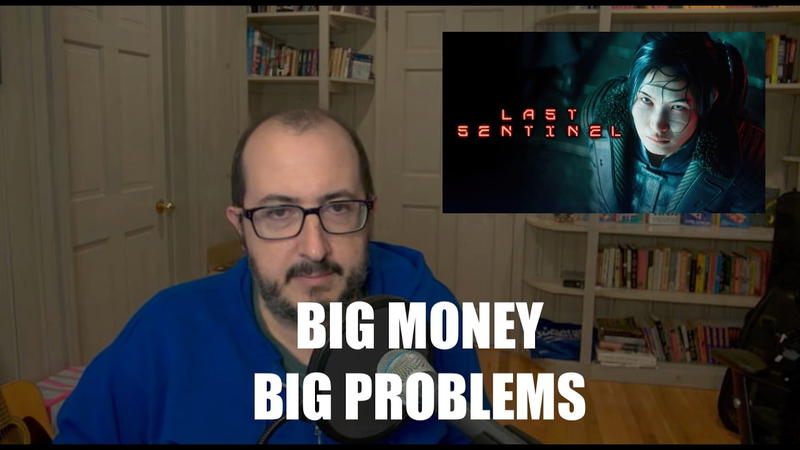
The frequent failure of independent game studios founded by veterans from major AAA companies stems from a disconnect between the resources of large organizations and the realities of smaller, independent operations.
- New studios founded by AAA veterans often fail because they lack the specialized infrastructure—such as dedicated marketing, cinematic teams, and administrative support—that large companies like Blizzard or Rockstar provide by default.
- Founders frequently struggle to adapt to modern market realities, such as the necessity of Early Access, community building via Discord, and iterative beta testing, instead relying on outdated 'surprise launch' strategies that are no longer effective.
- Excessive venture capital funding, common during the 2021–2022 zero-interest-rate period, often leads to 'scope creep,' where studios artificially inflate project size and headcount to match their inflated budgets, resulting in complacency and unmanageable complexity.

Why Video Game Developers Love Remakes
The prevalence of video game remakes is driven by a combination of strategic risk mitigation, operational efficiency, and creative opportunity.
- Remakes serve as a risk mitigation strategy by providing a clear, pre-defined vision, which reduces the uncertainty and decision-making overhead associated with developing entirely new intellectual property.
- Studios utilize remakes to train staff on new tools and development pipelines, such as transitioning from Unreal Engine 4 to 5, without the added complexity of inventing a new game concept simultaneously.
- Remakes provide a productive outlet for large development teams during the 'pre-production' phase of a new project, preventing the need to assign staff to low-value busy work while core directors prototype the next title.

The Video Game Publisher That Lost Its Entire Staff Overnight
The video game industry experienced a significant organizational collapse in 2024 when the entire staff of Annapurna Interactive resigned simultaneously.
- In September 2024, the entire 25-to-26-person staff of Annapurna Interactive resigned simultaneously following a breakdown in negotiations between leadership and owner Megan Ellison regarding the company's strategic direction.
- The mass resignation was triggered by a power struggle involving the return of Hector Sanchez, a former executive who had previously left the company following allegations of inappropriate behavior, whom Ellison rehired as president of interactive and new media.
- The former Annapurna Interactive team formed a new publishing entity called Fictions, which subsequently secured the rights to manage and release the remaining game portfolio from Take-Two Interactive's shuttered indie label, Private Division.

How Video Game Publishers Actually Work
The relationship between video game developers and publishers is a complex, multifaceted business dynamic that defies the simplistic narrative of creative developers versus profit-driven publishers.
- Publisher-developer agreements typically include recoupment clauses that require publishers to fully recover their initial investment before developers receive any royalty payments.
- Independent developers must secure funding through a rigorous pitching process at industry events like DICE and GDC, which requires a functional prototype to demonstrate project viability.
- Publisher financing is distributed in tranches tied to specific development milestones, such as vertical slices or alpha builds, rather than as a single lump sum.
Video Game Difficulty is Hard (But It Doesn't Have To Be) | Extra Credits Gaming
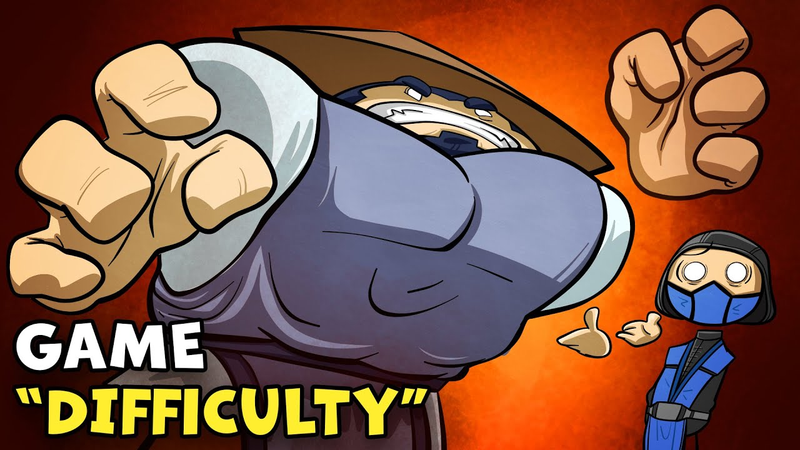
Traditional difficulty settings in video games often fail to serve players effectively because they require users to commit to a specific challenge level before they have experienced the game’s mechanics.
- Traditional difficulty settings often fail because they force players to make a permanent choice before they have experienced the game's mechanics or pacing.
- Player ego frequently prevents users from lowering difficulty settings; developers report that many players would rather quit a game entirely than switch to 'easy' mode.
- Adaptive difficulty systems, such as the 'game rank' feature in Resident Evil 4 or 'automatic challenge tuning' in Ratchet & Clank, secretly adjust mechanics like enemy health and item drops based on real-time player performance.

Level Up Your Business: Navigating Debt Financing and Tax Credit Strategies in the Games Industry
Debt financing serves as a critical mechanism for game studios seeking to accelerate development cycles and scale operations while preserving equity ownership.
- Video game companies can leverage debt financing against future income streams or tax credits to accelerate development, expand teams, or fund platform porting without diluting equity ownership.
- The UK government is transitioning from Video Games Tax Relief (VGTR) to the Video Games Expenditure Credit (VGEC), with companies able to remain on the VGTR regime until March 31, 2027, provided development started before April 1, 2025.
- Debt financiers typically require clear collateral, such as development contracts or tax credit projections, and often utilize staggered drawdowns and repayments to minimize the borrower's interest costs.
Philosophy of Video Game Combat Design | Design Club
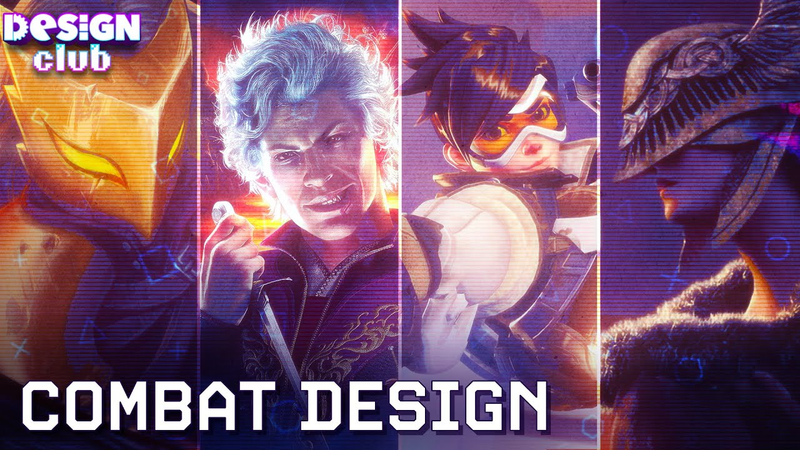
Effective combat design functions as the primary bridge between a game’s mechanical systems and its intended player experience.
- Combat design must fundamentally choose between skill-based mastery, where damage is avoidable through precision, and progression-based systems that rely on mathematical scaling.
- Effective combat relies on managing the action economy by balancing the frequency and impact of player actions against those of opponents.
- Modern combat design is shifting away from linear kill-to-win models toward multifaceted systems that incorporate environmental interaction, elemental weaknesses, and status effects like poise.
Games That Made Us
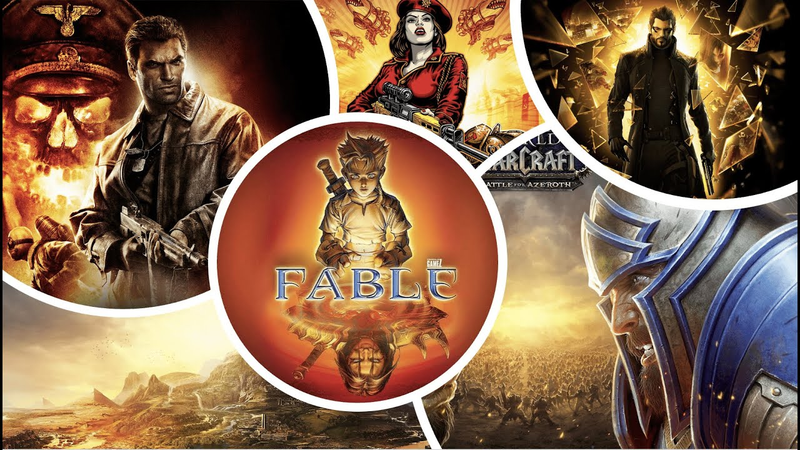
The recent induction of four titles into the World Video Game Hall of Fame—Williams Electronics’ Defender, Rare’s GoldenEye 007, id Software’s Quake, and Bandai’s Tamagotchi—highlights the industry’s ongoing effort to codify historical significance through metrics of icon status, longevity, geographical reach, and influence.
- Triple Dot has acquired AppLovin’s mobile gaming portfolio for $800 million, a deal encompassing 10 global studios and 2,500 employees across 23 cities.
- The acquisition is valued at a low multiple of 0.6 times revenue and 3.5 times EBITDA, reflecting a high-risk strategy for the buyer.
- AppLovin is divesting these assets to prioritize its high-growth advertising business, while Triple Dot faces the operational challenge of managing live-service games and in-app purchases without prior experience in those areas.

Are Video Game Cons Still Worth It? | Design Club
The modern landscape of the video game industry is defined by a fundamental shift in how information is disseminated and how professional networks are maintained.
- The industry has shifted from legacy trade shows like E3 toward direct-to-consumer digital campaigns, which offer publishers more control and lower logistical overhead for product marketing.
- Physical conventions like the Game Developers Conference have transitioned from being primary venues for product reveals to specialized hubs for high-level networking, deal-making, and professional development.
- Studios must conduct rigorous ROI analysis for in-person events due to significant financial costs, the risk of talent poaching, and the potential for employee burnout.

The State of Video Game Financing in 2025
The gaming industry is currently navigating a profound market correction, characterized by a 14 percent year-over-year decline in deal volume and a significant contraction in Series A graduation rates to 11.5 percent.
- The gaming industry is experiencing a market correction marked by a 14 percent year-over-year decline in deal volume and a contraction in Series A graduation rates to 11.5 percent.
- Venture capital firms are shifting investment focus away from content creation toward infrastructure, creating a structural funding crisis for mid-to-late-stage studios.
- The industry is transitioning from a high-growth, speculative model to a disciplined environment that prioritizes capital efficiency, fiscal restraint, and proven execution over rapid scaling.

The State of Video Game Publishing (with Serenity Forge)
Serenity Forge operates as a multifaceted publisher and developer based in Colorado, dedicated to producing emotionally resonant, meaningful gaming experiences.
- Serenity Forge has scaled from a small development team to a global publisher managing multi-million dollar productions, including the 30-million-player hit Doki Doki Literature Club.
- The firm’s core business model relies on deep diversification, blending internal development with physical distribution, merchandising, and bespoke co-development partnerships to mitigate market volatility.
- The publisher rejects industry fads like NFTs, instead utilizing a tool-agnostic approach that prioritizes product quality and direct, unfiltered community engagement.