Transcript
Good time zone internet. Hello and welcome to Design Club, the only game design show on the internet where the title's this long cuz I can't think of a more succinct way to say we're talking about the philosophy of video game combat. I am your humble host Will, joined as always by my pal Jeff. Say hi to the people, Jeff.
Hi to the people, Jeff. Hey everybody, I'm Jeff Cannizzaro and I'm the studio director of Extra Credits Studios and a long-time game designer. I looked at the other day, Will, it's been over 25 years. A goodly amount of time.
you're saying is your career could have graduated with a degree in game design.
And be drinking.
That's terrifying and it's kind of horrifying all at the same time. So Yeah, I'm not even going to think about that. Yeah.
So this conversation we're going to handle like a boss because in a lot of
cases it does talk about combat and bosses.
That's true.
I think Will, we'd initially started with an idea for a different topic and I told Will and a story.
Yeah, I would love for you to tell that story.
So we what were we initially thinking of? Um
We were talking
It's a fun transition to get to what we're doing today.
We were we were thinking about um talking about multiplayer. We were going to talk about multiplayer with Peak being such a a phenomena right now and Repo. We were talking about um the genre that some people are calling friend slop and I prefer to lovingly call idiots together, which is a game where you are not trying to be intelligent. You are part of the chaos that your friends will experience that is a threat, right? Um and so from that we got to talking about an EverQuest story and that led us here. So Jeff, could you
EverQuest through Mario Kart because I'd been commenting that um the friends together actually has a longer history because for example, if
you went and played Mario Kart solo, nobody else there, it's just a time trial racing game. Like all of the excitement from Mario Kart is the other drivers on the track and all a lot hopefully a lot of times your friends on the track doing silly things to each other and it's that interaction which is actually the magic of the game.
Right.
Like otherwise it's I won't say a generic racing game, but
It's fine, but it's it so like when I played um
Mhm.
Mario Kart World, right? I had the most fun playing with my roommates and with Matt, right? But I played a bunch of it by myself and it was fine. It was a good game. It's a good Mario Kart game, but I wasn't uproariously laughing or you know, my sides didn't hurt from one of my friends screaming about how absolutely nonsense blue shells were or Matt wasn't doing some sick trick to overtake me in the first, right? Like the friends make the magic, right?
Right. And this goes through a lot of
different games. Like if you were playing Smash Brothers, it's like together with friends or even going back to um Halo. Like they put a couple of things in Halo like the sticky grenades.
Mhm.
The sticky grenades are great to attach to one of the little guys who runs around going, "Get it off! Get it off!" before he runs like towards his friends and explodes, but accidentally sticking your friend as he's charging into something or one of the many other interactions. Like a lot of we have a long history in games of designers being like, "Well, screw it. Let's leave that part in. It'll make a good story later."
Right.
And one of my favorite stories for that actually is way back when I was working on EverQuest, I was chatting with a couple of players um because I wrote the magic system. Excuse me, not wrote. I was the designer of the magic system. We had an engineer who did full engineering support because I am not a good programmer. Like, you would not hire me to be a pro- I can fake parts of it, but
Sure.
that is not why you get me. But, um
I regularly went out and like chatted with players in our community or just online, because we didn't have the good feedback tools at the time. Just straight up. I got a lot of information uh just from people telling stories about it. And one of the spells that I'd put in for players was a charm spell. That, um you could temporarily charm a monster to have them fight on your side. And this is, when you think about it, a pretty powerful spell. And we can talk about more for that for combat later, because say you have a six-person party and you're fighting three mobs.
Right.
Temporarily switching it from three mobs down to two mobs, with one of those mobs doing additional damage to their friends, is a fairly large combat swing in all sorts of mathematical directions.
Yes.
And to be fair, monsters occasionally packed a charm spell, as well. And I was telling Will that some of the players I talked to favorite moments were when a buddy got charmed
and they were like, "Well, guess we got to put Bob down before he like murders half the party."
Right.
And Will was aghast
Right.
the healers or mages weren't packing a dispel to get rid of this.
Right. Because this is a this is a particular thorn in my side. See, uh my rating game of choices, Final Fantasy XIV, I've played healer since day one, minute zero. Okay? My first job in my first tab-targeted MMO was a healer, right? I have been healer main the entire time. And so, I recognize there's a All healers have a access to a cleanse, called Esuna, right? And so, the idea that instead of using a readily available tool to solve a problem like charm, your best solution was spend resources beating your friend to death and then spend resources resurrecting your friend or wait for them to corpse run is mind-boggling to me. The lengths
that players will go to avoid packing utility in their toolkits, right? Like
And to be a little bit fair, EverQuest basically you had eight slots to memorize spells. This never went up or down by level. And swapping in or out of spell took an actual amount of time, not like a second or two. Like you sat down, opened your spell book that covered your screen so you couldn't see monsters approaching, you picked a spell and there was like a loading bar of putting it in.
Yeah.
So, this wasn't a hot swap. This was a prep what you're going to do before the battle
Sure.
kind of thing. And there were a lot of people that they were just like, "Well, let's see. I have my buff spells, I have my damage spells, I have a crowd control spell or two. Maybe I'm too lazy to sub out my travel like there and they wouldn't always bring in the situational spells. And I I know I could still see Will's eyes just popping on that. And because of that, yes, there was well,
Bob's been taken over.
Beat Go to sleep, Bob. Go to sleep. You can't hurt us if you're unconscious, Bob, right? So, like yeah, that And that sort of got us talking about the different design philosophies behind combat systems. So, I'm going to I'm going to issue a disclaimer at the beginning because I have a feeling the comments and chat will get here eventually. We're not going to cover incredibly specific niche examples. The example of such a thing would be Undertale. We're not going to talk about Undertale, right? We're going to talk about bigger, broader categories because if we spend too long on like niche examples, like Undertale, we will be here for 3 hours and Jeff and I both have other things we need to do with our day. So,
Uh actually, real quick, let's see answer to chat Bull, yeah. Let's see, hold on a mic. Click. Why is that not appearing?
It should be.
Uh it hold on uh
Oh, well. Anyway, um Bull, answering you um if Jason um was on, it was at least not in the first 3 years.
When you
Cuz I was there actually 5 years. I was there like '97 to I left the team in '01 or '02 to go on to other games. But, it's also been running for over 25 years at this point, so there have been a lot of people on the team helping carry the tradition on.
Yeah. So, I think the the kind of thing that we want to talk about is sort of the the the question that I have been framing my thoughts on this with is in the game that you are playing {slash} designing {slash} thinking about,
Mhm.
the combat philosophy might be best exemplified by the idea, can you put a boss to sleep?
So, let's let's break that down just real fast. That implies that the system, right? So, so in order for you to be able to have a boss in an encounter and put them to sleep, that means a bunch of things have to be true. That means that the system has to have sleep. That means it has to be advantageous for the player to be using sleep reliably. It also means that sleep has to work on the boss, right? And those three things I think are sort of the ways that I look at combat in games and see the way that they sort of differ from one another, right? I recently got to play uh Final Fantasy VI for the first time. Um and in Final Fantasy VI, there's a whole bunch of bosses that have very specific elemental weaknesses. But, most of them are immune to big flashy status effects: sleep, toad,
paralysis, stop. The traditional
what we'd call the hard CC?
Correct. You might be able to
Do you stop doing
Correct.
stuff.
Yeah, correct. So, um that whole uh element of it felt very prevalent, right? But, there are other fights where you can just straight-up temporarily for a little while put the boss to sleep. And everybody can heal and use items or you whatever, and then you get like the big attack, right? I'm thinking of like a Monster Hunter World boss, right? Where you can just put the boss to sleep. That is part of the game, right?
And by sleep here, we're subbing that in again for a variety of It could be a long stun, a mesmerize if we're using some of the EverQuest slang. Like, there are multiple variants of Hey, the fight is temporarily paused, giving everybody a break to go do a thing.
Correct. Yeah, and I mean I mean sleep not as a permanent Well, and then uh I
think Johansson's uh question is is a good one, right? There are two variants here, which is one of them is the boss is asleep, the fight is over. You have achieved victory by accomplishing this objec- by, you know, rendering the boss unconscious in this fashion. And the other one is this is temporary, the boss will wake up the next time you breathe on it, poke it with a stick, look at it too long, wait too long. The boss will wake up and it will be angry.
So, there's some fun variants like Richard just mentioned, you know, banishing D&D
Yeah.
which is one good example, but hypnotic pattern is another iconic one that literally if you fail your save, you're standing there until somebody pokes you or moves you. Sleep, which we'll mention, which in fifth edition could actually be used for a long period of time and in 5. 24 isn't but it's also things like can I surround somebody in a wall of force and leave them
Right.
there, which is a thing that you can't get out of. Um, there are D&D has a rich variety of actual versions of put the boss to sleep
Yeah.
in there, most of which used to be stronger in earlier editions and were toned down in later ones because it was also realized that spells that lasted a minute or two or three like we're just too long or like hold person that used to last for the entire fight. Turns out it was an exceptionally powerful spell. They used to actually call these save or suck spells because if you fail your save, whether you're the monster or the player, you just suck for the entire rest of the encounter.
Right. And it's also worth noting that um D&D is kind of an interesting
Otto's irresistible dance. Thank you, Quick so. Exactly.
Yeah. Um
Ah, I forgot that one.
Uh, it's worth noting here that D&D is kind of an interesting example both
because it has so many interesting examples of crowd control, right? Of non-damaging effects which control the fight in some way. We'll talk about
Crowd control buffs and debuffs
Right.
all of a rich history of D&D in D&D.
Right. But part of that is also because all of those things are mediated by the player DM interaction, right? Which isn't necessarily the case in a video game, right? So, like while we're going to talk some about the the things that are possible. I think for a lot of what we're going to be talking about for D&D, we're also going to kind of substitute in some Baldur's Gate 3, right? As a computer or a CRPG version of that because there's a lot of um the expectations, I think, are a little different when we're talking about a tabletop game versus a computer game. And um
100%
And the the number of different ways that your DM can on the fly tell you that yes, the monster starts breakdancing because you thought it
would be cool to do Otto's irresistible dance to a K-pop track. Sure. You know what? Great. Awesome. That's possible because your DM is making it up as they go versus
nature of tabletop gives aid that
Yeah.
where let me tell you, having designed multiple video games, um if we don't put it in, it doesn't happen.
Mhm.
Like
Yeah. Uh I I also
a finite set of possibilities.
Yep. It's not and then everything else will do something. It's and then everything else will do nothing, right? Because uh it's it's sort of permissive. Um I I do think that there's um uh another element to this, right? Which is that it can simply be a stun, right? It can just be a manipulation of an action economy, which is another big part of this, right? And you might think
I don't actually hold talks on action economy and yeah.
Right. And of course, when we say action economy, we don't just mean in a turn-based game, right? If you look again at Monster Hunter, right? In
Monster Hunter, the bosses' health scales non-linearly as the number of players increases. So, a boss that or a monster that you are hunting with two players will have more than twice as much health because the action economy when you introduce a second hunter drastically favors the players.
The amount that it favors the players
For those unfamiliar, action economy, I believe was first used for Dungeons & Dragons. I could be wrong on that. That's the first time I really heard it used, but as a general term can be explained to a lot of things where D&D, for balance, when they were doing fifth edition, um considered that a party of four was the average number of people in a party. And so, they tuned a lot of their encounters towards that. And what this meant was they expected, because each player on their turn gets to do one action. An action can mean an attack, it can be casting magic. Some classes have something called a bonus action, which lets them do a
specific other category of actions. You can't, unlike Pathfinder, where you can sub between them, in D&D, you get an action, a bonus action. There's a little more to it than that, but what it means is when they're balancing the game system for combat, they're like, there will be four things in a round that the players do. Cast a spell, do an attack, etc. And they're balancing that again what against what can the monster or group of monsters do. If you're fighting four orcs against four players, you know that the four orcs will each most likely get an attack, and the four players will each do an attack, cast a spell. If you do something to manipulate that, death being the easiest form of crowd control. If you kill two orcs, suddenly the players still have four actions, the orcs only have two.
Right. Which is what
you cast a hold person spell, and one of the orcs fails, the orcs now have three actions, while the players still have four, but one player spent an action negating the action of one of the So, there becomes a whole bunch of balance
back and forth on this. And the non-linear thing that Will was talking about for Monster Hunter is by upping the bosses' hit points, because the monsters don't necessarily suddenly get, if there's two hunters, they don't get double the number of attacks. They might have some area attacks that can damage things, but the fact that each hunter still gets their series of attacks or actions where the monster does not increase theirs means that in some way you need to buff the monster to compensate. And one of the easiest ways is just to give it more hit points or have each action do more be more potent.
And that's
So do more damage.
also because um we're sort of speaking in a vacuum as though um uh the player's effectiveness also increases linearly, but we also know that that's not the case, right? For instance, um if uh in a D&D party, right? If I have three people, uh we're going to say they're three fighters cuz it's going to make this a lot easier, right? If I have three fighters,
that's three units of power, right? But if I add a cleric or someone who can cast bless,
Right.
now I've added probably slightly more than a fourth unit of power. It's still a little difficult to say, right? And so that is one of the things that we're going to have to consider is the the some of the ways in which the interactions between the different elements of these combat philosophies cause things to uh work better or worse, cause them to have different things, right? So like um paladin's charisma aura is another great example of your opponent is trying to debuff you to do some kind of crowd control, to change the action economy in their favor, but the paladin is standing there.
Right.
I mean plus four to everybody's saving throws within 10 ft, including concentration.
Correct.
So spells that might have gone down before suddenly have a 20% less chance of doing so.
Right.
And
And it's so powerful because it doesn't cost anything.
like
Yeah.
Having a single rogue is not uh or like adding a rogue to a party where there's another melee like a warrior or fighter, excuse me, who can be next to that to give them constant sneak attack, drastically increases the rogue's average DPS, or DPR, damage per round.
Yep.
And so, you these are never easy things. And actually, one of the things will I'm going to bring this in early as we're coming is as you're considering combat balance,
Mhm.
there's a whole extra thing for your game that most people don't even recognize is a thing to think about that I'm going to bring in to talk about right now.
Sure.
Which is before we even name any game, Will. Actually, here. We're combat balancing Hecknomancer.
Yep.
Cool. Hecknomancer, we're going to run around and we're going to beat the heck out of some snakes.
Sick.
For the moment. Cool.
So, Will, is it me, or do I get a companion?
Right. It's a great question. Yeah, everybody gets their own cat companion. So, you get to bring Percival with you, and Percival is your little cat squire.
Right. Because so, you think of games like that, um me um let's see. Let's say like Halo, for example. Let's take that for a moment. Are you Master Chief, or are you Master Chief that also has a couple of other soldiers or Spartans running around it with him? And that brings this into wait. Is this single player, or is this party-based? Because balancing I do damage as Master Chief, I do damage as Master Chief, but there's also companions. I do damage as Master Chief, but there's also companions and one, two, three other Spartans going with me,
Right.
is an entirely different style of combat balance. You know, am I a solo RPG? Am I an RPG with NPC companions like Baldur's Gate?
Or am I a say four-player Neverwinter Nights, each you know, like comes in each of which could also have a familiar or other thing like some of the balance just you know, we go back to action economy for how many actions there are. This is a thing you have to know from the beginning of your game balance because it also involves not just combat but what kind of thing. If you are a solo one, classes are designed differently. Because you can't have a single player game with no companions where you are where you're playing equivalently of support class. Like all classes in single player games in some way have to be DPS plus classes.
Right. And in some games
damage classes because you are the only ones that can defeat the monsters if there is fighting.
It's kind of interesting and different games solve this different ways. In some cases, they solve this by making the support class the only one that has a
companion. Elder Scrolls Online Elder Scrolls Online has a bunch of
Or sometimes those end up being called summoners.
Yeah, sometimes they are summoners, right? Yeah. But like the Warden has a bear. Yeah.
Still a summoner.
Yeah, still a summoner. Just summons one thing, it's a bear. Um Yeah, I think that the
Summoner and pet class is almost interchangeable but like the so anyway, one of the base things to think about when you're thinking of your philosophy of combat design and everything that goes around it is how rob how robust and diverse do we need to make the system? Cuz let's take an easy game example, Slay the Spire. It's a replayable roguelite. There are four classes you can play. None of them get companions nor anything else like that. They are the people going in and doing the fighting, slaying the Spire or ascending the Spire or looking to slay the heart. And so each of them is designed in such a way that they are primarily balanced around doing
damage and not what I call damage plus. It's damage plus meaning they're designed around doing damage but they all have slightly different ways of doing it or emphasis is on the style in which they can become more powerful and more potent and interact with the world around them, almost all of which involves fighting.
Yep.
Companion orbs.
Well, oh yeah, orbs are not So, when we talk about companions or pets, we're generally talking about things that are uh buffable, targetable, uh and have some kind of greater interaction than I have a halo of lightning orbs that just does damage, right? Then then it becomes a weapon, right? So.
Yeah, it is an extension of their power.
Yes, correct. And that's generally what we mean when we're talking about like a solo experience, right? Um and and it's also worth noting by the way, when you're thinking about the combat balance, the genre of game matters a lot because it is so much easier to fake all of those uh
Marines that are following you around, all those ODSTs in Halo that are following you around, it's easier to fake them doing something than it is to fake your companions doing something in Baldur's Gate because the expectations of transparency for information for the player are different as well, right? Oh, the ODSTs totally helped. They shot uh that grunt over there, probably, right? Versus in Baldur's Gate, I can look and see what each companion does on their turn, what each character does and how they
There's a little text window that reports Astarion backstabbed so-and-so and
Correct. Yeah.
Assume he sneak attacked so-and-so.
Yes. Yeah. So
And so yeah, like that is a major thing and so you take something like that another game like that would be early God of War games. You know, as Kratos, uh you have a set of moves, you learn more moves, you can choose which moves you get better at, but the design all around
it and both games like Halo and God of War, putting a boss to sleep isn't a thing you do.
Right.
It is a single player game. If this had been Deus Ex, which in one of the things was there were multiple ways to solve each problem in each encounter, like putting a boss to sleep, you know, a tranquilizer, a knockout, etc., would have been considered a very viable option because there were even ways to do pacifist runs through that entire game.
Yeah.
Because they'd actually designed the whole game so you could do it without actually killing anybody.
Right.
If you were clever enough and sneaky enough.
Right.
And so that was part of their combat design going in. Like unlike God of War Slay the Spire, which is defeat all opponents through combat, they said solve all encounters as opposed to defeat all opponents.
Right.
And D&D actually slowly shifted towards that as well in that it is solve an encounter. Like you can get full XP for solving an encounter. You don't have
to go murder everything. They are trying to do less murder hobo-y.
Right. And and I think that that's an important thing. So when we talk about winning an encounter, we talk about what victory means, that's going to be different, right? And that is a pretty fundamental part of the philosophy, right? What does victory
to be for combat design because you have to design towards the philosophy of what your game is trying to achieve. And like Deus Ex being that huge great example on one side of all encounters are solvable, including through without using combat.
Yeah. What game was I playing recently where somebody got frozen or someone ran out of action points. I was playing something and the game got declared over because no one could take any actions. I think it might have been six, right? Like that that's a loss condition. Your characters are alive. They just are stuck in
all petrified.
Right. Sometimes that's not a bad thing. I had a There's a Yeti character who I made
immune to every status effect including death. Uh and one of his perks is that he will throw teammates at stuff. You need teammates to be alive, so I let one of my teammates get paralyzed and then the Yeti used his uh petrified, excuse me, used his petrified teammate as a blunt object to beat a boss to death and it was the best. It was the best. Uh no notes, just great. Um
And there's a lot of other games that aren't quite as hardcore as Deus Ex, like Cyberpunk gives you ways to solve that aren't all necessarily going in slaughter. And a lot of games do to a variety and that really starts getting to the heart of what we talk about for combat design is how do you want to let players handle combat? Okay. How do you want to let them handle combat? Does your team have enough time, resources, etc. to hit broader amounts?
And how many players are you expecting to part Players and or NPCs are expecting to participate in each event? Because again, if you're expecting it to be party based, party based classes are way, way different than single player or single player plus companion kind of classes.
Yeah, it feels like that that I just want to highlight like that resource thing, right? If your combat math is just who punches the other person to death first, the combat the number of thing considerations for that combat is significantly less because you are just worrying about interesting and different ways to punch and be punched. Versus Deus Ex's approach.
Punch being very generic. That could be gun, laser,
Yeah, gun punch.
whatever we want.
Obviously, Jeff, everyone knows about gun punching. Um I've seen a gun punch in a game. I
know what it looks like. Uh and Deus Ex is much harder, right? To do because you need to consider all of the different ramifications for not only each encounter, but each thing you add and how it will impact each encounter and whether or not there's victory or not. Now, you can kind of boil that down, right? There are ways that you can do like, all right, these this whole class of stuff does non-lethal damage. And when they're knocked out for whatever reason, that counts. And triggers the non-lethal victory option, whatever that is. But, that does still mean that there's a whole extra category of non-lethal things that you have to consider in addition to all of the lethal ones.
And then we could take So, Deus Ex is once and let's get some spectrum here, Will.
Yeah.
So, Slay the Spire, I'm going to use as our North Star along with say something like Halo
Sure.
for single-player,
Yep.
can have classes, but they're kind of heading towards
this is how we fight.
Yeah.
Each class brings their own thing. In Halo, it'd be what weapons am I using?
Right.
Um but everything is pretty much solved by killing.
Yes, there is
Sound fair?
Uh and
Deus Ex, sorry.
And there's not a lot of crowd control in those games. There's mostly every status effect either impacts directly damage coming in or damage going out in the case of Slay the Spire, right? Weakness, vulnerability.
things like stun and stagger for some of those. So, there is some CC built in.
I would say that that when we start to talk about stun and stagger, we're beginning the path down the line towards a full Deus Ex, but we'll get to that in a second. I agree that they're they're very far in that extreme category.
With Deus Ex being you know, very many ways to solve combat.
Yep, and
D&D tabletop, that strays very close to
Deus Ex, where most D&D digital is kind of more towards the middle. But there are a variety of ways, and one of the reasons that we start getting that is actually, if we're looking at Halo and Elden Ring, excuse me, um Halo and stealth and spirit for a moment, let's talk about Elden Ring.
Yeah.
Because Elden Ring is a prime example of it's still you, or in this case you plus a companion, since we're doing Elden Ring. But there are there is a lot more versatility and variety in the builds, I won't quite call them classes, because they're
You you have a class, but like it doesn't really matter. Yeah.
Because I could be in there doing sword and board, I could be in there doing a huge variety of great weapons, two fast small weapons, but I could also be standing back pretending that archery wasn't the most expensive thing you could be doing there, or casting any variety of magic with certain and because you're only
allowed to load up a certain amount of spells at a time, actually very similar to EverQuest, or spells and abilities, what you are fighting with is a constrained you're you are basically custom building your personal style of engaging with combat.
Yes.
in that game. And so that is by definition from combat design radically more complex because instead of saying, here is silent, here is Master Chief, there is here is you with this almost infinite brand not infinite, but for all intents and purposes, wide variety of things you could be doing at the same time, all of which need to be at least somewhat adequate.
Right.
Like, they're allowed to make some more and less powerful, but
Yeah. And when we start talking about Elden Ring, we start in uh interacting with things like weaknesses and vulnerabilities to specific damage types, which is another access, right? All All enemies in Slay the Spire are
weak to getting hit in the face until they die. And all enemies in Halo are weak to bullets. To some extent, right? Yes, some of them have weak points, but like all enemies in Halo die to bullets, right? But there are definitely enemies in Elden Ring where it's like, "Oh, you didn't know that this boss needs you to use lightning." Like it's very important. I'm playing a lot of night ring. I'm going to play some more night ring with Matt tomorrow. There are fights that are that go from virtually impossible to manageable if you're using the correct elemental weakness, which is a dimension of this, right? That like there is an additional consideration that you need to bring a specific tool into the fight to The Witcher effect.
Yes.
Hey, if I've researched my monster,
Exactly. Um in addition,
Because The Witcher is actually another good Elden Ring-ish style of how you build your character, looking to see monster weaknesses, and just like Elden Ring, what gear are you packing?
Yep.
Because the gear adds a whole new dimensionality. And so,
again, if we're looking at combat design with Slay the Spire being one, you see Elden Ring, Monster Hunter, which is so somewhat That's like Monster Hunter would be between like Slay the Spire and Elden Ring because
I I would even put it further because um the every monster can be put to sleep in in Monster Hunter.
Oh, I was thinking more on but the their classes are much more You don't have the same variety of choices that you do in Elden Ring.
No, but you have a lot.
Yeah.
You do have a lot.
That's why we were putting on different sides for different reasons. You were saying there is more reasons for putting to sleep. I was saying from combat design though it's not quite as combinatorially complex as Elden Ring.
I don't even know that I agree with that actually. Based on the number of deco slots and the deco slots system that it's evolved into recently, there's a
Okay, maybe I'm a Monster Hunter or two behind.
Yeah, there's a lot of um armor so you choose a weapon and then you choose which of those weapons and there are there's an upper end weapon for every monster in the game and they all do something different and your armor and the um material likes that you slot into them can
Can I just say that then you get to get your food buffs and um
Exactly so.
Okay, and but yeah, so like the we've gone from small team designs
Yes.
like a small team can balance Halo combat.
Right, three people did design Slay the Spire.
Yeah.
Yeah.
Where you get something into Elden Ring, Monster Hunter, etc. or D&D, like the balance in that, you're getting larger and larger team or taking more and more time because it's getting more complex and philosophically the same. Like when you were talking Deus Ex level the encounter or the combat design, also I do include the environment team.
Because there were you had to make ways of solving it that were non-lethal and or evasion and or stealth and or I just walk around it based.
Yeah.
That meant that it couldn't just be one team that it was integrating with a whole new team
Yeah.
to bring in that solvable aspect of the game.
Yeah. I also think we would be remiss if it if when we bring up Elden Ring we didn't bring up one of the reasons that Elden Ring has an an deep combat system that is actually very multifaceted beyond merely the players options. And it's one word, and all of the Elden Ring uh nerds in chat are probably screaming it at the top of their lungs at their monitors. Jeff, do you know what one word I'm talking about?
Dog?
No, I'm not talking dog. Although dog, right? Dog, they're poor dog, right? Okay, cool. I'm talking about everybody's favorite and least favorite stat.
Ashes?
Poise.
Oh, okay.
Poise is a huge part of the interchange, right? Because there are tradeoffs in
Elden Ring in some cases between how much poise damage you're doing. Poise damage, it's not really how much how much you're fatiguing the enemies poise stat and how much yours is being fatigued in order to interact with the combat, right? It's not just a murder them dead. It's a murder them dead and keep in mind that while you do poise is a thing.
So, let me back up a second to get to poise. So, heading over to multi to party-based games.
Yeah.
In a in a game where you are the main character and maybe you have a pet or not there's only a certain amount of versatility in combat because you need the person doing it to be able to damage them down. If you are playing certain other games with MMOs being all call kind of the egregious is the wrong word, but the most egregious examples.
Like, hey, when we launched EverQuest, there were 14 classes. You had a six-person party.
I
Yeah. Yeah. Yeah. Right. I'm I'm sorry, I'm counting 14 classes cuz I keep losing count. Go on.
Okay. Um but what the and one of the things is each class, when you're doing something like that, has to feel somewhat unique. But, because all of them aren't the main character, this is an MMO, you are allowed to make them better and worse at some things. You can have classes like the original EverQuest enchanter, who's you know, if you have your damage stat going from like zero to 100%, theirs would be at like the 5% range. Enchanters didn't do damage. Like, when I told the team I was building a class that basically did no damage, I was looked at strangely because they were, you know, I I helped bring in the advent of crowd control as a viable class system or as a primary system. An enchanter's primary thing was crowd control. And we had other classes that
were summoner and pet classes. We had the classes that were DPS classes. We had classes that were more healing and buff classes. And just they filled those 14 roles, we had a wide variety of things. And therefore, not all of them had to be damage. In fact, they specifically shouldn't be damage. And so, the combat design around that started to get to things like classes that do buffs, classes that do debuffs, classes that do heals, classes that do crowd control. And as well as the damage classes that synergize in combat as well. And so, this introduced to a lot of the gameplay a wide variety of things that could be happening in combat and showed that there were things other than punch or shoot opponent down.
Yeah.
And out of that grew it starting to get things like stagger or poison stagger, which is kind of a direct evolution was of can we make combat more interesting
by allowing the player to in some ways disrupt or be disrupted by opponents without making it kind of make this saving throw or, you know, be knocked out for a while.
Right.
In other words, make it based on the character's actions as opposed to kind of randomness of dice roll and things like saving throws.
Yeah.
And that can get you to talk about back to talk about stagger and poise.
Yeah, that it feels like that those are sort of an additional consideration, right? Because now we've gone from hit the enemy till they stop moving. Right? Until they are a bloody paste upon the ground and you stand triumphant screaming your barbarian yell, right? Whatever. It's fine, right? They're just paste. To this more even the most and in fact especially the most I'm going to play the game naked with only a great sword let me solo her style build in Elden Ring takes advantage of it understands the multi-faceted nature of Elden Ring's combat, right? We've gone
from strike defend to this kind of attack in this timing to deal to do this kind of poise or it's actually more advantageous because I know the flow of the combat for me to block this attack and in return for not doing damage for a while, I will do more damage in the long run versus something like Halo where it's almost always correct to press your advantage to to be full on until you are out of bullets and now you are pistol-whipping things to death as Master Chief, right? And that feels like a big step up in complexity for both design. Now every boss has to have or every enemy has to have a poise stat and every weapon has to have a way that interacts with poise. Uh, that's a whole extra layer. And
And it's also a level of interaction because Elden Ring is sophisticated enough it let you choose as if you want to opt into that system or not.
Yeah.
You can be like, I'm playing a wizardy type and I'm going to stand in the back and I don't care about poise 90% of the
time.
Right. It might be cool if I managed to knock my opponent's poise down to zero and they get staggered, it gives me more time to cast laser beam at face, right? But it's not a primary consideration the way it is if I'm, again, naked as the day I was born holding a katana and a jar on my head trying to solo Malenia, Blade of Miquella, right?
And also, if you just look at how they do it like, you know, going into fighting equivalently with short, fast, big, large, like it added a whole variety of gameplay to different weapon combination and types.
Yes.
That let players feel like they were kind of dialing it into their preferred level, which is pretty cool.
And I think it's um the other really interesting thing is that it elevates fighter types and their complexity to something that might not be quite as complex as casters, but is approaching it versus something like the traditional um
I guess problem with D&D, which is I would like to rage. I'm now going to recklessly attack that thing until it stops moving versus I'm a wizard who has seen the end of time. I can change dice rolls, wish, meteor swarm, turn you into a frog, banish you to your home plane of existence, and more all at the snap of my fingers. And those players are both theoretically the same level. They are cuz the numbers usually mostly work out in that the wizard dies to a stiff breeze, the barbarian lives through the end of the world, but the complexity to play those classes in combat is not the same. I'm short changing barbarian a little here, by the way. As someone who's played barbarians, I am short changing barbarian a little here for the sake of the argument, I will admit. But, even so,
It is radically different, though. Like, the average time it takes a a barbarian to figure out their move is significantly less than somebody playing
a wizard or sorcerer looking at their 43 options possibly with or without um adding in extra flourish.
Right.
And thereby spending sorcery point. Like I would actually argue that um melees are more complex in Elden Ring than uh magic types.
I would agree with that.
like you have to know more to do well as a melee in Elden Ring.
You have fewer windows to attack in and the way that you avoid enemy attacks needs to be more tuned to specific enemy attack to to specific attacks.
You have to understand the combat better.
Yes. Right. And that is that is a huge part of its design philosophy and I think one of the reasons that people love it so much is that is that you can um if Master Chief or Slay the Spire or God of War is just murder
Mhm.
Elden Ring and some MMOs, I'm going to say a lot of rating MMOs,
become a beautiful ballet of death. Where there is a tempo, where there is an ebb and flow to the way that combat moves and you need to understand that tempo in order to maximally achieve it. And that level of difference both allows for crowd control, um knocking someone's poise down, parries, guards, right? You create an opening, you do additional damage, putting things to sleep, abusing weaknesses, etc. Right? You It That That Elden
Elden Rings that are handled on a step-by-step basis. Like there are RPGs you'll play where you like attack and you'll see like three or four things like you swing, opponent parries, you know, you have second attack, you know, opponent misses, you Yeah, like where four or five things happen every time you push attack because your character is loaded with those stats and they just auto resolve.
Yes.
Then um that doesn't typically happen. Like there's kind of on the combat balance,
that is also a fine combat balance. Like actually, going back to EverQuest, there were skills that a fighter could have including parry, like getting a double attack in, there's a repost, like if somebody hits you and you get an attack back. There were a whole bunch of skills and secondary skills that could be leveled up that made the classes fight differently, but the player wasn't sitting there hitting eight different button mashes for it. A lot of the math was built into their character and it got auto executed.
Right.
Part of it was also just the latency in the computers we were working with at the time. Like with latency MMO style MMO style latency, you didn't want the player having to sit there and like hit a counter button. Like there needed to be a little more give.
Yeah. What one of the By the way, one of the things that you just reminded me of is um when we're talking about philosophy of combat, sometimes the sm the impact that incredibly small things
have in the long run is a really great way to see complicated combat design. So I want to um we're going to avoid talking too much about PvP right now, but I do want to highlight one thing um that that Jeff just brought up, which was resetting auto attacks the double attack thing, right? As an example of combat depth in the same way, right? That that is despite the fact that in League a lot of your the skill math happens in the background, right? How much damage your your Q does is not a thing
Orb walking.
Mhm?
Oh, sorry, keep going. I'm waiting for you to say orb walk.
Yeah, right. What right. How much damage your Q does um uh it is determined in the background, but how many auto attacks you get in depends on how well you orb walk and how well you understand what does and does not reset your auto attack delay, as an example. Right?
Well, I have a question.
Yes.
Do you have the ability, if I was going to give you a picture, to quickly throw it up on screen, or is it not possible?
I I've got it all set up.
Here, let me because I want to here this picture I've used in a couple of talks. Um I want to bring this one in, too, because this is a whole extra element of combat um philosophy I want to talk about real quick.
Uh yeah, I can do that.
It's a JPEG, I think.
Yeah, yeah, yeah. No, I got that. Um I'm just trying to figure out where in this goes. Well, thank you. Awesome. Uh sizing.
Sorry, everybody. I'm giving Will a picture on the fly because I'm being mean.
I don't think you're being mean. You You wanted me to show them
this picture. This one?
And so, if we take a look at that picture real quick, we see Where did I have that in my talk? Did I? So, I have a Let's see. This picture, to me, actually, the first time I saw it like helped me I used to do I did a talk for a couple years at PAX uh talking about the Dean the mechanics of done mechanics and balance of fifth edition Dungeons and Dragons. And one of the things that I thought was super interesting is when you look at this picture, Will, you see lone hero facing off against dragony looking thing.
And friends, but yeah.
Yeah. And that's actually the friends. Thank you for saying that.
Yeah.
So, I have a question for you. Let's see. How effective See the little guy climbing up on the
lower left raising his sword?
Yeah. Yeah.
The henchman?
Yeah.
How effective is that guy in combat? And let me talk about this for a moment.
Like which combat? This combat or in combat in general or anyway, go on. Yeah.
This combat right here.
Probably not very.
Because in certain editions of D&D, um and this gets to something I want to talk about for the bounded accuracy. So, fourth edition D&D and a lot of MMOs are fairly notorious for this. Which is say you're wandering around well in Final Fantasy. Um and you're some ungodly high level because you are in that game.
Yeah.
Or this is fourth edition D&D. And you're up there as that 14th level whatever class you want to be, fighter staring at this thing. And you've got your third level henchman climbing up
next to you. Or you're in the MMO and you're a level 80 thing and you got your 15th level friend
Mhm.
who came in and wanted to tag along.
Uh-huh.
In certain games because of the way that the math is set up philosophically that third level fighter that third level henchman in the 14th level fight in fourth edition isn't going to do anything. And this is because the game scales up. It says, "As you go up in level we expect monsters' armor classes to get higher." Like this that dragon might have an armor class of 30 because we know that along the way every level your fighter is going to get plus one to hit. He's going to find magic weapons and by that point he's going to have a plus four sword and his strength is going to be 20. So, at 14th level he's going to get a plus 14 to hit. His strength is going to add another four, so it's plus 18 or five cuz it's 20 plus 19 is plus four sword is going to make it plus 23. So, we know that on an average roll of a D20
at a average roll of a 10.5 and a plus 23 to hit, you're going to averagely roll a 33 to hit. Which means we can safely set that monster's armor class at 30 knowing that that's going to make you hit roughly 65% of the time. This is actually how designers think about combat math.
Mhm.
That third level guy is going to get a plus three to hit. His strength is only going to give him two and he doesn't even have a plus one weapon yet. So, he's going to get a plus five to hit, which means to hit that 30 AC he has to roll a natural 20 because there's a a a rule in D&D that says natural 20s always hit. So, where you're going to be hitting and doing huge amounts of damage, that guy basically has a 5% chance per action of doing anything that impacts the roll. And this is how a lot of MMOs and games like fourth edition D&D tuned part of the balance, which was it was a constant progression of make number higher. And that all had to go into the combat math.
And but what part of that meant was radical level difference meant that the person was completely useless in this. D&D fifth edition did a really interesting thing with they called bounded accuracy. And so, for example, they removed that fighters get plus one to hit per level and they put it into buckets. You got a plus one or actually I think it started with a I can't even remember plus one or plus two at first level and at max level, level 20, it had gone up to a plus six to hit. They capped stats at a 20. Me and um which meant you could have get a maximum plus five and they capped magic weapons at a plus three. So, a 14th level guy is going be getting probably about a plus 10 or 11 to hit. That third level guy is getting about a plus four or five to hit. He's not up there, but that also means that the monster didn't need its AC set all the way up to 30. That monster could be have a AC of say 20 and that guy with the plus 11 or 12 is
still hitting you know, that a percent you want, but that third level guy with the plus four or plus five still has a somewhat decent chance to participate in combat and be more useful. And so, what they've done is they've taken the wide range of numbers you go up to and they've constrained it down. And that's part of your philosophy, too, is how much do you want radical levels of difference or power to affect how useful you are in a fight.
Yeah, and and I think that it also demonstrates something else, which um really differentiates MMOs and uh D&D specifically from games like Elden Ring. Which is and this is a very core part of philosophy and I see this all the time in rogue likes. All of the time. You can divide all rogue likes that are combat-based into two categories based on the following question. Is there mandatory damage?
Mhm.
Or is all damage avoidable? Right? For instance, what Jeff was
talking about, right? That third level person might be able to hit, but he's still probably going to get barbecued when the dragon breathes. Because D&D
His hit point scaling is still a thing.
thing and
Oh, sorry good.
And uh unless you're a rogue it's uh deck save for half. Not deck save for none. Right? And so, there is a possibility that there will simply be damage that you cannot avoid. Versus Elden Ring, Binding of Isaac, Enter the Gungeon, a whole bunch of other games where player skill is rewarded in the form of you can simple or expedition 33 is a great modern example of this, right? Player skill rewards you with simply do not get hit forehead. Right? Like that that that philosophical gap also says a lot because in a world where there is no mandatory damage, that third level person in a bounded that third level character in a bounded accuracy system can kill that dragon.
Yeah.
And that's a that's a really key question that I think a lot of that
it's part of the world philosophy because think for example like there was who just said in chat um Yeah, oh demon works. Um what experienced fighter shouldn't be a good match against a small town.
Sure.
That's the same kind of thing with the dragon. In a world with the expanded numbers 14th level fighter wanders into town and kills everybody. Dragon flies by, sees an army and says yawn. In a bounded actually where the numbers are lower, dragon flies by, looks at a hundred archers and says oh that's still going to hurt if I fly within range of a hundred people who all shoot arrows at me. Because it's going to hit significantly more versus you know the 5% hit versus 25% hit is a radical difference when you start talking about numbers and it kind of
shapes the whole core of how players interact with your game and the world. Because you you basically are less a demigod the tighter the number range is.
Right.
And certain games really sell this well like the Cyberpunk role playing game the numbers are a lot more constrained. So your average goon with a couple couple of goons with guns might accidentally murder you because the number range is lower even as a more experienced player because guns are dangerous in Cyberpunk.
Well And you respect guns. Guns can kill you dead. Um on that where you get a different style of game where the numbers are more constrained, you're like, "Oh, those are a couple of level one thugs. They're not even worth my time. I can accidentally kill them with my, you know, repost while wandering through town."
Right. A- And I think that the the reason that this is also important is that all of these questions and observations
and philosophical musings about these combat systems blend together to make each game's philosophy unique. Right? When we're talking about this, if I if it's not a power fantasy, but there is a world where I can just simply not take damage, right? Through my player skill. That's a very different world than no power fantasy, yes mandatory damage because those are like some roguelikes where you will just die. Like you get into an encounter and the boss is like, "And now you perish." And you're like, "I guess I'm re-racking." Right? And those those choices and the impact that they have on the game that you're building, designing, thinking about, building an encounter for, building a mod for, all sort of intermesh together to synthetically build what is your unique philosophy here.
And that is really Actually, a good example of that will. Let's take something where you shoot guns and run around.
Sure.
Halo expects you to get hit.
Yes.
Because they give Master Chief a health bar, but they also give him a shield that regenerates.
Yes.
And you because of that, you know it is okay to dive headfirst into a thing for some things, shoot a couple people, get hit a couple times, duck behind some cover to let your shield zip back up, go out again and fight. So, that's a very specific kind of I can charge right into the guns of things. Tomb Raider with Lara Croft bouncing around Lara does not have a shield. When she gets shot she takes health damage until like she can get to certain healing things. But Lara's style is never I run directly at a huge mob of things shooting at me. It's I dodge, I roll, I sneak up. She is agile, she takes cover and jumps around with her two guns. They're both shooting at things in this case, but because of the regenerating shield
Right.
aspect of it they're telling you just from that one mechanic of and combat
design of how they expect you to act in combat.
Even inside the Halo universe you can see both sides of that. Right? Halo 3 and Halo 3 ODST
Mhm.
are both games that are set in the Halo universe against against the same enemies with the same weapons
Mhm.
for the same reasons but in one of them you are Master Chief and one of them you are very decidedly not. And I will also put to you that the fact that you are not Master Chief is the reason that Halo 3 ODST is the best Halo game. I will fight people about that. Come to stream and fight me anytime. Um and and like the the difference is purely between those two is purely how powerful are you relative to the world. And in one of them you're Master Chief with the regenerating shield and the health bar and all of that. And the other one you are a human.
Mhm. You're trained you're trained soldiers
but you're not a Spartan.
You are a human.
Mhm.
Right? So um
But like and it's those little like those little things like that regenerating shield in Halo Lara being agile in Tomb Raider um that you know kind of go into how it plays as well. And when you take those and you push those, you start getting into combat design of hero shooters. Because you take something like Overwatch. Overwatch has an interesting couple things. It is a party-based game, which means that you can have things more Not everybody has to be maximum damage. That very specifically, you can start bringing in crowd control and buffs and zone control and, you know, high damage single shot, which is snipers, and, you know, lots and lots of lead and more area effect like with rewinds and ultimates, because you're you start pushing the differences in the individuality of how
each person inter- each character interacts with combat. And the fun part of combat design for those kinds of games is you kind of get to decide the breadth of how far you're willing to go, as well as the depth of how powerful you're willing to let them How wide do you give them the powers and how powerful could you let each attack or things scale up?
Yeah.
Um, moving over to something like League of Legends for a moment, which is not a hero shooter but is similar, I was playing a game last night and there was a LeBlanc. She is a mage assassin. And at one point, she got powerful enough that she was coming in and in one rotation of spells, which includes a dash, she could delete three of our five players. She could look at them, they'd be under a tower, she'd pop over something, bam, hit the couple abilities, and pop back, and you were dead, and she was safe. League is willing to allow players who do well in one particular match to scale to the level where they can literally
one shot a group, actually, one shot an individual. Where a lot of other games, it's no, you're going to have to do six or eight or 10 hit like they they want the fight to be more drawn out. And in League, you can get that with the bruisers and the tanks or or things going on. But again, it's kind of that how far are you willing to let the power level scale up and how wide are you willing to be on abilities? Overwatch goes pretty wide. League goes actually almost stupidly wide on it, but they also have 150 characters or more at this point. And that also is part of the combat design. Like, one person could not build that game on just the combat part of it. Like, that takes a team iterating over long periods of time with a strong design philosophy of, "Okay, here is how we interact with the world and through combat and through encounters."
Yeah. I also think that one of the key differences in what you just brought up and some of the other games that we've talked about is the duration that the
scaling sticks for.
Mhm.
Or the duration that the um the match up is
a good one to talk about because part of the fun of a MOBA is the reset. Because it What that means is they're allowed to give you that complete power fantasy curve of advancement in say a League of Legends match of 30 minutes. You go from level 1 to 18, going from having one ability to three maxed out abilities plus an ultimate plus a whole bunch of cool gear all in a relatively short amount of time.
Yeah.
And what it also means is if you make bad choices, oh well. Hey, you can go play another match after this.
Right. GG go next. Like, yes. And I think that that is It also means that the steps don't need to be terribly granular, relatively speaking, right? Versus something like an MMO where you're playing the same character or the same class for hundreds of hours, right? Um
Mhm.
The
be more experimental in a game where you know the match is 30 and everybody resets back to base stats because it's just a match.
Right.
Where, you you a lot of other games that's a 30-hour play-through, if you're like, "Let's get experimental on this build." You're part of your mind is going, "Yes, but 10 hours from now, am I going to realize that this is just complete crap and um
And that, dear friends, is the elevator pitch for why every game Look me in the windows of my soul. Every game that includes builds, that is not like a PvP multiplayer game,
Respec.
should do respecs frequently, often, and freely. Don't do this whole thing where you're like, "Oh, yeah, but you got to go grind for like 12 years to reset all No. Resets. Re- respec all the time. Let people do it cuz otherwise, you're short-changing their experimentation. ARPGs are really notorious for limiting that um or for making it a little
onerous to do that. Uh those those respecs uh Yeah. Let's make it easy to respec because that enables you to do the long-term power fantasy thing with the short-term cost thing. Yeah. Uh yeah, definitely don't respec via um uh definitely definitely definitely don't respec uh for microtransactions. That one That one's no good. That That this Yeah, no. Don't don't do this. Don't don't do this. The plenty of
Yeah, like actually, not having heard that, Barb, but kind of guessing it like, there should almost always be a cost to respec because otherwise, how you how you spend your points feels like it isn't as consequential.
Sure.
But it shouldn't but the cost should be a cost, not a This is a
prohibitive
a Oh, that's a minor inconvenience. I had to spend 100 gold to go do this, you
know, in the grand scheme of things, you know, that that's a fifth of a weapon I could have bought or something.
Yeah. Yeah. Yeah.
Um
A-
sometimes it's um I I I like Stardust's um uh point about Warframe. Uh I actually was looking at Warframe because for the first time in a gazillion years, they're redoing the tutorial for the mod system. And all of the Warframe players in chat just went, "They what?" Um they announced at TennoCon they're redoing the the tutorial for the mod system. The mod system is your power and how you specialize your weapons and your kit. And the the cost to respec is that you need to put power into elements that you put into slots. And so, what makes it sticky isn't that configuration, it's building up the elements to put them into the slot. Does that make sense? Right? So, it's not this particular arrangement of points, it's that I have
these points that I can put in. Um
And some of it actually when I say cost, cost could mean a couple of things. Like, Baldur's Gate wants you to freely experiment with things. Their cost is you have to go back to camp and you have to spend the time basically leveling your character from zero all from one all the way up again.
Right.
And it's free. You can do it unlimited times and tinker, but it's you're like, "Hmm, let me go rebuild and think about this." So, the their actual cost is spend the time to go do the thing.
Yeah.
Which And oh, and be back in base and not involved in the main story at the moment.
That that is a pretty
actually, the 100 gold.
Yeah, it's a trivial Yeah. 100 gold is By the time you're ready to start theory crafting big stupid things, 100 gold is not really a cost.
Is trivial.
Yeah.
And a lot of games do things like that. And like I like that freedom in there. By the way, getting up for a second reminded me, you know how we were
talking about the big power differentials?
Mhm. One of my favorite games that came up with a really interesting solution for that of hey, is Joe the henchman useful? Excuse me, is Joe my third level friend tagging along useful?
Yeah.
Is City of Heroes.
Yes.
Because City of Heroes absolutely had the mobs scale up. If you're a level five hero wandering in an area with level 50 mobs, you are just going to get murdered. Just straight up. But they had their sidekick and their What was the other version? Paragon? Um mentor? They basically had a double system. The initial one was like say Will, you and I are level 30 and we're running around in there and Matt's like, "Hey, I want to come play." And Matt's level five. We can invite Matt into our party and one of the two of us can sidekick him. And that basically temporarily from the computer's point of view raises him from level five to I think it was two levels below me since I sidekicked him, level 30. So he becomes level 28 and that all
of his stats and his abilities scale up to where they would have been if he was that level. So he can come with adventure with us for those couple, you know, for the hour or two we play.
Yep.
Gets experience, continues to level up. But when he leaves the party, he drops back down from that temporary boost but still having gained all the stuff he would have.
Mhm.
They had another system in there. I think it was called mentor but it could have been called something else. Where Will, if I'm level 30 and you and Matt are level 10 running around, I'm like, "I want to come with you." You can assign me as a mentor and my level drops down to 10. I still have all my abilities, but all my stats downgrade to that so I can party with you and we could play together. And it was because they had so much of the math of the scaling, it was a beautiful system in that you could basically, as long as you were somewhat grouped-ish, get to a level where everybody could come have fun.
14 wholesale took that entire system.
You can
they?
You can only sync down. But, um you know how in Warcraft, lots of old dungeons uh in World of Warcraft, lots of old dungeons just become trivial because someone takes current expansion and just walks through it.
Mhm.
You don't get to do that in daily roulettes in 14. You can walk through the dungeon, but the primary way that people play is synced. Where people at end game get synced down to be level You're not level 100 anymore, you're level 50. You're level 25. You're playing the game with your friends and it is an excellent excellent system for letting you do things with people. Um which I think is is good. Yeah, level sync is is probably my top uh thing for 14 for this is how you encourage people to play together with their friends and get their friends into the game.
Oh, yeah.
Yeah.
But, City of Heroes was the first MMO I ever saw with anything like that. And it made such sense like in a superhero context. Cool, here's my sidekick. Like
that Cool, I'm I'm Robin today.
Yeah, and that's and then
You're Batman.
Right. And again, this all the philosophy of the way that you design combat reflects the philosophy of what you value in the game. Right? And I think that that's a big thing. Right? So, let's let's let's go back to um Slay the Spire for a second, right? Slay the Spire's combat philosophy is very straightforward in its goals and means, but very complicated in the choices that you use to accomplish those things, right? You do have to build a deck and account for variance and do all of those other things, right? Because what Slay the Spire wants is for you to win a straightforward combat as often as you can given player skill and understanding of the way that the game works.
And knowing that it is actually a series of attrition, like you getting up to the spire is can I make myself strong enough
while constantly dealing with a small with an ongoing battle of attrition.
Yep.
And that is that is kind of part of their I won't say slog, but slog in a good way. It's like you ascending the tower like and especially as you start getting ascension levels on it, like I no longer like you heard a certain ascension levels like you no longer get a full heal when you move between each of the three different big areas. You start out wounded, you know, you start with a curse in your deck. You like they're making it feel like that ascension going up as it kind of makes things harder and harder. Gives it that sense of you are really going like it is the journey of it.
Yeah.
And you take another game like Monster Train which also has you solving a lot of interesting things. But they they deal with it the feel is different based on how they mechanically do it. You do heal for most of your
stuff completely between every fight. You have one ongoing health meter which is your train's health. Everything else is basically if as long as you win, it's irrelevant. They all come back fully fine. Like and again, that's part of how their combat design is done.
Yeah.
And it again, it sells to the philosophy of the game.
Yeah, and I think that this is this is a really great question that the ball just asked, right? What's a good balance of combat being a math problem versus skill expression? Is it game genre specific? Okay, so two things two things. One, you just said skill expression twice. Because the math the math part of a lot of this is a skill, right? Especially if you're on a crunch, especially if you're on a time crunch. Even if you're not, the ability to look at combat and to do the math quickly or to understand the math that is going on quickly is a learned skill that people do acquire over time. I was garbage at spire when I started and I played a lot of spire on stream to get better, to acquire the skills to evaluate combat
and to do all of that math. The second one is, yes, it's absolutely game specific. It's not even genre specific. We could look at two different ARPGs um I'm thinking like Last Epoch and Path of Exile, right? Which are both modern ARPGs. Path of Exile 2 and Last Epoch. And they're both modern ARPGs, but their takes on math, stats, um difficulty, uh what roles different classes have, how difficult it should be to respect, what your gear should do, totally different, right? And their philosophies are um shown in those differences, right? That Path of Exile is very season based and um Last Epoch is kind of season based, but not as much. Right? And the the differences there mean that those those questions about where the line should be between I got lucky and I got good. Um ma- is is a matter of personal taste for each game, for each game that you're
designing.
It's funny. This just gave me a thought like as I've said a couple of times here, I'm like I'm designing an indie game right now that I'm just going to do over the next couple of years. You know, you can't you're not um building like during a boss fight. That suddenly gave me an idea. It's like, well, imagine a game of magic where once each turn, you could take a card in your hand and move it out to the sideboard and bring any of your sideboard cards in. For a moment. Like, imagine a game that actually was part of you build during the encounter.
Yeah. See, that maybe panicked cuz you mentioned interacting with your sideboard during the game and they tried that once and the cards were so ungodly powerful it caused the only extant errata in modern magic um when they redid companions because it used to be that you could if you met the conditions for having a companion, you
could play the companion directly out of your sideboard and that was a bad idea. Chad, would you imagine that having a free eighth card in your hand that can't be thoughtseized and can be played at any on any turn when it's most advantageous to you in exchange for a minor deck building restriction is a bad idea? Cuz let me tell you from experience it was a bad idea.
But again, part of it would be like assume for a moment you're building a game up from scratch.
Yes.
You would build part of your combat balance and design
Yes.
would be around that central idea. Magic has the problem that they added it 15 or 20 or whatever years
Yeah.
or longer
years in, yeah.
after its creation so the game wasn't balanced for that but like part of these are
Yeah.
just because for example like oh, you can't balance this during the thing some designer's going to look at that and be like, "Ooh, maybe that's a central core for a game."
Yeah. Can I
or a really cool feature in it.
Yeah, can I get enough cover to swap
specs, stats, skills, whatever during a boss fight to accomplish the thing? Yeah.
Yeah, because in the same way as can I put a boss to sleep? In other words, is this game does this game have the ability or excuse me, is this game set up in such a way that that would be a thing that is interesting? You know, are the resources I brought into the fight the same ones that I exit the fight with?
Right.
Is also an interesting thought. Like and part of that is what leads to new genres, genre shift, genre expansion like a edition concerning bounded accuracy is not a new thought, but fifth edition saying we want a party, you know, we want a D&D party to be able to have a little bit of a level difference and everybody to still feel like they're participating is absolutely a philosophical thought
Yes.
that changed how the whole game operated.
Mhm.
Um and there's a lot of these thoughts that go in. And that's one of the
reasons that you have to know a lot about your game before you start doing combat building. Because that Deus Ex thing of all encounters can be solved non-lethally is an interesting thought. Like that defines how you do it. Baldur's Gate saying we are using the D&D system mostly, you're going to have four members in your party, possibly companions and or pets, and we want to be able to run you through unlike D&D where you do four or five encounters and go back to sleep, we want to be able to run you through maybe 10 or 20 or 30 encounters before you head back to your camp. That's like a philosophical difference.
Yep.
You know, the variety of Elden Ring, you know, the gung-honess of Halo, the 150 plus champs we could get to of League of Legends with the variety like bringing in Marvel Rivals with like let's give you the feel of playing some of your favorite superheroes in a big competitive fighting like all
of these are philosophical questions with a whole bunch of things you have to answer before you can even start thinking about well, how do I build and balance it?
Yeah.
Because I could I'll tell you as a systems designer I could go build by tomorrow. I could give you 20 rough ideas for here's a way a combat system could work. But I would never know if that's the right one for my next game without knowing a lot more information.
Yep. Exactly so. Exactly so. And we haven't even touched one of the biggest uh and we probably won't today. Although I will tease this as a thing we're looking at doing in the future. See.
Oh.
I also suspect that fans of a certain series about combat and when we mentioned sleep and RPG combat and turn-based combat being complicated may have been champion a bit to hear them to hear their game mentioned. We didn't bring up Pokémon. Cuz Jeff hasn't played Pokémon. So at some point in the future we're looking at maybe
I played Pokémon Go.
Okay, he's played Pokémon Go but never like a main phase Pokémon game. We're trying to figure out which of the Pokémon games Jeff should start with. I have had
I'm going to play one Pokémon game. So start with is the wrong word. If I want to experience Pokémon
Yes.
Like if I want to go through a whole Pokémon experience
Right. Yeah.
What is
So
Because I'm interested like I hadn't realized Pokémon combat was as diverse and interesting and had the depth that Will was mentioning when we were talking about this before the stream.
Yeah.
I was like, oh, I should go play like One of the problems with being a professional game designer is you have this never-ending queue of games to play.
Yes.
And it's very easy to miss entire series because you're playing so many other games.
Exactly.
Straight up.
Yeah. Well, there will will will we're thinking about it. I'm consulting with the mods. If you have suggestions on which of them Jeff should play, let us know. I'm going to put the following stipulations.
Okay.
And these may make sense to Jeff and
Has to be streamable.
What right. Okay, so that's that's a big one. Has to be streamable.
So it can't be the Gameboy.
Right. Well, sort of.
Okay. Has to be streamable and watchable by an audience that would be engaged by watching.
Correct. And has to be after the special split and most importantly for what we want to talk about, it has to include doubles.
I don't know what the special split or doubles means so.
Great. Excellent. Well, we will discuss all of those when we get to it. So, um but all that having been said, I think this is a great place for us to to wrap up our discussion of combat philosophy. Um Jeff, did we get to everything? I think we could like covered like the philosophy of philosophy. Yeah.
I think part of the thing to talk about is how much more there is to think about than just the numbers. Because the numbers are interesting, but the numbers and balance are there to make the game interesting and therefore they're not they shouldn't be generic and off-the-shelf. They need to be built to
address the kind of core identity of the game and the fantasy that we want our players to experience while they're playing it.
Yeah. And the really good ones actually build narrative into the combat mechanics. Because the story it they make the story of the combat interesting.
Yes. Absolutely. Uh well, that I think is going to do it for us. Chat, if you have uh questions, comments, concerns, thoughts about how uh our discussion of combat design philosophy has changed the way you think about your favorite game, let us know in the comments. Um let us know which Pokémon game Jeff should play. Uh we'll be back if you're watching this live or you're watching this on the 24th, we'll be back tomorrow with breakfast. Matt and I are doing a doing a
breakfast on Friday as opposed to the normal Monday.
Correct, because we're also doing a breakfast on Monday. So, all of last week's news is tomorrow and all of this week's news is Monday. Don't worry about it, it'll be a great time. Please join us for that tomorrow. Um
until then, everybody, uh please take care of yourselves, please take care of each other. We'll see you all next time. Say bye to the people, Jeff.
Bye to the people, Jeff. Thanks, everybody.
Oh, wait. I forgot to
Auto-generated captions from YouTube — names and numbers may be misheard.
Key insights
Distilling the key insights…
Ask AI about this video
Cite this video
Citation
Generating citation…

















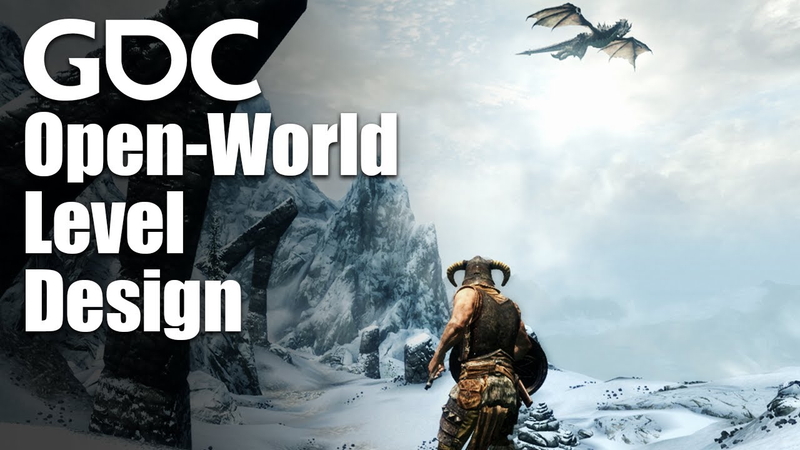
Comments