Transcript
Hello, OneTakeShryer here, and today we are going to talk about the relationship between video game developers and video game publishers. I think this is a really interesting topic, and there are a lot of misconceptions surrounding it, especially on the internet, where I think there are a lot of people out there who just see it as kind of like game developer good, game publisher bad, because the people who make the creative decisions are good and the people who make the financial decisions and want to see a return on their investment are bad. And I mean, maybe there's a little bit of truth to that, but look, reality, as always, is a lot more nuanced and complicated than that. I saw someone in a comment on one of my videos once call my channel nuance slop, which I really enjoyed. I think if OneTakeShryer doesn't really click, does it stops resonating with people, maybe we'll rename this channel nuance slop. So, how does that relationship actually work? Well, so there are two kind of basic buckets that we'll put this into, and we're going to spend a little bit more
time talking about one than the other. But, the two buckets are um let's call it first-party or publisher-owned developers, where a developer is within this larger organization, and they are owned by the publisher, and therefore the publisher has complete control over them, well, arguably. But, the publisher owns them and pays their salaries and is responsible for their office and responsible for all of the kind of high-level decisions surrounding them. Think of it as like EA owns BioWare. EA is a publisher, BioWare is a developer. That's kind of a an owned publisher relationship. And in those cases, things can actually be a little bit straightforward. Not totally straightforward, cuz there are always nuances involved, but essentially, BioWare is going to say to EA, "Hey, we want to make this video game. This is what's going to look like." They're going to do a whole lot of back and forth and negotiations over a budget, over a timeline, over features. Sometimes, here's a great example with BioWare specifically, during the the of Dragon Age Inquisition by where wanted more time. Um, I believe they were delaying
that game an entire year and in order to do so, they uh EA they had to promise EA that they would add more features to the game. I believe it was like more playable races and all sorts of other stuff that they they promised in order to account in order to as like a trade-off for that extra development time. Um, but BioWare generally speaking the people of BioWare don't have to worry about like not getting paid because they're part of a corporation. Everybody there is getting their paychecks. Used to be a day when joining one of these big corporations meant some semblance of stability. Um, but that's not true anymore in in 2026. Um, often times the developer will have to hit certain milestones, development milestones, which is an important concept. We'll get to that later. Sometimes they're called gates at some companies. Um, but the idea is essentially the developer has to show that they're making progress or else the publisher might come in and cancel it, might shut down the studio, might do layoffs, etc. etc. Um, that is a little it's a little bit more of a straightforward relationship. There are
some quirks and some differences between that and the second bucket, which is outside developers working with a publisher that they essentially have a business relationship with but are not kind of financially tied the way they would be if they were part of the same company. Um, one of the biggest nuances I think and let's go back to the EA and BioWare example cuz I think that's a really good kind of quintessential developer publisher relationship is um, if you are uh a developer within one of these big companies like EA, you might have to battle for certain resources. For example, you have to battle for um, marketing budgets or in EA's case you have to battle for support from the technology team, the team that is responsible for the engine called Frostbite. Um, and if you are a BioWare and you were seen as kind of like lower priority compared to say FIFA or Madden, you might have a harder time getting some of those engineers on the Frostbite team to come and help you out with your problems. And in fact, you might have the exact almost like opposite problem. You might have the
problem of EA saying, "Hey, actually, hey BioWare, since your game isn't as important, we're going to take some of your engineers and put them on FIFA or Madden." So, that sort of stuff can happen within the kind of the first party of the publisher owned studio operation. But, let's talk about the other one cuz I think that's where the kind of the there are the most misconceptions and just kind of complications and questions surrounding that relationship. So, let's say I'm a game developer, right? Let's say I've got a team of, I don't know, five people, 10 people. It's something like that. I got a studio. I'm making my dream game, my dream card-based JRPG sports simulator roller coaster tycoon game. And I want to get money for that game because I need to pay my employees. If I I mean, I guess we could all work on what's called sweat equity where essentially we all work on the promise of like if the company makes a big one day or if the game sells a lot of copies, we'll all make a bunch of money, but that is that is a little has some some ethical questions, some moral questions, and also some practical
questions because it's a lot harder to hold people accountable if you are not paying their salaries. Plus, they will probably have to get other jobs in order to actually get their needs met. So, you cannot really count on them giving you 40 hours a week or more. So, let's say I want to pay for things. The easiest way or the kind of the most straightforward way to get to get finance to get terms to get funding for your game is to go through a publisher. These days, there are a lot of other potential relationships and often a lot of times a game studio might have funding from a bunch of different buckets including like a VC funding that leads you into the first round and then you go to a publisher or something like that. Let's make this straightforward. You you want to go to a publisher. So, back in the the you could probably score some meetings with game publishers with just kind of like a PowerPoint presentation and a few ideas and and maybe a little bit of experience under your belt. These days, every single game publisher, every single prospective investor wants a prototype. So, usually
you have to build some sort of prototype, which essentially means you have some sort of running game that is there to demonstrate what your game could potentially be in the future. Maybe if it's if it's the game if it's the genre I was talking about, maybe your JRPG roller coasters in action. Um if it's I don't know if it's uh uh Balatro, maybe it's just kind of like a couple of jokers and just kind of like a basic run of it. You don't have final art, you don't have final visual effects, a lot of stuff or you don't have music or sound. A lot of it just kind of has to be left to the imagination or you have basic sound. A lot of it has to be left to the imagination, but the idea is you can look at this and you can imagine the game that it will become. This is not a vertical slice. I'll get to what that means in a second. But, you're taking this part of the paper around. Um these days, for people who don't know, there are kind of two big gaming conventions where a lot of this pitching happens. There are three, really, but to the two ones that I'm thinking of um are in the US, which are DICE, which happens in Las Vegas in February, and then GDC, which
happens in San Francisco in March. And these days, because the climate is so tough for finding investors, um you are expected as a game developer to go and have your first meetings at DICE, which are kind of like your appetizer meetings, and then your next meetings at GDC, which are your entree meetings. You're kind of like you're wetting their appetites ahead of the GDC meetings. So, you're expected to attend all these conventions and bring your prototype along the way. Sometimes it might take even longer than that. Often times it's a very it's a months-long process. Might lead into Gamescom, which is another kind of important pitching um place these days. Um sometimes you pitches happen just kind of outside of that cycle, but those conventions are helpful because all the publishers are in one place. So, okay. Let's say I find a publisher. Let's say I go and and find publisher uh Activision or Ubisoft or whoever. Let's make up a name. Let's say I I I find One Take Shryer Publishing and I say, "Hey, I'm going to I'm I've convinced you guys, I've convinced your business development people. We've We've gone through the proper channels. You guys have agreed to sign up on my my game."
I might have negotiated terms. Maybe I got $10 million out of you for a projected timeline of I don't know, 2 and 1/2 years, but everyone really knows that that's going to turn into 3 years because there's always some sort of buffer and games are always late. So, what do you the next 3 years look like? Well, what happens is this contract is usually, and I'm speaking very broadly here. There are obviously a million different possible scenarios for how this stuff can play out, but this this contract is usually kind of structured in a way where you don't get all that money at once. Instead, you get that money over the course of those years based on what is called development milestones. That is an important term. I mentioned it earlier. At some companies it's called gates, but milestones is the generally accepted term for it. And basically what that means is I am not going to get the money from the publisher until I have hit certain check marks, certain kind of feature checklist or content checklist. Essentially, whatever the contract says I have to deliver, I have to deliver or else I am not getting my next paycheck and then my studio is in
danger. So, what does that mean? Often times, vertical slice is a major milestone. A vertical slice is, unlike a prototype, a vertical slice is a chunk of the game that is designed to actually feel like the game will feel. So, it should be polished. It should have the graphical benchmarks and and fidelity bar that the final version is supposed to hit, should have as much of the kind of the features and content. It should be like a slice of the game that is designed to really demonstrate what the final product will look like. There's a lot of controversy over the idea of a vertical slice. Some people are very pro. Some people are very against for various reasons. Um there's a lot of debates over the the efficacy of these things, whether they're fake a lot of the time, whether you're spending a lot of time wasting work. And a lot of game developers have to wind up wasting work on vertical slices or demos that can't doesn't actually make it in the final product. Ideally, you want this vertical slice to be something that will actually be in the final game. Ideally, you don't
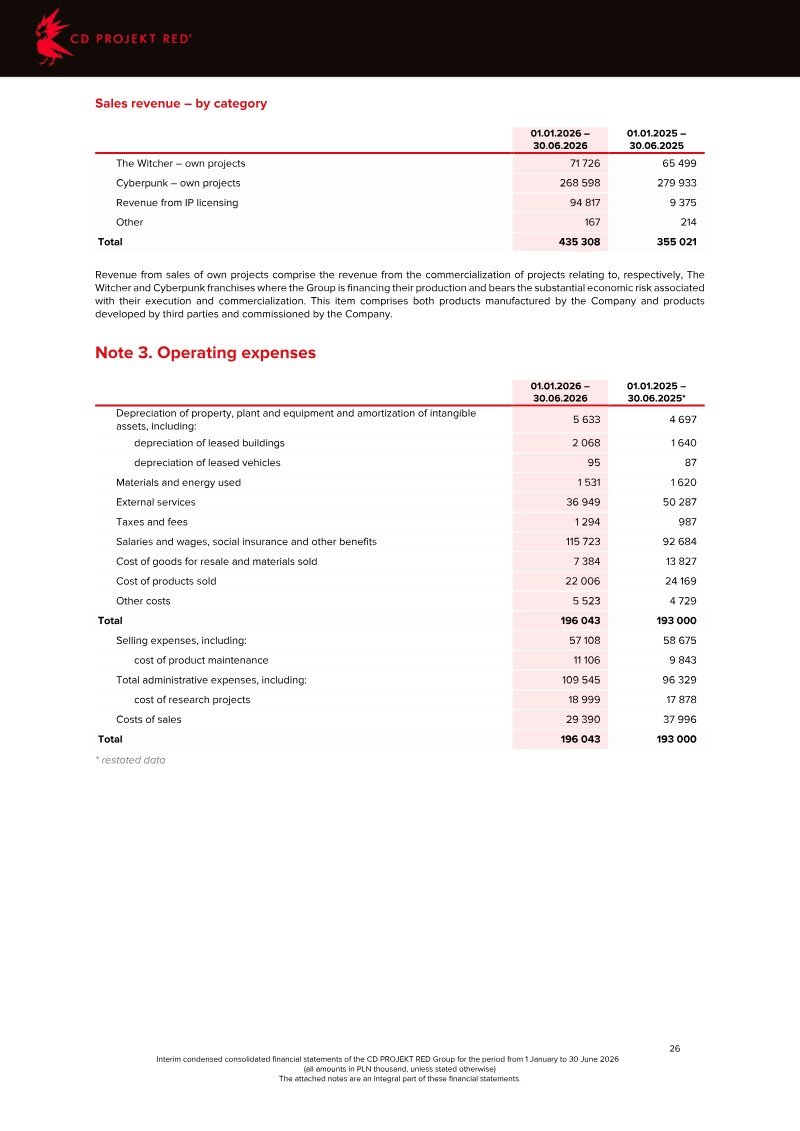
have to you don't want to have to make a multiple of them. Um that is often a major milestone. And then there there are all sorts of others that you could find along the way depending on the terms of the contract and what the publisher is looking for. Alpha, beta, other kind of smaller ones along the way. Maybe it's like, "Hey, now our multiplayer mode is working. That's our milestone for this for this quarter or whatever." Um so that that can look in a lot of different ways. So if I got that $10 million, it might be broken up into 10 tranches of like a million dollars each. And so I'm not going to see that money until I actually hit the milestone and submit the deliverable and the publisher says, "Okay, cool. That's that's good. That's in good shape. Here's your check." The CD Projekt Red publishers, of which One Take Try are publishing is of course not, but the CD Projekt Red ones might string developers along and say, "Oh, actually you're not meeting this milestone. Actually, why don't you put this this and this in And sometimes milestones get rejected, which can lead to either um
kind of delayed payments. Sometimes it can lead to a cancellation if a milestone is rejected. Um I don't think my understanding is that it's not super common for like a single rejection to lead to a cancellation because at that point the publisher is already kind of pot committed and they're invested and they're not going to be like, "Oh, one rejection, bam, you're out." Usually it's it's kind of you got more chances than that. But sometimes it might be clear to the publisher that the developer is just not living up to their end of the bargain. They are not making something that is is turning out well. Maybe they're going way too slowly. Maybe the features they promised are not actually they're not actually delivering on them. And from the publisher's point of view, it can be like, well, what we're just going to have to keep throwing money at this, so why don't we just cut bait and end it now? Often times in contracts, there is some sort of kill fee attached. So, like if you are terminated if your project is terminated, if it is canceled by a publisher, there might be all sorts of kind of severance payments for lack of a better word that you get out of it. Maybe you get a million dollars out of that 10 as
kind of a kill fee. Maybe you get full relinquishment of rights to your IP, which is what happened in the last video I made about the story of Clutch and Amazon Games. They got full rights back, which is a very, very big beneficial thing if you are a game studio cuz IP rights are very important. And often when you're working with a publisher, there's some sort of split or ownership. That is another thing that can be determined in the contract, like who owns the IP. Sometimes the publisher might say, "Okay, you guys can own the IP cuz developers often want to own their own franchise and own the creative rights to do whatever they want with their work, but the publisher might say, "Okay, but but we want hooks in on a sequel. We want first right of refusal on a sequel. So, if you decide to make your JRPG Roller Coaster number two, we get the opportunity to have first dibs at it and then we can say we want this or we don't want this and then we move on from there." So, that can be a very big thing. There could be other kind of hooks into the sequel or other just kind of hooks like if if you guys make a movie out of this, we want X% out
of a cut or something like that. It could be again, with these contracts, there's a reason that lawyers have have a lot get a lot of work in this industry and because there's a lot of nuances and a lot of complications that you can go back and forth on. So, okay. So, you go through this milestone process. Along the way, this is an important nuance that I think a lot of people miss. The publisher's not just writing a check and that's it. I mean, I'm sure some of the time like I'm sure what there there are a few like certain that are just kind of pure finance plays, so maybe once in a while that happens, but for the most part, again, speaking broadly, a publisher is going to be invested in the game's success, and therefore they are going to also have people who are kind of offering input, um offering support in some way, maybe connecting you to other kind of companies or agencies that you might need. So, here's an example. Often times uh these game publishers will have producers on their end um who are not just kind of uh working in production. Sometimes they are, sometimes they're just kind of responsible for schedules and milestones
and and just kind of keeping things efficient and on track. Other times they might be like a design producer or a design director or whatever. The terminology is all over the place in game development, but at a publisher you might have a design expert who comes in and is like, "You know what? I'm I'm the design producer supervising all of these various games, or supervising this specific project, and so therefore I'm going to come in and give you some design help, or design tips, or design advice, or feedback, or whatever it is." And sometimes that can be very useful for a game developer, because you have access to this person who might be very experienced, might have 20 years of design experience, and might be able to offer you some very useful input on your JRPG RollerCoaster Tycoon game. Um other times it might be annoying. It might be they're coming in and giving you feedback that you're just like, "What the hell? Like, I just have no interest in this," and you just have to tell them to piss off, or in in kinder ways. Um sometimes there's a lot of back and forth. I think most people are just generally reasonable and willing to have conversations and make compromises about this sort of thing, but for the most
part this is not just a simple like we're going to write you a check and call it a day kind of relationship. Um these publishers also will bring in various um marketing support a lot of the time. They might say, "Hey, we have relationships with Geoff Keighley at Summer Game Fest, so we're going to help you get in there, and get you a trailer, and we're going to connect you with this company that makes trailers, because you don't know how to do that. You're just like 10 artists and programmers and designers who don't know anything about like this other side of the business. We're going to connect you with the people who know how to um how to get into a Nintendo Direct or how to I don't know how to like talk to the movie business about selling your IP or whatever. It could be all sorts of things. We're going to We're going to connect you with a QA agency. We're going to provide localization support. We are going to connect you with the right people at Steam because you don't know anyone at Steam to make sure that you are getting the proper amount of support from them if you have issues or you're getting promotion on the Steam store or you are part of a Steam bundle or you are part of a Humble bundle or you know how to
get into an Xbox Game Pass deal etc. etc. So the publisher can offer a lot of this support over the years that that that will help a game developer more than people a lot of people might expect out there. So again, it's not just kind of like a developer good publisher bad sort of thing. It's a lot of nuance, a lot of tension. A lot of times developers have their own issues too. Even just like I don't know things that you wouldn't think of. If you're a game developer, you you spend all this time just thinking about your game. There are things in the process that you just like might have never even given any thought to. For example, achievements on Steam and Xbox or trophies on PlayStation. Like how much time are you spending really thinking about that? The publisher might come in and say actually we have to do this. Certification, that's a whole big process. Certification if you're not familiar is this process of submitting your game to one of the console manufacturers, Nintendo, Sony, or Xbox and having them actually approve your game to go on the store. And that can be
a very finicky process where like if you have button prompts in your game and the buttons are for the wrong system, they will fail you in certification. So that's that's another thing that you just have to think about. Okay, so then you get to the end of your project. you finish your game, it's all turning out great. The publisher ideally will help you sell it, although um sometimes along the way there could be kind of tension, could be back and forth. The publisher could decide, you know what, this game isn't actually going to be that great, so we're not going to put that much marketing budget into it. Um often times game developers complain about lack of marketing budget, which again is a nuanced topic because I think marketing, first of all, marketing in this day and age is kind of like different world from what it was a few years ago, but second of all, just cuz of the the climate and the sheer number of games and the way people get attention, very different world. But also, um I think it's very easy as a game developer to just blame marketing for your failures instead of kind of assessing inwards and being like, oh wait, maybe this wasn't the right game for the market or maybe this wasn't something that maybe wasn't as great as
it could have been, etc., etc. Um but let's say your game comes out um and it's it's out there. It's on the market. It's it's reaching people. It's selling people. It's selling X number of copies. So, what happens now is let's say that publisher, let's say Wanzie TryPublishing gave me $10 million for my JRPG Roller Coaster Tycoon. And so, that $10 million often times the publisher will want to recoup it before I see any royalties on the game. And if it doesn't recoup, I might never see royalties on the game. So, if I'm a game developer and I just spent that $10 million making this game and paying salaries, um I now have to think about what's next. And so, like I might even months before my game ships, I'm probably out there doing my kind of um traveling roadshow and trying to convince other publishers to sign my next project, thinking about what's going to happen next. Because ideally, you want something set up for all those people who just finished that game to move on to after that one is done. And you absolutely cannot count on getting royalties for a game, especially
with this kind of like upfront advanced style publisher agreement. Because again, if that publisher is seen uh pay me $10 million for this game, they expect that back and then they expect a return on top that. So, like a typical agreement might look something like um the publisher recoups the $10 million and then after that it's a I don't know, 70/30 revenue split um where the game developer gets 70% of all future revenue and the publisher takes 30. And those numbers can be all over the place depending on the deal, depending on the climate um in 2026 and in this current climate where publishers are where where money there's it's very hard to find money. It's it's um it's a much different it's much harder to get better terms than it was uh uh back in 2021 or 2022. So, that's a big factor as well. Um and so uh a lot of times even if you release a game and even if it's like somewhat successful, it might not break even, it might not make that money back, it might not um actually get to the point where it is making royalties for you. So, that is
something you have to account for as a developer when you're working with an outside publisher is hey, they want their money back, which makes sense. I mean, they just put $10 million into your game. So, yeah, I mean, there's a lot more nuances and complications along the way. I'm speaking very broadly here, but hopefully this helps some of you out there understand a little bit more about how that developer-publisher relationship works, um where it can go wrong along the way and those different kind of milestones. If one of those milestones fails or if a publisher just like looks at the progress and says, "Hey, enough is enough already." Um during that process by the way, a game developer might say, "Look, we're slipping, like we're running late, we're not hitting the same kind of progress that we expected it to. So, we need X amount of time. Are you willing to fund us for that?" Sometimes a publisher might say, "Well, you can have extra time, but we're not going to fund you for it." Sometimes a publisher might say, "Okay, let's let's revisit this deal, let's add another $5 million to the equation and this this and this to compensate for that." Um again, all sorts of permutations can happen along
the way. Sometimes if a game developer is kind of juggling multiple projects, it might have to take some of its own money and fund like certain parts of a game if it feels like that's behind and things get a little tricky, a little complicated, again, a little nuanced. So, yeah, that's that's the developer-publisher relationship in a nutshell and this will certainly come up over and over again as we talk about more specific stories and more about how the games industry works in general, but you should know that kind of that basic core of it. So, I hope you enjoyed this episode of Nuance Slap and I will see you next time.
Auto-generated captions from YouTube — names and numbers may be misheard.
Key insights
Distilling the key insights…
Ask AI about this video
Cite this video
Citation
Generating citation…

















Comments