Unreal
Game
Documents about Unreal
Epic Vs. Apple: What Does the Verdict Really Mean?
The 2021 verdict in the Epic v. Apple antitrust lawsuit represents a complex outcome that largely favored Apple’s platform control while introducing a significant shift in mobile payment transparency.
- The court ruled against Apple’s 'anti-steering' policies, granting developers the right to include external links and calls to action for payment systems outside of Apple’s In-App Purchasing.
- Epic Games failed to prove Apple is a monopolist under the Sherman Act, with the court rejecting nine out of ten counts brought against the platform holder.
- Epic Games was found liable for breach of contract and ordered to pay Apple 30% of the $12 million in revenue generated through its unauthorized direct payment system.


The State of Play: Summer 2024 Edition
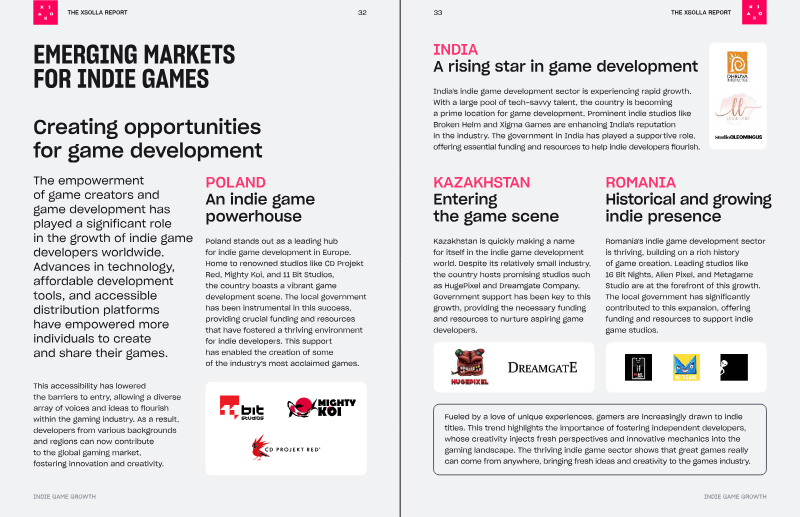
The summer 2024 Xsolla analysis argues that the game-development ecosystem has entered a phase of unprecedented democratization, driven by low-cost engines, open-source tools and third-party services that lower technical and financial barriers for creators.
- Indie studios are capturing a larger share of the market, generating 29% of total Steam revenue in 2023 compared to 25% in 2018.
- Game development is becoming increasingly democratized as Unity usage grows by 8% year-over-year, Unreal grows by 10%, and Godot experiences a 69% surge.
- The edutainment sector is poised for significant expansion, with a projected compound annual growth rate of 65–75% through 2034.


The Largest Report on the Condition of the Polish Gamedev Industry: 2022/23
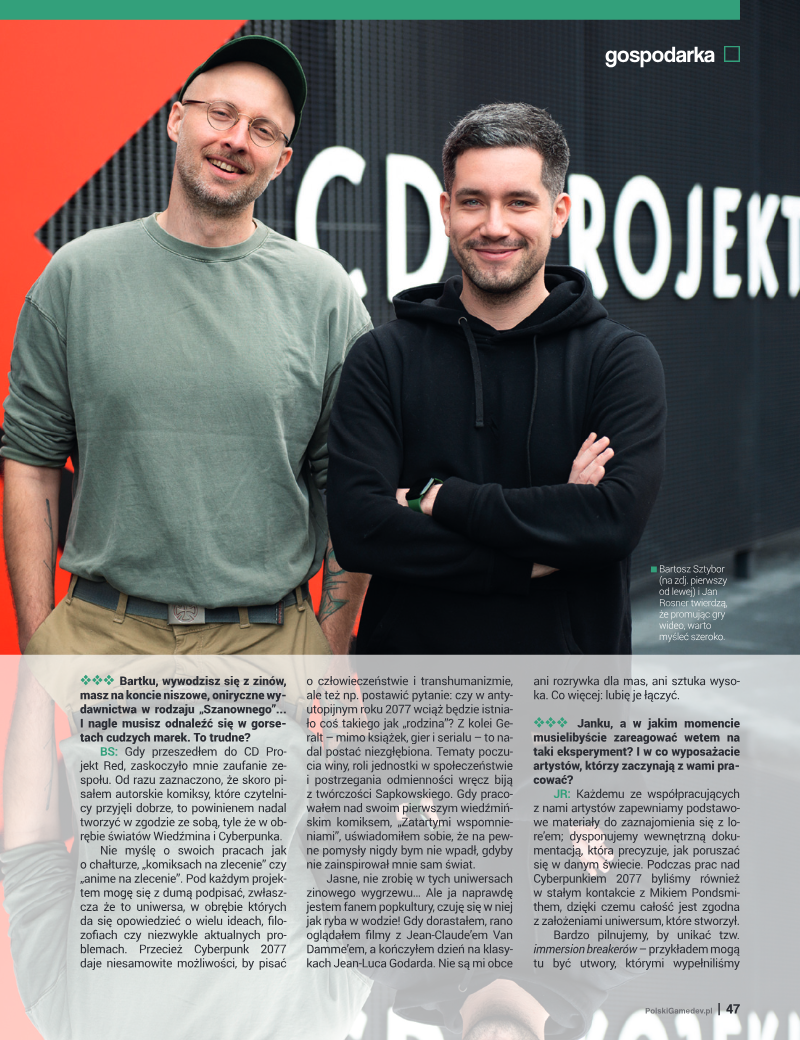
The Polish game development industry has established itself as a significant global player, characterized by a strong export orientation and a reliance on digital distribution platforms like Steam.
- The Polish game development sector has transitioned from a period of rapid growth between 2019 and 2020 to a current landscape characterized by a flattening trend in both employment and the formation of new studios.
- Industry sustainability is currently threatened by high market volatility, insufficient capitalization, and high staff attrition rates driven by unsustainable 'crunch' work cultures.
- Polish studios are increasingly adopting advanced production technologies, specifically Unreal Engine, photogrammetry, and AI, to improve narrative depth and operational efficiency.

Games: Once Upon Now in Hollywood
The entertainment industry is undergoing a fundamental shift as video games emerge as the primary source of intellectual property for Hollywood.
- Hollywood is shifting its primary source of intellectual property from comic books to video game franchises, following the commercial success of titles like The Super Mario Bros. Movie and The Last of Us.
- Game developers are increasingly retaining significant creative control, including script and director approval rights, to ensure adaptations remain faithful to their established canon.
- Upfront royalty payments for game-to-film adaptations currently range from $1 million to $20 million per project.

Gaming x AI: How Atlas makes models for 3D worlds 200X faster! (ft. CEO Ben James)
The integration of generative AI into 3D asset production marks a significant shift in game development, enabling the creation of complex, game-ready environments up to 200 times faster than traditional manual modeling.
- Generative AI tools can accelerate 3D asset production by up to 200 times compared to traditional manual modeling methods.
- The technology converts 2D inputs, such as sketches and photographs, into structured 3D geometry that integrates directly into Unity and Unreal Engine pipelines.
- AI-driven workflows are designed to be non-destructive, providing artists with editable, clean assets that allow for rapid iteration rather than replacing human designers.

Disney to Invest $1.5B in Epic Games
The Walt Disney Company has announced a strategic $1.5 billion investment in Epic Games to acquire an equity stake in the developer.
- The Walt Disney Company is investing $1.5 billion in Epic Games to acquire an equity stake in the developer.
- The partnership involves a multiyear project to build a persistent, open, and interoperable gaming and entertainment universe integrated with Fortnite.
- The new ecosystem will utilize Epic’s Unreal Engine to allow users to play, watch, shop, and engage with content from Disney, Pixar, Marvel, Star Wars, and Avatar.

The State of UGC Gaming in 2024
The user-generated content gaming market has achieved unprecedented scale, with platforms like Roblox commanding 350 million monthly active users and 70 million daily active users, effectively eclipsing the reach of traditional console ecosystems.
- Roblox has achieved a scale that eclipses traditional console ecosystems, currently commanding 350 million monthly active users and 70 million daily active users.
- The UGC sector is shifting toward higher-fidelity content as a new generation of developers, who matured within these digital environments, enters the professional workforce.
- Platform monetization strategies are pivoting away from low-engagement branded experiences toward high-efficiency advertising formats, specifically rewarded video and playable ads.

How This Game Dev Sold 50,000+ Copies of His Game — Full Time Game Dev Podcast Ep. 006
Achieving commercial success as a solo game developer requires a disciplined synthesis of creative passion, technical versatility, and market-driven pragmatism.
- The developer of Cultic achieved commercial success by selling over 50,000 units through a strategic blend of creative differentiation and market-driven pragmatism.
- Visual identity serves as a strategic tool; the developer utilized a 3D-to-sprite aesthetic to mask technical limitations while ensuring the game stood out in a saturated market.
- Transitioning to full-time development required a disciplined 'second shift' approach, balancing a full-time job with dedicated late-night development for over a year before securing a publishing partnership.

Perforce 2024 State of Game Technology Report
The report demonstrates that real-time 3D engines and advanced asset pipelines are now integral to more than half of organizations beyond traditional game development, spanning media, automotive, education and healthcare.
- Real-time 3D engines have expanded beyond gaming, with over 50% of organizations in media, automotive, education, and healthcare now integrating these technologies into their workflows.
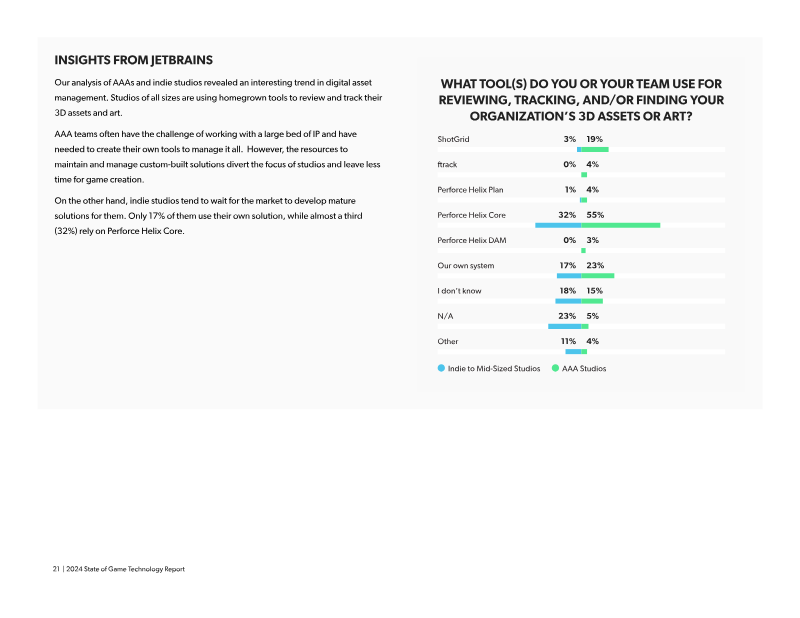
- Unreal Engine leads the market with 63% usage, followed by Unity at 47%, while Perforce Helix Core remains the primary version-control solution for 51% of firms.
- Generative AI adoption is widespread, with over 65% of respondents utilizing AI tools, led by ChatGPT at 47%, with indie studios showing higher adoption rates than AAA counterparts.

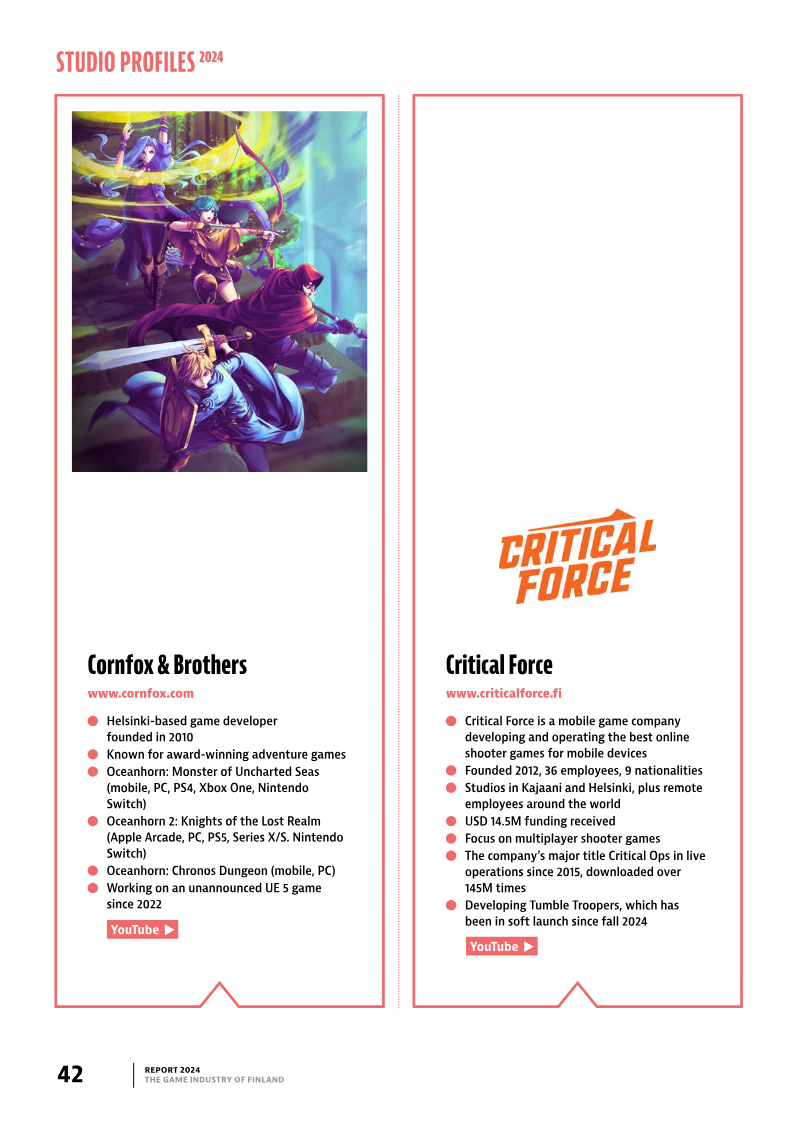

The Game Industry of Finland Report 2024
The 2024 overview of Finland’s game sector presents a comprehensive assessment of an industry that remains a global technology leader while confronting a tightening financing environment.
- Finland’s game industry currently employs approximately 4,300 individuals, representing about 3,800 full-time positions.
- A significant decline in private risk capital and publisher funding has forced studios to pivot toward B2B subcontracting, co-development agreements, and increased reliance on EU and national public R&D programs.
- The ecosystem remains anchored by major players like Supercell, which employs over 800 staff and has produced seven global hit titles, alongside diverse ventures like the mental-health game developer Soihtu DTx, which recently secured a $4.2 million seed round.

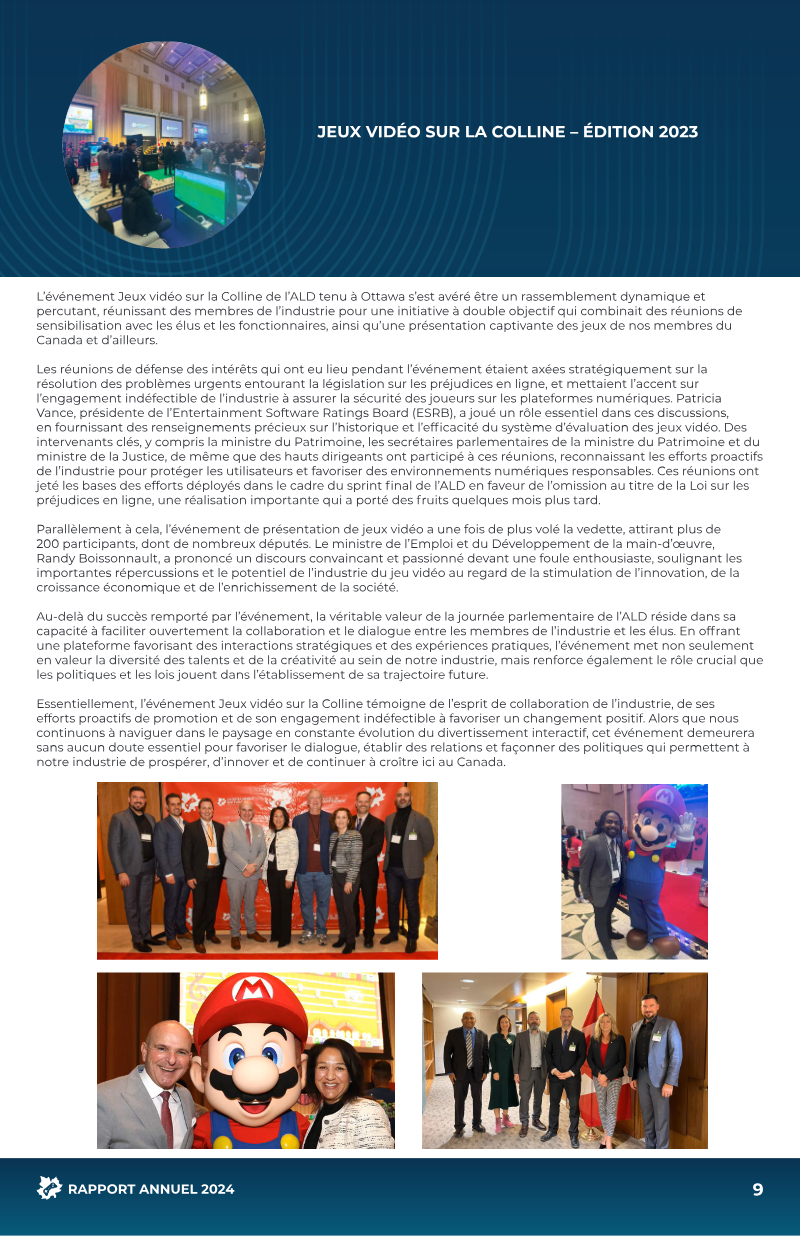

Association Canadienne du Logiciel de Divertissement Rapport Annuel 2024
The 2024 annual review presents a comprehensive assessment of Canada’s video-game sector, emphasizing its expanding regulatory influence, economic contribution and strategic diversification.
- The Canadian video game sector contributed $5.5 billion to the national GDP in 2024, supported by a resilient, virtual-first operational model.
- The industry successfully secured exemptions from the Streaming Act levy and the Online Harms Act, signaling significant growth in its regulatory and political influence.
- Major global publishers including Epic Games, Roblox, and Tencent joined the association, driving revenue beyond forecasts and expanding the sector's reach.

Why Solo Developers Should Use Unreal
This analysis examines the viability of Unreal Engine for solo developers, specifically addressing common misconceptions regarding technical requirements and development workflows.
- Solo developers can build complex, commercially successful games like 'Choo Choo Charles' entirely using Unreal Engine's visual scripting system, Blueprints, without writing a single line of C++ code.
- Common industry claims that specific advanced features—such as spline-based track systems—are impossible to implement in Blueprints are frequently incorrect and often stem from gatekeeping rather than technical limitations.
- Development efficiency and project completion are more important than adhering to 'proper' industry workflows, as evidenced by the creator's unconventional, manual approach to UV mapping and texturing.