Game Engines reports and market data
333 game industry reports, presentations and talks about game engines from writers such as Game Developers Conference, Thomas Brush and PocketGamer.biz, newest from 2026. Every document has a summary and key insights with the page they come from, and 15 charts and tables are extracted as data.
Documents

🚨📢 BREAKING NEWS: AppLovin sues Unity, Monster Hunter mobile, Minecraft new content in 14 years
The gaming industry is currently navigating a period of significant legal, financial, and creative shifts.
- AppLovin has initiated a lawsuit against Unity, alleging that Unity’s advertising SDK improperly harvests sensitive data regarding user devices, revenue engagement, and creative assets.
- A startup focused on training AI models on gameplay clips from Medal has raised $220 million, reaching a $6.2 billion valuation with a strategic focus on world models rather than game engines.
- Tencent’s TiMi Studio Group will launch the mobile title Monster Hunter Outlanders on October 29, with a mainland Chinese release slated for next year.

Why None of Us Saw Cyberpunk Coming Apart I Michal Nowakowski. joint CEO, CD PROJEKT RED
CD Projekt Red’s evolution from a regional distributor to a global AAA powerhouse is rooted in a strategy of intellectual property ownership and creative independence.
- CD Projekt Red restructured its development operations by abandoning proprietary technology in favor of Unreal Engine 5 to mitigate technical risks and streamline production.
- The studio transitioned from a siloed, waterfall production model to a unified, multi-platform approach that utilizes rigorous gating milestones to prevent future launch failures.
- Despite a 75% decline in stock value following the technical failures of Cyberpunk 2077, the studio achieved long-term commercial recovery with 35 million base game units sold and 10 million expansion units sold.

Gamescom 2026 insights and Sony Music's shock Puzzle & Dragons investment | Week in Mobile Games
The global gaming industry is currently navigating a period of strategic realignment, characterized by shifting developer allegiances, significant capital movements, and a renewed focus on core gameplay experiences.
- Sony Music has acquired a 23.29% stake in GungHo Online Entertainment, the developer behind the mobile hit Puzzle & Dragons.
- Godot is gaining significant market share as an open-source alternative to established engines, becoming the most-used engine in the GMTK Game Jam with 47% usage compared to 39% the previous year.
- W4 Games, a company supporting the Godot engine ecosystem, has secured $18 million in new investment.
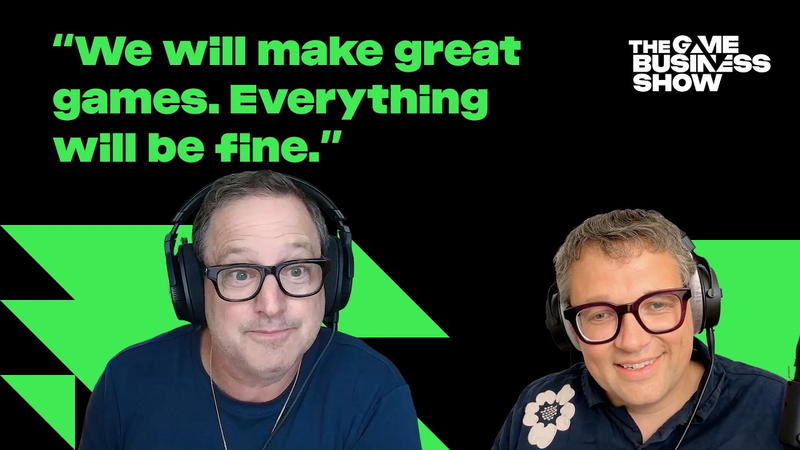
Unity CEO: “The cost of building a game is coming down markedly”
The gaming industry is currently undergoing a significant structural transition characterized by a shift away from massive, resource-heavy projects toward more efficient development models.
- The gaming industry is shifting away from massive, resource-heavy projects toward smaller, agile teams and shorter production cycles to mitigate the risks of prolonged development timelines.
- Development costs are decreasing markedly, which is lowering barriers to entry and creating new opportunities for independent creators and innovative intellectual property.
- AI and coding agents are being integrated into production workflows to accelerate content creation, though these tools act as facilitators rather than replacements for human creative vision.
Unity vs AppLovin: Which One Is Actually Winning?
The mobile gaming industry is currently navigating a period of significant volatility and strategic realignment, characterized by intense competition between major ad networks and shifting market valuations.
- AppLovin experienced a $27 billion loss in market value and a 29% share price decline despite reporting a 53% year-over-year revenue increase to $1.9 billion.
- Unity is attempting a strategic pivot by integrating engine data into its advertising infrastructure through its Vector AI initiative and new day-28 (D28) optimization models.
- Unity remains at a competitive disadvantage because it must pay fees to bid into AppLovin’s MAX platform while simultaneously competing against AppLovin’s superior data scale.

TWIG #393: GTA 6's Impossible Attach Rate, Playtika's Earn-Out Disaster, and Unity 7's Big Swing
The gaming industry is currently grappling with a disconnect between aggressive financial projections and historical market realities, particularly regarding the highly anticipated launch of Grand Theft Auto 6.
- Analysts project that GTA 6 would require an unprecedented 60% attach rate to meet expectations of 85 million units sold within two months, a figure that significantly exceeds historical AAA benchmarks.
- The gaming market is highly consolidated, with 94% of total console and PC revenue currently generated by a small group of established franchises.
- Playtika has suspended dividends due to severe balance sheet strain caused by poorly negotiated earn-out obligations following its acquisition of Superplay.

The Most Important Number in Unity’s D2C Launch Is Zero
Unity’s introduction of a free direct-to-consumer payment integration within its IAP SDK marks a strategic shift toward enabling developers to bypass traditional platform billing systems.
- Unity’s IAP SDK, updated as of June 30, now enables developers to sell digital goods directly to players via web shops, bypassing exclusive reliance on Apple and Google app store payment flows.
- Unity is positioning itself as a mediator for direct-to-consumer (D2C) payments by integrating third-party providers like Stripe and Coda, with plans to add Stash and others to its roadmap.
- The primary strategic value of Unity’s D2C initiative is not just margin improvement, but the ability for developers to own first-party player data to optimize user acquisition and monetization.

Why Most Game Engines Die, and How AI Builds "Living Worlds"
The game industry is currently undergoing a fundamental transition from utilizing artificial intelligence as a productivity tool for asset generation toward integrating it as a core engine component for real-time, immersive gameplay.
- The game industry is shifting from using AI as a productivity tool for asset generation to integrating it as a core engine component for real-time, dynamic gameplay.
- Developers are prioritizing on-device AI processing over cloud-based models to mitigate latency, privacy risks, costs, and model drift while ensuring deterministic gameplay.
- The goal is to create 'living worlds' with non-player characters that possess memory and engage in unscripted interactions, moving away from static, pre-scripted narrative loops.
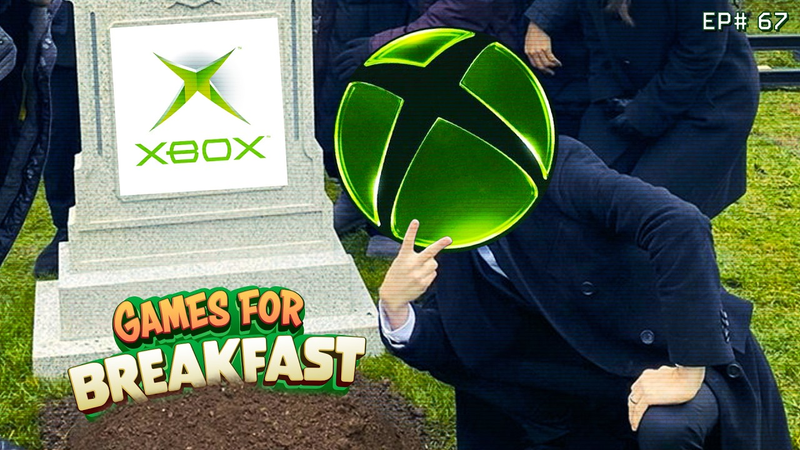
Only XBOX Can Kill Xbox, Unreal 6's AI Update & Pokémon Training Drones | Games For Breakfast
The gaming industry currently faces a period of profound instability characterized by corporate mismanagement, ethical controversies, and a shift toward aggressive, often alienating, monetization strategies.
- Microsoft has closed multiple game studios despite a five-year investment of over $20 billion in content and hardware, during which annual revenue declined by nearly half a billion dollars.
- Microsoft is facing internal pressure to improve efficiency, with the company reporting a 3% accountability margin and a need to pivot its strategy to address declining financial performance.
- The gaming industry is increasingly grappling with the integration of AI tools in development, raising concerns regarding the protection of intellectual property and the legal status of AI-generated assets.

Building AI Tools for Roblox Creators
Lemonade functions as a specialized AI-powered coding agent designed to democratize game development within the Roblox ecosystem.
- The platform utilizes a complex layer of agents and routers to deconstruct user intent, addressing the challenge that young creators often struggle to articulate technical requirements through traditional prompting.
- Lemonade prioritizes a robust evaluation (evals) framework over post-training, allowing the company to rapidly swap underlying AI models as technology improves without sacrificing the quality of the user experience.
- Beyond basic coding, Lemonade is expanding into UI generation, noting that approximately 50% of Roblox game development is dedicated to 2D interface elements like inventories and leaderboards.

TWIG #377: Epic for Sale, Unity Cuts Deep, and Merge Keeps Printing
The video game industry currently faces a period of intense structural realignment, characterized by a shift away from speculative hardware and niche genres toward proven, high-margin monetization models.
- The gaming industry is shifting from speculative hardware and niche genres toward high-margin, data-driven monetization models as companies prioritize risk mitigation.
- Mobile gaming success is increasingly dominated by the 'merge-two' genre, with titles like Gossip Harbor leveraging slot-style economics and card-collection mechanics to monetize player impatience.
- Unity is undergoing a strategic retrenchment, divesting from underperforming ad networks to focus on its core engine business, though analysts remain skeptical of its ability to compete with market leaders.
Mobile Dev Memo Podcast, Season 7, Episode 8: Games and AI (with Joost van Dreunen)
The gaming industry currently faces a critical miscalculation regarding the role of generative AI, as public markets erroneously view the technology as a disruptive force destined to replace human labor.
- The video game industry experienced significant workforce reductions, with 15,000 layoffs in 2024 and approximately 9,500 in 2025, a trend accelerated by both economic decline and the promise of AI-driven efficiency.
- AI currently excels at productivity and cost-cutting but fails to generate new consumer demand, a critical gap that industry leaders must address to avoid a surplus of mediocre, derivative content.
- The massive infrastructure investment by AI companies, such as the competition for high-end Nvidia chipsets, is driving up hardware costs and creating a supply-side barrier for consumers and smaller developers.