Unreal
Game
397 documents in the library are about Unreal, from writers such as PocketGamer.biz, Game Developers Conference and Thomas Brush. Each has a summary and key insights with the page they come from.
Connections
The documents about Unreal on the inner ring, the other games and companies they name on the outer one. Select a cover to see it up close and open it in a new tab; drag to move, pinch or Ctrl + scroll to zoom.
Key figures from the reports
Sandfall Interactive developed the 30+ hour RPG 'Clair Obscur: Expedition 33' using a core programming team of only four people by offloading 95% of gameplay logic to Unreal Engine Blueprints.
Game Developers Conference, 2026 · Clair Obscur Expedition 33: Small Team, Massive Game | Technical Secrets Behind Making Hit RPG, p. 1
Epic Games has paid content creators over $1 billion through Unreal Editor for Fortnite since its March 2023 launch. By May 2026, creator-built islands accounted for 47% of Fortnite's total playtime, an increase from 35% a year prior.
GameDev Reports, 2026 · Games and Numbers (June 17 - June 30, 2026)
Godot is gaining market share among developers, increasing its usage in Next Fest demos from 9.2% to 12.6%, while Unity and Unreal Engine both saw slight declines.
GameDiscoverCo, 2026 · Who Won June 2026's Steam Next Fest?
Unreal Engine is the primary development tool for top-wishlisted games, powering 52% of titles compared to 14% for Unity.
GameDiscoverCo, 2026 · What Were the Top Games & Showcases During Summer Game Fest?
Unity remains the dominant engine for Steam Next Fest entrants at 52.2% market share, followed by Unreal at 17.9% and Godot at 9%.
GameDiscoverCo, 2026 · Who 'won' February 2026's Steam Next Fest?
Documents about Unreal
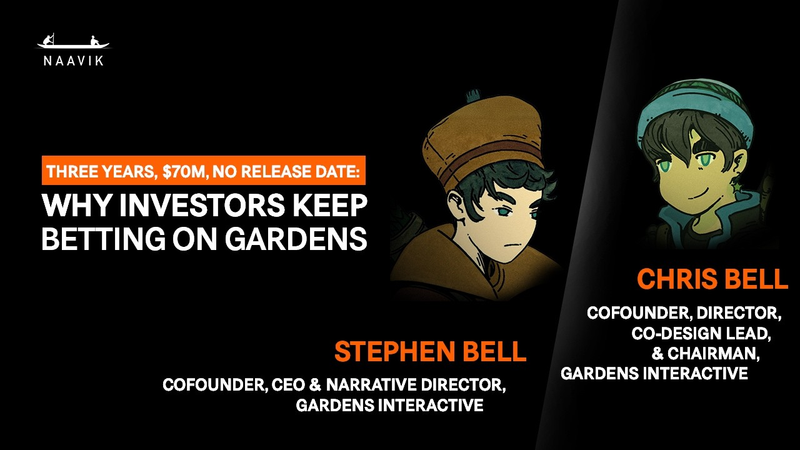
Why Investors Keep Betting on Gardens
Gardens Interactive is positioning itself at the forefront of a new wave of social-first gaming, securing $70 million in total funding, including a recent $35 million Series B round that values the studio at $190 million.
- Gardens Interactive has secured $70 million in total funding, including a $35 million Series B round that brings the studio's valuation to $190 million.
- The studio is developing a 'strandbox' game model that prioritizes emergent social interaction and player-driven world-shaping over traditional algorithmic or AI-generated content.
- Development utilizes the Unreal engine combined with a proprietary foundation that integrates procedural generation with hand-authored design to ensure visual longevity.
Epic Games Goes All In On AI For Disney Shooter
Epic Games has initiated a significant strategic pivot, transitioning its upcoming collaborative project with Disney—an extraction shooter featuring Marvel and Star Wars intellectual property—into an AI-first production.
- Epic Games has delayed its upcoming Disney-licensed extraction shooter and mandated an 'AI-first' production strategy, requiring staff to replace handwritten code and traditional art workflows with generative AI tools.
- CEO Tim Sweeney is aggressively positioning Epic Games as a leader in the AI transition, viewing the technology as essential for the company's survival and future competitiveness in game development.
- The project, which features Marvel and Star Wars intellectual property, has faced multiple delays and internal development challenges, including shifting priorities and inconsistent decision-making.

CD Projekt’s Best Days May Be Ahead
CD Projekt is currently transitioning toward a more sustainable, multi-project development model, positioning the company for potential long-term growth.
- CD Projekt reported strong financial stability in H1 2026 with PLN 435M ($120M) in revenue and a net profit of PLN 249M ($68M), achieving a 57% net margin without a new major release.
- The company is transitioning its development pipeline from the proprietary REDengine to Unreal Engine 5 to improve cross-team collaboration, tool sharing, and long-term production efficiency.
- CD Projekt is scaling its North American presence with a growing, multi-site team across Boston and Vancouver to support the pre-production of Cyberpunk 2 alongside the full production of The Witcher 4.

Why None of Us Saw Cyberpunk Coming Apart I Michal Nowakowski. joint CEO, CD PROJEKT RED
CD Projekt Red’s evolution from a regional distributor to a global AAA powerhouse is rooted in a strategy of intellectual property ownership and creative independence.
- CD Projekt Red restructured its development operations by abandoning proprietary technology in favor of Unreal Engine 5 to mitigate technical risks and streamline production.
- The studio transitioned from a siloed, waterfall production model to a unified, multi-platform approach that utilizes rigorous gating milestones to prevent future launch failures.
- Despite a 75% decline in stock value following the technical failures of Cyberpunk 2077, the studio achieved long-term commercial recovery with 35 million base game units sold and 10 million expansion units sold.

Why Video Game Developers Love Remakes
The prevalence of video game remakes is driven by a combination of strategic risk mitigation, operational efficiency, and creative opportunity.
- Remakes serve as a risk mitigation strategy by providing a clear, pre-defined vision, which reduces the uncertainty and decision-making overhead associated with developing entirely new intellectual property.
- Studios utilize remakes to train staff on new tools and development pipelines, such as transitioning from Unreal Engine 4 to 5, without the added complexity of inventing a new game concept simultaneously.
- Remakes provide a productive outlet for large development teams during the 'pre-production' phase of a new project, preventing the need to assign staff to low-value busy work while core directors prototype the next title.
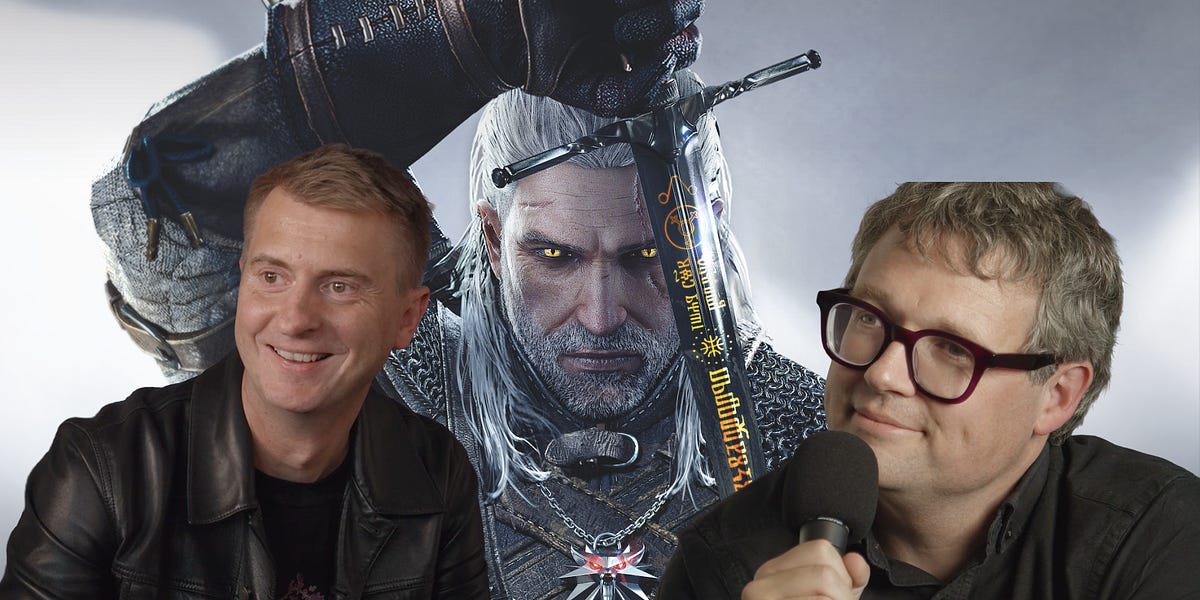
CD Projekt Red: If You Want a Cost-driven Development, You Cannot Make The Witcher 4
CD Projekt Red is undergoing a significant strategic shift, moving from a single-project development model to a multi-project pipeline.
- CD Projekt Red is shifting from a single-project model to developing three major titles simultaneously—The Witcher 4 (due 2028), a Cyberpunk sequel, and a new IP called Project Hadar—to increase output without compromising quality.
- CEO Michał Nowakowski explicitly rejects cost-driven development, stating that the high-quality standards required for titles like The Witcher 4 are incompatible with a strategy focused primarily on minimizing production costs.
- The studio is targeting significant sales growth, noting that while The Witcher 3 has reached 65 million units and Cyberpunk 2077 has hit 40 million, there is still substantial room to reach the higher sales volumes seen by competitors like GTA V.

CD Projekt Red: If you want a cost-driven development, you cannot make The Witcher 4
CD Projekt Red is undergoing a fundamental structural evolution to support the simultaneous development of multiple high-end titles, including the next installment in The Witcher franchise, a sequel to Cyberpunk, and the original intellectual property Project Hadar.
- CD Projekt Red has rejected cost-driven development models, asserting that premium, narrative-heavy games like the next Witcher title require prioritizing creative quality over rapid release cycles.
- The studio is transitioning to a multi-project development strategy, simultaneously working on the next Witcher installment, a Cyberpunk sequel, and a new IP titled Project Hadar.
- To improve operational efficiency and support simultaneous development, the studio has abandoned its proprietary engine in favor of Unreal Engine 5.

TWIG #398: Gaming's 2026 Reality Check, The GTA 6 Leak Nightmare and Why Jobs Are Still Vanishing
The global gaming industry is entering a period of stabilization and consolidation, with total revenue projected to reach $214 billion by 2026.
- The global gaming industry is projected to reach $214 billion in revenue by 2026, maintaining a steady six percent growth rate despite market cooling and workforce reductions.
- Console spending is forecast to surge by 17.5 percent, a growth trajectory heavily influenced by the anticipated release of Grand Theft Auto 6.
- Venture capital investment is shifting away from traditional game development, prioritizing AI infrastructure and project-specific financing instead.
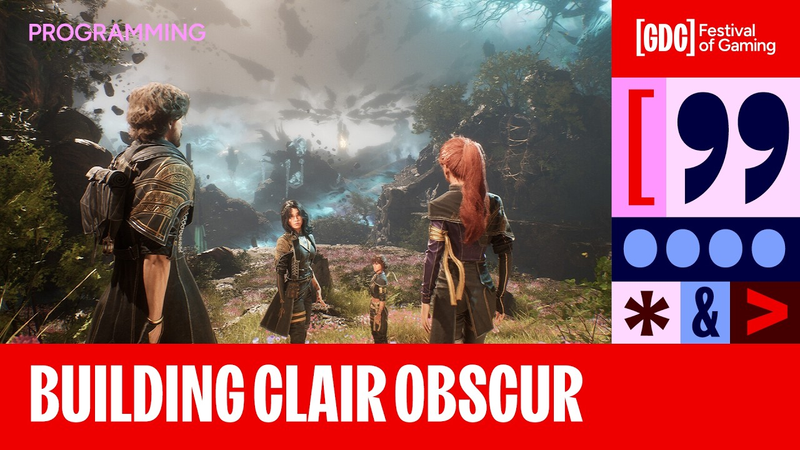
Clair Obscur Expedition 33: Small Team, Massive Game | Technical Secrets Behind Making Hit RPG
Sandfall Interactive achieves the ambitious scope of the role-playing game Clair Obscur: Expedition 33 by utilizing a lean, four-person programming team that prioritizes a vanilla-first development philosophy.
- Sandfall Interactive developed the 30+ hour RPG 'Clair Obscur: Expedition 33' using a core programming team of only four people by offloading 95% of gameplay logic to Unreal Engine Blueprints.
- The studio utilized a build farm to optimize development efficiency, reducing the total game packaging time from 2.5 hours to 50 minutes.
- To empower designers, the programming team created a comprehensive Blueprint API that allows non-programmers to access complex systems like quest status, inventory, and battle logic without writing C++ code.

South Africa’s Pineapple on Pizza Studios Reveals Atonement of Adam
South African developer Pineapple on Pizza Studios has announced its latest project, Atonement of Adam, a third-person action shooter that reimagines Mary Shelley’s Frankenstein in an alternate-history setting.
- South African developer Pineapple on Pizza Studios has announced 'Atonement of Adam,' a third-person action shooter reimagining Mary Shelley’s Frankenstein in an alternate-history setting.
- The game is being built in Unreal Engine 5 for PC, with integrated controller support to facilitate potential future console releases.
- The project has been accepted into the Xbox Game Camp 2026, signaling institutional support for the title's development.

Review of PC Gamer March 1997
The mid-1990s PC gaming landscape was defined by a pivotal transition toward strategy, simulation, and immersive 3D experiences, signaling a departure from traditional point-and-click adventure games.
- In the March 1997 PC Gamer Awards, Civilization II was named Game of the Year, beating out high-profile titles like Quake and Tomb Raider.
- Looking Glass Studios, despite their focus on immersive sims like System Shock, produced a golf simulator during this period to generate revenue and offset the high costs of their innovative projects.
- PC gaming in 1997 was characterized by a heavy reliance on expensive, specialized peripherals like flight sticks and steering wheels, distinguishing the platform from the console market.

Let's Review Your Games — Ep. 060
The provided content features a game development critique session focused on evaluating indie titles to provide constructive feedback before their official releases.
- To prevent players from bypassing level content in first-person shooters, developers should implement trigger-based 'lockdown' systems that force players to defeat all enemies in a zone before progressing.
- Game feel is prioritized by ensuring combat is highly reactive, with instantaneous feedback and clear telegraphing of actions, even if graphics and audio quality are suboptimal.
- Destructible environmental objects should provide clear visual and audio cues, such as flashing white or breaking animations, to communicate to the player that an object is interactive.