VideoThe Game Business
CD Projekt Red: If you want a cost-driven development, you cannot make The Witcher 4
1 Sept 202639 min video

We still believe there's ways to grow in terms of sales. Even if you look at the for example GTA 5, you know what they sold. These are very different numbers to what we have achieved with which free or cyber from like pure nerds being at the helm perspective. We would love to do more because there's a lot of cool things we could do. It's just there's a limit to what we can do. Exactly to your point because if we go larger which is [music] everything is going to fall apart but I definitely wouldn't say this is a cost-driven development. If you want to have a cost-driven development, and that's a proper thing, by the way, that's a proper business thinking for for a lot of games, [music] you cannot make a game like The Witcher 4. By the way, I don't I doubt if the development of GTA 6 was a cost-driven development. I'm in fact 100% sure it wasn't. [music] Hello and welcome to the Game Business Show. This week's episode is sponsored by Keyword Studios, the video game industry end-to-end partner. It's the service giant with over 13,000 staff from 26 countries. They help game makers build their games, launch their games, and grow their games at a global scale.
When it comes to game development itself, that means flexible production support that scales with ambition. So, they offer code development and engineering, live operations, technical delivery, and a whole lot more. Keyword Studios helps game makers move faster, solve complexity, and keep production connected without losing sight of the games that players are waiting for. To find out more, head to the Keywords website or alternatively click on the links in today's newsletter attached with this show. Speaking of which, let's get back to it. This week's show is with CD Project's joint CEO Mikuel Naracowski. Now, it was a big Gamescom for CD Project. Not only did it announce before the show that The Witcher 4 will be coming out in 2028, it also showed the first trailer for the upcoming DLC to its 11-year-old game, The Witcher 3, called Songs of the Past. and it announced The Witcher 3 remastered, a game that's coming out next month on September 29th and is free for all former The Witcher 3 owners. Is also coming to Switch 2 and Battle.net for the first time. Now, CD Project has a lot going on. It just switched engines
to Unreal Engine so it can develop more games. It's working on a new IP called Project Hader. It's working on a sequel to Cyberpunk. It's working on The Witcher 4. It's working on a multiplayer game set in the Witcher universe. It's also got a load of other small projects on the go with partner studios. It's certainly a lot more than they used to do. and I decided it would be worthwhile talking to CD Project about how the company's changed, why it's going down this route, and also how it feels about the current direction of the video game business. So, here it is, my interview with Mickey Nakowski. Hello, Miho. Welcome to the game business show. CD Project seem to be all over Gamescom this year. The remaster of The Witcher 3 is is generating so much noise. But maybe I'm being naive. making it available for free to people who already own the game. Surely they'd be happy to buy it. And what what was the thinking there?
Well, first of all, hello and thank you for having me here. But um I don't think it was ever a thought we even had. It was never a question we asked ourselves.
The way we thought about it is like it's an improvement. It's a sort of a scene
on which we wanted to introduce songs of the past as well. when we felt, okay, if we're coming back to the game after such a long time,
literally I remember we were like going deeper and deeper into the development of songs of the past with full steer and we started chatting like why don't we make the game more modern like everything feels like it was developed like 10 years ago and that was really the beginning of the conversation and we said well because it was developed actually more than 10 years ago because the development wasn't just a minute you know before 2015
yeah when it came out
and we started chatter like what could we do to improve it and It started like with small things like okay maybe let's fix this maybe let's fix that and then it turned into this larger project and we suddenly realized we actually have a remaster on our heads but but coming back to your original commercial question we we never thought about this way like the commercial bit of it is uh you know the expansion obviously
but the game we really felt this is the CDPR way to to gift it to the players who already own it of course if you haven't then you you will have to purchase you know the game from scratch
but then we tried to sweeten the deal for you
uh by adding you know, two expansions into the whole package. So,
yeah,
it was just never a question we asked ourselves to be honest.
Did you think you'll be releasing an expansion to The Witcher 3 12 years after it came out?
Depends on when when we took that decision. Yes. Obviously, no. But, but seriously, uh for a long time, no. We felt that The Witcher 3 is a closed book and uh we're never ever coming back to it. But a couple of, you know, happy accidents happened like, you know, we started collaboration with Fool's Theory. they they were supposed to work on the Witcher one. We realized they that needs a little bit more time because of certain technology dependencies with Witcher 4 and then you know we actually had the idea for the third expansion long time ago but it was you know in the drawer you know put there forever. We never thought we're going to be taking it out but all things combined one led to another conversation with Fool's Theory. I'm I'm shrinking all that. That was quite a lot of conversations led to like why don't we try and make a expansion for a game? Does it even make sense such a long time? Has anybody done that, you know,
for a single player game? I'm not talking, you know, like the World of Warcraft, which is which is a different story. It's a live operated game. And that led us to the answer. Uh which was yes. Let's give it a shot. It sounds maybe crazy, but let's let's try and give herald one more ride. And uh that's that's where we are right now.
Is it still doing like 5 million copies every year, The Witcher 3? Even now,
I wouldn't say it's doing every year, but for sure, I think that's the way you can look at it. When you compare the number from like the last year, it did very well in the last period of time. It it really is fluctuating depending on a lot of stuff like uh what's animating it outside of the game, the sales periods and so on. But yes, it's true. It did around 5 million copies last year.
When you've got a game, not just that, Cyber Punk's also doing I think maybe even more than that every year. Does that take the pressure off, oh, we need to get The Witcher 4 done for this time. does that are you able to be a little bit more flexible with timelines and things like that?
So, no, we're we're not thinking about the Witcher for in a way like it has to be by XYZ or else, you know, that's that's not the kind of pressure we're
we're even allowing to be put on ourselves.
We want to be sure that the game is, you know, as good as we want it to be. There's certain ambition which is not small behind that game and and we want to be sure we get there and we take the time we need to get there. So, no, it doesn't take any pressure off. Oh, so yeah, she
it doesn't put any extra pressure, but it doesn't take any pressure off when it comes to the quality.
I mean, this is something that the team is is always pursuing as the first thing.
Well, but I just think back to I know we we I've talked about it loads with with you folks. Um but um Cyberpunk and the launch there and they felt like there was pressure to get that game out at that point and that had an impact upon what you had to do with your team and also had an impact the game wasn't quite right when it came out. And I was just wondering if because these games just keep on selling and selling and selling, you're able to go, well, if it's not ready, we can just, you know, punt it back a bit.
I think the situation was different in a way that first of all, we were in a very peculiar moment in time as in this was the middle of the co and and honestly the way the tension
builds within the team, I think was a little bit different than uh maybe if it wasn't the case. I don't mean to, you know,
put it all on COVID and and so on, but it was a factor for sure. Mhm.
So what it what it does is like the team was getting exhausted in a different way. There was a lot of factors. Yes, there were people outside telling you telling us you should launch already fans asking for the game to be launched. But the team itself also wanted to push it out of the door because it was really tiring at that moment in time
and the decision to launch was for sure wrong uh period. There's there's no denying it. But uh there's no easy answer to you know to like I don't know some magical investors or something like that. I've read a lot of that in the internet telling us you have to release now or else that was not the situation. It was much more complicated much more psychological I would even say.
Oh okay. I didn't know that. You're quite a big company now.
Yes and no. I mean I mean we're trying to think as a I mean okay we're not a small company. We're not a startup.
We're not um
we're independent as we're not depending on any other entity, but we're I for sure wouldn't call us indie. Uh that would be that would be for sure
too far. That would be a lie. But
we're of a certain size for sure.
At the same time, we're still at heart trying to think exactly like we like we did. So we're trying to all the time make sure that the company doesn't lose its, you know, northstar, its compass when it comes to both quality, the way we try to service fans, the way we want to tell our stories. This is this is all vital to the success. Like in fact, it's kind of like we we we have a little bit more toys to play with because of the size and uh we feel we we hope we'll be able to tell more and better stories because of that, but we don't want to change the core of what's cool about the company or what was cool about it. you know, when we were starting way back.
Well, cuz we had Comrade on the show a few months ago talking about obviously his new game. And he said that one of the reasons why he wanted to do Rebel Wolves was because he wanted to get back to being not not a manager basically and
and being part of a smaller team. And I guess that's the challenge, isn't it? When you get bigger and bigger and bigger cuz your games are getting bigger, you're being more ambitious, you're one of the top game developers in the world. That's requires a certain amount of, you know, resource. But also you want to somehow keep hold of what it is that makes CD project special. How do you how do you do that? Can you
Well, it it is true in a way that uh the larger the the the you know the development team is um I think the whole process is is is for sure different which which is I think not just true for you know development of of games it's true for any team doing anything. I mean, if it's 50 or 100 of you, it's a very different story than if you're a 500 and then, you know, another number like that working externally with you, it just changes a lot. So, I think for our team, for for the people working on the game, it changes a great deal in how they have to plan, how they have to execute. In fact, cyberpunk was a big reason for us to rethink how the production should be run, how we should
make sure we look at certain processes, milestone pickups, what is the toleration for some uh I don't know backs spilling over from one milestone to the other,
creating technology depth, you know, a lot of stuff like that was our consideration right after the cyber bank launch. And one of the first thoughts was like how do we rethink ourselves to make sure it doesn't happen again. Yeah. or like minimizing the chances of anything even near near like that. So it is tough but like uh lots of procedures sounds like a bank I don't know but like lots of good procedures that actually make sense are beneficial to the team and as little procedures that will actually make you slow down or like cut on creative or cut on risk- takingaking because risk-taking is super important to us.
You may think we're not taking risks anymore but the company is taking risks all the time. the team is taking risks all the time and we want to encourage people to take risks creatively because we don't want to just build another you know which are free with just prettier something or better XYZ we want to create a new game that is going to be
like oh it's it's it's it's different but it's it's it's actually better it's an improvement on on what was there before same with Cyberpunk and so on this is the ambition so we feel that if we stay in the same spot
we're no longer going to be growing and I don't mean growing in numbers I mean growing as uh you know as human beings as human beings that want to create something different
have a reputation as the market leader which means you know you set the bar.
Thank you. I mean this is what we're trying to tell ourselves like set the bar push the bar even further but uh you know I I'm a big believer that you earn that
with your last release. So so once we're going to launch and if we're going to be there I'm happy to hear that from you but before we do that that's you know
do you see yourself becoming a bigger company? I know a lot of developers these days are doing outsourcing if they need to scale up rather than expanding. I mean what's what's that how's that for you? Don't get me wrong, we still get we still do uh outsource. We work with a lot of partners.
Even the example of you know songs of the past is uh you know we work with false theory. Yeah. We work with Esoft out of Hungary on the technology.
There's there's a lot of other partners you know involved here and there but I don't think we have a goal of growing to some crazy number. I think I think the way we are thinking of growing is uh for sure initially there was a plan to develop two games at the same time. Well, at the same time meaning not launching, you know, back to back like we don't want to have which of 4 and then immediately right after, you know, next month Cyberpunk 2. That's not going to happen. But like which of 4 is here in development, let's say it's almost ready to ship. Uh Cyberpunk is here and then we're starting at some point we want to deferred. Hadar of course is going to be the next one and it's somewhere at the beginning. It's already you can call it development but it's really early on and then you know this is done this goes here this goes here another which goes here this is more the way we're thinking but it's free isolated teams with with clear leadership with clear vision and there's a certain capacity beyond which I think we cannot go if we want to be sure that we deliver at a certain quality at a certain level but we still believe
there's ways to grow in terms of sales even if you look at the for example GTA 5 you know what they sold. Uh these are very different numbers to what we have achieved with which are free or cyber bank. So if you look at them, there is still room for growth.
Oh wow. 65 million is not quite enough for you.
That's not what I'm saying.
No, I know. I'm joking.
I mean, we're super happy with that. But of course, I'm just saying that if you're asking us from like the pure business growth perspective,
we can do more games. Although I would not count on us being, I don't know, annual launch or something like that. That's not going to happen. and uh we can we can sell more if we if we do our job well.
Talking about three games internally, but you've also got all these partner games that you're working on that you oversee. Is there a risk maybe of overstretching or overextending?
You mean over overstretching as in like uh stretching ourselves or like
maybe losing focus a little bit. It's always the risk. It's always the threat. You know, the amount of game companies I've spoken to over the years that decided,
oh, we're going to expand and we're going to make more games. And then what happened was they end up hurting the core games. The new games didn't really
work out. they end up refocusing around the core and so I'm guess I'm always alert to that risk.
There is always a risk for sure
and we actually
I think kill a lot of ideas that we have and they will never happen or maybe sometime in the future because we
believe we cannot execute them at a proper level or with a proper focus. So uh every collaboration, every partnership we make or every development we make, we go into that with the thought whether we can actually deliver on that, whether we can support it or not. Like we there's definitely no partnerships which we would take even external especially external I would actually even say where we would just say here's the Witcher or here's Cyberpunk do whatever you want like the important bit is for it to be you know tomorrow. That's not going to happen. Like every partnership we invest ourselves. Uh we invest our people being part of the process especially in the beginning making sure that the other side for example understands what the Witcher or what the uh cyberpunk is overseeing
those things. We actually even have like a franchise team specifically
working uh just on that just to make sure that for example it is within the lore. it uh sticks to like the story continuum or the lore continuum
that the visuals fall within what we think is fitting for you know the Witcher or Cyberpunk and so on and on and on. So so a lot of scrutiny goes into that. We could actually we will
from from like pure uh nerds being at the helm perspective. We would love to do more because there's a lot of cool things we could do. It's just there's a limit to what we can do. Exactly. to your point because if we go larger widgets
everything is going to fall apart.
The move to Unreal Engine that's part of this sort of making sure that you know you can do multiple projects right isn't that part of the thinking behind that technology move.
Uh yes I mean that was part of it because um the the thing with red engine was it was actually a very good engine. It was uh we built it in the beginning because we did not see in the market any
engine that was fitting for the kind of games we wanted to make which was open world you know choices and consequences story driven we felt there was nothing that could actually deliver on that when we first had a glimpse of you know UE5 and what was what was the promise of what it's going to be capable that was when we started thinking like what if we had a strategic partnership with guys like Epic who are going to be they're always by nature of what they do, you know, also Fortnite and all that, they're always going to be taking care of like the foundation of what the engine is.
And uh we can build our tools. I'm super oversimplifying, but we can build our tools specific to what we want to do
and co-develop engine here and there with them. That's in in some specific places and that's going to allow us to bring out more games instead of with Red Engine. What was the case we had to very few people know that actually, but we had to build the engine from scratch for every game we made. It's not like you know you were taking the which a free engine and then like you know tweak it here and there and it was ready to you
know to run cyberpunk you had to change so much it's crazy. So we found ourselves investing small years into first doing the technology and then in the end you were finding yourself developing technology next to the development of the game as well which is always the case to some to some extent of course but like it was more so than we wished it to be. So the idea was and of course we're still ahead of proving whether that's going to be the case. We believe yes, we believe we're on the right path and Epic's been a great partner so far that we'll be able to deliver more by building foundation, you know, on Unreal Engine and then
making more games like the switch from one game to the other should be a little bit easier.
Are you confident you can still keep that uniqueness to your games even when when using a more offtheshelf um engine like Unreal?
Honestly, yes. I mean uh that was a big question we were asking ourselves in the beginning because uh the visuals pushing the envelope with you know how the games look feel the the cinematic feel of it all was very very important. You could I think especially see that with you know
Cyberpunk which was the the last game the last full game we launched. Um and that was like a big question mark when we were in the R&D phase of uh thinking trying to think outside of box of whether UE5 is going to be a good fit or not. we really ask ourselves all of these questions and the answer was in some cases it's not yet but together with Epic we can bring it to that point and actually you know what we did with the you know tech demo the
the the as we called it project silver the one we dropped in Orlando with with you know at during the Unreal Fest was was a little bit of a showcase of of how we're planning to get there so so I know a lot of people when we made that switch were asking question oh they're going to be another Unreal looking Uh there's a saying like that. Uh but I think we're not going to be I think we're really are going to be able to differentiate ourselves. People are going to feel this is the CDPR game still
and you know technology under the hood is actually going to be irrelevant to them from like the pure fun perspective.
I don't even know if this is important to you. Does it help speed up development in any way?
In the beginning, no. Because you have to make a switch. You have to change a lot of you know pipelines. uh you have to switch people from for for you know you have to build tools from scratch. you had those tools for for example for quest building for uh red engine and you have to build it from ground you know for for UE5 that's a that's a big shift but uh once you get into that and you build it for the Witcher and then you tweak it you know here and there actually tweaks are still not insignificant but still easier for you know for Cyberpunk between Cyberpunk and the Witcher then you're or I I wouldn't say on the rails but you're definitely on a faster path than you were when we were making the you know jumps from uh one engine to another between uh genres actually and the IPS
they ask because obviously a lot of AAA companies that we talk to
not all of them but some of them they're all they're trying to work out how to bring down that that cost of development which is often how long the game takes to make really is people plus time I
don't know if you have to worry too much about that but is it something that is is a focus for you
we are of course cost conscious it's not unimportant I mean we're a business in the end so
I would lie if I said that it doesn't matter how much the game costs trusts. But um I to be honest, the first thing we always look at is whether the quality we're meeting is is there
and and and period whether we're meeting the expectations of what the fans are expecting from the next installment of The Witcher or not. This is like
the dominant thing we're looking at. So I definitely wouldn't put cost in the number one position. As weird as it may sound, we're still cost conscious. We're still trying to make sure we're, you know, we're we're keeping within the boundaries
or if it's exceeding then like we sit down and think what it means for for everything pretty much. But uh but I definitely wouldn't say this is a cost-driven development. If you want to have a cost-driven development and that's a proper thing by the way uh that's a proper business thinking for for a lot of games. You cannot make a
game like The Witcher 4. By the way, I don't I doubt if uh the development of GTA 6 was a cost-driven development. I'm in fact 100% sure it wasn't. I think the philosophy might be very similar in many ways.
I changed the subject a little bit cuz uh the last thing I've been playing from from CD Project has been Cyberpunk on Switch 2.
All right.
What I thought was a remarkable job.
Thank you.
But I don't know. I don't know what success looks like for that game.
For the for the Switch, you mean?
Yeah. The Switch 2 version. Yeah.
The success Well, we were the bestselling third party game
on Switch for a while, I think, when we launched. In fact, we were overselling uh quite a few Nintendo games uh their own games uh with the exception of of course of Mario Kart,
which was a Mario Kart b and c it was also bundled with console. So
yeah,
and and quite deservedly. I mean this is this is an awesome game.
Yeah.
But uh I think that was a success on its own. We were uh we're very happy by the way with the sales numbers on the
platform. Uh made the money on it, broke even. were in the positive. It is a peculiar platform because it's it's you know it was at its launch moment so the install base was not as huge. So we never expected numbers of I don't know steam or something like that but we did very well and actually the game continues to sell were happy and uh the most important bit is that you know the players are happy. I believe Nintendo was very happy as well. Everything we heard from them was you know was praised. They were they were also you know very impressed uh with with how the game performed on the on the hardware. uh you know the special features of yeah Cyberpunk on Switch 2 and so on and um you know wait and see for for for the for for the Witcher now.
Yeah. Oh yeah. I looked at it and I thought it's going to be you've got not so much concerned about Cyber Punk. I can see Nintendo were pushing it a lot as well and it looked amazing. But you know you've got Mario Kart bundled with it. If you've got the Zelda games, they're nicely upgraded and improved. A bunch of games that were upgraded and improved. It's backwards compatible unlike the Switch one and and there's all that kind of stuff that I thought probably might impact um the amount of
games people buy. But it was good to see glad to hear it's done well.
This was a bit of a test for us because this was literally the first time ever for us to be on the platform day-to-day launch. So we kind of didn't [clears throat] know what to expect,
but we like the hardware so much and you know the pitch that Nintendo had overall for the for the whole ecosystem that we decided to give it a shot and I I think it paid off. We're happy. Well, you're generally very in with the platform holders, Nintendo and PlayStation and Xbox, but they're in a bit of a they're having a bit of a troubled time at the moment. Um, we're seeing the prices rising as a result of all of the uh the component shortages, sales are falling. It's end towards the end of the cycle, but and there's gossip around the delay for the next generation, though. How are you feeling about consoles? Are you are you worried?
I'm not worried. I mean, I'm of course I'm not a specialist on the business. I never run uh you know, a console business. Probably never will. Um, so we're only watching as the participants of the market, you know, on the sidelines, so to say,
of course.
And of course, you know, all you said is is is true. You know, I think I think from the hardware manufacturer
perspective, you know, the rising prices of memory are a big issue for everybody to be honest for PlayStation, Xbox, and Nintendo as well.
And it's objective. I mean, it is what it is. Um, I think consoles are still necessary as the market participants to kind of broaden the audience on the casual
or semicasual level. I think it's important. I mean, uh,
there's something for everyone. I think I think actually in many ways we live in days where gaming is the most accessible in in the every possible way as it ever was. If you go back to like 80s, you know, and try to plug in your ZX 81 or something like that or Atari 800 2600 console or something, you know, it was a very different experience uh
especially the computers to what it is right now with just plugandplay consoles and what they can capable of. So, I think it's important for broadening of the audience to have an easy
easy to plug in and and enjoy, you know, gaming from the get- go box. So, uh I
I'm big believer that I'm going to weather the storm. Uh but like the pricing this is the this is the objective challenge and uh uh whether the rumors we we hear them just as you did uh you know of of the next gen being delayed. We hear them I don't know if they're true or not.
Does it matter to you if it does it make a difference?
Well the way we look at it is we how we reach the gamers is a little bit irrelevant. Uh it's the content that is important and we believe that if the content content is the king and if the content is right people will find a way to play it.
Yeah.
So you know if when we launch PS5 you know uh Xbox Series XS you know and uh and uh um uh is is what people are playing the games on. We're going to be there.
Uh we're going to try and find a business model that's going to work uh you know for us commercially. That's going to be fine for the players. that's going to make them fine with what they, you know, paid for, how they paid for it, and so on. And that's that's it. I
mean, the if you ask the dev team, they will always always have an answer that's going to be simple. Give us as much power as we can because we want to show
the best stuff. That's the way they're they're uh they're wired. But then again, they're also realistic. They know what's in the market. and uh and and you know that that might sometimes if something gets delayed like like the next gen if this is really the case it could be the case that some of the ideas they had uh might be put on the shelf and left for something that's in the future but that's I guess that's that's just the reality we we have to adjust. We we're not worried about like the commercial side of it. I think I think consoles are here to stay. I'm a big believer.
I am too. Actually Matthew Bramberg from Unity was on our show last week and he said um
I know him.
Yeah. Yeah. Well, and he he made a whole thing about yes, consoles going through a hard time at the moment. Some of it is the pricing. Some of it is is the Roblox generation upgrades into consoles, some of that, but really it comes down to games, isn't it? And of course, and hopefully the pricing is temporary and that solves itself over time.
I seriously hope so. Yes.
And then you've got if you if you know
people make some amazing console games, people will come out and buy them. You know, we had this amazing year at cinema where everyone's going to the cinema again and it turned out that all you needed to do was give people a reason to go to the cinema.
I was actually going to literally say that. I I use that in some conversation today that uh look at you know at the Odyssey you have the right story told in the right way done in the right way and then you suddenly have people show up in huge numbers and break the records and uh you know suddenly all the people who were saying you know cinema is dead like okay then what about that
even if you go beyond below that billion dollar level
oh of course I use the most extreme example of course yeah
even like Wthering Heights which did I wasn't I'm a I wasn't a massive fan of that film but it did very very well when it's a gothic romance and then you've got horror movies doing extremely well and project Hail Mary and all of these it just anyway we're not here talking about film
no I mean it's it's all about making a game that's a great game has its audience uh makes sense budget-wise I mean like like spend what you're aiming for is another thing and and and then of
course discoverability can be a massive issue I think this is the biggest challenge in the video games right now if you ask me that's that's like probably the biggest problem of of 95% of the market Maybe um like like a lot of people in the market for sure this is an issue.
I'm asked a question that's a risky question. Um The Witcher 4 coming in 2028, right?
Right.
That means apparently you're not going to be able to have a disc version on PlayStation 5.
We don't know what's going to be the case. This is
we know what PlayStation has announced. Yeah. I mean we have no influence on the policies of uh of the first parties to be honest. uh the discs for the first parties like for the uh you know including PlayStation have to be manufactured you know in their own factories. So if they stop manufacturing indeed by 2028 then then then yes but like what we're we're focusing on like we're big fans of people having access to
tangible collectible things like we we're nerds ourselves and we like that. We always supported that. So so whatever
is the case we're going to be for sure having a box. We're going to have a box that's going to have some, you know, some feelies in it. Something that's going to, you know, be be something you're going to be wanting to open up and and enjoy.
Yeah. Yeah.
But we have no influence actually on what is the case here.
No, I because I know you love physical cuz that's what we did with the Switch T version. I know all the fancy spec editions you got. And um but I'm I'm kind of like I'm not maybe it's just me personally. I'm not necessary too worried about the lack of a disc or not. I but I do like to have I've got the Resident Evil Reququum watch on. I do like to have a physical item. That's just my own um uh perspective. I was going to ask actually though, changing the subject. I asked this question before many many years ago, but I've not asked it since. You've got the TV shows The Witcher and uh and Edrunners always. How much of an impact how how significant is that now? I mean, I know that's not to you, but it's like it's impacting your your games. How significant is that now?
Uh you mean like right now? This very moment.
Yeah. Yeah.
So, this very moment, not much because
because because there's no, you know, season or
of anything. But um
and there's an important difference like like the Witcher show we are actually not we're not tied to that in any way. Yeah. I mean this was the
show that's been done between uh uh you know Andre Subski and the and the deal he has signed with with Netflix. So we're not really involved in that.
We did exchange some Easter eggs and stuff like that, but that's not our
our doing so to say.
We did however benefit for sure when uh when the show launched. We did see you know the spike of interest you know especially around the season one of people coming in and checking out the game buying it and and so on with animation and with cyberpunk in general this is a little bit of different story because we control the TV film animation rights ourselves
so we orchestrated you know eders and the upcoming edunners releasing on Netflix on the October 20th as far as as far as I recall that actually had a massive impact as well we saw a big surge of uh sales for when we combined
behind it because we we did it so that we had a patch with items and elements and some teeny tiny, you know, quests a bit from related to the edge on STV show, you know, we put it in the game and and that created like this perfect moment, I think, for the fans. Uh, you know, we're fans of things ourselves and we know ourselves that we like to if we truly enjoy something, whatever IP that is, you like to see, you like to connect the dots between the things and if they're done right, like you're in heaven. Mhm.
That's why it was very important for us with the eders that the show is of really top quality and we were very involved in in co-creating it. Same thing with the uh you know second season and yeah I mean this this creates this this moment. So
so it has a value. I mean it's not just you know we put it out there and it's it's there. It has meaning both for the fans because they enjoy it and it actually creates some commercial uh uh you know feedback as well. Well, games taking so long to make, I imagine it also allows you to, you know, keep providing stories and moments for fans.
No, no, no. I mean, we're all Exactly. I
mean, we're all about creating those moments, you know. In fact, um, I don't think we thought about it this way. Exactly. But because of how we were doing that, I was told by someone not so long ago that you guys are kind of live operating a single player game and I I, you know, I laughed a little bit, but I was like, actually, that that person has a point. I mean, we we are kind of doing that. I just never thought about it this way. But uh we create those moments and you know you you bring in new people, new cohorts of people who are not maybe or or forgot about the game but it reminded them of that and come and check it out and and you know we we we have new people enjoying the game.
Yeah. And you do it slightly differently to to some like maybe IO Interactive which obviously have their little challenges they put in the game all the time but it's a single player game here man and maybe even No Man's Sky which I guess has element to it. Those games that are living on and on and on. They keep performing really well. They keep selling. they keep appealing to people. They're sort of a weird single player as a service sort of thing that's happening. I don't mean that in a sort of grubby way. I mean that in a in a very you're just keeping it alive. And that's how you have someone like The
Witcher 3,
you know, 12 years in getting well 11 years at the moment, but 12 years when the DLC drops, still getting updated. Um that's true.
It's um it's remarkable. I'm going to ask um one final question and it's a very I ask this every time but you kind of may have answered it earlier on so but it is where would you like to see see the project in should I say five or 10 years. Um well honestly we we actually have a plan that's uh that's a 10-year plan and we we kind of update it internally on a rolling basis.
Of course, you know, I'd say the the nearest 5 years is kind of specific. The further away you go from that, it's a little bit more of a guessing game, I would say.
Yeah.
But we definitely want to be a company that is able to successfully launch two big games, like work on them at the same time, kind of like what I was saying, you know, before and launch them successfully and, you know, to the point that fans really think these are worthy new entries into the franchise. We want to be the company that is also
growing its entertainment footprint in terms of like animation and TV shows that are executed at a top-notch level and are not seen as like oh they just slap a license on it and uh you know shut a movie or TV series and it's there and then it's forgotten but like it becomes a classic of a genre on its own like this is for sure a desire same thing for comic books uh or whatever else we do in the pop culture location based entertainment. We like to be in all these and for all of these things to be worthy on their own. But the key thing is of course games like uh being able to launch two free games within within certain relatively short period of time.
Again, I don't mean year by year. That's never going to be the goal. is for sure where we we just we just would like to tell more cool stories to the people given the time you know on this earth we have which sounds very philosophically ingreme but that's that's actually true.
Wow. If you yeah if you only make one
game at a time you haven't got that many left in you right
that was actually that was actually big thinking you know when we were sitting down and and and talking like everybody has a biology you know built into them and we were like if we keep doing things the way we do and we have ideas we have a lot of ideas we're going to make only XYZ because we're going to before we're going to retire or like naturally retire you know from from this place.
Mhm.
So how can we do more but not compromise on the quality? this was like the predominant thought and and then we started thinking okay so what's the business around that but that was like really the beginning how can we do more but at a quality so so this is my biggest wish this is I I'd like us to look back and say okay we we did it we told I don't know two free stories instead of just one within that moment and all of them were top-notch
thank you for coming joining us on the show good luck with uh the DLC launch and the remaster launch and the and the witch 4 all of that you you say not every year but here we are There's quite a few things coming up. Yes. And and we still have some cards up our sleeve going forward. Cannot comment on on
exactly details, but we like
Yeah.
teasing people.
Brilliant. Well, thank you so much for your time and you good luck with it.
Thank you. That's it for today's episode of the Game Business Show. Thank you to Macau there for joining us. We'll be back with more news, analysis, insight, and interviews in the days and weeks ahead. You know, if you want to make sure you don't miss an episode, you just need to go to the gamebus.com, put in your email address, and every single time we do a new show, you will get an email about it. But that's it for us today. Until next time, thank you for tuning in. What is the greatest RPG that isn't a CD Project RPG?
There's two ones which I would put for different reasons. One is Skyrim, which I had a lot of fun with because of its sandbox. It's very non city project game. Emphasis on story is in a very different spot than with with our games, but I had a lot of fun with it. And the other one which I loved was Obsidian's Fallout New Vegas. Ah,
I know people are divided on that. I'm not a PhD in Fallout. I mean, I played
those games, actually all of them, but like this was the one I enjoyed the most. I like the cheeky writing. I like the, you know, humor, which I think was the most obvious in that game. Here's a cult favorite. If you could be the CEO of any other company, doesn't have to be games, what would it be?
Oh, that's interesting. I've always loved space exploration and interesting facts and trivia about uh in fact when I was a kid I was hoping we're going to be you know by this time pretty much you know base on the moon base on the Mars so I think it's a kid in me speaking I would say SpaceX not because I have some humongous knowledge of how to run a space rocket company PC or console I don't have the division in my in my head because I play on everything I find myself playing some games more on the PC
and then there's Some games I'm going to play on the PlayStation, some stuff I'm going to play on Xbox, [music] and there's a lot of stuff I play, especially with my children. I got three boys uh on Switch. I I genuinely couldn't choose.
What is the greatest album of all time?
I'm not sure if it's the greatest, but the one that sits in my heart is the uh
Blood Sugar Sex Magic from Red Hot Chili Peppers.
Oh, really?
I just have like a super fond memories of that moment in my life. If you could make a game based on any IP in the world, this is you personally, not necess project, what would it be?
I would probably go for Dungeons and Dragons. I'm a I'm a big D and D fan since like forever and that would be my my choice. I
Yeah, actually if we went deeper with the, you know, top games we played the previous question, I would move towards, you know, the boulders gates, plcapes [music] of this world.
Auto-generated captions from YouTube — names and numbers may be misheard.
CD Projekt Red is undergoing a fundamental structural evolution to support the simultaneous development of multiple high-end titles, including the next installment in The Witcher franchise, a sequel to Cyberpunk, and the original intellectual property Project Hadar. The core thesis driving this transition is that premium, narrative-heavy gaming experiences are incompatible with cost-driven development models. By prioritizing creative quality over rapid, iterative release cycles, the studio aims to mitigate the risks associated with scaling production while maintaining the high standards expected of its flagship franchises.
To facilitate this multi-project strategy, the studio has transitioned to Unreal Engine 5, effectively abandoning the inefficiencies of proprietary engine development. This technical shift is complemented by a management philosophy that emphasizes isolated, focused development teams and rigorous oversight of external partnerships. Leadership maintains that the ability to cancel projects that fail to meet internal creative benchmarks is essential to protecting the long-term value of their intellectual property, ensuring that expansion does not lead to a dilution of brand equity.
The company’s ten-year strategic outlook treats single-player experiences as long-term assets, utilizing multimedia tie-ins—such as animation and comics—and consistent content updates to sustain engagement. By extending the lifecycle of these titles through a live-service-adjacent approach, the studio seeks to maximize the commercial footprint of its franchises across global markets. This strategy reflects a broader commitment to high-fidelity content as the primary driver of success, reinforcing the studio's position as a developer focused on prestige, console-first experiences rather than short-term cost optimization.

The Game Business · 2026

The Game Business · 2026

The Game Business · 2026

The Game Business · 2026

The Game Business · 2026

The Game Business · 2026

The Game Business · 2026

The Game Business · 2026

The Game Business · 2026

The Game Business · 2026

The Game Business · 2026

The Game Business · 2026

Deconstructor of Fun · 2026
PCF Group
11 bit studios
11 bit studios
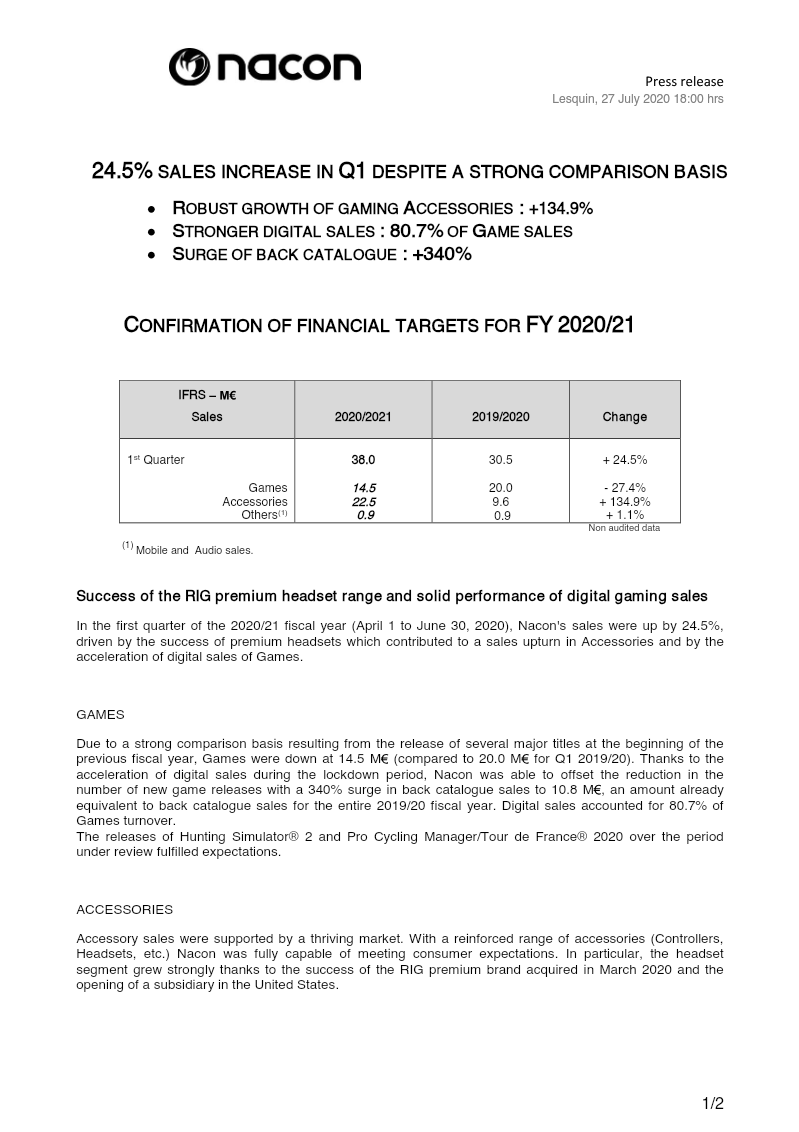
Nacon
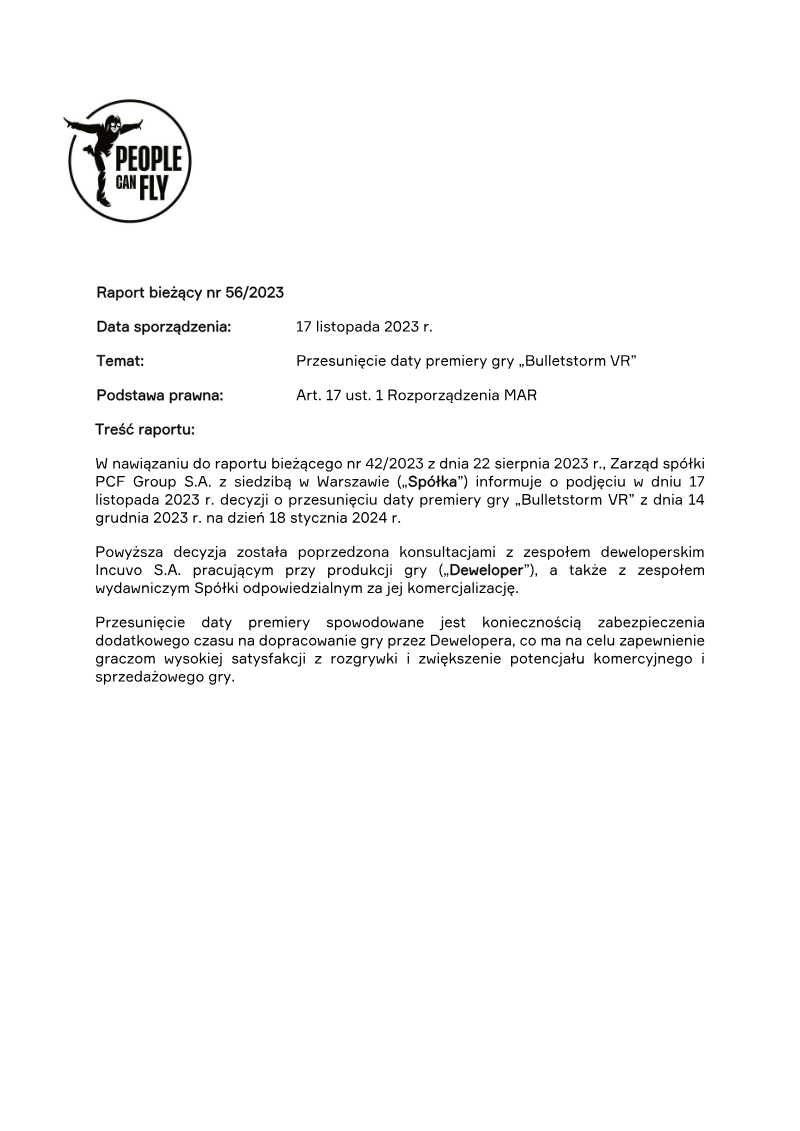
PCF Group
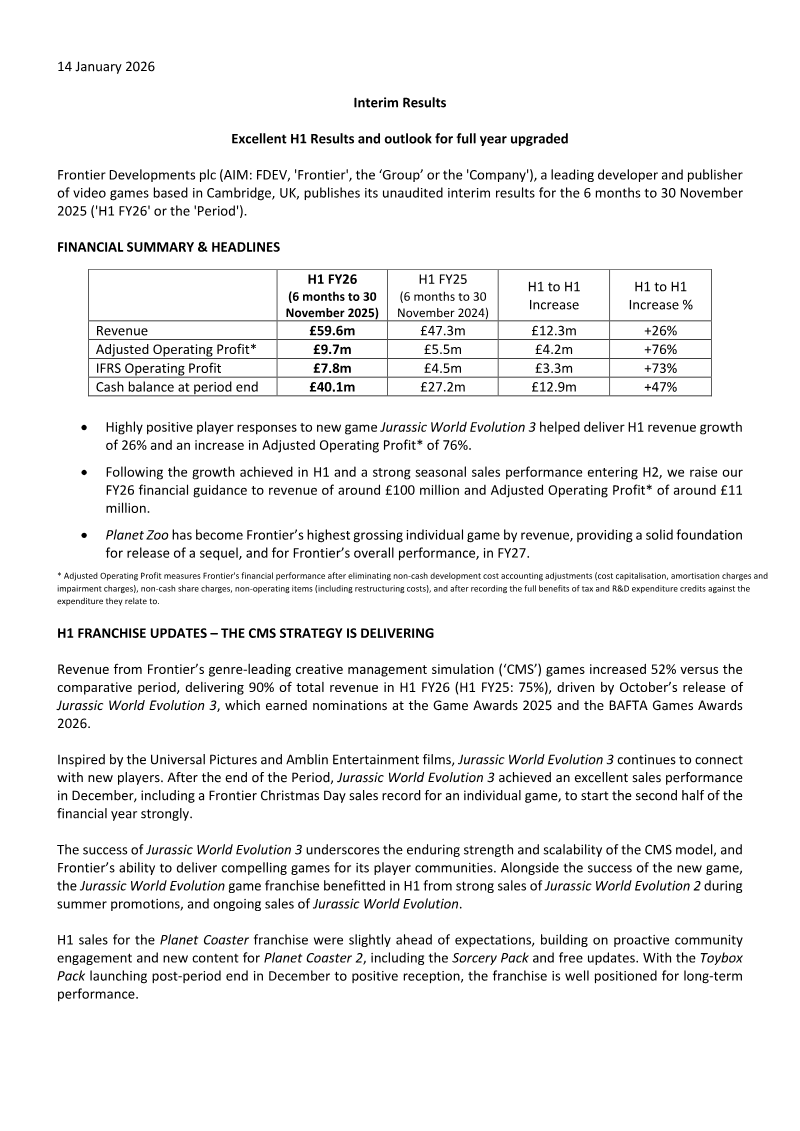
Frontier Developments
11 bit studios
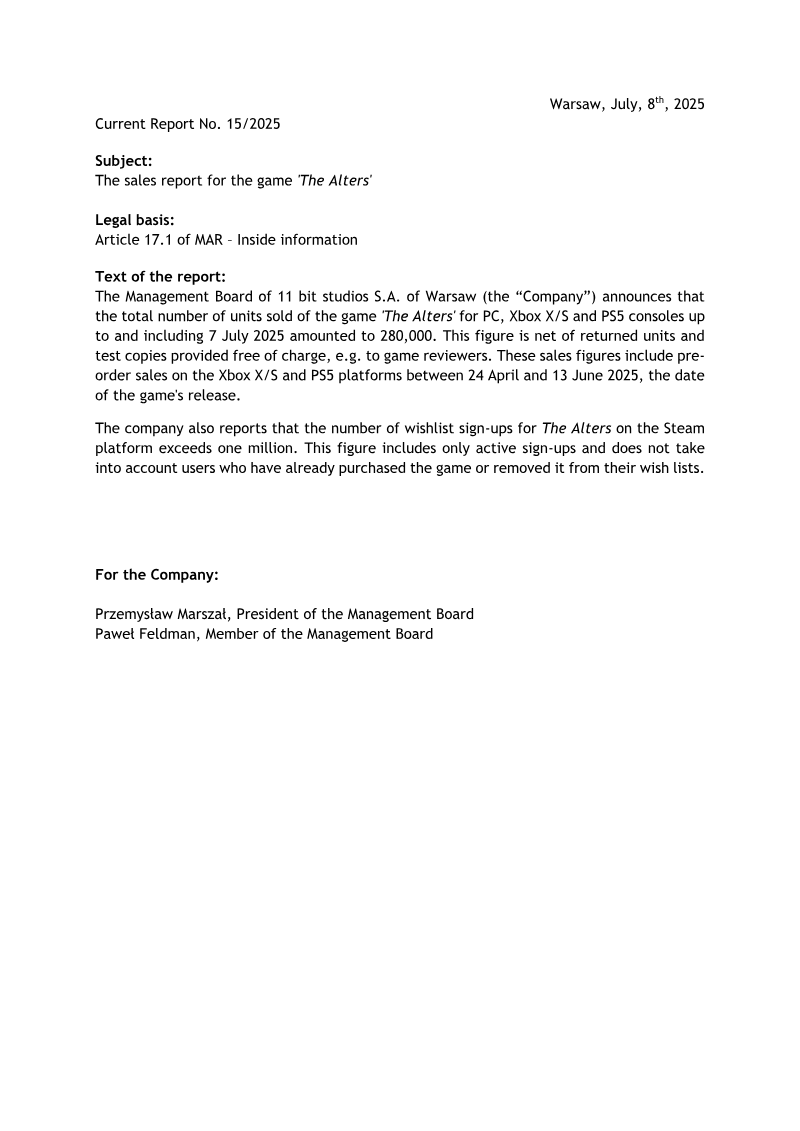
11 bit studios

GungHo Online Entertainment
The Game Business · 2026

The Game Business · 2026
Comments