The Game
Game
Documents about The Game
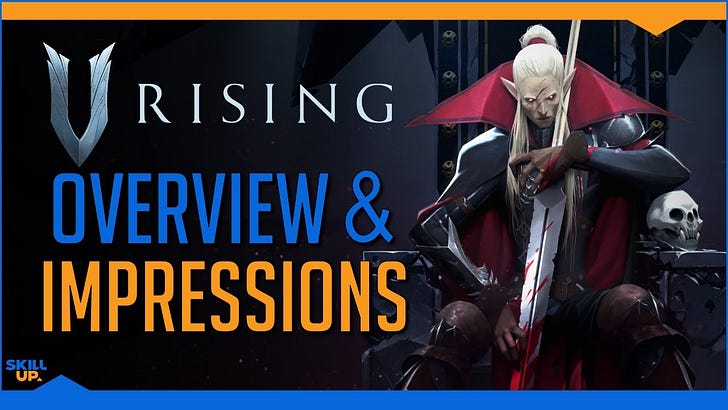
Plus: Look at V Rising Go, Fellow Vampires!
This analysis examines the commercial performance and market trends of the global video game industry for the third week of May 2022, focusing primarily on Steam, console platforms, and the Epic Games Store.
- V Rising became a breakout success in the survival-crafting genre, selling 500,000 units in its first three days and reaching a peak of 94,500 concurrent users on Steam.
- V Rising's launch performance significantly exceeded its pre-launch engagement metrics, which stood at approximately 35,600 Steam followers.
- Arma Reforger and Little Witch in the Woods recorded notable Steam debuts with peak concurrent user counts of 12,300 and 4,350, respectively.


Fact Sheet: Fiscal Year Ended March 31, 2022
The fiscal year ended March 31, 2022, represents a period of significant financial growth and operational expansion for KADOKAWA Corporation.
- KADOKAWA Corporation achieved consolidated net sales of 221,208 million yen for the fiscal year ended March 31, 2022, up from 209,947 million yen in the previous year.
- Operating profit grew significantly to 18,519 million yen, while profit attributable to owners of the parent reached 14,078 million yen.
- The Publication segment remains the company's primary revenue driver, contributing 132,972 million yen in net sales and 17,370 million yen in segment profit.
Plus: Songs of Conquest, We Were Here Forever Hit It Big
This analysis provides a comprehensive overview of the PC and console gaming market for the week of May 9, 2022, focusing on Steam performance, upcoming releases, and cross-platform trends.
- Co-op and strategy titles showed strong market traction during the week of May 9, 2022, with We Were Here Forever reaching 6,700 concurrent users (CCU) and Songs of Conquest peaking at 4,200 CCU in Early Access.
- V Rising and Little Witch in the Woods are identified as high-potential upcoming releases for the week of May 16, 2022, supported by Steam follower counts of 35,000 and 22,000 respectively.
- Established genres like Metroidvanias continue to demonstrate long-tail viability, as evidenced by sustained high review volumes for Hollow Knight years after its initial release.
Half of Perfect Dark Core Developers Reportedly Left The Initiative During 2021
The development of the Perfect Dark reboot at The Initiative faced significant internal instability throughout 2021.
- During 2021, approximately 34 core developers—nearly half of the studio's staff—departed from The Initiative, leaving fewer than 50 employees remaining.
- Key leadership departures from The Initiative included the game director, technical director, lead animator, lead gameplay engineer, lead level designer, and most of the senior design team.
- Departing staff cited concerns regarding slow development progress and a lack of creative freedom as primary reasons for leaving the studio.
Noble Fates' Stealth Success, Examined
This analysis examines the performance of various PC and console titles during the final weeks of 2021, with a specific focus on the unconventional success of the fantasy kingdom simulator Noble Fates.
- Noble Fates achieved over 1,000 concurrent users and a 'Very Positive' rating on Steam despite launching its store page only two weeks before release, challenging the necessity of long-term wishlist accumulation.
- The success of Noble Fates suggests that high-quality titles in popular genres can bypass traditional marketing cycles through rapid organic discovery and unconventional tactics like using a custom Steam curator page as a landing site.
- Hardcore niche titles demonstrated strong market resilience in late 2021, with Ultimate Admiral: Dreadnought maintaining over 1,000 concurrent users.
The Game Industry of Poland: 2021 Report
The Polish game industry demonstrated remarkable resilience and expansion throughout 2020, cementing its status as a global powerhouse in interactive entertainment.
- The Polish game industry generated €969 million in annual revenue in 2020, supported by a workforce of over 12,000 professionals across 470 active studios.
- The sector operates as a net exporter of games, with a domestic market valued at over $924 million and a strategic focus on international distribution for premium PC and console titles.
- Poland maintains a specialized talent pipeline through 71 dedicated degree programs hosted at 56 universities, contributing to a workforce with 25% female representation.

57: To the Point
Sony’s acquisition of Bluepoint Games highlights a distinct, protectionist strategy compared to the aggressive expansionist tactics employed by competitors like Microsoft.
- Sony’s acquisition of Bluepoint Games reflects a protectionist strategy of securing long-term partners, contrasting with Microsoft’s aggressive expansionist approach of buying multiplatform studios.
- Bluepoint Games plans to transition from its established role as a remaster specialist to developing original content, a significant strategic shift for the studio.
- New Chinese government regulations are imposing strict content restrictions, including bans on 'effeminate males' and the removal of morality systems that allow players to choose between good and evil paths.

Everywhere
This analysis examines the state of the video game industry as of August 2021, focusing on the centralization of influence, shifting release schedules, and significant corporate developments.
- Apple settled a 2019 class-action lawsuit allowing developers to communicate alternative payment methods to users via email, bypassing the standard 30% App Store commission for those transactions.
- Geoff Keighley has achieved significant industry centralization by managing major events including E3 Judges Week, the Game Critics Awards, The Game Awards, and headline roles at Gamescom.
- The first quarter of 2022 is heavily congested with major releases, including Horizon Forbidden West, Destiny 2: The Witch Queen, Sifu, and Saints Row all debuting within a single week in February.


FY2021 Third Quarter Consolidated Financial Results (Japanese GAAP)
CyberAgent’s consolidated financial results for the third quarter of fiscal year 2021, ending June 30, 2021, reveal a period of significant growth and upward momentum.
- CyberAgent reported a 36.1% year-on-year increase in net sales to ¥486.7 billion and a 171.9% surge in operating income to ¥77.5 billion for the first nine months of FY2021.
- The Game Business served as the primary growth driver, achieving a 59.5% increase in net sales to ¥186.3 billion and a 196.4% jump in operating income to ¥68.6 billion, fueled by a new title launch.
- The Internet Advertisement Business reached record-high net sales of ¥239.1 billion, representing a 17.0% year-on-year increase driven by the expanding smartphone advertising market.

Game Report 2020
The Game Report 2020 serves as a centralized resource for industry data and analysis, specifically highlighting the state of the games sector in Norway.
- The European Games Developer Federation (EGDF) represents over 2,500 game developer studios across 22 European countries.
- Member studios of the EGDF collectively employ more than 40,000 people within the European games industry.
- The EGDF functions as an umbrella organization for 24 national trade associations, including major industry bodies in countries such as Germany, France, the United Kingdom, and Italy.

The Game Jam Experience
The game jam experience is characterized by a recurring cycle of ambitious ideation, technical friction, and eventual time-pressured development.
- Game jams function as high-intensity, 72-hour development environments that test rapid prototyping, project management, and team communication skills.
- Teams frequently struggle with 'scope creep,' where initial goals for simple, polished projects are undermined by the addition of complex features like narrative cutscenes and boss fights.
- Technical friction, specifically regarding version control and synchronization errors, is a primary cause of development delays that consume significant portions of the limited 72-hour window.

Panel: The Game Business Post-vaccine - A New Path to 'Normality'
The global gaming industry demonstrated remarkable resilience throughout the pandemic, maintaining high productivity levels and consistent hiring despite widespread operational disruptions.
- Approximately 25 percent of the gaming industry workforce would resign if mandated to return to full-time office attendance, necessitating a permanent shift toward hybrid and remote work models.
- Studios are adopting hybrid work strategies to reduce overhead costs and access a more diverse, global talent pool while maintaining productivity.
- The industry is prioritizing HR strategies focused on employee well-being and inclusivity to sustain company culture within distributed, remote environments.
Companies behind it

As the documents state it.