South Park
Game
Documents about South Park
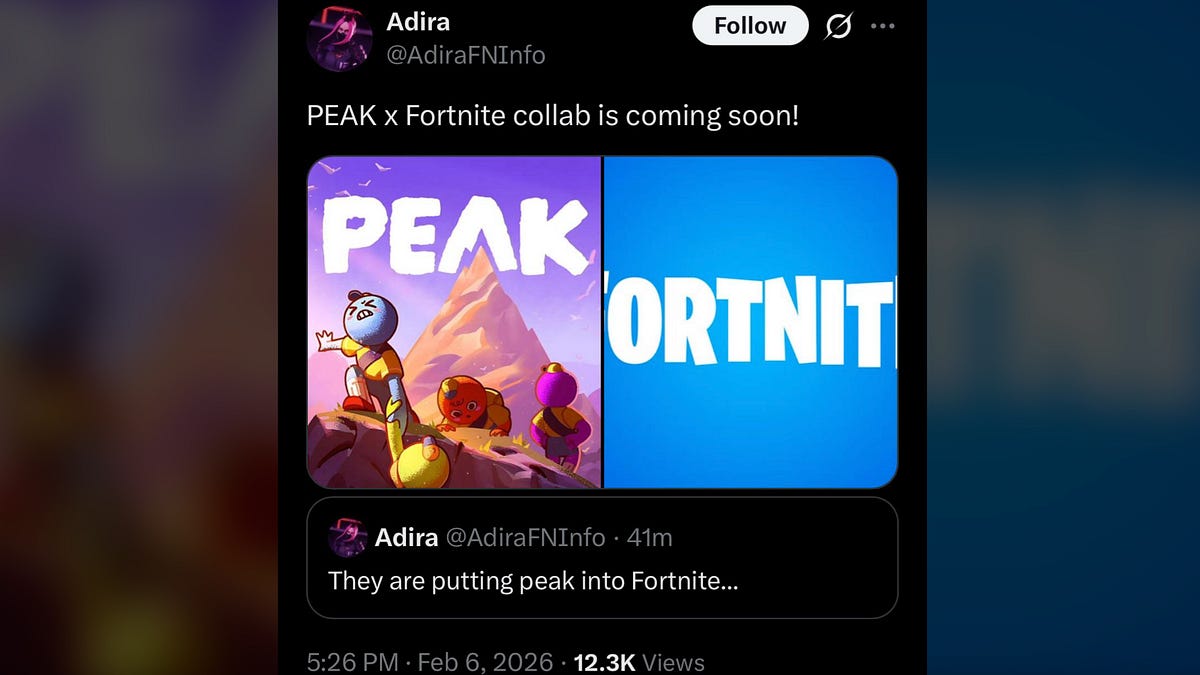
Epic Settles Lawsuit Against Alleged Fortnite Leaker
Epic Games and former contractor Hayden Cohen have agreed to settle a federal lawsuit in North Carolina that accused Cohen of repeatedly leaking confidential Fortnite information, including unreleased collaborations with Minecraft, Peak, South Park and others.
- Epic Games settled a lawsuit with former contractor Hayden Cohen, who was accused of leaking confidential Fortnite collaborations with brands like Minecraft, Peak, and South Park.
- The settlement includes a judgment against Cohen and an injunction preventing him from disclosing Epic's confidential information, but it does not specify monetary damages.
- Sony announced it will cease producing physical discs for new PlayStation games starting January 2028, a decision that has been met with public dissatisfaction.
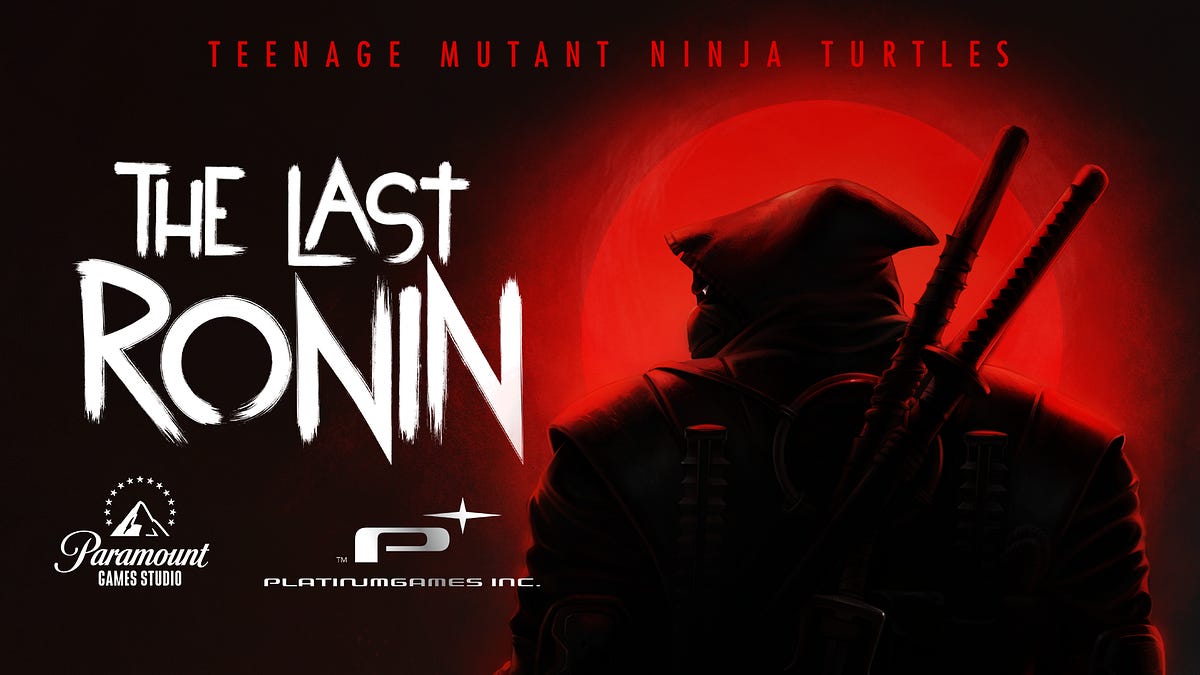
Inside Paramount's New Gaming Division
Paramount has formed a dedicated games division, Paramount Games Group, following the 2025 merger of Skydance Media and Paramount.
- Paramount has established a new Games Group following its 2025 merger with Skydance Media, elevating gaming to a core content pillar alongside film and television.
- The division is prioritizing a conservative growth strategy that focuses on high-potential intellectual properties like Teenage Mutant Ninja Turtles, SpongeBob Squarepants, Star Trek, and Avatar: The Last Airbender rather than rapid studio expansion.
- PlatinumGames is developing 'TMNT: The Last Ronin,' a third-person action-adventure title overseen by former Tekken producer Yohei Shimbori.

Drink Responsibly, Play Responsibly: Why the Games Industry Borrowed the Alcohol Playbook
Rob Sandberg, a game production writer, argues that the games industry has adopted the alcohol and tobacco industries' self-regulation playbook to fend off oversight of monetization practices such as loot boxes, and that regulators are now moving past voluntary measures.
- The gaming industry has adopted a self-regulation strategy mirroring the alcohol and tobacco sectors, which focuses on individual responsibility to preempt and block systemic, population-level regulation.
- Voluntary self-regulation has proven ineffective, as evidenced by a 2025 study showing less than 10% compliance with UK industry rules regarding loot box disclosure in social media advertisements.
- Global regulatory pressure is intensifying, with Belgium and the Netherlands banning certain loot boxes, Brazil prohibiting their sale to minors, and the EU drafting continent-wide legislation expected in late 2026.

Satan Was Right About Dopamine
Rob Sandberg argues that the dopamine-driven critique of freemium games, delivered by Satan in a 2014 South Park episode and dismissed at the time as pop psychology, is now supported by neuroscience, revenue data, and regulatory action.
- Mobile gaming revenue is projected to exceed $104 billion by 2026, driven primarily by variable reinforcement mechanics that trigger dopamine responses similar to those seen in substance addiction.
- The freemium business model is highly concentrated, with 1–5% of players (whales) generating 50–70% of total in-app purchase revenue.
- Unity’s 2025 Gaming Report indicates that 72% of players spend nothing, while the top 5% of spenders average approximately $66 per day.
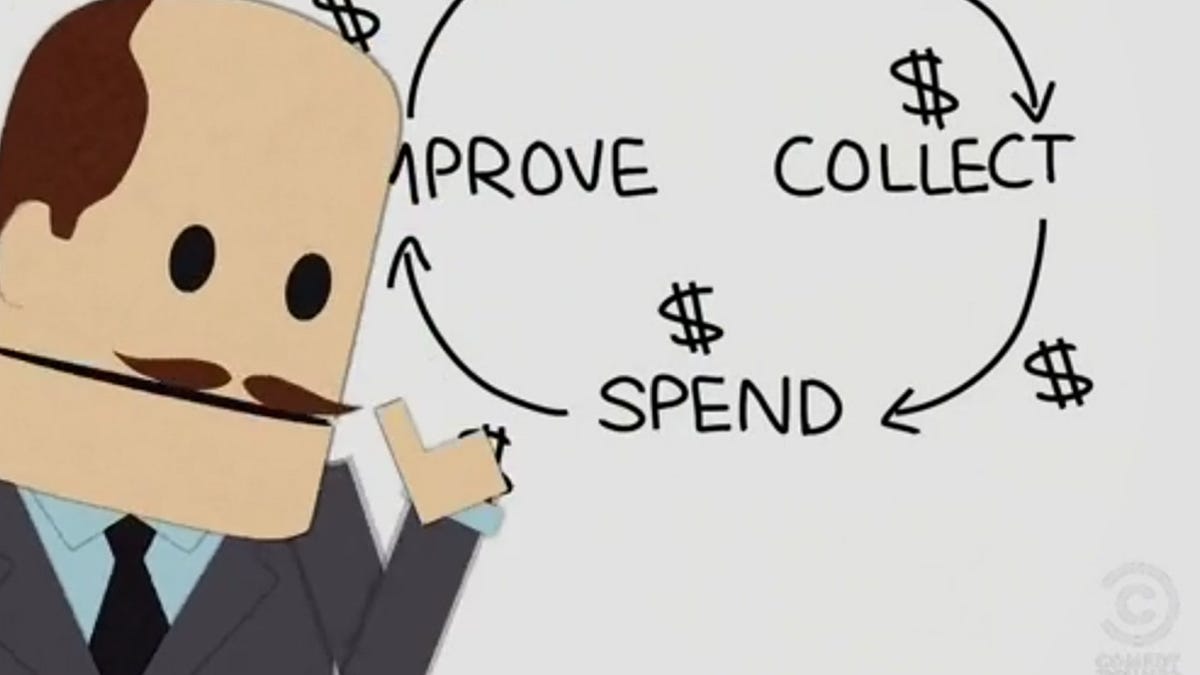
South Park Was Right: How a Cartoon Predicted the FTC’s Enforcement Agenda
Rob Sandberg, a former free-to-play producer, argues that South Park's November 2014 episode "Freemium Isn't Free" anticipated nearly every major regulatory and academic critique of mobile monetisation that has emerged since.
- The 2014 South Park episode 'Freemium Isn't Free' accurately predicted six core criticisms of the free-to-play model that are now the subject of global regulatory enforcement and legislation.
- Industry data confirms that the free-to-play model is heavily dependent on a small minority of users, with 5% of players generating 65% of all in-app purchase revenue while 72% of players spend nothing.
- Regulators are aggressively targeting 'dark patterns' in game design, evidenced by a $520 million settlement involving Epic Games and a $2.5 billion settlement involving Amazon regarding deceptive user flows.

Ghost of Yotei Delivers Strong Opening: Europe
The document analyzes European video game sales for the week ending October 5, 2025, focusing on new releases and their performance against established titles.
- Ghost of Yotei debuted at No. 2 in the European GSD charts, with opening sales matching the performance of its 2020 predecessor, Ghost of Tsushima.
- EA Sports FC 26 maintained the No. 1 position in Europe for the third consecutive week, despite a 62% week-on-week decline in unit sales.
- Ghost of Yotei represents the strongest first-party PlayStation launch since Spider-Man 2 in October 2023.
Infection Free Zone Comes in 'Hot' to Steam Next Week
This analysis provides an overview of upcoming and recently released game performance across various platforms, with a particular focus on Steam.
- The upcoming city-builder Infection Free Zone is projected to reach 5,000 to 10,000 concurrent users (CCU) at launch, supported by 93,700 Steam followers and a successful prologue that previously hit 5,000 CCU.
- Content Warning demonstrated the efficacy of a 24-hour free-to-own 'stealth launch' strategy, resulting in 205,000 CCU and 6.2 million owners before shifting to a paid model.
- High follower counts do not guarantee commercial success, as evidenced by Monsters Domain, which failed to convert its audience into active players due to technical issues and poor polish.

Outpost: Infinity Siege Blends Genres Like a Champ
This document provides an analysis of recent game releases and market trends across various platforms, with a particular focus on Steam.
- Dragon’s Dogma 2 and Helldivers 2 currently dominate global top-grossing charts, with Dragon’s Dogma 2 leading recent paid downloads on both PlayStation and Xbox in the United States.
- Genre-hybridization is a successful market strategy, evidenced by Outpost: Infinity Siege achieving over 13,000 concurrent users (CCU) by blending tower defense, extraction shooter, and roguelite mechanics.
- The Chinese market is a significant driver of engagement for new releases, as seen in the high volume of Simplified Chinese reviews for titles like Outpost: Infinity Siege and Ender Magnolia: Bloom in the Mist.
Two & a Half Gamers Session #25: Does Ubisoft Give a F! About Mobile Games?
Episode #25 of the "two & a half gamers" podcast, published July 2022, continues a new recurring segment called the Mobile Gaming Company Happy Hour, which examines a single mobile publisher through three lenses: game design, user acquisition (UA), and ad monetisation.
- Ubisoft’s mobile strategy is hindered by an operational disconnect between its traditional console/PC-focused corporate structure and its mobile-first subsidiaries.
- The company’s mobile portfolio relies on specialized subsidiaries including Kolibri Games, Greenpanda Games, and 1492 Studio to manage game design and monetization.
- Ubisoft utilizes a multi-channel user acquisition (UA) strategy, primarily leveraging creative assets across advertising platforms like Facebook and Google.
A Bit of Culture: Assembling by the Tree
Plastic bricks, collectible miniatures, and trading cards are framed as precursors to the digital goods economy, with the central argument that assembly, of both parts and people, is the most valuable aspect of play.
- LEGO sets have emerged as a high-yield asset class, delivering an average annual return of 11% based on a study of 2,322 unopened products.
- LEGO has achieved a seven-fold increase in sales since 2003, driven by the modular nature of its system and thematic scarcity in the secondary market.
- The video game and toy industries are converging around the concept of 'fractionalization,' where consumer value is derived from assembling modular systems and personalized digital or physical experiences.

2019 Predictions: There Is a Billion to be Made in the Wake of Machine Zone
Strategy games are the largest revenue category within Mid-core mobile and the second largest across all mobile games after Puzzle, and this February 2019 analysis forecasts where the three main subcategories (4X, Build & Battle, and Synchronous Battlers) are headed.
- The 4X strategy subcategory represents a high-value opportunity, with IGG’s Lords Mobile generating over €350M in 2018 and demonstrating that integrating RPG mechanics into 4X gameplay can successfully expand the genre's audience.
- Machine Zone lost its dominant market position following the launch of Final Fantasy, allowing competitors like FunPlus and IGG to capture significant market share through superior live operations and portfolio-based strategies.
- FunPlus achieved growth by building a 4X platform that utilizes reskins of its hit title King of Avalon, proving that theme and art style are the primary differentiators for user acquisition and marketability in a genre where core features are often similar.
Dying in the Game: A Perspective of Life, Death and Rebirth Through World of Warcraft
Wanda Gregory's personal essay, published in the 2018 gamevironments special issue on video gaming and death, examines how a player's relationship with in-game death shifted after a cancer diagnosis.
- Wanda Gregory's 2018 essay, published in the gamevironments special issue on video gaming and death, argues that games typically reset, reboot, or soften the consequences of a character's death, unlike the lasting grief associated with deaths in books and film.
- The essay is an autoethnographic account of one player's cancer diagnosis, during which she came to see her World of Warcraft troll shaman, Tahara, as a mirror for her own fears of dying rather than a casual avatar.
- The author describes WoW's death mechanics in detail, including paying the Angel of Death for resurrection and travelling as a ghost to recover one's corpse, and says she first avoided risk by grinding at low levels.