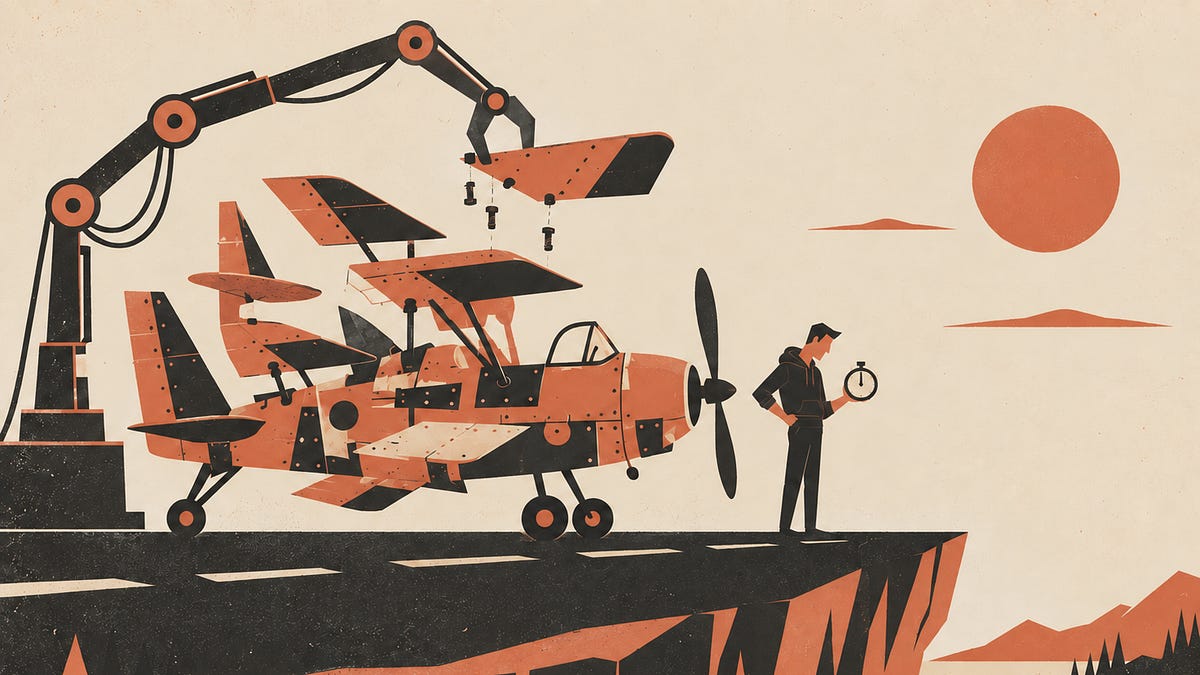
Rob Sandberg argues that the dopamine-driven critique of freemium games, delivered by Satan in a 2014 South Park episode and dismissed at the time as pop psychology, is now supported by neuroscience, revenue data, and regulatory action. This is the second installment of a four-part series on the free-to-play trap. It revisits Eric Seufert's 2014 rebuttal, which held that low conversion rates are a feature of freemium, that in-game currency is merely convenient, that comparing game spending to addiction is a category error, and that Pareto-style revenue concentration is common across consumer products.
Sandberg traces the mechanism to B.F. Skinner's 1957 operant conditioning work, in which variable-ratio rewards produced behavior highly resistant to extinction, and he maps it onto loot boxes, gacha pulls, and mystery chests. He notes that dopamine peaks during anticipation rather than receipt, and that spinning wheels, timers, and slow-reveal animations extend that window. He cites a 2025 Kumar and Manohar study of Genshin Impact, Fortnite, Clash of Clans, and Candy Crush Saga confirming that variable rewards trigger dopamine release and drive microtransaction spending. He also cites a PMC study finding that rats on variable-ratio schedules developed dopamine sensitization comparable to amphetamine exposure.
On economics, he reports that 5% of players generate 65% of in-app purchase revenue, 72% spend nothing, and whales (1–2% of players) fund 50–70% of IAP revenue. The top 5% of spenders average about $66 per day, and acquiring a super whale can cost over $500. Mobile IAP revenue reached $92.6 billion in 2024 and is projected to pass $104 billion by 2026.
Drawing on his own experience at a Toronto F2P studio in 2012 and as a Smurfs' Village player, Sandberg contends that regulatory moves, including the FTC's $520 million Epic Games settlement and Belgium's loot box gambling classification, undercut Seufert's defenses. He notes that Ubisoft still released South Park: Phone Destroyer with a self-aware monetization disclaimer. His conclusion is that the science is settled and the real question is how the industry responded, which the next installment addresses through the alcohol industry's playbook and self-regulation.
 Epic GamesCompany · United States · founded 1991 · 981 documents
 Unity TechnologiesCompany · Technology · 1,158 documents
 FortniteGame · Epic Games · 2020 · 1,136 documents
 UbisoftCompany · Game company · 754 documents
 Genshin ImpactGame · HoYoverse · 2020 · 366 documents
 Candy Crush SagaGame · King · 2012 · 297 documents
 Clash of ClansGame · Supercell · 2012 · 283 documents