1 free read left. Create a free account for unlimited reading + AI research.
Create free accountArticle gamevironments
1 free read left. Create a free account for unlimited reading + AI research.
Create free accountArticlegamevironments
This contrasts with the lasting grief associated with deaths in books and film.
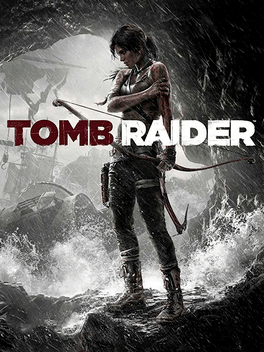
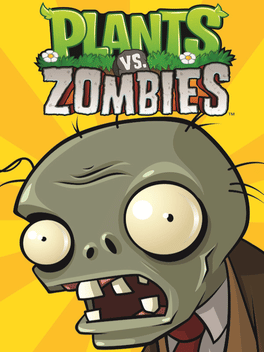
Wanda Gregory's essay, published in the 2018 gamevironments special issue on video gaming and death, examines how digital games represent mortality and how one player's experience of cancer reshaped her engagement with World of Warcraft. The author begins by surveying the conventions of death in games, noting that titles from Tomb Raider and Zelda to Neopets and Plants vs. Zombies typically reset, reboot, or soften the consequences of a character's demise, in contrast to the lasting grief associated with deaths in books and film. She argues that games frame death as failure, as a reset mechanic, or as an inconvenience such as lost items, and she also recounts the phenomenon of "funeral raids," in which mourners at a virtual memorial were attacked, raising questions about whether social norms persist where game rules do not forbid behavior.
The core of the essay is autoethnographic. After being diagnosed with cancer, the author shifted from treating her troll shaman, Tahara, as a casual avatar to viewing her as a mirror for her own fears of dying. She describes the mechanics of WoW death, including paying the Angel of Death for resurrection, or traveling as a ghost to recover one's corpse, and how she eventually avoided risk by grinding at low levels. Over time she moved from third-person to first-person perspective and began taking greater risks, reframing the game as a space to practice confronting mortality rather than evade it.
The study's scope is limited to one player's personal account, drawing on reflection and informal conversation rather than systematic data, surveys, or sampling. Its conclusions are interpretive: the author proposes that virtual death, when read alongside lived illness, can offer a means of learning to live with uncertainty, though this claim rests on a single case and is not generalized to broader player populations.
DiGRA · 2003