Rob Sandberg, a former free-to-play producer, argues that South Park's November 2014 episode "Freemium Isn't Free" anticipated nearly every major regulatory and academic critique of mobile monetisation that has emerged since. This is the first of a four-part series on the free-to-play trap. It combines personal confession with a scorecard of the episode's claims as they stand in 2026. Sandberg recalls defending reward schedules on Facebook in April 2015, then reposting the comment two years later and calling his work a "parasitic profession."
The episode, written and directed by Trey Parker, grew out of pitches Parker and Stone received for a South Park freemium game, which they found offensive. It made six claims: freemium games are deliberately tedious, premium currency obscures real costs, revenue depends on a small group of heavy spenders, the reward loops mirror gambling and addiction, "play responsibly" messaging is cosmetic, and the people pushing the games are victims of the system too. Critics were lukewarm, with the AV Club giving a B-minus and calling the gambling comparison a stretch, and IGN giving 7.5. The episode earned an Emmy nomination but no win. Ubisoft later released the free-to-play South Park: Phone Destroyer in 2017.
Sandberg then checks the claims against current evidence. The FTC now pursues dark patterns, with Epic Games settling for $520 million and Amazon for $2.5 billion over deceptive enrolment and cancellation flows. Cognosphere, maker of Genshin Impact, settled in January 2025 over obscured costs and odds. Unity's 2025 report found 5% of players generate 65% of in-app purchase revenue while 72% spend nothing. Belgium classed paid loot boxes as gambling in 2018, Brazil banned their sale to minors from March 2026, and the European Parliament urged a continent-wide ban, with a Digital Fairness Act expected in late 2026. A 2025 Royal Society study found fewer than 10% of loot box ads carried required disclosures. Sandberg defers the sixth claim to part four and closes by asking why the industry, and people like him, kept building what they mocked.
 Unity TechnologiesCompany · Technology · 1,158 documents
 Epic GamesCompany · United States · founded 1991 · 981 documents
 UbisoftCompany · Game company · 754 documents
 AmazonCompany · Technology · 556 documents
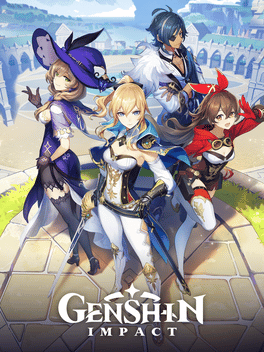 Genshin ImpactGame · HoYoverse · 2020 · 366 documents
 CognosphereCompany · Singapore · founded 2021 · 7 documents