
ETC Press
ETC Press is an academic publisher run out of Carnegie Mellon University's Entertainment Technology Center. It publishes books, conference proceedings and edited volumes on game studies, game design, analog games and play.
Documents
How Video Games Can Make You a Better Journalist
Caio Sampaio's book "Level Up: How Video Games Can Make You a Better Journalist" argues that journalists facing fierce competition for audience attention in a content-saturated, smartphone-driven media environment can learn powerful storytelling techniques from video game design.
- Video games' participatory and immersive nature makes storytelling easier to absorb than text, since players are part of the story rather than reading passively for hours.
- Augmented reality failed for Esquire's 2009 interactive cover because it was a gimmick that did not make the magazine more informative, whereas USA Today's 2020 AR investment focused on informative content, such as its Kent State Shootings app that projects a map onto any surface to detail the 1970 events.
- Audio storytelling such as radio plays stimulates imagination because listeners project their own memories and personalities onto the scene, creating a more personal and engaging experience.

Playful Testing: Designing a Formative Assessment Game for Data Science
"Playful Testing" presents Beats Empire, a music-industry management game designed as a formative assessment of data science skills for New York City middle school students, and argues that games can capture computational thinking that standardized tests often miss while building student agency.
- Beats Empire, a formative assessment game for data science, was designed through participatory design with computer science advocates, administrators, teachers, and students, with formative research shaping its core design tenets.
- Making players' choices explicit through game mechanics (such as a bar vs. line graph selection and optional 'prediction' bonuses) reduces guesswork about why students chose as they did, giving teachers visibility into their data reasoning.
- Pilot play showed players falling into categories such as rarely using data, mainly using bar graphs, mainly using line graphs, or switching between representations, and all pilot players made some data-informed decisions while occasionally ignoring the data.

Digital Playgrounds: Our Kids & Video Games
"Digital Playgrounds: Our Kids & Video Games" argues that digital play is a legitimate and valuable part of childhood, and that parents should guide children's gaming through conversation and collaboration rather than fear.
- The report frames digital play as a legitimate part of childhood, arguing that parents should guide children's gaming through conversation and collaboration rather than fear.
- It distinguishes positive escapism, which provides stress relief, from subversive escapism, which involves avoiding real responsibilities, and argues that problematic play usually reflects underlying conditions such as depression or anxiety rather than games themselves.
- The authors critique the WHO's 2019 "Gaming Disorder" classification as vague and insufficiently supported by evidence that games cause the problems attributed to them.


Black Games Studies: An Introduction to the Games, Game Makers, and Scholarship of the African Diaspora
Black Games Studies: An Introduction to the Games, Game Makers, and Scholarship of the African Diaspora, edited by Lindsay Grace and published by ETC Press at Carnegie Mellon University, addresses what its authors describe as the serious under-research of games made by Black creators in the African diaspora.
- Consumers increasingly judge games by the characteristics of the companies and people who made them, not just the product itself, making workplace equity a market concern; the report cites an $18 million settlement by Activision-Blizzard with the US EEOC as a notable case.
- The game industry struggles, like other tech sectors, to recruit and retain one of its largest consumer bases, with diversity and inclusion framed as both an ethical and commercial challenge.
- Black game makers' work is grouped into overlapping categories: games about Blackness, games about situation (e.g., structural racism, sexism), and games about membership that rely on in-group cultural knowledge, with Inequality-opoly (2016) cited as an example of the situational pattern.


Save Point: Reporting from a Video Game Industry in Transition, 2003-2011
Kyle Orland's "Save Point" collects his writing on the video game industry from 2003 to 2011, a period he frames as the industry's "late adolescence."
- Atari's Lynx portable got a new lease on life after acquiring exclusive portable licensing rights to Tetris, and the Tetris-bundled Lynx Lite sold 5 million units during the 1990 holiday season alone.
- Nintendo abandoned the portable market around 1989, as sales of its Game & Watch units began to flag, to focus on the lucrative NES, and later chose not to take on the Lynx while defending the Super NES against the Sega Genesis, effectively ceding portable gaming to Atari.
- Amazon's review system was exploited in 2004 when a programming glitch revealed authors posting anonymous praise for their own books, and reviewers reported that positive reviews were rated 'useful' more often than critical ones, with vendor-linked people able to downrate critical reviews.
Teaching the Game: A Collection of Syllabi for Game Design, Development, and Implementation
"Teaching the Game" is a collection of 21 syllabi from university game-education courses, published by Carnegie Mellon's ETC Press with the aim of giving educators concrete, comparable models for building game courses.
- The report is a collection of syllabi for teaching game design, development, and implementation, drawing on course materials from multiple universities and programs.
- Course designs emphasize understanding over production, with a stated preference for transferable heuristics rather than fixed formulas, so students can navigate unfamiliar professional discourses.
- Assessment in these courses commonly follows Bloom's pyramid, progressing from applying and analyzing concepts early on to evaluating markets and writing economic essays in later semesters, such as reflecting on monetization methods and trends.
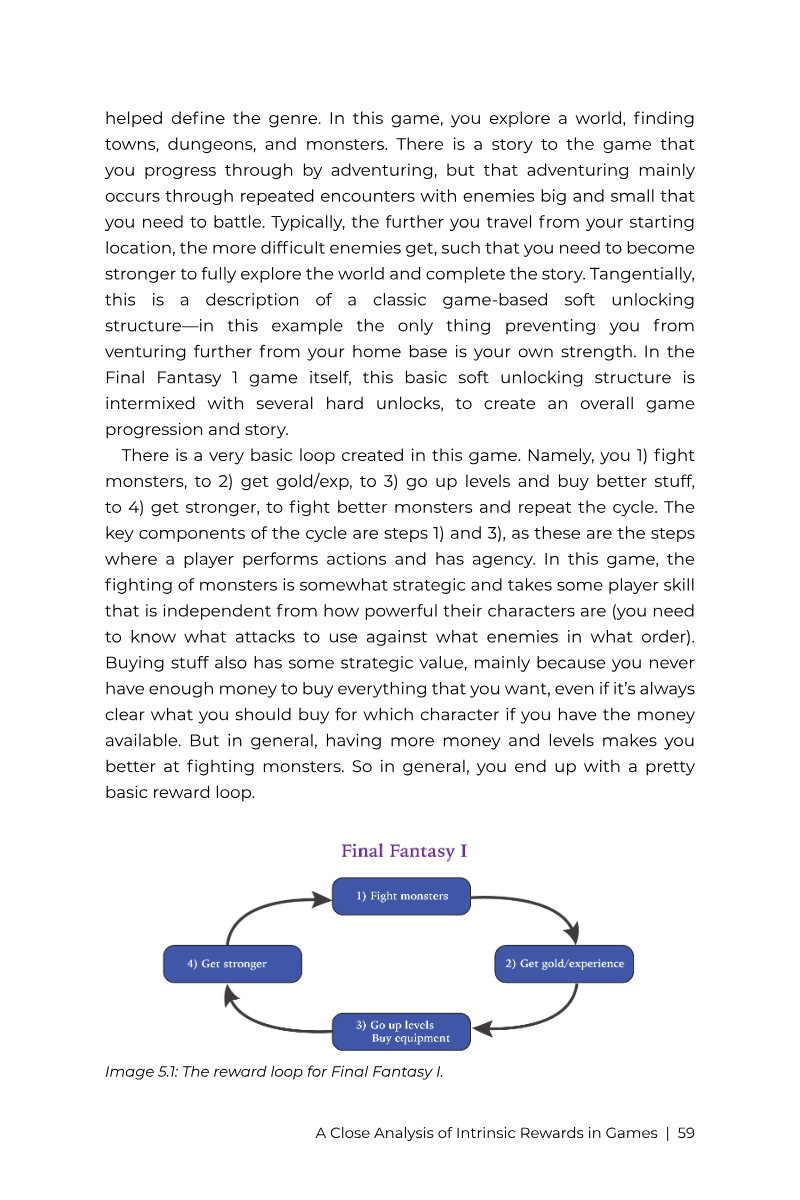
Intrinsic Rewards in Games and Learning
"Intrinsic Rewards in Games and Learning" argues that reward systems are best understood by their structure rather than their value: an extrinsic reward says "do this to get that," while an intrinsic reward loops back to the action itself, encouraging players or learners to "do this to do this more."
- The core distinction is structural: extrinsic rewards say 'do this to get that,' while intrinsic rewards loop back so that the action itself motivates further action ('do this to do this more').
- The author argues games have developed meaningful intrinsic reward loops, while education relies heavily on poorly designed, largely extrinsic rewards such as grades and diplomas.
- Most external awards, including military honors, grades, and food-industry ratings, are discrete, human-evaluated, and extrinsic, whereas Scout advancement and Go ranks combine leveled progression with unlocking to create intrinsic loops.

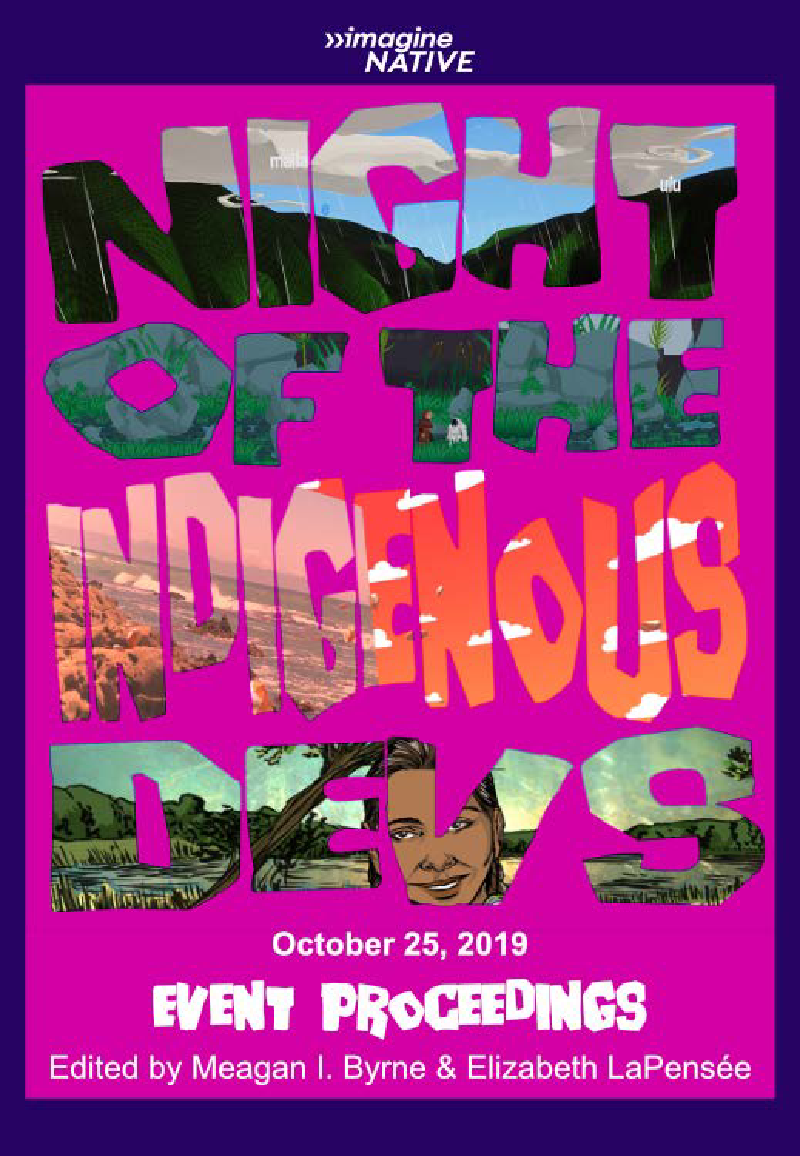
Night of the Indigenous Devs 2019 Proceedings
The 2019 Night of the Indigenous Devs proceedings, published by imagineNATIVE and Carnegie Mellon's ETC Press, document the first edition of an event in which six Indigenous-created games were played live in a theatre before audiences that included randomly selected volunteers encountering the games for the first time.
- The first Night of the Indigenous Devs, held at imagineNATIVE in October 2019, brought six Indigenous game creators and groups to a theatre stage to present their games and play them live, with volunteers from the audience playing for the first time.
- The featured games were Hold My Hand (Nathan Powless-Lynes), Wao Kanaka (Ka Lei Milika'a Collective), Terra Nova (SlipCycle), Don't Wake The Night (Brujería @ Werk), When Rivers Were Trails (Indian Land Tenure Foundation), and Full of Birds (Ashlee Bird & Sarah Biscarra Dilley).
- Wao Kanaka is an educational game teaching the Indigenous Hawaiian language, and its sacredness comes from being a place of learning, while When Rivers Were Trails weaves ceremony into gameplay, such as offering tobacco to change the hunting minigame.
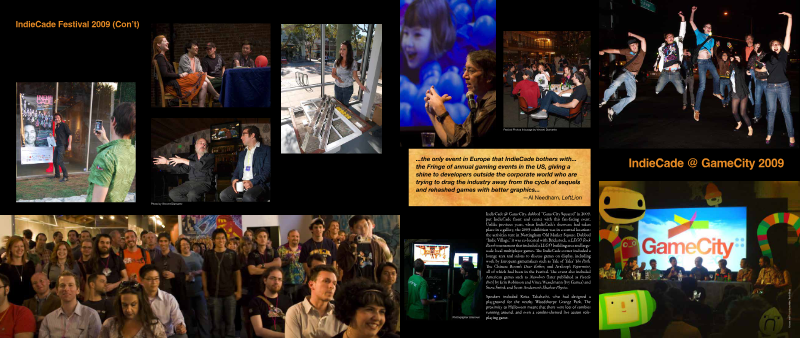
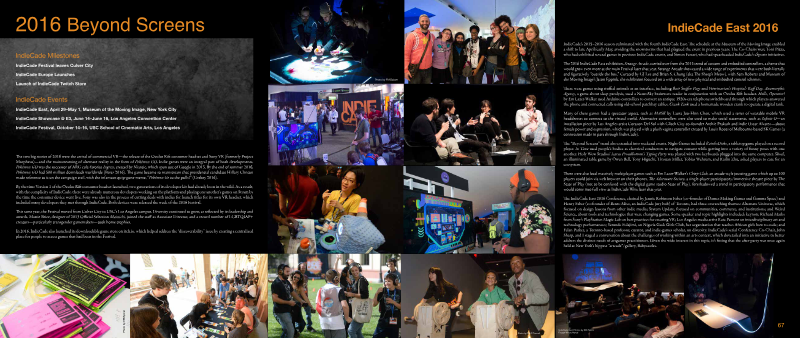
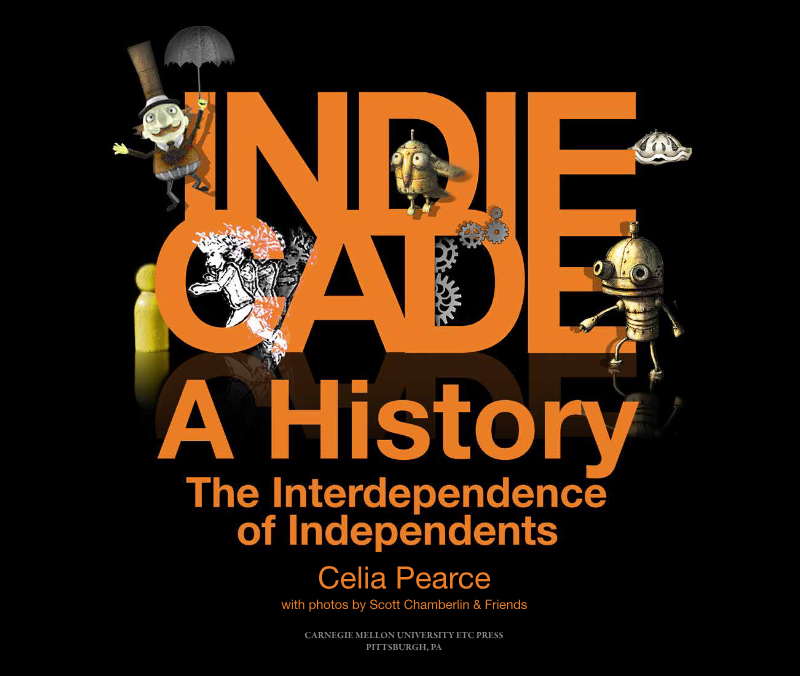
IndieCade: A History
Celia Pearce's "IndieCade: A History" is a narrative account, written from the perspective of a founder and scholar, of the IndieCade festival and the broader independent game movement it helped shape.
- IndieCade launched its inaugural event, the IndieCade Showcase @ E3, in July 2007 with funding from the Entertainment Software Association, presenting curated indie games within the larger expo.
- Academia played a foundational role in indie game criticism and scholarship, with University-driven book series and journals such as Well Played helping establish video game studies as a discipline.
- Game mechanics as a vehicle for meaning gained prominence through works like Darfur is Dying (adapting Frogger-style mechanics) and Brenda Romero's Train (2009), and through the NSF-funded Values at Play research project.


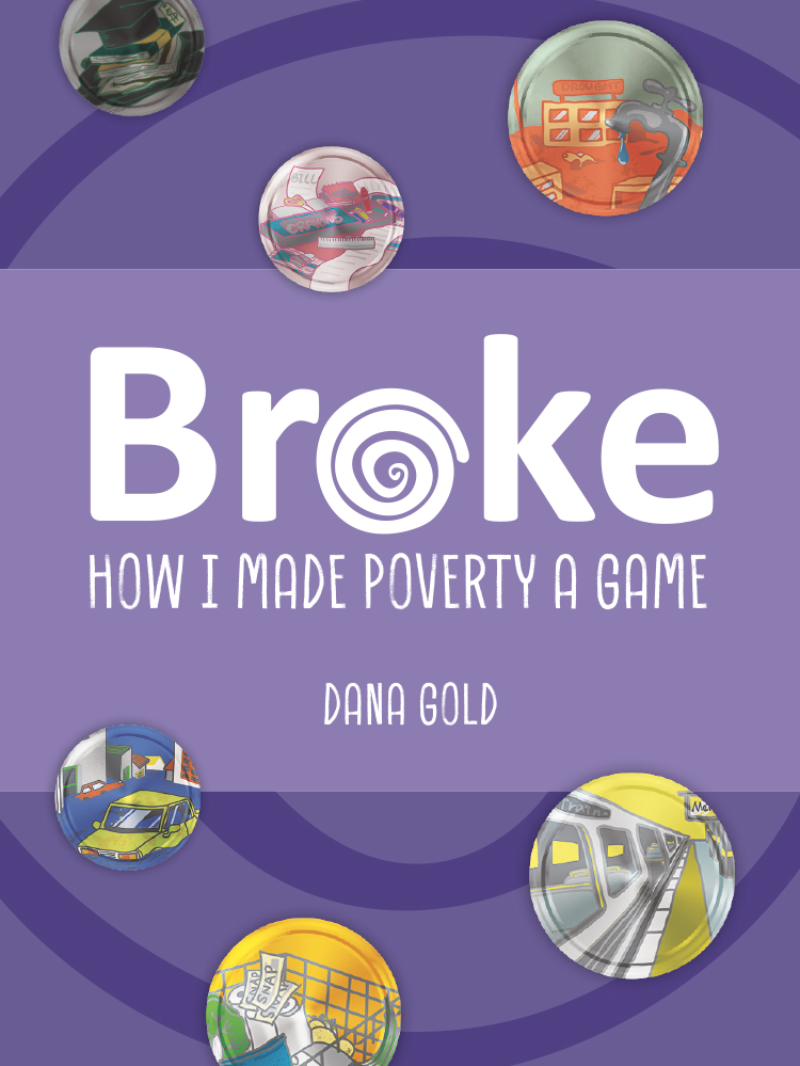
Broke: How I Made Poverty a Game
Dana Gold's book Broke: How I Made Poverty a Game, published by Carnegie Mellon University's ETC Press, presents the poverty simulation board game Broke as a tool for building empathy toward people living in U.S. poverty.
- Dana Gold's memoir-style report 'Broke: How I Made Poverty a Game' draws on her childhood in a family of six that relied on food stamps, with her mother's cash-out of a small paycheck at the grocery store and public judgment of food stamp purchases shaping her sense of shame.
- Gold later directed a homeless shelter, which began as a short-term emergency measure with beds from a church camp and became a permanent solution; she was motivated by her own family's experience of hiding from danger and by her daughter's homelessness.
- A cited experiment split participants into a group earning about $70,000 a year and one earning about $20,000 a year, and found both groups performed equally on cognitive tests when asked about a $150 car repair, but the lower-income group's cognitive performance was reportedly worse when facing a $1,500 repair.
Proceedings of the 2019 Esports Research Conference
The 2019 Esports Research Conference Proceedings, published by Carnegie Mellon University's ETC Press, assembles early academic work on competitive gaming across sociology, education, business, cognitive science, media studies, and platform theory.
- Institution-supported college esports programs have existed since 2014, with student-led initiatives dating back to 2009, and hundreds more colleges are exploring esports at various levels from student organizations to varsity programs.
- League of Legends has a uniquely interactive community of practice: several dozen professional players stream daily on Twitch, with streamer doublelift averaging 12,000-15,000 constant viewers and peaks up to 35,000, and Twitch income is how professionals earn most of their money.
- Program builders are advised to find and leverage hidden student expertise on campus and to act as esports evangelists, since many faculty across disciplines (communication, writing, sports management) don't yet recognize the relevant skills and career opportunities esports offers.

Analog Game Studies, Volume IV
Analog Game Studies, Volume IV, published by ETC Press in 2020, presents a collection of scholarly essays examining tabletop and analog games through critical, theoretical, and empirical lenses.
- Analog game studies in this volume argue that competitive games produce emergent inequality (winners and losers from skill and chance) within a nominally level playing field, and that the rules governing this inequality are themselves systemic, which allows critical engagement with systemic inequality.
- Using the Oil Springs scenario of The Settlers of Catan, the authors link resource generation to land ownership, the runaway leader problem to capital accruing capital, and industrialization to market destabilization and ecological catastrophe.
- The authors contend that playing environmentalism in a game is no more intrinsically beneficial than playing industrial capitalism; critical gameplay requires interrogating the assumptions and positions players bring to the game, not merely importing real-world values.