Hero
Company
Documents about Hero
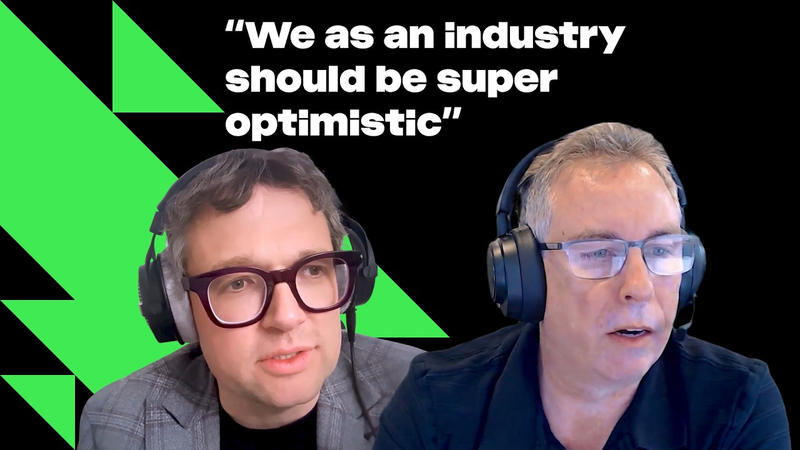
PlayStation: “We have a responsibility to the whole industry”
PlayStation operates a comprehensive ecosystem designed to support nearly 10,000 third-party partners, functioning as a primary engine for global industry growth.
- PlayStation supports an ecosystem of nearly 10,000 third-party partners, positioning itself as a primary driver for global industry growth through resource, marketing, and funding support.
- The company is actively expanding its geographic footprint by investing in emerging development hubs, specifically targeting China, India, and the Middle East to cultivate international talent.
- The 'China Hero Project' is utilized as a primary model for regional development, successfully accelerating the creation of unique content within the Chinese market.

Hero Esports to Stage Second Asian Champions League: Shanghai
Hero Esports has announced the return of the Asian Champions League (ACL) to Shanghai, scheduled to take place from May 1–24, 2026.
- Hero Esports will host the second Asian Champions League (ACL) in Shanghai from May 1–24, 2026, featuring a total prize pool of $365,000.
- The tournament serves as a direct qualification pathway to the 2026 Esports World Cup (EWC) for all three featured titles: Dota 2, Counter-Strike 2, and Mobile Legends: Bang Bang.
- The prize pool is distributed across the three titles, with $150,000 for CS2, $125,000 for MLBB, and $90,000 for Dota 2.
Is Destiny doomed? King on AI, layoffs and more, plus March's top games, data, soft launches, more
The mobile games industry continues to navigate a complex landscape defined by shifting monetization strategies, the integration of artificial intelligence, and intense market competition.
- Microfun’s Gossip Harbor reached $100 million in monthly in-app purchase revenue for the first time in March, marking a significant increase from $82.5 million in February and positioning it to potentially overtake Candy Crush Saga as the top-grossing puzzle game.
- King VP Eva Ryott defended the company's use of AI as a supporting tool for level management rather than a direct replacement for staff, while noting that workforce adjustments following 200 layoffs were necessary to maintain competitive relevance.
- Candy Crush Saga has adopted a 2x2 matching mechanic, a feature King implemented within the last year to align with evolving market standards and compete against rivals like Royal Match and Gossip Harbor.

Analyst Bulletin: Mobile Game Market Review March 2026
The mobile gaming landscape in March 2026 is defined by a strategic shift toward complex, multi-layered engagement loops and the aggressive integration of cross-genre mechanics.
- Mobile games are shifting from simple loops to complex, multi-layered engagement models that utilize seasonal collectible albums and nested event structures to drive sustained spending.
- The industry is increasingly adopting hybrid gameplay models, such as integrating 4X strategy mechanics into titles like Hero Wars or merge features into casual puzzle games.
- Chinese publishers are successfully capturing significant Western market share, particularly within the merge genre, as evidenced by the performance of titles like Gossip Harbor.

Butcher Hero Review: The Next Alien Invasion? Not quite yet!
Butcher Hero, an idle RPG developed by Multicast, currently occupies a precarious position in the mobile gaming market.
- Multicast’s 'Butcher Hero' generates 20,000 to 30,000 daily downloads but suffers from high churn rates due to a repetitive, shallow gameplay loop.
- The title currently generates approximately $5,000 in daily ad revenue, a figure that highlights the limitations of its current design and monetization model.
- There is a significant disconnect between the game's effective marketing creatives and the actual user experience, which lacks the depth and variety of the developer's previous hit, 'Alien Invasion'.
GDev Form 20-F: Fiscal Year 2025
GDEV Inc., a British Virgin Islands-based gaming holding company listed on the Nasdaq, presents its 2025 annual report as an emerging growth company operating under International Financial Reporting Standards.
- GDEV Inc. reported a net decrease in cash and cash equivalents to $62.9 million for the fiscal year ended December 31, 2025, down from $111.0 million at the end of 2024.
- The mobile RPG genre, a core focus for the company, faced a multi-year downward trend with material declines in in-app purchase (IAP) revenue throughout 2025 across Asia, North America, and Europe.
- The company faces increasing regulatory scrutiny regarding data privacy and consumer protection, specifically receiving inquiries in 2025 from authorities in the UK and Poland concerning cookies, loot boxes, and advertising practices.
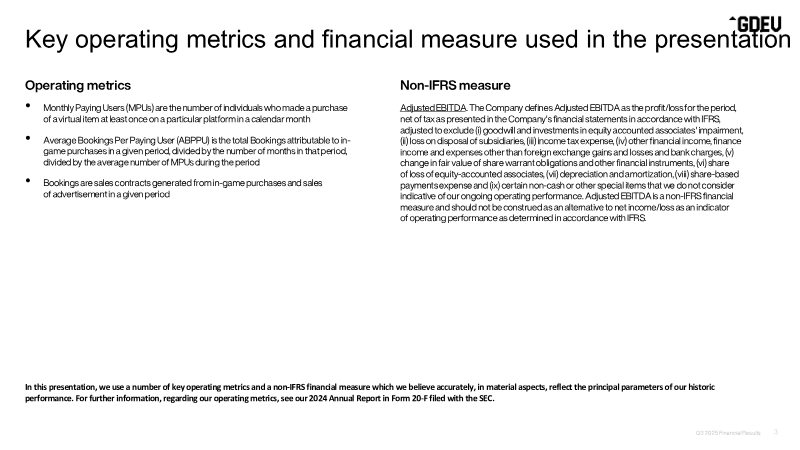

GDEV Inc Q3 2024 Financial Results
The Q3 2024 financial results for GDEV Inc. demonstrate a period of strategic operational refinement and improved profitability.
- GDEV Inc. reported a Q3 2025 profit of $24 million, up from $15 million in the same period of the previous year.
- Adjusted EBITDA increased to $26 million in Q3 2025, with the margin improving to 27% from 16% in Q3 2024.
- Total costs and expenses were reduced to $72.7 million, primarily driven by a significant decrease in selling and marketing expenditures.

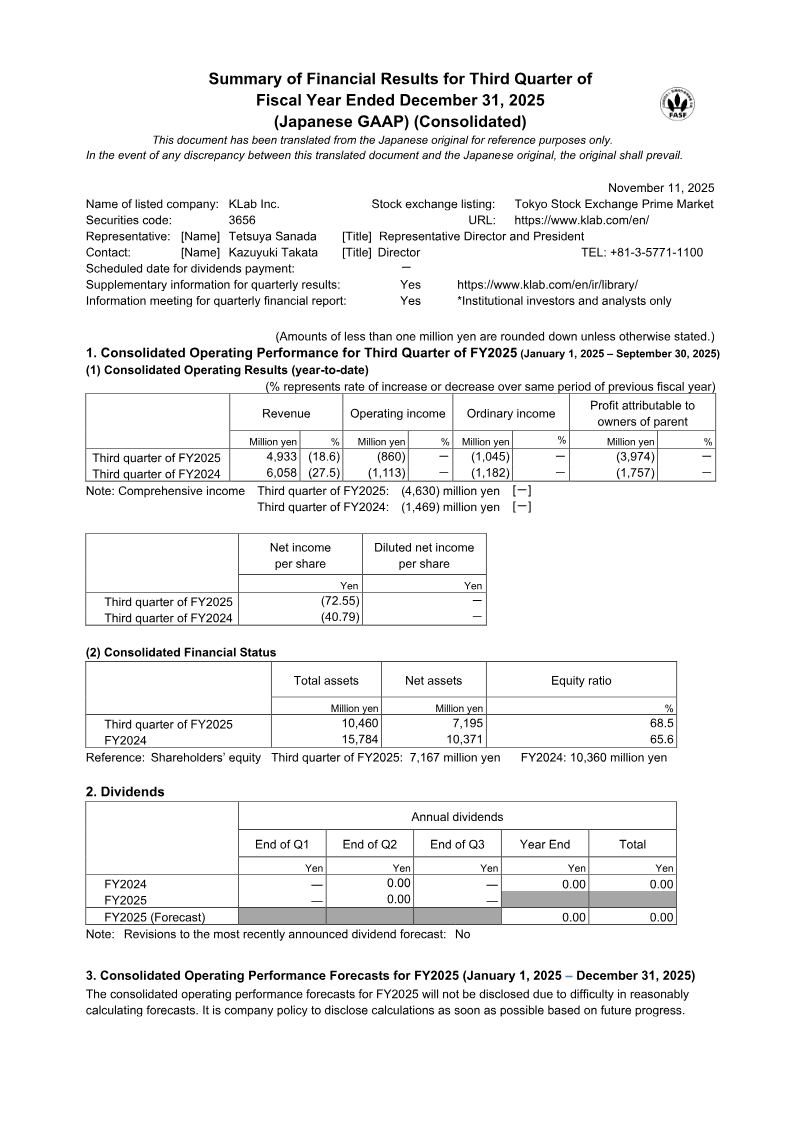
Summary of Financial Results for Third Quarter of Fiscal Year Ended December 31, 2025
KLab Inc. experienced a significant downturn during the third quarter of fiscal year 2025, characterized by an 18.6% year-over-year revenue decline to ¥4.93 billion.
- KLab Inc. reported a net loss of ¥3.97 billion for Q3 2025, driven by an 18.6% year-over-year revenue decline to ¥4.93 billion.
- The company recorded a ¥4.42 billion impairment charge on software assets, primarily linked to EA SPORTS FC™ TACTICAL and the divestment of GlobalGear Co. Ltd.
- Despite four consecutive years of operating deficits, management maintains that no material uncertainty exists regarding the company's status as a going concern.

GDEV Inc Q3 2024 Financial Results
GDEV Inc’s financial results for the second quarter of 2025 demonstrate a period of operational growth and improved profitability, despite a decline in certain user engagement metrics.
- GDEV Inc reported Q2 2025 revenue of $119.9 million, an increase from $105.8 million in Q2 2024.
- Profit for the period rose to $16.6 million, up from $14.7 million in the same quarter of the previous year.
- Adjusted EBITDA reached $22 million in Q2 2025, improving from $17 million in Q2 2024.

Are guitar games coming back? The story of RedOctane's return
The gaming industry is currently undergoing a period of significant structural transformation, characterized by both corporate consolidation and a strategic pivot toward sustainable, community-driven development models.
- Embracer Group is reviving the RedOctane brand by merging original staff with open-source rhythm game developers to move away from the annual release model that previously caused market oversaturation.
- The new rhythm game strategy shifts toward a 'forever game' model, prioritizing long-term content updates and direct-to-consumer engagement over traditional retail cycles.
- Publishers are increasingly utilizing game bundles as a strategic tool to extend the lifecycle and reach of titles after initial launch momentum declines.
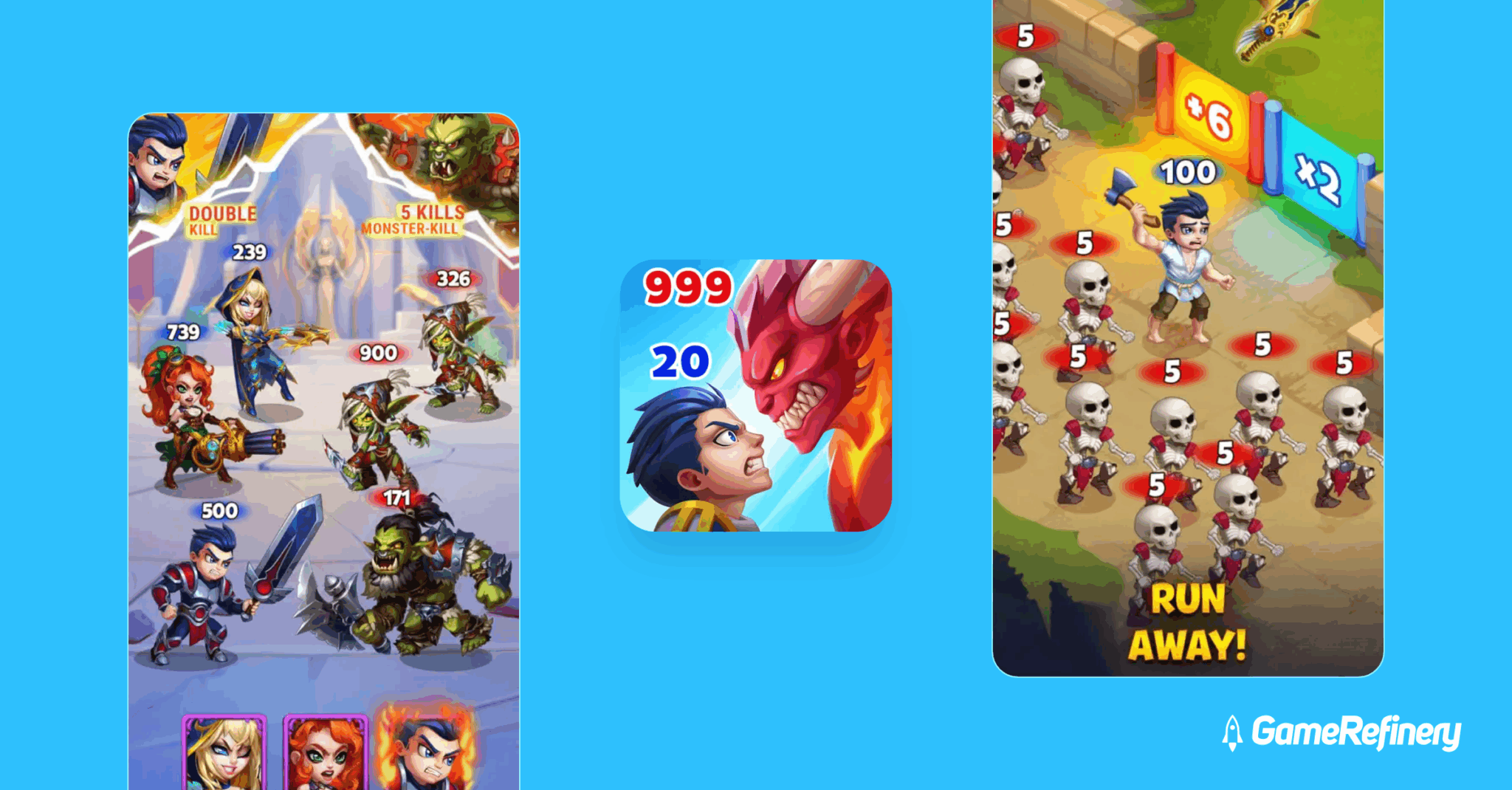
How Nexters' Hero Wars Stayed on Top with a Winning Events Strategy
Hero Wars sustains its long-term market leadership and consistent growth in daily active users and revenue by employing an aggressive, high-frequency LiveOps strategy.
- Since 2019, Hero Wars has maintained a consistent top 100 grossing position on US iOS by utilizing an aggressive and evolving live events strategy.
- The Battle Pass feature is a primary revenue driver, with the game iterating through three versions of the system and introducing a 'Season Pass' in September 2024 to further maximize engagement.
- Nexters has significantly increased the frequency of monetization-focused events, utilizing IAP bundles and strategic collaborations, such as the Lara Croft integration, to drive revenue spikes.


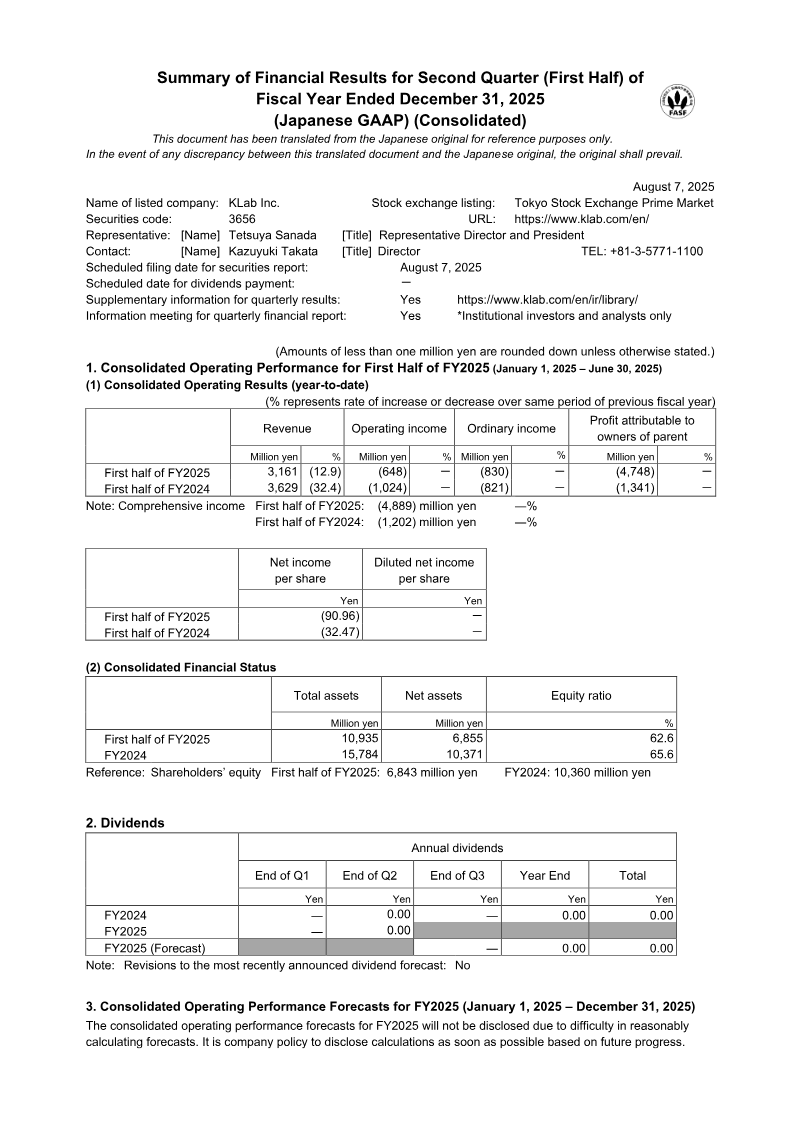
Summary of Financial Results for Second Quarter (First Half) of Fiscal Year Ended December 31, 2025
KLab Inc. experienced a challenging first half of the fiscal year ending December 31, 2025, characterized by a 12.9% year-over-year revenue decline to 3,161 million yen and a substantial net loss of 4,748 million yen.
- KLab Inc. reported a net loss of 4,748 million yen for the first half of fiscal year 2025, driven largely by a 4.43 billion yen impairment charge on software in progress.
- Revenue declined 12.9% year-over-year to 3,161 million yen, while total assets dropped from 15.7 billion yen to 10.9 billion yen.
- The company has suspended interim dividends and declined to provide a full-year financial forecast due to ongoing performance volatility and four consecutive years of operating deficits.