Digital Games
Company
Documents about Digital Games
A Method for Discovering Values in Digital Games
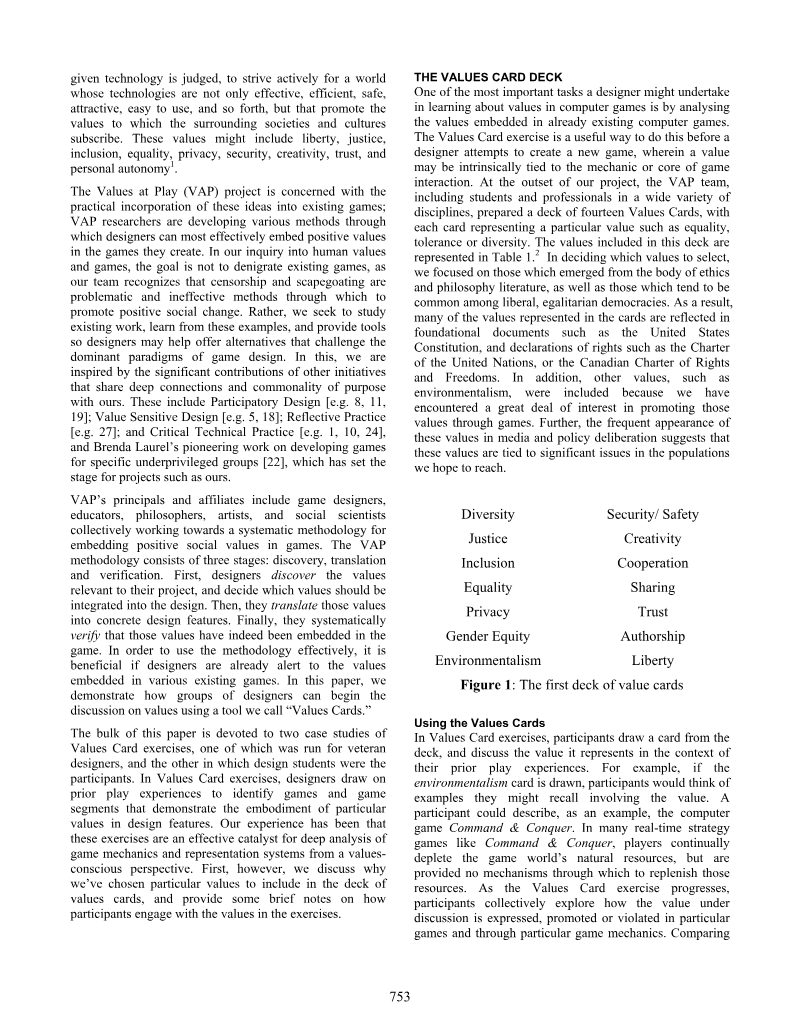
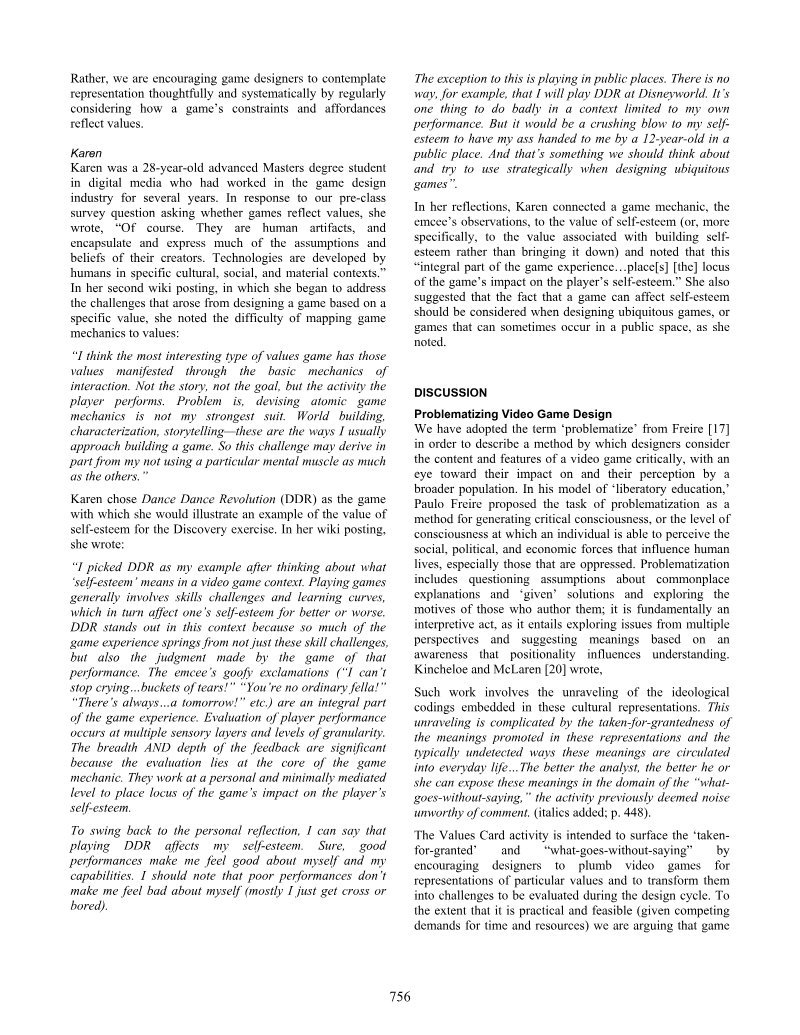
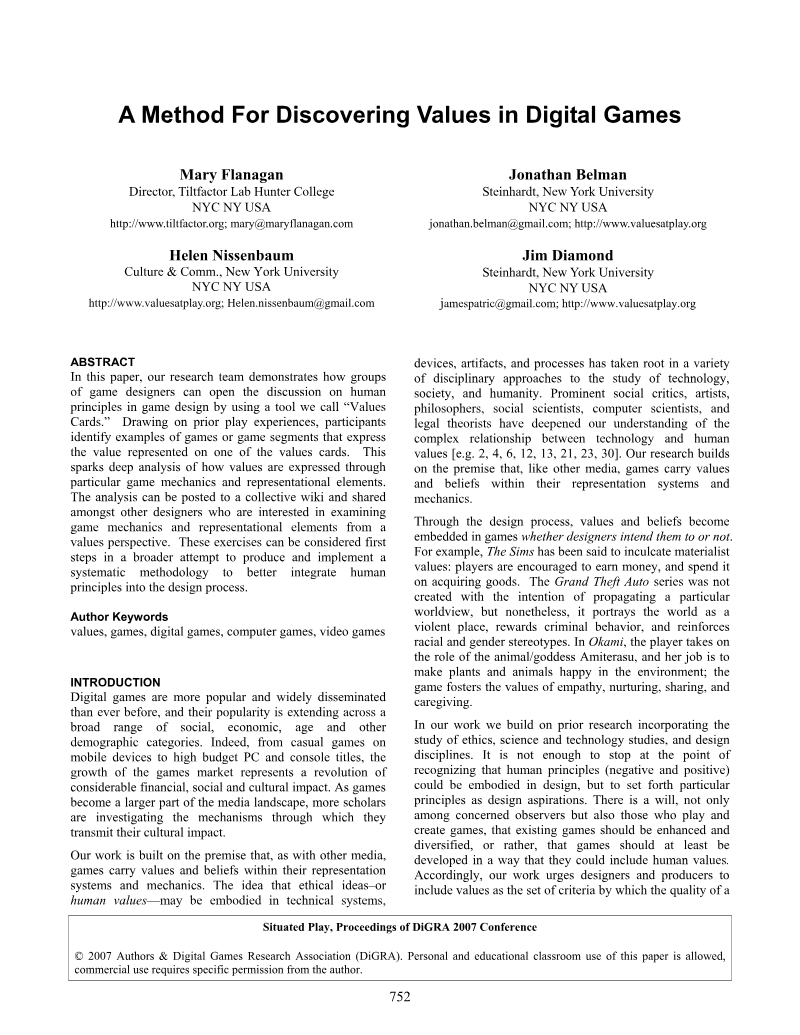
The document outlines a novel methodology, centered on a "Values Cards" tool, designed to help game designers systematically identify, analyze, and integrate human values into digital games.
- Games inevitably embed human values such as equality, justice, generosity, and competition, in their mechanics, representation, and the prior experiences players bring, much as other media do.
- The Values Cards exercise is presented as a practical tool that lets game designers identify and discuss these embedded values, and it is positioned as the first step in the broader Values at Play methodology of discovery, translation, and verification.
- Designers can gain conscious control over the values their games convey by examining both the positive and negative expressions of those values.
The Sponsored Avatar: Examining the Present Reality and Future Possibilities of Advertising in Digital Games
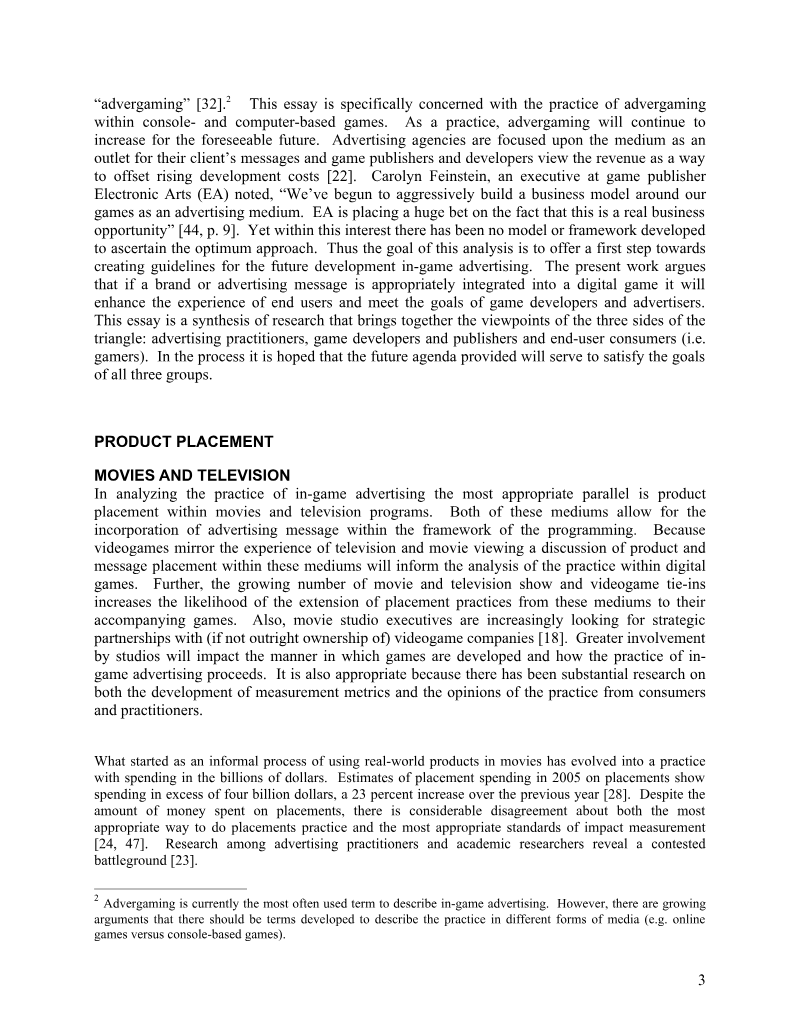
This paper examines the current state and future potential of advertising within digital games, a practice often termed "advergaming."
- Advertising spending is shifting away from traditional television commercials toward placements in entertainment, with one cited beverage company redirecting more than $300 million in annual spending.
- Game-based advertising remained a small share of revenue relative to film and television, with projections of roughly $260 million by 2008, though agencies increasingly seek game placements and some have created dedicated game advertising divisions.
- Players generally accept in-game advertising, mostly because it enhances realism, but they worry that placements may feel incongruous and detract from the experience.
Playing With Non-Humans: Digital Games as Techno-Cultural Form
Seth Giddings's "Playing With Non-Humans: Digital Games as Techno-Cultural Form" argues that game studies needs a serious debate about the digitality of digital games.
- Seth Giddings argues that game studies needs a serious debate about the digitality of digital games, holding that understanding gameplay requires recognising non-human technological agency rather than treating technologies as merely socially constructed.
- Drawing on Science and Technology Studies and Actor-Network Theory, the work critiques the social constructivist and textual models dominant in media studies, contending that technologies exert material effects that cannot be reduced to their social consumption and that humans and non-humans form symmetrical networks.
- Using the strategy game Advance Wars 2 as its primary case study, the work proposes conceptualising gameplay as a cybernetic circuit rather than an extended cyborg body, shifting attention from games as passive texts to the active role of software systems.
The Localization of Digital Games: A Case Study in China
This paper investigates the complexities of digital game localization, specifically focusing on the Chinese market.
- Game localization is more complex than general software localization because games function simultaneously as commercial and cultural products.
- The authors propose a three-dimensional model comprising the In-Game Environment (storyline, gameplay, engagement, interface), the External Environment (social, political, legal, ideological factors), and the Users, who link the two.
- The central contention is that all three dimensions should be considered throughout the entire game design process rather than treated as a late-stage adjustment.
Digital Games: A Motivational Perspective
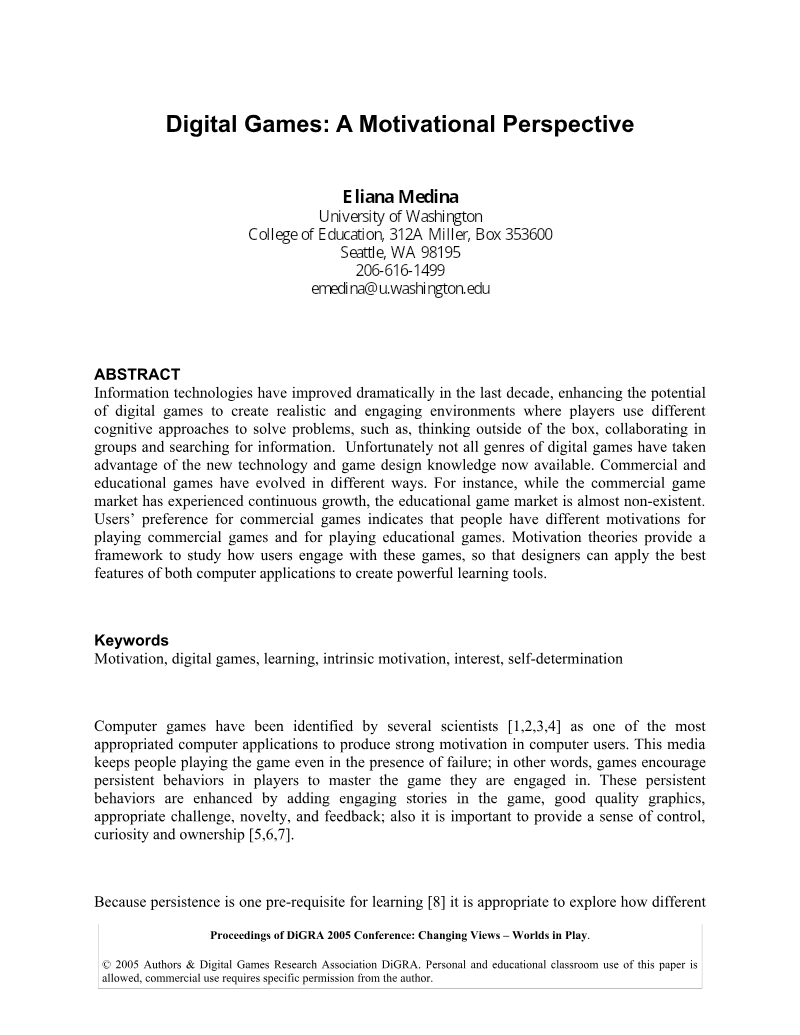
This literature review explores the motivational differences and similarities between commercial and educational digital games, aiming to inform the design of more effective learning tools.
- Commercial digital games have grown steadily while educational games remain marginal, and the review argues that understanding the motivational differences between the two can help designers combine their strengths to build more effective learning tools.
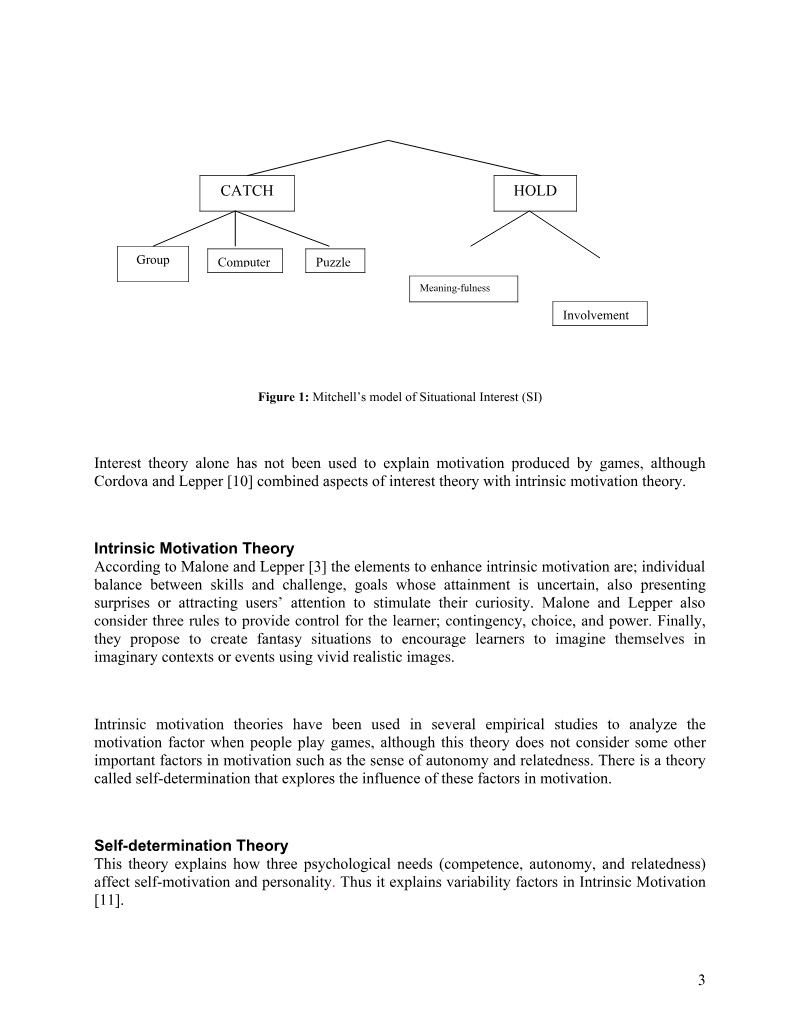
- The review grounds its analysis in three frameworks: Mitchell's situational interest model (CATCH versus HOLD), intrinsic motivation theory (challenge, fantasy, curiosity, control), and self-determination theory (competence, autonomy, relatedness).
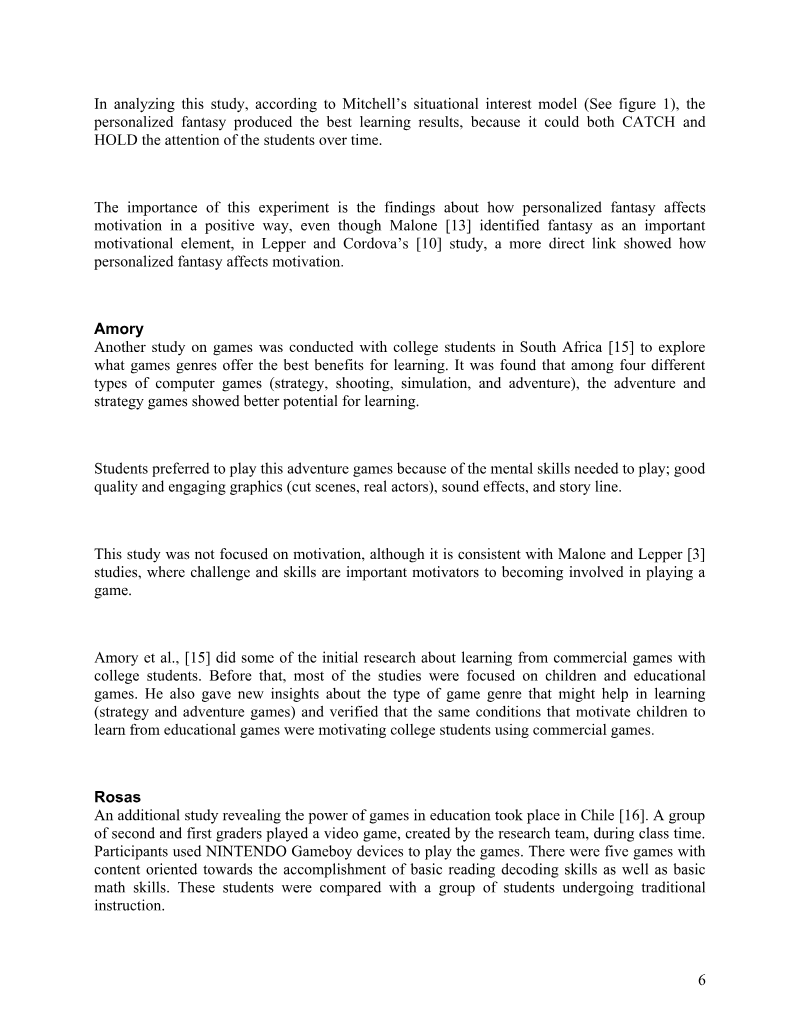
- Lepper and Cordova's arithmetic game experiments found that personalized fantasy and player choice improved intrinsic motivation, time on task, and learning, with personalized fantasy producing the strongest results.
History of Digital Games in Turkey
This study provides a historical overview and current status of digital games and the game industry in Turkey, covering the period from the late 1980s to 2005.
- Turkish players' habits and play durations parallel global averages, but domestic game development has been extremely limited and poorly documented.
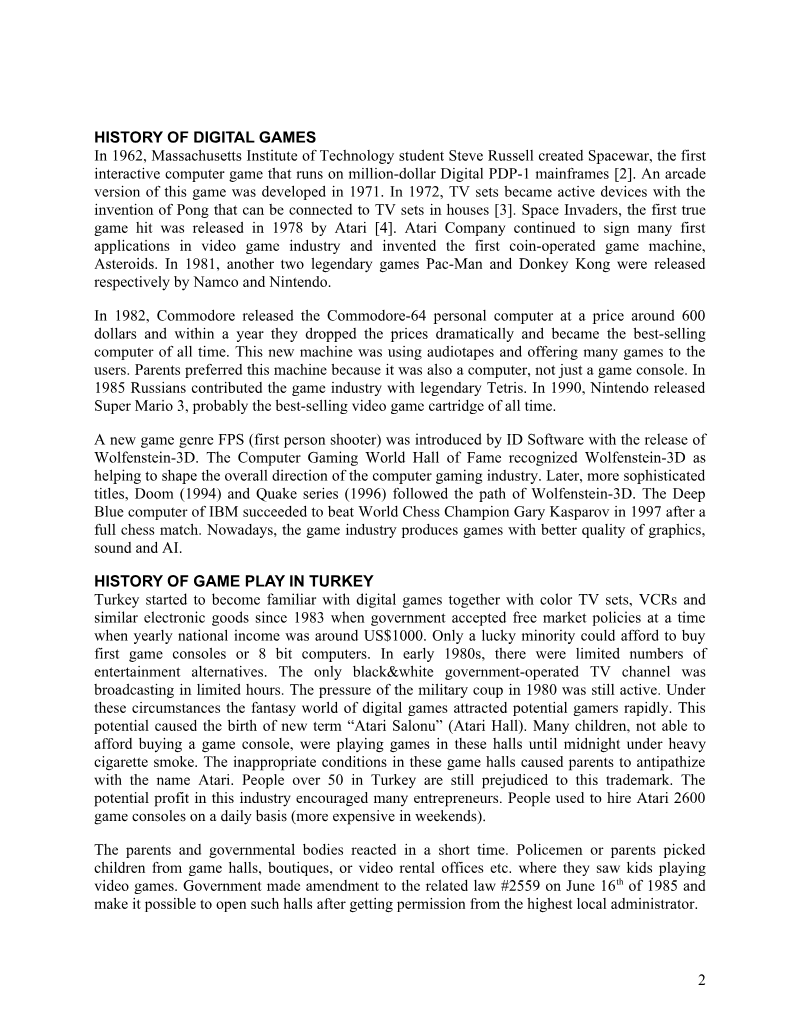
- Digital games reached Turkey in the early 1980s via arcade-style "Atari Salonu" halls, which prompted a 1985 regulatory response requiring local permits.
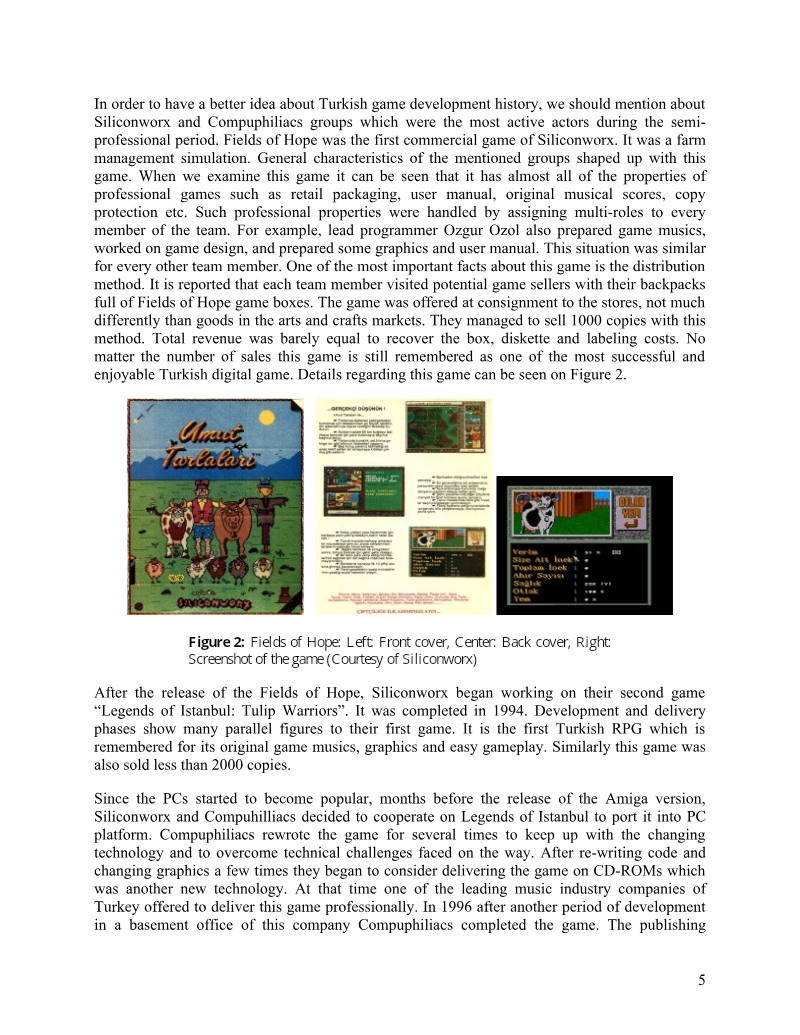
- Turkish home game development passed through three phases: an amateur 1980s period built on the Commodore 64 and magazine-published source code, a semi-professional 1990s period centered on Amiga and PC groups like Siliconworx and Compuphiliacs, and a professional stage from 2000 onward.
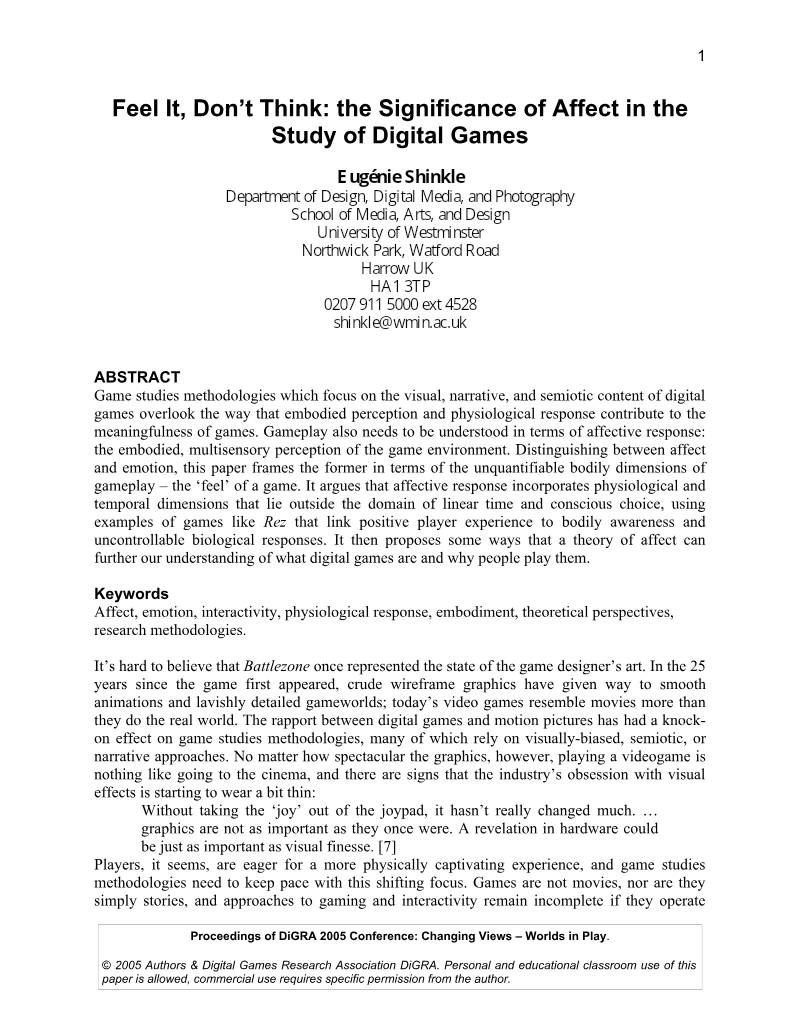
Feel It, Don't Think: The Significance of Affect in the Study of Digital Games
The document, "Feel It, Don't Think: The Significance of Affect in the Study of Digital Games," argues that traditional game studies methodologies, which prioritize visual, narrative, and semiotic elements, fail to adequately account for the embodied, multisensory, and physiological dimensions of gameplay.
- Shinkle argues that game studies focused on visual, narrative, and semiotic content overlook the embodied, physiological 'feel' of gameplay, which she calls affect: a multisensory, temporally delocalized experience that operates partly outside linear time and conscious choice.
- The paper distinguishes affect from emotion and presents itself as a preliminary theoretical examination rather than an empirical study, drawing on Massumi, Grodal, Aarseth, and Poole.
- Sega's rave-inspired Rez is cited as an example whose appeal lies in a trance-like synchronicity between player and environment rather than in level completion.

Issues and Approaches in Artificial Intelligence Middleware Development for Digital Games and Entertainment Products
The document examines the challenges and solutions in developing Artificial Intelligence (AI) middleware for digital games and entertainment products.
- AI has shifted from a secondary concern to a priority in game development, yet developers still rely on a narrow set of techniques and lack flexible, reusable tooling.
- Dedicated AI middleware, a software layer that supplies agent behavior and decision-making services to game engines, is presented as the likely next step for improving game AI and freeing developers for creative work.
- Dominant practice relies on finite state machines, hierarchical and fuzzy state machines, A pathfinding, steering behaviors, decision trees, and rule-based systems, each trading off speed, expressiveness, and predictability.

Technology Tells a Tale: Digital Games and Narrative
"Technology Tells a Tale: Digital Games and Narrative" examines how digital games redefine and transform traditional notions of storytelling, rather than simply being narratives themselves.
- Digital games are not narratives in themselves; the digital medium is reshaping how culture understands what a story is.
- The paper frames the long-running debate between narratologists (applying literary and film theory to games) and ludologists such as Aarseth, Frasca, and Eskelinen (prioritizing play and interactivity).
- The author identifies five recurring characteristics of computing as the basis for how games produce meaning: procedurality, participation, quantifiability, modularity, and finiteness.


Encounters With Consumption During Computer-Mediated Play: The Development of Digital Games as Marketing Communication Media
This analysis examines the evolving role of digital games as a marketing communication medium, focusing on how brand integration within game environments influences player perception and consumer behavior.
- Exploratory focus groups with 24 experienced video game players across four sessions found that players generally view in-game brand placement as a source of realism and as a way to fund lower-priced games.
- Players also voiced concern that brand placement can be invasive and that advertising revenue could distort game design.
- Brand placement is presented as potentially effective: it can strengthen brand recall, and players may show shifts in attitude or purchase intention.


Tiny Patches of Peace: Signs of Agency in Digital Games
Cindy Poremba's study examines how player-created modifications function as a form of authorship in digital games, with particular attention to peace-themed works produced after September 11, 2001.
- Player-created modifications are framed as an independent form of authorship that both expresses and reinforces the player's legitimacy as an author, with the study focusing on peace-themed mods made after September 11, 2001.
- Cindy Poremba's analysis centers on two cases: the anti-war Counter-Strike modification "Velvet-Strike" and the anti-war posters "Tiny Signs of Hope" created for The Sims.
- Velvet-Strike adopts a "gamer" persona to gain credibility within the combative first-person shooter community while aiming its message at an outside audience of artists and activists.



Women Just Want to Have Fun: A Study of Adult Female Players of Digital Games
This study examines adult female digital game players, challenging the prevailing notion of gaming as a male-dominated activity.
- Social networks, rather than individual initiative alone, are the main force shaping how adult women first enter digital gaming and how they keep playing, with early exposure through brothers, fathers, or friends and access to shared or borrowed consoles as the principal routes in.
- Despite Sony's marketing and redesign claims of gender neutrality, female ownership of the PlayStation 2 reached only 6.7 percent of registered PAL-territory owners, compared with 11.1 percent in Japan.
- The study attributes the PlayStation 2's limited female uptake to a continued focus on hardcore male gamers, price sensitivity among women, and manufacturers' reliance on registered-user data that cannot capture people playing on borrowed hardware.