1 free read left. Create a free account for unlimited reading + AI research.
Create free accountWhitepaper DiGRA
1 free read left. Create a free account for unlimited reading + AI research.
Create free accountWhitepaperDiGRA
Eugénie Shinkle's paper argues that game studies methodologies focused on visual, narrative, and semiotic content overlook the embodied, physiological dimensions that give digital games their meaning. Distinguishing affect from emotion, the author frames affect as the unquantifiable "feel" of gameplay: a multisensory, temporally delocalized experience that operates partly outside linear time and conscious choice. The paper positions this as a preliminary theoretical examination rather than an empirical study, drawing on sources including Massumi, Grodal, Aarseth, and Poole, and on design examples across the arcade and console eras.
Key supporting examples include Sega's rave-inspired Rez, whose appeal lies in a trance-like synchronicity between player and environment rather than level completion, and a Japanese prototype that feeds players' skin conductance response back into gameplay, raising difficulty as their agitation rises. The paper also notes a roughly half-second gap between neural activity and outward action, suggesting that the body responds to its environment before conscious awareness does. Critiques of existing controllers, such as the "cybernetic dissonance" Poole describes in ports of Centipede and Tempest, lead to proposals for richer haptic feedback and for interfaces that balance immersion against somatic awareness.
The author concludes that affect offers a way to reconsider boundaries between body, technology, and self, and to extend debates about games and ideology by recognizing that bodily incorporation of behavior, not only explicit content, shapes how games function socially. The paper's scope is conceptual and draws on examples from the period around 2005, with no quantitative data or survey sample.
Each row is a game or company this document names, each column a document, oldest first. A mark means that document names it. Select a row to see those documents.
DiGRA · 2019
DiGRA · 2019
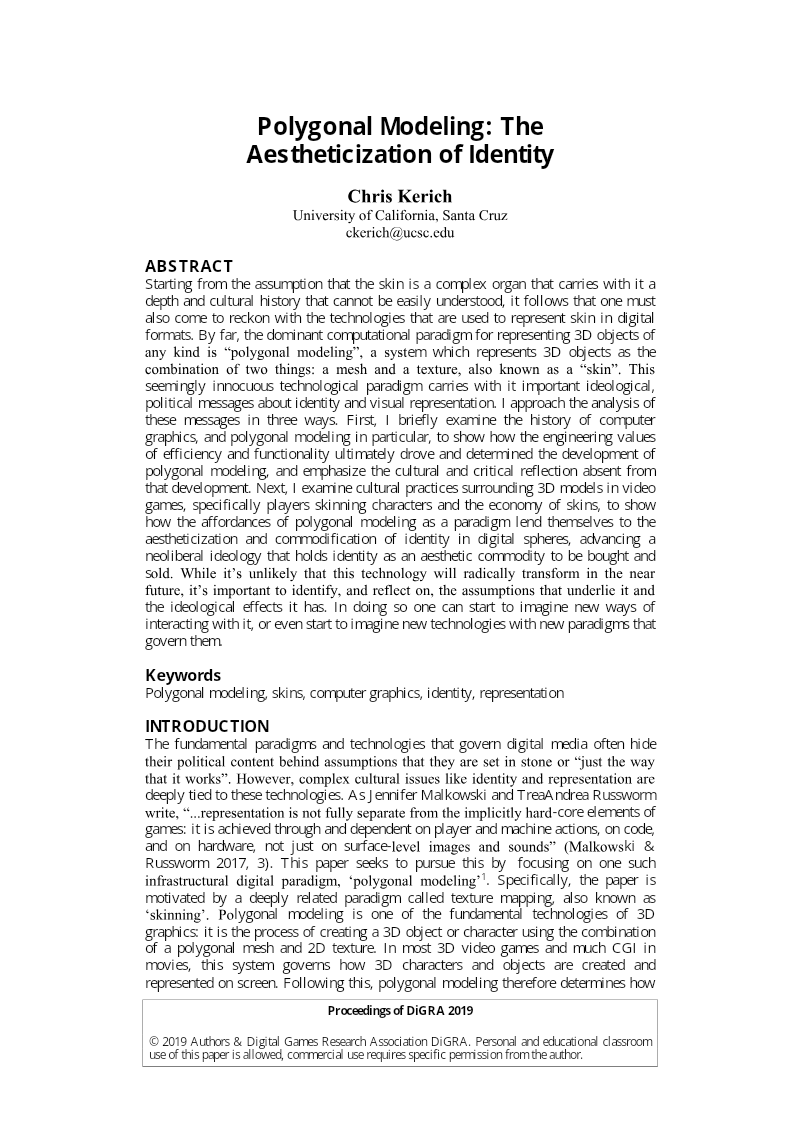
DiGRA · 2019
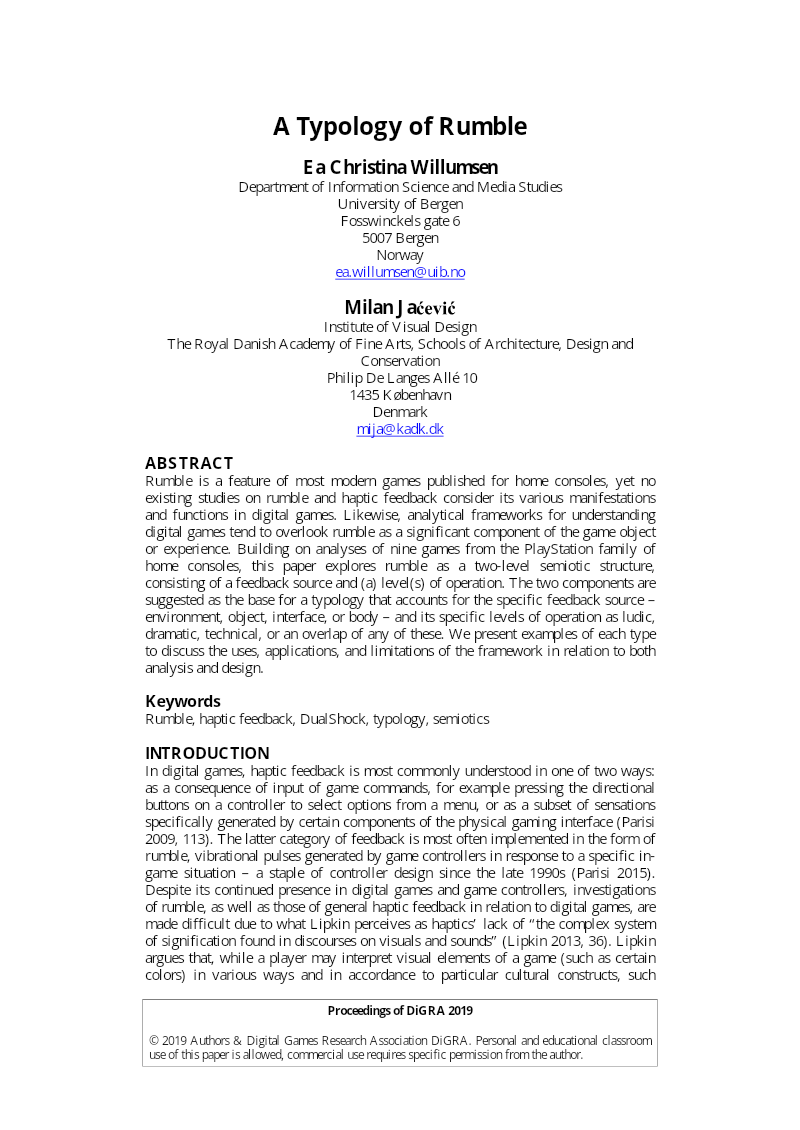
DiGRA · 2019



DiGRA · 2019
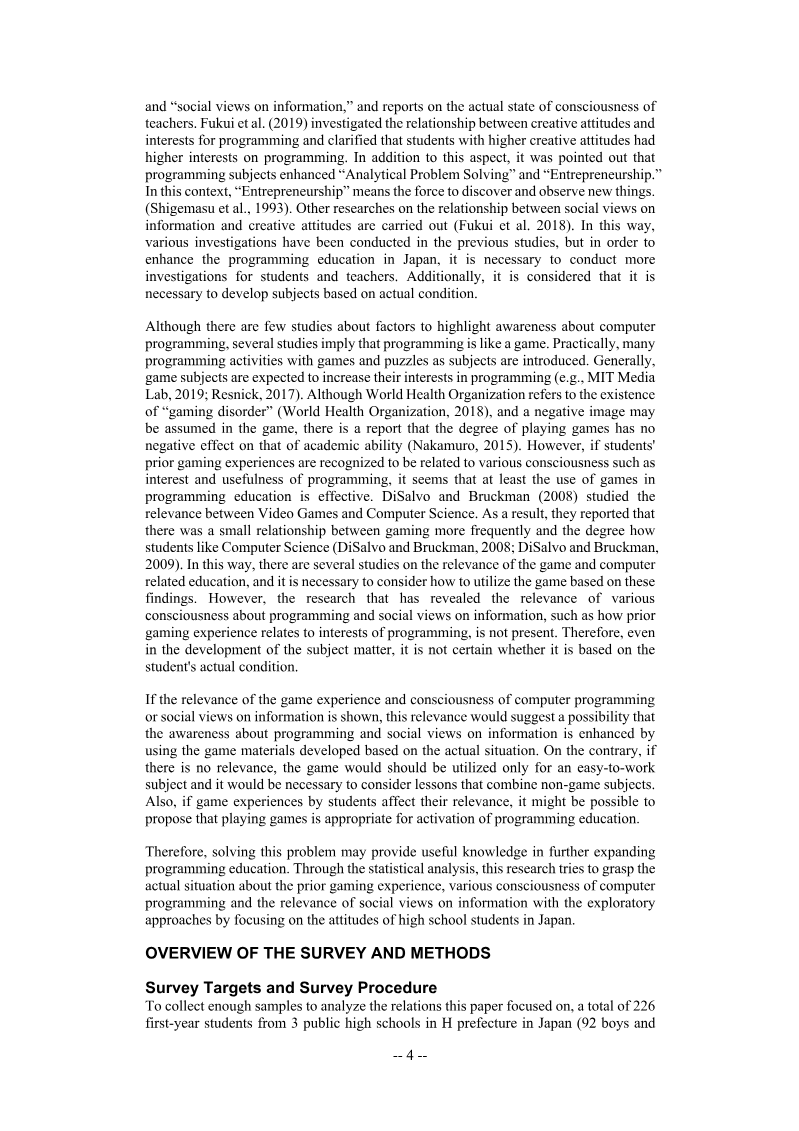
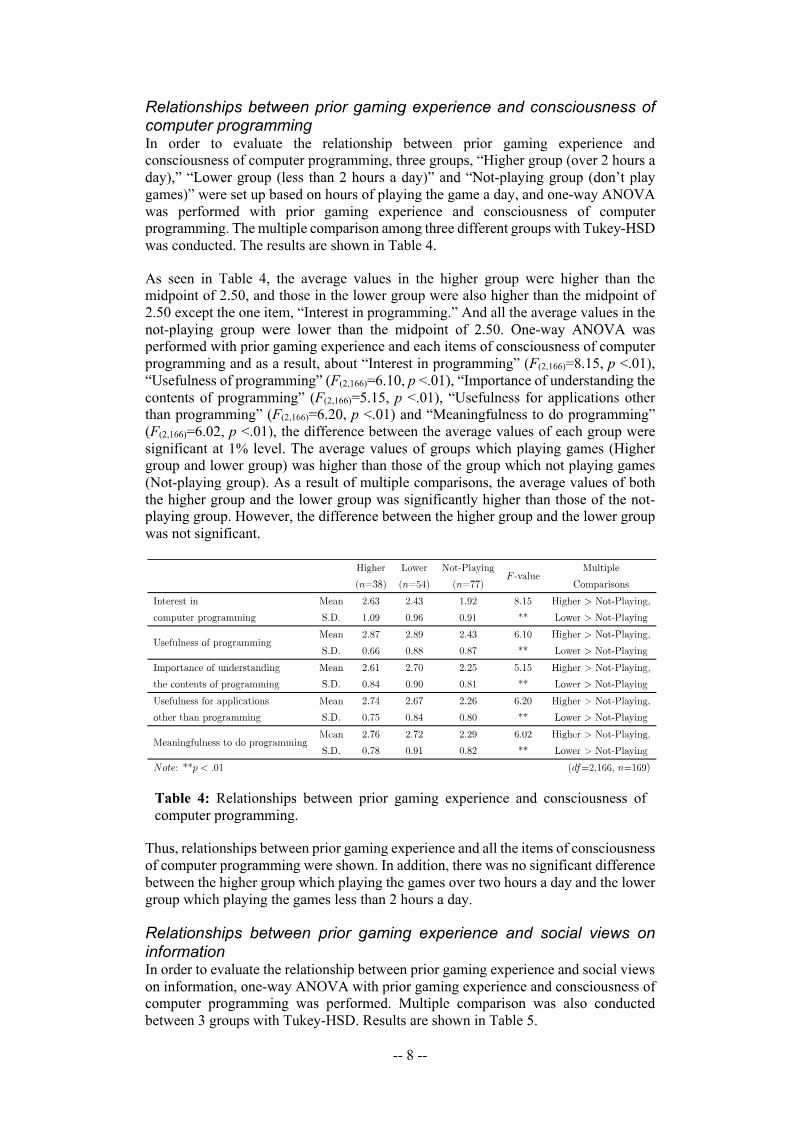
DiGRA · 2019
DiGRA · 2019
DiGRA · 2019
DiGRA · 2019
DiGRA · 2019
DiGRA · 2019
DiGRA · 2019
CD Projekt · 2026