Digital Games
Company
Documents about Digital Games
The Eyes, the Hands and the Brain: What can Text-to-Image Models Offer for Game Design and Visual Creativity?
The authors, Hongwei Zhou, Jichen Zhu, Michael Mateas and Noah Wardrip-Fruin of UC Santa Cruz and IT University of Copenhagen, present a theoretical analysis for the 2024 Foundations of Digital Games conference, aimed at informing games that foster critical literacy around text-to-image models such as DALL-E, Stable Diffusion…
- The authors distinguish two ways of orienting players to visual creativity: seeing for visual communication, which works directly with color, shape and lines, and seeing for recognition, which text-to-image interfaces emphasize.
- The authors argue that text-to-image models habituate users toward seeing as recognition, partly because the author's intention must be explicitly inscribed through text.
- Chicory limits players to four colors per in-game area, plus white, and its canvas records colors in an absolute manner, with each having to be one of five colors.
Permalife of the Archive: Archaeogaming as Queergaming
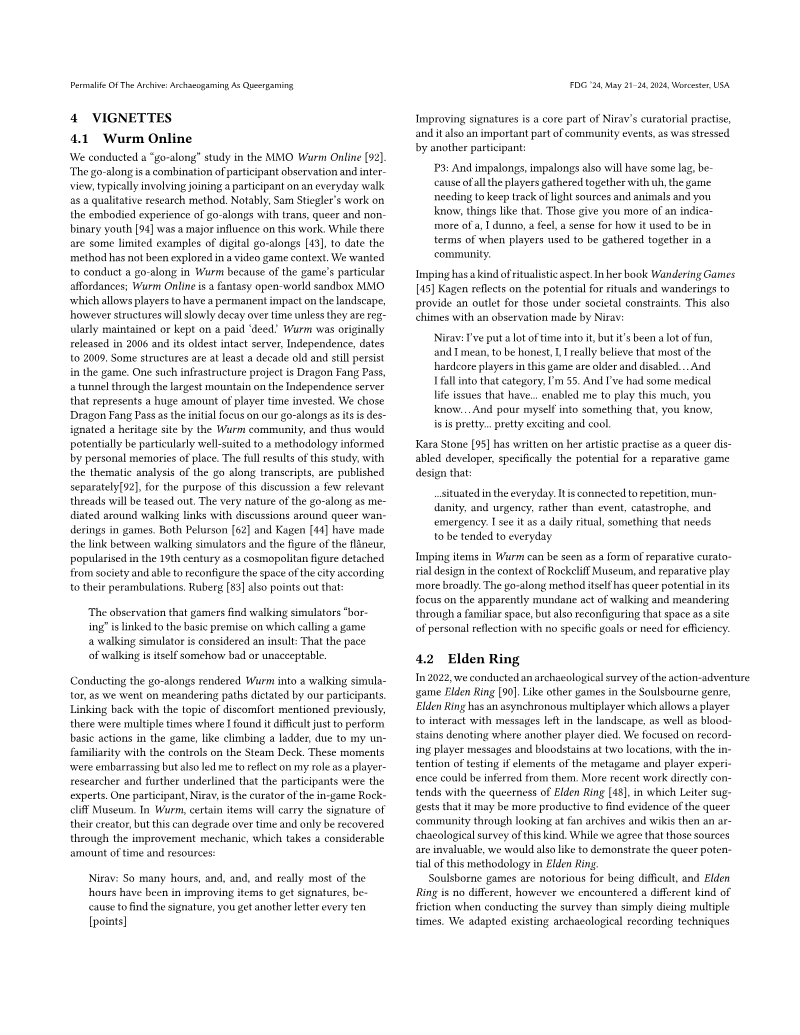
Florence Smith Nicholls, of Queen Mary University of London, presents a paper published for the 19th International Conference on the Foundations of Digital Games (FDG 2024) arguing that archaeogaming, the archaeological study of games, and queergaming, the application of queer theory to games, share epistemological parallels.
- The author argues that archaeogaming and queergaming both concern the limits and ethics of representation, and the personal and political contexts of game development.
- The Wurm Online go-along study chose Dragon Fang Pass, a tunnel through the largest mountain on the Independence server that the Wurm community designates a heritage site, as its initial focus.
- In the Elden Ring survey, the author adapted analogue techniques, using the player character's foot as a unit of measurement to create scale base plans.

FY2024 Report: Australian Game Development Survey
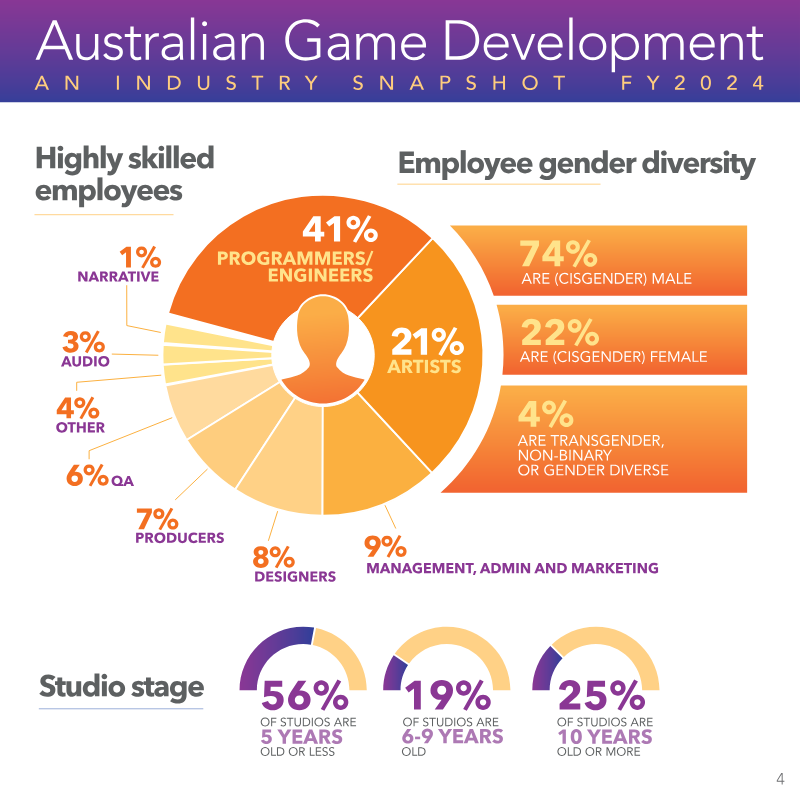
The FY2024 Australian Game Development Survey, the ninth annual edition from IGEA, offers a snapshot of the local industry's size, health and outlook for the financial year from 1 July 2023 to 30 June 2024.
- The Australian game development industry generated $339.1 million in revenue during FY2024, reflecting a minor 1.9% year-over-year decline despite global economic headwinds.
- The sector is highly export-focused, with 93% of total revenue derived from international markets and 85% of studios prioritizing the development of original intellectual property.
- Employment remains stable at 2,465 full-time equivalent workers, with 61% of studios planning to increase their headcount in the coming year.
Toward a Framework for Analyzing Adaptive Digital Games' Research Effectiveness
The paper by Vanbecelaere, Demedts, Reynvoet and Depaepe (KU Leuven, Belgium), published in the International Journal of Serious Games in November 2023, proposes a conceptual framework for analyzing research on the effectiveness of adaptive digital games for learning.
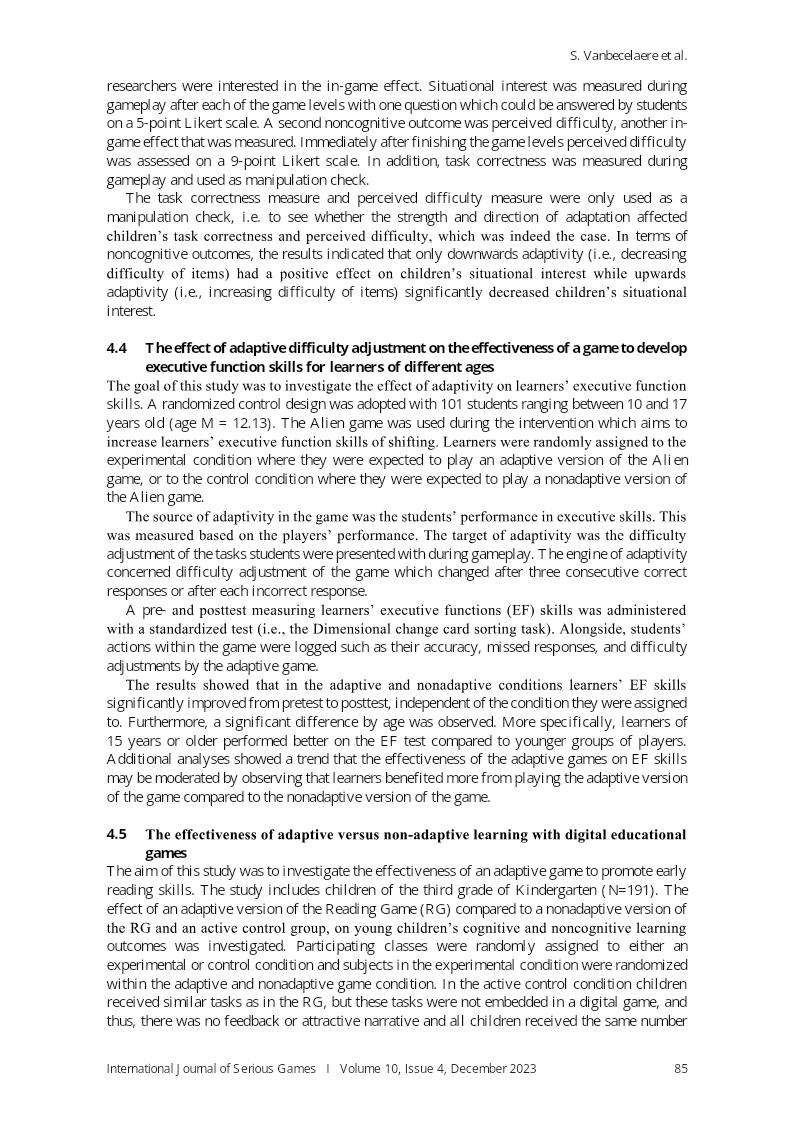
- Across the six reviewed studies, only three examined whether individual differences moderated effectiveness, and no study compared different forms of adaptivity.
- In one first-grade study, the adaptive version did not outperform the nonadaptive version on cognitive outcomes but needed significantly less time to reach the same learning goals.
- In a 167-child study, only downward difficulty adaptation had a positive effect on situational interest, while upward adaptation significantly decreased it.
A Look into Darkness: Ludofictional Aesthetics from the Non-Mechanical Difficulty
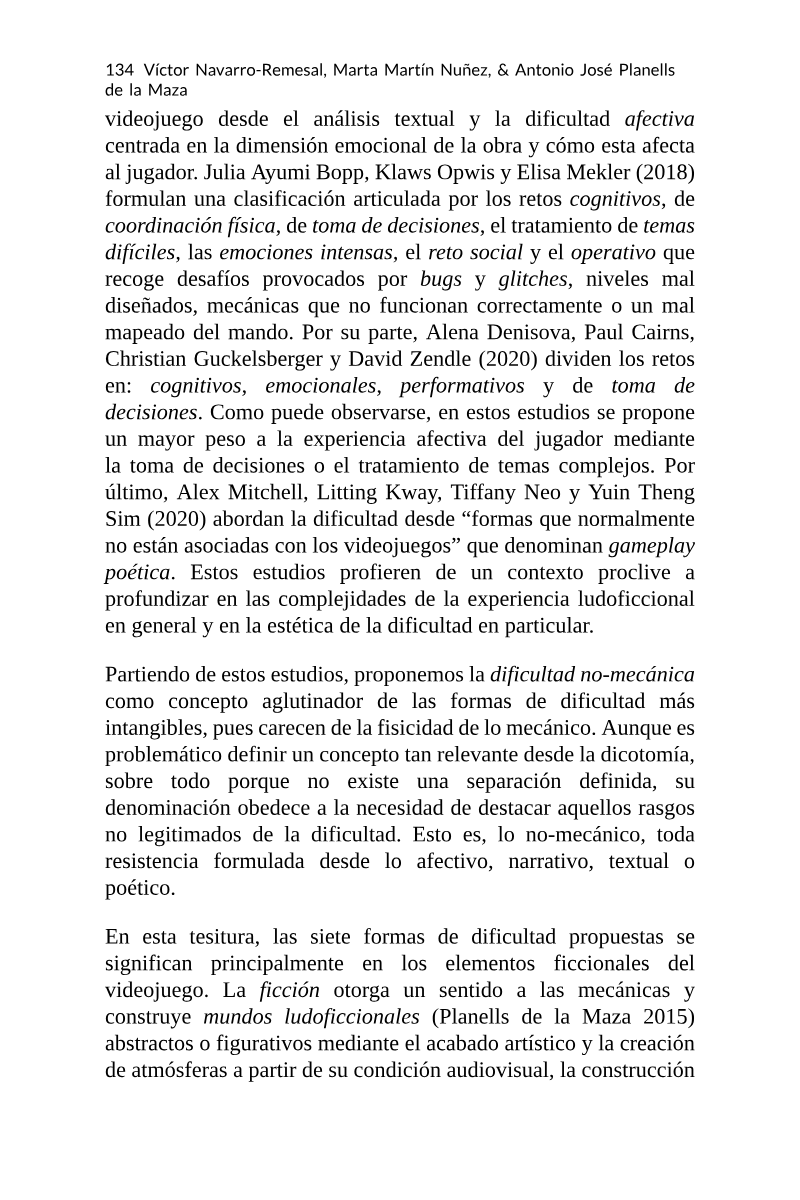
This article by Mateo Terrasa-Torres, published in the Transactions of the Digital Games Research Association (January 2023, Vol. 6 No 2, pp. 127-151), examines difficulty in video games beyond mechanical challenge.
- The author describes difficulty as resistance to the advancement, compression, and access to the ludofictional text that causes some kind of suffering to the player, and identifies seven non-mechanical forms of difficulty.
- The author cites Daniel Vela as reading Dark Souls' difficulty as aiming for an experience close to the sublime, in which the player's insignificance before a hostile world is revealed.
- The study bases its seven forms on close reading and playtesting of a set of contemporary video games from 2009 to 2020.
Pyro Studios: An Essay on the Success and Later Demise of the Studio behind Commandos
This essay by Jaume Esteve and Federico Peinado, published in Transactions of the Digital Games Research Association (January 2023), traces the history of Spanish studio Pyro Studios, from its founding in 1996 to its closure in 2017.
- Commandos: Behind Enemy Lines reached number one in sales in several major European markets within weeks of its June 1998 release. The authors state that Eidos part-financed its development and handled distribution.
- Commandos 2: Men of Courage had a budget six times larger than its predecessor, but its final sales were similar to the original game's.
- Commandos 3: Destination Berlin sold roughly 500,000 units, according to Ignacio Pérez Dolset, which was below the sales of the original Commandos.
Approaching the Eras of the History of Board Games in Spain: 20th Century
Antonio Catalán's article, published in Transactions of the Digital Games Research Association (January 2023, Vol. 6 No 2, pp.
- The article divides Spain's 20th-century board game history into five periods, with the industrial period running from 1931 to 1975. Its framework is adapted from the European and American division to reflect Spain's later development.
- The author says Spain's board game industry began later than in neighbouring countries, and that most foreign products reached the Spanish market about thirty years late.
- According to the author, Borrás and Palouzié formed a monopoly in design, production and distribution from the 1920s, which restricted the market until nearly the 1970s.
Revisión de los Game Studies desde la estética del formalismo y el romanticismo
Alejandro Lozano's article was published in Transactions of the Digital Games Research Association (January 2023, Vol. 6 No 2, pp. 1-24). The article is in Vol. 6 No 2, pp. 1-24.
- The author identifies formalism and romanticism as the two frameworks used to interpret the selected Game Studies sources; the article also refers to a formalist moment in Game Studies that accompanied the first 20 years of the discipline.
- Sicart's ludocapitalism is presented as a concept in which capitalism appropriates play for profit, which the author links to the Romantic diagnosis of a fragmented culture.
- The author cites a passage from Sicart's Play Matters in which Sicart calls his theory romantic (or rhetorical) and based on creativity and expression, and the author notes that the debt to Romanticism is explicit in that essay.

The White Peril: Colonial Expressions in Digital Games
Haryo Pambuko Jiwandono's peer-reviewed article in issue 18 of gamevironments (2023) examines expressions of orientalism and white supremacy in action-adventure digital games.
- The author's sample is three triple-A action-adventure games, selected for their adherence to genre premises and their status as triple-A titles that enforce white hegemony.
- The author argues that the games enforce rules that only allow players to interact with the game via a white avatar, so playing Uncharted: Drake's Fortune only affords embodiment of whiteness.
- The article states that in Uncharted: Drake's Fortune, the non-white antagonists Atoq Navarro and Eddy Raja are more stereotyped than the white characters, who have more fleshed-out characterizations.

Skillful Play Is Dependent on Rules: Notes on a Phenomenology of Skills in Games and Digital Games
This extended abstract, presented at DiGRA 2023, argues that skillful play depends on rules and that skills provide the epistemic access necessary for aesthetic and phenomenological study of games.
- Skillful play depends on rules, and acquired skill is what gives a player or scholar epistemic access to a game's form and potentialities, making it central to the aesthetic and phenomenological study of games.
- The paper identifies a gap in game studies: rules have been widely theorized, but practical skill has received comparatively little attention.
- Drawing on Hubert Dreyfus's account of expertise, the author argues that novices move from detached rule-following toward flexible, situation-specific play, with game-constitutive and tactical rules receding into the background of expert activity.

Digital Games and the Category of Auteur: A Re-Evaluation and Perspectives
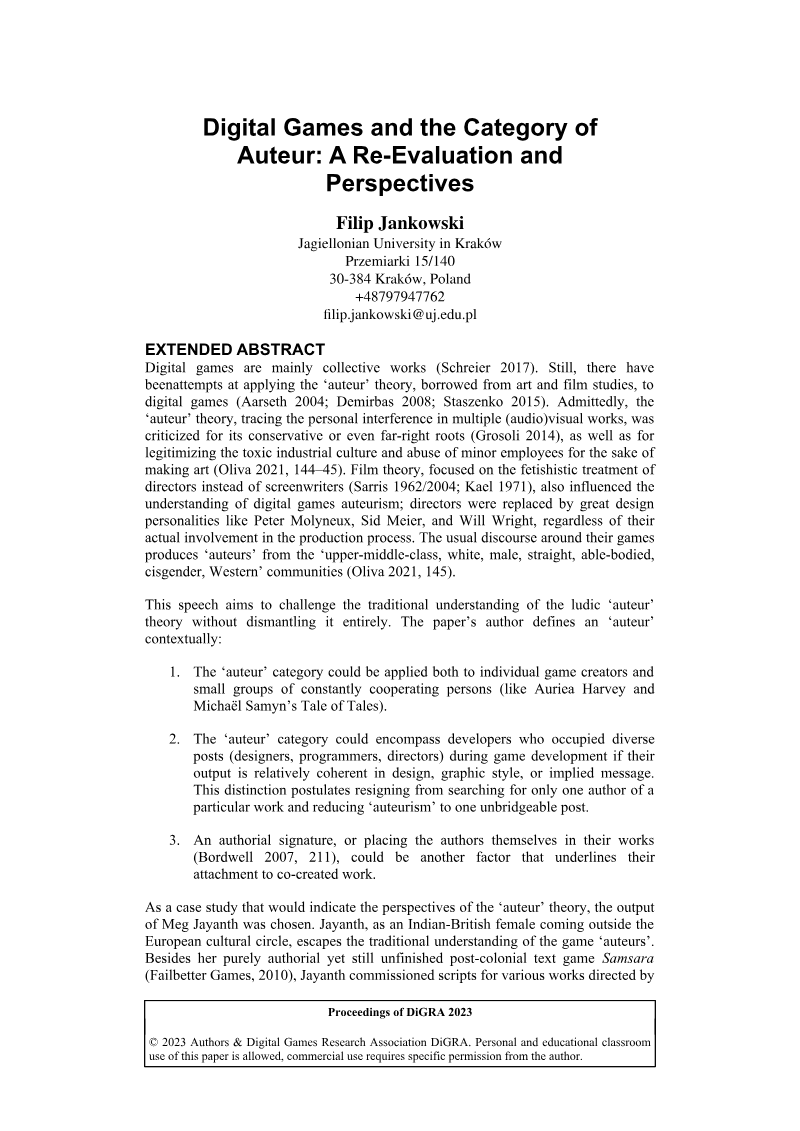
This extended abstract, presented at DiGRA 2023 by Filip Jankowski of Jagiellonian University, re-examines the application of auteur theory to digital games.
- The paper argues that the auteur concept, borrowed from film studies, carries problematic associations, including conservative origins, legitimization of exploitative labor conditions, and canonization of a narrow demographic of designers such as Peter Molyneux, Sid Meier, and Will Wright regardless of their actual production roles.
- Rather than abandoning auteur theory for games, the author proposes a contextual redefinition built on three principles: an auteur may be an individual or a small persistently collaborating group, developers with varied roles can qualify if their output is coherent, and an authorial signature such as placing one's likeness in a work can signal attachment to co-created material.
- Tale of Tales, run by Auriea Harvey and Michaël Samyn, is cited as an example of a small, persistently collaborating group that can be considered an auteur under the redefined framework.
Materially Random Stories: Randomness and Narrative as Material Structures in Digital Games
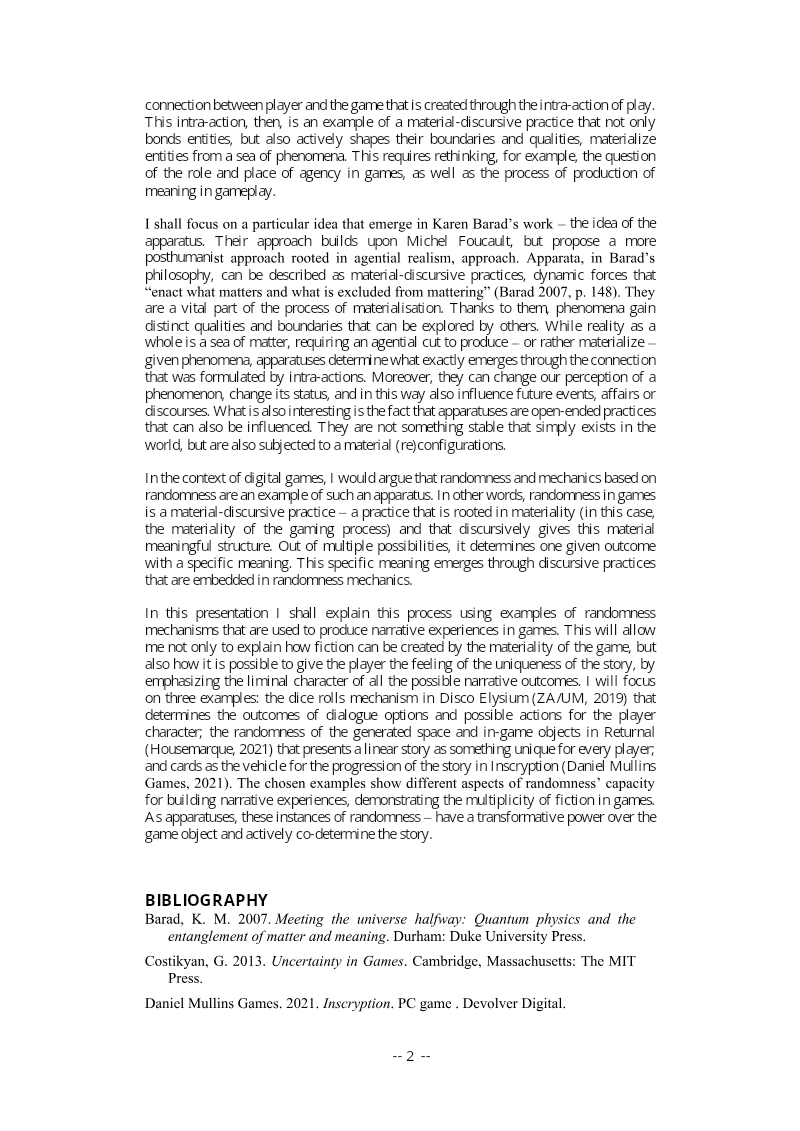
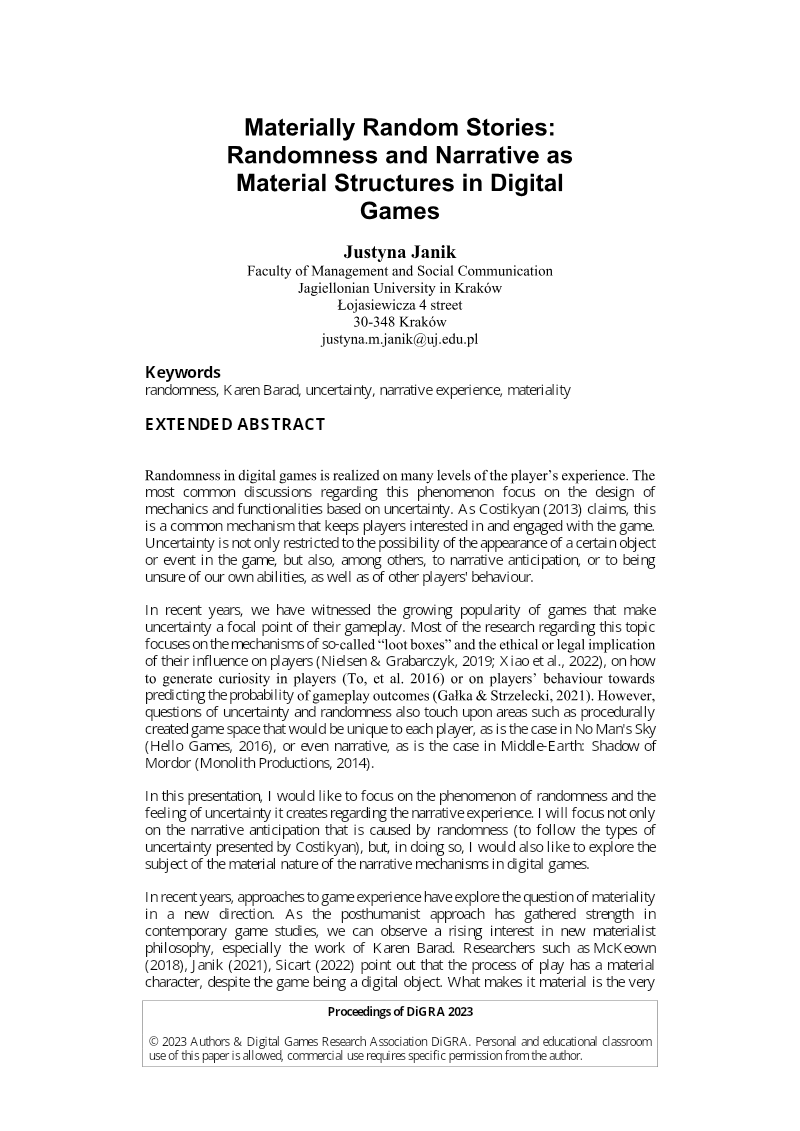
Janik's paper, presented at DiGRA 2023, argues that randomness in digital games should be understood as a material-discursive practice rather than merely a design mechanic for generating uncertainty.
- Janik's DiGRA 2023 paper reframes randomness in digital games as a material-discursive practice, not merely a mechanic for generating uncertainty, drawing on Karen Barad's agential realism and her concept of the apparatus.
- The central claim is that randomness acts as an apparatus: a mechanism selects one outcome from many possibilities, and embedded discursive practices give that outcome its meaning.
- The paper argues that narrative uncertainty is not just anticipation of events but a material process through which fiction emerges, and that unrealized alternatives heighten players' sense that their story is singular.