Loading the document
Key insights
4 slides
New perspective
Game difficulty is an aesthetic experience, not just a measure of mechanical skill.
Difficulty should be understood through intellectual and affective challenges.
1 / 4
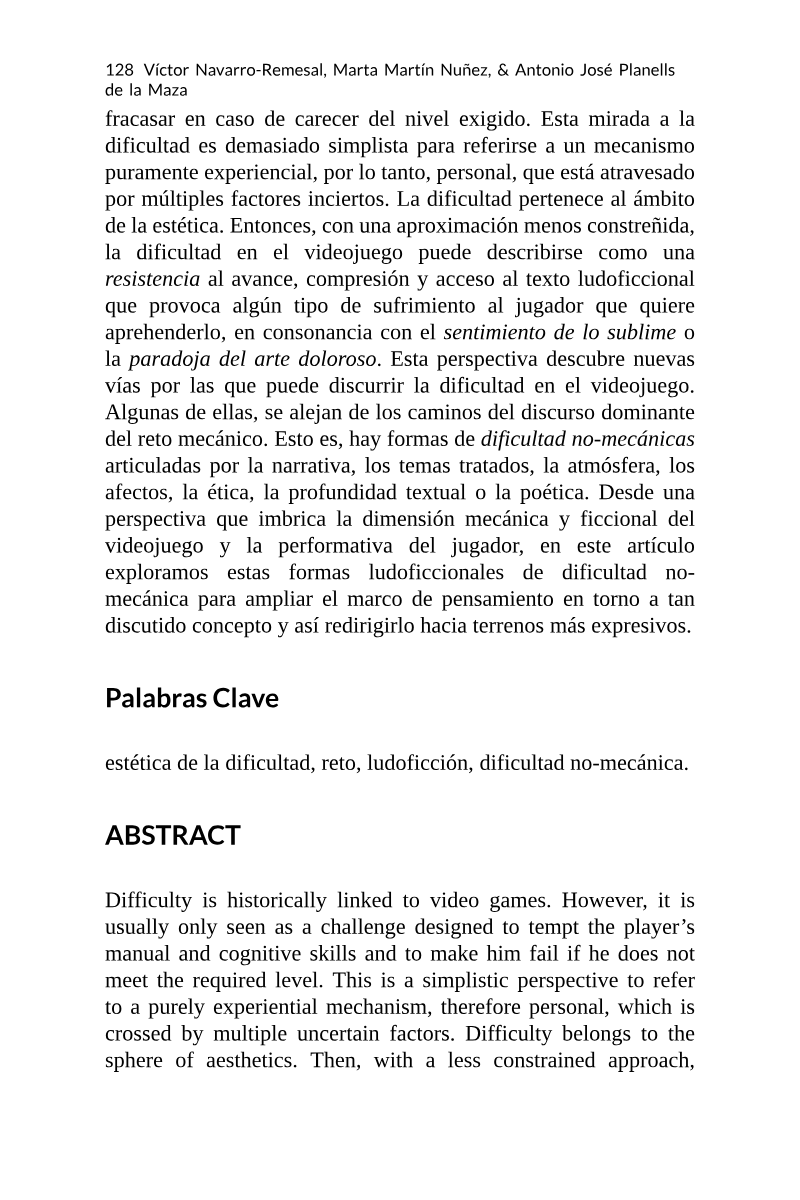
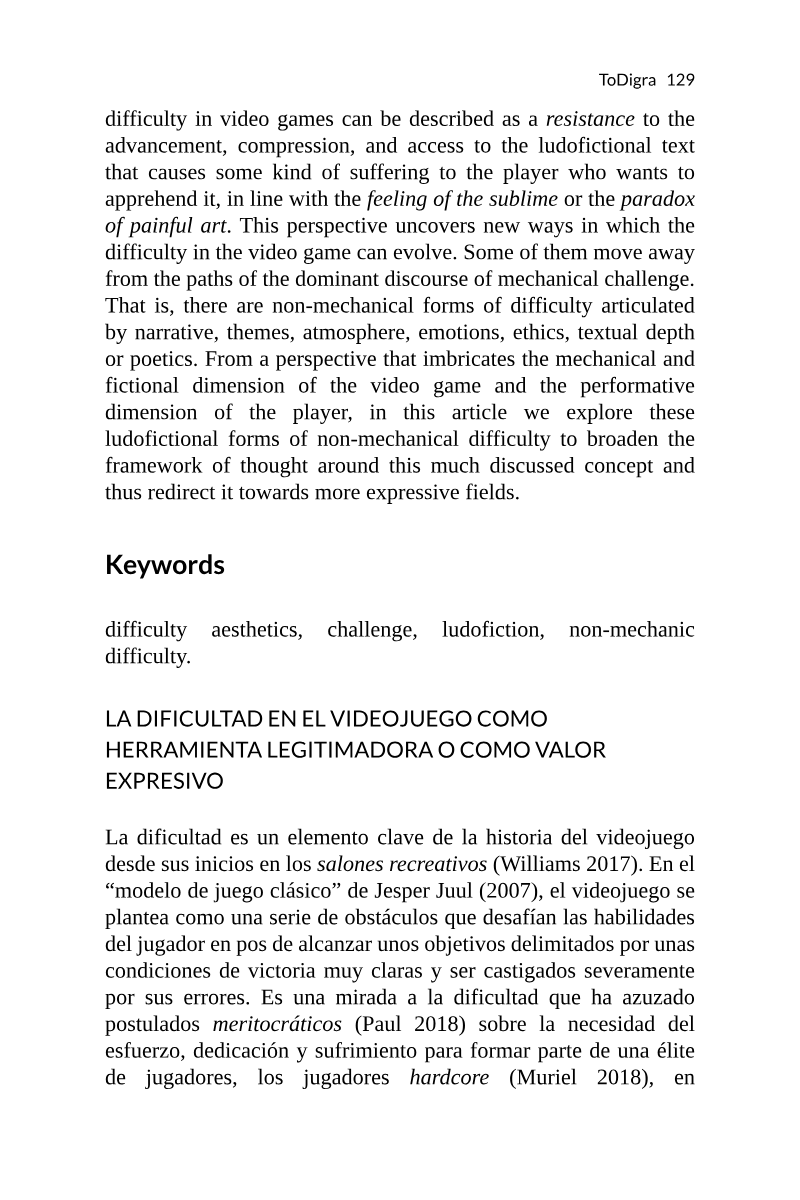
- 01The author describes difficulty as resistance to the advancement, compression, and access to the ludofictional text that causes some kind of suffering to the player, and identifies seven non-mechanical forms of difficulty.See it on page 3
- 02The author cites Daniel Vela as reading Dark Souls' difficulty as aiming for an experience close to the sublime, in which the player's insignificance before a hostile world is revealed.See it on page 4
- 03The study bases its seven forms on close reading and playtesting of a set of contemporary video games from 2009 to 2020.See it on page 9
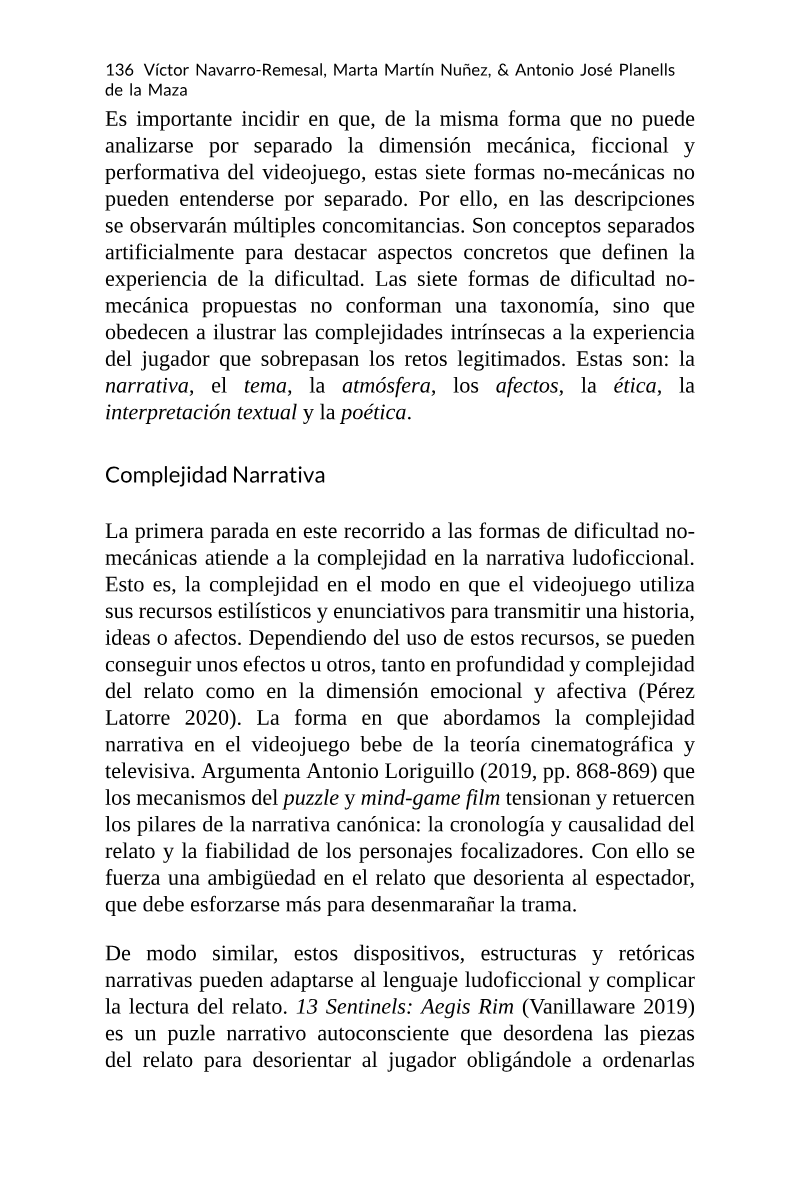
- 04The author states that the seven forms of non-mechanical difficulty do not constitute a taxonomy and cannot be understood separately.See it on page 10
- 05The author argues that difficulty cannot be reduced to numerical factors and depends on players who accept the aesthetic experience as difficult.See it on page 20
- 06The author notes, citing Doyle-Myerscough, that This War of Mine pushes players toward a less operative form of play, in which the promise of stability never arrives.See it on page 15
Ask AI about this report
Summary
This article by Mateo Terrasa-Torres, published in the Transactions of the Digital Games Research Association (January 2023, Vol. 6 No 2, pp. 127-151), examines difficulty in video games beyond mechanical challenge. The author describes difficulty as a resistance to the advancement, compression, and access to the ludofictional text that causes some kind of suffering to the player, linking it to the feeling of the sublime or the paradox of painful art. Using close reading and playtesting of a set of contemporary video games from 2009 to 2020, the author identifies seven non-mechanical forms of difficulty: narrative complexity, difficult themes, atmospheric density and darkness, emotional and affective complexity, ethical difficulty, textual interpretation, and poetic difficulty. The author states that these forms are not a taxonomy and cannot be understood separately. The author cites Dark Souls as an example in which difficulty is read as producing an experience close to the sublime rather than functioning only as a challenge. The author argues that the legitimated discourse of difficulty centres on mechanical challenge, skill, effort and meritocracy, and proposes a broader aesthetic framing. The author concludes that difficulty cannot be measured or reduced to numerical factors, since it depends on players who accept the aesthetic experience as difficult.