Loading the document
Key insights
4 slides
New perspective
Ludoromanticism emerged, framing play as an emancipatory response to capitalism.
This perspective shifted the focus from technical architecture to the transformative potential of games, emphasizing their capacity to change human experience.
1 / 4
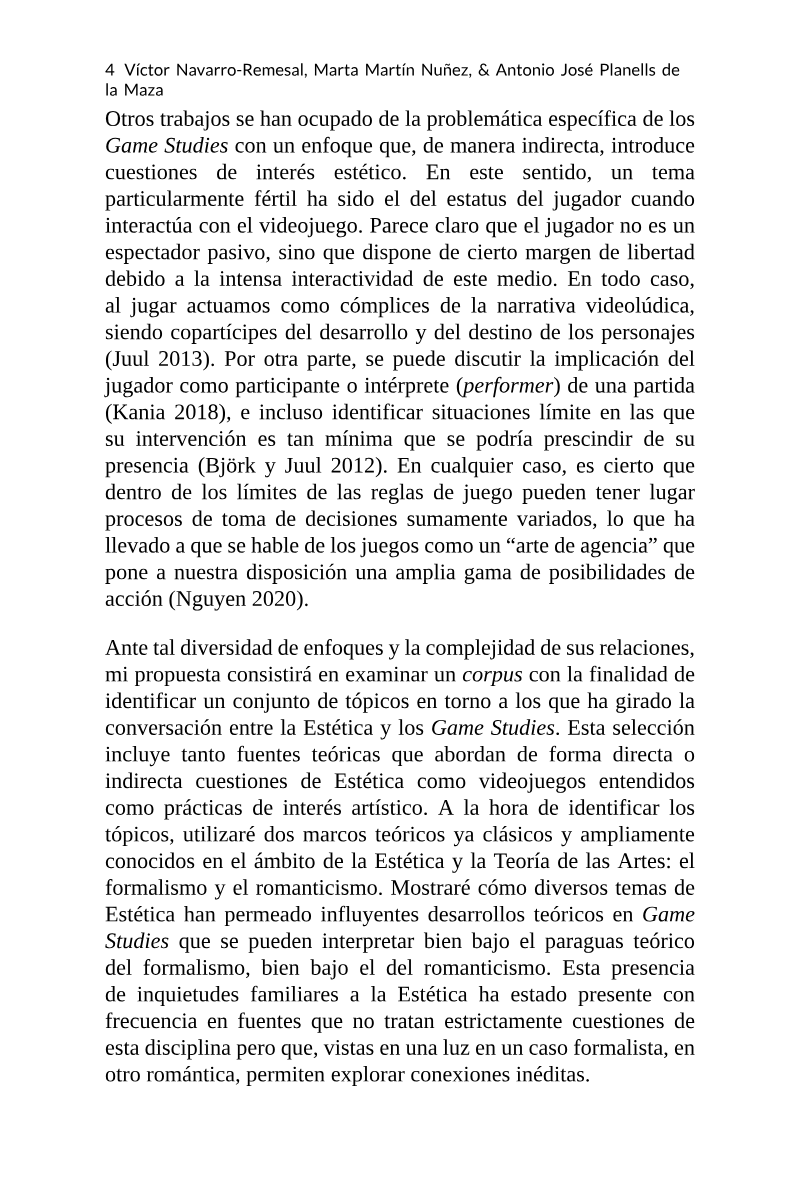
- 01The author identifies formalism and romanticism as the two frameworks used to interpret the selected Game Studies sources; the article also refers to a formalist moment in Game Studies that accompanied the first 20 years of the discipline.See it on page 7
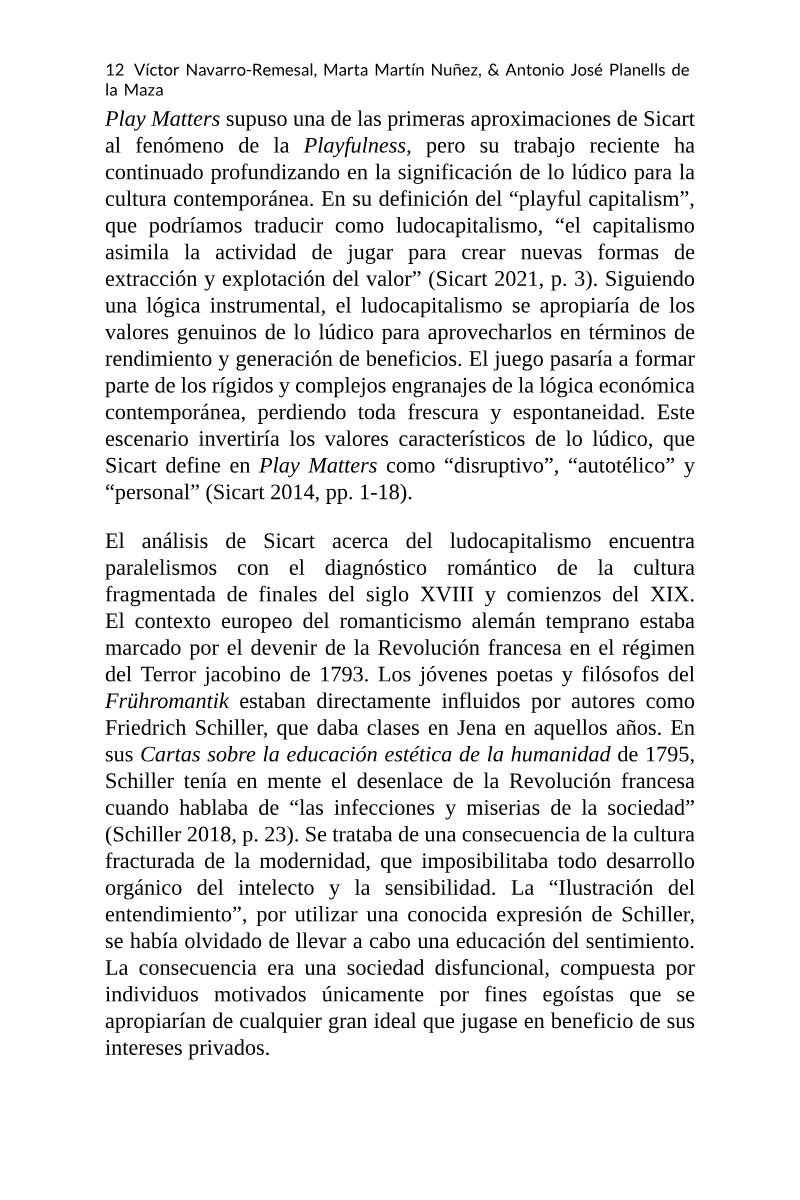
- 02Sicart's ludocapitalism is presented as a concept in which capitalism appropriates play for profit, which the author links to the Romantic diagnosis of a fragmented culture.See it on page 12
- 03The author cites a passage from Sicart's Play Matters in which Sicart calls his theory romantic (or rhetorical) and based on creativity and expression, and the author notes that the debt to Romanticism is explicit in that essay.See it on page 10
- 04Sharp's Works of Game proposed a three-part typology of relations between games and art: Game Art, Artgames and Artists Games.See it on page 8
- 05The author asks whether the 2020s will be a decade for more politically oriented Game Studies, citing recent texts such as Ideological Games and Against Flow.See it on page 16
Ask AI about this report
Summary
Alejandro Lozano's article was published in Transactions of the Digital Games Research Association (January 2023, Vol. 6 No 2, pp. 1-24). The article is in Vol. 6 No 2, pp. 1-24. The article explores theories and practices related to Game Studies that appeared between the 2000s and 2010s, from the perspective of aesthetics and art theory. The author proposes reading the selected sources as either ludoformalist or ludo-romantic. The study is framed as a response to a call by DiGRA Spain '21 to map the state of Game Studies in Spain, and it examines a corpus that includes theoretical sources and video games. The author argues that formalist concerns about what is specific to video games accompanied the first two decades of the discipline. Citing Brian Schrank's distinction between formal and political avant-gardes, the article asks whether the 2020s will be a decade of more politically oriented Game Studies. The author also describes a ludo-romantic current centred on playfulness, linking Miguel Sicart's Play Matters and his later work on playful capitalism, which Sicart defines as capitalism assimilating the activity of playing to create new forms of extraction and exploitation of value.