"The White Peril: Colonial Expressions in Digital Games" argues that colonialist values, rooted in orientalism and white supremacy, persist in mainstream action-adventure games through invisible defaults that position white protagonists as universal and non-white settings as exotic backdrops. Its central thesis holds that digital games teach players to "be white" through embodiment, a mechanism the author presents as distinctive to the medium compared with other forms of media. Drawing on postcolonial and whiteness theory, the work frames whiteness as the unexamined logic of contemporary game design rather than an incidental feature of it.
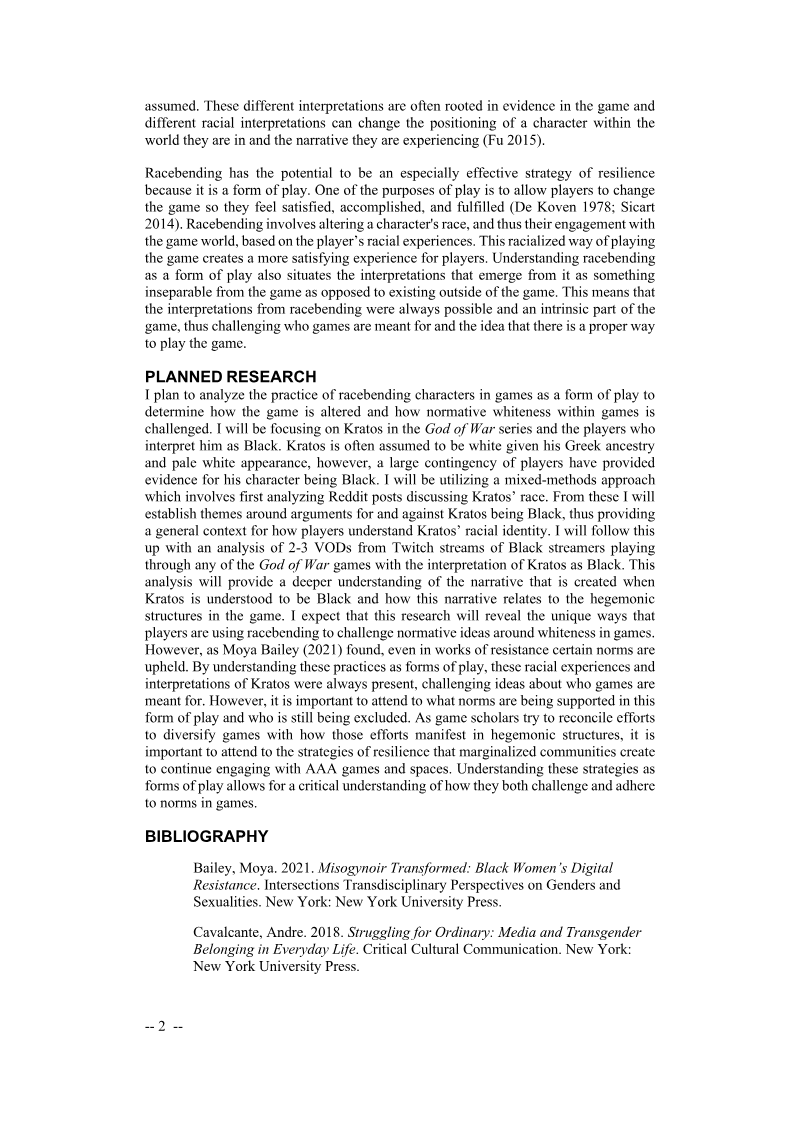
The analysis is qualitative and centers on three triple-A titles: Uncharted: Drake's Fortune (2007), Far Cry 3 (2012), and Shadow of the Tomb Raider (2018), all set in South American or Southeast Asian locales. Across these games, the author identifies recurring patterns in which non-white characters appear as stereotyped antagonists, subordinates, or peripheral figures whose conflicts are resolved by white protagonists. The study describes an "orientalist despotism" that depicts non-Western settings as lawless or violent and an "orientalist production model" in which white values and white saviours structure the narratives. Even Shadow of the Tomb Raider's more inclusive portrayal of Paititian society is judged to subordinate its characters within "noble savage" tropes.
A further contention concerns the industry itself. The author argues that a "hegemony of play," dominated by white male producers and executives, reinforces these norms through commercial and cultural power, and that the resulting conventions of gun violence and Eurocentric values are naturalized as universal. The work concludes by calling for critical engagement with these dynamics, localized game design, and non-white conventions developed on their own terms. Its scope is limited to these three titles and the theoretical frameworks drawn upon, with its reference list extending to further examples such as Far Cry 5, Grand Theft Auto V, and The Last of Us.
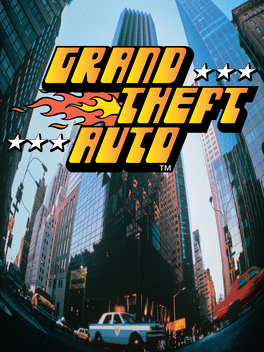 Grand Theft AutoGame · DMA Design · 1997 · 558 documents
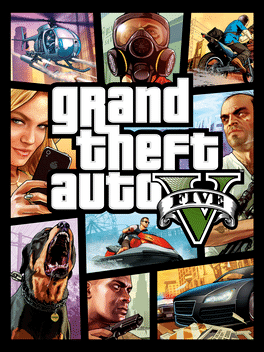 Grand Theft Auto VGame · Rockstar North · 2013 · 193 documents
 Far CryGame · Crytek Frankfurt · 2004 · 116 documents
 Tomb RaiderGame · Crystal Dynamics · 2013 · 105 documents
 Far Cry 5Game · Ubisoft Montreal · 2018 · 13 documents
 Shadow of the Tomb RaiderGame · Eidos Montréal · 2018 · 10 documents
 Far Cry 3Game · Ubisoft Montreal · 2012 · 8 documents