More from University of California Santa Cruz
View all
Article
The Intersection Between Gaming, Gambling, and Social Media Platforms: The Case of Five Danish Gambling Streamers on Twitch, Kick, and
University of Copenhagen · 2026



Whitepaper
Disco Elysium: Existential Reflection within Crisis
University of Copenhagen · 2026
Whitepaper
Designing Doable and Locally-adapted Action Cards for an Interactive Tabletop Game
University of California Santa Cruz · 2025
Whitepaper
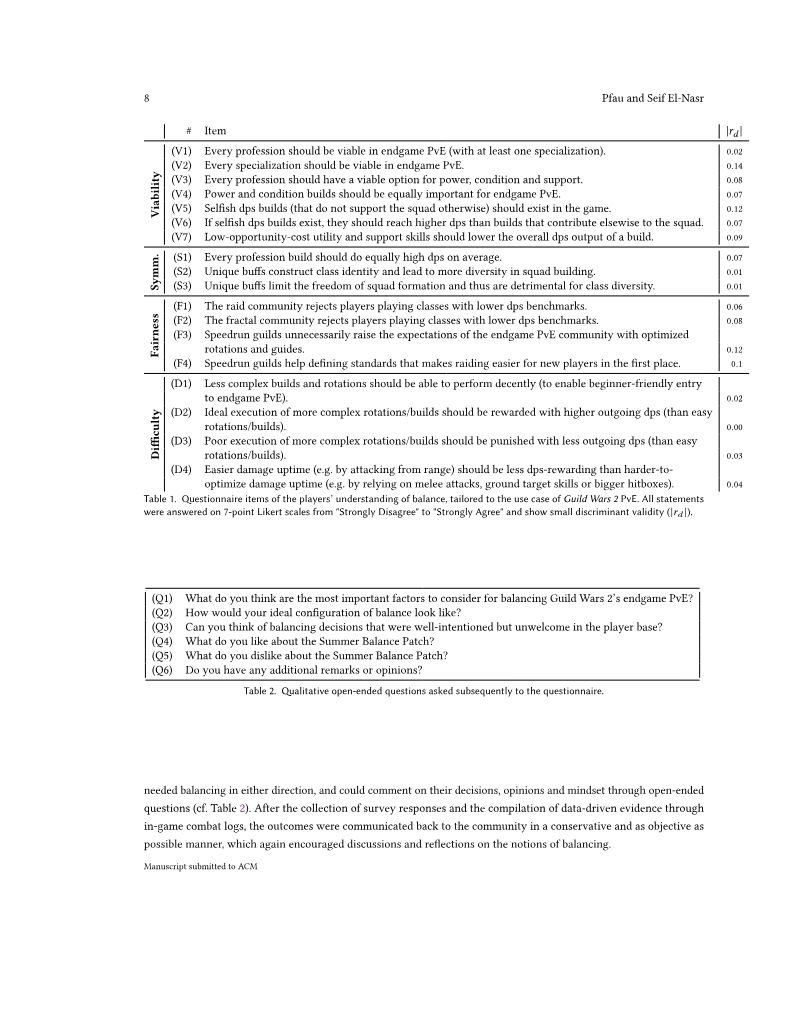
Towards Democratisation of Games User Research: Exploring Playtesting Challenges of Indie Video Game Developers
Association for Computing Machinery · 2024
Whitepaper
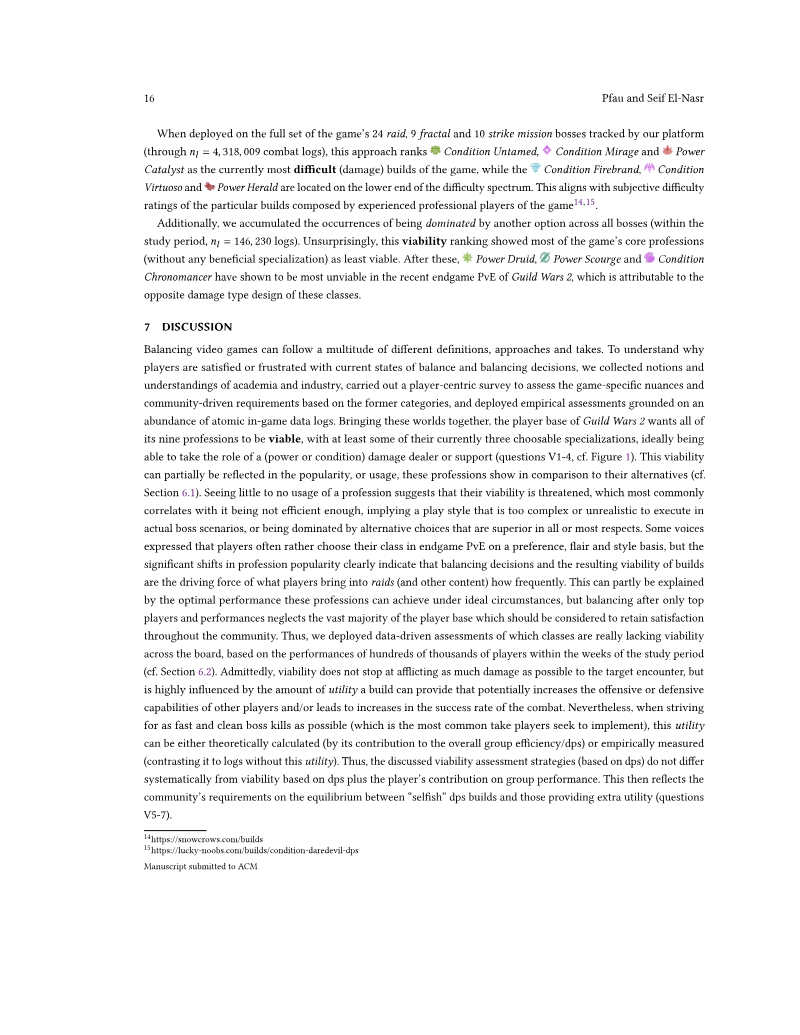
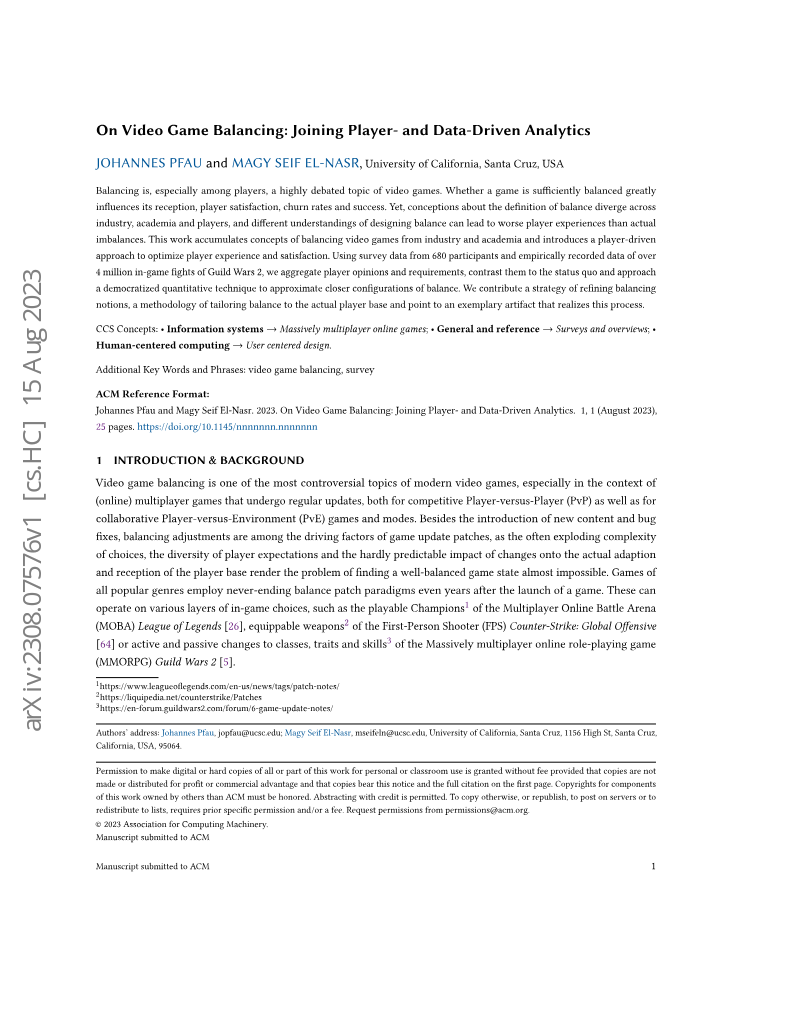
On Video Game Balancing: Joining Player- and Data-Driven Analytics
University of California Santa Cruz · 2024
Whitepaper
You Only Randomize Once: Shaping Statistical Properties in Constraint-based PCG
University of California Santa Cruz · 2024
Whitepaper
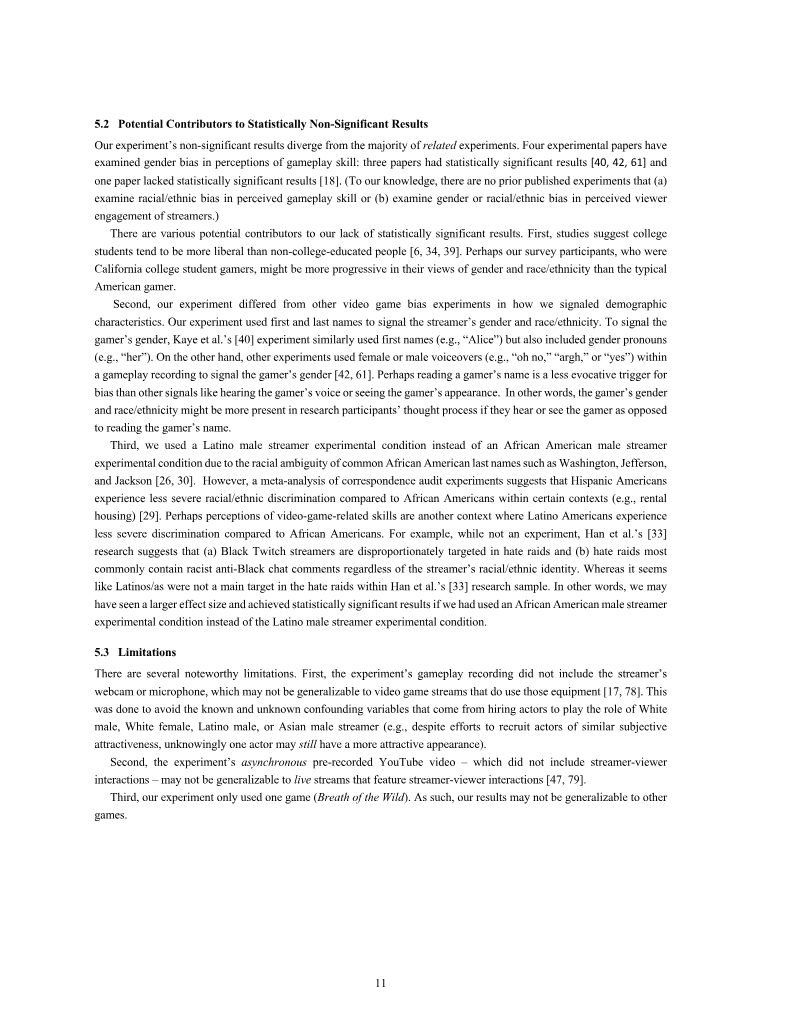
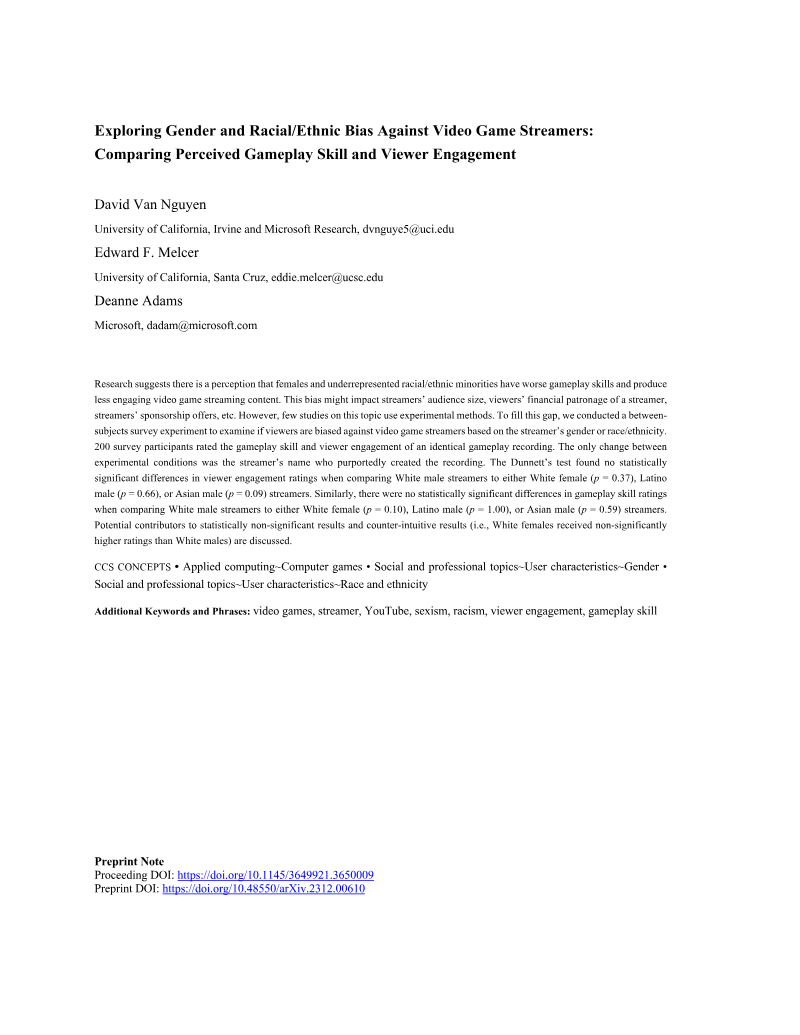
Exploring Gender and Racial/Ethnic Bias Against Video Game Streamers: Comparing Perceived Gameplay Skill and Viewer Engagement
University of California · 2024
Whitepaper
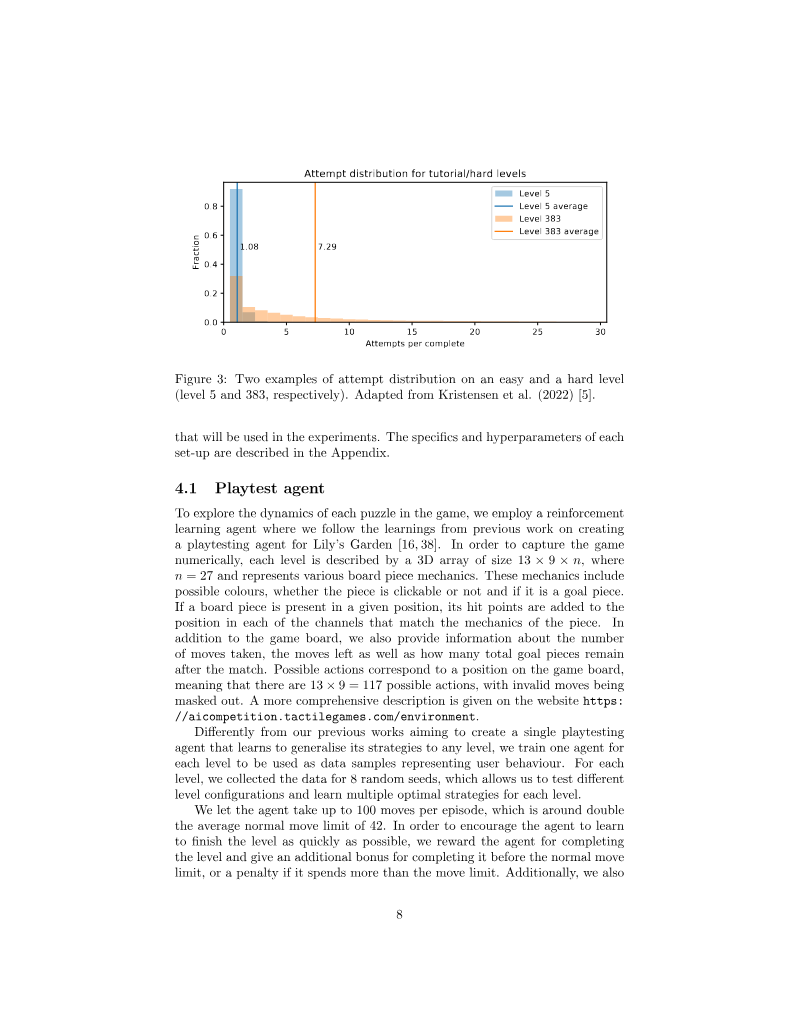
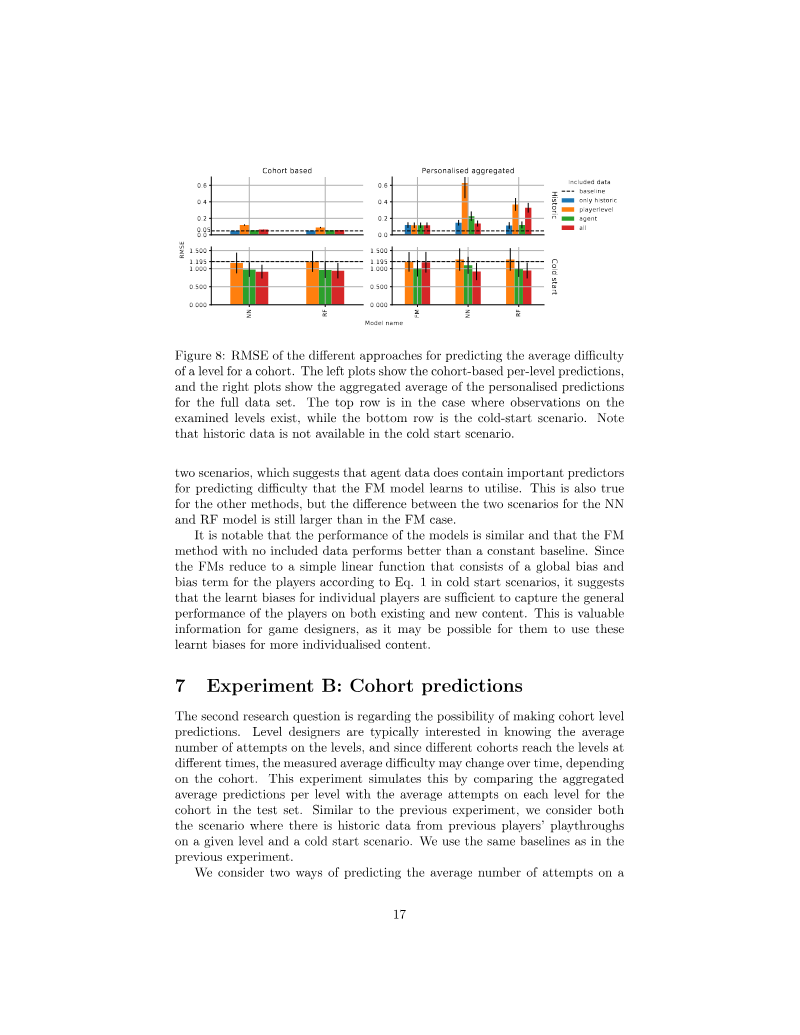
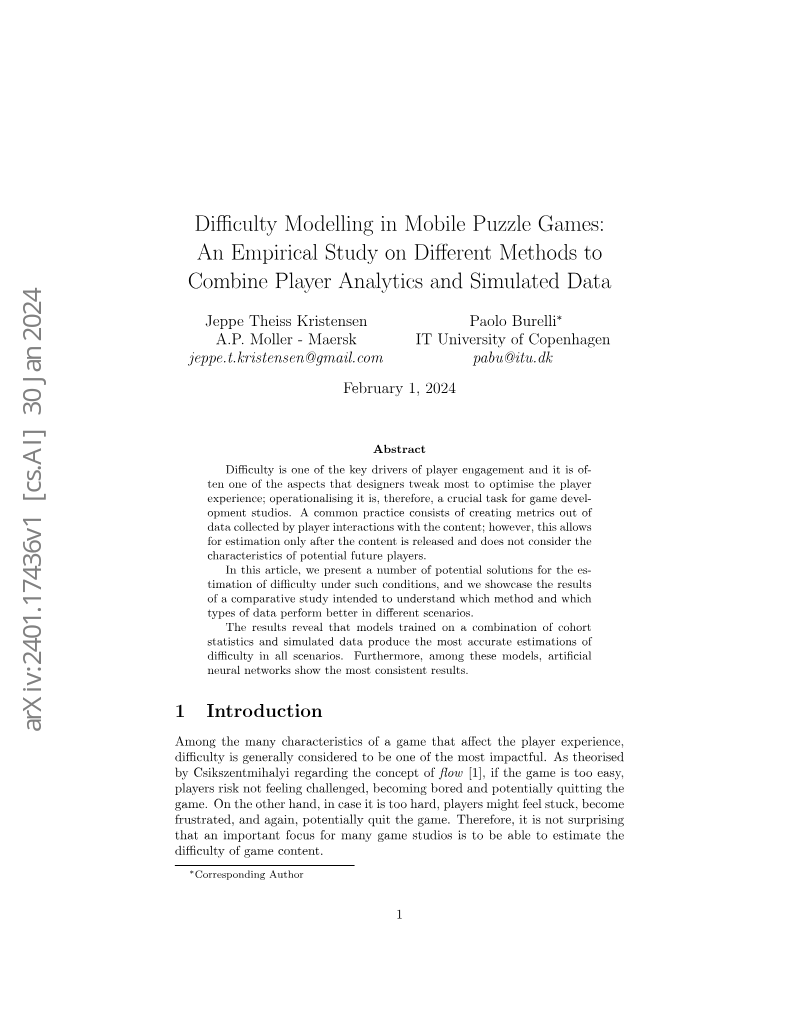
Difficulty Modelling in Mobile Puzzle Games: An Empirical Study on Different Methods to Combine Player Analytics and Simulated Data
University of Copenhagen · 2024
Whitepaper
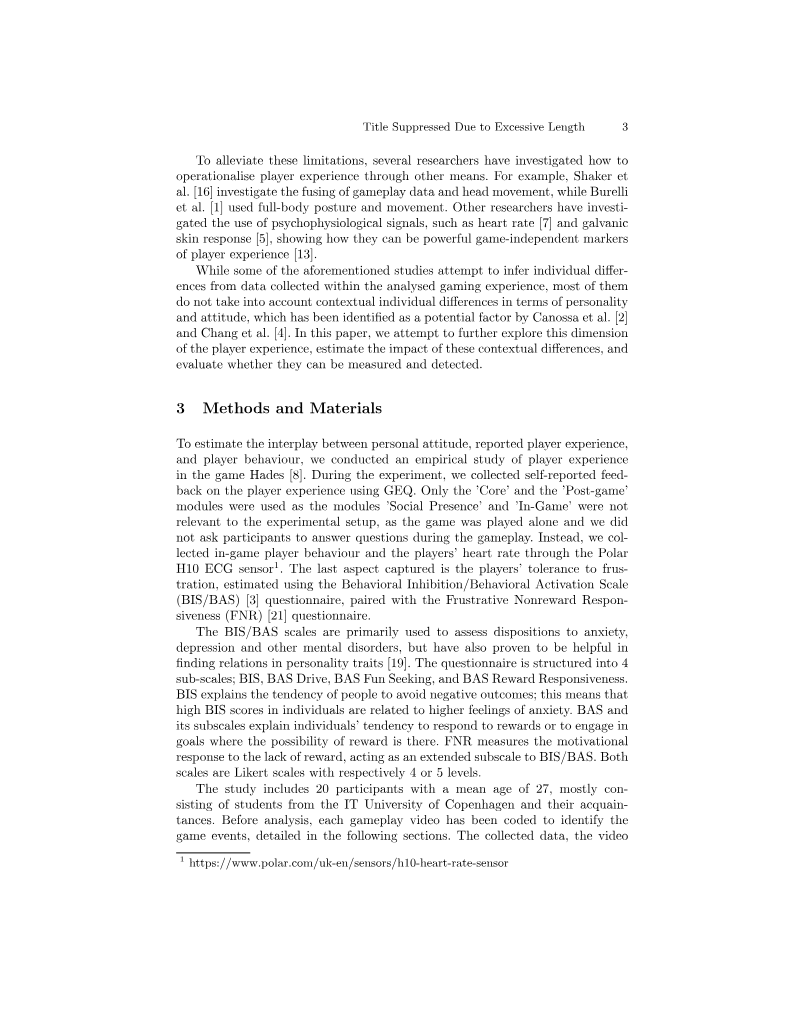
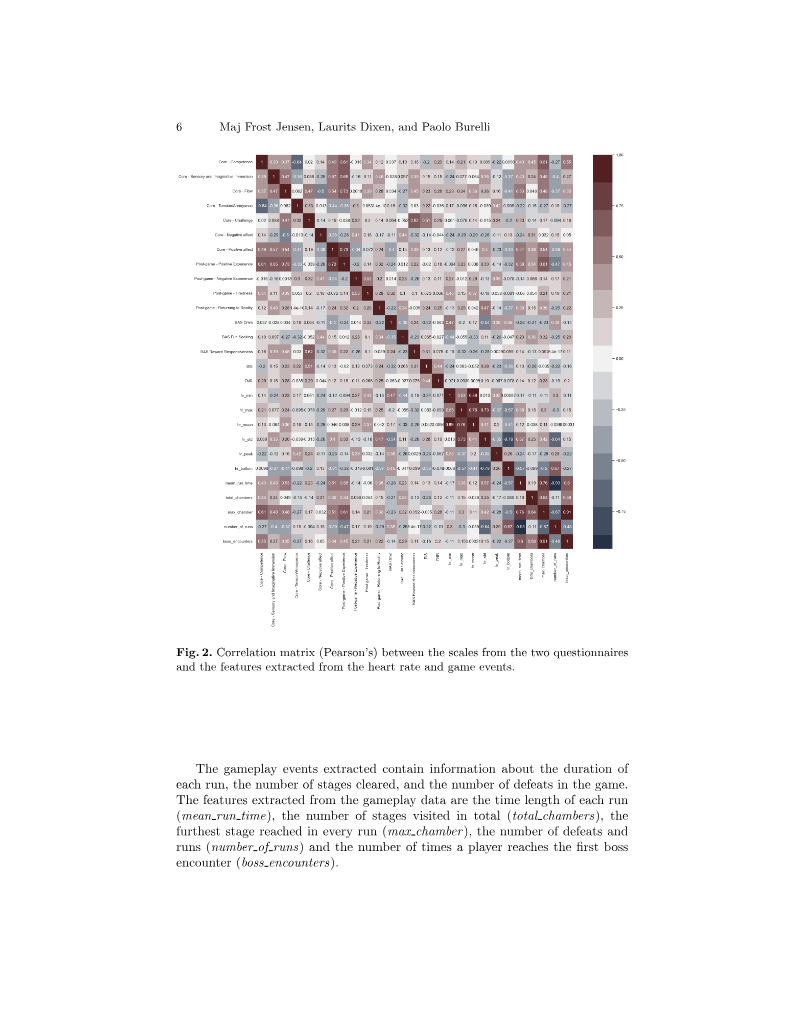
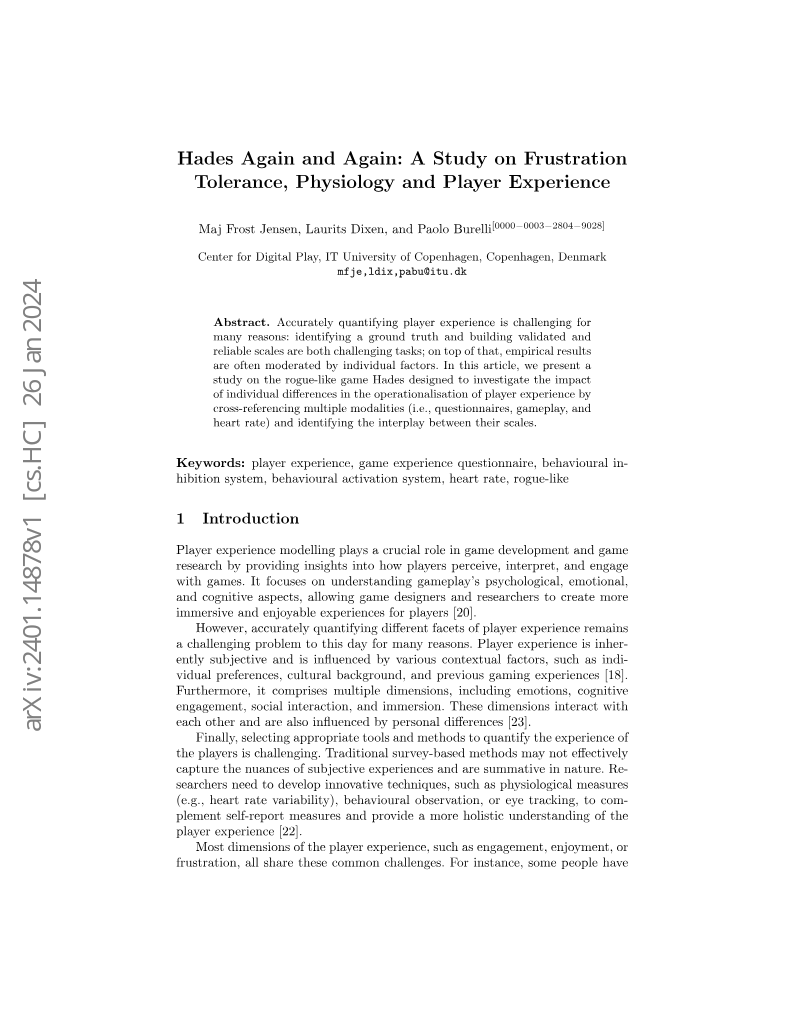
Hades Again and Again: A Study on Frustration Tolerance, Physiology and Player Experience
University of Copenhagen · 2024
Whitepaper
Playful Practices in Ancient Greek Philosophy
DiGRA · 2020
Whitepaper
Bride, Demon or Alien? Undressing Stigma in Catherine: Full Body
DiGRA · 2020