2015
Company
Documents about 2015

Market for Computer and Video Games in Germany: 2015 Growth Analysis
The German computer and video games industry maintained a positive growth trajectory throughout 2015, driven by ongoing innovation in platforms and business models.
- The German computer and video game market grew by 4.5% in 2015, reaching a total sales volume of 2.81 billion euros compared to 2.69 billion euros in 2014.
- Sales revenue from gaming consoles rose by 6.5% in 2015, increasing from 774 million euros in 2014 to 825 million euros.
- The market for digital games generated 1.99 billion euros in 2015, representing a 3.5% growth over the previous year's 1.92 billion euros.

Games Fuel the App Economy
Game apps serve as the primary economic engine for the global mobile application market, consistently accounting for the vast majority of consumer spending.
- Game apps accounted for 85% of global app store revenue in 2015, generating $34.8 billion out of a total $41.1 billion market.
- The dominance of gaming in the app economy is projected to persist, with game apps expected to generate $74.6 billion of the total $101 billion in projected 2020 app revenue.
- In Germany, game apps are responsible for approximately 76% of all revenue generated within domestic app stores.

Global Market for Game Apps Will Grow to 74.6 Billion US Dollars by 2020
The global market for mobile game applications is projected to experience significant expansion, with total sales revenue expected to reach 74.6 billion US dollars by 2020.
- The global market for game apps is projected to grow from $34.8 billion in 2015 to $74.6 billion by 2020, representing an increase of more than 114%.
- In 2015, game apps accounted for 85% of total global app store revenue, despite representing only 40% of total app downloads.
- The global market for game apps was projected to reach $41.5 billion in 2016, marking a year-over-year growth of more than 19% compared to 2015.
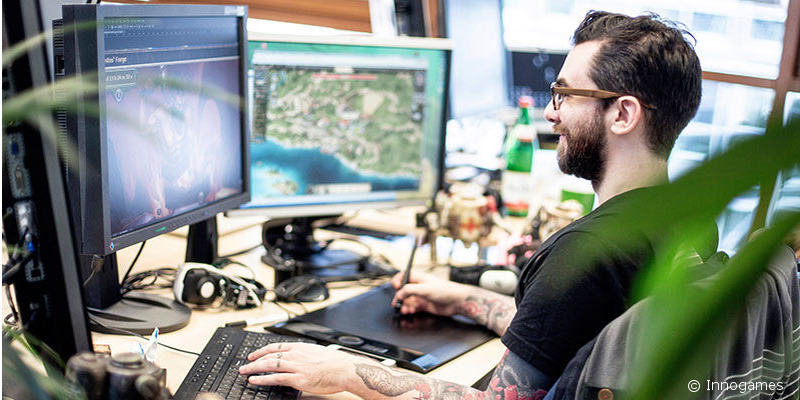
Slight Jobs Increase in German Computer and Video Games Industry
The German computer and video games industry experienced modest employment growth and significant market expansion throughout 2015 and early 2016.
- As of April 1, 2016, the German computer and video games industry employed 12,839 people across 510 companies, marking a 1% increase in staff and a 14% increase in the number of companies compared to 2015.
- When including peripheral roles such as specialist retail, journalism, and academia, the total number of jobs supported by the industry in Germany reached 31,293, a 4% year-over-year increase.
- The German games market grew by 4.5% in 2015, reaching a total value of 2.81 billion euros.

Free-to-Play Games: From Smartphone to eSports Arena
The German games industry has experienced a significant shift in business models, with free-to-play (F2P) titles emerging as a foundational pillar of the market.
- The German market for virtual products and extra content within free-to-play games grew by 18% in 2015, reaching 562 million euros compared to 477 million euros in 2014.
- Free-to-play mobile apps dominate the smartphone and tablet sector, accounting for 295 million euros of the 315 million euros total generated by game apps in Germany in 2015, or approximately 94% of that revenue.
- The broader German computer and video games market reached a total value of 2.81 billion euros as of 2016.
Finnish Game Industry: An Interview with Oleg Paliy
The Finnish game industry has evolved into a significant global player, reaching an annual turnover of €2.4 billion by 2015, up from €1.8 billion in 2014.
- The Finnish game industry experienced significant growth, with annual turnover rising from €1.8 billion in 2014 to €2.4 billion in 2015.
- As of 2016, the Finnish gaming ecosystem comprised approximately 290 companies and 2,700 developers, with women accounting for slightly less than 25% of the workforce.
- State funding agency Tekes is a primary driver of industry growth, having invested in major studios including Supercell, Rovio, Remedy, and Seriously to support R&D and innovative monetization models.
Interview with Ricardo Ruiz from 3Ecologias
This interview, published in the 2016 issue of a games studies journal, profiles 3Ecologias, a Brazilian company founded by Ricardo Brazileiro and Ricardo Ruiz that develops open-technology solutions for education, culture, and sustainability, and focuses on its game project Contos de Ifá.
- 3Ecologias, a Brazilian company founded by Ricardo Brazileiro and Ricardo Ruiz with about fifteen employees, builds open-technology solutions for education, culture, and sustainability, named after Félix Guattari's three ecologies of mind, society, and environment.
- Its flagship game Contos de Ifá, in development since 2010 with the Coco de Umbigada Cultural Center in Olinda, Pernambuco, teaches Afro-Brazilian mythology (especially Candomblé) to counter religious prejudice, organizing play around the xirê order of orisha worship starting with Exú.
- As of the interview, the game offered four playable phases dedicated to individual orishas, with two more in development and a stated goal of 256 stories.
Interview with Shailesh Prabhu, Indian Game Designer
This interview, published in the 2016 issue of a game studies journal's interview section, features Indian game designer Shailesh Prabhu discussing his work and his upcoming two-player local multiplayer game Sky Sutra.
- Shailesh Prabhu runs a loosely organized, multicultural team spread across Sweden, France, India, and Copenhagen, and recently took a full-time game design job in Copenhagen while continuing independent work on his project.
- Sky Sutra is a two-player local multiplayer game with asymmetric design: one player steers a flying carpet that leaves a trail, while the other tries to stun and displace them, and it originated from a physics-inspired concept about players occupying different planes.
- Sky Sutra was shown at the Indie Game Shindig in Kerala in 2015 and at Now Play This in London in 2016, with generally positive audience reception.
Mapping Methods: Visualizing Visual Novels Cultural Production in Japan
This study maps how Otome and Boys' Love visual novel merchandise circulates through the urban fabric of Ikebukuro, Tokyo, drawing on fieldwork conducted between 2009 and 2016.
- The study maps Otome and Boys' Love visual novel merchandise (acrylic straps, badges, drama CDs) circulating through Ikebukuro, Tokyo, based on fieldwork conducted between 2009 and 2016.
- The author argues the games' cultural production forms a localized "game environment" in which the collecting logic of the games is mirrored in the goods, treating the games as urban phenomena rather than software to analyze.
- Fans navigate a cyclical, interdependent recycling ecosystem of limited-edition releases, recycle shops, fanzine gatherings, and cafés, forming layered walking routes that followed the district's transformation into "Otome-Road" after 2004.

Launch Round Portfolio Update: UK
The UK Games Fund provides a progress update on its inaugural portfolio of 24 companies, highlighting the impact of early-stage financial support on the domestic games development ecosystem.
- The UK Games Fund has received over 300 applications since its launch in Autumn 2015 and has supported a portfolio of 24 companies in its initial round.
- Tag Games leveraged funding to retain seven staff members and secure interest from publishers including Sega US and Flare Games for its project 'Misfits vs. Monsters'.
- Coatsink utilized grant funding to complete a prototype that led to a full-scale development deal, with a multi-platform release scheduled for 2017.
Why Is Supercell Worth Billions? They’re Better Than Everyone Else
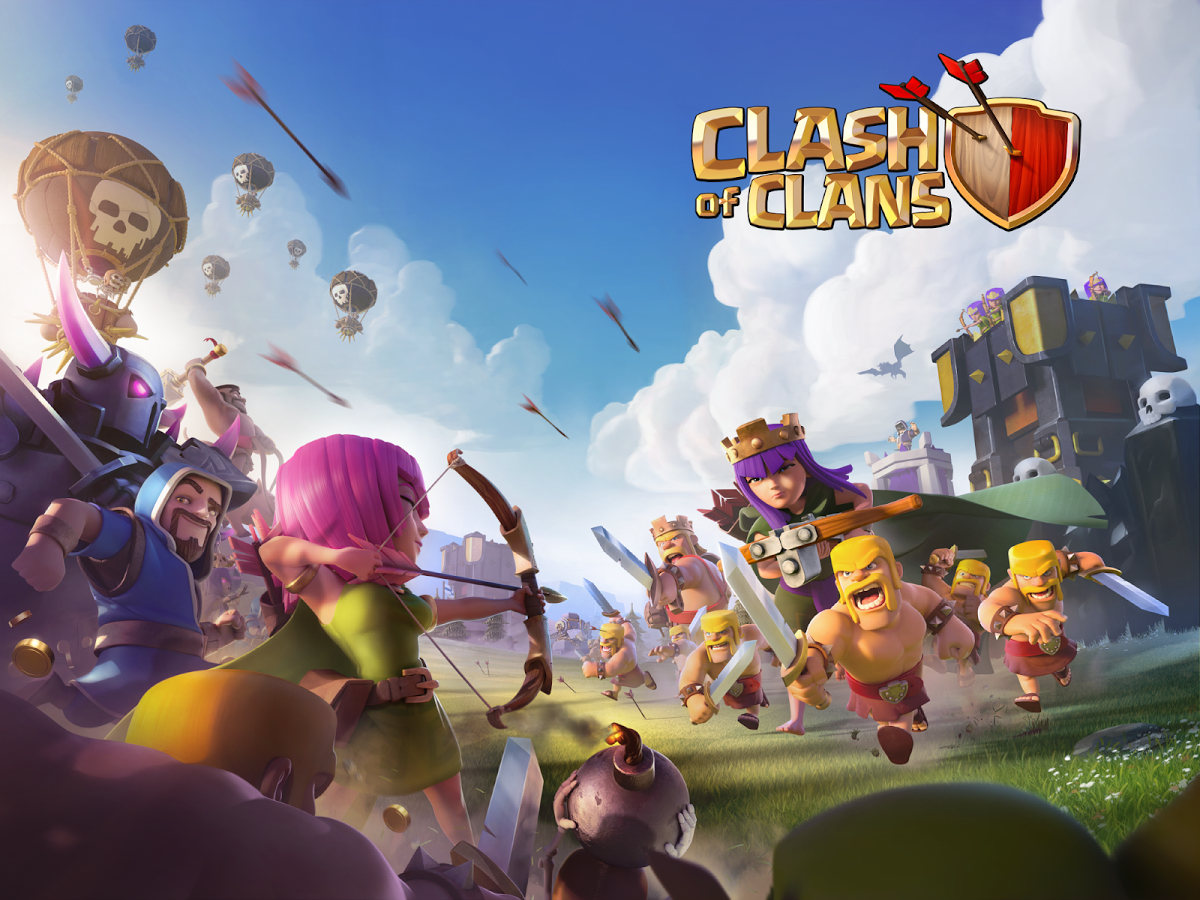
Supercell’s multi-billion dollar valuation is attributed to a unique organizational culture and a highly effective approach to mobile game development.
- Supercell achieved a valuation of approximately $9 billion in 2016, driven by the success of titles like Boom Beach and Clash Royale, representing a $6 billion increase in enterprise value in under three years.
- In 2015, Supercell generated $2.3 billion in revenue and nearly $1 billion in EBIT with a workforce of fewer than 200 employees.
- The company utilizes a 'cell' organizational structure, which decentralizes roles into small, autonomous teams to foster rapid experimentation and the ability to quickly terminate underperforming projects.
FLEGA Report 2016: Highlights and Conclusions
The 2016 Flemish Games Association (FLEGA) report provides a comprehensive analysis of the Belgian games industry, focusing on the economic challenges and growth potential of the sector.
- The Belgian game industry generated a total turnover of €43.6 million in 2014, representing a 6.63% growth compared to 2012.
- High wage costs in Belgium are a primary barrier to growth, forcing major studios like Larian Studios to expand operations internationally and preventing local companies from hiring permanent staff.
- Belgium has 72 active game studios, with 45 located in Flanders, 23 in Wallonia, and 4 in Brussels.