Serious Games reports and market data
Documents


Gamification of a College Course: A Case Study
A 2021/2022 case study conducted at the University of Wrocław examines whether gamification can improve student engagement in a university course on internet texts.
- Gamifying a University of Wrocław internet-texts course (2021/2022) changed how students interacted and were assessed, but not the course content or intended learning outcomes.
- Students in the two gamified groups submitted 19 and 22 special tasks versus 9 in the traditional control group, though the authors caution that pre-existing student predispositions may explain part of this gap.
- Of the 14 students who answered the post-semester survey, half said they did not regret the gamified format, citing higher motivation, transparent assessment, and greater learning autonomy.
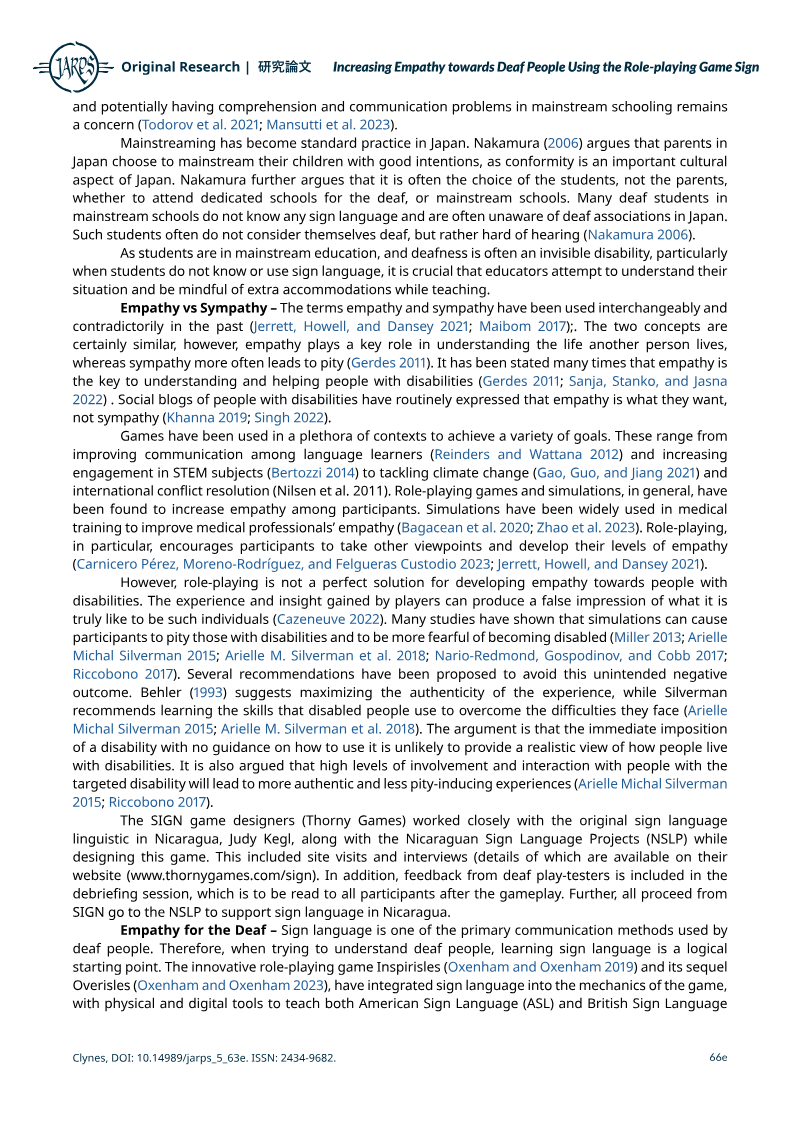
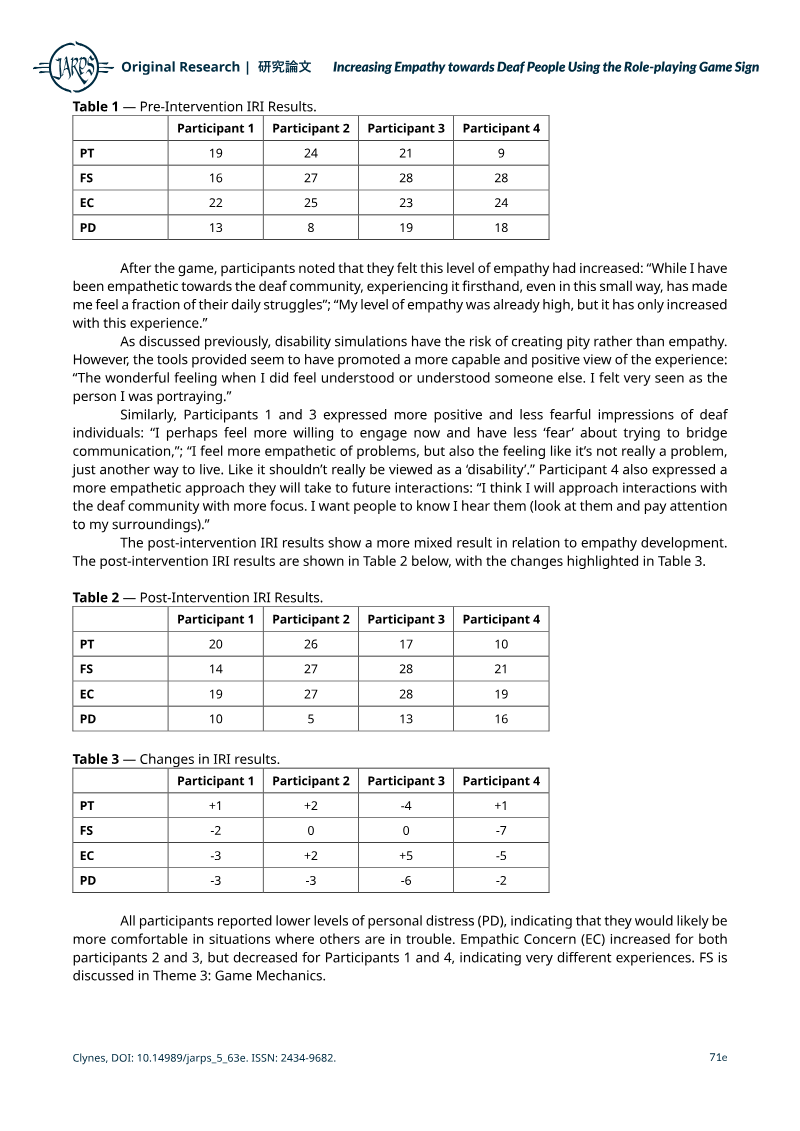
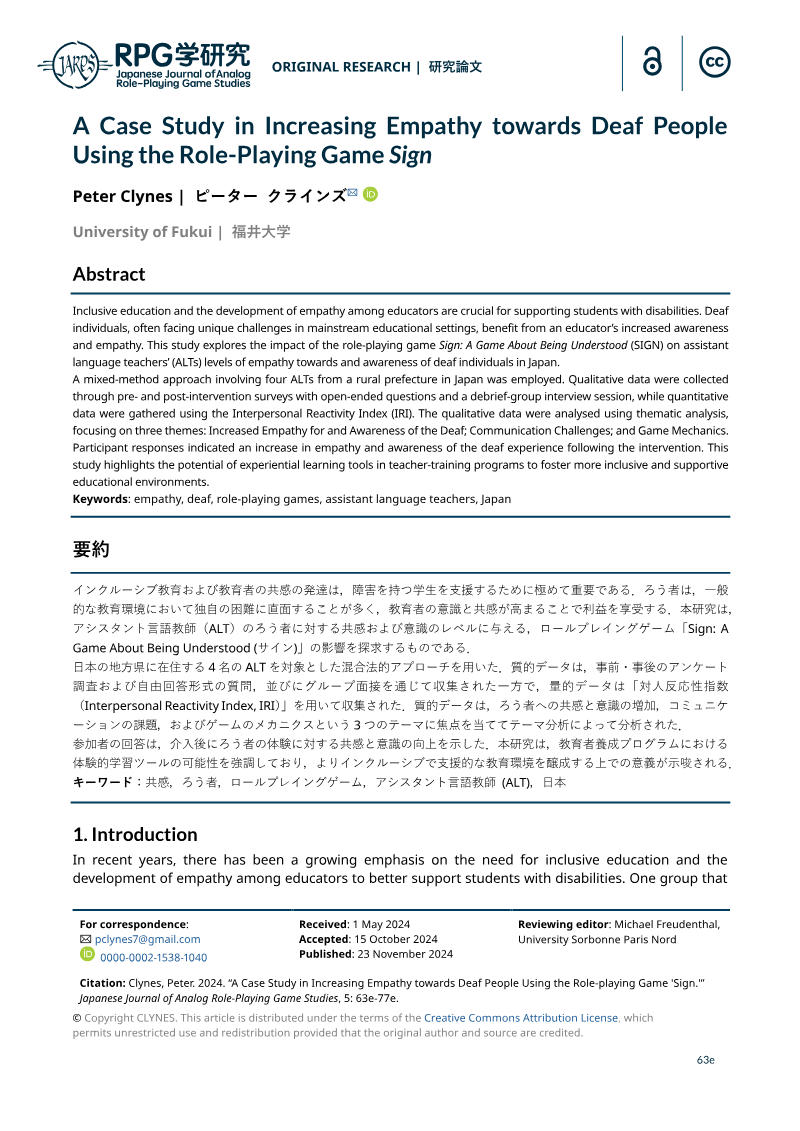
A Case Study in Increasing Empathy towards Deaf People Using the Role-Playing Game Sign: Japan
The role-playing game Sign serves as a potent pedagogical tool for fostering empathy and awareness toward the deaf experience among educators.
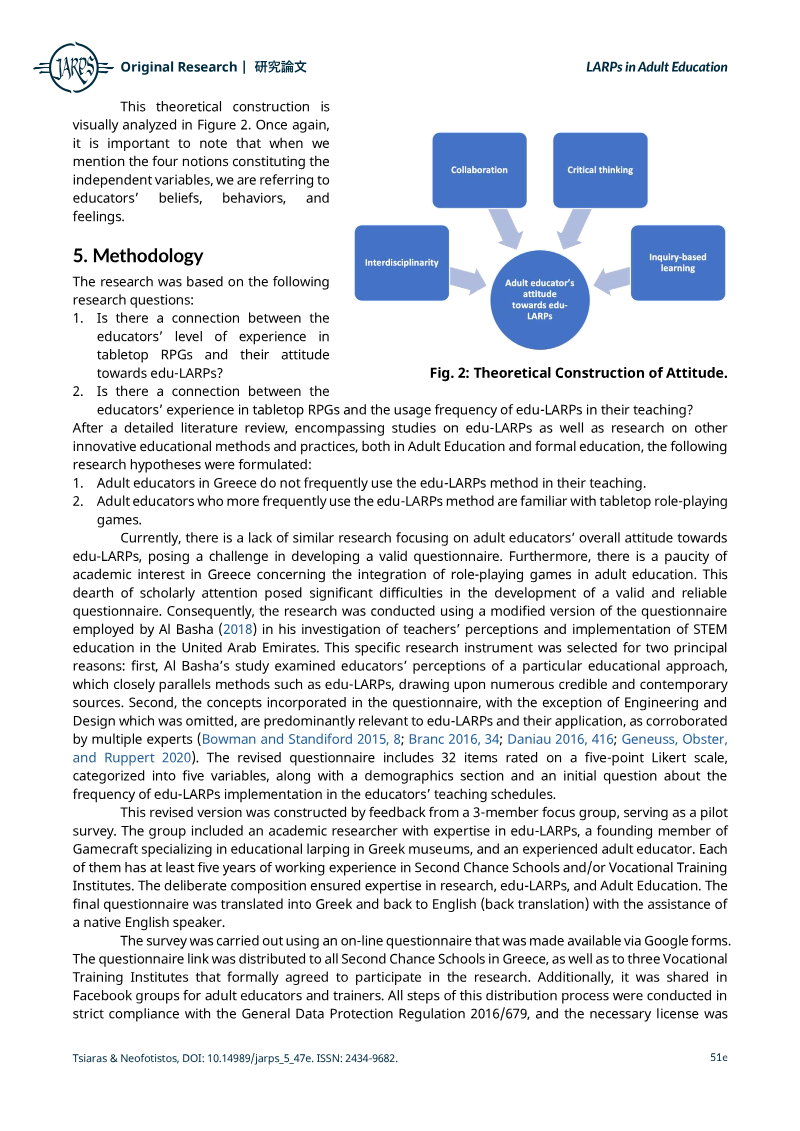
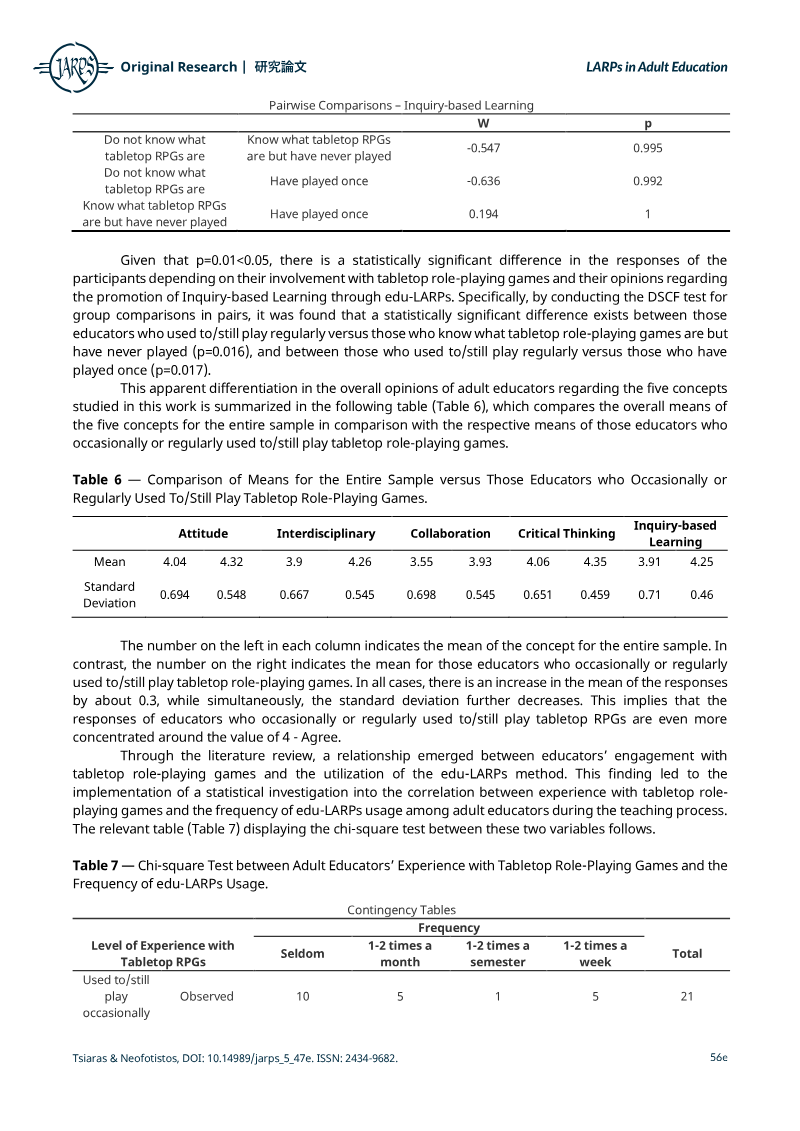
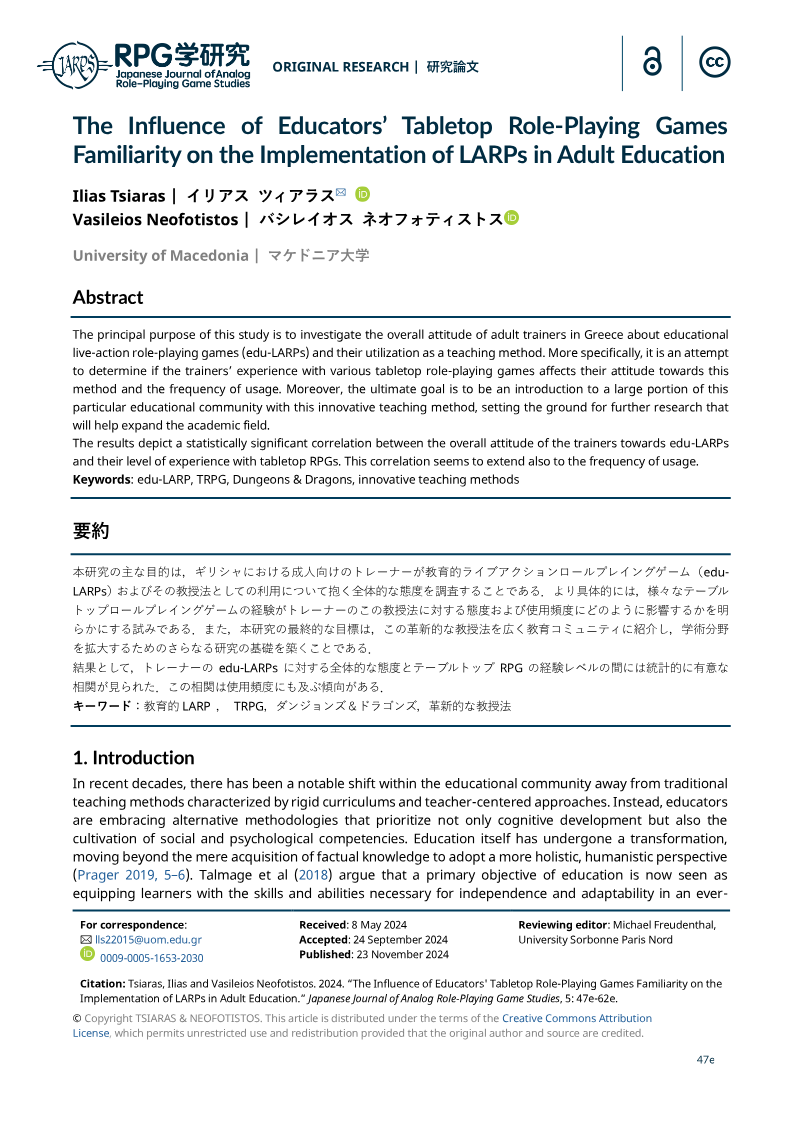
The Influence of Educators' Tabletop Role-Playing Games Familiarity on the Implementation of LARPs in Adult Education: Greece
Tabletop role-playing games serve as a foundational predictor for the adoption of educational live-action role-playing games within the Greek adult education sector.
- Prior experience with tabletop role-playing games is a primary predictor for the adoption of live-action role-playing (LARP) methodologies in Greek adult education.
- A survey of 113 Greek adult educators confirms a statistically significant correlation between analog gaming familiarity and the frequent implementation of experiential learning techniques.
- Educators with tabletop gaming backgrounds exhibit a more favorable perception of game-based learning and possess the confidence required to facilitate complex, inquiry-based live-action simulations.


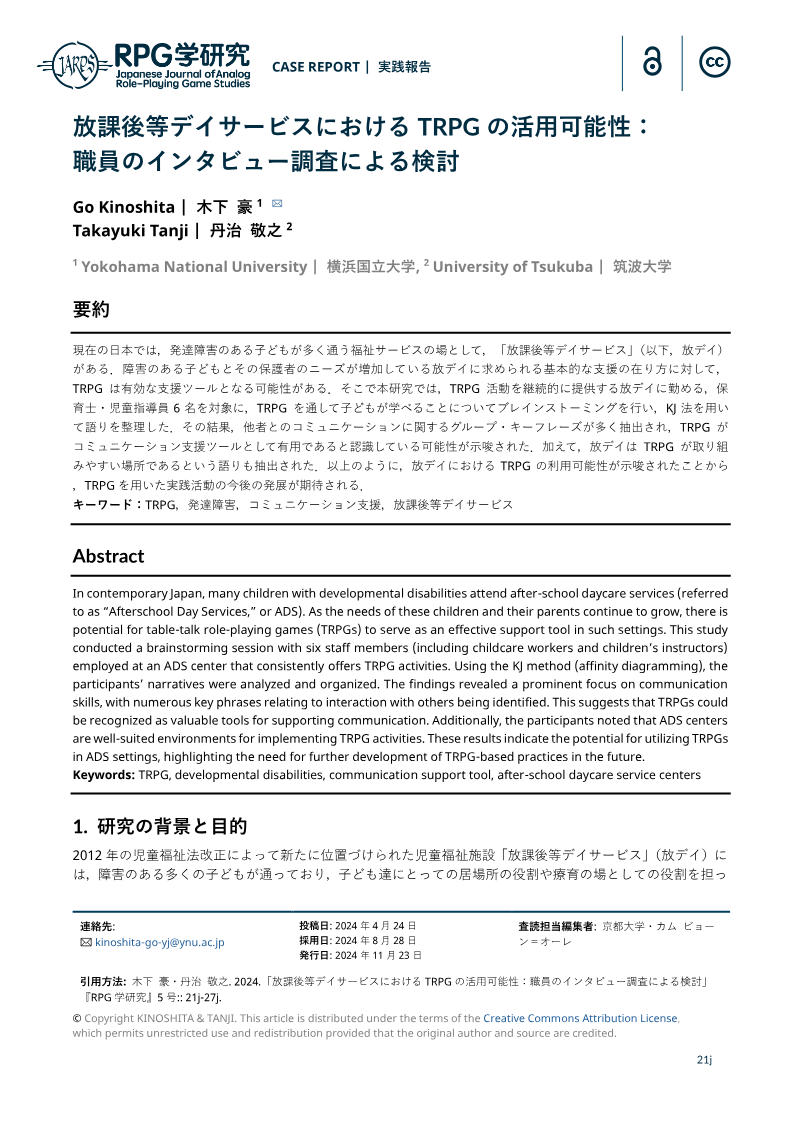
Possibility of Utilizing TRPG in After-School Daycare Services: An Interview Study of Staff
This study examines the potential of table-talk role-playing games (TRPGs) as a therapeutic and educational tool within Japanese after-school daycare services (ADS) for children with developmental disabilities.
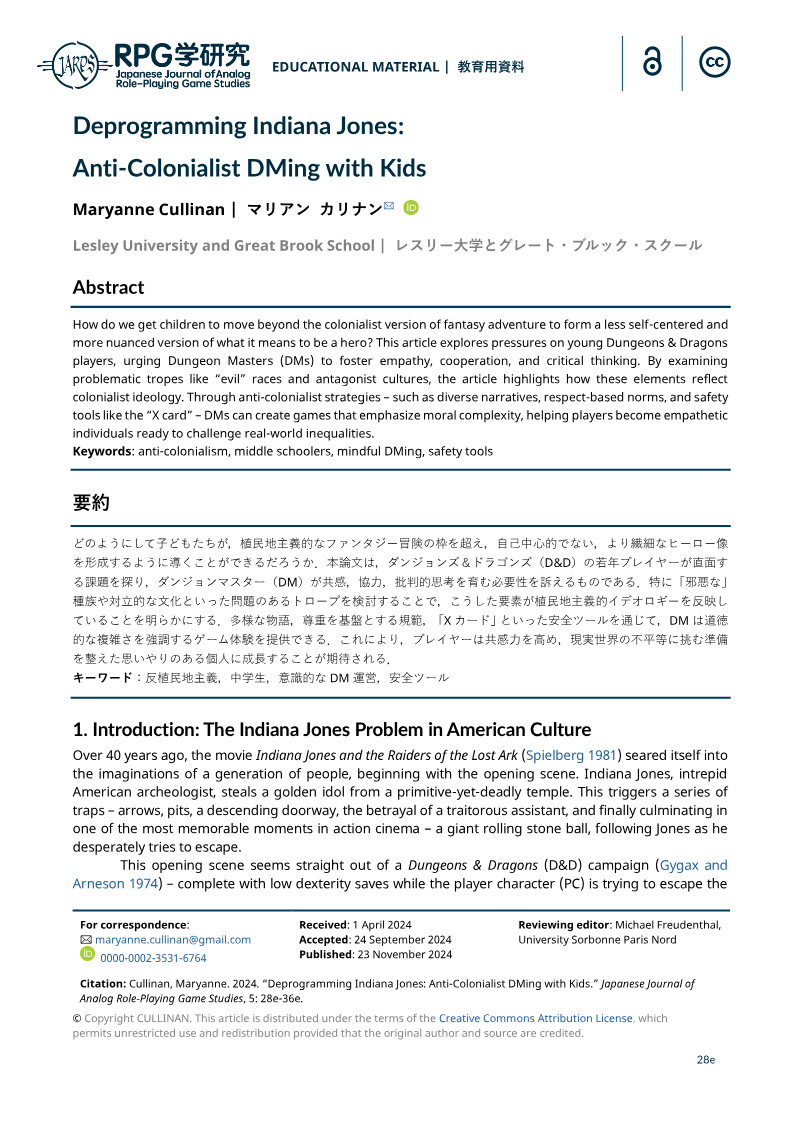
Deprogramming Indiana Jones: Anti-Colonialist DMing with Kids
Traditional tabletop role-playing games frequently perpetuate colonialist ideologies by relying on problematic tropes, such as the inherent villainy of specific races and the glorification of treasure-seeking violence.
Can Mobile Games Be an Option for Teaching Algebra?
Mobile game-based learning serves as a viable pedagogical tool for teaching algebra to seventh-grade students, particularly those who struggle with traditional mathematics instruction but possess high digital gaming proficiency.
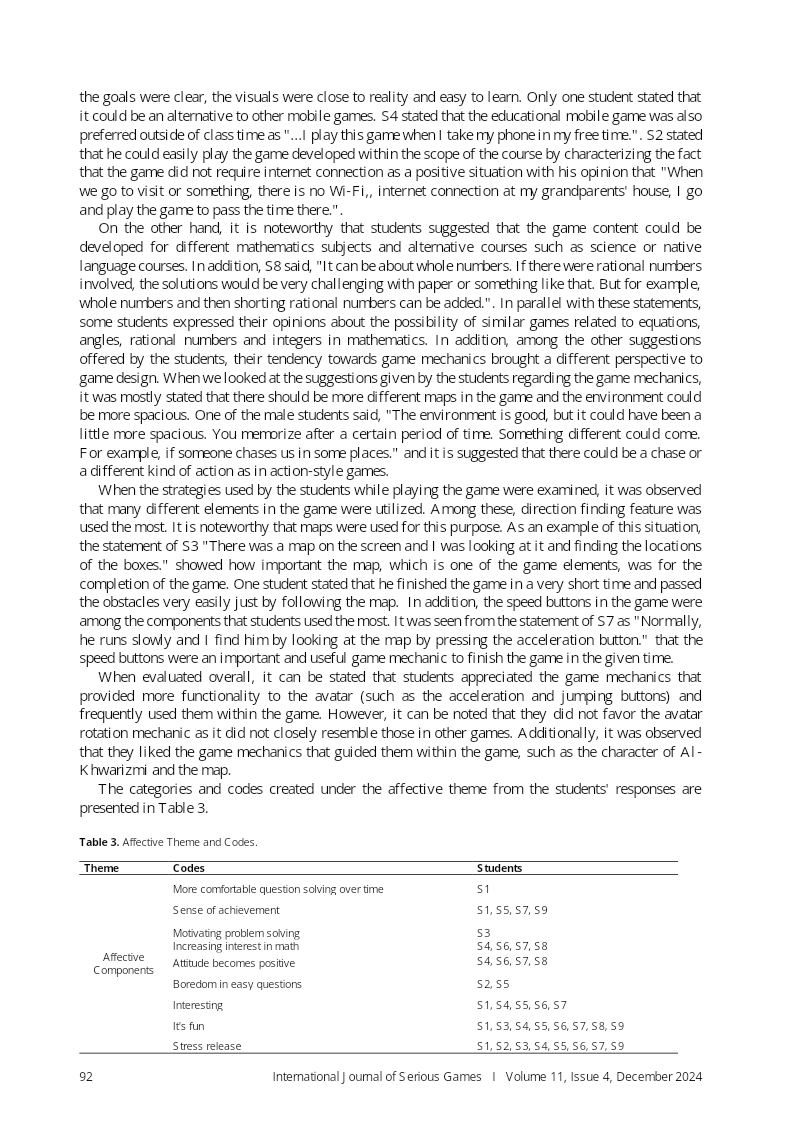
- Mobile games effectively increase student motivation and mental processing speeds in seventh-grade algebra, particularly for students who struggle with traditional instruction.
- While mobile platforms improve student attitudes toward mathematics, they do not inherently teach formal mathematical reasoning or replace the need for explicit instruction.
- Research indicates that students using mobile algebra games often rely on trial-and-error strategies rather than developing new cognitive approaches to problem-solving.
A Bird Matching Game: Difficulty, Rewards, and Intrinsic Motivation
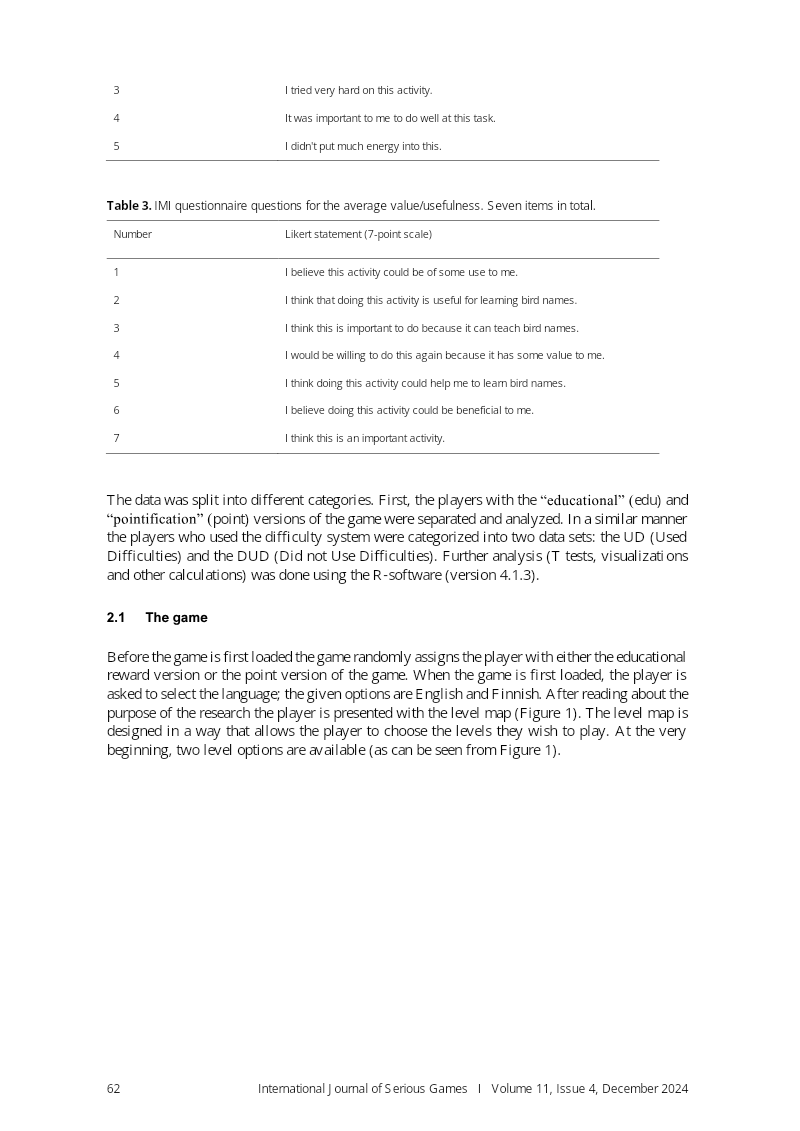
The primary objective of this research is to evaluate the efficacy of various engagement mechanics—specifically point-based reward systems versus educational content—and the role of self-selected difficulty in fostering intrinsic motivation.
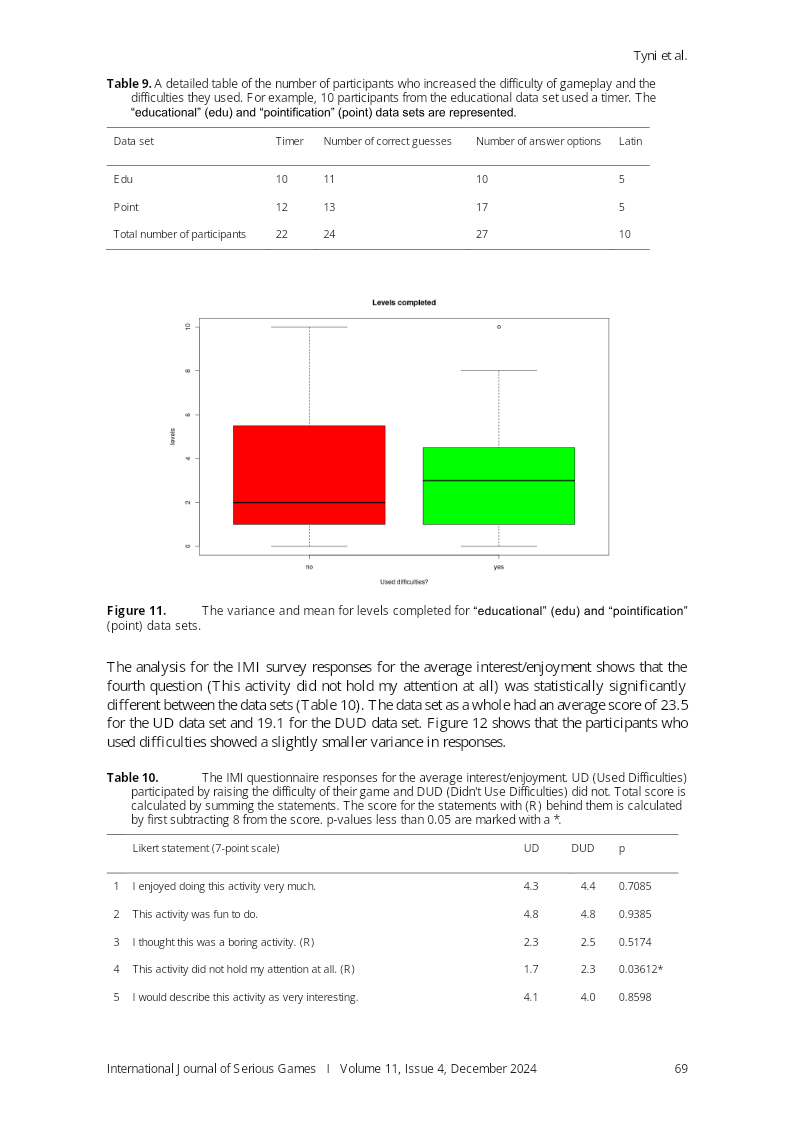
- Granting players the autonomy to self-select difficulty levels is a more effective driver of intrinsic motivation and engagement than traditional reward systems.
- Participants who voluntarily increased game difficulty reported significantly higher scores on the Intrinsic Motivation Inventory, specifically regarding perceived effort and task importance.
- Extrinsic reward structures, including gamification elements like badges and points as well as educational content, showed no statistically significant impact on player motivation or progression.

A Linear Programming Methodology for Evaluating Game Attributes in Serious Games
Serious games often lack standardized, objective evaluation frameworks, leading to subjective assessments of design effectiveness.
- A new linear programming methodology provides a quantitative framework to objectively evaluate serious game attributes like immersion, feedback, challenge, and autonomy.
- The framework was validated using survey data from 255 participants to minimize discrepancies between individual attribute ratings and overall user evaluations.
- Users exhibit cognitive bias by disproportionately prioritizing knowledge improvement and concentration while neglecting other essential design components.
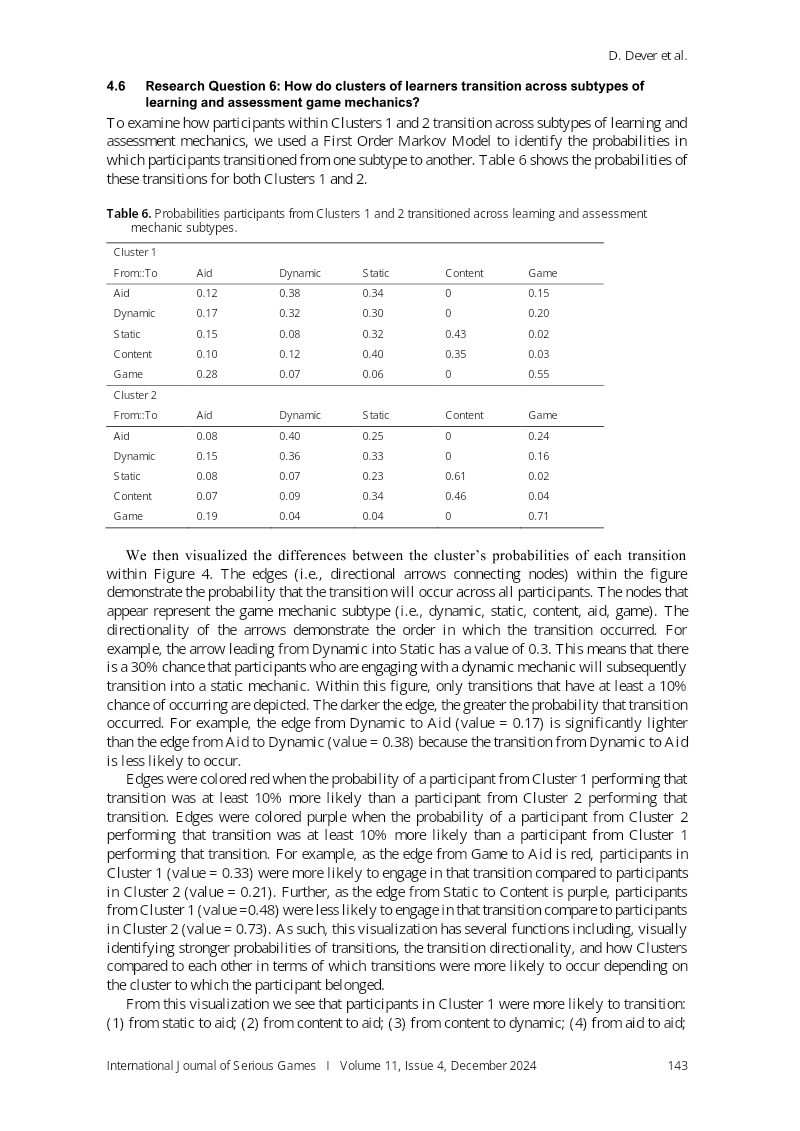
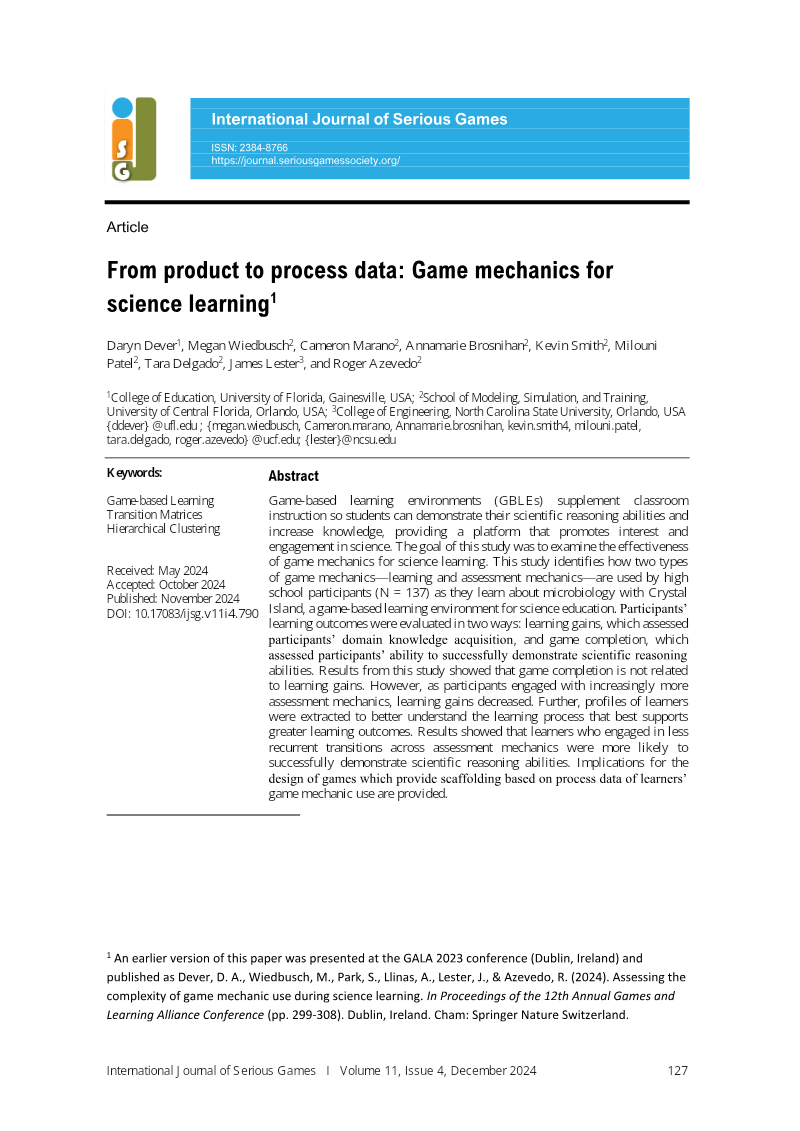
From Product to Process Data: Game Mechanics for Science Learning
Game-based learning environments often conflate successful game completion with actual knowledge acquisition, yet empirical evidence suggests these outcomes are driven by distinct behavioral patterns.
- Game completion is not a reliable proxy for pedagogical success, as empirical data from 137 high school students shows that successful game completion and actual knowledge acquisition are driven by distinct behavioral patterns.
- Frequent engagement with learning mechanics, such as static information and instructional aids, significantly increases the likelihood of game completion.
- Over-reliance on assessment mechanics frequently correlates with diminished learning gains and a tendency for students to 'game the system' rather than internalize scientific reasoning.
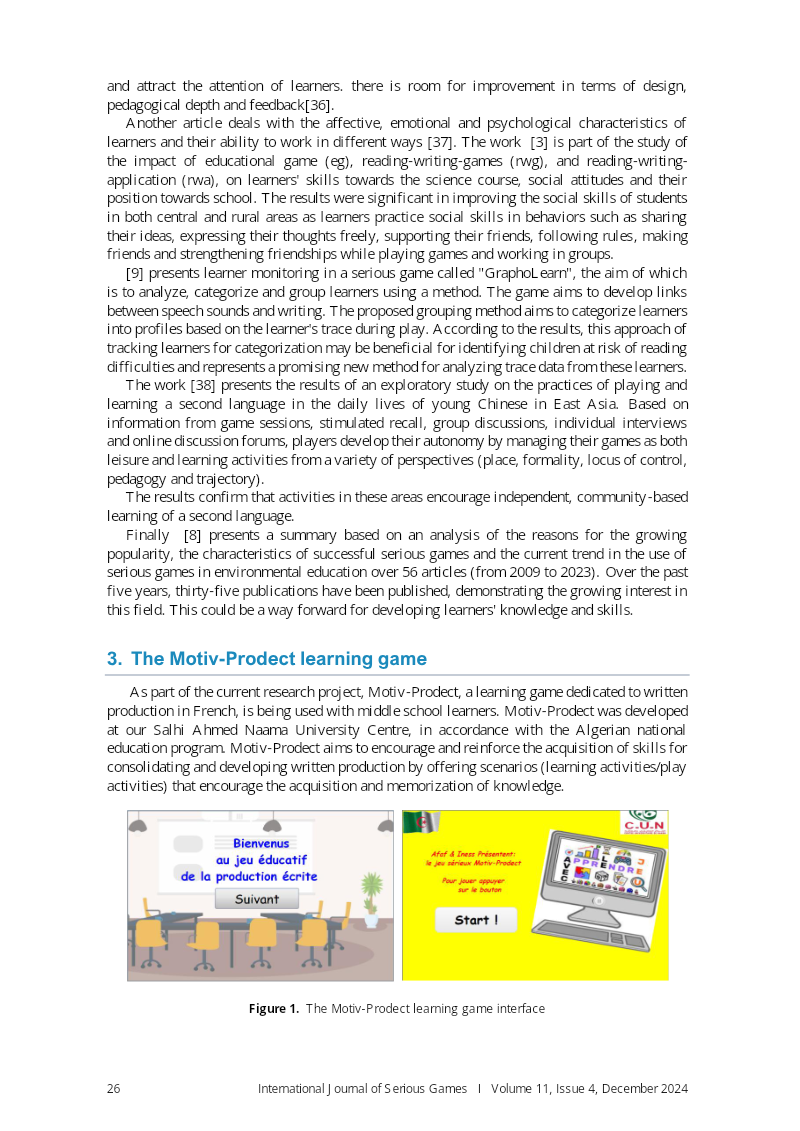
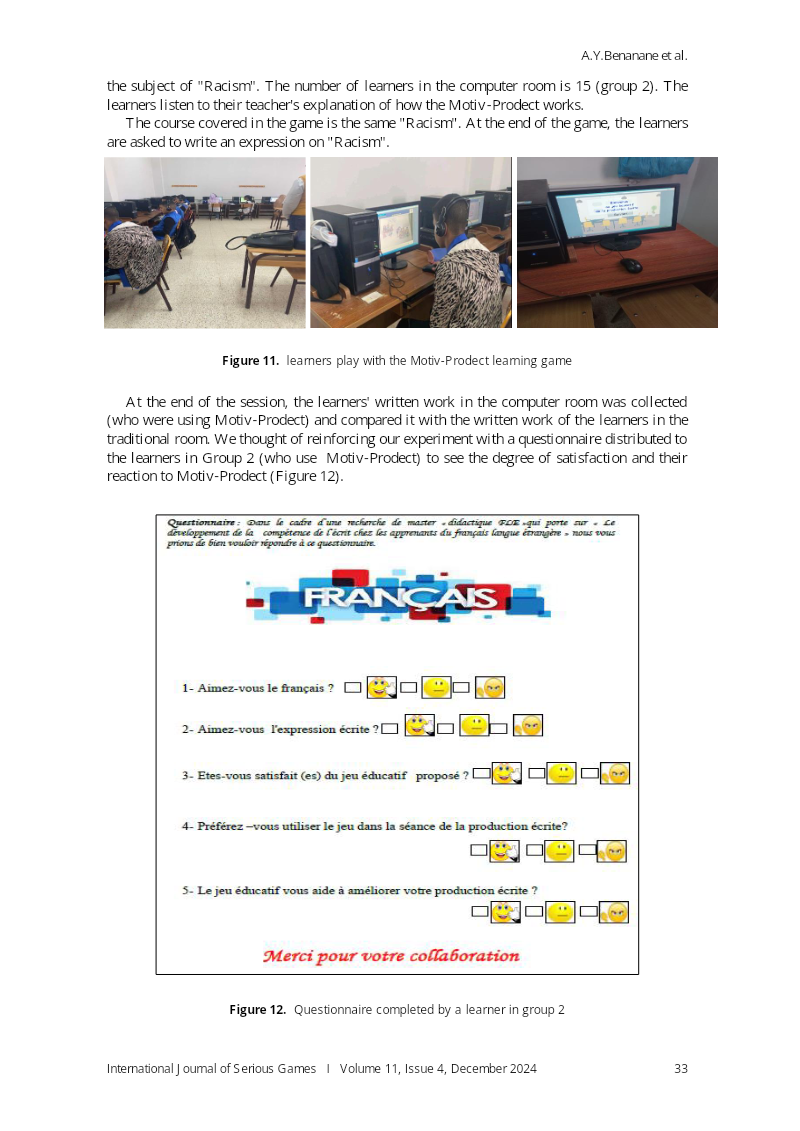
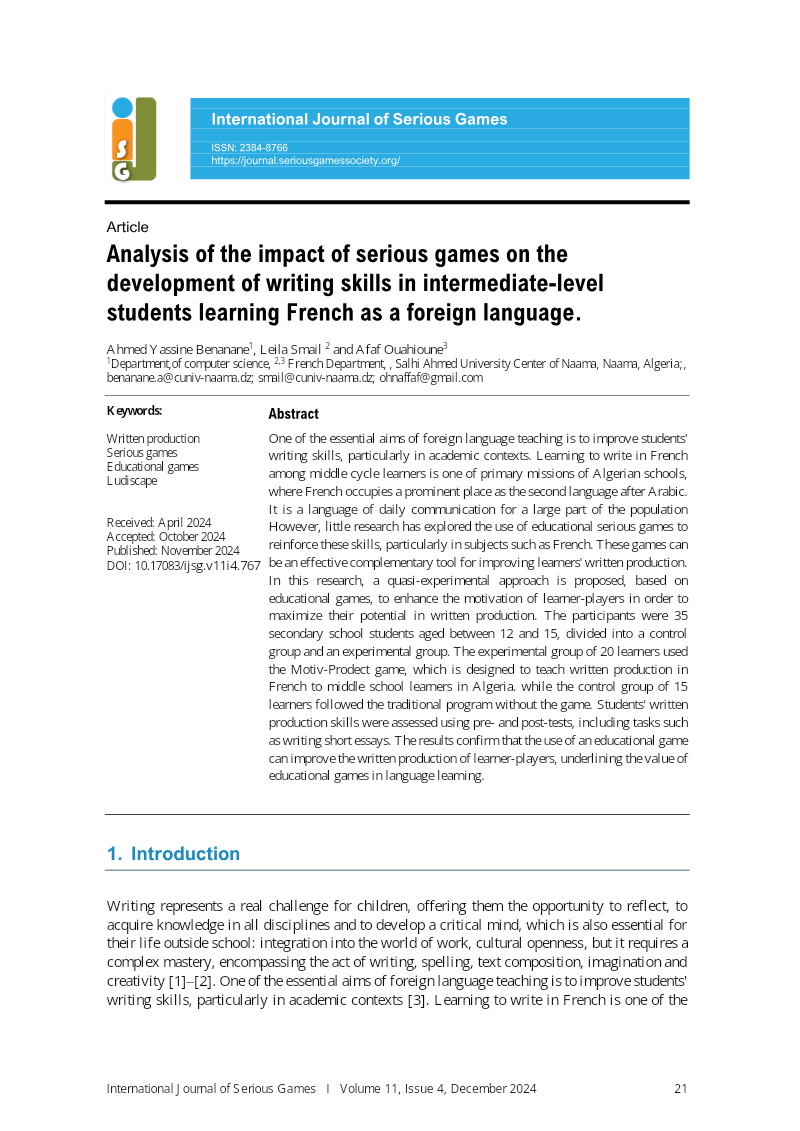
Analysis of the Impact of Serious Games on the Development of Writing Skills in Intermediate-Level Students Learning French as a Foreign Language
Serious games serve as a potent pedagogical intervention for improving written proficiency in foreign language acquisition.
- Students using the Motiv-Prodect gamified platform consistently outperformed peers in traditional classrooms, achieving higher quiz scores and demonstrating superior textual coherence and situational appropriateness in written French.
- Gamified learning environments effectively reduce student anxiety related to writing tasks while fostering the intrinsic motivation required for autonomous skill development.
- A study of 35 Algerian middle school students confirms that integrating game mechanics directly correlates with enhanced critical thinking and linguistic output.
Serious Games in Science and Mathematics Education: A Scoping Umbrella Review
Serious games serve as a significant pedagogical tool for enhancing science and mathematics education, primarily by fostering student motivation, engagement, and cognitive development.
- Serious games significantly enhance science and mathematics education by boosting student motivation, engagement, and academic self-confidence, based on a synthesis of 16 systematic reviews and 535 primary studies.
- The effectiveness of serious games is highly variable, as poor design or implementation can trigger negative outcomes such as student anxiety, demotivation, and feelings of failure.
- Successful integration requires high teacher proficiency and game literacy to ensure educational objectives remain the priority over the gaming experience.
Traditional Quizzing with a Twist: Involving University Students in the Development Process
This pilot study by Haave, Slyman, and Vold, based at Inland Norway University of Applied Sciences and Roehampton University, examines how a low-tech, paper-based quiz developed by university students can support games-based learning in a research methods course.
- Analogue, paper-based quizzes written by students offer a way to keep games-based learning engaging while complying with GDPR, after several Norwegian universities withdrew licences for platforms like Kahoot! because their servers sat outside Norwegian jurisdiction.
- The authors frame the approach as linking student co-creation, low-technology design, and data-protection compliance within a single pedagogical model for games-based learning.
- The evidence is a small, exploratory qualitative pilot based on informal group interviews with students in a single research methods course at one institution, so the authors describe its conclusions as preliminary.