
Japanese Association for Role-Playing Game Studies (JARPS)
Open-access journal of the Japanese Association for Role-Playing Game Studies on role-playing games, larp and game-based learning.
Documents
NotebookLM: LARP Participant Support Tool Implementation Report
This report examines the implementation of Google’s AI service, NotebookLM, as a participant support tool for live-action role-playing (LARP) events in Japan.
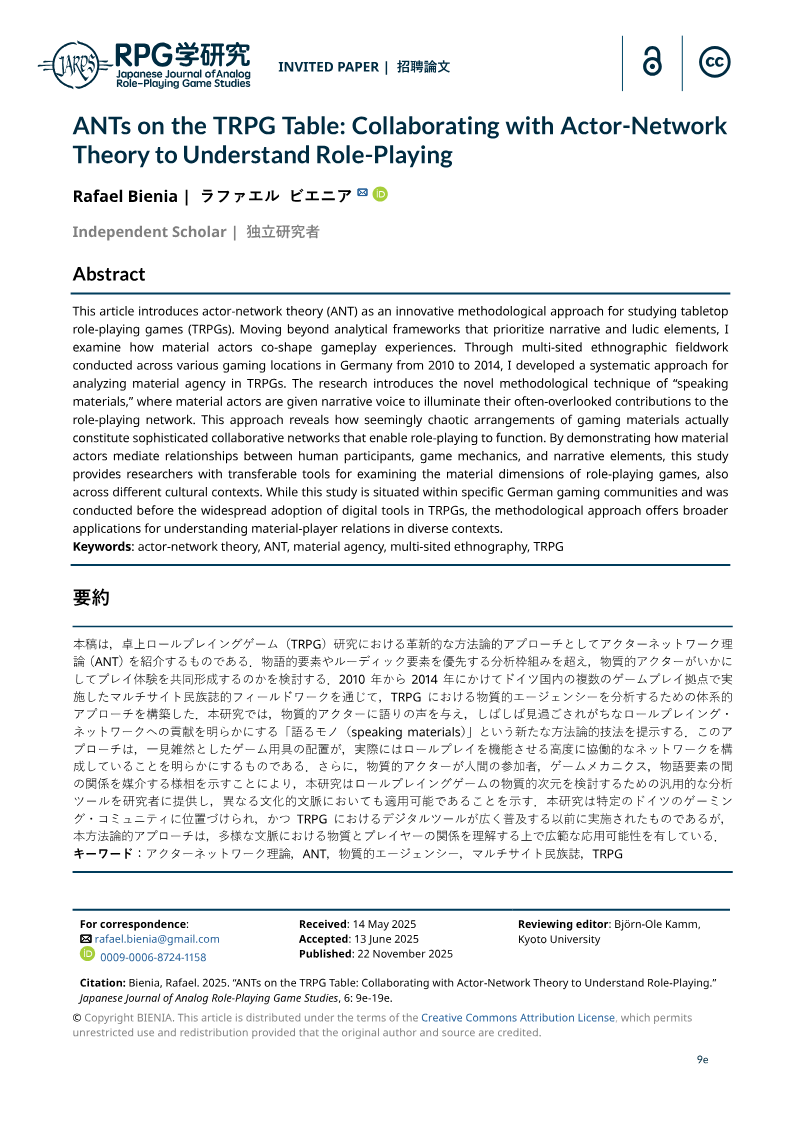
ANTs on the TRPG Table: Collaborating with Actor-Network Theory to Understand Role-Playing
Tabletop role-playing games function as complex, collaborative networks where the distinction between human participants and material objects dissolves into a shared, inseparable agency.
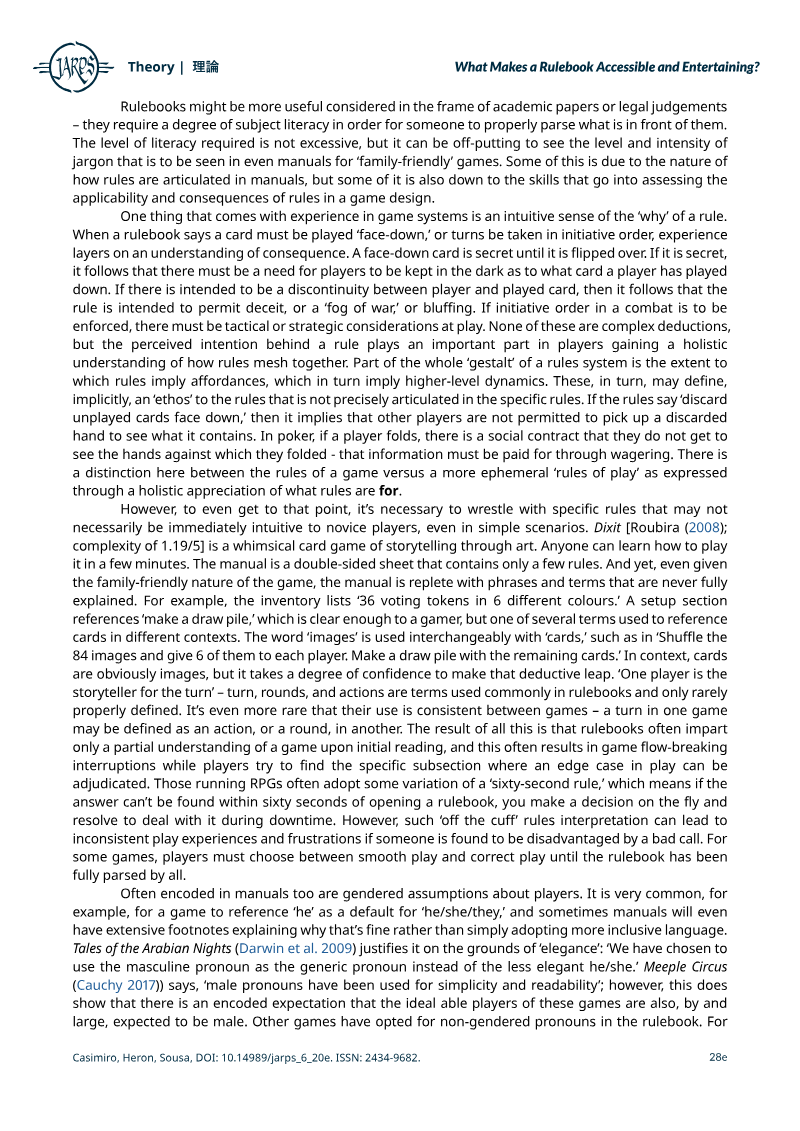
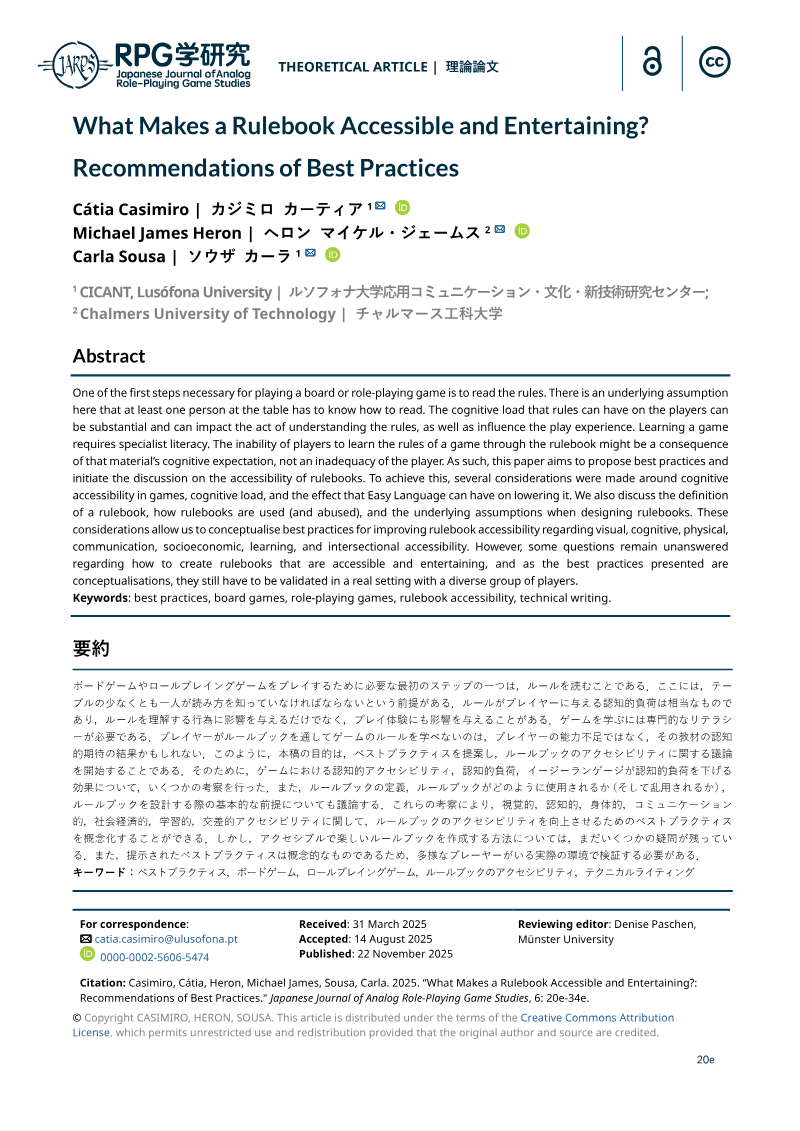
What Makes a Rulebook Accessible and Entertaining? Recommendations of Best Practices
Tabletop game rulebooks frequently serve as significant barriers to entry, where poor design choices rather than player aptitude impede the learning process.
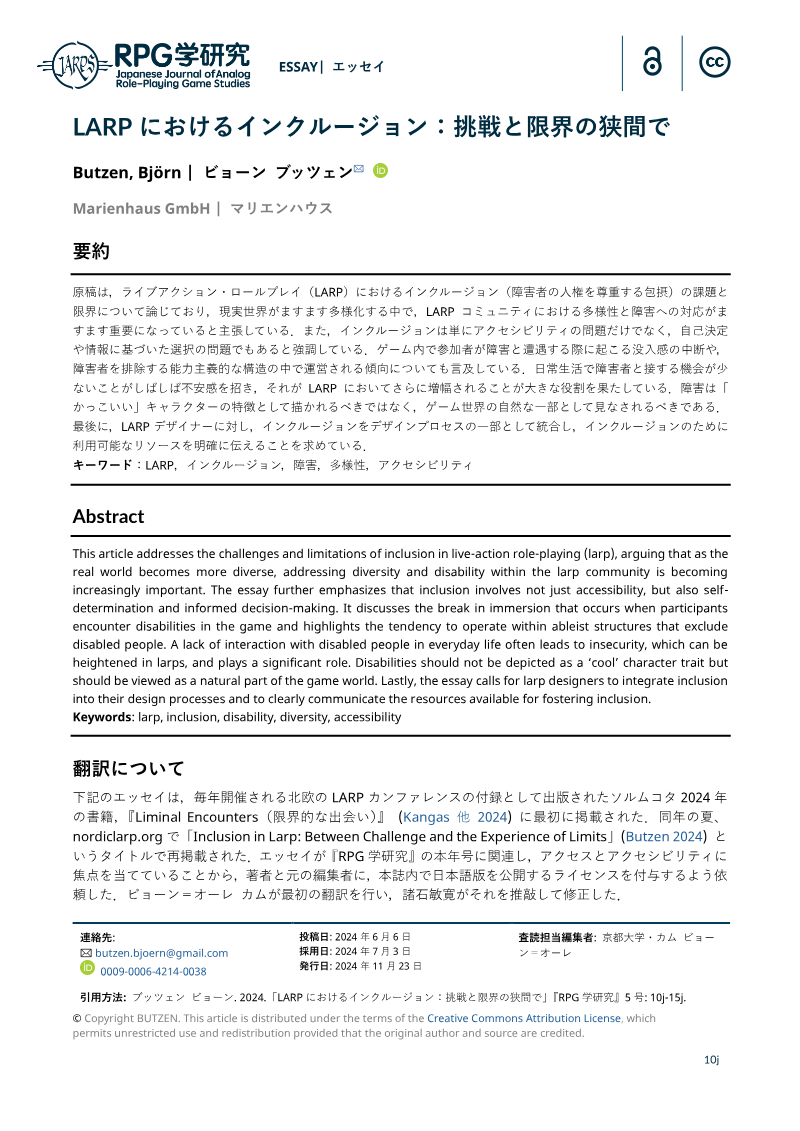
Inclusion in LARP: Between Challenges and Limitations
This analysis examines the integration of disability and inclusion within the live-action role-playing (LARP) community, arguing that the hobby must evolve to reflect the diversity of the real world.
Reimagining Calibration Frameworks Through Crip Theory
The article explores the intersection of calibration frameworks, disability, and accessibility within the context of tabletop role-playing games (TRPGs).
- Calibration tools in tabletop role-playing games (TRPGs) serve as essential mechanisms for managing informed risk and establishing clear boundaries for players with conditions such as autism, anxiety, and PTSD.
- Safety tools do not function to suppress challenging content, but rather facilitate communal gameplay and structured engagement with difficult themes through established boundaries.
- Applying 'crip time'—a concept from crip theory—to TRPG calibration allows time to be treated as a flexible resource that enhances accessibility and benefits the overall game experience rather than acting as a constraint.
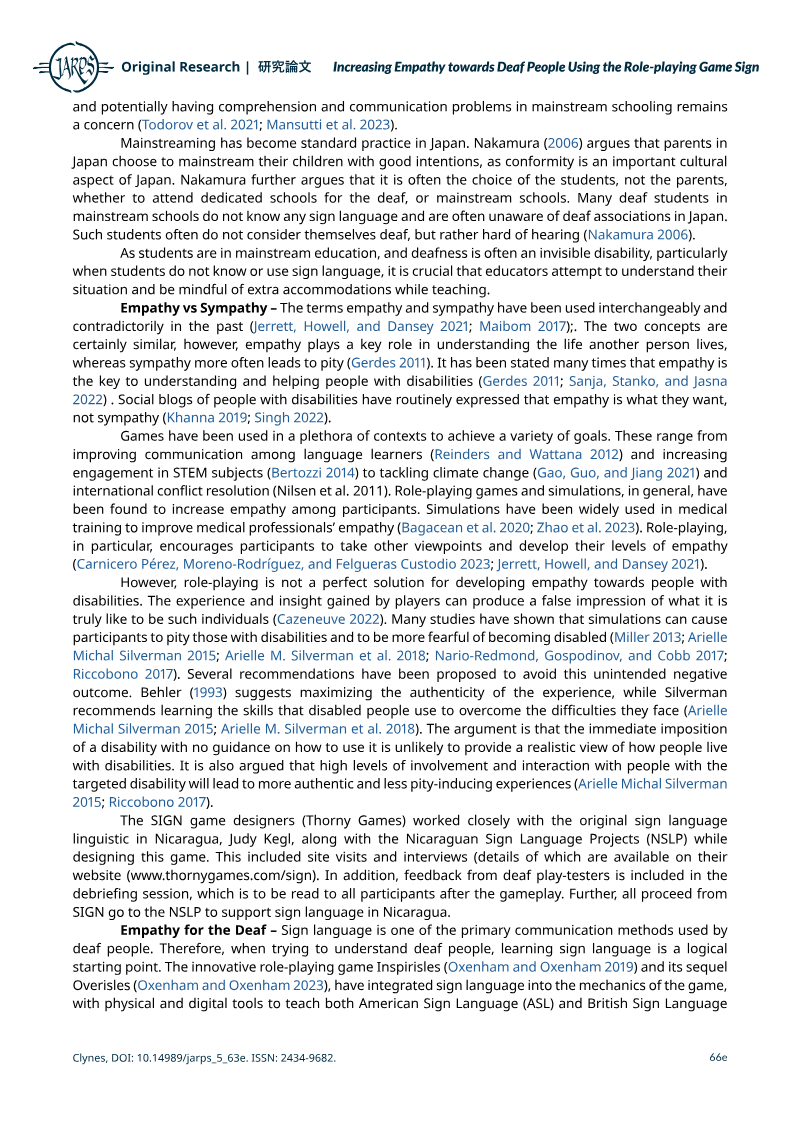
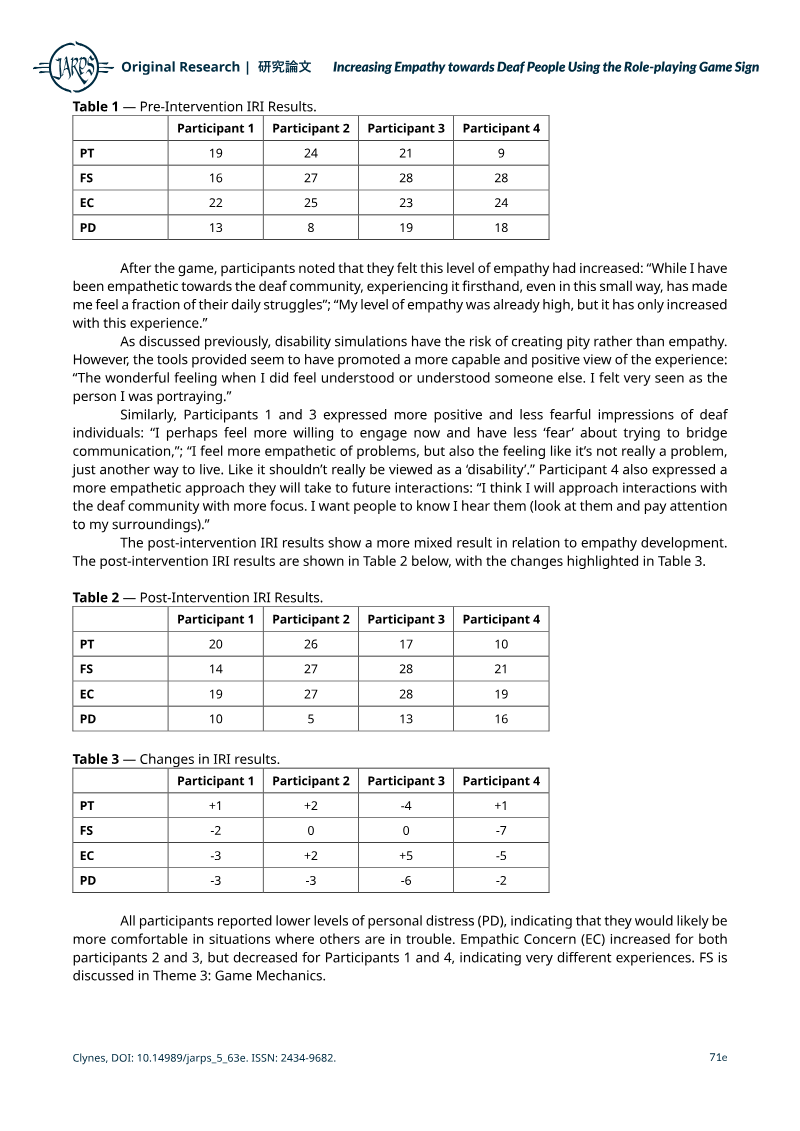
A Case Study in Increasing Empathy towards Deaf People Using the Role-Playing Game Sign: Japan
The role-playing game Sign serves as a potent pedagogical tool for fostering empathy and awareness toward the deaf experience among educators.
Enjoy the Silence: A Discussion Around Players' Experience and Emotional Accessibility in Alice is Missing
Alice is Missing redefines the tabletop role-playing experience by replacing traditional verbal interaction with silent, text-based communication.
The Influence of Educators' Tabletop Role-Playing Games Familiarity on the Implementation of LARPs in Adult Education: Greece
Tabletop role-playing games serve as a foundational predictor for the adoption of educational live-action role-playing games within the Greek adult education sector.
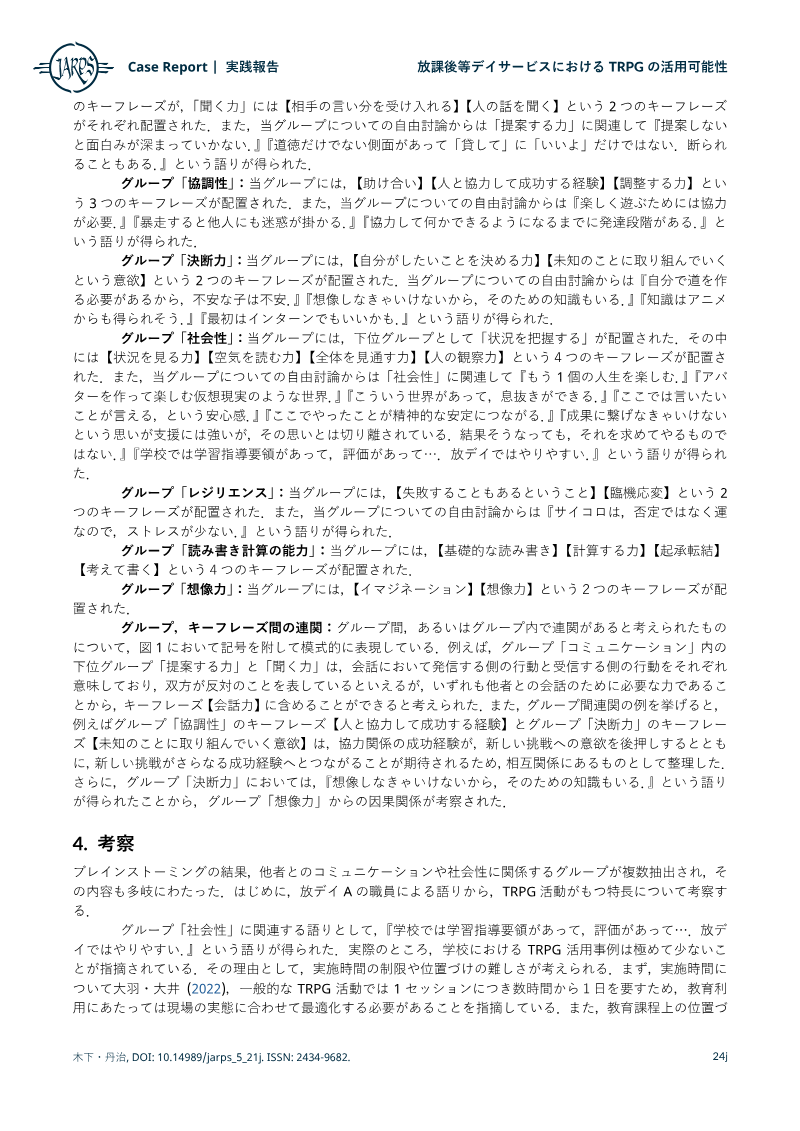
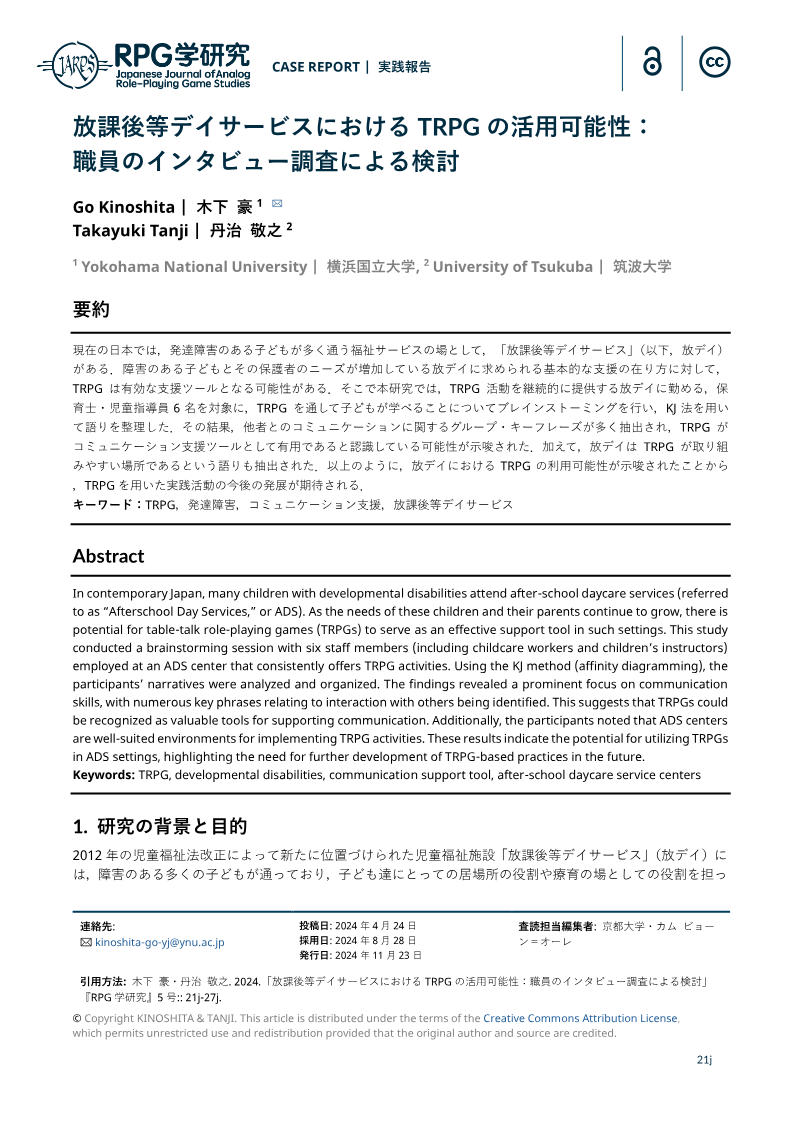
Possibility of Utilizing TRPG in After-School Daycare Services: An Interview Study of Staff
This study examines the potential of table-talk role-playing games (TRPGs) as a therapeutic and educational tool within Japanese after-school daycare services (ADS) for children with developmental disabilities.
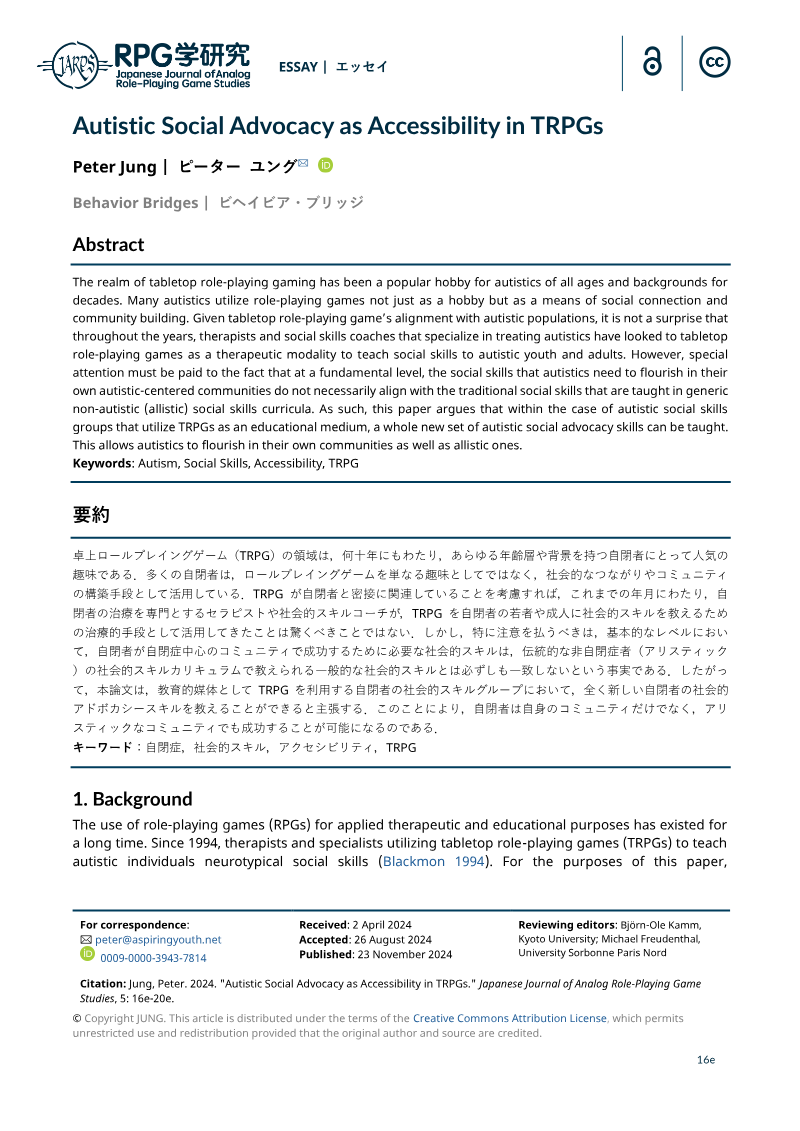
Autistic Social Advocacy as Accessibility in TRPGs
This analysis explores the integration of tabletop role-playing games (TRPGs) into social skills training for autistic individuals, advocating for a shift from the traditional medical model of disability to a neurodiversity-affirming social model.
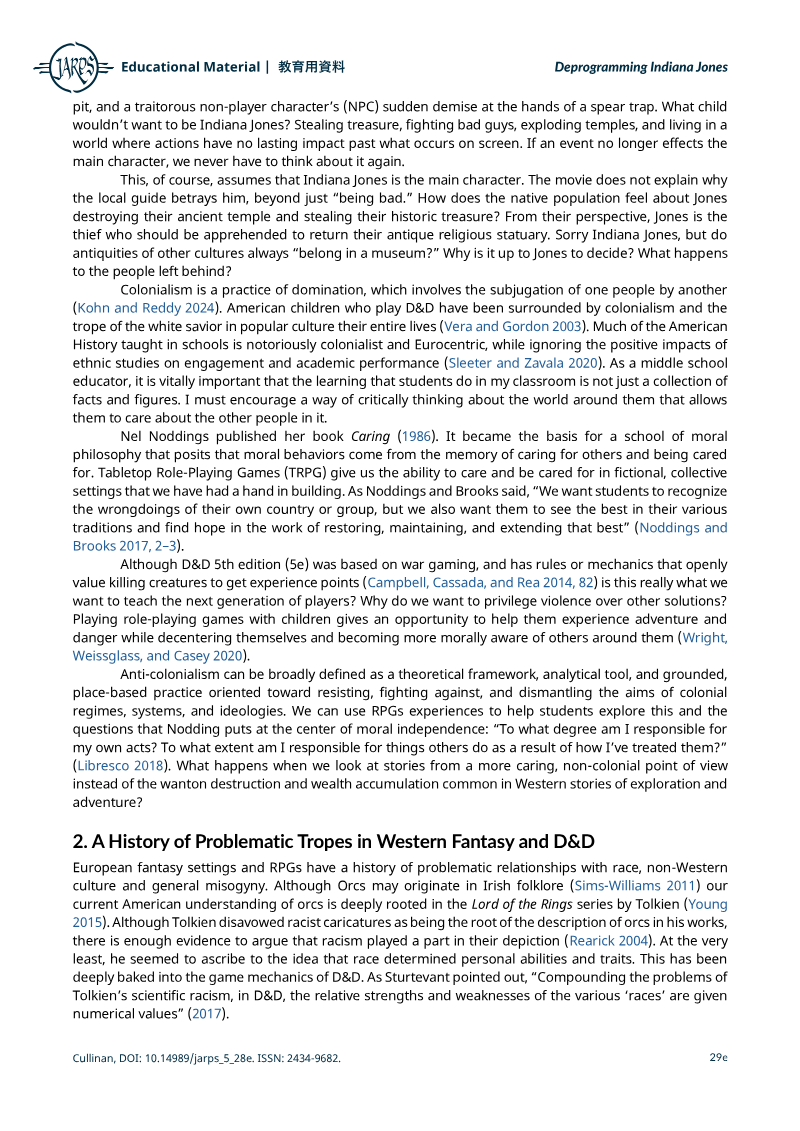
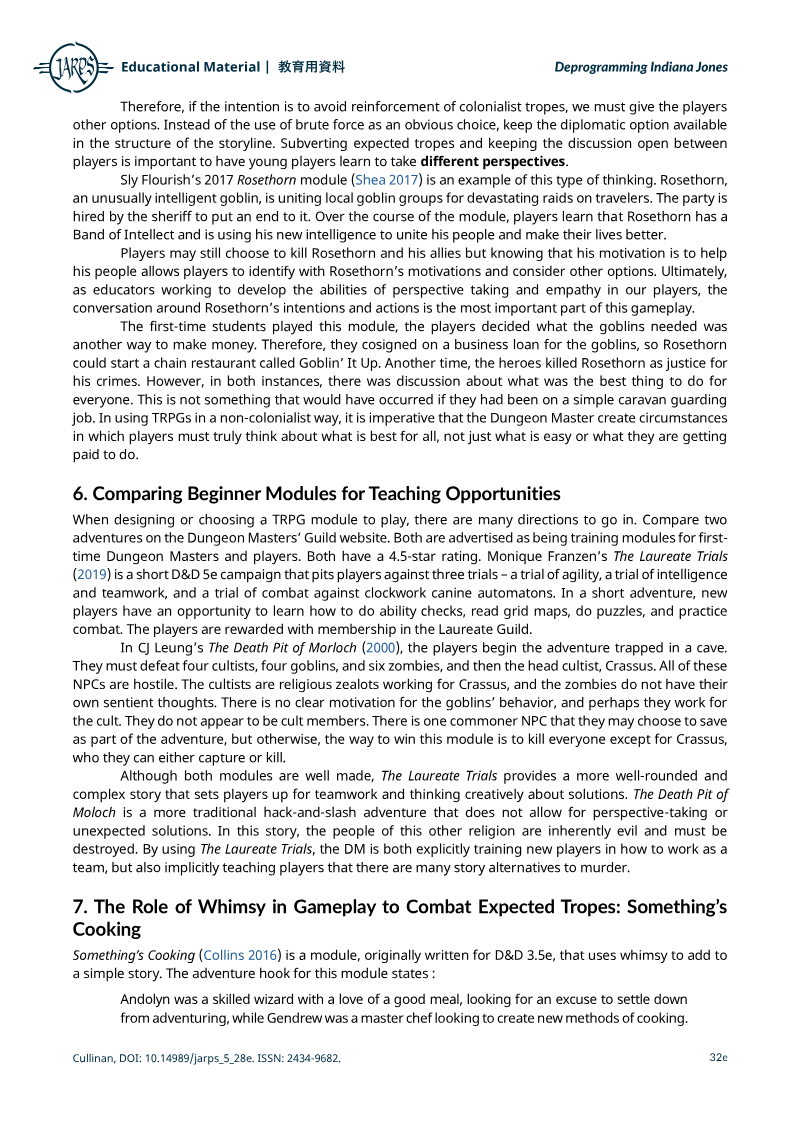
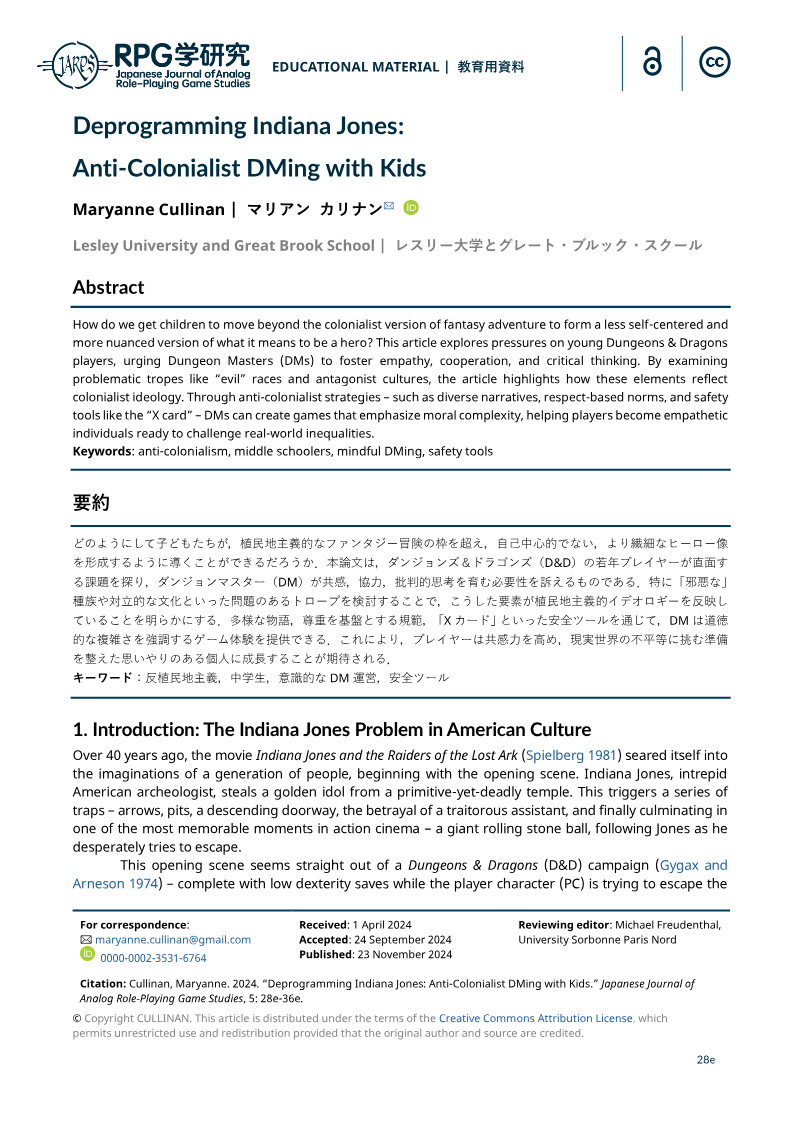
Deprogramming Indiana Jones: Anti-Colonialist DMing with Kids
Traditional tabletop role-playing games frequently perpetuate colonialist ideologies by relying on problematic tropes, such as the inherent villainy of specific races and the glorification of treasure-seeking violence.
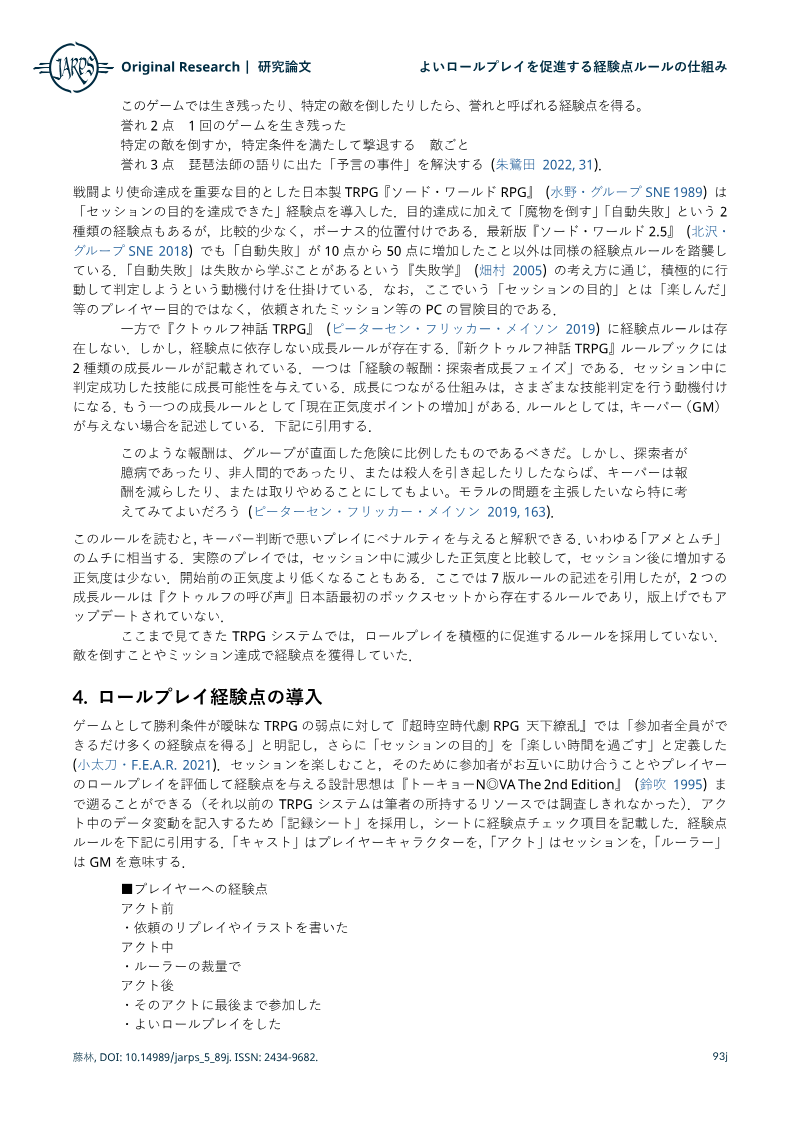
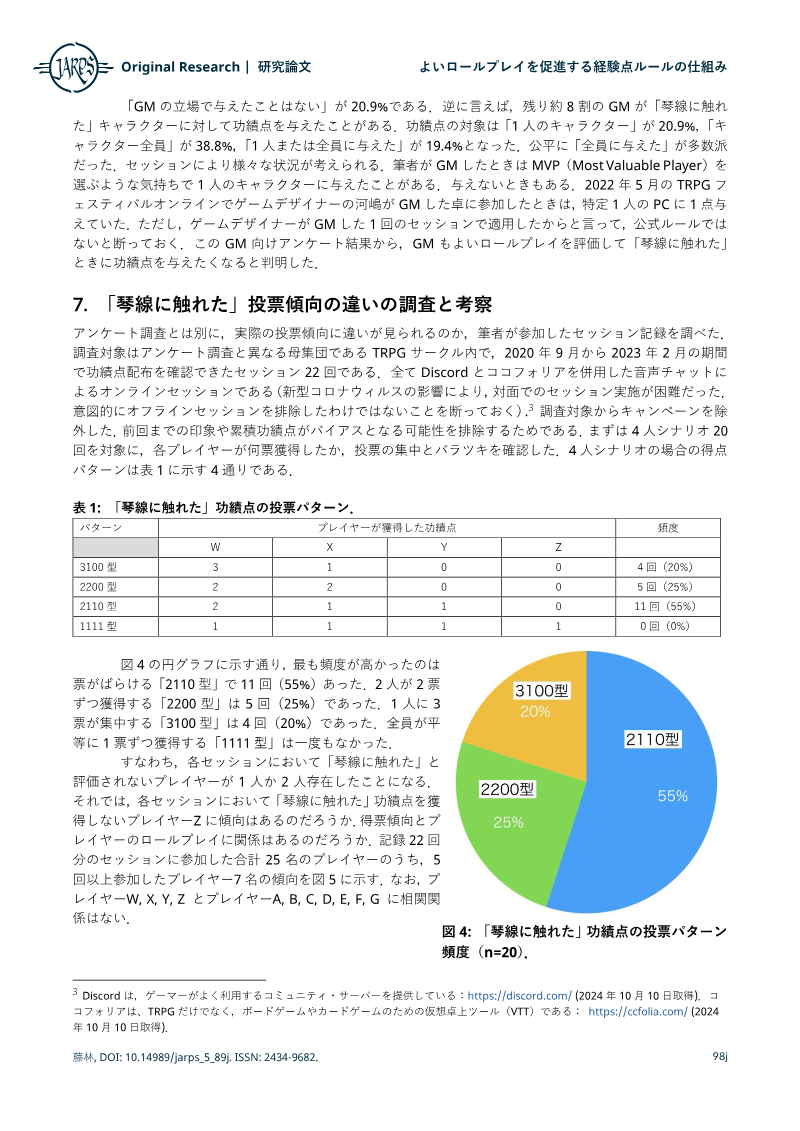
Mechanisms of Experience Point Rules to Promote Good Roleplay: A Study of 'Touched by the Heartstrings' in Shinobigami
This study examines the role of experience point mechanics in promoting positive roleplay within Japanese Table-talk Role-Playing Games (TRPGs), with a primary focus on the "Touched the Heartstrings" (Kinsen ni fureta) mechanic in the ninja battle RPG Shinobigami.