Serious Games reports and market data
Documents
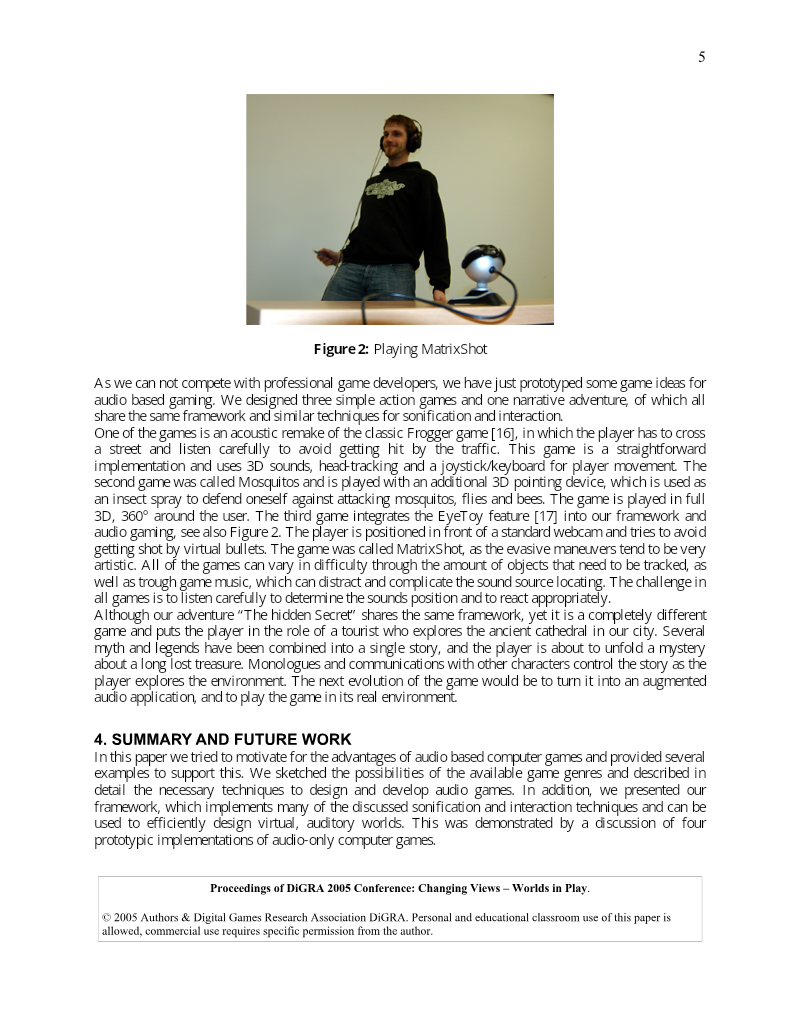
Playing Audio-Only Games: A Compendium of Interacting with Virtual, Auditory Worlds
This paper presents an overview of audio-only computer games, games played and perceived entirely through sound and acoustics.
- Audio-only games were originally developed by and for visually impaired players, but the authors argue they offer advantages for gameplay experimentation, mobile gaming, and immersive storytelling that also appeal to hearing players.
- The central design challenge is balancing functional information for orientation and navigation against artistic aesthetics, avoiding both cluttered auditory displays and silent stretches that disorient players.
- Designers can tune difficulty through narration, monologues, the number of sound objects, and background music, which the paper presents as tools for managing this functionality-aesthetics balance.
The Play's the Thing: Practicing Play as Community Foundation and Design Technique
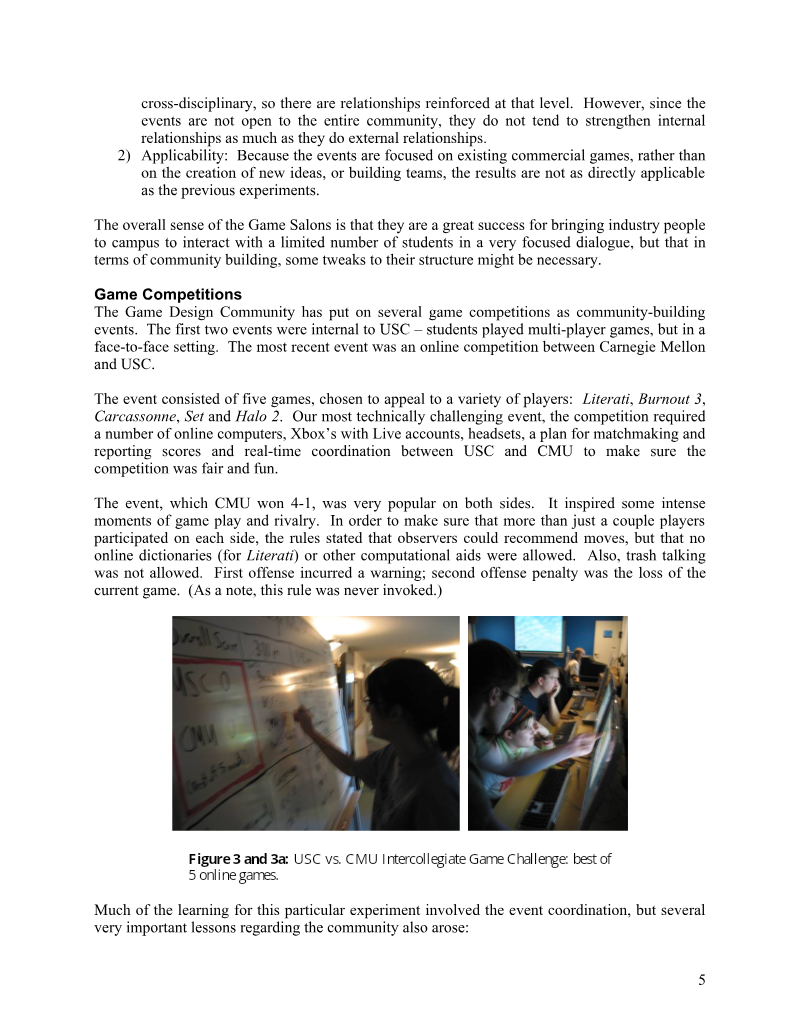
Tracy Fullerton's paper describes the USC Game Design Community, an extracurricular, cross-departmental initiative at the University of Southern California's School of Cinema-Television and Annenberg Center for Communication.
- Tracy Fullerton's paper argues that shared play experiences can give students and researchers from different disciplines a common vocabulary, social bonds, and collaboratively generated design concepts, complementing formal curricula that leave cross-disciplinary teamwork to chance.
- The USC Game Design Community is an extracurricular, cross-departmental initiative run through the School of Cinema-Television and the Annenberg Center for Communication at the University of Southern California.
- The Cooperative Game Play Experiment, drawing on the 1970s New Games Movement and led by Bernie DeKoven, was judged the community's most successful event, with its outdoor, technology-free format and the motto "play hard, play fair, nobody hurt" credited with sustaining discussion.
Use of Computer and Video Games in the Classroom
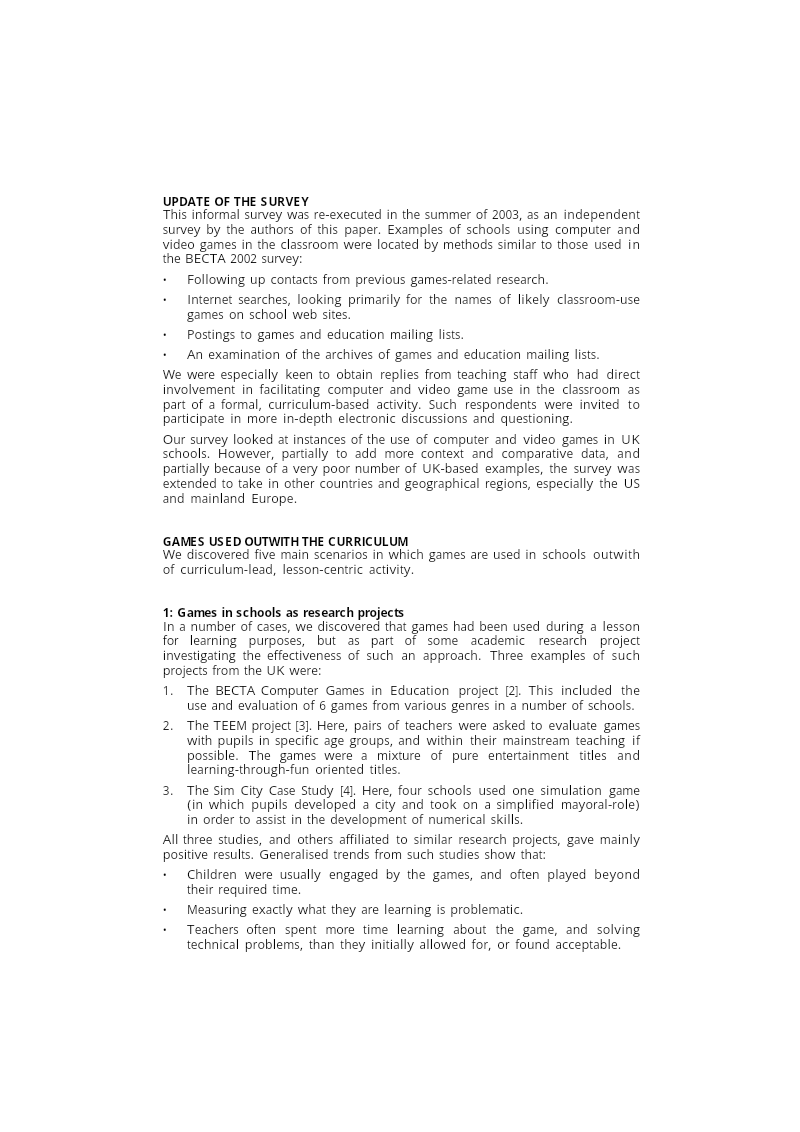
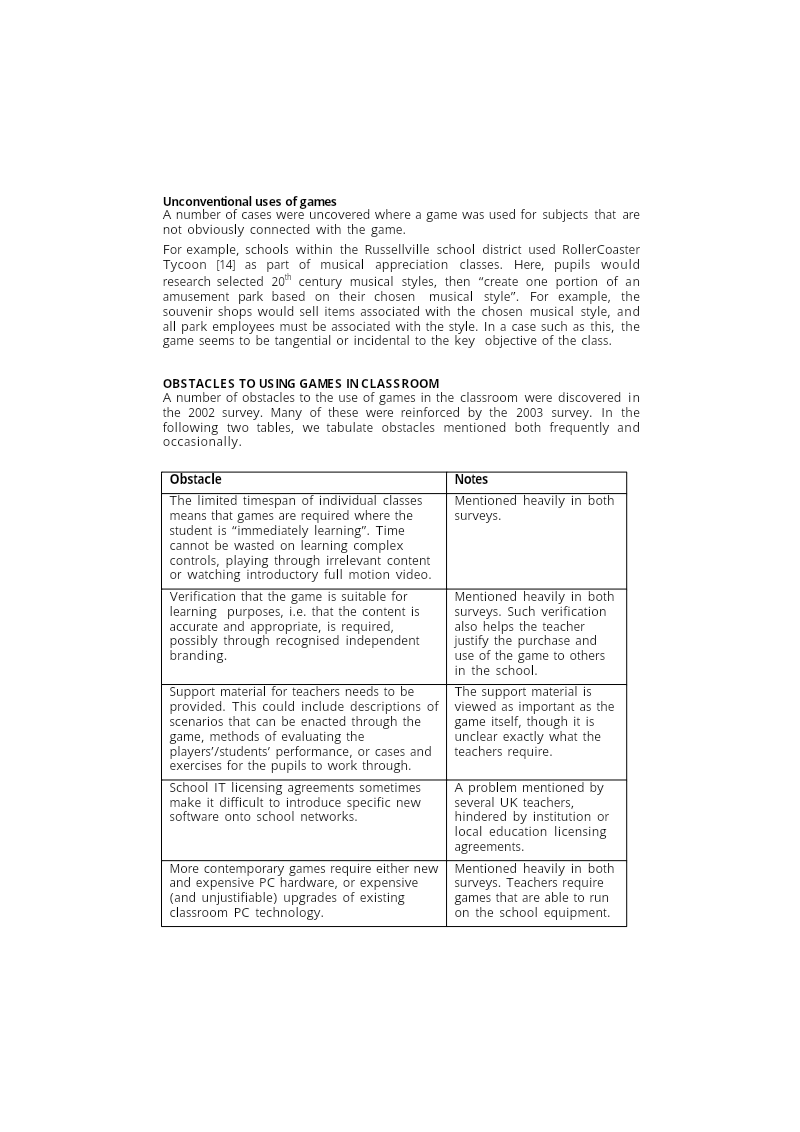
This paper examines how commercial, entertainment-oriented computer and video games are used within formal classroom instruction, drawing on informal surveys conducted in 2002 and 2003 that were focused primarily on UK schools but extended to the United States, mainland Europe, and Australia to provide comparative context.
- Games were mostly used outside the core curriculum, in research pilots, competitions, computer clubs, literacy and critique activities, and as behavioural rewards, rather than as part of formal lessons.
- Strategy and simulation titles such as Sim City and RollerCoaster Tycoon were the most common classroom games, valued for their relevance across subjects and their ability to engage students.
- Teachers reported high pupil engagement and sometimes markedly increased group discussion and collaboration when games were used.
Tiny Patches of Peace: Signs of Agency in Digital Games
Cindy Poremba's study examines how player-created modifications function as a form of authorship in digital games, with particular attention to peace-themed works produced after September 11, 2001.
- Player-created modifications are framed as an independent form of authorship that both expresses and reinforces the player's legitimacy as an author, with the study focusing on peace-themed mods made after September 11, 2001.
- Cindy Poremba's analysis centers on two cases: the anti-war Counter-Strike modification "Velvet-Strike" and the anti-war posters "Tiny Signs of Hope" created for The Sims.
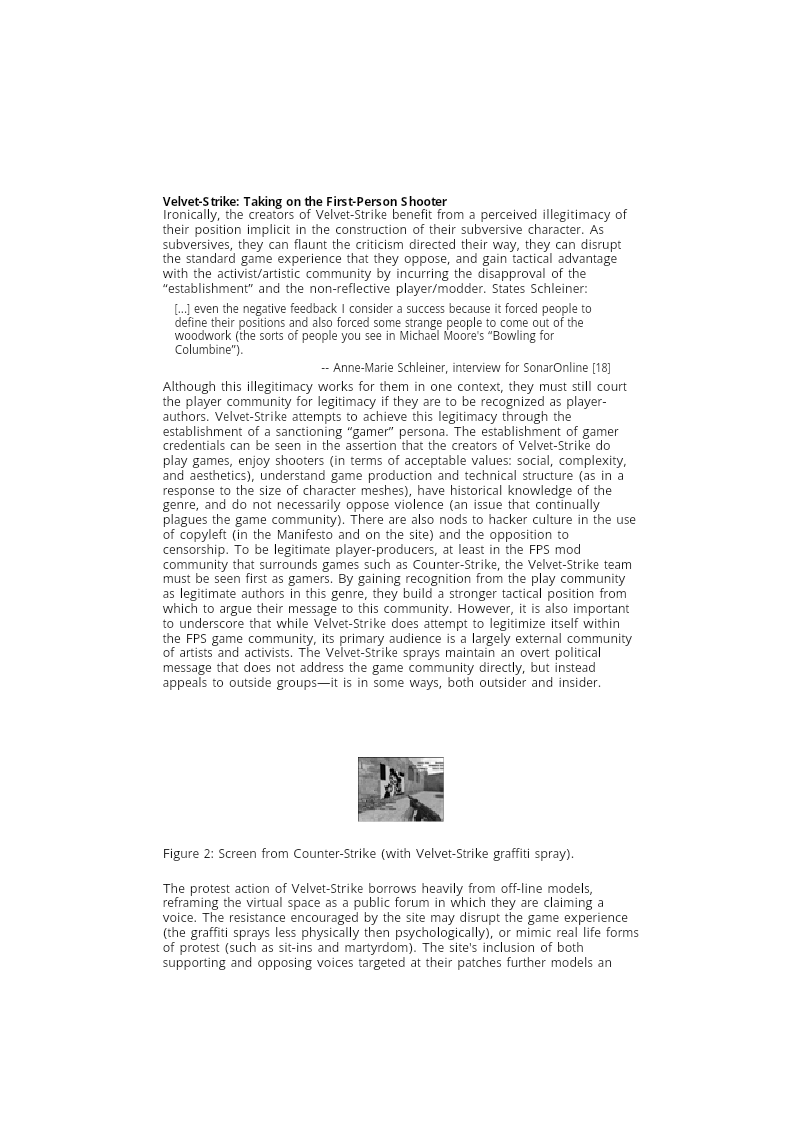
- Velvet-Strike adopts a "gamer" persona to gain credibility within the combative first-person shooter community while aiming its message at an outside audience of artists and activists.
On Cooking a Sour Game
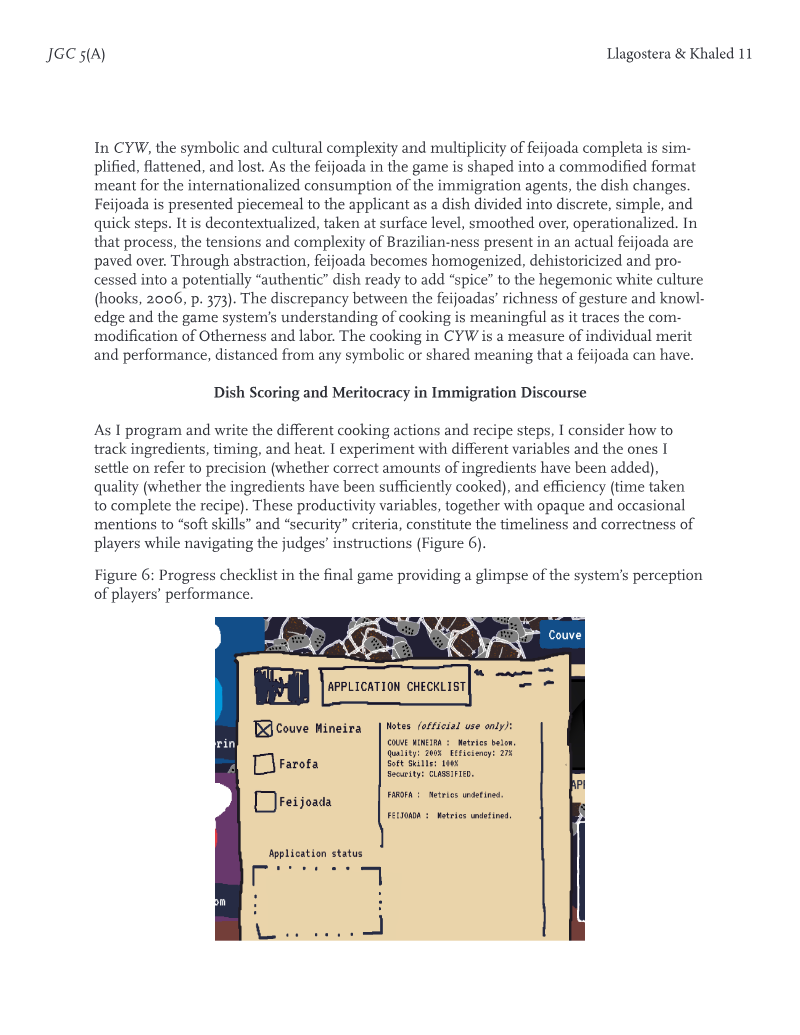
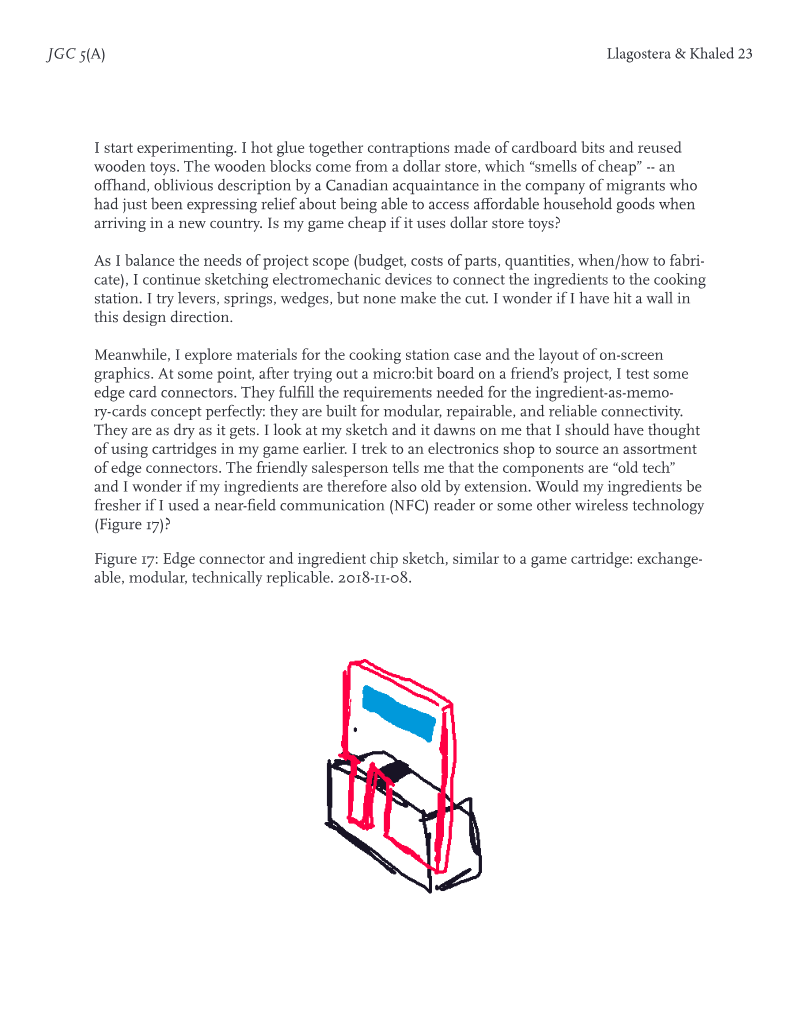
Cook Your Way functions as a critical intervention in game design, utilizing an alternative controller and the preparation of traditional Brazilian cuisine to interrogate the dehumanizing mechanics of global immigration systems.