Player Demographics reports and market data
Documents

'Flirtual Reality' and designing for female gamers
The gaming industry is increasingly recognizing the significant economic potential of female players, a demographic that has historically been underserved.
- Female gamers represent a high-value demographic, spending 35 percent more time in-game and 31 percent more on in-app purchases than male players.
- Effective engagement relies on prioritizing high-quality, innovative mechanics over gender-specific aesthetics or patronizing stereotypes.
- Game design should emphasize social interaction, deep customization, and clear progression paths to naturally attract and retain female users.

Kondycja Polskiej Branży Gierwideo Raport 2015
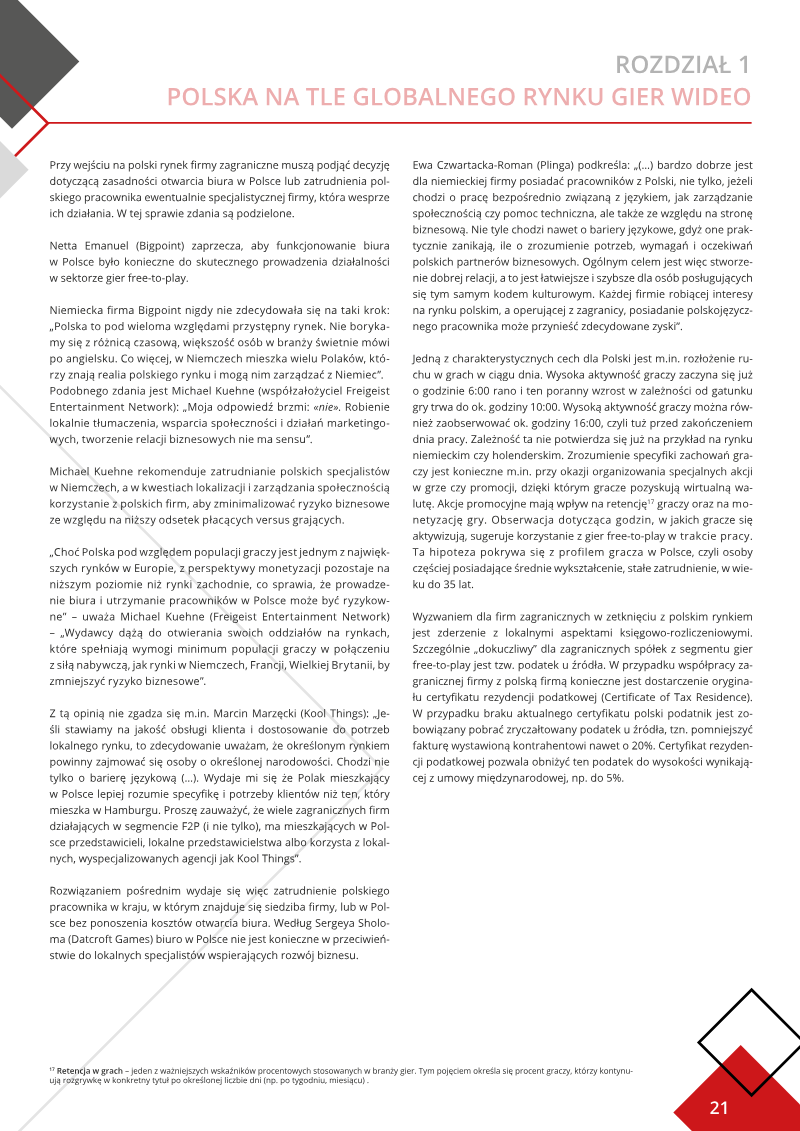
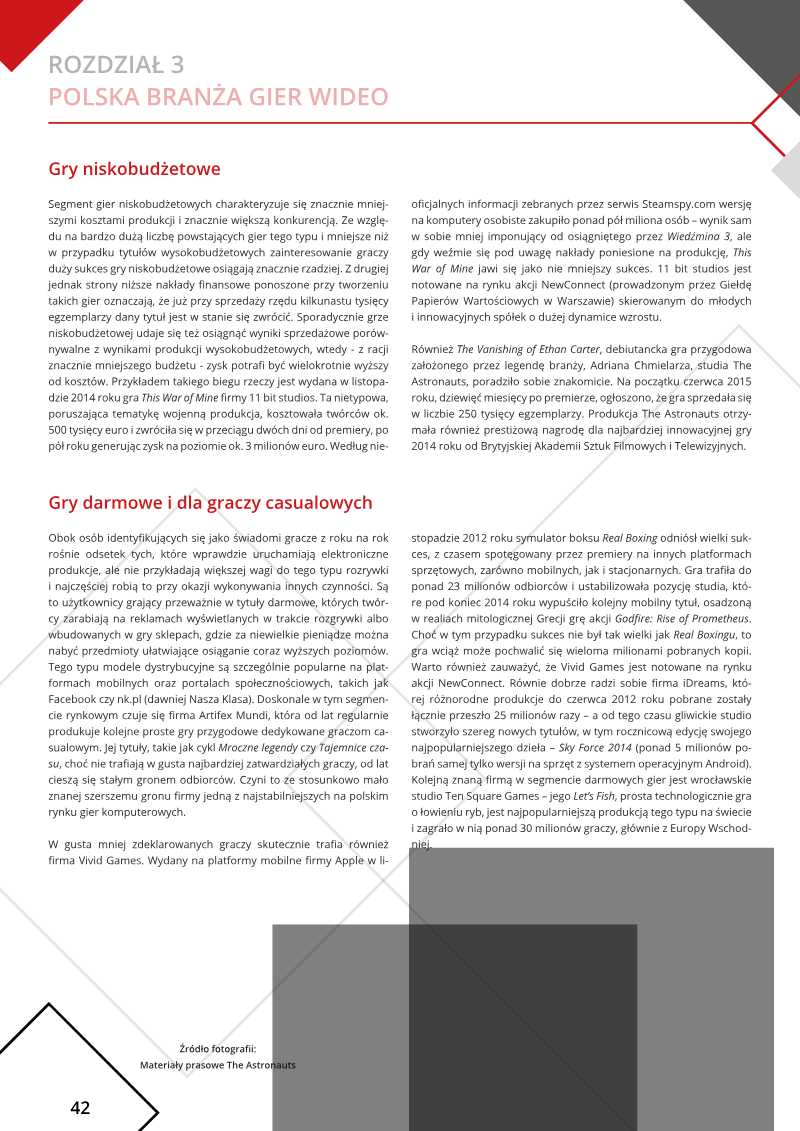
The 2015 analysis of the Polish video game industry provides a comprehensive overview of a sector undergoing rapid structural transformation.
- The global games market in 2015 was valued at $74.2 billion, with mobile games ($22.3 billion) and retail sales ($19.7 billion) being the largest segments.
- In Poland, 72% of internet users play games. 42% play games installed on computers, 40% play on smartphones/tablets, and 38% play browser games.
- Action games are the most popular genre among Polish players, accounting for 35% of page views on GRY-OnLine.pl in the first half of 2015.
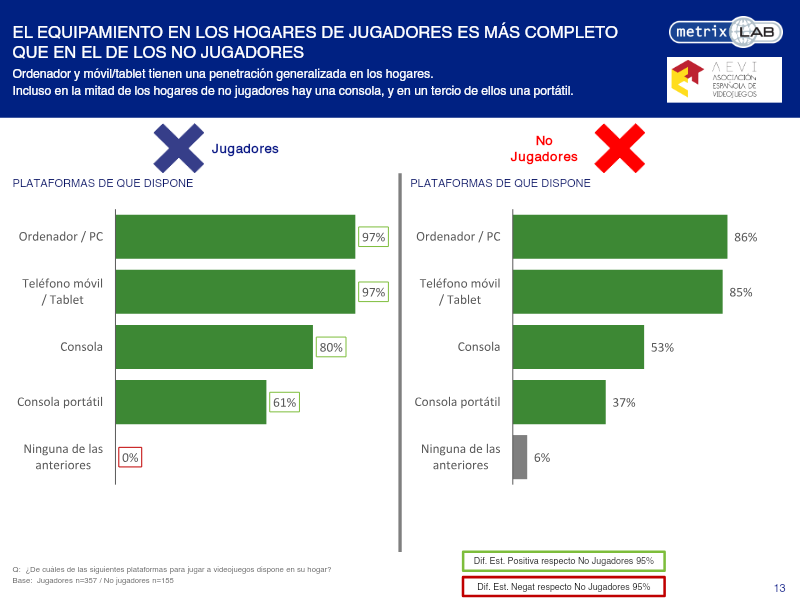

Padres y Videojuegos Hoy: España 2014
The research investigates contemporary Spanish parental attitudes toward video gaming, focusing on usage patterns, perceived competence, and consumer behavior during the 2014 holiday season.
- In 2014, 84% of Spanish parents actively played video games and reported feeling equally or more technologically competent than their children.
- 40% of Spanish parents utilized video games as formal educational tools for their children.
- More than 50% of surveyed parents maintained or increased their personal gaming time after becoming parents, primarily driven by the desire for shared family play.
How Oink can help F2P developers tap into the young adult market
The monetization of the under-18 gaming demographic presents significant challenges for free-to-play developers, primarily due to regulatory compliance, parental concerns regarding unauthorized spending, and the lack of accessible payment methods for minors.
- The under-18 gaming demographic represents a massive market with an annual spending power of £3 billion in the UK and $200 billion in the US.
- Free-to-play developers struggle to monetize minors due to regulatory compliance like COPPA, the lack of traditional payment methods for children, and high rates of 'friendly fraud' chargebacks.
- Oink functions as a secure intermediary by allowing parents to fund digital wallets with monthly allowances, removing the need for minors to store credit card data or personal information.

Getting inside the heads of F2P players who pay $50 per month
This analysis examines the behavioral patterns and motivations of high-spending players, commonly referred to as whales, within the free-to-play (F2P) mobile gaming market.
- High-spending players, defined as those spending $10 to $50 monthly, are highly social and competitive, contradicting the stereotype of the isolated whale.
- YouTube is a critical discovery and engagement hub for heavy spenders, rivaling Facebook in importance for this demographic.
- Heavy spenders are significantly more likely than non-payers to discover games through online word-of-mouth, social media, blogs, and video content.

SkyMobi on why it's focusing on casual Chinese mobile gamers
The Chinese mobile gaming market is undergoing a significant shift, with growth increasingly driven by users in third-tier cities and below rather than major metropolitan hubs like Beijing or Shanghai.
- Sixty percent of China's mobile gaming population resides in third-tier cities or below, representing the primary driver of current market growth.
- SkyMobi’s Maopao app store reaches 147 million users and maintains 25 million monthly active users by securing pre-installation on 40 percent of new Android devices in China.
- Lower-tier city gamers prioritize Android devices and require lightweight game files due to hardware limitations and restricted 3G/4G network infrastructure.
How Minecraft Changes the Future of Games - Minecraft Generation - Extra Credits
The long-term influence of Minecraft on the video game industry extends far beyond its immediate commercial success, representing a fundamental shift in the developmental experiences of a new generation of players.
- Minecraft is shifting the gaming industry away from reflex-based, instant-gratification design toward a paradigm centered on patience, construction, and creative labor.
- The maturation of the 'Minecraft generation' into the primary consumer base is expected to reshape industry standards over the next decade.
- Future AAA game development will likely move away from strictly action-focused mechanics to accommodate more methodical genres like deep simulations and tactical shooters.
Designing for Youth - Making Games for Players Under 14 - Extra Credits
Designing games for children under 14 requires a fundamental shift in development philosophy, moving away from the historical reliance on licensed intellectual property and low-budget production toward creating genuinely engaging, age-appropriate experiences.
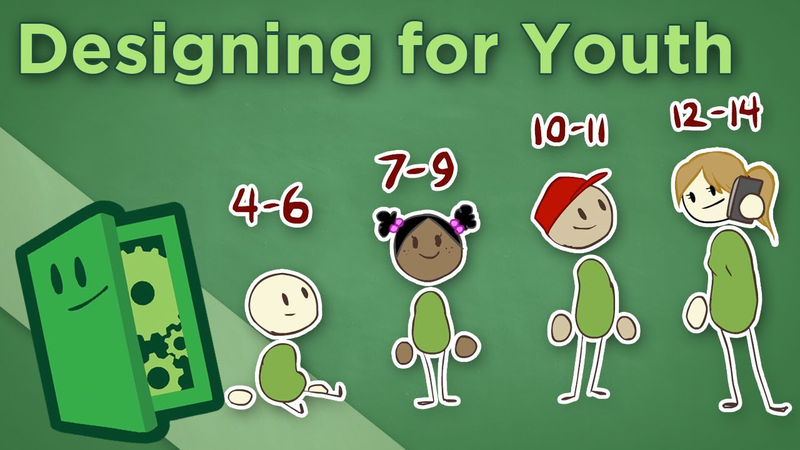
- Developers must segment the youth market into four distinct age brackets—4–6, 7–9, 10–11, and 12–14—to account for rapid shifts in cognitive, social, and literacy development.
- Designers should avoid the 'box art' strategy of relying on licensed intellectual property and instead prioritize gameplay quality to meet the expectations of increasingly discerning parents.
- Games should incorporate multiple levels of success to ensure accessibility for novices while providing sufficient depth to reward strategic thinking.



Essential Facts 2014: Canada
The 2014 overview of Canada’s video-game sector presents a comprehensive picture of an industry that ranks among the world’s largest by per-capita employment and is a cornerstone of the nation’s digital economy.
- Canada’s video game sector directly employs 16,500 people, representing 27,000 full-time equivalent jobs.
- The industry contributed $2.3 billion to Canada’s GDP and generated $1.6 billion in direct spending, marking a 12.5% increase since 2011.
- Employment in the sector grew by 5% between 2011 and 2013, with 40% of firms projecting a 25% staff expansion within two years.



Faits Essentiels 2014
The purpose of the compilation is to present a comprehensive portrait of Canada’s video-game industry in 2014, demonstrating its economic weight, employment dynamics, and public perception.
- The Canadian video game sector employs 16,500 people directly, creates 27,000 full-time equivalent jobs, and contributes $2.3 billion annually to Canada's GDP. It is the world's largest producer of video games per capita (by employee count).
- Canadian video game companies spent $1.6 billion directly, a 12.5% increase from 2011. The sector comprises 329 companies, with 53% identifying as independent developers, and 910 projects were completed in 2012.
- The average age of a Canadian video game worker is 31, with an average salary of $72,500 per year in 2012. 97% of new graduates hired are recruited within Canada.

"Gamer" - What's in a Name? - Extra Credits
The term gamer serves as a unique, often problematic label that distinguishes video game enthusiasts from the general population in a way not seen with other media like literature or film.
- The 'gamer' label functions as a problematic binary distinction that separates enthusiasts from the general population, unlike labels for film or literature consumers.
- Persistent negative stereotypes—including antisocial behavior, immaturity, and exclusionary gatekeeping—hinder the medium's cultural legitimacy and mainstream acceptance.
- The stigma surrounding the term is reinforced by both external societal neophobia and an internal, insular community culture that often promotes defensive posturing.


Essential Facts 2012: Canada
Essential Facts 2012: Canada provides a comprehensive statistical overview of the Canadian video game industry and consumer landscape.
- The Canadian video game industry contributed $1.7 billion to the economy in 2011 and supports approximately 16,000 direct jobs across 348 companies.
- Gaming is a mainstream activity in Canada with an average player age of 31, and 90% of children and teens identifying as gamers.
- While 68% of industry labor remains focused on console development, mobile gaming has surged, with 25% of Canadians now citing mobile as their primary gaming platform.