1 free read left. Create a free account for unlimited reading + AI research.
Create free account
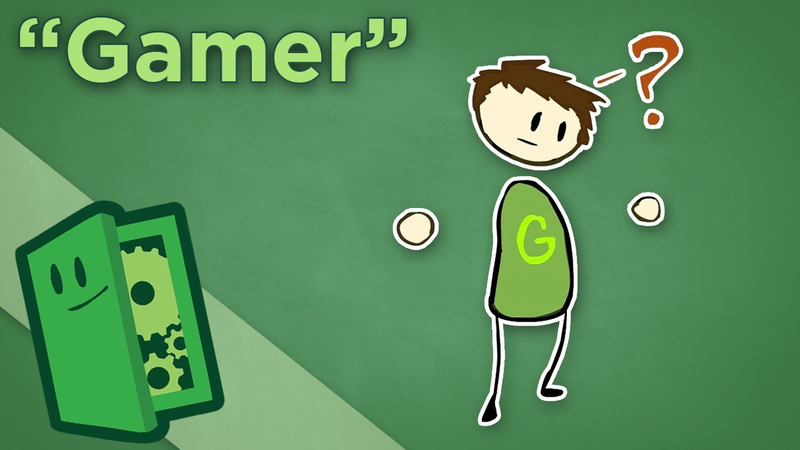
"Gamer" - What's in a Name? - Extra Credits
Key insights
7 takeaways- 01The 'gamer' label functions as a problematic binary distinction that separates enthusiasts from the general population, unlike labels for film or literature consumers.
- 02Persistent negative stereotypes—including antisocial behavior, immaturity, and exclusionary gatekeeping—hinder the medium's cultural legitimacy and mainstream acceptance.
- 03The stigma surrounding the term is reinforced by both external societal neophobia and an internal, insular community culture that often promotes defensive posturing.
- 04Many enthusiasts hide their hobby in public to avoid social shame, which inadvertently perpetuates the very tropes and exclusionary behaviors they seek to escape.
- 05To achieve cultural normalization, the community must move away from elitism toward casual players and address toxic interactions within online spaces.
- 06The ultimate goal for the industry is to render the 'gamer' label obsolete, transitioning gaming from a stigmatized subculture into a respected form of mainstream expression.
- 07Enthusiasts should act as ambassadors for the medium by demanding higher-quality, meaningful content from developers to prove gaming's artistic value.
Ask AI about this video
Transcript
Hey folks. Today we're going to be talking about one word. Gamer. For some, it's a badge of pride. For others, it's a term you never want to be called. It's at the heart of the discussion over whether or not video games are art, and it's part of the reason so many of us still don't play our PSPs in public. Gamer itself is an odd term. It's pretty unique. Think about film or books. You don't call people who watch movies filmers or film watchers. And you don't call people who enjoy novels readers or bookers. Hm, actually that one's kind of fun. Bookers. Where was I? Ah, yes. The fact is none of those other mass media have a term analogous to gamer. The only other time you refer to a person by the media they enjoy, outside of games, is when the person is a kind of a connoisseur or has an almost pathological obsession with that media. Film buff. Bookworm. A bibliophile or audiophile is not someone who merely
likes books or music. They're someone who fixates on these media to the complete exclusion of other aspects of their life. I'm fine with the term ludophile, I suppose. Seems appropriate enough, and there are certainly cases where the word would accurately describe some video game enthusiasts. But it's not the same as a gamer, is it? Gamer is a tag given to almost anyone who plays games. Why is this? In part, it's because our medium isn't universally enjoyed yet. If I were to ask all of you, is there music that you enjoy? 100% of you would say yes. But if I were to go out on the street and ask people if they enjoy video games, I'd get a few no's and a lot of others saying, "I don't really play them." So is gamer simply a binary label to separate those who have tried games from those who haven't? Well, no. It means much more than that. It's a generalization to lump a group of people together. So, what makes a person a gamer? Am I a gamer because I've spent thousands of hours playing games? I've also spent thousands of hours reading books. I've spent just as much time playing music, and even more time than that just listening to it. And I've probably spent nearly that much time watching
television or films, too. I'm a media soak. I consume media. But the only label I get is gamer. Why should games define me? That question is at the heart of what gamer means. The term itself is vague, almost to the point of being meaningless. But it finds meaning in the stereotype that surrounds it. The stereotype is one we've always known. It's the Cheetos-eating, basement-dwelling troglodyte that lives with their parents or never leaves the dorm room. It's the ultra-hardcore, gay-bashing, noob-hating shooter fan, and the 8-year-old teabagger. These are the images that are wrapped up into a single package under the term gamer. And I guess some of that's on us. It's our responsibility to change that. That's where we just have to grow up a little and stop using games as a way to vent our insecurities or flee from an unaccepting outside world. Just because games can be great for occasional escapism, doesn't mean they're a place to hide. They should be objects of joy, exciting, exhilarating, life-affirming. Games show us what we can be. They show us each day that we can succeed and overcome. But don't get me wrong. This unpleasant gamer stereotype isn't all
our fault. Part of the ugliness behind the term comes from a frightened, neophobic world that's no more secure or mature than the groups it labels. Games get demonized and marginalized because they're an easy target. It happened to comics, it's happened to music, and now it's happening to us. People who don't understand the medium and won't take the time to become informed about the things they criticize have perpetuated a stereotype that is no longer true, and honestly, probably never was. Now, let me ask you. Have you ever been embarrassed to play a game in a public setting? Maybe a little? Now, how about reading a book? The times you've been embarrassed reading a book in public, I'm willing to bet it's because of the specific book you were reading. But many of us feel shy about playing even the best, most worthwhile games in public. We're embarrassed not about the content or the value of what we're doing, but the medium it's presented in. We are, in fact, afraid of the stigma, the label attached to being a gamer. I've met many gamers who even lead a double life, proud to be a gamer amongst their gamer friends, but in ardent denial when not.
Sound a little familiar? It sure does to me. Well, it shouldn't be that way, and we can't let it continue. This gamer label and stereotype need to go. Playing games is a normal activity, and there should not be any shame attached to that. So, how do we get there? First off, the good news. We're on our way. Conan O'Brien can make cracks about Halo on a major network, and Ice-T can tweet about how elite his Call of Duty skills are. The sheer value of the medium and the joy it brings are slowly winning out. Rejoice, people. Gaming is finally becoming the norm. But, it's not going to happen on its own. Look, let's just jump right to the hardest part. We game enthusiasts have formed our own beautiful exclusionary culture. We have our own jokes. We have our own vocabulary, our own music, and our own heroes. This is a beautiful thing, and I wouldn't change it for the world. But, one of the unfortunate downsides of it is that it's set us apart. As a response to the stigma that is associated with gamers, many of us have chosen to associate only with other gamers. This only reinforces the stereotype of gamers as antisocial people. Now, take
it easy. I'm not saying that you need to get your ass out there and learn to love football or rodeos or whatever. But, I think we should all feel comfortable talking to non-gamers about something other than video games now and then. Second, some of us have become the loud and proud type, choosing to take back the term gamer by being in your face about our love of games. And that's not really helping. Look, much as an opera aficionado should be proud of their knowledge and the way their favorite medium has enriched their lives, so too should video game enthusiasts. That doesn't mean we have to raise a banner and go to war over it. Loving games doesn't mean we have to start looking down on jocks just because some of them have looked down on us before, and we don't have to hate on casual players just because they don't love games the way we do. We don't have to broadcast to the world how different we are. Let's just be us. We don't have anything to prove to anyone. We as a community can be more, and that's the only thing we should be concerned with. And speaking of which, third, we have got to clean up our community a little. Seriously, it's embarrassing. Talking about skull someone's
mom because he happens to prefer the PS3 over the 360 does not paint us in the best light as a group. Can we please just start being better than this? Please? Lastly, we have to demand better games. We're getting to the point where we have a library of games to turn to when someone tries to tell us games have no value or that video games are just mindless killing. But as an industry, we can do so much more. Don't settle for second-rate titles. Don't let your friends settle for them, either. Friends don't let friends buy shovelware. I know we've been pretty content to settle for what we've been getting so far, but the game industry is never going to make its Godfather or its Blade Runner, much less its Seventh Seal or its Cabinet of Dr. Caligari, unless we start asking for it. But it looks like I've gone on too long and not said nearly enough. Perhaps we'll come back to this topic someday later. Let's just leave it at this for now. We will be known as gamers for as long as gaming is seen as abnormal. And as long as gaming is seen as abnormal, it will carry with it that stigma that hampers games and gamers from being taken seriously. We should absolutely be proud of the fact that we are pioneers in this new
medium, embracing it in its earliest stages. So, as gaming's evangelists, let's try to act with the respect and dignity that this medium deserves. Let's disprove, once and for all, the lie of what it means to love video games. Hey. Hey.
Summary
The term gamer serves as a unique, often problematic label that distinguishes video game enthusiasts from the general population in a way not seen with other media like literature or film. While other forms of entertainment categorize consumers based on deep expertise or obsession, the gamer label is applied broadly to anyone who plays games, regardless of their level of engagement. This categorization is largely driven by the fact that gaming has not yet achieved universal adoption, leading to a binary social distinction between those who play and those who do not.
The primary thesis is that the gamer label is inextricably linked to negative, persistent stereotypes—such as antisocial behavior, immaturity, and exclusionary gatekeeping—which hinder the medium’s cultural legitimacy. These stereotypes are perpetuated both by an external, often neophobic society that demonizes the medium and by an internal community that has fostered an insular, sometimes hostile culture. This stigma causes many enthusiasts to hide their hobby in public, creating a cycle of shame and defensive posturing that reinforces the very tropes they seek to escape.
To overcome these challenges, the industry and its community must shift toward a more mature, inclusive identity. This involves moving away from exclusionary behaviors, such as elitism toward casual players or toxic interactions within online spaces, and instead engaging with the broader world with dignity. Furthermore, the community is encouraged to demand higher-quality, more meaningful content from developers to prove the artistic value of the medium. By acting as ambassadors for gaming and refusing to settle for low-quality titles, enthusiasts can eventually render the gamer label obsolete, transitioning gaming from a stigmatized subculture into a normalized, respected form of mainstream expression.