PC reports and market data
Documents
Past Stories and Future Worlds: History and Popular Imagination in Fallout 4
This extended abstract, presented at DiGRA 2018, examines how Fallout 4 uses historical imagery and the counterfactual mode to construct a critical reimagining of the Cold War and to prompt reflection on how historical knowledge is produced.
- The paper argues that Fallout 4's interactive structure lets developer and player co-author historical narrative, allowing the game to challenge assumptions about what history is, who tells it, and for what ends.
- Fallout 4's Massachusetts setting, including Concord, Lexington, and Boston, anchors its story in an American narrative of optimism and renewal, which the postapocalyptic landscape of devastation sharply contrasts.
- By blending real historical elements with a fictional outcome in which the Cold War turns hot, the game is argued to unsettle the narrative neatness of popular histories that portray the Cold War as a settled victory for capitalism and American consumerism.
Are Loot Boxes Gambling? Random Reward Mechanisms in Video Games
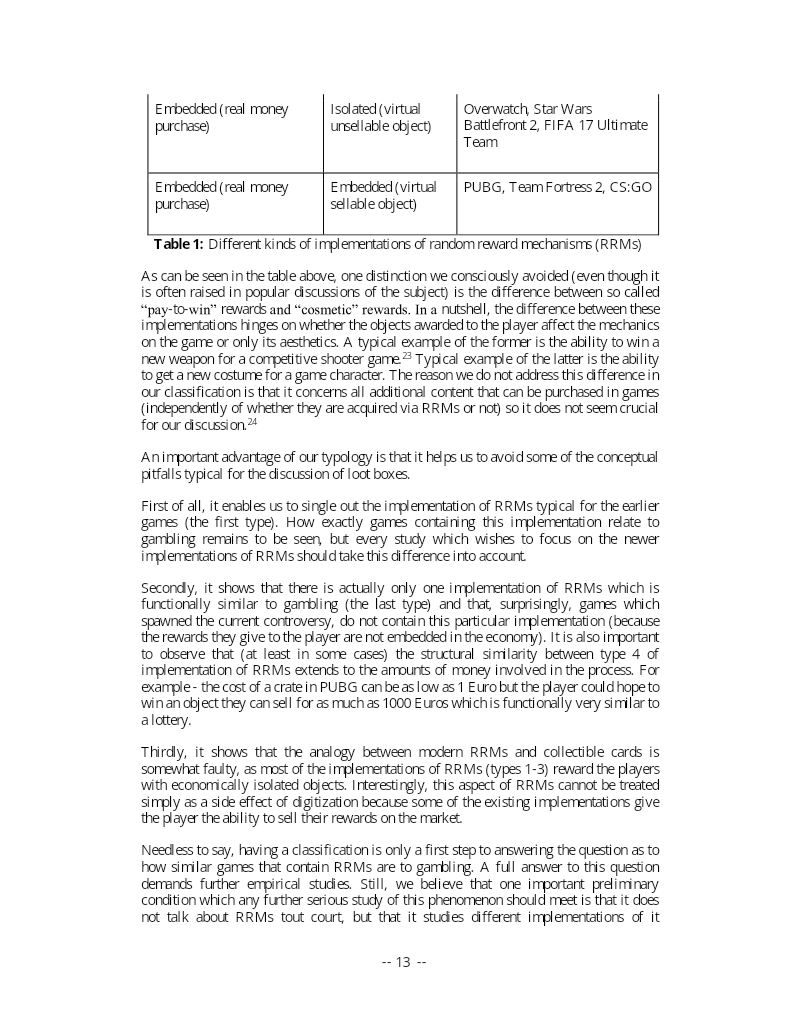
The paper argues that the popular term "loot box" is too imprecise for academic and regulatory purposes, and proposes "random reward mechanisms" (RRMs) as a neutral alternative, defined as an eligibility condition that triggers a random procedure delivering a reward.
- The paper argues "loot box" is too imprecise for academic and regulatory use and proposes "random reward mechanisms" (RRMs), defined as an eligibility condition that triggers a random procedure delivering a reward.
- The authors' central finding is that RRMs resemble gambling only when both the purchase and the reward are embedded in the real-world economy, i.e., they can be bought with and exchanged for real money.
- Regulators diverged on this point: Denmark's Gambling Authority treated CS:GO skin-betting as gambling because skins could be sold for cash, but did not classify Star Wars Battlefront 2 loot boxes, whose contents could not be converted to currency.
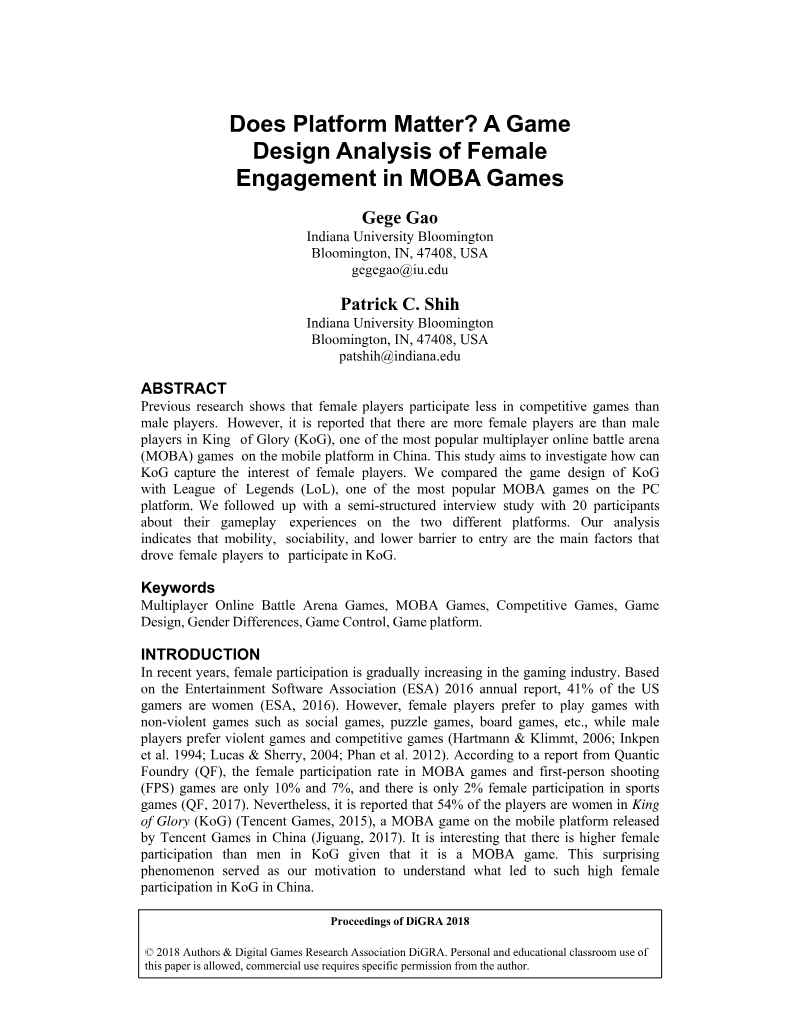
Does Platform Matter? A Game Design Analysis of Female Engagement in MOBA Games
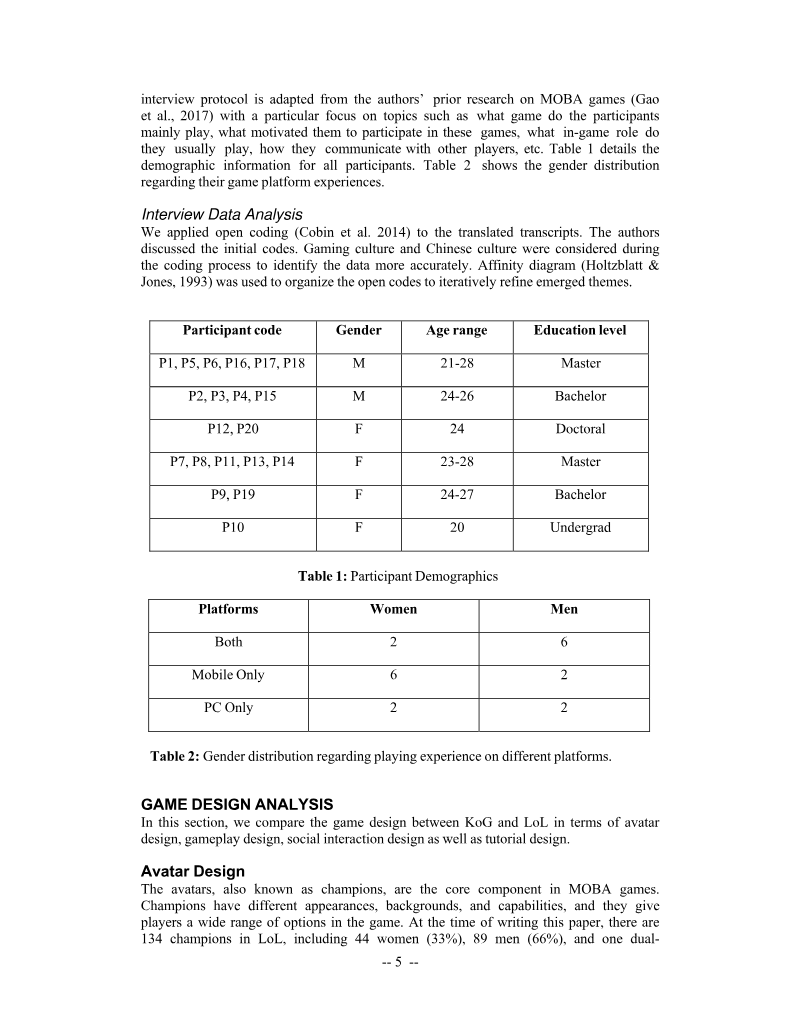
This study examines why King of Glory, a mobile MOBA reportedly around 54% female in China, appears to attract substantially more female players than League of Legends, a PC MOBA with roughly 35% female participation, despite sharing similar core mechanics.
- King of Glory, a mobile MOBA reportedly around 54% female in China, draws substantially more female players than League of Legends, a PC MOBA with roughly 35% female participation, despite similar core mechanics, suggesting platform shapes female engagement.
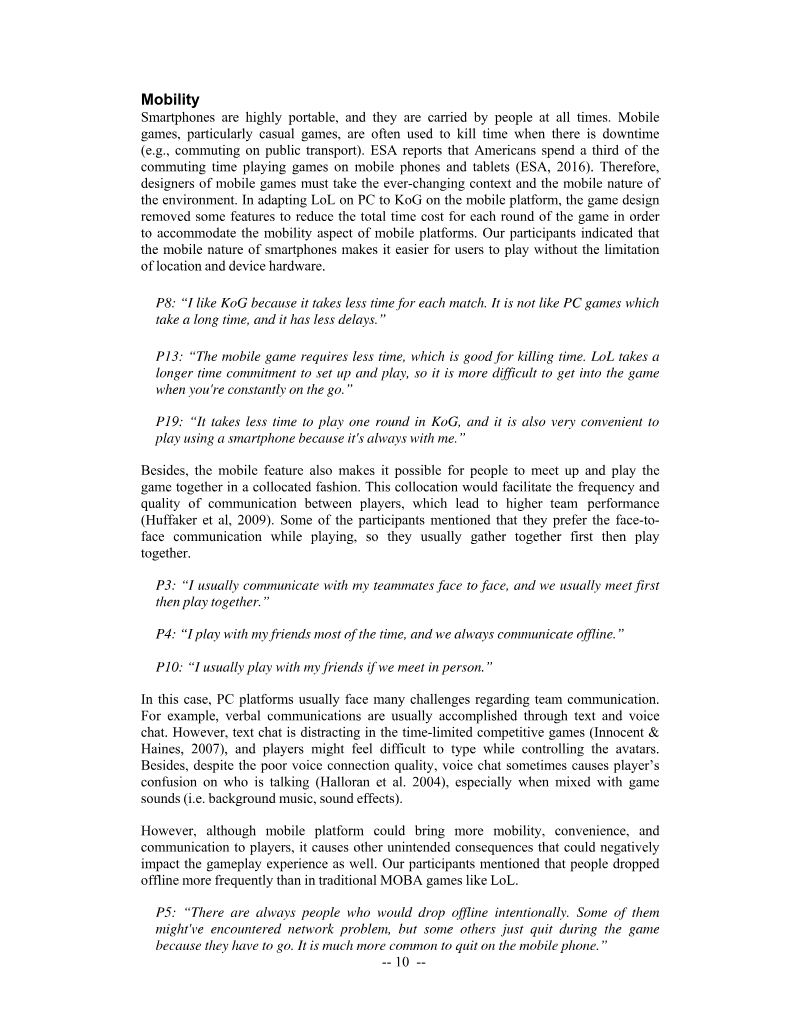
- King of Glory's accessibility advantages include simplified controls, fewer abilities, QQ and WeChat login integration, interactive tutorials, handheld mobility, and avatars that players found appealing.
- Interviewees identified sociability as a key draw of King of Glory, while serious players of either gender often preferred League of Legends for its complexity and teamwork demands.
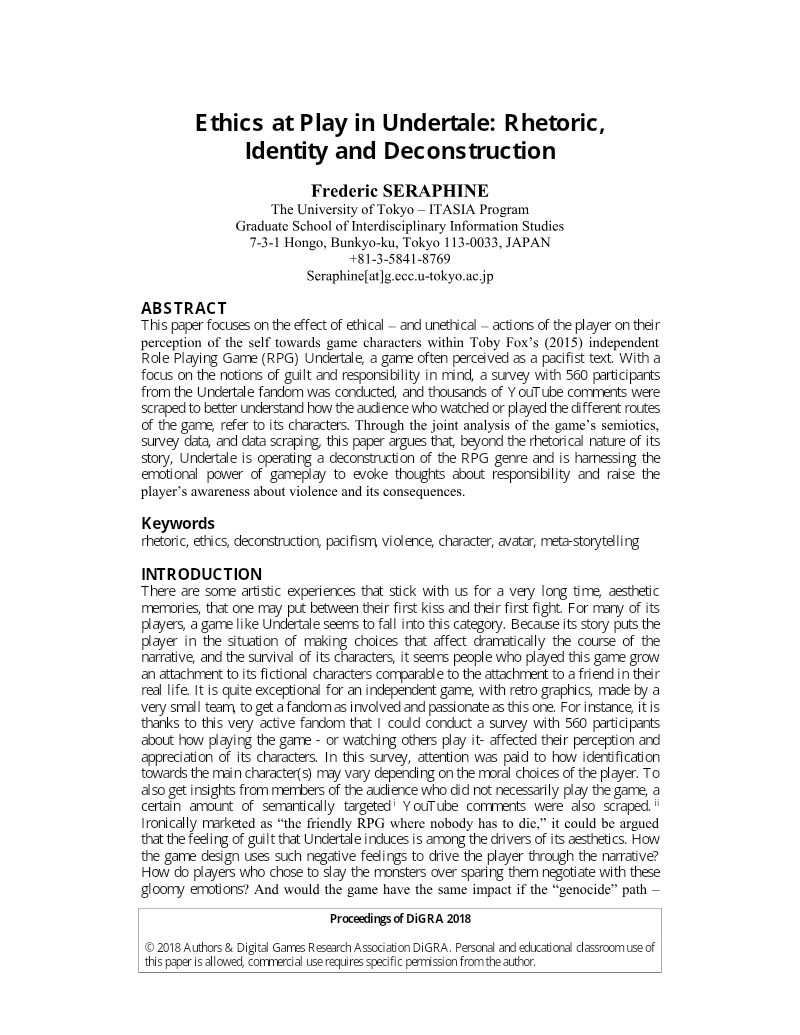
Ethics at Play in Undertale: Rhetoric, Identity and Deconstruction
Frederic Seraphine's study of Undertale argues that the game is a deliberately ethical, rhetorical, and deconstructive text, one whose mechanics are designed to steer players toward nonviolence and toward reflection on the moral weight of their actions.
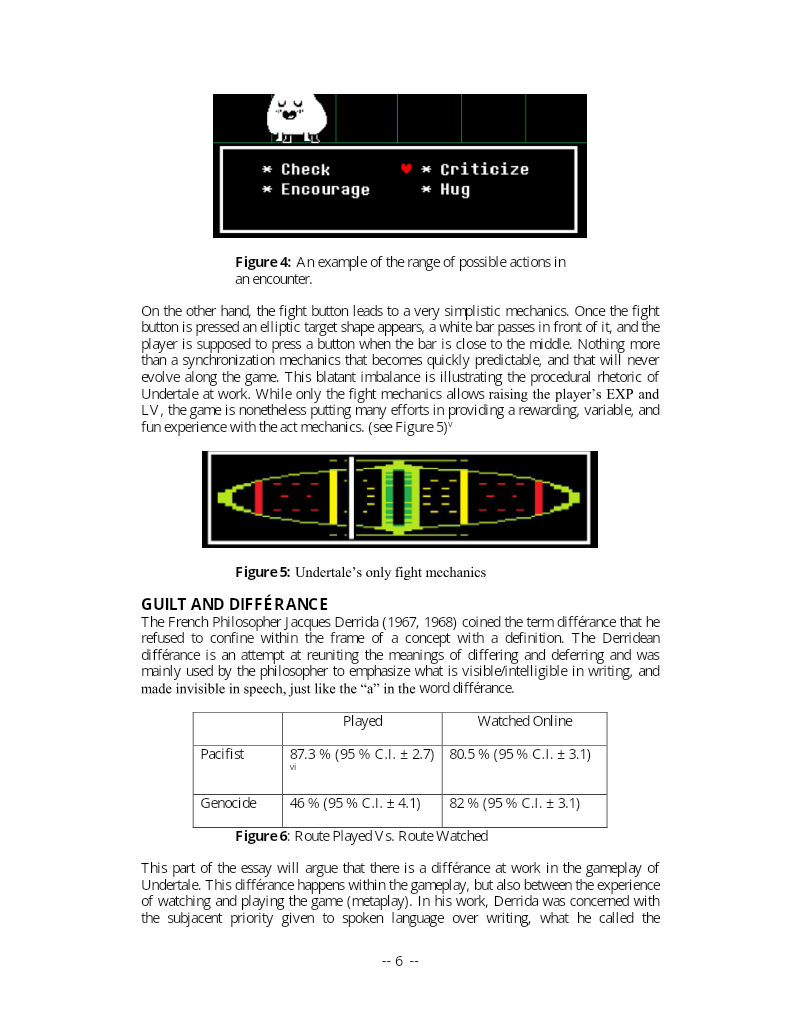
- Frederic Seraphine argues Undertale is a deliberately ethical, rhetorical, and deconstructive text whose mechanics steer players toward nonviolence and reflection on the moral weight of their actions, framed through procedural rhetoric and Derridean différance.
- Completion rates diverge sharply: 87.3% of players finished the pacifist route versus 46% for the genocide route, based on a survey of 560 fandom participants plus scraped YouTube comments.
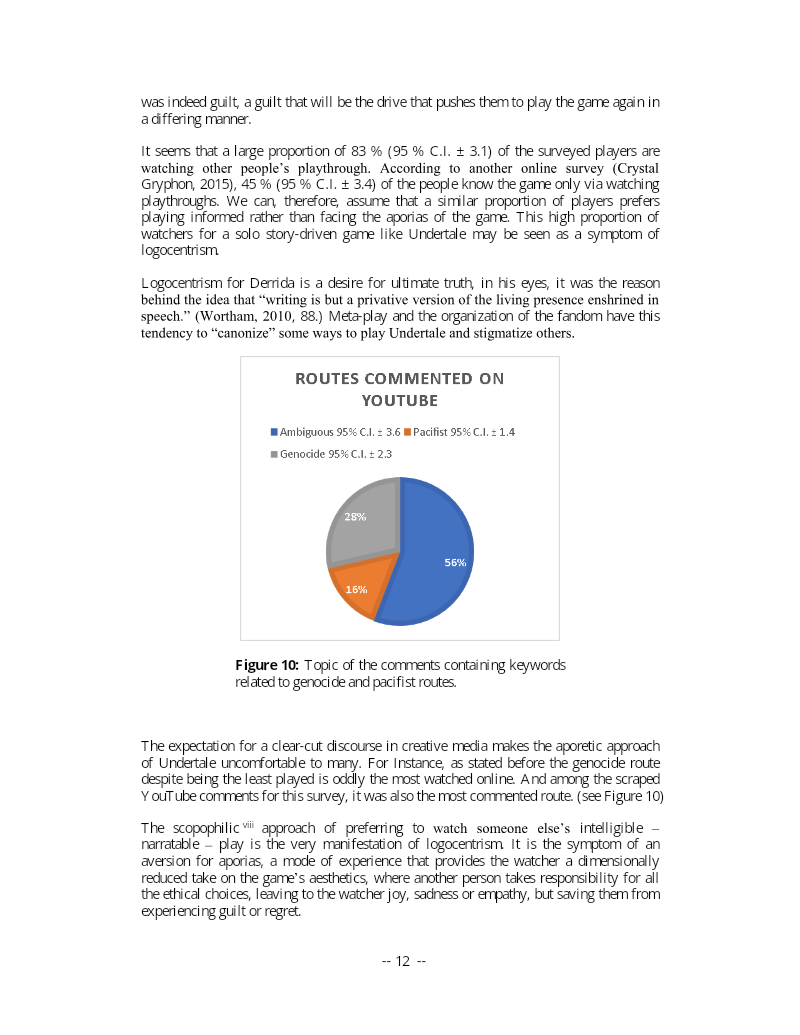
- Play and watch behavior diverge: 83% of respondents watched others play the genocide route and 45% knew the game only through such content, which the author links to avoidance of its emotionally dissonant experience and to logocentrism.
Free-to-Play or Pay-to-Win?: Casual, Hardcore, and Hearthstone
Free-to-play games such as Blizzard's Hearthstone, the author argues, blur the traditional boundary between casual and hardcore play by tying a player's status to how much they spend as well as how much time and skill they invest.
- The central thesis is that free-to-play models with microtransactions for randomized card packs create a "pay-to-win" dynamic, in which spending money tends to move players from casual toward hardcore engagement, using Blizzard's Hearthstone as the primary case study.
- Hearthstone had over 70 million registered accounts as of Blizzard's 2017 report, and an analyst estimated its monthly revenue at over $25 million.
- Randomization mitigates the most extreme pay-to-win effects, but expansions, metagame shifts, and a daily quest system still pressure casual players to either spend money or devote substantial daily time to stay competitive.



Contextualizing Pathological Gaming: A Proof-of-Concept Study
This proof-of-concept study examines whether a widely used screening questionnaire for pathological gaming accurately captures the experiences of gaming professionals and players.
- The study argues that Gentile's (2009) 11-item pathological gaming questionnaire, largely adapted from substance-abuse criteria, may not measure what it intends and risks labeling healthy, committed players as problematic.
- Four eSports players and streamers completed the instrument and then explained their answers in semi-structured interviews, revealing specific points of misfit between the items and their lived experience.
- Ambiguous wording caused misinterpretation: the two-part "try to play less" item led one participant to answer "No" because they had never tried to cut down, not because they were unable to.



Avatars, Gender and Sexuality for Brazilian Players on Rust
This study examines how nine Brazilian players aged 19 to 32, based in Porto Alegre, relate to gendered avatars in Rust, a multiplayer survival game that randomly assigns male or female characters.
- Players largely treated avatars and their characters as distinct entities, distinguishing them mainly through customization and control, and showed no strong preference for particular avatars or evidence that avatar gender shaped behavior or identification.
- Gender and sexuality still structured social interaction in Rust: women were more cautious around male avatars, and avatar gender shaped how other players responded, with female avatars eliciting more cooperation and male avatars provoking more reactivity.
- A clear divergence appeared between participants' stated reasons for gender swapping and their stated reasons for choosing gendered avatars, suggesting that stated motivations and actual practices did not match.

Jahresbericht der Deutschen Games-Branche 2018
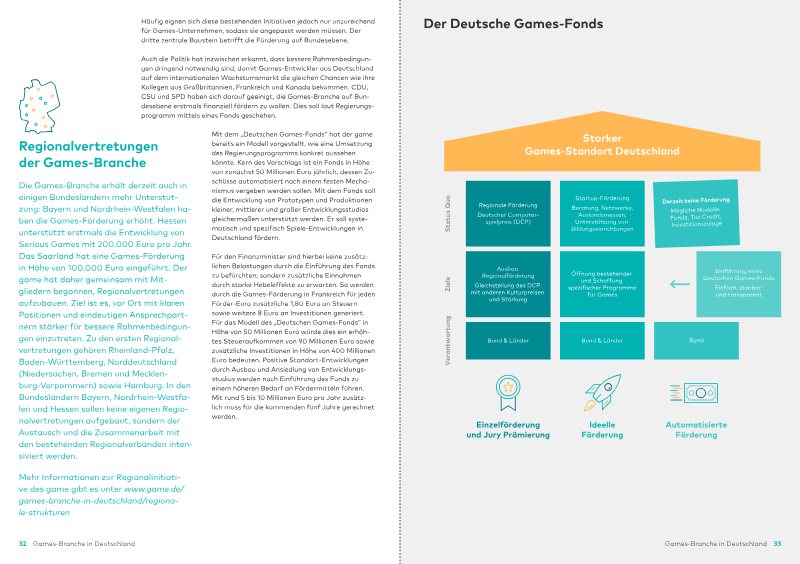
Der Jahresbericht 2018 des neu gegründeten Verbands game, der Ende Januar 2018 aus dem Zusammenschluss von BIU und GAME hervorging und über 200 Mitglieder zählt, zeichnet ein widersprüchliches Bild: Der deutsche Games-Markt wächst kräftig, die heimische Branche profitiert davon jedoch kaum.
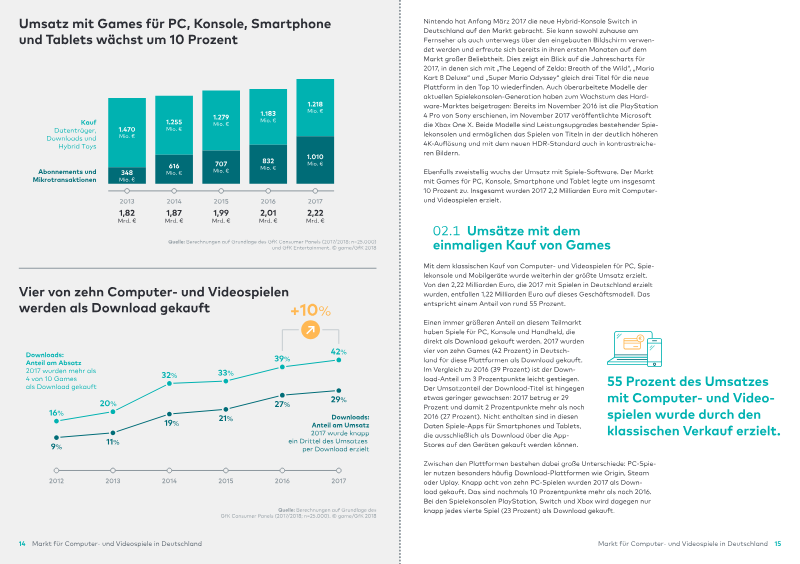
- The German games market generated 2.2 billion Euros in 2017, growing 10% from 2016. This growth was driven by a 21% increase in revenue from virtual goods and additional content (reaching 1.01 billion Euros) and a 57% increase in revenue from online network fees (reaching 179 million Euros).
- Smartphone gaming has surpassed PC as the most popular gaming platform in Germany, with 18.2 million smartphone gamers compared to 17.3 million PC gamers in 2017. Console gaming also saw significant engagement with 16 million players.
- The German games industry is largely mid-sized, with 90% of companies generating up to 5 million Euros in annual revenue. It also boasts a high export quota, with 46% of its revenue earned outside Germany, significantly higher than the music (9%) and film/TV (4%) industries.
Open Production With Sunless Sea: Kickstarter, Early Access and After
Open production serves as a transformative strategy for independent game developers, enabling studios to transition from financial instability to long-term sustainability.
- Open production models like Kickstarter and Early Access provide financial stability and a diagnostic feedback loop that allows developers to refine design and marketing before full release.
- Developers must maintain final authority over creative vision, as relying too heavily on veteran player feedback can skew development toward niche preferences and alienate broader audiences.
- Sustainable financial planning requires that crowdfunding stretch goals remain low-cost and high-engagement to ensure early capital builds a foundation for future projects rather than serving as a temporary fix.

Low Complexity, High Fidelity - INSIDE Rendering
The rendering architecture for INSIDE centers on achieving high-fidelity, atmospheric visuals within a 2.5D environment while maintaining a consistent 60fps performance.
- The rendering engine utilizes a custom light pre-pass architecture that executes complex lighting and volumetric effects in under one millisecond to maintain a consistent 60fps.
- Visual fidelity is achieved through empirical approximations and mathematical shortcuts rather than brute-force computation, prioritizing efficiency to stay within strict performance budgets.
- Blue noise is implemented to manage dithering and eliminate banding artifacts, providing a superior error distribution compared to traditional noise patterns.
Tech Art in Tamriel: The Elder Scrolls Online's Character Tools and Pipeline
The development of The Elder Scrolls Online required a sophisticated, data-driven technical art pipeline to manage the massive scale of its character assets.
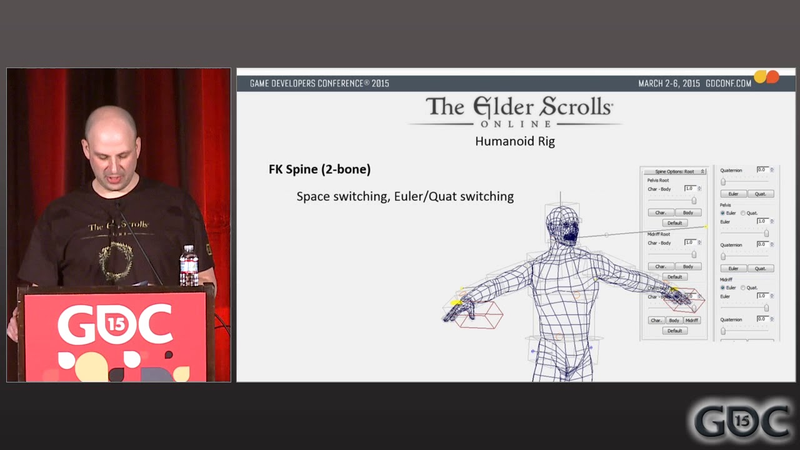
- The Elder Scrolls Online utilized a modular, XML-based rigging system in 3ds Max to manage character assets across ten playable races and ninety unique monster rigs.
- To meet DirectX 9 performance constraints, the team enforced a standardized humanoid rig limited to 77 bones, enabling automated asset creation and procedural animation for elements like robes and tails.
- A data-centric architecture allowed for the management of thousands of armor and character combinations while enabling tool updates across the network without requiring software restarts.
DayZ - Tragedy of the Commons: The Game - Extra Credits
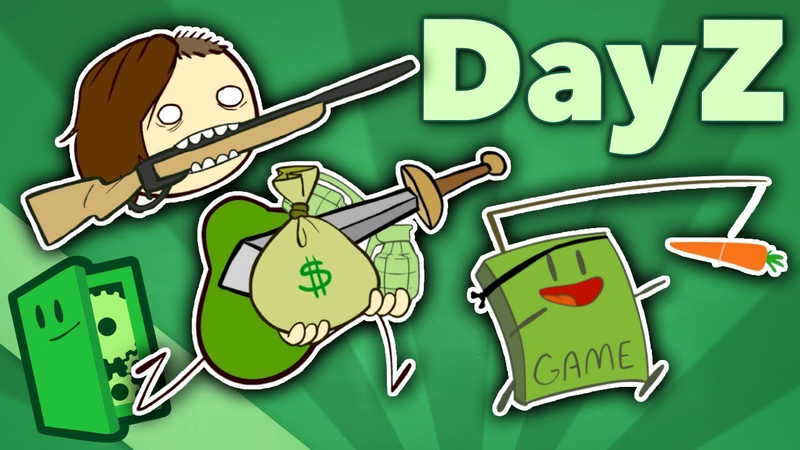
The tragedy of the commons serves as a foundational economic and ecological theory, illustrating how individual self-interest often leads to the depletion of shared resources, ultimately harming the collective and the individual alike.
- The 'tragedy of the commons' occurs in multiplayer survival games like DayZ when individual mistrust and fear of scarcity lead players to hoard resources and attack others, ultimately destroying the collective environment.
- Multiplayer environments disrupt the long-term strategic resource management typically found in single-player games because players assume bad faith from others, triggering a self-fulfilling cycle of competition and waste.
- Traditional solutions to resource depletion, such as privatizing assets or implementing punitive enforcement, often fail to solve the problem efficiently due to high overhead costs and reduced system utility.