PC reports and market data
Documents
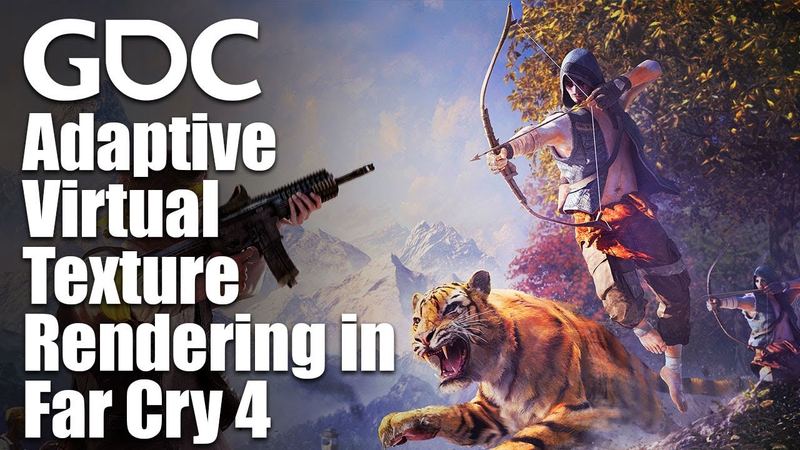
Adaptive Virtual Texture Rendering in Far Cry 4
Adaptive Virtual Texture rendering serves as a foundational technology for Far Cry 4, enabling the display of high-fidelity terrain and thousands of procedural decals without exceeding strict memory constraints.
- Ubisoft's Adaptive Virtual Texture (AVT) rendering technique allows for the rendering of thousands of terrain decals in under 1 millisecond, achieving a high resolution of 10 pixels per centimeter.
- The AVT system dynamically adjusts texture resolution based on camera distance by dividing the world into 64x64 meter sectors, allocating larger virtual image sizes for sectors closer to the camera and smaller sizes for those further away.
- To minimize memory footprint and bandwidth, the system uses a 32-bit page ID buffer during the G-buffer rendering pass, with bits allocated specifically for page ID, mipmap level, and virtual image size.

Designing an Art Style for Your Game - in 1 Day: Space!
Developing a unique visual identity for indie games can be achieved through unconventional physical media, such as play dough and stop-motion animation.
- Using physical media like play dough and stop-motion animation creates a distinct, biological aesthetic that differentiates indie games from standard digital rendering.
- The production workflow requires sculpting physical models, capturing sequential frames, and using post-production software to refine assets for game engine implementation.
- Manual masking and cutting in image editing software are necessary to achieve high-quality sprite transparency, as green-screen techniques often fail due to inconsistent lighting and shadows.

Analog Painting Game Art Style in 1 Day: Flowers!
The integration of traditional analog painting into digital game development presents a unique aesthetic challenge, particularly when balancing physical texture with technical constraints.
- Maintaining player readability requires neutral, minimalist background brushwork to prevent visual clutter from obscuring gameplay elements.
- High-resolution photography is essential during the digitization process, as low-quality captures introduce excessive grain that degrades sprite clarity.
- Complex physical textures, such as those created with additives like sugar, often fail to translate to digital formats and produce unintended visual artifacts.
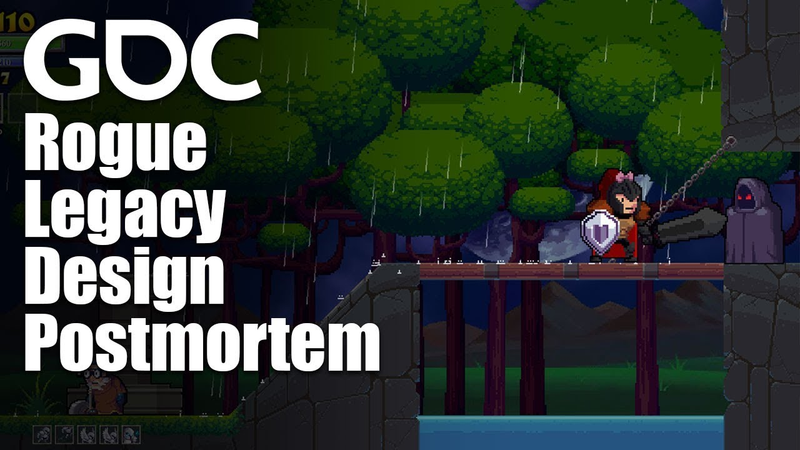
Rogue Legacy Design Postmortem: Budget Development
The development of the indie title Rogue Legacy serves as a case study in budget-conscious game design.
- Cellar Door Games developed Rogue Legacy over 18 months with a total production cost of less than $15,000, recouping all development expenses within one hour of launch.
- The team achieved rapid development by prioritizing 'good, not perfect' solutions, focusing on gameplay mechanics over high-fidelity assets and reusing systems from previous projects.
- To increase accessibility, the developers removed traditional roguelike 'floor clearing' and 'obscurity' mechanics, replacing them with a persistent lineage system that allows players to spend gold on character upgrades after every death.

Fake 3D Game Art Style in 1 Day: Robots!
The development process for implementing a fake 3D art style in a 2D strategy game centers on the use of normal maps to simulate depth and dynamic lighting.
- Developers can simulate 3D depth in 2D strategy games by using normal maps generated from 3D models to enable dynamic lighting on 2D sprites.
- By rendering 3D models with a custom shader that outputs surface orientation instead of color, sprites can react to light sources correctly regardless of their rotation.
- This workflow allows for the use of high-polygon 3D models for pre-rendered sprites without incurring real-time performance costs, as the engine only processes the normal map shading during gameplay.

Creating an Art Style for Your Game in Just 1 Day: Dragons!
Developing a cohesive 2D art style for an indie strategy game within a single day is a viable method for rapid prototyping and visual exploration.
- Rapidly prototyping a 2D art style in a single day allows developers to evaluate the technical feasibility and emotional alignment of visual assets against core gameplay goals.
- Character identity should be established through silhouettes before integrating assets into the game engine to test hitboxes and animation flow.
- Backgrounds must be designed and tested alongside character sprites, as the environment significantly dictates the tone and visual clarity of the game.
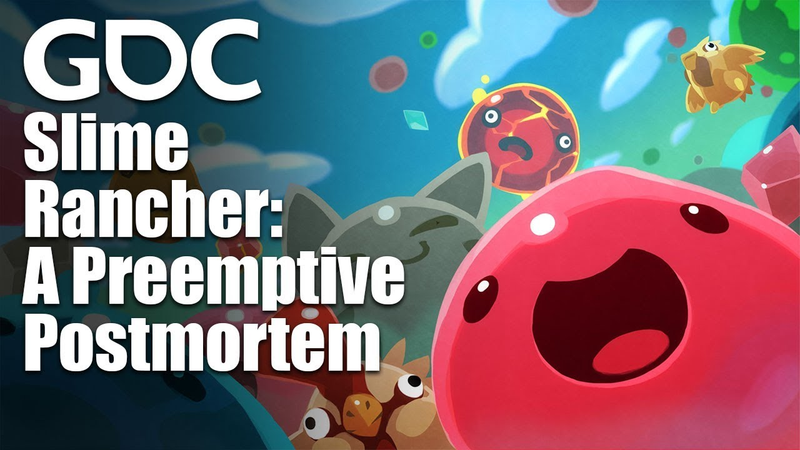
Slime Rancher: A Preemptive Postmortem
The success of Slime Rancher stems from a development philosophy that prioritizes a highly polished, satisfying core gameplay loop over speculative features or complex systems.
- Treat Early Access as a live service product rather than a development phase, focusing on major, feature-based content updates that generate hype rather than minor patch notes.
- Design games to be 'YouTube-friendly' by prioritizing emergent, unpredictable character behaviors and satisfying core gameplay loops that are visually engaging for spectators.
- Leverage organic growth on YouTube by distributing keys to smaller creators first, allowing the game to naturally climb the 'food chain' to larger influencers like Markiplier and Jacksepticeye without direct outreach.

Gameplay Day - Let's Keep Improving!
The development process for this strategy game prototype focuses on refining core mechanics to balance player engagement, performance, and difficulty scaling.
- A proximity-based growth system for creature eggs was implemented to cap population size, forcing strategic spatial planning while preventing engine performance bottlenecks.
- Visual feedback mechanisms were introduced to slow egg hatching rates when placed in close proximity, effectively managing creature density and game difficulty.
- Initial enemy difficulty was reduced by introducing tiered enemy types with distinct health and speed profiles to create a smoother, more accessible difficulty curve.
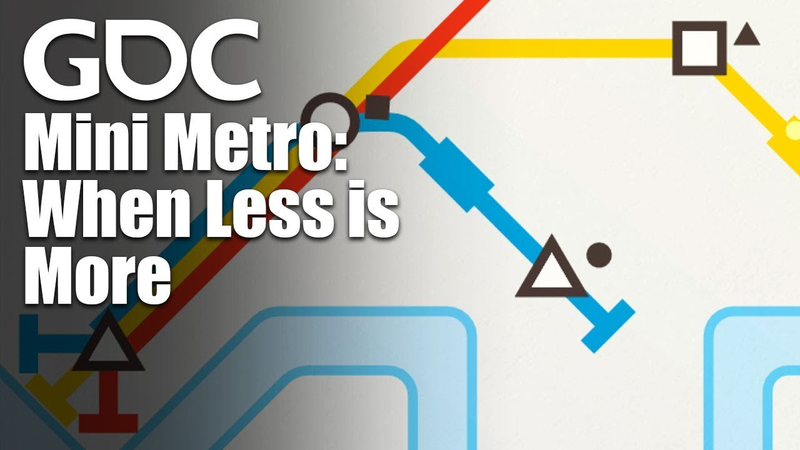
Mini Metro: When Less is More
The development of the user interface for the strategy game Mini Metro serves as a case study in how minimalist design choices can foster player discovery and engagement.
- Mini Metro achieved commercial success with 800,000 units sold and over three million dollars in gross revenue, maintaining a 96% positive rating on Steam.
- The design team prioritized minimalist UI by omitting complex HUDs, leaderboards, and meta-progression systems to focus entirely on the core gameplay loop of network optimization.
- Development spanned two years and involved extensive visual iteration, resulting in the creation of over 4,000 images and 112 preview videos.
Dynamic Storytelling in The Novelist
The Novelist explores the potential of system-driven narrative design, moving away from traditional branching paths to create a unique, non-prescribed storytelling experience.
- The Novelist replaces traditional branching narrative paths with a system-driven model that forces players to balance the competing needs of three family members.
- The game utilizes a hidden relationship scoring system to track long-term consequences, which are communicated to the player through human-readable feedback like diary entries and environmental changes.
- Systemic narrative design is significantly more labor-intensive than traditional scripting because it requires developers to account for a vast array of potential outcomes while maintaining narrative clarity.

Dev Log - Meet my Baby!
The core of this minimalist strategy project centers on a resource management mechanic where players control white creatures to combat red enemy units.
- The game utilizes a minimalist two-button control scheme where the left mouse button duplicates player units and the right mouse button triggers explosive attacks.
- Core gameplay centers on balancing exponential population growth against the strategic timing of detonations to clear levels before enemy difficulty scales.
- The prototype features varied enemy behaviors, including static targets and intelligent units that actively hunt player duplication points.
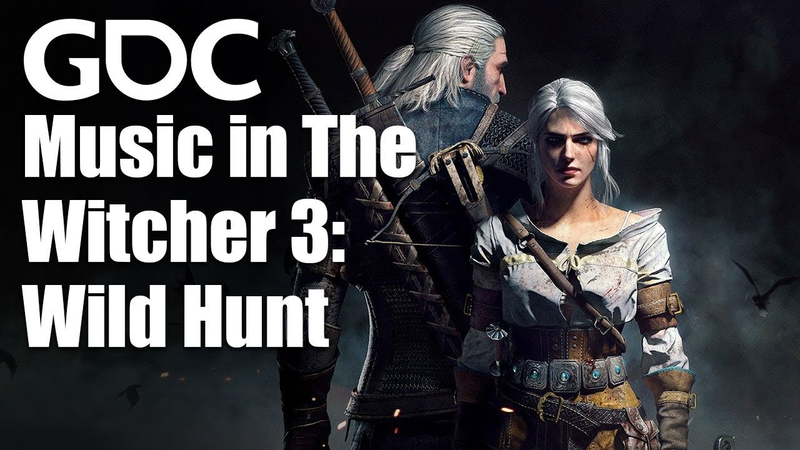
Slavic Adaptation of Music in The Witcher 3: Wild Hunt
The musical identity of The Witcher 3: Wild Hunt centers on a deliberate synthesis of Slavic folklore and contemporary cinematic orchestration.
- The Witcher 3 soundtrack was designed to blend Slavic folk music with contemporary orchestral sounds, utilizing a vast database of regional folk music from countries including Poland, Ukraine, Hungary, and Germany.
- The composers incorporated authentic historical instruments, such as the Turkish-origin saz and a 12th-century replica of a Gdansk-based string instrument, to establish a unique, cohesive musical identity for the franchise.
- To ensure global accessibility, the team localized a key ballad into seven languages—Polish, English, German, Russian, French, Japanese, and Brazilian Portuguese—while maintaining syllable counts and rhythmic sync with the underlying music loop.