1 free read left. Create a free account for unlimited reading + AI research.
Create free accountWhitepaper DiGRA
1 free read left. Create a free account for unlimited reading + AI research.
Create free accountWhitepaperDiGRA
Distilling the key insights…
Frederic Seraphine's study of Undertale argues that the game is a deliberately ethical, rhetorical, and deconstructive text, one whose mechanics are designed to steer players toward nonviolence and toward reflection on the moral weight of their actions. Drawing on procedural rhetoric and the tension between the game's fighting and acting systems, the author contends that the pacifist route encourages restraint while the genocide route dismantles role-playing game conventions and provokes guilt and self-questioning. The analysis frames these effects through Derridean différance and deconstruction, treating the genocide route's depopulated world as an "aesthetic of guilt and regret."
The empirical basis rests on a survey of 560 fandom participants alongside scraped YouTube comments. Reported completion rates show 87.3% of players finishing the pacifist route compared with 46% for the genocide route, while 82% of viewers watched the genocide route against 80.5% for the pacifist route. The most striking divergence is between play and watch behavior: many respondents avoid the genocide route's emotionally dissonant experience and instead encounter it through playthroughs, with 83% watching others play and 45% knowing the game only through such content. The author links this avoidance to logocentrism, interpreting it as a limit on the game's introspective effect.
Among the study's more consequential findings, 58% of genocide-route players, compared with 47% of those who only watched, held the player personally responsible for outcomes, which the author takes as evidence that the game's moral discourse is effective. Players who had consulted no outside content were also more likely to kill Toriel, at 56% versus 29%, though the overlapping confidence intervals for the full sample temper how firmly this can be read. Several survey figures are presented without adequate detail on sample composition, a limitation that bears on how far the conclusions generalize.
Each row is a game or company this document names, each column a document, oldest first. A mark means that document names it. Select a row to see those documents.
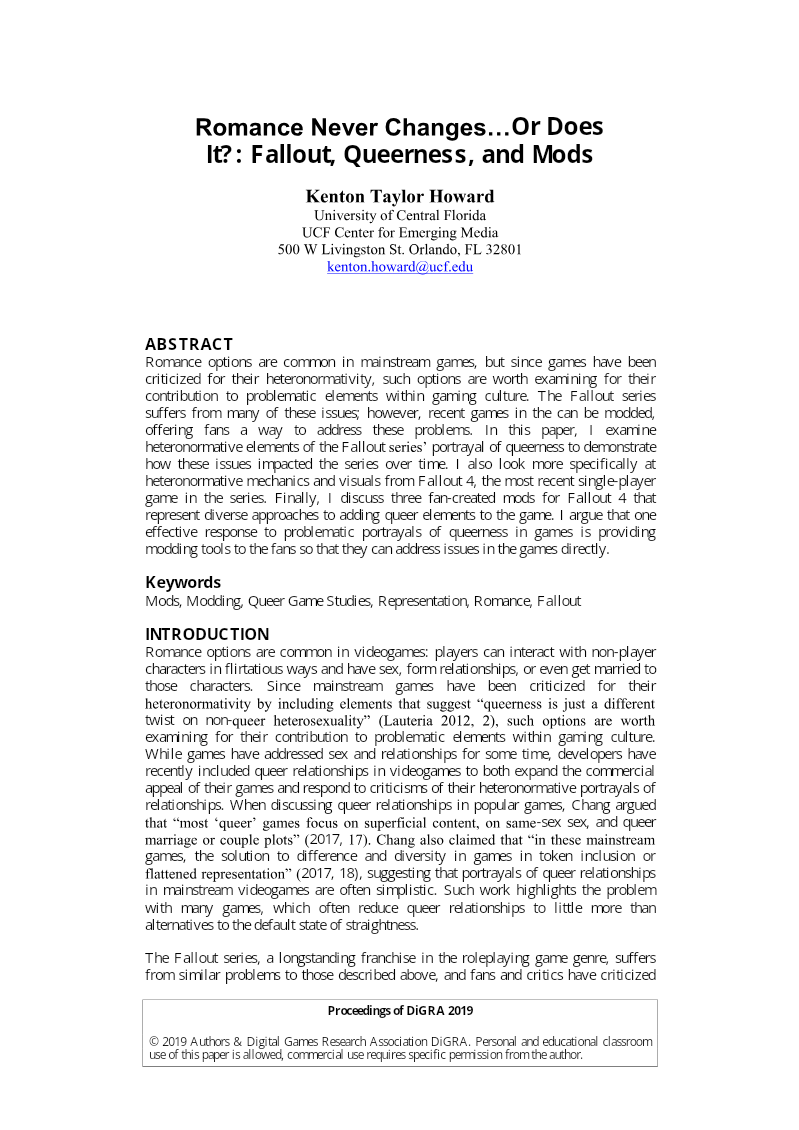
DiGRA · 2019
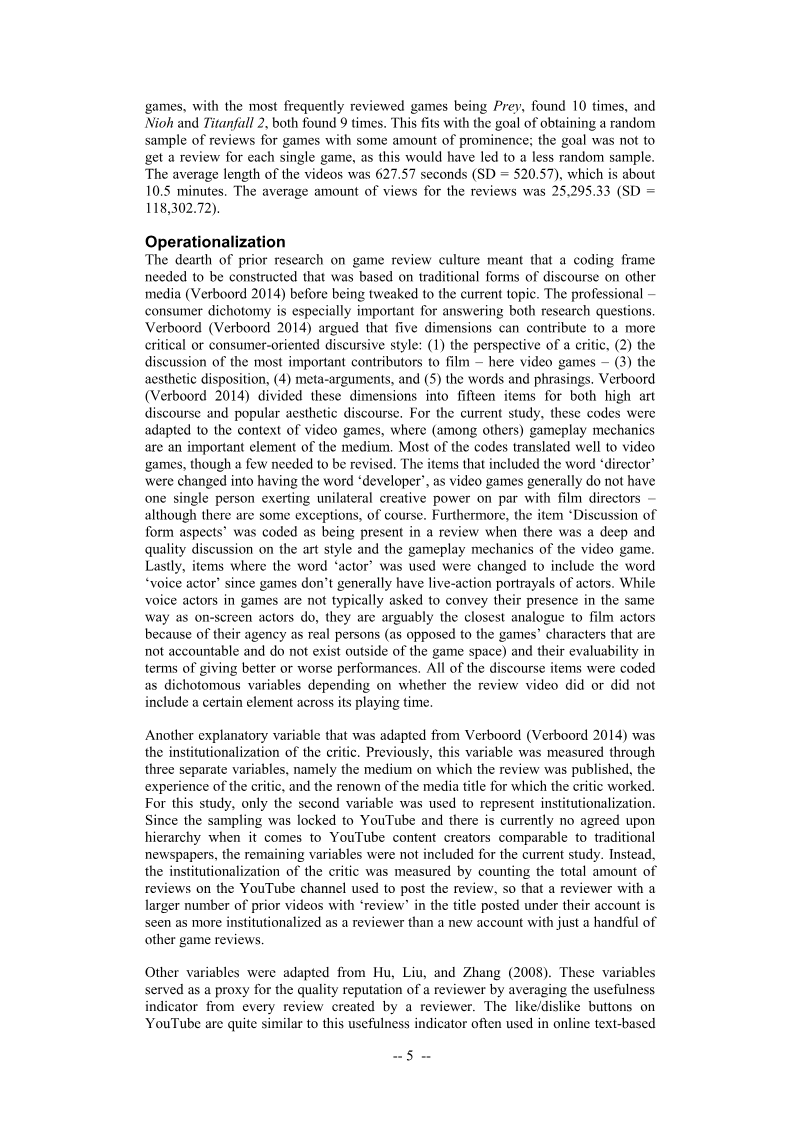
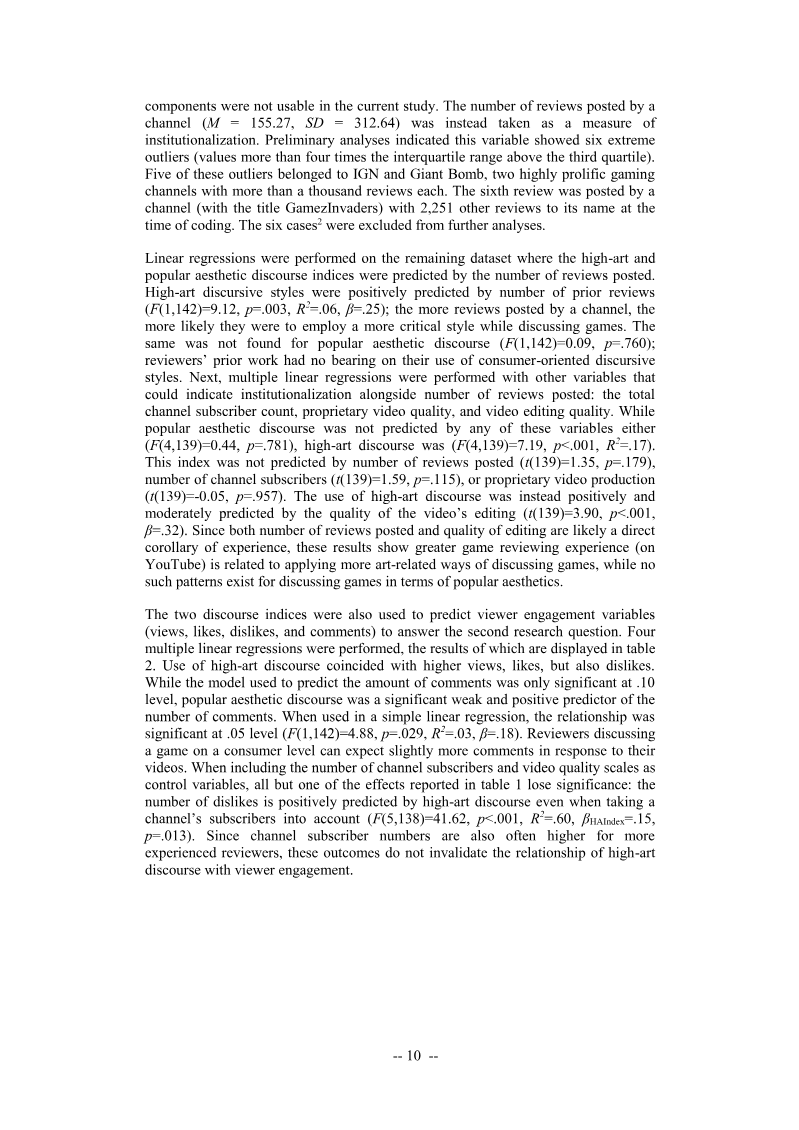
DiGRA · 2019
DiGRA · 2019
DiGRA · 2019
DiGRA · 2019
DiGRA · 2019
DiGRA · 2019
DiGRA · 2019
DiGRA · 2019
DiGRA · 2019
DiGRA · 2019
DiGRA · 2019
DiGRA · 2016