1 free read left. Create a free account for unlimited reading + AI research.
Create free account
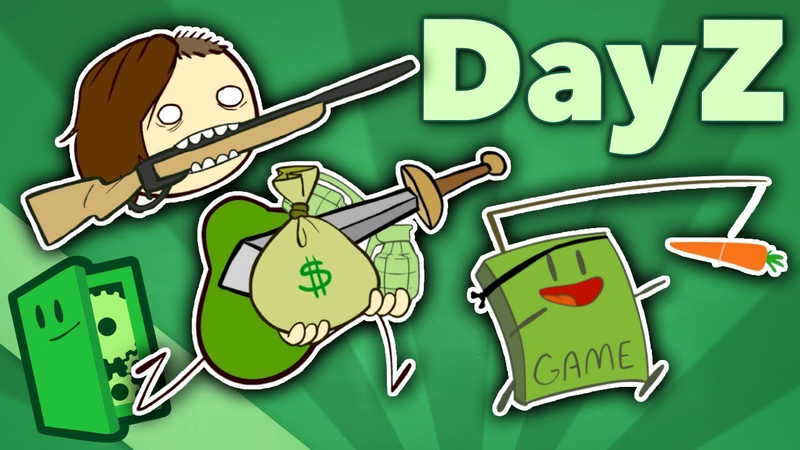
DayZ - Tragedy of the Commons: The Game - Extra Credits
Key insights
6 takeaways- 01Virtual spaces serve as unique platforms for players to practice and cultivate the cooperative mindsets necessary to overcome resource depletion challenges in both digital and real-world contexts.
- 02The 'tragedy of the commons' occurs in multiplayer survival games like DayZ when individual mistrust and fear of scarcity lead players to hoard resources and attack others, ultimately destroying the collective environment.
- 03Multiplayer environments disrupt the long-term strategic resource management typically found in single-player games because players assume bad faith from others, triggering a self-fulfilling cycle of competition and waste.
- 04Traditional solutions to resource depletion, such as privatizing assets or implementing punitive enforcement, often fail to solve the problem efficiently due to high overhead costs and reduced system utility.
- 05Incentive-based systems that reward sustainable, cooperative behavior—modeled after real-world renewable energy policies—are more effective at fostering long-term stability than punitive measures.
- 06Game developers have the opportunity to combat the tragedy of the commons by designing mechanics that explicitly reward equitable resource management and long-term community cooperation.
Ask AI about this video
Transcript
You could argue that many of today's problems stem from humanity as a whole failing to remember the tragedy of the commons. And if you want to see a perfect model of that failure in action, I give you DayZ. The tragedy of the commons is an old economic and ecological theory that says when resources are limited, personal self-interest actually works against itself. The classic example is common land in England. There was this patch of land in almost every village that everyone had access to to graze their cattle on. And if everyone had put just a few cows out to pasture there, everything would have worked out great. But of course, it would benefit any given individual more to have as many of their cows grazing on the commons as possible because then they could use their own land as something more than mere grazing space. And so, due to this short-sighted self-interest, each individual starts grazing more and more of their cattle on the commons. And this
quickly depletes the land, reducing the amount of food left for the cattle to graze on there. Seeing this, everyone then starts racing to put even more cattle on the land because they see that the commons isn't going to last much longer. They got to get as much out of it as they can. And of course, this doomed the land for good. It leaves everybody, even those individuals who initially got the most benefit out of it, more screwed than if they had just all figured out a way to use the space equitably. Because now, everyone has to graze all of their cattle on their own land. Admittedly, the tragedy of the commons is a super old-timey example. But for a more modern one, you can't do much better than DayZ. The default settings for a DayZ island, at least originally, had it so that there were plenty of resources for everybody to survive and hold off the zombies. If everyone just worked together and apportioned their gear, saving humanity would be no problem. But that's never how it actually plays out. Instead, everyone starts hoarding gear for
themselves. And then, when there's not enough gear to go around, people start fighting over it, using up all of those precious consumable resources like ammunition and healing items. So, now there's even fewer resources because they're all getting spent in the fighting. And people now have to scramble even harder to get equipped and are even more likely to attack strangers or raid one another for items in the middle of a zombie apocalypse. Inevitably, this leads to an almost inescapable cycle where humans fritter away the last remaining tools to survive while the zombie hordes close in. The tragedy of Turn A Rust. And if you think about it, almost every zombie game, and heck, most apocalyptic fiction, is built around this theme. This idea that it's so very easy to not see how the common good is also your personal good in a real, non-abstract way. Because even if you manage to hoard this huge pile of food for yourself, it won't make a difference if someone's just going to snipe you for it, or if everyone dies
and the zombies overwhelm you. And, in fact, when we design survival games, we actually count on this part of human psychology taking over, at least in the PvP servers. Most of these games are designed pretty similarly to DayZ, where the initial seed actually contains plenty of resources for all, assuming they were divided well. But, they never are. So, how can we learn to avoid this? Well, games are actually pretty great at teaching us to see the long view. Many games are all about planning for the future. Even action-oriented games often require you to manage resources. You don't just use all of your best guns and ammo all the time. You got to balance your use of grenades and ammo so that you have enough when a tough battle comes. In single-player games, we've actually learned this lesson really well. So, it's kind of funny that it goes right out the door as soon as other players come into the equation. On an intellectual level, we all know that cooperation is smarter. If Daisy were a top-down zombie apocalypse management
sim where you could control what everybody was doing, cooperation would be a given because it would make winning so much easier. I mean, you don't win StarCraft matches by saying, "All right, Marines, the Zerg are coming. Every man for himself." But, the problem comes down to trust. As soon as we introduce one other person into the situation, as especially somebody we don't know very well, all of a sudden we don't trust them to play fair. We just assume that they are going to grab all that they can, so we should do the same. I mean, if that's how they are operating, it's the only logical thing to do, right? Which, of course, means that as soon as somebody falls prey to that psychological trap, even if everybody actually was planning on acting in the best interests of the group, now everybody's got to rush to sweep up as many resources as they can before they're all gone. It causes the exact scenario our paranoia had us so worried about. So, how can we try to bring that long-term view that we've learned from single-player games to our multiplayer experiences and also the world? Well,
most of the solutions we've found in the real world all have drawbacks. One is to privatize the resources, to give the commons entirely over to individuals or to corporations, which incentivizes them to make those sectioned-off resources sustainable. After all, now they're playing a single-player game where they can control everyone's access to the commons. Of course, that generally sacrifices a lot of the benefit of those commons being a shared resource. Sure, you'll have a place to graze your cattle forever, but now instead of it being a free resource, it's only slightly cheaper than just grazing them on your own land. Another way we manage this in reality is to try to put in rules and punitive measures to prevent people from taking more than their fair share. Yes, anyone can join our Daisy clan, but if we see you taking too much, we are going to shoot you and we are going to feed you to those zombies over there. But, the downside here is that now you got to dedicate resources to enforcing your rules, again lowering overall efficiency. Better successful examples
do exist though. In the real world, you can find many examples of small groups who know each other well and trust each other simply agreeing to split the common limited resources in an equitable and sustainable way. And then everyone sticks to that either out of trust or social pressure. And it feels like there's got to be a way to practice establishing that system in games to make ourselves get better at it so that we can start implementing such communities in the real world on a small scale and then maybe even on a larger scale. But, the other great real world example is renewable power generation in Germany. Rather than punishing people for using fossil fuels, Germany has created incentives for using renewable energy. They essentially made in investing in renewable energy really easy. If you put some solar panels on your house or if your community gets together to pay for a wind turbine out past the town limits, it's very easy to plug that energy into the power grid and basically sell the power it generates
the same way a major power plant would. And as a result, Germany leads the major economic powers in renewable energy. So much so that they're phasing out nuclear. More than that though, half of the renewable energy generation in Germany isn't owned by big corporations. It's owned by the citizens. So, while renewable energy sources were a little bit more expensive at first, a lot of people didn't really mind because they were actually getting paid when people used them. It seems that the secret to avoiding the self-interest spiral is in creating mutually beneficial incentive systems. And if there is one thing that we are very good at in games, it's building incentive systems. But, perhaps the best way is for all of us to practice long-term thinking, to think about our resources the same way we think about them in games, and work on making the optimal play. So, the next time you find yourself in a situation where it's really tempting to just go out and grab as much as you can as fast as you can before somebody else takes your share, remember the tragedy of the
commons. Remember DayZ. See you next week. Chris go. Wow.
Summary
The tragedy of the commons serves as a foundational economic and ecological theory, illustrating how individual self-interest often leads to the depletion of shared resources, ultimately harming the collective and the individual alike. This phenomenon is frequently observed in multiplayer survival games like DayZ, where players prioritize hoarding gear and attacking others out of fear and mistrust. Although these games often provide sufficient resources for all players to survive if managed cooperatively, the lack of trust triggers a destructive cycle of competition, resource waste, and conflict, mirroring the collapse of historical grazing commons.
The analysis highlights that while single-player games successfully teach players to manage resources for long-term survival, this strategic foresight often vanishes in multiplayer environments. The introduction of other players creates a psychological barrier where the assumption of bad faith by others forces individuals to act selfishly, thereby creating the very scarcity they feared. To mitigate this, society and game design have experimented with various solutions, including the privatization of resources and the implementation of punitive enforcement measures. However, these approaches often sacrifice efficiency or require significant overhead to maintain.
A more effective strategy involves creating mutually beneficial incentive systems, as demonstrated by Germany’s approach to renewable energy. By incentivizing sustainable behavior rather than merely punishing consumption, communities can foster cooperation and long-term stability. The analysis concludes that games offer a unique platform to practice these cooperative systems. By designing games that reward long-term, equitable resource management, developers can help players cultivate the mindset necessary to overcome the tragedy of the commons in both virtual spaces and the real world.




















Comments