1 free read left. Create a free account for unlimited reading + AI research.
Create free accountWhitepaper DiGRA
1 free read left. Create a free account for unlimited reading + AI research.
Create free accountWhitepaperDiGRA
It proposes "random reward mechanisms" (RRMs) as a neutral alternative. An RRM is an eligibility condition that triggers a random procedure delivering a reward.
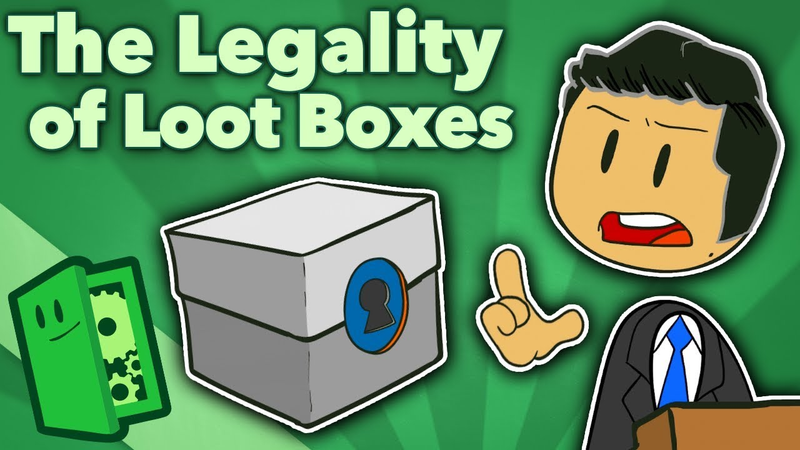
The paper argues that the popular term "loot box" is too imprecise for academic and regulatory purposes, and proposes "random reward mechanisms" (RRMs) as a neutral alternative, defined as an eligibility condition that triggers a random procedure delivering a reward. Its central question is whether these mechanisms function like gambling. The authors trace RRMs back to longstanding analog precedents such as collectible cards and Monopoly-style chance elements, while noting that newer digital implementations since roughly 2006 to 2007 deliberately foreground randomness through visual cues like spinning wheels and pack openings. Drawing on the cognitive biases associated with gambling, including near misses, the gambler's fallacy, and chasing losses, the authors acknowledge that video games are not uniquely addictive, yet argue that purchasable RRMs deserve scrutiny given that gambling is currently the only behavior recognized as addictive in the DSM-5 and ICD-11 drafts.
The paper's key conclusion is that RRMs resemble gambling only under specific conditions. Similarity arises when both the purchase and the reward are embedded in the real-world economy, meaning they can be bought with and exchanged for real money. The authors support this distinction with regulatory examples: the Danish Gambling Authority treated CS:GO skin-betting as gambling because skins could be sold for cash, but did not apply the same classification to Star Wars Battlefront 2 loot boxes whose contents could not be converted to currency. Using a four-part typology of RRM implementations, the authors find that only the category where real money buys a random reward that holds resale value is functionally comparable to gambling, and that many high-profile loot-box systems fall outside it.
The document's supporting material reflects a contested regulatory landscape. Its references include Danish Gambling Authority statements, Belgian Gaming Commission deliberations, and reporting on the ESRB's decision not to classify loot boxes as gambling, alongside New Zealand's position declining to treat them as gambling. The endnotes clarify that purchasable RRMs are those requiring payment for eligibility and that the ESRB defines simulated gambling as gambling without wagering real currency. Taken together, the paper frames loot-box regulation as dependent on the economic structure of the mechanism rather than on randomness alone.
Each row is a game or company this document names, each column a document, oldest first. A mark means that document names it. Select a row to see those documents.
DiGRA · 2020
DiGRA · 2020
DiGRA · 2020
DiGRA · 2020
DiGRA · 2020
DiGRA · 2020
DiGRA · 2020
DiGRA · 2020
DiGRA · 2020
DiGRA · 2020
DiGRA · 2020
DiGRA · 2020
Deconstructor of Fun · 2024