Monetization reports and market data
Documents
Superstar Session: Sustainable Social Growth on Instant Games
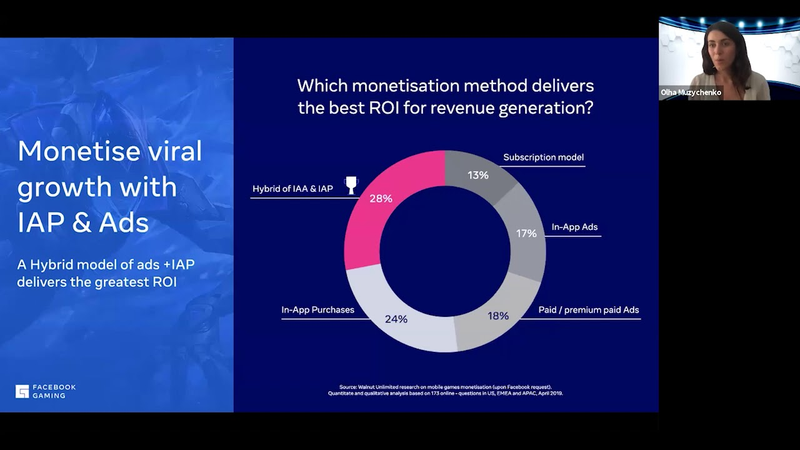
This presentation outlines strategies for achieving sustainable social growth on Facebook’s Instant Games platform, an HTML5-based ecosystem integrated into Facebook and Messenger.
- Hybrid monetization models combining in-app purchases and Audience Network ads (interstitials and rewarded video) consistently outperform single-revenue strategies on the Instant Games platform.
- Rewarded video optimization must be localized, as North American players prioritize virtual currency rewards while German players prefer extended gameplay options.
- Sustainable retention is driven by time-sensitive social features, specifically seven-day leaderboards that create recurring incentives for player engagement.

How to Reduce In-Game Inflation by Monitoring Your Economic Systems
Managing economic stability in complex MMORPGs requires a proactive approach to monitoring and regulating in-game inflation, which mirrors the challenges faced by central banks in real-world economies.
- Developers must treat in-game economies as dynamic systems by balancing time, labor, and currency to prevent price volatility and maintain player confidence.
- The five primary drivers of inflation are excessive currency issuance, insufficient essential item production, declining player populations, market manipulation by bots, and the sudden influx of 'sleeping money' from returning players.
- Teams should implement robust visualization tools to track currency flow, exchange rates, and transaction networks to identify imbalances between currency issued and collected.

Rovio: A Two Year Journey into Modernizing the Production Process
Rovio has undergone a comprehensive two-year transformation to modernize its production framework, moving away from rigid, top-down management toward a model defined by transparency, autonomy, and data-driven decision-making.
- Rovio transitioned from a rigid, 'tick-box' production process to 'Flypath,' a flexible framework built on transparency and team autonomy that has successfully sustained projects for over two years.
- The Flypath framework organizes development into distinct phases—Concept, Pre-production, and Soft Launch—with a focus on validating team capabilities, technical requirements, and external compliance requirements from partners like Apple and Google.
- Rovio manages a portfolio of 15–20 live games, utilizing cross-promotion and integrated live operations to maintain the Angry Birds brand, which has surpassed 4 billion total downloads.

Game Licensing for Streamers? | Roundtable News | Game Dev Unchained Episode 241
The modern gaming industry faces a significant structural tension regarding the streaming of intellectual property, characterized by a debate over whether developers should implement formal licensing models for content creators.
- The gaming industry is debating a shift from the current 'wild west' streaming model toward a formal, permission-based licensing framework to ensure developers receive equitable compensation.
- Proponents argue that streaming platforms and creators currently monetize intellectual property without providing a direct financial return to the original developers.
- The lack of industry-wide standards and transparent data prevents developers from accurately valuing their contributions, leading to investment trends that disproportionately favor streaming-friendly titles.
Riz Virk on US vs. China App Wars, Simulation Hypothesis (Life is a Game!), & Startup Myths
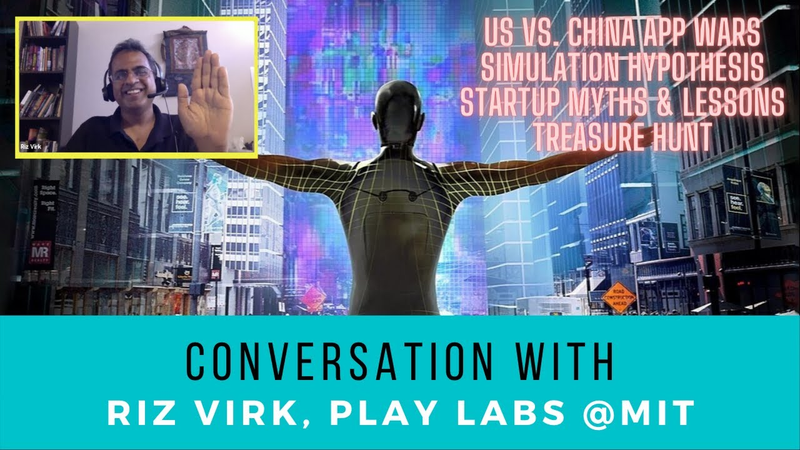
Mobile applications have evolved from simple content delivery tools into critical geopolitical infrastructure, marking a shift from regulating content to controlling the platforms themselves.
- Mobile applications have transitioned from simple content delivery tools into critical geopolitical infrastructure, leading the US, China, and India to treat platforms as matters of national security and data sovereignty.
- The global tech industry must adapt to an era of economic protectionism where foreign-controlled platforms face persistent regulatory scrutiny and complex cross-border ownership requirements.
- The simulation hypothesis suggests that reality functions like a sophisticated video game engine, drawing parallels between quantum physics' observer effect and the information-based structure of the universe.
Superstar: Designing for Interactive Game Streams: Incorporating Stream Viewers into Your Vision
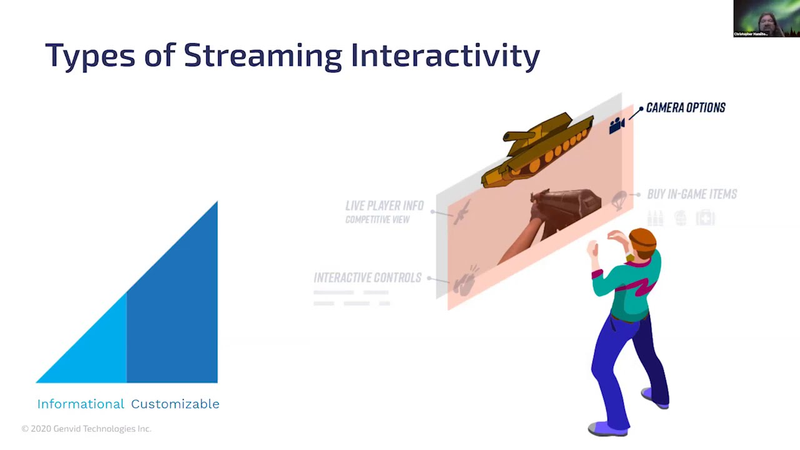
Modern game design is undergoing a fundamental shift that treats live stream viewers as active participants rather than passive observers.
- Game developers have historically focused exclusively on the player experience, leaving the massive, growing audience of live-stream viewers as an underserved market for engagement and monetization.
- Interactive streaming technology allows viewers to transition from passive observers to active participants, enabling them to influence gameplay through mechanics like cheering, voting, or purchasing in-game items.
- Massive online events like Fortnite's Travis Scott concert, which reached 12.3 million viewers, demonstrate that games are increasingly serving as social platforms for shared experiences beyond traditional gameplay.

Panel: Live Ops Best Practices: How to Make them more Engaging & Profitable
Successful live operations demand a fundamental shift in development philosophy, prioritizing the post-launch lifecycle as the most critical phase for long-term viability.
- Prioritize early retention by optimizing technical performance, specifically by reducing loading times and fixing crashes, before focusing on long-term content expansion.
- Implement a rigorous testing pipeline by deploying updates to a small subset of players (5-10%) before a full rollout to ensure stability and gather data.
- Adopt a 'restaurant' mindset for live operations, where teams must be prepped for a high-frequency, agile development cycle that often requires weekly content releases.
Does Personalisation Exist in the Industry? The Need for a New Segmentation Approach
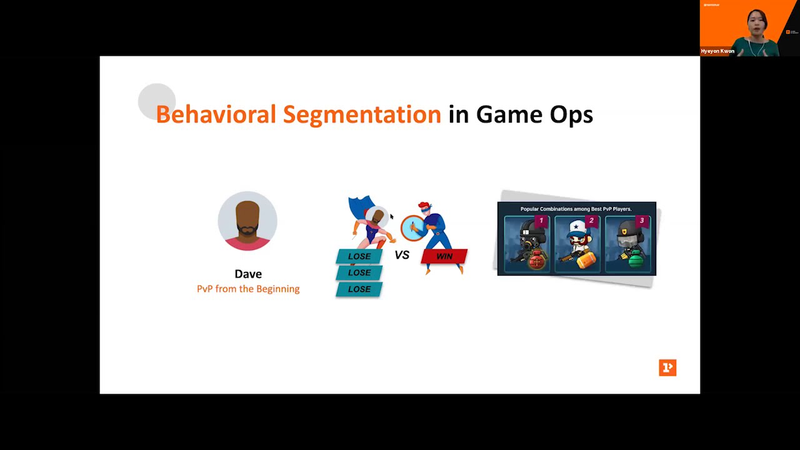
Traditional player segmentation methods, which rely heavily on demographic data and monetization history, are increasingly inadequate for the demands of modern live-service games.
- Traditional demographic segmentation (age, gender, geography) is ineffective for in-game operations because it fails to capture the primary drivers of player behavior and engagement.
- Monetization-based segmentation, which focuses exclusively on high-spending 'whales,' risks game instability and shortened lifecycles by neglecting the remaining 97% of the player base.
- Successful games achieve high conversion rates through broad engagement, such as Candy Crush Saga at 30% and Fortnite at 70%.

Panel: Putting the Hype into Social Games - Deconstructing Hypercasual & Social Games
The gaming industry is currently navigating a strategic convergence between hypercasual and social gaming models, driven by a shared need for accessible, high-volume engagement.
- Developers are increasingly adopting 'hybrid-casual' models that combine hypercasual ad-based monetization with social gaming's in-app purchase mechanics to maximize profitability.
- The loss of IDFA tracking under iOS 14 has forced the industry to move away from granular user targeting toward privacy-compliant lifetime value calculation technologies.
- Hypercasual games, traditionally focused on short-term 30-day lifetime value, are now integrating social features like voice and video chat to boost long-term retention.
Curated Panel: How to Maximise ARPDAU With a Hybrid Approach
The mobile gaming industry is undergoing a fundamental shift toward hybrid monetization models, which integrate in-app purchases with in-app advertising to stabilize and maximize average revenue per daily active user.
- Hybrid monetization models that integrate in-app purchases with rewarded video are stabilizing revenue, with many studios achieving an even 50/50 split between ad-driven and purchase-driven income.
- Publishers are transitioning from manual waterfall management to automated in-app bidding to eliminate labor-intensive line-item adjustments and improve operational efficiency.
- Automated bidding platforms allow development teams to reallocate resources from ad operations toward user acquisition and core product innovation.
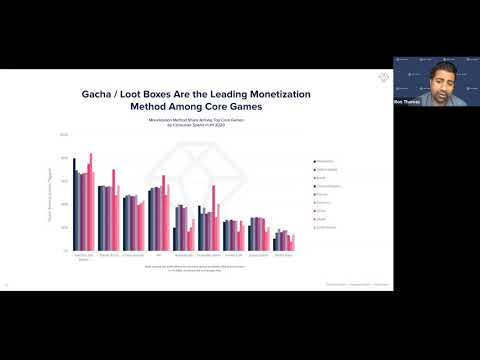
Superstar Session: How to Maximise the Game Economy With Ad Monetisation
The presentation explores strategies for maximizing game economies through ad monetization, emphasizing the necessity of data-driven decision-making in an evolving mobile landscape.
- Publishers must integrate first-party performance data with third-party market intelligence, such as App Annie’s Game IQ, to normalize metrics across user acquisition, mediation, and in-app purchase platforms.
- Monetization models should be dynamic rather than static, transitioning between ad-heavy, hybrid, or subscription systems based on specific user maturity levels and geographic performance trends.
- Strategic ad integration—when managed for frequency and timing—does not degrade retention and can function as a tool for delayed gratification by offering rewards for future gameplay sessions.

Panel: Doubling Down on Repeat Players- Moving to Retention as a Focus to Making Money
Retention and monetization function as interdependent pillars of long-term financial success in the mobile gaming industry.
- Retention is the fundamental prerequisite for monetization; aggressive ad frequency or excessive in-app purchase pop-ups can degrade the user experience and ultimately destroy long-term revenue potential.
- Return on Ad Spend (ROAS) serves as a critical metric for balancing monetization and retention, as high-performing ROAS models allow for increased investment in user acquisition.
- Ad placements that are player-controlled, such as optional rewards for players who have run out of content, can function as retention features rather than just monetization tools.