Monetization reports and market data
Documents

The New Rules Of In-Game Advertising with AdInMo | PocketGamer.biz RoundTable
The mobile gaming industry is undergoing a fundamental transition in monetization strategy, moving away from interruptive, click-based advertising toward immersive, native brand experiences.
- Mobile gaming monetization is shifting from interruptive, click-based advertising to immersive, native brand experiences to protect player retention.
- Privacy changes, specifically IDFA deprecation, have reduced the efficacy of traditional hyper-targeted ad models, forcing a move toward privacy-compliant strategies.
- Developers are now integrating native ad units—such as billboards and posters—early in the production process to ensure they feel authentic to the game environment.
Farlight 84 - New FPS Shooter in 2021 | Reaction & Analysis
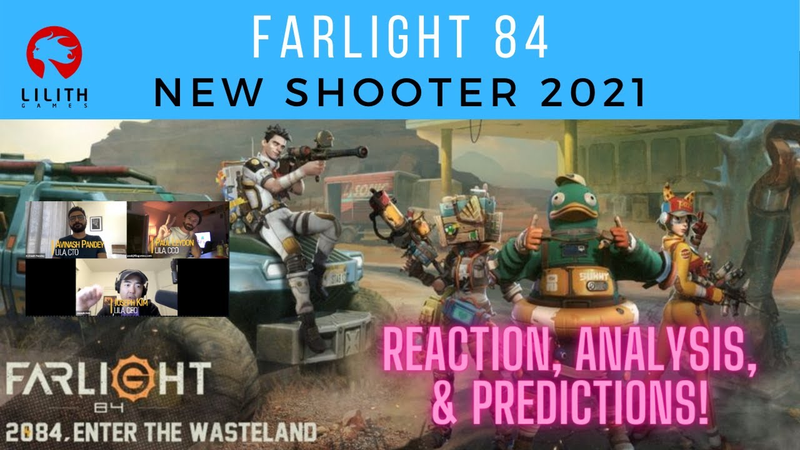
Farlight 84 represents a strategic entry into the competitive battle royale market, aiming to capture the mobile and cross-platform audience through a blend of high-fidelity aesthetics and fast-paced, class-based combat.
- Farlight 84 targets the mobile and cross-platform battle royale market by combining class-based combat with unique movement mechanics like jetpacks and legged vehicles.
- The game utilizes Unreal Engine to support a 40-player map structure, specifically optimized for mobile hardware performance.
- The core gameplay loop integrates squad-based tactical objectives with a persistent social hub model similar to Fortnite to drive player engagement.

How much MONEY did my STEAM/SWITCH game make?
The primary objective is to illustrate the financial realities of independent game development by analyzing the performance of the title Never Song.
- Long-term financial sustainability in indie game development requires a diversified revenue model that combines storefront sales with crowdfunding, publisher advances, and personal brand cultivation.
- The game Never Song generated $90,000 in gross revenue from over 12,000 units on Steam and $30,000 from nearly 3,000 units on the Nintendo Switch within its first five months of release in May 2020.
- Relying solely on organic discovery within storefronts is insufficient due to high market competition, making a proactive marketing system essential for consistent visibility.
SWATTING Around with Ubisoft | Roundtable News | Episode 242
The gaming industry is currently navigating a period of significant technological and structural transition, defined by the launch of next-generation hardware and evolving monetization strategies.
- The gaming industry faces a significant technical bottleneck as high-fidelity game file sizes frequently exceed 200 GB, creating friction between next-gen hardware storage capacities and consumer performance expectations.
- Consumer preference has shifted toward 60 FPS performance over ray-tracing, forcing developers to prioritize frame rate stability to meet modern user experience standards.
- Premium titles, particularly in the sports genre, are increasingly integrating free-to-play monetization mechanics like microtransactions and in-game currencies despite maintaining a $70 retail price point.
Superstar Session: Wordscapes: How the World’s Most Popular Word Game Boosted LTV by 40%
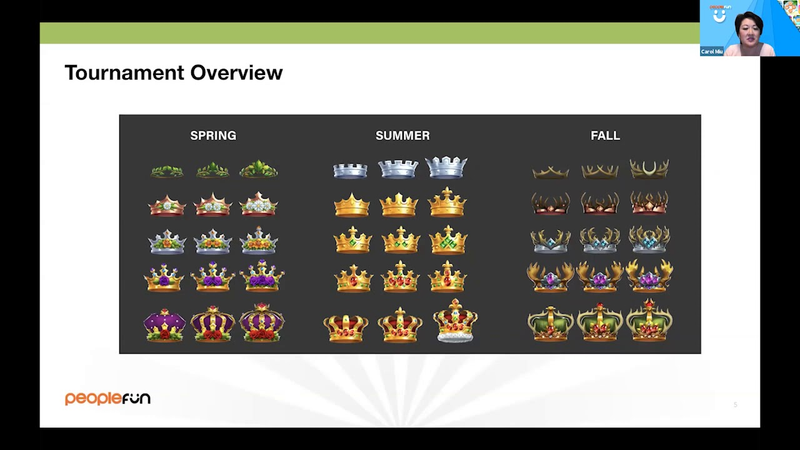
PeopleFun achieved a 40% increase in the lifetime value of the mobile title Wordscapes by shifting toward vanity-driven live operations and seasonal content.
- PeopleFun increased the lifetime value (LTV) of Wordscapes by 40% by shifting to vanity-driven live operations and seasonal content.
- The studio successfully reduced coin payouts by 50% without negatively impacting KPIs by introducing exclusive crown rewards within a 13-week tournament structure.
- Sticker collections increased both in-app purchase and ad-based ARPDAU by over 20% while doubling level completion rates among top players.

IDFA:How the Right Publisher can Help Choose Tools, Partners & Prepare Data to Avoid the Apocalypse.
The deprecation of the Identifier for Advertisers (IDFA) marks a fundamental shift in the mobile gaming industry, signaling the end of granular, machine-learning-driven user acquisition.
- The deprecation of IDFA has rendered traditional, granular machine-learning-driven user acquisition and legacy Mobile Measurement Partner (MMP) attribution models obsolete.
- Developers must transition to privacy-centric frameworks like Apple’s SKAdNetwork, which complicates the ability to distinguish between organic and acquired user segments.
- Internal data infrastructure is increasingly insufficient, necessitating a shift toward advanced lifetime value (LTV) prediction algorithms and diversified monetization suites.

Panel: How do we Prepare for the End of IDFA?
The deprecation of the Identifier for Advertisers (IDFA) represents a fundamental shift in the mobile gaming industry, necessitating a move away from granular, user-level tracking toward more sustainable, privacy-centric growth strategies.
- The deprecation of IDFA necessitates a shift from granular, user-level tracking to privacy-centric growth strategies like SKAdNetwork, incrementality testing, and media mix modeling.
- Performance-based advertising and retargeting are experiencing immediate volatility, resulting in initial declines in eCPM and overall ad revenue.
- Studios must transition toward predictive lifetime value modeling and cohort-based analysis to replace the lost efficacy of traditional user acquisition tactics.

Superstar Session: Hypercasual Live Ops- Building a Data-driven Growth Machine
Hypercasual game development relies on a systematic, data-driven growth machine to optimize performance and extend product lifecycles.
- Hypercasual studios should transition from intuition-based design to a systematic, data-driven growth machine that utilizes automated A/B testing across the entire user funnel.
- The core growth strategy relies on running hundreds of A/B tests in parallel to isolate variables in game mechanics, monetization, and user acquisition for cumulative, exponential performance gains.
- Internal scoring algorithms should be used to evaluate potential updates, ensuring that every product decision is backed by empirical evidence to maximize engagement and lifetime value.

Panel: Alternative ways to Monetise Your Games
Modern game monetization is undergoing a fundamental shift away from traditional, intrusive display advertising toward models rooted in player motivation, aspiration, and long-term engagement.
- Sustainable monetization now requires a multi-faceted approach that integrates in-app purchases, battle passes, and subscriptions alongside non-invasive ad formats.
- The industry is shifting away from intrusive display advertising toward models based on player motivation, such as competitive ambition, social interaction, and time management.
- Repeat usage is the primary key performance indicator for assessing long-term game health, superseding short-term revenue gains.

Panel: Have we Reached the End of Innovation with Hybrid Monetisation?
Hybrid monetization represents a strategic evolution in mobile gaming, shifting away from reliance on high-spending whales toward a balanced ecosystem that integrates in-app purchases, subscriptions, and diverse advertising formats.
- Hybrid monetization shifts mobile gaming strategy from whale-dependency to a balanced ecosystem of in-app purchases, subscriptions, and diverse ad formats to maximize total player lifetime value.
- Rewarded video ads should be positioned as high-utility consumables to improve player retention and serve as a gateway for non-paying users to eventually transition into spenders.
- Developers must treat ad revenue as a ring-fenced component of the game economy to prevent the cannibalization of in-app purchase revenue.

Speed Panel: The Death of IDFA & Cookies - Your Monetisation is at Risk
The deprecation of IDFA and third-party cookies necessitates a fundamental shift in mobile gaming monetization, moving away from intrusive, data-heavy targeting toward privacy-compliant, authentic advertising models.
- The deprecation of IDFA and third-party cookies requires a shift from intrusive, data-heavy targeting toward privacy-compliant, game-centric advertising models.
- Intrinsic advertising, such as placing ads on in-game billboards, allows developers to monetize the entire player base rather than relying solely on a small cohort of spenders.
- Successful intrinsic advertising depends on contextual alignment, where ad content must resonate with the game's setting and audience to maintain brand value.
Superstar Session: Don't Go Indie, Go Hyper!
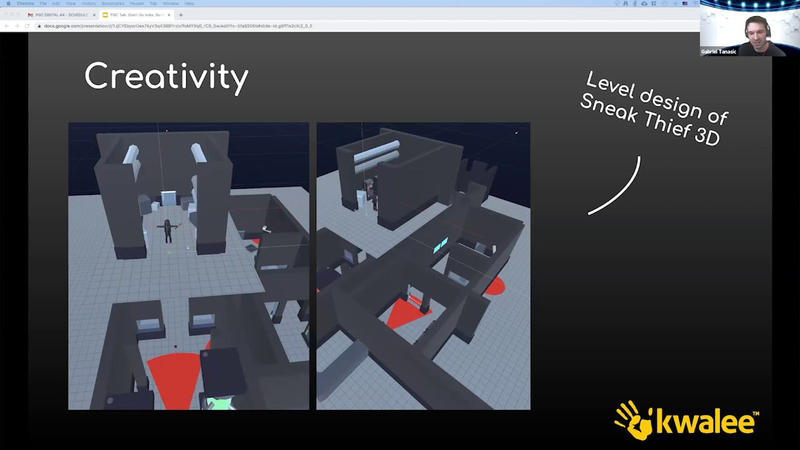
The hypercasual gaming sector offers a distinct alternative to traditional indie development, characterized by rapid prototyping, high creative turnover, and a focus on gameplay over complex production values.
- Hypercasual development prioritizes rapid prototyping, with core functionality often developed in under one week to allow for immediate marketability testing via click-through rate (CTR) analysis.
- The business model mitigates financial risk by utilizing a 'fail fast' approach, where developers abandon underperforming concepts early to focus resources exclusively on high-potential projects.
- Hypercasual games rely on broad accessibility and engaging mechanics rather than deep narratives or high-fidelity graphics, allowing for the use of asset packs and simplified programming to lower entry barriers.