1 free read left. Create a free account for unlimited reading + AI research.
Create free account
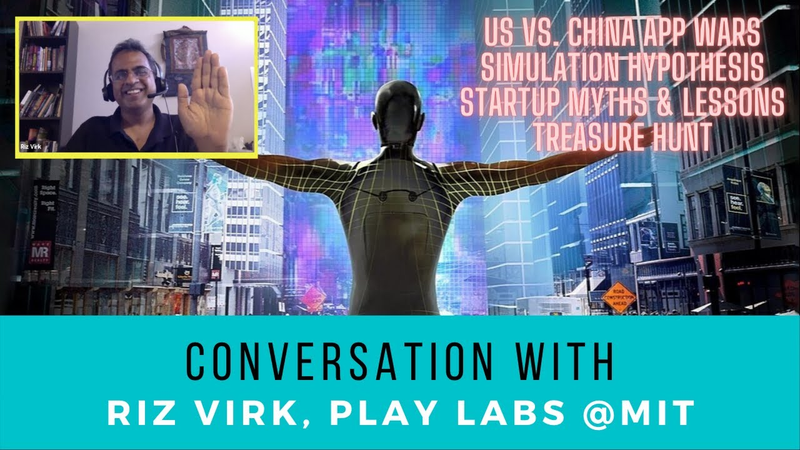
Riz Virk on US vs. China App Wars, Simulation Hypothesis (Life is a Game!), & Startup Myths
Key insights
6 takeaways- 01Mobile applications have transitioned from simple content delivery tools into critical geopolitical infrastructure, leading the US, China, and India to treat platforms as matters of national security and data sovereignty.
- 02The global tech industry must adapt to an era of economic protectionism where foreign-controlled platforms face persistent regulatory scrutiny and complex cross-border ownership requirements.
- 03The simulation hypothesis suggests that reality functions like a sophisticated video game engine, drawing parallels between quantum physics' observer effect and the information-based structure of the universe.
- 04Viewing existence through an RPG model encourages individuals to exercise free will and pursue specific life quests rather than operating as deterministic non-player characters.
- 05Startup success requires identifying underserved niches rather than competing in saturated markets, necessitating a balance between analytical data and intuitive decision-making.
- 06Professional development is most effective when treated as an iterative treasure hunt, where individuals follow sequential clues to navigate the uncertainty of the modern economy rather than adhering to rigid, predetermined career paths.
Ask AI about this video
Transcript
hey everybody joe kim here our next guest was one of the old school pioneers of mobile free to play as part of the founding team of tapjoy ceo and co-founder of gameview studios the makers of tapfish if you remember and gameview was acquired by dna riz then became a gm of dna then became an advisor and board member to a bunch of different companies did some venture stuff and i think you also did some angel investing but today you are the executive director at play labs at mit and doing a lot of writing now with respect to the to writing rizz has written three books first treasure hunt follow your inner clues to find true success second start up myths and models what you won't learn in business school and most interestingly the simulation hypothesis in mit computer scientist shows why ai quantum physics and eastern mystics
all agree we are in a video game so in addition to his books riz writes articles including most recently a piece for nbc news titled trump uses tick-tock and wechat to challenge china welcome to a new conflict the app wars please welcome rizverk how's it going rizz hi joe thanks for having me on yeah no worries i thought we could kind of maybe go in reverse chronological order through some of your writing which you know i personally found incredibly incredibly interesting and i thought we could first start with the the article that you wrote about the coming u.s china app wars and maybe we could start with that in terms of like what do you mean by the app wars what's happening and what are maybe some of the potential implications of what could potentially happen based on current events yeah sure and you know by now most people have probably heard about the ongoing saga at
least in the game industry uh of uh or in the mobile you know app industry of uh trump the trump administration banning several chinese apps and then kind of going back on it and then judges coming up to giving orders to stop the ban uh and so you know i wrote this piece to kind of put some perspective that it's interesting that mobile apps have become you know such an important part of how we consume content how we share content to the point where it's really being used as an arena for super power posturing you know so if you go back to you know the cold war right there was a lot of posturing between the united states and the soviet union uh to the point where you know we were boycotting each other's olympics like you know now dating myself here a little bit but going back to like the 1980 olympics and then the soviets boycotting the 84 olympics and so you know what happens with superpowers is uh you know getting into direct
conflicts is uh too devastating right and so there's always proxy wars whether it's you know the korean war vietnam etc or the proxies move into other arenas and so i thought it was interesting that you know with this recent kind of trade war going on with china you know against that backdrop and china has sort of an emerging superpower and then the u.s has an existing superpower that mobile apps have entered into that fray and so really i wrote the piece to kind of explore that idea that you know apps are now strategic to government economic policy but also to security etc and so you know the stated reason for banning these apps was that well these are chinese companies right and therefore they are under the jurisdiction of the chinese government which means that the communist party and the chinese defense establishment has access to all your data right and so that was kind of the ostensible reason for the ban
and you know there was a a long discussion that's still ongoing about you know well if u.s companies were to buy the assets of the u.s assets of tick tock and set up a separate company and have it hosted in the u.s and you know originally microsoft made a bid for it uh and then oracle and walmart made a bid for it and then there's been conflicting uh views on you know what that actually means you know tick tock is supposed to was supposed to actually keep a majority share of the company but since tik tok has owned 40 by u.s investors if you count oracle and walmart's new investment and the new company they're setting up and you count the u.s investors and tick tock theoretically they own the majority and so there's been a lot of back and forth on that and so you know this is a story that that's ongoing and evolving but really you know i wrote the piece more to put this into perspective to show how you know mobile apps aren't just for geeks anymore
and washington beijing and other uh countries like india for example which has also been tick-tock now when india tick tock they also banned 57 other chinese apps so it looked like it was a a more of a you know uh like the reason they did it was because of some policies that they have and they decided to apply those policies across many other uh many of the chinese apps whereas in the us you know it's tick tock and wechat and so wechat is used you know heavily in china they have over a billion monthly active users most users in the us are people who are basically communicating back with people in china so they tend to be you know chinese nationals and people of chinese ethnic origin who are communicating uh but you know tick tock the rumors are well trump got really pissed off at tick tock right because it was yeah the tulsa rally right it was used by a bunch of kids to you know go to spread the news that they wanted to buy
you know tickets or get tickets for his rally and then nobody showed up uh and you know i i wouldn't put that past trump that that that's kind of what really got under his skin and then they said well you can't just ban tick-tock you gotta ban somebody else he said okay well who else can we ban oh wechat why don't we add that to the list now that's a rumor i can't say if that's you know the real reason they did it but that was you know one of the the things that was floating around you know when i wrote this piece so so res when you think about like a potential u.s china app war and we're already seeing it kind of even play out even further in india as you had mentioned but like there's kind of like the ray dalio view and i'm not sure how familiar you are with some of ray dalio's work where he's kind of he's kind of insinuating that just based on the longer term trends like a conflict with china is inven is inevitable but how do you unbundle that from because as you mentioned is are some of these actions against china because trump's mad because trump's trying to help
enrich his friend larry ellison at oracle or yeah you know it's like heart school so how much do you think is more structural in actually a long term regardless of whether it's trump or biden or whoever that there's going to be like this upcoming war versus is this just some just more of a temporary thing in your mind yeah well you know the current situation with tick-tock obviously has all these other uh you know all these other factors which when when you're talking about trump there's always other factors right and so there's the larry ellison you know his buddies you know the very few buddies in silicon valley that he has and you know there was this issue that i talked about about young people who generally you know uh but there's also if you recall uh just around the same time that trump announced that he you know this deal could could uh push off the ban he announced a a re-education effort right for the youth of america so that the youth of america can learn real history right which uh
you know the more the official story and so there's this sense i think you know within the within trump world anyway that you know people are getting a uh less of a sanitized history of you know slavery and other things uh in the us and that's causing young people to vote a certain way and and you know socially be a certain way uh and if you remember with the tick tock deal when he announced that he also said and they're going to put five billion dollars into my re-education fund and of course tick tock said huh we don't remember saying we're gonna put five billion dollars into that and you know so there's a lot of back and forth there so with trump there's always other factors that are at play but i do think this is a long-term trend and you know i can't say that i'm totally familiar with with uh you know ray dalio's work but but i've certainly heard i've heard of him and uh you know i don't think that a military conflict is necessarily inevitable right you know with the soviet union we never had a direct military conflict we did have proxy wars and so i think proxy wars are inevitable
i think you know when you've got superpowers exerting their influence um and you know with the us in particular you have to do with different administrations you know the commitment to our other asian partners outside of china kind of waxes and wanes but i think that the bigger issue right now is with you know trump got elected partly on a populist movement and part of that movement is we're going to stop you know china from you know stealing our money and stealing our jobs right and so you know there is a broader context even within the trump administration which this the app wars are fitting into but i think you know more and more if you think about what used to be banned in the old days right it was content right a lot of western content was banned you know in the soviet union and in communist countries and today you know the internet is there you've got the great chinese firewall so you've got you know content being banned that way so that was kind of like the year 2000
solution is the chinese firewall to ban content now the year 2020 solution is starting to be banned apps from other countries right and it's not just india europe is in fact uh you know investigating tick tocks data practices right and with the u.s man it's hard to separate out what's real like is there a real security threat are they actually worried about data or is that all these other factors but you know if you think of it in a broader context you know india is a rising economic superpower and you know europe can say if you can think of a consolidated economy is definitely an economic superpower and so they are also looking at the practices they haven't banned tick-tock yet at least i haven't heard that if they have but india had in pakistan just banned tic-tock recently so you know there may be something to some of the security concerns uh but you know the suspicion is that those weren't really well thought out like even a lot of uh security analysts you know when they commented on it or like yeah it's
possible someday that it could lead to something uh you know the chinese that will have information on what a bunch of kids are doing but i think the broader concern might actually be the content that comes across right so just like people have been wary of facebook's algorithms and how we're selecting content to show uh so people are becoming more and more you know tribal on social media and that's already affecting the elections and it's affecting people really you know getting into their own bubbles that the next wave of that is going to come from from these kinds of apps right and so is it that you know if the chinese government or the u.s government for example is controlling a company and we know there has been collaboration between the u.s security establishment and the tech firms could they then not just get access to data but could they start influencing people's perceptions right so the whole russian scandal around the election was you know
about social media right it was about bought farms taking fake stories and and just uh pushing them on social media and then they get shared ad infinitum within certain tribes and so i think longer term you know that is a real concern for pretty much any country and in the democracy if your citizenry is supposed to be informed so really this is starting to become uh you know even though the trade wars are more about economics this is also starting to become about information and positioning and ideology uh and i think that may be a valid longer-term concern i'm not sure that with tick-tock it's all user-generated content primarily but the algorithms that select you know content could certainly be influenced and that was one point of contention so the points of contention for this new tick tock u.s company that's theoretically going to get around was was going to get around the band was move the data onto oracle's cloud which would be hosted in servers you know here in the us but the with the algorithms
you know details of the algorithms be available to that company or would they stay in china if they stay in china then it's possible you could have subtle tweaks of the algorithms which start favoring certain types of content and i mean these apps have become so popular that that could in fact influence thinking just like television influence thinking of people right depending on what you see youtube has influenced the thinking of a lot of people today and there's a lot of concern uh that you know whether it's fake news whether you buy into the news or you think it's fake news youtube has been spreading a lot of stuff right and so that was again the 2000s solution now we're looking at you know the 2020s and beyond which will be through these apps and so i think it's a whatever happens with the current ban and you know there's a bunch of legal arguments going back and forth whether the trump administration can actually do the ban or not i think we're looking at a preview of coming attractions around the world yeah and when i try to think about more direct implications to for for example for a game studio and
it seems like there are potentially some implications for example from a data perspective as you mentioned maybe we need to treat different geographies differently with respect to like where we're collecting the data and data policies and maybe also to your point about the firewall or like having i think what some people are calling splinternet right so if if it's india and china and and or india and in the us and china are separate sort of markets for for apps and like the chinese developers won't be able to publish games here and vice versa that's kind of what we're seeing with pub g and some of the chinese games currently like do you like what other implications are or how real do you think some of those implications are because certainly like let's say in the shooter market which is you know a genre that i compete in or even in the moba space if we were to block chinese developers and that basically frees up like a huge
market for anyone to come in and things of that nature so right so there's yeah i mean so there's interesting economic implications there i mean it's the same thing of you know if china bans google that leaves or amazon or facebook that might be blows up then yeah right exactly yeah baidu and then you've got alibaba you've got all these companies and so it's a form of protectionism right yeah uh and so you know this is where economic policy is is important uh we may be seeing a resurgence of protectionism certainly with you know the trade war with china uh and and that may be the unstated reason to ban for india for example to ban chinese i mean there's already a rivalry between india and china and that you know they even have little skirmishes on the border because they share right um and i thought it was interesting that pakistan just banned tick tock because they tend to get along with china so there's less of the uh the geopolitical you know considerations there but yeah i think for app developers you know this is a concern uh that we will end up with you know not just splintered net but splinter
um app stores right uh an app store is already kind of a walled garden and there's already different policies so you know like when we built uh like a bingo app in one of my companies like in korea we couldn't have the app because it wasn't allowed to have simulated gambling even though it wasn't real money gambling and so you already have an element of that where you have different policies in different countries and so guys who run app stores like apple and google have to be wary of that but it may go a lot further right so there may be a lot less if if this kind of thing stands then i guess it'll depend on the administration uh but you know it it does get into you know that that kind of economic protectionism and i think we'll start to see more of that right one last implication would be just ownership right because tencent owns riot owns a big chunk of epic you know a little over fifty percent of supercell and things of that nature so that might
also be a potential implication uh do you think though i could see down the road you know i mean if if those policies are actually uh turn into kind of real policies that go beyond one company beyond tick tock right and wechat that you could start to see it impact gaming because you know there's a lot of data about american users that's technically owned by chinese companies now and i think that's something that you know gamers know this but a lot of the politicians don't know this because they don't play video games so they're not really you know necessarily in that market so something would happen like the tulsa tick tock rally i think that makes people you know more aware i mean right now you know they're looking at the whole the government is looking at the anti-competitive practices you know of all of many of the big tech companies and there was a report on that and i actually just wrote a piece on that which will be coming out as well you know which you know really comparing the de facto monopolies we have today to what happened in the uh the days of
the robber barons you know back in the the rockefellers and the the carnegies and the jp morgans and how it was an environment of of trying to build on offline that was the actual goal um so yeah and if you were to like place a bet like what how how likely do you think we would get to for example a splinter net or even just to like match the chinese policy right like we can't launch games in china without a chinese partner and getting chinese license if we were to bet how likely do you think that we would at least match them on the other side or just completely block some of the chinese games similar to what india has done for for you know 57 apps in in india you know i think it depends on on who gets elected right okay uh i think if trump gets reelected there's there's a chance that there might be more of these types of kind of protectionist policies which would uh
you know put bans on there um i don't think would go quite as far as china has gone or as india might go where you need to have a local partner on everything but i think you know there will be more ramp up i i mean good news and bad news trump tends towards wanting protectionist policies but on the other hand i don't know that he has the attention span to really to to really get into this into that level beyond you know banning a couple of very prominent players and saying okay i've taken care of that right i solved that problem so so you know but but it could i mean if that becomes more of the policy uh and you think how he tied it into this uh patriotic uh you know re-education effort right which sounds a lot like you know things that happen in in in communist countries and in nazi germany yeah you know then you start to think about well if you really want to do that you have to start to ban certain content as well right and and then there could be wider
implications for that so it's possible but it really depends on congress uh you know it's ironic because republicans tend to tend it to be ones that favor free trade uh in the past and democrats tended to be you know what's that tended towards protectionism and so we have kind of a weird reversal going on so i i think it could grow bigger than it is today i don't think it'll grow to the level of what china and india are doing uh for the u.s side you know on our side yeah and speaking of the real weird world that we live in i thought we could talk about the last book that you published which was the simulation hypothesis in mit computer sciences shows why ai quantum physics and eastern mystics all agree we are in a video game so i was hoping rizzy could just kind of set this up for us in terms of you know why do you what are some of the hints that you're seeing or why do you think we are in a simulation sure well you know i i was a a big fan of science fiction that kind
of raised this question you know going back to star trek the next generation and when they had the holodeck episode where data played sherlock holmes and there was a character in the holodeck that professor moriarty who realized that he was different from these guys they came from somewhere outside of the reality and he's playing and then of course in 1999 there was the release of the matrix which you know really put forward this idea in a way that everybody could understand that we are living in a computer simulated reality and all we really see is what's being beamed into our brains and so that was considered science fiction but you know as our video game technology has evolved and you've seen the recent you know unreal engine demos we're getting better and better fidelity uh and in fact you know distinguishing between reality and digital is becoming harder and harder i mean if you look at a movie like blade runner 2049 or even the recent star wars films the special effects start to meld like
whereas before you could kind of tell okay this is cgi and this is real right it's starting to get to the point where that's harder and harder to do and the effects are kind of blending in more naturally so um you know a couple years ago i was playing a virtual reality ping-pong game um and you know i put on the headset and i was playing this game and it wasn't even like a super high resolution game nothing like the special effects that i'm talking about but the responsiveness was so good i actually felt like i was really hitting the ball so much so that at the end of the game i decided to put my paddle down on the table and lean against the table and of course i i was in a room without a table and i just had a headset on and so you know the controller fell to the floor and that's when i realized okay we're starting to get to the point where you know we would be able to immerse ourselves so heavily into a virtual environment that we could really forget that there's another world out there and
so the impetus for writing the book originally was for me to think about what would it take for us to reach what i call the simulation point which is the point at which we can build these ultra realistic simulations and so i laid out a series of stages you know which included photorealistic virtual reality augmented reality uh but and on that front we're moving right along and the areas that really would be required though are more like brain computer interfaces right um which are starting to to get attention with elon musk and neuralink and some of the other companies that are out there especially within the gaming world you know there's i wrote an article called you know bci for video games which went over some of the companies out there that are doing this i mean right now it's still fairly basic they're either using eeg or they're detecting the nerve cells you know in a first person shooter there's a company that you know it'll it'll detect the stimulus so that you don't actually have to press the mouse button it'll give you like a 200 millisecond advantage you know in a first person shooter
because it's getting it right from there and so uh you know i laid out those stages uh and it looked like we weren't that far away from being able to get there ourselves and so the reason this idea is taken seriously now even more seriously now is there was a professor from oxford named nick bostrom who put out a paper in 2003 called are you living in a computer simulation and he laid out an interesting philosophical argument and he said look if any civilization and say in the galaxy ever got to that point where they could generate an ultra realistic simulation then they could generate lots and lots of them so there would basically be millions of simulated worlds with trillions of simulated beings in them and there might only be one base reality and so if you just say what are the odds that you if you're a being you're a simulated being or if you live in a world that you're living in a simulated world versus a real world there's many more of those than there
are those therefore the odds are that you are in a simulation and so you know he put that that argument forward you know almost two decades ago but now that our technology is getting to the point where we may be able to to build uh these uh simulations like the matrix uh within a hundred years well what would a civilization that has a million years on us be able to build right doesn't even have to be a million could be a thousand years what will video games look like in a thousand years right assuming the civilization doesn't blow itself up uh and you know doesn't uh stop uh doing computer technology like uh you know like in dune we have the new dune movie coming out and in that world you know they their their kind of biggest uh religious tenet is you know thou shalt not build a computer in the form of a human brain so unless you know these things are banned certain technologies are banned uh you know we will see development get to that point and so then that goes back to that
argument that who's to say someone hasn't already gotten there so that was kind of the original impetus for for looking at looking into this and i i think i watched a talk with you with you at google where you talked also about some hints that you're seeing in physical reality that kind of makes you think that we are actually living in a simulation or video game like the observer effect of things yeah you talk about some of those things yeah sure so you know as i looked at different findings in in physics uh you know what's happened with physics over the last 100 years or so is there was a famous physicist named named john wheeler and you know he said that when he started his career everything was a particle like they thought the world consisted of physical particles you know and then quantum field theory came out and then they thought everything was a field of probabilities uh he goes and then in the 80s he came up with this phrase it from bit and he said well at the bottom level if you really look at it
there's no such thing as matter it's just information right now when you when you keep like opening up the box it's like it's like the russian nested dolls and you get down and say well what is a particle he said it's a series of yes no decisions right and what does that sound like it sounds like bits of information so there seems to be a growing consensus even within you know the physics world that the universe consists not of matter but of information and and there's a whole branch now called digital physics and you know when stephen hawking talks about black holes you know he talks about can information be lost within black holes and so information science you know there's a famous saying from mark andreessen here in silicon valley about software and he said this like 15 20 years ago he said software is eating the world right and what we're finding today is that information science is eating all the other sciences right and so so that was one aspect of it is that the universe may be information
after all another aspect that's that's really boggling about quantum physics is the observer effect right and so this is this idea that when you look at something it's only then that it becomes the actuated reality and a good way to talk about this was schrodinger's famous cat most people have heard of the cat and the idea was you put the cat in a box with a radioactive material so that in one hour the cat has a 50 chance of being alive or 50 chance of being dead now what the observer effect shows us is not what common sense would tell us is that the cat is either alive or dead we just don't know because we haven't looked in a box you know but it can only be one of those possibilities but what quantum experiments tell us and these have been confirmed is that there's a state of superposition of the cat it's actually existing in both states at once uh is a dead cat and a live cat and it's not until someone observes the cat that that probability wave collapses down into a single possibility and so i
thought about it and said well you know if you think about this from a video game perspective right if you go back to the 80s and you say well how did we build video games like there was a fun game called king's quest i don't know if you remember this game again i'm i'm kind of dating myself here but the way we did video games back then was you laid out all the bits of the screen and you fully rendered that world and then you had the next part of the world and it was fully rendered and you just stored all these bitmaps on disk and you just loaded them so it was a pre-rendered world right that's not how we do video games today right so if you ask somebody back in the 80s can you you know render something like a world of warcraft you know a full 3d world they say no there's not enough computing power to keep track of all the pixels in a really fully immersive 3d world there's no way we could do that well what happened since then was you had games like doom with the first person perspective 3d modeling has come up and so really you know we render the whole point of these engines like the unreal engine and unity what are
they good at they're good at 3d rendering right and keeping track of the information so we keep track of our 3d worlds as a set of information and then the engine renders only that portion of the world that you can see right so if you and i are in the same room in second life we're not really in the same room are we right my computer is rendering your avatar next to me in that world and your computer your rendering device is rendering you know my avatar next to you but you could basically think of it as conditional rendering and so you know some people think that quantum indeterminacy which is the observer effect could be an optimization technique right and so that you're basically saying you don't have to render the whole physical world you only need to render that which has been observed now just like we do in computer science you know we have caching right so if somebody's been in a room we may store some information about who else is on the room
uh and we may cash some things to make it quicker and so given the fact that we have a bunch of observers on this planet right this whole planet is fully pre-rendered at this point so it's not like the earth is going to stop being rendered because there's enough observers now but what if there was there were no observers for you know a million years on the earth then what would happen right it gets back to that idea of if the tree falls and no one's around to hear it doesn't make a sound right uh and and you know this is a debate that's been going back uh many many thousands of years so it's not a new debate going back to plato and his his allegory of the cave and you know also descartes who said in his meditations that if there was an evil demon that was deceiving me or i was in a dream and i was basically getting all this information to me it would look like reality right but how do i know that that physical rest of the world is real i can't really know that for sure all i can know is i'm here and i'm thinking uh right i think therefore i am sort of the origin of that famous phrase
um and and so those are some of the things in the world around us you know another uh question is uh is the world pixelated right and we talked about information being you know the uh the fundamental unit uh but uh there's a there's like a smallest length the plank length right that we can't measure anything below that you know why is that is that because that is like the pixel of our universe and anything below that you know it can't have any values and so so there's a lot of kind of mysteries around uh not just quantum physics but different branches of physics some people think that time is quantized as well we don't know that for sure yet the experiments haven't shown it but you know the way we build simulations in computer games is we have a clock right and everything happens based on that clock and that clock is some multiple of the the processors the cpu clock right we can't get any lower than that like you know we can't really
do much below that and so is there a fundamental quantization of time it's an open question but so all of these things lead me to think that you know we live in a world of information that gets rendered as opposed to a physical world that's out there and risk for you is this more of an intellectual exercise or is this what your belief system is do you believe that we are in a simulation well so i started off as more of an intellectual exercise right uh and the more i looked into it the more i realized that uh you know this is a model that incorporates everything i mean one of the biggest uh debates in in physics and science has been you know what is consciousness right does consciousness exist is it simply an emergent property of biology so if you put together the right neurons will you get a conscious entity and of course this is within the ai world you know a big topic of discussion
but even within the physics world it goes back to you know max planck who's sort of the grandfather or the great grandfather of of quantum theory where he he actually thought consciousness was primary and matter was derivative right the prevailing scientific view today is that matter is primary and consciousness derives from that so if you just arrange the right molecules in the right way so that there's neurons and everything else then consciousness will just result naturally but so this is a big open question and i think this presents itself in the simulation uh hypothesis quite uh quite well and it was one of the things that i like to talk about which not a lot of people who talk about simulation talk about is what i call the npc versus the rpg version of simulations and so you know you're this is a gaming blog so people know what npcs are right uh so we have you know ai characters within games that are running around and so most people when they talk about the simulation they're actually saying
we're just a bunch of npcs that are you know computer programs running on some giant computer and we don't really exist outside of it but if you think of the matrix in the matrix every single character that was not everyone but you know the main characters that were inside the simulation neo also existed outside the simulation so he had the bci in the back of the head the brain computer interface and he was role playing a character an avatar in the simulation and so for me i found that that's actually a more compelling and interesting version of the simulation hypothesis because it turns out you know science is looking for truth but that's also what philosophy philosophers have been doing for thousands of years and that's what religious people uh and scholars and mystics have been doing for for thousands and thousands of years uh and so i i would argue that every single religion was founded when someone uh peaked outside the simulation and he saw what was there and came back and
tried to describe it to people like imagine trying to describe to people in fortnite what our world is like okay it would be very difficult to do because you know or in minecraft right right where everything is blocky and say well everything's not blocky here right so uh you know so i find that even the different worlds religions to me are kind of like the three blind men in the elephant right you've probably heard that story where you know one said they're all touching this elephant and one says so it's like a snake and one says no it's like a house well it says no it's like a tree they're all touching the same thing but because they can't see they they don't have the full perspective to know they're all talking about the exact same thing they're just talking about it differently and so for me it's actually you know part of the reason why i included the the section on mystics so you know what one area that i get dinged from people in the engineering and scientific world is why did you devote a third of the book to talking about mystics and religions i actually think it's a really important point turns out they've been telling us all along that this is not the real world that this is a game that has been set up
for us and particularly if you go to the the eastern uh you know traditions of hinduism and buddhism i mean they're literally telling us we come in we we download our consciousness into an avatar we play that avatar just like you know you might play an avatar and then we die and our consciousness gets uploaded and we store information about what just happened somewhere where in the cloud it's called karma right uh and so they've literally been telling us this but they didn't have the terminology of computer games or video games so so it's got to the point where i actually think it's a useful model like it's almost religion 3.0 in a way right uh if you think of like the old religions as being one model and the younger generation everybody plays video games so they'll understand this much better uh than you know the old kind of traditions of heaven hell you know these types of things and also you know when we design video games we have quests and challenges that are laid out and so you know i found and i don't think we're really
gonna have too much time to talk about you know some of my other books but uh you know one of the aspects that i like to talk about is that each of us is called to do different things right you know you're called to do this podcast right i might be called to write some people are called to you know go mountain climbing and spend you know the ten thousand hours you need to be and i have no interest in spending ten thousand hours climbing mountains why is that what's the difference in personality i say those are individual quests like you know when you choose a character and you kind of have the different characteristics of the character maybe you did that with your current avatar you chose the different characteristics and then you chose the story lines and you chose the quests and you still have some free will within that storyline just like within a video game i might be able to you know shoot somebody or not i can make that decision i still have free will but i might still have certain quests and challenges that i'm meant to do and so i find when difficulty happens in life
if we think of life as a video game it provides a very different perspective and it says well maybe this is a quest or a challenge that i chose for myself because our game is different than grand theft auto right that's not why we're here you know we may have different goals we may have different achievements and we may level up in a completely different way uh and it kind of helps to put things in perspective and it also bridges the gap between like all of my friends in the scientific world who are very materialistic says everything is based just on you know atoms and bits and those people that believe there's more turns out the simulation hypothesis is a bridge and so i've come to think of it as more than just an intellectual exercise but as something that really you know ties into uh my perspective about how the universe works and our role in the universe you know so it kind of it's a very optimistic view i hope you're right so it's so you're saying that we're more players in the simulated universe rather than
npcs which would then to me also have two implications the first being that you so am i correct in thinking that you believe there's an existence outside of this current life we live and two that you don't think if it is a simulation you're saying it's not deterministic there's this element of free will in this simulation right so i think that if if you have an npc version then you get rid of the free will it's entirely deterministic but you know why do people run simulations right in the first place it's to see what will happen right we might do runs simulations to figure out um you know will uh how will the weather change right and this ties to the whole idea of you know chaos theory and computational irreducibility which uh you know stephen wolfram talks a lot about which is that to find out what would happen you have to run the steps you know like like if you have like
orbits of stars uh you know you get back to like the three body problem and you have these three bodies you're orbiting each other and say where will they end up can you predict it well you almost have to run the simulations to figure it out you can't just do it and so this is why computation is so important uh and so you know one perspective is even if it was deterministic you don't know how it's going to how it's going to come out because you may have to run it and there may still be little things that change uh it's very you know the whole idea of chaos theory is small changes in initial conditions tiny differences in initial conditions with the deterministic set of rules like in fractals will complete very vastly different outcomes and so that's you know one aspect of it i do prefer as use as you said the rpg version personally which is that we actually do exist outside of this and i believe to a certain extent you know we have some free will but i also believe to a certain extent
we have certain storylines just like if you're a good video game designer you make it seem like to the player that they can you know they have free will and they they do to a certain extent if they're playing the game they make choice a or b or c or d but the choices that can be made are probably been limited by the designers of the video game and if there's enough choices it looks like it's an infinite number of choices right but i do think that we have certain uh story lines like i keep coming back to that because i think that's an important part of it and that there's part of us that exists that's here to see how this is gonna end up and i think we sign up for certain things you know in that game and so those things probably are harder to change you can ignore them you cannot take the challenge you can say you know challenge not accepted or this quest has been accepted or you know i'm going to have a quest with that person and it's this type or that time you know so yeah that that's kind of where where i would come out on that you know got it and maybe moving on to
your second book and i'm not sure how you're doing for time riz but if we do have i have time maybe a a few more minutes we can talk about the second book a little bit yeah right the second book which was startup myths and models and i think the focus of that book was it from the title seemed to be to try and teach some specific lessons that you don't learn in business school and so maybe could you set that up as well as far as the premise and why you wrote that book yeah sure so you know the subtitle of that book was supposed to be what you won't learn at stanford business school because you know that's right that's where i went to business school the problem is it was published by columbia business school press and so they said well we can't put stanford in the title the subtitle but you know when i was in business school uh we learned a lot of models about you know how economics works and there would be these kind of graphs supply and demand curves and you probably remember those and uh you know there were equations you could use and they were
you know net present value for bringing out the evaluation of companies and i remember seeing all that stuff and and you know i thought about my time in the startup world both before and after that and i realized yeah you know a lot of that stuff doesn't apply to startups right because these are very early stage companies and the market is evolving so fast you obviously can't value a company based on on cash flow because there is no cash flow right and if you look at you know why did google pay 2 billion for oculus you know there's no equation that's going to tell you that right and so a lot of what happens in startups doesn't have a good framework or ways of thinking about it and so i come up with some models of my own and i take some existing models that are out there and we pull those into that's the models part of startup bits and models uh and then there's the myths and the myths are like advice that i've heard over and over again uh and you know i i
would say i debunk the myths but we use the mitts as a starting point to say what's the real issue here so you know one of the myths is you have to build a billion dollar company right and so that's tossed around a lot in the startup world particularly in silicon valley it's like i'm going to build the next unicorn and then you kind of unpack that and and you realize that you know when people often who built billion dollar companies when they were starting out it wasn't clear that this was a big enough market to support multiple multi-billion dollar companies in fact you know when i was back at uh and in undergrad at mit back in the 90s um you know we we had this program where we went to japan for the summer to work and one of my classmates actually you know mitch who was a co-founder of several of my companies you know he went to japan one summer and he met this guy named jerry from stanford and he had a little po dunk thing that was like a list of like you know 20 websites or something and he thought it was going to be a real company right well it turns out that company was yahoo right so it ended up being a multi-billion dollar company eventually
but at the time it was just this podunk thing where he was just experimenting with it and so you know the best way to build a billion dollar company may be not to try to build a billion dollar company there's too much of a focus on that you know so that's an example of the type of myths that i go through you know in the book and you know there's a bunch of other ones relating to different aspects of raising financing of starting a company you know you have to be first to market you know that's something you hear a lot that's a myth that's been debunked a lot as well and you realize well there there actually are real benefits to being first to market but there's also real issues uh where you know the the pioneers are the ones who get the arrows in their back right using that old saying and if you look at google and facebook and these weren't the first companies to do what they were doing they figured out a way to do it and uh but oftentimes there's a new platform that's emerging right and so you want to be the first that does something well on on a platform but you may want to be
the first few right you don't necessarily want to be the very first you want to be one of the first few so you can figure out from from the mistakes on the other hand oracle was the first you know sql relational database that really made it to market before ibm did and because of that they were able to build a very large relational database business and so so these myths are more complicated than the rules of thumb that we toss around in silicon valley often when we hear advice you know another piece of advice is you know raise the most money you can get or try to raise the least amount of money you can get and that's what i call a set of dueling myths right what's the right answer and you know the answer is it's complicated right there are times when you don't want to raise any money at all and so raising the least amount of money is the best thing you can do for yourself there are other times when you need to raise the most amount of money because you're in a market that requires it and you're going to be left behind but what happens is in silicon valley everything tends to be you know we think of ourselves we're
hammer so everything is a nail right and so we think all startups have to be built the same way uh well turns out venture capital isn't the best way for a lot of companies right i mean you know i i think that there's a lot of good companies here that fail that if they were started in a different city and without a free access to half million million dollar seed rounds they may actually succeed but because they had such an easy access to you know these seed pre-seed and seed rounds and they were able to get uh you know a series seed late seed of a couple million dollars then they run through that money and they fail you know they might have been better off with raising a lot less money and figuring out the business model that actually works and that scales and so you know which might take longer i mean it may take a while right another one is fail fail you know fail fast right and pivoting right so that's you know one of the big ones that people toss around so you can pivot to something else is
that is that the right answer turns out it isn't in some cases and in other cases it is so for example there was a company called life360 you know they started back in 2008 for people who had smartphones to be able to keep track of their uh family members uh and so you know the the most common text message in the world uh the founders of life360 alex told me uh was you know where are you right so if you could just replace that text message with an app now his company did not take off for many years uh and so people were telling him they should have pivoted to something else right in his case he waited and there was an inflection point in about 2011 when there were families that had more than one smartphone right if you think back to the early days of smartphones usually there was only one in the family right maybe two right you're getting in 2010 maybe they had two but it wasn't until families had enough smartphones and in this case it was probably the kids had android phones because the cost
that suddenly they started to see the network effects and now they're probably one of the most downloaded apps ever right with hundreds of millions of downloads that said there are plenty of other examples where you know fail fast and pivot quickly was actually uh the right approach because they realized what they were doing didn't work and they had to pivot to something else uh and so so the book kind of unpacks these myths um and and uses you know my experiences in the video game industry a lot and uh experiences of uh vcs that i interviewed uh and other entrepreneurs so so you know those are some examples of the myths that that we use riz if you were gonna give specific advice to some of the gaming startups today is there any like specific advice you would give them to try and be successful in today's market well you know one of the uh one of the models that i built in the book is what i call the startup life cycle and it's the startup market lifecycle so
this is not about the life of a specific startup it's about how the market as a whole evolves and so you know there's an old saying uh and there was there were some vc firms that that you know they did some analysis to say let's take all the different factors of what makes our company successful management team the amount of financing they raised this the market um you know the technology intellectual property and they said one one factor outweighs all the others and that is the stage of the market right and so there's an old saying that a rising tide lifts all boats right and so you know when i was doing mobile gaming back in 2010 it was a relatively small industry uh and so we were able to get tap fish built very quickly we think we spent like 25 thousand dollars on building it and then we spent 25 cents per install uh to get users and we were able to do that to get to the top of the app store and then once we got there people saw it
and there was a built-in virality and so you know it wasn't that hard if you built a good game in those days to at least get the attention the game needs now the game has to be good for people to continue playing it and to tell their friends about it and all that but so it took a small amount of money and that's when you know there was a lot of opportunity in that industry and so over time that started to the cost of building games went up right i mean i remember in 2015 kabam saying they spent you know millions of dollars per game and with your experience i'm sure you know how much was spent you know by some of the big companies in building mobile games it's not twenty five thousand dollars i can tell you that right i'm sure and how much do you have to spend to market the game right and so what happens is that the valuations of companies go through these kind of almost predictable stages uh and and you know from three to five times revenues to you know 10 plus revenues to back to
three to five times revenues and that depends on the stage of the market and then finally the market gets mature and becomes a multi-billion dollar industry and that's what mobile gaming today is a pretty mature industry it's a 70 billion dollar you know a year industry and so there are public companies that are based on uh profits their values getting back to what we learned in business school it's all based on those formulas now p e ratios and all that stuff and so my advice to somebody you know building a gaming company now is to to find a small market that where you can be a player without spending lots and lots of money like that's almost a better way to go and if you find a small market that's growing and now you know mobile gaming is too broad of a term you'd have to find a sector of mobile gaming that is a small but growing and more popular segment because it's that growth that really matters it's not the size of the market today um and so you know what is that next
phase of gaming right is it skill based gaming right skills is going public right now uh with real money tournaments you know is it virtual reality gaming there was a lot of um there was a lot of uh optimism around vr games back in 2015 and 16 but then you know the number of headsets just didn't pan out so unlike the iphone right where you know hundreds of millions and then billions of people are using it the number of headsets it's in the millions but it's still pretty small for vr headsets um and so you know i'd say find the next platform or the niche that's growing that's underserved as opposed to i'm going to build the next fortnight or i'm going to build you know the next pokemon go right pokemon go before they released that company niantic right uh had raised something like 30 million dollars and so you know if you're somebody who has access to capital then that's fine you know you should go after you know one of those markets like you know um it was a jam city was founded by
uh or was uh acquired by crystal wolf who did myspace and had a 500 million exits so fine so he had he had access to capital he could afford to jump into the mobile game space and the casual mobile game space uh and buy companies and do all that most people who start out as entrepreneurs don't have access to that kind of capital uh so what but what's more important than the capital and the size of the market is you know is is there a small niche that's growing that you can really jump into and and make a difference on i that would be my advice to people in the gaming industry rizz i know we're over time but maybe the one last question i could ask you is so your last book treasure hunt maybe just explain the basic premise and why people should check it out sure so you know i i talked about being a stanford business school and i remember in one of the classes we had a decision modeling class and the idea was this is how you make decisions in business and what it was was a spreadsheet class
we and we built these really uh you know complicated spreadsheets and you plug in the numbers on the left and you get i'll put a b and c and you look at the best number and you say that is the the the decision we should make and i remember raising my hand in one of the classes to our professor and he had written the textbook i mean literally he wrote the textbook we were using on excel decision modeling and i said professor moore what if you change the number on the left because well then everything changes on the right they say well how do you know what number to plug in on the left because in mature industries the past equals the future right and so but in startup markets the past does not equal if there's one thing that's certain when you're doing a startup is that the past does not equal the future he said well that's where you have to use your gut you know you have to use your intuition and so i thought about it a lot and and so you know treasure hunt is really about learning to use your intuition in business and in your career and you know i've known entrepreneurs that were great entrepreneurs and if you logically did looked at x y and z
it would say your decision would be choose x but they chose y or z like why did they do that it's because they had a hunch they had a gut feeling about it and so within you know that framework i brought up ideas of deja vu and synchronicity and you know where do we get our ideas from um and so that book is all you know which could come from anywhere really uh they could come from um you know in our dreams right there's a great story that i tell about a young filmmaker named james who was in italy working on some b-movie and he had an illness and he couldn't go to the set he had this kind of feverish dream of he saw these robots coming to kill him after and uh after some kind of an apocalyptic uh thick fire you know he woke up and said what the hell do i do with this so he drew a picture of it and his friend gail told him well why don't you try to write a story in a screenplay and that ended up being the terminator right which ended up being very instrumental
in james cameron's career in arnold schwarzenegger's career and now not all of our hunches or intuitions are going to be that dramatic but i believe we have gut feelings we have hunches we have intuition that can guide us which is kind of like the traditional you know if you think of the left brain versus right brain uh approach right it's a taking an intuitive approach and then validating it with with the left brain spreadsheets because you still have to justify what you want to do to your investors to your business partners to your managers right so you still have to do the left brain work but sometimes you know a hunch can can point you in the right direction and so treasure hunt is all about trying to bring those two together uh in a way that is uh fruitful to you and so this ties back to what we're talking about in the simulation hypothesis where i believe we all have things we're called to do and our quests and so you know what is true success for me might be different than true success for you or somebody else in a different industry or may have nothing to do with work but learning to follow
our hunches and our intuition that's what treasure hunt is all about following the clues yeah you know i always say that an indiana jones film like raiders lost talk would be pretty boring if he just got the map at the beginning and he said oh here's the x there's the ark of the covenant go get it that's not how it works a video game would be boring too the way it works is you get one clue and you follow that clue where does it take you to the next clip and to the next clue and if you follow those clues they may take you to whatever is your own personal definition of career success yeah got it all right well riz thank you for uh you know very interesting conversation i have a lot more questions but we're limited on time but yeah thank you so much it was very interesting well thanks thanks for having me on this is a lot of fun [Applause] [Music]
[Music]
Summary
Mobile applications have evolved from simple content delivery tools into critical geopolitical infrastructure, marking a shift from regulating content to controlling the platforms themselves. As the United States, China, and India navigate an era of increasing economic protectionism and the emergence of a fragmented internet, mobile apps are now viewed through the lens of national security, data sovereignty, and algorithmic influence. This regulatory environment suggests that foreign-controlled platforms will face persistent scrutiny, forcing the global tech industry to adapt to a landscape defined by restricted markets and complex cross-border ownership requirements.
Beyond the geopolitical sphere, the nature of reality itself is increasingly viewed through the framework of the simulation hypothesis. By drawing parallels between quantum physics—specifically the observer effect and the concept that the universe is composed of information—and modern game design, it becomes plausible that reality functions like a sophisticated video game engine. This perspective bridges the gap between scientific materialism and spiritual traditions, suggesting that existence operates on an RPG model where individuals possess free will to pursue specific life quests, effectively acting as players rather than deterministic non-player characters.
This gamified approach extends to professional development and entrepreneurship, where traditional, rigid business models often fail to account for the uncertainty of early-stage ventures. Success in the startup ecosystem requires identifying underserved niches rather than competing in saturated markets, while balancing analytical data with intuitive decision-making. Ultimately, career progression is best navigated by treating one’s professional journey as an iterative treasure hunt. By following sequential clues rather than adhering to a predetermined path, individuals can better manage the complexities of their growth and adapt to the unpredictable nature of the modern economy.