Rovio: A Two Year Journey into Modernizing the Production Process
4 Nov 202055 min video
Transcript
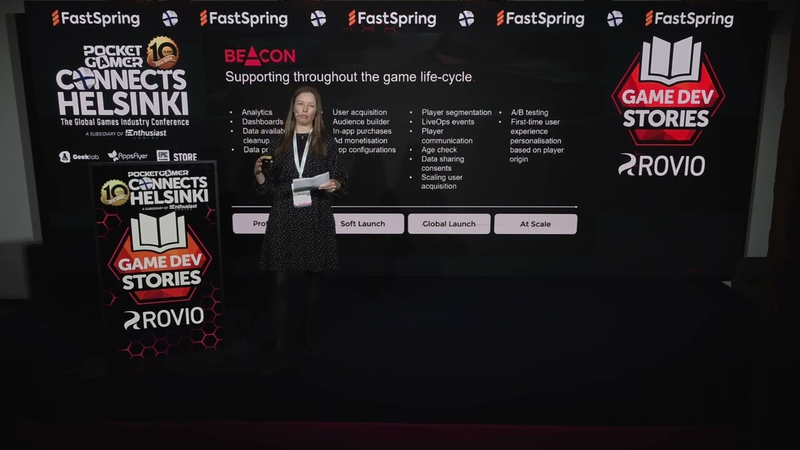
[Music] good afternoon we're going to get started thank you very much for joining me during this session my name is cyro i work for rovio in finland in helsinki and today we're going to talk about making games this is what we're going to talk about we're going to look back at what rovio's done in the last two years to modernize the production process how we look at game and how we move forward with the production process i'm going to start talking about myself which is nice but it is relevant to about the to this talk as you can see i have been working in the mechanical industry for 10 years before i joined the game industry 11 years ago and this
is quite relevant to what we are doing today at rovio there's a lot of dna that i took over from the mechanical industry to today to the game industry let's think about it i've got two points here the first point is about the type of product i used to do aircraft gas product food packaging we can imagine that the level of quality of this product is quite high and i'm not only talking about the amount of bugs we can see or defect we can see in those products but also the usability of this product i'm sure we're all thinking about that now about games about the amount of bugs and usability of our games but i learned the hard way when i was a quality manager that if one of my gas product was leaking i could injured people the other point is interesting think about a factory think about a high-speed production factory i was a quality manager i was an improvement manager and i was running continuous improvement i was running improvement on with the process on the product on the
lines imaging very noisy environment with very heavy machine 50 turns press spitting out a thousand product a minute for example like the can the the beer can you can see thousand cans a minute every time i had to stop the line i had to justify the loss of production of thousand cans per minute every time i wanted to change the process i had in some case to justify the movement the the relocation of a 50 ton press there was a lot of thinking being done before all those happens there was a lot of soul-searching being very honest what are we looking for what are we trying to achieve and i had to justify it out loud to a lot of people before it will happen we can all take that to the game industry today how are we trying to define what does good look like whenever we do an improvement whenever we change the process
then i moved to finland and i moved to the game industry i worked for a company like digital chocolate then i worked for a startup doing interactive images but with the software as a service mentality and i opened a gameloft studio in helsinki for a year and i've been working at rovio for three years now about rovio just to get a little wrap up about who we are rovio was founded in 2003 by three students in 2009 we had 51 games under our belt and the 50 second was angry birds i think we all know angry birds and the success that it has had a big milestone for us and for the industry i think is 2016 when we launched the angry birds movie went number one in more than 50 countries uh making 350 million dollar revenue a big successful review a big success for the industry showing that we are providing entertainment
very recently in 2017 uh rovio went through ipo and the next milestone that we can see in the future for sure is that in 2019 we are going to have a movie sequel hopefully before that we will create all the milestones for the company and for the game industry rovio is around 400 people 300 working on games and 100 on all the activities the angry birds brand was downloading more than 4 billion times which is we are very very proud of that the way we are organized in the game business unit is we are divided in four studios in two locations one will be helsinki finland the other one will be stockholm in sweden we are divided by specialty by genre so a studio will focus on the slingshot mechanism that we can see in angry birds and with the angry birds brand mixing the two and trying to
to make a making game for for this genre another one battle we call battle is located in helsinki finland is focusing on team vs team real time team vs team battles the next video is a puzzle doing match 3 tap to clear bubble popper based in helsinki and the last one the rpg studio is based in stockholm so as you can see we are divided by specialty and by genre it doesn't mean that there's no crossover between the studios but this is how we are divided so let's talk about making games and i'm starting in 2015. one reason is because i started at review in 2016 and 15. but the real reason i'm starting my presentation on that date is this is the first time at rovio we started to ask us questions like how can we have a process that help us
to make great game how can we have a process that helps us to make great great game consistently and for me that was the beginning of us thinking of having a better process having a process that would be very modern that will allow us to do great games if you think about it process great game in the same sentence process is usually dull it's logistical it's operation it's not super creative it's a bit boring great game we're all here to make great games it's very creative it's visual it's fun it's cool but we have those two opposite in the same sentence but for us it was it it that was it we wanted a process that will help us to make great games consistently so let's look at how rovio was organized in 2015 well we had a process we had a production process in 2015.
i mean if we think about it in terms of headcount rovio was the biggest and he's still the biggest studio in in finland biggest headquarter studio in finland we had and we still have around 15 20 projects going on at the same time and if we want to have any sort of strategy if you want to have any sort of management about where we're going we need a process so yes in 2015 we had a process but i put the tick box here because did we check that the prototype we were doing were fun yeah we did we always do you do a game jam to get a great prototype is it fun yes should we go to production yes maybe there was a lot of mechanical things we were checking do you have a date for launch yes done now did we talk about business case did we talk about the market did we talk about target audience maybe not maybe not the way we do today did we
talk about what are the motivation of our target audience no we did not talk about that in 2015. so yes we had a process but it was a very i'd say tick box is a good example it's very tick box type of process so let's look at let's look at what kind of games were launched following this this process the one on the left is angry angrybots2 was launched in 2015. today angry bus 2 is our biggest game by far a huge success amazing kpis when it was launched in 2015 it was the foundation of this big success it was liveops compliant it was a full fetch game it had depth allow campaigns events sales etc a great game from for free to play now who knows about the other game bats we launched bats soft launch
in 2015 great game very very fun but impossible to monetize meaning premium game give us a dollar we'll give you the game so in time i mean there was nothing else than just a fun game there was no possibility to make business with this game so in terms of deliveries we could see that there was a lot of variation in the quality in the overhaul quality of the game that we were delivering using this process so we knew we had we had an issue with our process the process was not delivering a consistent great game or great game consistently so we started to work and we tried to understand is the process in place helping us to make great games a good place to start is to go to the coffee machine because you get a lot of people going in and out and we start to
ask questions and we ask the central management a few questions and and and some of the feedback we had is hey how is this game doing what does it mean if the central management asking me how a game is doing they have no visibility of what is happening they have no visibility on the build that is available they have no visibility of what the team is trying to achieve maybe yes we heard other things like what is the target audience for this game you have to understand that when we launched angry birds in 2009 it was such um a success that we took it we didn't question it the reality is the target the audience that we got in 2009 was a very young audience you can imagine a very young audience like grew with rovio but in 2015 i'm not sure we were not sure that this audience was the audience we wanted for our new games so we had to question ourselves do we want the same audience that we currently
have or do we need to shoot i mean target another audience so the question of which audience are we making this game for starting to be very important for us and yet again the central management will ask the question who are we making this game for no visibility the example of angry birds 2 and bats will this game monetize us free to play clearly we got the scar from from from this release we want to make sure that every single game we're going to reload we're going to launch from now is going to be a great free-to-play game so how are we doing that how are we doing the design what kind of visibility do i have as a central manager on that at the end of the day you understand it it was really about the central management saying you know what the the the process we have in place is not really helping me to take the right decision to drive the strategy and to build a vision for the company so the process we had in place in 2015
exists which was great but was not really helping the central management i stayed at the coffee machine and i carry on talking to people coming here and the next people coming were from the game development team and they start to tell me things very scary like uh you know what i've got this game but i'm not going to show it to you or to anyone because it's not ready and you know what's happening when you show a game that is not ready i will receive email of of you should do this you should do that long like that so i'm going to hide my work in progress we all know that this lack of transparency is not the answer but still that was how we how the game were operating in a way the other one which is horrible is like hey i've got this meeting invitation in my calendar i have no idea what it is are they going to kill my game like no discretion no visibility the fear of going to a meeting that is is imposed by the process the fear of having your own game killed that was pretty bad
and then coming to soft launch with no real idea if the game was going to perform or not really crossing finger and just say let's launch this game with just in case of you know maybe it will work maybe we will not i have no idea from real real user before soft launch about is this game answering any anybody's needs anybody's motivation and at the end of the day again the process we had in place didn't really help the development team so we had a process in place yes but it didn't really help and at the end of the day you understand that what it meant that the games team had some sort of fear about the process and that the central management didn't really respect any of the process and and try to intervene try to micromanage the team that's what he was of course i'm painting a picture for to make to make a case here it was not as bad as that but you get the feeling
so we looked and we say what do we do we saw three opportunities three opportunities that will allow us to make better games to have a process that will help us to make better games the first one is what about us focusing on the vision and the strategy for each game no exception each game that we are making should have a clear vision what we want to build and a clear strategy how we're going to build why we're going to build it when we're going to build it etc that will help us a lot that was a clear opportunity we saw the other one was improved transparency it was clear from my example that the transparency was not great and i'm not necessarily discussing about the game team showing the central management what they are doing i'm saying the central management giving a clear visibility on the strategy
on what we're trying to achieve having the process so visible that it's very transparent about how we're going to run the process in the future how are we going to run game production in the future so it's transparency all over the organization not just showing the build to the management and the third one is restore autonomy you know that the team that did angry birds too and bats they were strong autonomous team all of them the two of them but the autonomy they had was a fake economy because at the end of the day because of the lack of transparency a lot of people were telling them what to do well hey i don't know what's happening so show me something and when i see something i'll tell you what to do so it was a it was a not it was not a true autonomy that we had in place back then out of the three opportunities by far and and i mean by far we said if we focus on the last two
on the improve the transparency and restore the autonomy we have the better chance to succeed and why because the assumption and we were convinced about that that by focusing on those two points we will build trust we will build trust in the organization and again it's not about one trusting the other it's about looking at the process the central management and the development development team all trusting each other the central management and the development team trusting that the process in place is good for them can help them central management trusting the team and the team trusting that the central management will not intervene or micromanage that was the assumption back then so we worked in 2016 in flight path this is a name we gave to our production process and i'm saying process here and i'm writing guideline here we're going to see about that
but flypath is a guideline it's a it's explaining what to do but not how to do there's no secret recipe to how to make a great game so we acknowledge that it is a guideline it started in 2016 and i'm going to tell you it's still working today it's still called flypath and we're still working on it we still improve it how many of our project here started one day and was canceled three months later this one is almost two i mean more than two years old and he's still alive and kicking and i'm very very proud of that every time we improve our process it's a continuation of flight path so when you hear me saying fly path this is what i mean our production process and fly past is the so is a story of trust you have to understand that we have to understand that it's all about trust is the trust that we build and where autonomy and transparency are playing a leading role we build trust through transparency and autonomy and this is what i'm going to
try to explain during the next few slides so let's look at flight path it's no rocket science i'm sorry it disappoints you there's no secret you know amazing stuff it starts with concept like any other process and it will end up in global launch slash live operations very simple we didn't reinvent the the wheel there are a few principle i'm going to drink the first one is ownership so my title at rovio today is vp of operations i would say i'm a good candidate to be the owner of flypass vp of operation operations process process flypass i'll be a very very good candidate to be the owner of flypath but i'm not i am not the owner of flypath at rovio we have a group called the production guild the production guild is a group of people producers operation people like
user research quality delivery player support and anybody who wants to opt in anybody product lead management finance anybody who wants to have a say in how we run operations how we run production sorry in in rovio we meet every two weeks and we discuss about production and whenever flypass has to change be evolved or be modified we discuss about it and we take a decision together we're not making we're not coming with ideas that we will present to management we take decision on how we're going to run the operations how we're going to run the production and this is the production guild is the owner of flypath so we are owning the way we operate and there's no vp telling anybody how to operate the second one is flexibility as a guideline is very important it is a guideline is about what to focus on not how to make great
games there is a little bit of the idea of the battlefield soldiers are very very well trained they know all their gears they know all the procedure but when they're in the battlefield there's no book that describes how to win a battle it's the same for us we need to be highly skilled individuals and teams professionals but when it's about making games there's no process there's no flypass who will tell us how to make great games so we have to be flexible one of the reason is not everybody has got the same maturity so a young team or a young product lead will need maybe a little bit more guidance than somebody more mature the other one is if we're too flexible the process of today will be the process of tomorrow but if we are flexible then maybe a more mature team will decide not to follow flight path which is absolutely okay if we are transparent about it if we are open about it if we are discussing about it because today's experiment might becomes
tomorrow's firepass we might drive improvement through not following the process and this is a very interesting one but if we have a tick box process then everybody does the same everybody gets frustrated and we're not running improvement trust the third one is trust i said it and i'm going to repeat it here because it is important it's about trust between the process the central management and the and the teams we all acknowledge that flypath exists and we are going to go through flight path once we when we do production central management acknowledge this flight path there's no need to do micro management because i should get the visibility the team acknowledged this flight path i know what is this meeting coming in two weeks i know what i'm supposed to discuss with the rest of the team
now is it perfect well it's it's not bad is there a tension here is the team always wanting more autonomy and the central management always wanted to micromanage yes it exists but we acknowledge this tension and it's fine so we have trust also that this tension is healthy for us team asking for more autonomy and macro and and social management trying to you know put their nose into the project but that's fine so we acknowledge that we've done with the principle we can look at the different phases we'll go one by one in the next few slides fly plus is the five phase and then we have a quarterly studio level review it means every three months we know that the studio head remember i mentioned we have four studios so the studio has on the product lead will will meet the central management and we will we will be discussing about the games
we are going to discuss about the product the game we are making flypasta got three green lights no more we had more it changed we have a production green light a soft launch green light and a global launch screen lights that's it so fly path the way we handle production at rovio is five phases one quarterly review and five gates the first one the first one of the phase is a mix of three things concepting market research and prototype it all starts with acknowledging the fact that a fun prototype is not enough to justify 12 18 or 24 months of production we we need more than that we need more than a fun prototype so concept is all about building a vision a team building together a vision and a
product lead holding the vision forward taking the vision forward but we need time to build this vision research we can't launch a game without understanding the competition without understanding what is going to happen in 18 months or 24 months when we launch without understanding the users the target audience that we are we are making the game for and of course we have a prototype so yes we build a prototype and we have a lot of fun with it absolutely but it's all together when we do research we have one say in our head it's like it's never too early to test it's never too early to have feedback from real users so as soon as we can put some something it could be a sentence it could be a graphic it can be a mock-up it can be a prototype as soon as we can do that we can put that in front of a real user to get feedback we do it it's a lot of effort but we try to do it as soon as possible
so we build this vision this is a concept phase once we have this vision build once once we know where we're going once the team has built the vision together and the product line owned this vision we are moving to pre-production and pre-production is not about building the vision because it's already done pre-production is about to figure out if if we can't deliver this great vision can we build it yes we can so it's all of course we're going to stay agile here we're not i'm not saying we're going to freeze the vision and never change it for 24 months of course not of course we're going to iterate it as you know all the signals coming from outside but at this point it's not about building the future vision anymore it's about figuring out do we have the right tools do we have the right process do we have the right people knowledge skills etc time money all this do we
have all these so we can deliver that game so we are going to look at the what we know maybe we don't need to test that what we don't know what we have been in what is very innovative usually this is what we are going to to test either to build or or test in a prototype i mean in in a final build um and and we look at the most risky aspect of our vision of our game we are trying to build and we try to leverage this risk during pre-production remember my my passing factories before setting up a line that will spit out 1000 cans per minute trust me we were aligning all the machines we were running very slowly we were making sure we had all the machine we need and all the operator we need and all the raw material we need it's it's the same different words but it's the same spirit we run slowly we evaluate what it takes to be able to run fast we adjust and then we go to production
during all this time we meet every three months we call it the quarterly review quite early studio level review so it's one per studio four studios and again it's not all about everybody accepting that yes we will meet every three months and we will talk about the the games so there's no surprise so when we come to this meeting we know what the template of this of discussion we're going to have and it's very open meeting i'm not saying that the visibility the transparency is only built in this meeting there is a lot of discussion there's a lot of work in progress available so we can play the game but here is kind of the formal way when we all sit down and finance is also here because we're going to talk about money about head count etc marketing is here to figure out how we're going to launch the game et cetera et cetera so a lot of different functions are in this meeting but it's a great way of giving transparency within the
organization then comes the production green light and it's all about well we need to figure out what the plan so there was a lot of things happening a lot of transparency we've we've built the vision and we saw during preparation that yes we can build the vision but let's sit all together one more time before we go and invest 12 or 18 months of of the company's time and and we discussed very early about launch plans so we talk about marketing already at this point i took an example here on this slide about angry birds match it's an interesting one the first in 2016 the first production green light that we ran internally was for green lighting angry birds match are we going to production or not and we discussed about everything we discussed about scrum we discussed about timeline about headcount about
about tools and servers and how we're going to use aws et cetera it went well it went fine i was happy it was the first time we had it it was a bit of a test and yeah yes we have green light we agreed together that um that that that we're going to do it and then the break link product leads comes to me at the end and says what happened there what do you mean well you know what this angry birds match is my fourth match three game i'm doing with that team i've done three games they were all super successful each one more successful than the previous one do you know what is my biggest asset to make a great success out of angry birds match i said well i don't know you tell me well my team we've been working together same team four times this is our fourth title if i'm going to succeed in this in this project is because of my team and at no point we reviewed the team and i say well that's a very good point so what do we do we are both part of the production guild
we are responsible to make fly pass evolve and we change flight paths today and even though it's not perfect yet but today we are evaluating the team whenever we are evaluating production that's very important another point that is interesting is that when the product leads come to this green light meeting it doesn't come in front of the central management to ask permission to move into production it's you've seen my build you've seen my strategy we met every three months we went through pre-production you got the result i've got a plan you know my plan and starting tomorrow i'm going to start production i'm not asking you if i can but by the way we have one hour so if you have any tricky question maybe it's the time because tomorrow i'm moving into production so again it's not it's not about asking we already know that we're good and that gives a lot of responsibility to the product lead to basically stop a game kill a game before this meeting we're not probably not coming to this meeting to hear anybody killing their game so we need to be true
to ourselves and understanding what is the strategy what we are trying to achieve and and if we are all on the same page whenever we come to this meeting production we all know about production last 12 18 sometimes three years oh sorry 12 months 18 months sometimes three years it's all about being agile i said it we don't want to be waterfall we we have to adapt to the market to all the external signals we will do a lot of user testing during this phase it means that we will receive a lot of feedback from real users we have to adapt but if we have to make 180 degree turn then maybe we should pause and think again but it's all about being agile not being wonderful as i said we do a lot of user testing this is something we're putting a lot of effort at rovio during the last 12 months to really understand what are the tools what tools are available for us to test some aspect of the game or whenever we have a question about the design depending on the question how can we get
real user giving us hints about yes your vision seems to be answering my needs or no i'm going to put a bit of friction are you sure this is what you want to deliver to target audience likes like me it's about the whole game what does what do i mean by the whole game we all understand the call loop and the meta and we are all on the visual we this is given but we have legal compliances in u.s we have copper in europe we have gdpr there are other compliances legal compliances this is all defined before we move into production this is all put into the into the backlog before we move into production and we need to make sure that during production we build all this we integrate all this we can't come two days before soft launch and say oh what what is gdpr oh what is child protection copper yeah it can't be like this so we need to give a lot of visibility then we have external compliance we all
have partners apple google amazon you name it so what do they want they forbid us to do this and they want us to do that they would like us to do that to be featured for example so we call it external compliance coming from our partner we are making sure that all the backlogs of our gaming production have all those tasks already listed so whenever we estimate a delivery time or we estimate the size of a game we are accurate as accurate as we can be and then we have internal compliance so that would be roveo compliance so you can imagine that at rovio with a portfolio of 15 20 games that we have live we always want to do cross promotion and one game will promote the other game whenever whenever it's needed and i took the example of angry birds too i said a lot of good things about angry birds too today i'm going to stop now i'm going to say something bad about angry birds too they launched in july 2015 and i joined a few months before that my first project at rovio was to make sure that
all our catalog and when i mean all all our catalog will have super duper cross promotion feature that will cross promote angry bus 2 from every single one of our catalog i spend a lot of time with designers product list to convince them to prioritize their backlog to implement cross-promotion feature to support the launch as a matter of fact angry bus 2 was number one in the chart before featuring started because of cross promotion the cross promotion was so efficient that it boosted the angry bus 2 to the top of the chart just with cross promotion no featuring then featuring here couple let we let a couple of months you know when angry bus 2 is fixing all the bugs and adding what they couldn't do before global launch and then we say went to stockholm and say all right now you're going to pay back turn on your cross-promotion back and feed back some users to our portfolio and the product like looking at me and say cross promo what they didn't have a clue about what was cross promotion so of course they built the best game
ever it's a great game but in terms of internal compliance they were not helping the whole portfolio it was a very singled out project since then they implemented cross-promotion and they're contributing a lot to the cross-promotion of all the game but it was so surprising that after all the effort that we've done that they couldn't even pay back if i can use this word then we go to soft launch green light and the question we're asking ourselves if what does could look like you remember when i was when i said the example of the factory i had to justify a lot before moving a machine and this is a little bit the spirit so we asked the team to define what kind of kpi will be good kpi what would be a success story so we asked them that once they answer we ask them to put it on the powerpoint we ask them to print the powerpoint without stopping here we ask them to frame the powerpoint that was printed
and to put it in the kitchen of the studio so everybody will see what this team is trying to achieve and this is simple this is silly but it is so powerful it is so powerful to let the team think about what they want to achieve and to commit to it and of course you know things will change or things will not change there's always been discussion around those kpi but putting them in front of the whole company in the company kitchen is very very powerful because you really have to think about what you try to achieve by the way we asked the same question very early in the process but now we understand that the market has changed so we are trying to readjust that so across the whole production phases we have an idea we have a clear idea about what we're trying to achieve and this is the soft launch green light again it's not about asking can i move to soft launch it's more about i'm moving to soft launch and this is my plan and this is what i try to achieve
then we go to soft launch it's a kpi driven phase we're going to do paid user acquisition at rovio we do pages acquisition and we also do pages acquisition at scale to make sure that all the cpi cost per install and the lifetime value ltv are the same at low at low high low scale and high scale and we have two things in mind very hard very hard to keep that in mind but they're here the first one is that soft launch will not save our game there was a lot of talk in ggc this year about improving retention and we all acknowledge the fact that beyond the obvious first time user experience tweak d1 d3 improvement it is very hard to improve retention one of the talk i
think yesterday said that game performance or retention is a factor of the genre the art style and the game design none of those three is is is easy to change so what it means that if long time retention is bad at soft launch then it's bad forever it's extremely hard to change it and we have to remind ourselves is long-term retention is not good we should stop we can't save it there are exceptions but in theory we can't save it so we have to remind ourselves what it means it means that if we have a long soft launch it means it's a good game it means that we have a long-term retention that is good and we are tweaking the economy to make better upda and average revenue per paying users etc but we have to remember ourselves all the time that if it's not good in terms of long-term retention we better stop it and that's a soft launch so we do pay user acquisition we do paid user acquisition at scale and and we're looking at retention very closely battle
bay here spent 14 months in soft launch the longest for ravio quite long soft launch but it worth it very good game for us new genre five versus five real-time battle and a very good kpis we're very happy about it and we don't regret a single moment to have spent 14 months in soft launch so we spend the diamonds of launch we have kpi and again we are going to launch it so it's going to be the whole company behind one game marketing operation localization delivery you name it everybody is behind the game so again we are stopping we're looking at the result of ltv and and cpi at scale can we can we boost download through pages acquisition do we have a launch plan what is it who's doing what and when and then we talk about live operations the reality is live operation
we talk about it very often during the design phase we talk a lot about it before production green light during production but here we're very honest with ourselves that we need live operation not only in soft launch because in soft launch we also do a live operation but we also need it right after launch so it feels fresh straight off the bat i took the example of angry birds blast that was supposed to launch just very early 2017 and early december 2016 so a few weeks before the global launch we met with our partner and one of our partners suggested that launching on december 22nd 2016 would be a good idea oh wow three weeks before like during christmas holiday so what we did we looked at our backlog luckily we had the full game uh specked out on the backlog prioritize and we said to global launch we need all
this we don't need all that and we said can we make it by december 22nd yes if we cancel a holiday so we cancel a holiday and we launch it was a great launch but it was a good example of being well organized with a proper backlog including all the compliances and understanding what our partner will want what we will want what the legal will want being being able to launch three months ah three weeks ahead sorry it was was feasible it was a great launch for us uh but it was a very uh interesting christmas in 2016. live operations is all about improving our game every week there's no magic bullet but if we manage to improve our game every week a little bit this is live operation it's about being the best at getting better and we're very lucky at rovio we have the chance to work with amazing brand like nfl and and iron maiden i don't know if you
saw those campaigns was very very lucky not only we are we do live operations with campaigns and events and and sales uh but we can do that with amazing brands it means that of course it was even more pressure on us to execute very very well but all in all i have to admit that our ability to work with those brands is a great chance that we do have atrovio that's flypath that's it we've seen the phases we've seen the green lights we've seen the principle maybe there is one principle that is missing it's a live process in the last two years we had four major updates of fly paths that were dictated by our maturity our culture but the reality that because flypast is evolving according to our culture and our maturity everybody's i mean all the three points are feeding each other we remove green lights we added green lights with merge phases we did a lot of things but by no means it's a
set process and it's going if i'm if we meet again in a year it's not going to be the same flypass that we're having it's going to evolve there is definitely a link between our maturity our culture and fly past itself so what the outcome 26 2015 was very clear about what kind of process we had and what kind of game we were delivering was the outcome well with with flypass everywhere everyone knows what to expect at every step of the production process this is a transparency that we are giving across central management the team and the process no surprises we all know what to expect the outcome is that we launched few fewer games you have seen less game launched by rovio recently because we are more demanding but there are better games angry birds evolution angry birds match great game for us great launch last year and more especially more importantly all those games are fitting the strategy there is a great
visibility at the rovio level about what is our strategy what we're trying to achieve and what kind of game do we need to achieve that and every game that we're launching are fitting the strategy there's no more rogue project that is happening just because they all have a review process through flypass and we make sure that every one of our delivery fit the strategy autonomy and transparency created trust rovio is a very nice company to work in at the moment there's a lot of trust happening in the company there is autonomy we build it ourselves and there is transparency it's hard but it's happening and we build it ourselves we trust the process also we have a process that has a name we trust it exists we acknowledge it exists and we trust it and the reality is that it enhanced the company culture quite a lot
i'm not saying it was a bad company in 2015 but i'm saying that today it's a very very nice company the company culture is really really good so what are the next step and we're coming to the end of the presentation here the next step are about ambitious continuous improvement i used to be improvement manager i like the ambitious because we want to be leading the industry we want to set the world on fire again so what are we doing what are we looking at at the moment we're looking at need based game design how do we define our target audience how do we understand our target audience what are their motivation what are the needs what are the frustration how do we build a relationship between the target audience and the design this is something we're working very very hard so very early in the process of making game we understand who we are making the game for and what make them tick and how we we can create design for those people
live operations 2.0 you've heard a lot about liveops liveops it was in a lot of talks in ggc it's it's the buzzword it's very important it's very important for us too very very important there's a lot of liveops in the presentation i've just done but we know we need to get better when i said if you remember that we're doing live operation in soft launch we are just starting to do a live operation in soft launch because we realize it is very important to understand the ltv of our games while doing live operation it means that we need to work harder faster better in having a real proper game before we soft launch to be able to learn about this and this is what i mean by live operations 2.0 being even better doing live operations and the third one is fast cycle time faster learning how do we accelerate the pace how can we learn faster from users it means how do we make release faster one of the point that we have in mind is about how do we shift the quality
ownership from a quality team to a development team what kind of cultural change change does it require to have the development team being the owner of the quality and the and with that we'll be able to go faster have faster cycle time faster release and learn from faster from the from the users coming to my last slide here what's coming next is we have a process we are happy about that ha that is evolving with the production guild on its own so now we need to look at the pro product we need to look at the product very closely one of the reason is if we don't have a process or if a process is broken we might lose time we might lose money but those are small time and small money if we don't have good product we're talking about the life of the company we need good products so it means that the process is here to help us to make great game consistently it means
we need to make great game it's not about focusing on the process it's about focusing on the product and that's when flypath the culture and the maturity are coming to one the maturity is recorded in fly paths our culture is dictated by flypast and they're all one and now we're looking at the product this is it for the presentation thank you very much for listening so i'm very happy to take any question if there's any uh hi um i'm a producer on some mobile games right now and i was just curious about how you guys go about sun setting a product and making that decision because you just use you're saying in the green light that's not for that but along the way do you have some kind of formal process set up in flight path for if you do need to sunset something early okay so is the question about killing a
game like during production or is it about sunsetting a game while it's been live for many years killing killing okay so killing is a good game is a good because it's hot it's painful yeah and and for the team it's always painful to to stop your baby stop developing your baby so we don't have we don't have a former uh process i mean we have the the standard aftermath and we pop up the champagne and we put the wall of fame photos and and everything um but but it's there are many things that we do and we don't do so we we do the basics uh what what we don't do is about uh considering the team so there are two there are there are two points and i mentioned about the value of the team how do we see that there's one point about we take the same team and we try again it has a value because we all learn together or the other one is acknowledging that the team didn't work and it's very hard because they're colleagues and friends but acknowledging something didn't work and then change the team and then you come to very personal decision and that we know we have to be better at
uh so that's that is something that is coming but otherwise i would say the usual suspect of the you know champagne and parties and and aftermath and these kind of things post-mortem yes thank you thank you uh i have a question um sorry sorry of course um i'd like you to go uh talk a little bit more about the decision to um uh cancel holiday and and make the staff work uh leading up to christmas because that's gonna have a massive impact on company culture okay uh so i'd like you to talk a little more about that okay that's a that's that's a finger in in in my in in my rip so i lied we didn't cancel the holiday no so what what we did though what we did though because the launch was 22nd of december technically we looked for volunteer that from 22nd of december to the 7th of january whenever we were
coming back to the office we will have the bi we will have the server operations cloud operation etc available so we look for volunteers so we didn't force anybody and then we just worked very hard for the few weeks that was remaining so when i say we can't sell a holiday maybe that we cancel our holiday spirit about you know kind of ramping down toward the end of the year when there's nothing much to do because the app store are going to close anyway this kind of thing so i like doing it a bit just for the presentation no that's right but but yes we we did work hard for it and then we look for volunteer but we never cancel any any holiday in that session great thank you thank you hi there great talk thank you thank you um do you have a lot of old titles right do you apply flight pass process to it's maintenance those because it's it's uh tough it's a good question it's very very good question a lot of observation here so if you notice that flypast stop at
live operation and we've been asking ourselves what about flypast after that what about flypass for game that go beyond live operations so maybe go to autopilot autopilot meaning it's on the store it's there to be downloaded and play but nobody is really maintaining it sunset you're there but you can't really pay any iep etc we've been asking ourselves this question the priority for us is really to focus on the game that we are making the new game we're going to launch because we are convinced that the game that we're going to launch are going to be the next hit of tomorrow we're not going to uh uh we can maintain a lot of the game that is our in live operation we can grow them but we know the next big hit that is going to be hundreds and hundreds of millions is going to come from a game that is in concept today so we're not uh applying flypass too much just because it's a it's a low priority for us at the moment at the moment so anything that is coming live that is being developed is quite uh is going through flight path thank you okay um uh you talked
it was a very good talk uh from the from the concept on i was just curious about the process for generating ideas and filtering ideas that we'll get to get to preparation a lot of good questions a lot of good because it's really like all the plugs all the holes that i in my presentation are covered by questions so this is also something that we are searching we are searching our soul here what is the what is the the the good answer so one studio has a 20 rule so every in the sprint which is uh which is uh 10 days they will dedicate one one day to do something something can be framed or something can be totally open so they've tried different things all the teams are thinking that you should be able to do your work with 80 of your time then you have 20 of your time to uh is a bit the same principle then we have very well organized game jam at the moment a little bit at the studio level not at um not at the ravio level
but for example when the ar kit came we made a game jam about the ar kit whenever we were um thinking about would there be a next slingshot game would there be one so what could it be let's do a slingshot game jam so we have that but overall we don't have a very strong organized way of addition and and of of game jamming it's it's really adork at the moment but we're looking at it to see how we can be a bit more systematic because we are convinced that feeding the beast we say the more idea we have the better chance we have to have good ideas and a good business case cool thanks no more question well thank you very much everybody for coming to this session thank you you
Auto-generated captions from YouTube — names and numbers may be misheard.
Key insights
Distilling the key insights…
Ask AI about this video
Cite this video
Citation
Generating citation…














Comments