Monetization reports and market data
Documents
Speed Panel: Monetisation With In-app Bidding
This panel discussion from the September 2020 Pocket Gamer Connects Helsinki Digital event explores the transition from traditional waterfall-based ad mediation to hybrid in-app bidding models.
- Adopting a hybrid in-app bidding model typically yields a 5% to 25% increase in revenue by improving fill rates and reducing latency.
- Transitioning from traditional waterfall-based mediation to hybrid bidding significantly reduces the operational burden of managing thousands of manual line items.
- Modern mediation platforms now facilitate easier A/B testing, enabling developers to make data-driven decisions regarding network performance and waterfall optimization.
Unlock More than 1 Billion Potential New Users
The Unity Distribution Portal (UDP) serves as a centralized hub designed to simplify the distribution of Android games across multiple third-party app stores.
- The Unity Distribution Portal (UDP) enables developers to reach over one billion potential new users by streamlining distribution across multiple third-party Android app stores.
- The platform eliminates the need for multiple SDKs and individual builds by automatically repacking a single game build with store-specific requirements, such as in-app purchase (IAP) integrations.
- Developers can manage their entire distribution workflow through a centralized hub that supports metadata importation from the Google Play Store and provides unified performance reporting.
Panel: New Ad Formats - The Next Generation
The modern gaming industry is undergoing a fundamental shift toward non-intrusive, context-aware monetization strategies that prioritize player retention alongside revenue generation.
- The gaming industry is shifting from disruptive interstitial ads to non-intrusive, context-aware formats like rewarded videos, audio ads, and dynamic in-game product placements to prioritize player retention.
- The deprecation of traditional tracking identifiers like IDFA has forced a transition toward privacy-compliant, contextual advertising models that do not rely on deep individual behavioral tracking.
- Developers are utilizing cross-platform SDKs for Unity and Unreal to maintain consistent monetization strategies across mobile, PC, and web environments.
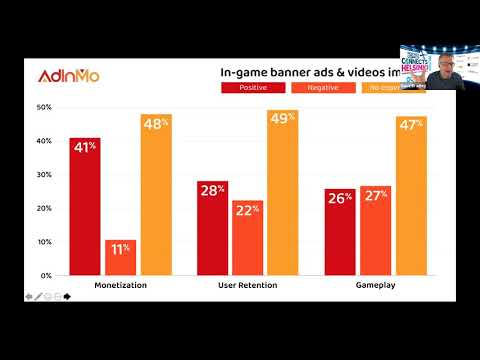
Fireside Chat: What do Game Developers Really Think About Monetisation?
The modern game development landscape is undergoing a significant shift toward monetization strategies that prioritize player retention and immersion over traditional, disruptive advertising.
- Approximately 75% of game developers now prioritize non-intrusive monetization strategies, such as ambient in-game placements, over disruptive advertising models.
- Gamers are three times more likely to prefer native, integrated advertising formats compared to conventional, disruptive ad breaks.
- Developers are increasingly demanding greater control and transparency over displayed ad content to protect brand integrity and prevent the promotion of direct competitors.
Monetise, not Bastardise
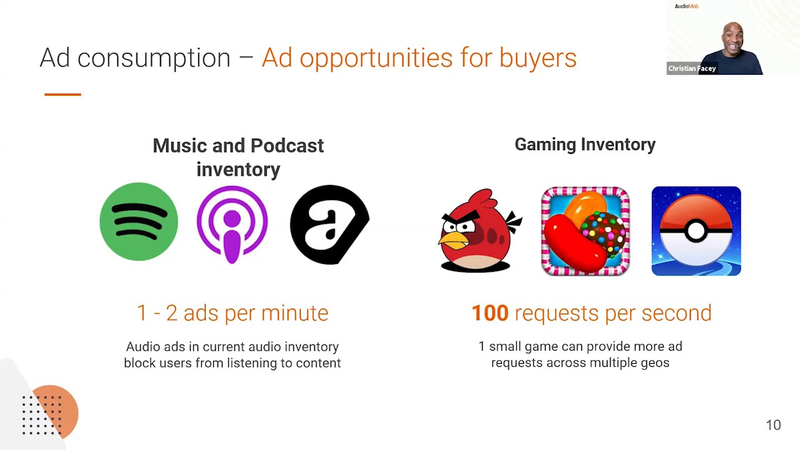
The primary objective of this presentation is to introduce audio advertising as a non-intrusive, high-value monetization alternative for mobile game developers.
- Audio advertising provides a high-value monetization alternative with CPMs ranging from $2 to $30, significantly outperforming traditional banner ads.
- The audio advertising sector is experiencing 23% annual growth, supported by an $18 billion total addressable market and $3 billion in traded demand.
- Consumer sentiment data from YouGov shows that 86% of UK mobile gamers dislike video ads, while 28% express a specific preference for audio-based formats.
Superstar Session: How to Maximise the Game Economy With Ad Monetisation
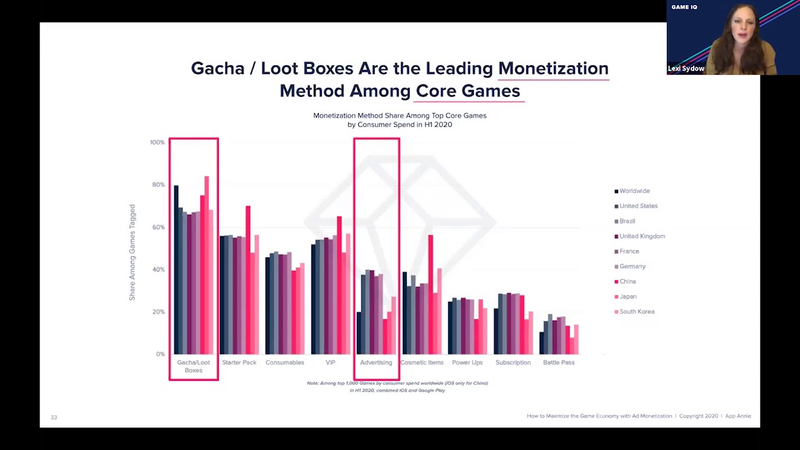
The mobile gaming industry experienced significant growth during the first half of 2020, largely accelerated by the COVID-19 pandemic.
- Mobile gaming is the industry's dominant sector, projected to exceed $100 billion in consumer spend in 2020 and generating 1.5 times the revenue of PC, Mac, and console platforms combined.
- The mobile advertising market is projected to reach $240 billion in 2020, with 93% of the top 500 games on Google Play now utilizing in-app advertising.
- Rewarded video ads are highly effective, with nearly 23% of all mobile gamers and 40% of hardcore gamers expressing a preference for this monetization format.
Game Changer: Empowering Others in the Games Industry
The games industry faces a critical need to address systemic issues regarding diversity, inclusion, and representation.
- The games industry workforce lacks demographic diversity, with 2019 data showing that approximately 70 percent of game developers identify as Caucasian.
- Women remain significantly underrepresented in both the general workforce and senior leadership roles within the gaming sector.
- Homogeneity in hiring practices contributes to a lack of diverse perspectives in game design and corporate culture, which risks perpetuating systemic biases.
The Game Developer's Guide to iOS 14: Expectations & Preparations
The introduction of Apple’s App Tracking Transparency (ATT) framework represents a significant shift in mobile privacy, moving permission management from the device level to the individual app level.
- Apple’s App Tracking Transparency (ATT) framework mandates that developers obtain explicit user consent to access the Identifier for Advertisers (IDFA), which is critical for user acquisition, retargeting, and ad monetization.
- Approximately 30% to 40% of users in major markets like the United States already have 'Limit Ad Tracking' enabled, meaning they will not receive the ATT prompt and will effectively opt out of IDFA tracking by default.
- Because the ATT prompt can only be displayed once per app, developers must strategically determine the optimal timing and placement to maximize consent rates while minimizing user churn.

Microsoft Buys Zenimax, EPIC V Apple, Subscription, & Tencent | Roundtable News | Episode 236
The gaming industry is currently defined by a fundamental strategic divergence between Microsoft and Sony regarding content distribution and monetization.
- Microsoft is aggressively pursuing a subscription-first strategy by acquiring ZeniMax to populate its Game Pass service, directly challenging Sony’s traditional model of premium, high-budget exclusive titles.
- Sony maintains that releasing blockbuster titles on subscription services on day one is financially unsustainable, highlighting a fundamental strategic divergence in industry monetization models.
- The gaming industry faces significant operational instability as rising development costs and pandemic-induced remote work challenges create a high risk of near-term studio closures and layoffs.
Gaming for Good: Philanthropy as a Business Strategy
Integrating philanthropy into core business operations transforms corporate social responsibility from an ad-hoc activity into a strategic driver of brand loyalty and community engagement.
- Integrating philanthropy directly into live-ops game mechanics can engage nearly one-third of a game’s monthly active user base.
- Strategic corporate social responsibility shifts philanthropy from ad-hoc donations to a driver of brand loyalty and community engagement by aligning corporate values with player interests.
- Successful philanthropic activations utilize multi-channel strategies, including streaming events, digital bundles, and community-focused merchandise, to maximize participation.

Lessons from Duolingo: How to Turn Good Intentions Into Good Numbers
The primary objective of this analysis is to demonstrate how game developers and technology companies can reconcile ethical values and educational missions with the pursuit of profitability and data-driven growth.
- Duolingo scaled from zero to over $100 million in annual revenue within 3.5 years while simultaneously increasing day-one retention fivefold.
- The company maintains a high-volume experimentation culture, having conducted over 3,000 A/B tests to drive growth and product development.
- Organizations can protect core values during rapid growth by implementing 'guardrail metrics' that prevent teams from optimizing isolated KPIs at the expense of overall user experience or company health.

Content and Events Planning for Live Ops Panel | Zynga, Murka, Storm8, Funzio
Live operations strategy centers on the integration of long-term content roadmaps with tactical, data-driven event cycles designed to stabilize game economies and maximize player engagement.
- Live operations success requires separating development teams, who build scalable foundational systems, from dedicated operations teams that manage the daily cadence of content releases.
- Teams must utilize quantitative tools like Sankey charts to optimize user interface flows and balance content consumption rates against currency inflation or resource bottlenecks.
- To prevent revenue cannibalization, developers must define feature-specific KPIs for every event to ensure they drive incremental growth rather than simply shifting existing player spending.