1 free read left. Create a free account for unlimited reading + AI research.
Create free account
Superstar Session: How to Maximise the Game Economy With Ad Monetisation
Key insights
6 takeaways- 01Publishers must integrate first-party performance data with third-party market intelligence, such as App Annie’s Game IQ, to normalize metrics across user acquisition, mediation, and in-app purchase platforms.
- 02Consumer behavior shifts observed in the first half of 2020 showed weekday gameplay patterns aligning with weekend activity, resulting in higher total time spent and increased consumer expenditure.
- 03Future competitiveness in the global mobile market, specifically in regions like the U.S., Brazil, Japan, and South Korea, requires developers to move toward cross-platform engagement and collapse traditional media silos.
- 04Monetization models should be dynamic rather than static, transitioning between ad-heavy, hybrid, or subscription systems based on specific user maturity levels and geographic performance trends.
- 05Strategic ad integration—when managed for frequency and timing—does not degrade retention and can function as a tool for delayed gratification by offering rewards for future gameplay sessions.
- 06The 'ultra-casual' game segment is a primary growth driver, fueled by younger demographics who prioritize short-term satisfaction and high levels of control.
Ask AI about this video
Transcript
we do in a moment have a talk coming up from apani the track sponsors on how to maximize the game economy with ad monetization from ron thomas um but i will take this opportunity just to thank our other sponsors obviously diamond sponsor agora who was just in that previous panel um platinum sponsors microsoft game stack denuvo and facebook gaming and gold sponsors at love in unity g star 10 square games twitter and singular um and all the track sponsors that you can see to my uh left your right um i think we are ready to go now with ron if he is joining us uh are you there ron
hi robert hi rick fantastic how are you today i'm doing wonderful thanks for asking how are you doing i am doing very well it's very warm in my flat so i'm gonna turn myself on mute turn my fan back on and let you uh go ahead and take over so yes uh how to maximize game economy with administration with ron thomas from track sponsor apani uh the floor is yours thank you rick and uh thank you everybody for joining excited to spend a few minutes with you today i'm uh calling in from uh normally it's sunny california this time of year but right now it's smoky california uh due to all the wildfires and smoke we have um but glad that we're all safe and i hope that with everything going on that you and all of your family are also safe so uh with that in mind let's go ahead and get started we'll try to take advantage of the time and go through a small presentation that we have and look forward to any questions that you might have for myself at the end of this session so i'll just go ahead and just share my
screen and we'll go ahead and get started here all right rick can i can you see my screen here yeah all looking good all right great thanks um hello and welcome again everybody my name is ron thomas i'm the general manager of our analytics solution um so that means that i'm responsible for one of our core solution offerings globally so very excited to spend a little bit of time with all of you here today so let's dig into kind of what we want to cover off today so a little bit about app annie um i think most folks here are probably familiar with app annie and it's a name that's been around now for quite a while we're privileged to work with over a thousand plus customers representing some of the best and brightest across the mobile app economy um throughout the globe so it's an incredible opportunity an incredible organization and we've been uh really focused on continuing to drive innovation over the past several years so historically a lot of our
association has really been around market data so really it's our third-party market data offering that's what you see over here on the top left-hand side marked intelligence and so that's really been our historical offering which really provides you as a as a game developer to really understand what's happening in the mobile marketplace and what's happening out in the app economy out there really for you to understand competitive landscape trends from a useful perspective and really try to unpack what are those unique opportunities available to you to really go and drive and maximize any and every single opportunity from a revenue perspective however earlier this quarter we've also released our app annie ascend solution so our app annie ascend solutions really the advertising solution as it relates to your own data so you can think about this as how do you best understand performance as it relates to your own specific data in both across advertising and really across in-app purchases and all the revenue components and all the cost components as well so
uh two different data sets one is really all about third party hey what's happening out there in the landscape and in the market and the other is really about first party data which is your own data in order to understand how am i performing to really ensure that i can navigate the best strategies available to go and really become a leader in whatever sector that's really applicable to me now app annie also works with companies outside of gaming um you know mainstream media entertainment and a variety of other verticals as well all designed in order for people to really understand hey what else can i do in terms of really understanding what market leaders are exercising today so with that in mind two side-by-side data sets fueled by data science um really enabling success for all of our customers throughout the globe fueled also by customer support with a variety of different services and education as well in order to make sure that
anybody who really uses the platform can truly be successful so as i mentioned some of the the world's leading brands here so excited to to partner and work with some of these incredible companies uh some of these companies like like zynga for example obviously uh you know jam city um ludia and just several other customers uh throughout the world some of the best and brightest that we really see so with that in mind uh we also want to talk about one of our newest products that we've just released so this is another third-party uh data offering component that sits inside our intelligence suite it's called game iq game iq is really a brand new innovative solution that app annie has released in the marketplace while there's many different gaming taxonomies out there this really not only provides the flexibility for you to kind of go and generate your own tags but also to understand what's happening out there really from a genre perspective and also deep down in terms of what's really driving performance whether it's usage whether it's revenue and really how can you undertake
and unpack for yourself hey what are some things that you could actually uh take into account one of the the ways that we see customers utilize products like this is really to understand best in class performance across one sector like for example what's what's actually happening in casual or hyper casual or ultra casual then how do i actually take that into a different type of sector and think about you know what does that mean in terms of game play in terms of how to go maximize monetization components as well we also have our app annie ascend product which we'll also speak about today again this is really all about uh ingesting your own first party data so we just talked about game iq which is a taxonomy designed for you to help understand the marketplace app annie ascend is really designed to help understand your own data and performance so as you think about what actually happens once you ingest data from various different sources whether it's your dsps on the user acquisition side um ssps you know in-app purchase components from
the stores uh mediation platforms urban product usage really to put all that together make sure you have one consistent schema from a normalization perspective and then quickly be able to visualize and unpack that and really understand hey what what is my performance and one of those opportunities that exist for me to go and drive and maximize performance in a strategic way and what might be some of the specific monetization mechanisms that i might need to shift for example should i spend more in in-app purchases should i go drive in-app purchases in terms of driving or consumers to spend more there versus ads and then on the ad side hey what is the right mix that really makes sense uh for me and for the different maturity levels that are applicable in my game so as we've kind of gone through this i think uh with launch game iq there's some critical findings i i think that we're we're really seeing in the ecosystem today across our different customers so some of them is obviously with all the current situations that are happening at a global level
the time spent is is really just dramatically changing uh one of our customers talks a little bit about how um their game plays actually have to change because in a lot of ways users are behaving more and more um on a wednesday more like a saturday right so um basically weekend gameplay has moved over and crossed over to weekday gameplay and it's really resulted in a massive increase in terms of not only spend but also time spent um and also total consumer spend as well um on all sparking really on a download basis in terms of hyper casual in the first half of 2020. so really massive opportunities exist in this category and we're also seeing consumers spend both time and dollars in a variety of different locations as well we also see significant consumer spending for example like um action rpg games from apac um as well so let's understand a little more about gamer preferences and how do we really
unpack that in order to understand hey what's actually happening so this is an example of why the taxonomy is so different and then how that actually drives strategies from a monetization also gameplay perspective so you know if you're in a casino game right we look at things and we can really see that hey where are people allocating time and energy um you know and i think we can definitely say hey leaderboards friend invites tournaments um are all games from a casino perspective right so for example i'm i i'm a big fan of playing poker online so it's one of the things that you can kind of play on and you can jump into a tournament you know obviously you sign up for that there's leaderboards you look to see how you're doing and you also take advantage of spark events that actually might be available too and you also invite your friends so these are all the different kinds of activities that are there other than if i'm playing clash royale right and it's a very different type of game play there right so i'm going to spend a lot more time looking at gems looking at trying to understand hey you know what exactly is the right
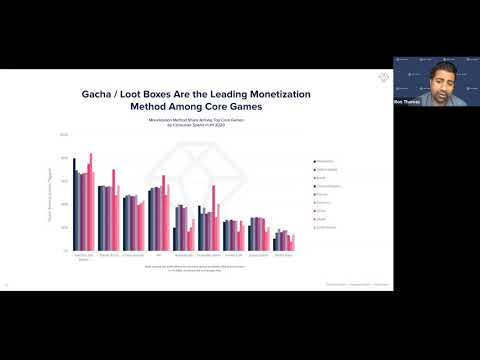
strategy that that's actually applicable and that's also why we start to see um you know really brilliant companies start to employ other components like youtube like royal tv to understand hey what is the best way to go and deal with a situation if you're facing an attack by someone who's got giants um and uh you know barbarians you know what is the best way to actually go and actually stop that onslaught with a counter right so understanding what that looks like and then saying you know those are two different you know gameplay components how do you go and drive that and one of the specific features that are really going to go and drive engagement over time are really critical as well as you look across the different genres loot box is also a leading monetization method going back to a variety of different games as well i think one of the things that we see is the idea of an unknown loot box right or starter pack uh to all really kind of help you boost up in terms of what are some different things that are available out there whether it's gems whether it's new characters uh
whatever it might look like you can also see the breakdown across both worldwide and then through the different key mission critical mobile markets whether it's brazil uh south korea japan uh united states of the united kingdom all broken out there as well so lots of opportunities in terms of thinking about hey do i want to start with you know power up uh or is subscription more applicable or hey you know do i really want to think about a starter pack to really kind of get started so really understanding from a core perspective you know how are consumers spending in the first half of 2020 and what does it also mean i i think a big piece of the puzzle too that we're really seeing is if you're a new gamer the kind of experience that you need to understand is very different than if you're an experienced gamer who's downloaded multiple different types of games uh then understanding the user journey and where that fits right now is a critical portion of how you think about success so um you know i and i think that's
something that we definitely see as well is when we talk to a publisher saying hey i'm gonna relatively small getting started how do i get there i think it's really important to understand who your target is too in terms of understanding if you're going to you know look at someone who is a serious game player and who's very familiar with this specific category versus someone who uh quite frankly is a noob and just trying to figure out exactly where everything goes part of that once you understand the actual way that consumers are trending and the behaviors that are actually applicable it also now provides an opportunity to think about geography and think about consumer spend based on the specific geos that you're in and then target that in correlation to go drive monetization so whether it's uh you know downloads um specifically that you're kind of able to see uh whether it's time spent and also in terms of revenue as well so what does that mean in the different geos and how does that translate to the specific monetization mechanisms that are most applicable right so we can obviously see for example hey look if you're targeting a specific game
that's great in a specific country there's a really good question to say hey should you look at in-app purchase versus subscription versus ads and how should that strategy look like based on where you are so if you're earlier maybe you do need to actually look at ads um but you know maybe that's only after a specific time spent in the game because that's really the breaking point and then after that instead of driving to subscription you probably should look at a starter pack or a loot box or or some gems or whatever might make sense in terms of going to drive some small in-app purchases and then eventually um and when the when the money makes sense and the consumer spending and really the time spent is applicable that you can quickly move to to actually look at subscription of course all these really vary significantly by games as well so um that's also there as you think about genre and that's why the criticality of being able to have your own tags and really being able to understand that is just really important so now we've talked a lot about you know some of the gameplay components from a monetization perspective also wanted to spend a few minutes talking about advertising as well
so there's um a conversation i have with with a lot of publishers to really talk a little bit about hey what does this mean um from a uh a perspective as it relates to uh you know the ability and desire for people and willingness to really look at ads oftentimes i still hear hey i really don't want to look at mobile ads but if you look at some of the data that we're actually seeing right a hybrid model or even kind of some mobile ads have really just now become very very prevalent and consumers have a different type of affinity and comfort level with that as well and so i think part of that is is really as you think about designing what what's the best game that's going to drive the most revenue it's also to kind of be able to unpack and understand the market nuances as well and that's very applicable across different geos across different segments the other piece too that we really see is you know even games that install first at sdks right grew and downloads nmau right and
we can kind of see before and after sdk installation from an ad perspective right it's still really growing right so again there's at this point i think we can safely say there's enough information that that essentially says hey ads are not going to automatically destroy or limit the ability for for customers and consumers to really get engaged with your with your game but the question is how do you do it the frequency and when you do it as well uh the other piece of the puzzle is you know advertiser leveraging more and more ad platforms and we see that um across um year over year if we look at 2017 even now to 2019 across every single platform we really see a consistent increase whether it's the the play store whether it's ios we continue just to to see um increased number of just total number of ad networks that are being utilized so as people are thinking about you know hey ua they're also thinking about a hybrid approach and really maximizing and going and driving revenue and also testing new opportunities as well
part of it that you can take a look at whether it's brain out or hunter assassin or really free fire right there are a lot of sdks that are really there and they're really trying to understand what this looks like in terms of that of of of the total advertising sdks attribution and analytics sdks as well so you know definitely from a tech stack perspective there's some complexity here but it's also applicable in terms of really being able to test and retest and have the right amount of flexibility interestingly enough you'll notice brain out had about 17 so i've actually shrunk versus you know wood turning has about 30. and finally when we think about it from the consumer perspective as a consumer and as someone who's out there you know their people are just being bombarded with without exposures every single day across all our different devices whether it's ott smart tv smart electronics you know of course your mobile phones your ipads your laptops
and so how much of that you really remember is it's really important um and you realize that you only really like recall a very small percentage so we think about you know what is the right kind of mix in terms of the strategy that you need to employ and one of the biggest things that we kind of think about is this revenue data relationship it's the idea that you need to have visibility to understand in terms of you know hey what's actually happening and then have the agility to quickly adjust whether it's changing an ad network moving from app purchases to subscription or changing a user pack or you know thinking about how you want to drive your game to have the highest impact it also ties to the right experience that you want to drive based on the specific segmentation of the user tags that you have to understand hey what type of game are you really driving at and what kind of consumers are there for your specific sector fueled by data to go and drive revenue have an accurate picture of your world and continue to repeat and iterate on the cycle consistently as you look to really go and maximize opportunity but both to
understand monetization and really to understand you know the relevant data elements to go and feel that at scale and we notice that there's a lot of publishers that are still challenged there's still too many folks relying on spreadsheets a lot of time troubleshooting trying to understand what's actually happening they're sometimes days behind in terms of analysis and just don't have the ability to really to really understand what's happening very very quickly and so the trade-off is very very intensive you know instead of building products you're you're joining connectors instead of growing revenue or troubleshooting apis instead of identifying anomalies you're clearly naming conventions and so really i think a new platform is really needed um and so you know we obviously have some phenomenal customers who are very privileged to work with whether it's someone like quality or jam city or ludia to really unpack really what's happening from a monetization perspective to go and drive revenue for your overall business so that's really what i wanted to share at a high level uh thank you all so much for your time and with that i'll turn it over to rick lovely thank you very much uh we do
still have a bit of time for questions so if anybody wants to drop anything into the q a we can throw that over to ron uh i do have a few of my own so um they're kind of curious about you know um so earlier this this um track we've been talking about like different kinds of um ad monetization that are coming in so like audio ads and um like seamless integrated ads i can't remember the word um you know like billboards and stuff like that and what do you think uh about those and like how are you seeing any sort of like growth in in games using them do you think they're going to start becoming part of the the ad um economy anytime soon yeah i think it's a really good question rick so i think um when we think about the ad economy today you know we still respectfully the majority of publishers are still really thinking about hey um we just completed a level great now let's display an ad right um but i think what we're starting
to see is that hey there needs to be a much more holistic point of view around that whether it's you know advertising in the game itself right uh we've talked a lot about that um you know i think historically it's been a lot of discussions about you know hey you're playing a racing game and there's a billboard out there and the billboard can can talk about whatever makes the most sense in terms of whoever wants to go pick up that specific signage literally in game right um and then i think there's also other discussions to actually talk about hey what happens you know after the game's over right um you know where i'm actually talking to publisher today and they talk a little bit about hey after the level's over you know we they're thinking really hard about retention so one of the ideas that they're testing right now is to say hey if you watch this ad the next time you you know you log in you will receive a reward but it will only be applicable in six hours right uh or 12 hours whatever that specific window is so they're actually thinking about hey uh let's if you were willing to watch this reward we're gonna give you five more gems right um it's not you know it's not specifically five but the idea is that
hey you watch the award and you get a delayed gratification was that going to go and drive a retention mechanism for you so we've always thought about ads is purely driving revenue but i think we're also seeing trends we're saying hey you know will watching ads also change user behavior strategically as we think about key components of really staying on top of mind and driving yet another reason to come back and log into the game um and so you've also got a lot of data about like um genres and which ones are proving popular uh obviously battle royale is absolutely huge at the moment um and there's all the usual suspects social casino that kind of thing are there any sort of growing genres that you think developers should be more aware of or ones that maybe you've seen in the data that you're surprised about those like getting bigger that you weren't expecting you know that's a good question um i i think that there are a lot of surprises in the data um i i think one of them for me which i found really surprising is is really just the time spent so i think we all know that hey
there's going to be some time spent but if you look at the time spent and you look at it by region i mean it's amazing right and one of the things that we really see is in in countries before that where we would expect you know a normal traditional growth trajectory of you know 15 20 percent and we're we're seeing double or triple that um because of all the different things that have happened this year but if you also look at that you know and think about hey where is that coming from that means you're now targeting brand new people that are very first-time gamers as well um which is very interesting on the mobile side because i i talked a little about you know the gaming noob but i think we're actually starting to see people who have maybe never downloaded a mobile game before right um or really thinking about that because part of that is you know the us population is roughly about 360 million or so yet if you look at the growth that that's actually what we're seeing here you're talking about brand new segments of the population so that's been a really interesting surprise for us um for me personally as i just kind of looked through some of the data components and i guess that's sort of been fueled a
lot by um back over 19 and people being stuck at home yeah that's right right so it's like how much netflix can you watch right i mean i think uh i think everyone's like all right i've i've literally run out of things to watch i mean i've seen everything i've seen the recommended continue watching watch again i mean you know you know you have a content problem when netflix is like would you like to watch this show again right um you know okay hey guys uh i really have seen just like literally everything right so um you know we start to see all those kinds of trends as well where people are are actually looking for different ways to stay engaged um and so as well as like genres and other things are there any sort of um interesting like regions and countries that you've seen sort of growing as markets for for games i think that i think the standard places i think what we i touch on a lot of them and in kind of the the the actual presentation brazilian pro uh japan south korea right i mean i think china has always been a name a namestay for you know a long long time uh the us too
right um i think if you'd ask me hey how much gameplay is available in the us uh a year ago i would say it doesn't feel like there's that much more we can really grow because the population is relatively small compared to other countries and even look at the total number of devices but we're still seeing growth that really everywhere right so i wouldn't say one specific country or segments or like has really stood out as being unexpectedly growing really really fast but definitely growth throughout yeah cool um and i guess you know just as a you don't have don't have to have any specific ideas about this but sort of a general sort of view to the future is there any sort of trends that you're seeing at the minute that you think are going to be overall huge for the market is there anything you're particularly excited about for the future of mobile games you know i think um there's two things the first thing is really the dawn of ultra casual and um one of the things i think about is i have a 15 year old daughter and you know she spends her time on tick
tock and all the usual places but she also plays ultra casual um and when i ask her about it's like hey what is why else are casual and her feedback is hey it's something i feel like i can win at i get a satisfaction of of of feeling like i'm in control of something and winning something in a really short span of time and her attention span is incredibly short right um and so i think the first thing is you know we're definitely seeing that kind of change in generation and then the technology innovation cycle is radically different i also have a little son who can barely talk and he's uh he's two in some so you know my daughter looks at my wife and says hey mom why do you use a laptop that's so old school you know here's your ipad let's just do it on the ipad my son looks at my daughter and goes hey you're so old school why do you use an ipad i just use siri right um and so you're kind of seeing that that that technological you know cycle of innovation really shrink
over time and those cycles are much shorter i think that's one big bucket that ties into what i'm talking about from an attention perspective as well in terms of what's successful i think the second thing is really uh i i i like to call it as like uh the collapse of uh mediums so what i mean by that is that we think today if everything is relatively siloed hey i'm on my laptop i'm on one device i can do certain types of activities um gamepl also i think an interesting discussion around cross-platform engagement and what does that look like and how do we actually build that and how do we actually say how do we get somebody to move from one platform to the other and what does that mean for the stickiness of my game the stickiness of the user that i have which then also results to say hey what can i possibly extract from a monetization perspective from that individual so i think lots of stuff is there and of
course idea phase dawning of the horizon as well so i think all all these changes you know um innovation and agility are definitely key components that everybody needs to really embrace here and as as as well like um i was just remembering then like uh apple was just about to start allowing um stadia and uh x-cloud games and um but only if they're allowed as separate apps and then that's gonna allow app i need to start tracking like huge console games on ios i think that's pretty exciting as well we are so excited about that i can't wait to start tracking some of those and to really understand what's happening out there as well right so um it'll be interesting as we continue to expand uh in terms of our footprint too wonderful um right we'll wrap up there but thank you so much ron um for joining us it's a great really great talk and it's great chatting with you afterwards um so yeah you're free to to go and if people want to talk to ron ask any questions and do i i imagine you're on the the meet to match and discord and that kind of thing i'm so sure people can reach out to you thanks
rick thanks everybody thank you very much
Summary
The presentation explores strategies for maximizing game economies through ad monetization, emphasizing the necessity of data-driven decision-making in an evolving mobile landscape. The core thesis posits that publishers must move beyond static monetization models by integrating first-party performance data with third-party market intelligence to achieve agility. By leveraging tools that normalize data from disparate sources—such as user acquisition platforms, mediation services, and in-app purchase stores—developers can identify specific monetization shifts, such as transitioning from ad-heavy models to hybrid approaches or subscription-based systems, based on user maturity and geographic trends.
Key findings highlight a significant shift in consumer behavior, particularly during the first half of 2020, where weekday gameplay patterns began mirroring weekend activity, leading to increased time spent and higher consumer expenditure. The analysis identifies "ultra-casual" games as a growing segment driven by younger demographics seeking short-term satisfaction and control. Furthermore, the data suggests that ad integration, when executed with appropriate frequency and strategic timing, does not negatively impact user engagement or retention. Instead, ads are increasingly viewed as a tool for delayed gratification and retention, such as offering rewards for future sessions.
The scope of this analysis covers the global mobile gaming industry, with specific attention to key markets including the United States, Brazil, Japan, and South Korea. The methodology relies on App Annie’s proprietary intelligence suites, which utilize both third-party market taxonomies—such as Game IQ—and first-party data ingestion to provide a comprehensive view of performance. The session concludes that the future of the industry lies in the collapse of traditional media silos and the rise of cross-platform engagement, requiring developers to embrace technological agility to remain competitive as user attention spans shorten and hardware interaction cycles accelerate.





















Comments