1 free read left. Create a free account for unlimited reading + AI research.
Create free account
Curated Panel: How to Maximise ARPDAU With a Hybrid Approach
Key insights
6 takeaways- 01Hybrid monetization models that integrate in-app purchases with rewarded video are stabilizing revenue, with many studios achieving an even 50/50 split between ad-driven and purchase-driven income.
- 02Automated bidding platforms allow development teams to reallocate resources from ad operations toward user acquisition and core product innovation.
- 03The shift to automated bidding fosters a more competitive ecosystem that helps maintain healthy effective cost-per-mille (eCPM) rates despite privacy-centric challenges on iOS.
- 04Publishers are transitioning from manual waterfall management to automated in-app bidding to eliminate labor-intensive line-item adjustments and improve operational efficiency.
- 05Ongoing algorithmic optimizations are being used to recover performance metrics and maintain brand safety in response to reduced data availability caused by privacy regulations.
- 06Long-term growth requires sophisticated mediation tools and nuanced user segmentation to identify high-value players before applying ad restrictions.
Ask AI about this video
Transcript
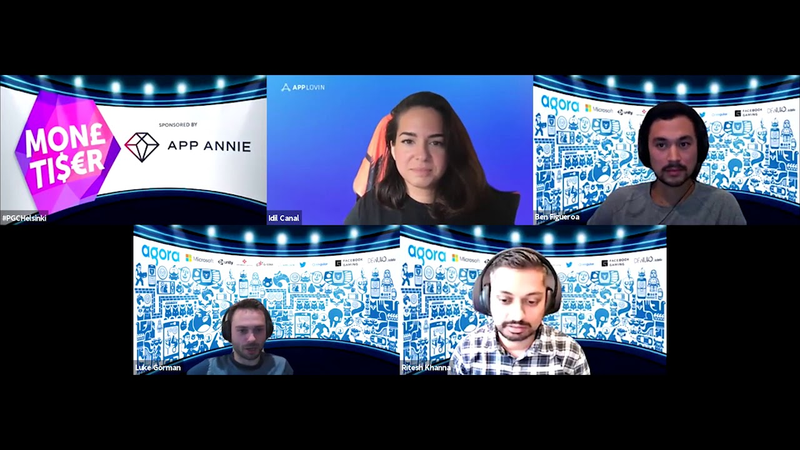
to the final session of this track um the pgc monetizer track sponsored by apani um which will be a panel on how to maximize up dow with a hybrid approach we're still just waiting for a few panels to show up so i'll just quickly remind everybody of our diamond sponsors agora to my right your left uh our platinum sponsors microsoft game stacked anova by uh uh uh deneuver and facebook gaming and our gold sponsors applevin unity gstar 10 square games twitter and singular we wouldn't be doing this without the support of all of those companies um this isn't the end of pgc
for today by the way if you are waiting for more content afterwards or looking for more content afterwards uh our other tracks are still running a bit later than this one um but we will get started soon when uh the panelists start showing up um we've also got uh if you are interested in our careers week we've got a bunch of stuff going on check out the careers week jobs board unboxing dog is the website that i edit um and if you do want to talk to journalists like me and um more fun journalists who actually play games and don't just write about the business behind them we do have the journalist bar each day on our discord from two till three pm uh i do actually join in on those because it's a lot of fun we get to talk and offer some insight into what's going through our brains when we're looking at your games um which is always i'm sure insightful and helpful um let's run down some more stuff that we can do uh do you use the q a function uh even with the panels the they obviously have
a lot of time towards the end when we can answer any questions and because this is the end of the the track you know we can hang around a bit longer if there's some good discussion going on um and do get on twitter and tweet out your thoughts and um favorite sessions favorite speakers all that kind of stuff any great quotes you've heard on twitter and use the pgc helsinki um to share some of those around we will be back again tomorrow i will be back back again tomorrow to host another track in the morning and this whole thing is running for the rest of the week um so if you are still excited to learn more about mobile games i know i certainly am uh you can join us for the rest of the week and it will be phenomenal okay uh i think we're now ready to start bringing people in so uh we should shortly um be joined by adil from applovin who i think is just we're just waiting for her to connect to the audio and stuff and there we are hi adele hi how are you
i'm doing well how are you hanging in there fantastic uh yeah it looks like we've got everybody joining in so um i'll just quickly say again yeah this is the um how to maximize update with a hybrid approach panel uh with adil canal as the moderator and i will leave it up to you awesome thank you for kicking us off rick hello everyone my name is adil i'm the general manager of max at uploading and i'll be your moderator today a little bit about us applovin is a global leader in mobile entertainment we build popular immersive games and powerful technology for developers to bring their games to more players around the world max is our full stack monetization platform built on in-app bidding we help the world's leading gaming studios grow their businesses through a 360 partnership that means we help them monetize within that bidding make more money and scale their games through user acquisition with our full stack
developer friendly tools today's session will focus on one of this year's hot topics in-app bidding and its role in hybrid monetization structures we'll hear from our guests on both the game studio side and the demand side we're excited to have ben from facebook audience network ritesh from clipwire games and luke from hyper hippo joining us today they'll tell us all the secrets of how they have seen success with effectively mixing ad revenue with in-app purchases in a hybrid monetization stack without further ado let's go ahead and do a quick round of introductions everyone ben do you want to go first yeah uh happy too my name is ben figueroa with facebook audience network i work with you know studios across north america helping them kind of optimize their monetization and growth strategies awesome luke do you want to go next yeah sure um
i am luke gorman i am the senior growth lead at hyper hippo games i focus on all things ad monetization um a little bit of ua and also looking at soft launch strategy for our new titles awesome and retesh i think you're a mute yeah yeah uh rotation ceo over at uh clip buyer games uh we're based out of toronto our biggest title is is bingo story uh it's grown quite a bit over the last year it's really exciting um yeah that's that's our story so on that note let's talk a little bit more about the studios so on the supply side ritesh and luke i want to hear more about hyper hippo and clip wire what type of games do you guys make and where's the team based ritesh do you want to just continue on that since you can yeah i already already said i already gave it away but uh we're based in toronto although uh
we're now hiring in a more broad area because we are functioning remotely uh we do have a few titles we've got a solitaire title as well and a word title as well um but our main focus is surrounded on on bingo awesome what about you guys luke yeah cool um first of all i want to say thank you for having me on the panel really excited to be here chatting with dap loving and talking about hyper hippo a little bit um hyper hippo is a really cool studio um based out of kelowna british columbia we're a city of just over 60 people but we also have offices in vancouver and seattle which is where i'm based out of we pride ourselves on some of the best auto games in the world but people might know us a bit more specifically from adventure capitalists and adventure communists um both titles have a modest gau around
about 150 um in our split between iep and ads is around 50 50. um well it's not the most impressive dau numbers in the world our company focus is really putting players first and because of that we've seen just some awesome players and personally some of the best players that i've seen in the industry awesome okay so let's deep dive into the formats a little bit switching over to you then for those of us who are not familiar can you explain what the main differences are in monetization approaches yeah absolutely so i think the first one is iaa or in-app advertising basically means advertising that's integrated into your mobile game so think of formats like rewarded video interstitial native banner all of these formats are displayed like right in the context and ecosystem of the game iap stands for in-app purchase iap
basically allows users to buy additional functionalities or features right that are integrated into free-to-play games so virtual currencies level unlocks virtual items and hybrid hybrid is really just a mix of those two strategies right uh it's probably the most dominant monetization strategy i would say in mobile games today uh we did a research study with walnut unlimited in 2019 and basically of all the developers that we surveyed about 69 of the large developers chose a hybrid model as their top you know used monetization strategy okay great so now let's ask the supply side what type of monetization structures are you guys using today is it ads and is it in-app purchases or is it a hybrid model like that said and did this combination change or have you guys always used a hybrid approach uh ritesh do you want to go first sure so we started out iap only i i didn't think i didn't think ads was right for us um but about
it's been about two years now since we tried it out the first time and just on the first day like immediately the results were positive and it was obvious that we shouldn't be doing ifp only we should be doing hybrid um so you know we did it we did one placement liked it we did another placement you know we saw the numbers go up and as we kept adding placements and being creative on you know what would be good places for people to view ads uh we were able to increase the number of ads we ran in the game um and i believe at this point now we're between 30 and 40 of our our revenue coming from the ad side and it was incremental i'm guessing since you mentioned that it was additive yeah so each time we added we saw a little bit more uh and we we we've kind of kept adding as long as we could and wherever we could nice i like that um and to you luke what
do you think about it yes so as i briefly touched upon before our split between ads and iep tends to be around 50 50. um depending on certain events we have um some months that can actually be heavier weighted on ads it's been our approach since the get-go pretty much our major focus for ads is on rewarded video which actually accounts for over 95 of our ad revenue we do utilize off wall on interstitials but that's only an adventure capitalist and our focus here is obviously a lot smaller um since we do have an equal reliance on ads in iep managing the waterfall is definitely a really important task week of a week um and so yeah kind of the theme of today the implementation of implementation of bidding since we switched to max has just been huge in terms of dropping the manual workload and our growth team is it's just myself and
one other member and so getting that time back has just been a huge burden lifted off our shoulders awesome so let's build on that and the next question is a great transition so how did that process you mentioned that it has been a lot easier for two people to manage the whole stack now that you guys are using bidding and the hybrid measure so how frequently did you guys need to communicate with one another before and how did that change now let's start with you and then we can hear more from the demand side as well yeah sure um so it's primarily just myself managing the waterfall my other member has to focus a lot more on the ua side but operating manual waterfalls was exactly that it was manual um the lack of bidding forces your hand at a traditional setup and this can still produce results but definitely have the cost of time so before switching to max we had weekly meetings with several if not all
of our partners um all of whom were fighting for those top fill spots the ever important uh top of stack spots that everybody wants um the change to max the incorporation bidding has just been a big game changer to focus else to promote focus elsewhere um to put into perspective the amount of lot items we had um were around 40 or 50 per geo before switching to max and we had it structured so it was us and then tier one tier two rest the world and then within tier one tier two it would be another anywhere from 10 to 30 line items per geo within those tiers so since we enabled bidding um those line items have really more than been cut in half so um not to mention the geo management had just been a lot more fluid so the yeah the line items that we're managing now is has just drastically been reduced
which has been awesome yeah and now let's hear from the demand side ben from your perspective how did that transition affect your day-to-day management how frequently did you need to communicate with one another yeah yeah from the network network perspective to back up a little bit i think with the waterfall mediation when an ad impression becomes available a publisher's ad server calls those demand sources one by one right in order of average historic prices so not really what those demand sources or networks are willing to pay for that particular impression at that particular moment i mean this means kind of to luke's point that the waterfall you know is kind of problematic and inefficient for both buyers and sellers publishers don't truly maximize their overall ad revenue opportunity and advertisers don't really get a fair shot at the inventory as far as communication yeah i mean again to luke's point right we're not fighting over first bill anymore i think uh you know back in those days things got pretty aggressive
and you know it's a breath of fresh air that we don't have to be kind of jockeying for position week in and week out um so yeah it's led to you know greater efficiency for sure awesome and ritesh anything going to add there yeah like when we first started i was almost like when i first learning how the waterfall worked i was surprised that this is the way you need to do it um so i'm really glad that the change is coming like this is how i imagine it would be before we started um and then we realized it wasn't that and now it is becoming that so it's great yeah i think that's a great way to put it um so let's let's build on that a little bit on the publisher side this is for you riches and luke you guys are both using macs as your monetization platform and you're very familiar with our a b testing tool how did you measure the impact of the manual changes you made in your waterfall structure before you moved to max what did the world look like back then you want to start maybe yeah i can jump in um yeah measuring performance was it was
really done on two broader levels for us uh that was like a network level and an overall level um whether the overall level b game platform portfolio and network levels obviously on the network basis our most important metric being arc dow typically when making it change the waterfall we would measure the change stock down both the network and the overall level and it was definitely a bigger part of or yeah bigger part and to do with communication with the networks because you wanted they want their op data increase we want their op down to increase but if the overall out now decreases then it makes things a little bit more a little bit more muddy in the water um so this was challenging because there is typically multiple changes made within the waterfall so measuring that measuring a single change was seldom the case which seldom had that luxury so because of
that it was difficult to understand which change you made had the direct impacts so now the ability to a b test has really been game changing because it's just been so much easier to implement so with the a b test we're able to test every change before implementing it and we're able to break down those changes for geo and for placement which usually allows us to appreciate the test in one form or another so we're actually at a point now we've been a b testing a lot since we've switched to max and so most of the tests actually just have very similar results or maybe slightly greater results but for the most part now we've been able to utilize the av testing tool to a point where we actually don't even need to touch the waterfall that much which is great well i love it i love power users but when it comes to a b testing i think there are very different strategies some publishers go for only promoting changes that are incremental so that there is an increase in their overall after
in some publishers or developers they choose to promote things that give them a larger and well-distributed share of voice change so that it's not just a single demand buyer that's only taking 60 of their revenue they like a healthy distribution so back to you ritesh on that same topic um how did you guys manage the manual changes and see the differences in the waterfall yeah it's it was it wasn't easy uh you would our experience sounds very similar to luke's where you would go in and you would talk to people you would see what what's going on you would look at as many reports as you could and you just made guesses and you would try different things and then you would wait a week or two and maybe there was some event who knows what what could have happened but uh hopefully your changes resulted in in a positive shift and that positive shift was a result of your changes then you'd stick with it and try to iterate but it wasn't easy there was no science to it i'd like to say we we a b test as well as luke sounds like
he's doing um but it's it's definitely a big improvement we're not leaving as much on the table anymore yeah i that's that's a great way to put it as well not leaving money on the table so the amount of effort and the manual changes were time consuming from what you guys have explained how impactful has bidding been in this picture could you guys share and i think luke you briefly mentioned this but what percentage of your ad revenue is now coming from in-app bidders versus a traditionally mediated networks and hybrid setup uh ritesh maybe we'll start with you first yeah so when we first put in our first one it was really exciting because uh that that was it was facebook and we saw a 20 lift right right away it was immediate to switching um and uh and then as more and more started you know we now have three of them um they've they've grown in their share and right now they're doing 70 of the total uh the the total placements
um and it's been a huge time saver like anything that saves you time and prevents you from having recurring meetings and everything like that i mean who doesn't want that stuff who doesn't want to automate right yeah and you guys also use i think you guys are a power user when it comes to bidders because you have your own floors so that in certain geos your valuable users are not even exposed to ads right exactly yeah yeah it makes sense yeah definitely and from your perspective luke what was the percentage if you look at the overall titles if it was a range let's say yeah sure so snowballing off of ritesh it's been it's been huge um the only so our overall percentage of bidding in terms of ad revenue is we're getting about half of our ad revenue from bidders which is great and that's that's obviously a huge impact and increase from before when we had zero bidders and just the
the implementation of having bidders is just such a game changer because the only optimization optimization excuse me needed with bitters is really on a geo level but since we have a pretty good idea of which networks perform well in the respective geos we don't really even need to focus on those networks nearly as much so again since the implementation of bidding that is about 50 of our revenue and we really only have about an average of 20 line items total per ad unit now so just much less work yeah so now that you guys no longer need to communicate with networks and you get your 20 lift with just moving to facebook bidding um where do you guys allocate your time now where do you allocate that additional time that you have is in monetization or growth so luke let's start with you you mentioned that you see you oversee both user acquisition and monetization side so you have a 360 view of the um day-to-day management could you give us some examples of what you've been
able to spend more time on sure yeah so since we're such a small and nimble team at hyper hippo i as you mentioned i need to dedicate a lot of my time to the ua side of the business as well as the monetization side i'm the ua sata i primarily manage sdk networks as well as a few campaigns on social networks specifically snapchat um all of which for those who have managed these especially the sdk networks can be quite time consuming so the time i've been able to get back from the monetization side has been huge when shifting our focus to scaling campaigns on the ua side um we also have a few really exciting titles in soft launch that i mentioned in the intros so now i'm able to allocate some of my time towards our soft launch strategy as well as scaling these campaigns week over week and this time i've gotten back would have been nearly impossible without bidding in a b tests awesome and ritesh i know you have
a similar team structure as well they oversee ua and monetization together how has that helped you guys to become more efficient yeah so we're even smaller than luke we're only a team of 20 and when we were doing this we were even smaller so the shift to you know from china trying to get a little bit more here and a little bit more there to just letting the bidding do its thing and then focusing on ua is so valuable we can focus on ua we can even focus on the side of ua after the user comes into the app which is a lot of value as well um so yeah i mean because we were small and we are still small a lot of people do a lot of things so now that's just one less thing people need to do yeah great um let's take a few steps back and ben this is a question for you let's hear more from your perspective what influence facebook audience networks move towards bidding and how do you see it improving the industry for game developers and publishers okay um yeah let me start with kind of
what influenced us i think our app bidding journey really started back in 2017. that's when we first started testing with you know some of our initial partners both publishers and some of our initial partners on the ecosystem and it's continued to be a priority for us to help make bidding just more accessible to publishers we feel it's a way to foster a more fair and open ecosystem and it provides a real business benefit to our partners um and that's why we offer you know a variety of ways to kind of integrate bidding whether a publisher wants to go an in-house solution or whether they want to go through a mediation solution like max the second part of that question how is bidding improving the industry from what we've seen and you know we did a report last year called the new era monetization and we kind of took away two two key takeaways from that right increased ad revenue uh i think when you have every demand source bidding in an open and fair like real-time auction you just see more competition on the inventory which means better prices for every impression
um and then the second kind of takeaway from that was improved operational efficiency i think it's something that luke and ritesh kind of just spoke to right when you have i mean by removing the burden of maintaining that kind of complex waterfall bidding really just frees up more time for your team to kind of focus on driving more impact on other parts of the business whether that's ua or design or whatever it may be within that same kind of new era and monetization report that we published last year everybody from rovio to game hive triple dot fungi games game insight even all reported the same kind of stuff right more time to optimize their app experience more freedom to integrate new demand sources overall just more more resources to kind of focus on important parts of the business yeah and let's talk about rewarded video a lot more ads specifically rewarded video have been shown to have a positive impact on retention what have you guys seen there yeah uh so from you know with regards to
bidding adoption bidding adoption continues to gain more momentum across the industry i think in this last year alone the number of apps using bidding with facebook audience network has i think 7xed over the last year i think among our top 10 publishers a majority of them are now using bidding so that includes folks like voodoo zynga news break etc to further that point of all the publishers that have adopted bidding with audience network half are now earning you know their revenue back through bidding rather than that waterfall mediation nice um let's switch gears a little bit and talk about the latest announcements on ios 14 and apple luke and ritesh this one is for you guys there has been a lot of speculation about the latest privacy changes with ios 14 and they're now delaying these changes how do you see this impacting your user acquisition and monetization strategy in the short term because q4 is right ahead of us and then let's talk about 2021 in terms of the long-term vision
that you guys have um retesh let's start with you yeah it's a it's a tough question in a tough situation we're not we're not sure how to look um i don't think our strategy is going to change much right we're still going to be running ads there's still going to be bidding it's still going to be an important part of of how it's how it's going to hap how we're going to monetize um we've we already you know monetized a portion of audience that doesn't have the um the the tracking enabled and and you know with just the contextual data that is enough to get decent ecpms we're just gonna have to to prepare for that be you know just more of that right and that being the the standard way to go on the acquisition side it's pretty much the same thing we're gonna need to keep keep doing ua we're gonna have to keep running our ads so we're going to kind of lean on the networks to help us out there and and see what we can still do and i i think it'll still be successful like i don't i don't think it's going to
going to harm us too much yeah what about you luke yeah so in the short term i won't pretend that there aren't problems ios 14 poses because unfortunately that would be a lie um on the ua side we are working with our data team to build a model of our users based on events completed within the first 24 hours of install which will help us optimize campaigns based on the number of those completions for the monetization side we are forecasting a drop in cpms from likely all of our partners we'll need to structure our waterfalls a little bit differently specifically between lit versus non-iot users so our optimization strategy is going to change relative to where it's at right now in the long run i do see numbers stabilizing as models become more accurate but our main focus is tackling the issue one sip at a time unfortunately there's still a lot of missing information from both apple and the network so
a bit of a conundrum but i like to say our strategy is to stay proactively reactive as information comes to light meaning that won't be able to prepare for everything yet but each side of the business is on their toes and ready to allocate those resources when the information does come to light yeah i agree i think it's spot on so ben from your perspective uh in the next twin 21 and in this post ios 14 era bidding is now being adopted universally across our industry with great results how do you see bidding evolving in this new era yeah uh oh sorry um let me kind of just address the ios 14 issue at least from you know our perspective since it has been a hot topic i would say over the last couple of weeks um you know so as many of you know are aware of in june apple announced you know updates taking place with the release of ios 14 and we facebook shared how we're going to be addressing those changes which initially
included you know we weren't going to be collecting idfa on our own apps on ios 14 devices uh given kind of that breadth of fresh air the apple's announcement that they're kind of delaying that implementation of the user permission requirement we're going to continue collecting idfa on ios 14 more so in an attempt to just kind of reduce reduce any unnecessary disruption to our publishers business but i think we along with the rest of the developer community kind of continue to await that final policy details from apple but you know we stand strong with more than i think 19 000 developers now publishers that lean on audience network in some form or fashion you know to monetize and really support their businesses so and you know we're going to continue to share updates as we learn more about apple's policies and what actions you know our publishers can take but just know that you know we're continuing to work on short and long-term strategies that you know are going to help support these changes but okay so now what is bidding going to look like post ios 14.
uh i think as publishers work on their own idfa mitigation strategies um we're going to encourage them to move to bidding i think as audience network we believe that bidding remains kind of the most impactful way for publishers to maximize their overall ad revenue opportunity i think you know to luke's point given some of the unpredictable impacts and changes to cps you know over the next couple months um you know it's likely that adapting and adapting and updating waterfalls is just going to become more difficult and more time consuming in this new world with bidding however you're already kind of set up to receive the highest possible price and can benefit from the improvements that demand sources are going to be making without really having to reconfigure those existing waterfalls so we believe that moving away from the waterfall remains the most impactful way for our publishers to maximize yield and you know their ad revenue well said 100 plus one completely agree all right so to wrap it up last question
and this one is for you luke as a studio who monetizes heavily through in-app purchases would you suggest that other studios have a lot to gain through a moving data platform like max that supports an opening um definitely i know each mediation has its own benefits and there's definitely a lot of great minds in the industry but since we switched to max i really haven't looked back switching to max been really a win-win all around hyper hippo just had its highest earnings per month in august for ad revenue um and since we internalized publish or since we internalized publishing back in january and each month since we've switched we've seen our arced out and our revenue increase month over month so aside from that clear performance boost um the time i've gone back from bidding and a b testing has really allowed
me to focus my time and energy elsewhere so kind of just going with the theme of the day of earning time back all i'll say is if you want to earn a little bit more money for your company for a lot less works than work then i would definitely consider math so although i realize i've been leaning into this less work thing maybe a little bit too much i know there's some other hippos listening in so maybe i won't want to fall into that too much awesome music to my ears so that's great recommendations all around and i think we have some time on the clock back to you rick should we maybe start with q a now yes let's do some q a so thank you everybody for the panel so far we do have quite a few questions um in the q a so i'll start with one i think somebody tried to ask this a bit earlier and i sort of missed it um so we'll go with anonymous 10d wants to know how to set up price floors in a hybrid waterfall i will allow anybody to jump in on any
of these questions i can jump in on that um it's very easy it's essentially setting up so you set up your bidder which you don't really need any price floors on that it's kind of plug and chug there and then setting up your cpm floors with any network so um it's yeah essentially half your networks can be bidding so you really just turn it on and go and then other networks that aren't in bidding you can adjust your cpm floors based on where you want to put them within your staff perfect thank you very much luke uh i hope whoever asked that twice has now got their answer and is very happy um regards the next one um what are the minimum number of impressions per ad format per ad network for in-app bidding to be effective and again yeah fabulous i'll jump on this question because it's a great question so two pieces to that in terms of having a dense auction what
we always say is that you really want to have facebook in your auction and on max obviously we have upload and participating as well but we also have a lot more bidders as well so in general you want to have at least three and a half bidders in the auction and having facebook makes a huge difference especially for formats like rewarded video where they are the most competitive out there in the market but in terms of ad format and ad networks that you want to have in your waterfall one of the things that we highlight when publishers move to max or when they're testing different solutions or a b testing moving a network from a traditional setup to a bidder we always ask them to think about their in per day right because if you're showing only one interstitial or one rewarded video per session you're only monetizing and trying to maximize that one but the lift is exponential so the more that you show not that you have to show more ads but if you have two three and per dau in terms of the number of impressions you show for rewarded video
the lift is going to be exponential in each one so that's a combination of the answer i think but we could go into more details if there are more questions cool um we'll go on to the next question from tanveer who wants to know how well do the bidders work in conjunction with google optimized high slash mid-slash low floors and also what are the early observations on bidder's performance on l80 hybrid waterfalls two questions um but anyone feel free to answer whichever one makes you you think you can answer that's a great question and i think uh luke would be great in answering the google piece because i think they have a very solid setup when it comes to using the right combination of price floors and geos for google and maybe i can speak to the last piece because we just released a new uh feature on this one sure so really we've seen before switching to max and post switching max google has had a pretty strong share of voice in our waterfall and nothing has changed actually with the
addition of bitters we still um we still use that the high medium low floors for google and with the bidders in there google still is pretty strong in terms of share of voice so surprisingly or maybe not surprisingly they they've still their bit has been quite competitive within our waterfall even with the bidders in there so um yeah i guess moral of the story is no no big changes yeah to add on to that i think some additional work that we do when we help publishers test bidders or move to max is also understanding what their waterfall will look like in this hybrid setup right when you're switching from zero percent in outfitting demand from a traditional uh mediation platform over to max where you're gonna have 60 70 bidded you have to think about what this world will look like and what does that mean for your waterfall so with google specifically we do a lot of granular optimizations and help publishers out in terms of what the best practices are so that they don't just
have three lines for a global waterfall they give google a better chance and all the other mediated line items a better set up so that there's competition for bidders to also perform well in terms of lat i think that's a great question because a lot of people are now actively working on it there will be improvements and i know from our side as well we're already seeing um an increase in cpms and phil from just our bidder as well in the past couple of weeks we still continue to make changes and i know that there are some networks in terms of bidders that are actively working on addressing and improving fill as well so what we see right now is that um there's probably going to be a 20 40 drop in overall cpms but in the next two weeks or a month you can assume that all networks are actively working on improving their algorithms so that number is probably going to be lower and lower over time cool i still got some time a few more questions um
anonymous attendee wants to know uh how do you prevent valuable users from seeing ads and was it easy to set up uh retest you come off mute so you can jump in yeah so we do this and we mentioned it earlier um setting it up super easy you just gotta define what valuable means to you in your game and once you know what that is you just don't put the placement in there uh it's easy to it's just up to a developer to to put that logic in there uh so so the technical part isn't very difficult the challenge comes is when you start doing this your your highest bids come from the users who you tend to see as valuable so you will see like a disproportionate drop in your ecpm so you got to figure out what makes sense like is your definition of valuable correct because you may actually want to show some some of these people ads because they they get the highest bid from from the networks um so so just get that right definition of valuable uh to get this right excellent thank you um another anonymous attendee would like
to know do you allow any types of ads in your game i guess that's like as in do you allow all types of ads in your game and do you accept ads for other games and what's the impact on ecpm when you do so so most of our ads are from other games and we allow almost every there's some like we know our audience and some some ads are a little bit like edgy and stuff we don't like any of that stuff so um aside from that we let it we let it roll um and it is mostly games uh you know and removing a few games here there that we don't like not a noticeable impact on ecbm from our end cool uh luke anything on that yeah so can kind of echo retouch on that point we do have ads that are that are against our policy at hyperhippo so we block kind of a adult content anything like that but for the most part where we pretty much also let it roll uh we do
do a bit of cross promotion within our games um not a whole bunch but we do cross promote within our games as well but for the most part most of the ads are other games and abide by our policies and then kind of another great part about maps is the addition of safety k which allows us to see which ads are being shown in our game so we actually have um a report that flags ads that don't abide by our policies so as soon as that happens i actually got an email this morning from safety k um about an ad that um yeah was against our policy and all i have to do is click about two buttons and it sends an email to our account manager and gets it blocked within about a day at most so it's it's pretty easy to manage the ads that are being shown in your game awesome um we've still got a couple more questions we've got a bit of time so i'll just throw these out there um does in-app bidding increase ecpms of
banners um i'll take this one since both of these guys do not use banners yes it does uh but in terms of in outfitting and banners really most of the movement on the demand side has been on interstitial and rewarded video networks right so for banners we're waiting on networks like in moby's motto and ad colony is now adding support for banners as well so for enabling to work you need dense auctions for your platform to support all of these networks uh within a month or so we're actually going to transition all these names to fully to bidding so i think the answer will be yes you will see an improvement in there as well but in general with banners i think the value add and people find i think spoke to that recently really well they set up a lot of line items so the operational ease as long as even the revenue is identical the hours that is saved from not setting up billions of line items at like five cents in currents for a banner
waterfall is the value out there awesome uh final question is from an anonymous attendee who says max is great uh when can we expect max to support fire os i have a feeling this is one of my existing clients um well the answer is let's let's channel flying because i'm not committed that there's more than one network that needs to be live in a fire os mediated uh waterfall but yeah let's chat let's channel awesome um that is all the questions and all we really have time for so i will just say thank you for the panel for joining me and thank you for the discussion it was really interesting and i hope everybody very much enjoyed it thank you thanks everyone thanks everybody
Summary
The mobile gaming industry is undergoing a fundamental shift toward hybrid monetization models, which integrate in-app purchases with in-app advertising to stabilize and maximize average revenue per daily active user. By leveraging rewarded video alongside traditional purchase mechanics, developers are achieving a more balanced revenue stream, with many studios successfully reaching an even split between ad-driven and purchase-driven income. This strategic diversification serves as a critical hedge against market volatility and evolving privacy regulations.
Operational efficiency has become a primary driver of this transition, as publishers move away from labor-intensive, manual waterfall management toward automated in-app bidding platforms. This shift eliminates the need for constant manual line-item adjustments and aggressive negotiations with demand partners, allowing development teams to reallocate significant resources toward user acquisition and core product innovation. Automated bidding fosters a more competitive and transparent ecosystem, ensuring that publishers can maintain healthy effective cost-per-mille rates even as the industry navigates the complexities of privacy-centric environments like iOS.
To sustain long-term growth, developers must adopt sophisticated mediation tools that streamline ad operations while maintaining rigorous quality standards. While privacy-driven changes have introduced challenges regarding data availability, ongoing algorithmic optimizations are helping to recover performance metrics. Success in this landscape requires a nuanced approach to user segmentation, where publishers carefully identify high-value users before implementing ad restrictions. By prioritizing automated bidding and data-driven management, studios can effectively navigate the current mobile landscape, ensuring that ad placements remain both profitable and brand-safe without compromising the overall player experience.














Comments