Mobile reports and market data
Documents
Planning for the next four years after releasing a mobile indie success
The mobile game studio behind the hit title Badland provides a case study on scaling an independent development company following a major commercial success.
- Mobile game sales tails have compressed significantly, dropping from an 18-month lifespan for the original Badland title to approximately three months for newer releases.
- Diversification is essential for sustainability, as Badland achieved 40 million total installs with 95% of revenue generated from iOS and Android platforms.
- Android can outperform iOS in daily revenue when utilizing a hybrid monetization model that combines advertisements with in-app purchases.
Using your game's community to drive ahead
The studio DoDreams, based in Helsinki, leverages organic community engagement to drive the success of its mobile title, Drive Ahead.
- DoDreams achieved 25 million downloads and 600,000 to 1 million daily active users for 'Drive Ahead' by prioritizing organic community engagement over paid user acquisition.
- The studio integrated native video replay technology to allow players to capture and share chaotic, physics-based gameplay moments directly from the game environment.
- The 'Superstar Stadium' feature drives engagement by dynamically promoting top user-generated replays as daily challenges, effectively turning players into recognized content creators.
Best Fiends developer Seriously on what comes after shipping a hit game
The transition from shipping a successful mobile game to sustaining long-term growth presents a unique set of operational and creative challenges.
- Treat an initial hit game as a foundation for long-term intellectual property development rather than a standalone product to ensure multi-year franchise sustainability.
- Avoid the temptation to over-diversify or chase every business opportunity post-launch, as excessive sidetracking dilutes focus on the core product.
- Balance data analysis with creative intuition, as viral hits often generate inflated vanity metrics that can lead to poor decision-making.
Big Bang Racing – A journey from game maker to social racer
The development of the mobile physics-based racing game Big Bang Racing serves as a case study for the strategic implementation of user-generated content (UGC) to drive engagement and retention.
- Shifting from content creator to platform architect allows developers to build a self-sustaining ecosystem where players generate 250,000 new tracks per week.
- A 'toy-like' level editor that emphasizes creating for others rather than oneself successfully drove 13% of daily active users to contribute content.
- The game achieved a volume of 1.3 million user-generated levels within the first five weeks of launch.
How indies can thrive in the modern mobile business
Independent game developers operating in the modern mobile ecosystem face significant pressure to adopt free-to-play models, which often prioritize user acquisition and monetization over creative diversity.
- Independent studios should prioritize premium-priced products over free-to-play models to avoid the high capital requirements and ethical compromises associated with aggressive user acquisition.
- Launching on PC platforms first allows developers to build a dedicated community and validate gameplay concepts before committing to mobile or multi-platform expansions.
- Long-term sustainability for indie teams is best achieved by focusing on organic visibility and consistent post-launch updates rather than rapid scaling or exit strategies.
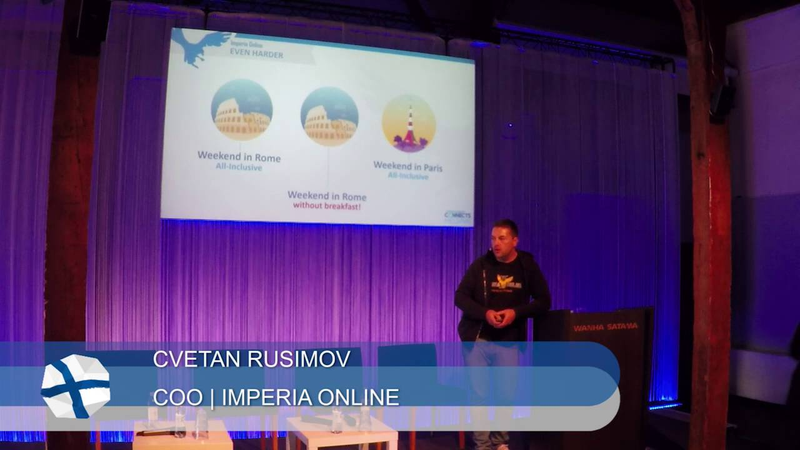
Hacking the human brain – Irrational thinking will triple your game's revenue
The primary objective of this analysis is to demonstrate how applying principles of behavioral economics and cognitive psychology can significantly increase revenue in mobile gaming.
- Strategic application of behavioral economics and cognitive biases, such as decoys and price anchoring, can increase mobile game revenue by over 300% without requiring an expanded player base.
- Implementing a 'decoy' option—an unattractive or illogical price tier—effectively shifts consumer preference toward more expensive, high-value packages by altering the perceived value of the options.
- Developers can use a middle-tier price point as a reference anchor to make premium offers appear more advantageous to the player.
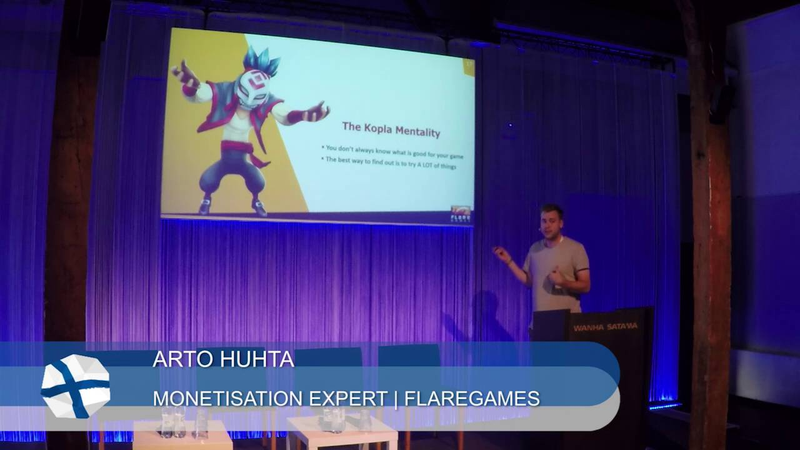
How Flaregames and Kopla Games Doubled the monetisation performance of Nonstop Knight
The development of the mobile action RPG Nonstop Knight, a collaboration between Flaregames and Kopla Games, serves as a case study in utilizing iterative design and rapid experimentation to optimize monetization and player retention.
- Flaregames and Kopla Games doubled both day-30 player retention and total revenue for Nonstop Knight following its 2016 launch by shifting from front-loaded monetization to a long-term engagement model.
- The development team utilized a 'brute-forcing luck' methodology, which prioritizes rapid, low-cost experimentation and the quick discarding of unsuccessful features over extensive upfront design.
- To scale the game effectively, the team integrated specialized roles like economy designers to balance progression systems while relying on internal playtesting for immediate design validation.
How to make good decisions in games development with lessons from The Walking Dead: No Man's Land
Effective game development relies on fostering a culture of empowered decision-making rather than relying on rigid, top-down bureaucratic processes.
- Empower teams by shifting from top-down bureaucracy to a culture of shared values, such as courage, caring, and curiosity, which fosters autonomy and alignment.
- Implement a four-step decision-making framework: evaluate value to the user, value to the business, opportunity cost of the task, and the risk of potential failure.
- Prioritize data-driven validation over personal assumptions, using analytics to verify hunches and confirm that features genuinely delight players.
How Wooga sees the mobile games industry evolving in 2016 and beyond
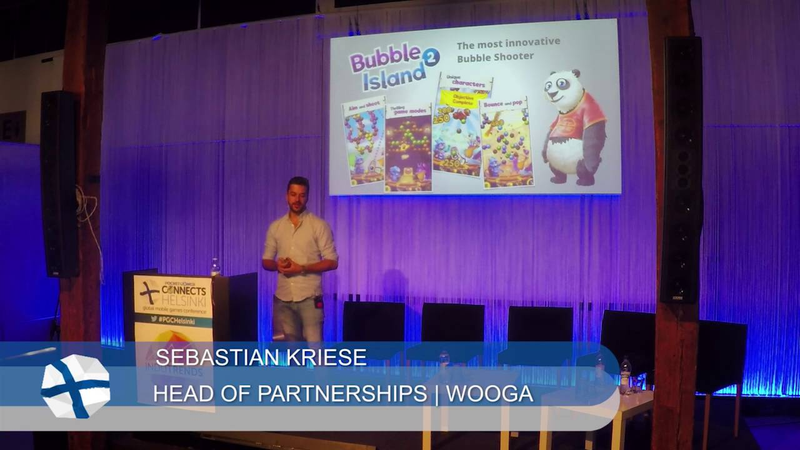
The mobile gaming industry has reached a state of high maturity and intense competition, characterized by a significant concentration of revenue among top-tier developers.
- Mobile developers must transition from managing individual titles to cultivating a network-wide ecosystem that utilizes cross-promotion and portfolio-wide retargeting to increase aggregate user lifetime value.
- Mid-sized developers should adopt a specialized strategy by focusing on genre leadership, such as casual games, to build deep expertise and offset rising customer acquisition costs.
- Internal brand assets are prioritized over external intellectual property because internal franchises better leverage existing player familiarity and allow for the refinement of mobile-first mechanics.
How Critical Force is bringing eSports to first-person shooters on mobile
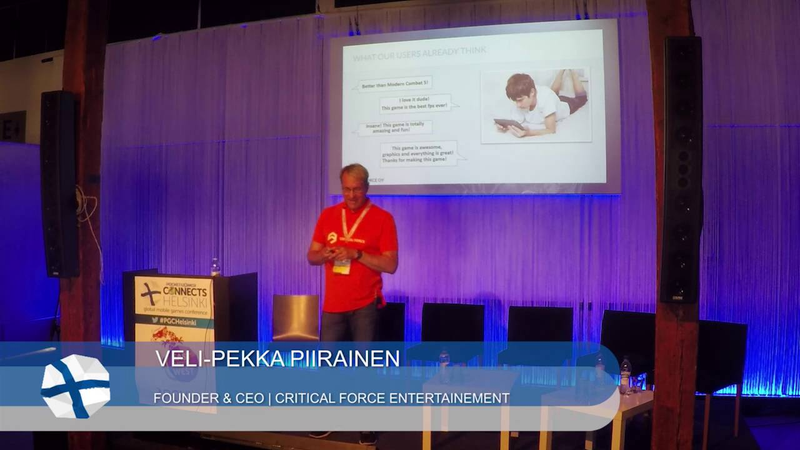
Critical Force Entertainment aims to establish the global standard for mobile first-person shooter (FPS) eSports through its flagship title, Critical Ops.
- Critical Force is positioning 'Critical Ops' as the standard for mobile FPS eSports by targeting a market where mobile devices outnumber PCs by a factor of ten to fifteen.
- The game has achieved over 8 million downloads and 200,000 daily active users through organic growth, intentionally avoiding paid user acquisition.
- The studio secured $4.5 million in funding from NHN Entertainment to support its 2017 roadmap, which includes an official feature-complete release and a push into professional eSports circuits.
Location-based mobile gaming - How did we get here and what’s next after Pokemon GO?
The evolution of location-based mobile gaming represents a significant shift in how brands and retailers engage with consumers, moving beyond traditional digital advertising toward integrated, real-world experiences.
- Location-based gaming provides a closed-loop system for retailers to track measurable attribution for advertising spend by bridging virtual gameplay with physical store traffic.
- Retailers are rapidly adopting infrastructure to support this, with 80 percent of the top 100 U.S. retailers having implemented or planned beacon technology by the end of 2016.
- The integration of physical and digital retail experiences is projected to influence approximately 40 billion dollars in retail sales.
How to optimise your revenue and user acquisition funding
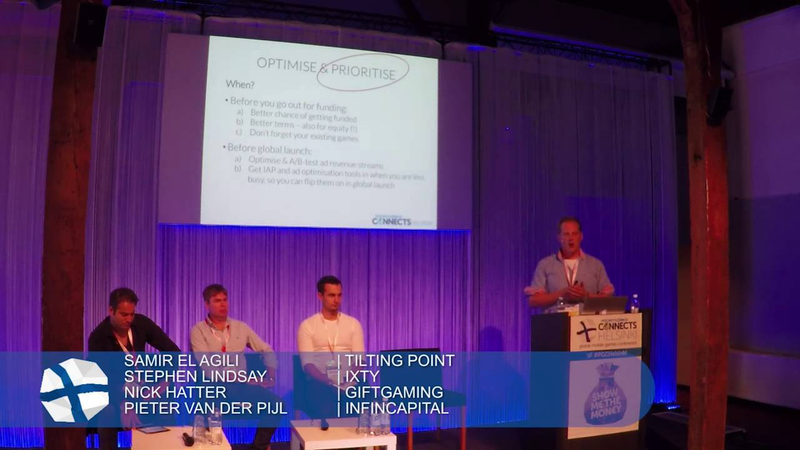
Securing user acquisition funding in the competitive mobile gaming landscape requires a rigorous focus on revenue optimization and the demonstration of robust performance metrics.
- Prioritize Average Revenue Per Daily Active User (ARPDAU) as the primary metric before global launch to ensure campaign profitability and secure better financing terms.
- Shift user acquisition strategies from focusing on install volume to prioritizing the long-term retention of paying users to combat market saturation.
- Implement automated, global price localization and continuous A/B testing to identify optimal price points across diverse international markets.