1 free read left. Create a free account for unlimited reading + AI research.
Create free account
How indies can thrive in the modern mobile business
Key insights
6 takeaways- 01Long-term sustainability for indie teams is best achieved by focusing on organic visibility and consistent post-launch updates rather than rapid scaling or exit strategies.
- 02To avoid derivative production after a success, studios should intentionally decouple from constant release cycles to invest in prototyping and core skill development.
- 03Independent studios should prioritize premium-priced products over free-to-play models to avoid the high capital requirements and ethical compromises associated with aggressive user acquisition.
- 04Titles like Turbo Dismount demonstrate that maintaining creative control and prioritizing inherent gameplay value can lead to commercial viability without adopting industry-standard monetization pressures.
- 05Defining a clear version of success—whether artistic fulfillment or commercial scale—is essential for developers to choose business models that protect their creative autonomy.
- 06Launching on PC platforms first allows developers to build a dedicated community and validate gameplay concepts before committing to mobile or multi-platform expansions.
Ask AI about this video
Transcript
[Music] so start I will establish my position of authority I have played the lotto now for 13 years making me an expert in lotto i'm here to give you last year's lots of winning numbers and that's about as useful as my talk is going to be to every one of you the note invited here to talk about and the topic of this track all together is how indie developers should thrive in the modern mobile ecosystem so i'll preface this presentation with what i consider to be the current state of the modern mobile ecosystem and should anyone feel upset just apply hashtag satire generously so the conversation about like
free-to-play games altogether has roughly progressed like this well it makes money you do notice that you're sacrificing quite a lot of game design diversity with this model it makes money you do understand that you're coercing your users into inner purchases there are significant ethical considerations here money the paid user acquisition is actually screwing up the marketplace for a lot of us murder and thus with the conversation finished both consultants and journalists were confident in proclaiming that free-to-play has one so fast forwarding to 2016 my spam filter in my inbox is now blocking more emails from user acquisition agencies and mobile ad networks then actually offers for male member extension and exotic brides
in one example and this is where satire breaks down this is a copy paste from one of the emails we are dedicated to offering the most prestige technology to assist online game publisher in penetrating their target gamers so that's in so many words is the state of the modern mobile ecosystem this presentation is intended as moral support for Indies looking for any kind of vindication or validation so turbo dismount we sig figs that are an indie company and we are indeed exactly in the way that we define indie we're fully owned by the employees we are income funded we own our own IP and we self publish our IP and turbo dismount was kind of a turning
point for us I mean for ten years we were living hand-to-mouth we were almost about to go bankrupt and when then we decided we have to do something different and we did so this game came out first of the web a playable demo on a website we did that simply for visibility purposes from that we went to steam greenlight then PewDiePie played the game then we got through green light rather quickly then we went to early access spent five months in early access came out on pc sold the game for ten dollars and we were already we had already made back the investment the development costs by the time early access was finished so we were profitable from that point on this was five months of early access from there we went to mobile so iOS and Android that was about six months later and the the mobile version certainly has generated the most revenue but at the same time the business model there is more of a spin on the old shareware
model so it's a premium unlock where the free version has limited set of content so all this currently know about premium being dead I mean what's premium dead on the xbox live arcade I don't think so it's just well you can apply the shareware model and still get paid for premium the turbo dismount factors of success that we kind of identified is that of course this mount brand itself is worth billions chuckles gameplay was physics driven YouTube popularity obviously we had markiplier PewDiePie and all I'm sorry I can't leave at least the names but we're deeply grateful for all the visibility that we got for the game on YouTube worktop we are talking about hundreds of millions of views for the for the videos then constant updates the game has had
22 updates ever since launch of the mark at a new level or a new vehicle so we've kept that going and the results and what we define a success are that right now our company has about seven years runway considering our current burn rate and we're a team of five now going into part to that hangover and this is the subjective thing I don't know if this helps anyone of you I just want to prepare for you like if you were a better be out of a let us talk about you so you made a hit game now what then this kind of mirror is that quite a bit in the way that if you've spent ten years in this kind of noodle budget indie life and you've had to ship shipshape produce produce produce and you're in that state of mind and suddenly the heat happens I don't want to call her but it's not a hit but anyway it did bring a significant amount
of financial stability to a company that didn't have that before then your company kind of grinds to a halt because what you were used to doing that thing that you were used to doing but then the parameter shift and suddenly you question your ambition your question like wait what is it that we actually have to do what should we do you realize it for the last 10 years we've just been so productive that you haven't actually learned anything new and all of this comes into play also once the the word of your financial rails comes out your focus as a CEO is torn apart by by constant approaches and offers for you know do you want to invest in racing horse do you want to buy a cottage lot near ski resort in Sweden and so you soon learn to block these out and you start to appreciate your focus even more now that you have to fight for it the obvious
route for us of course would be to make a sequel you know to expand into merchandising to make a movie and roughly I don't I don't think we're up to that or at least we need to detox from from this current crunch and the well not a crunch we haven't crunched but we have been under tight pressure so the this period of time is actually taking 18 months it's not like two weeks of confusion it takes long while you're still of course keeping your current product up to date and it's not just us there's a wonderful talk from end up writing from rummies my love lambier about indie developers who have come in come in to success and how they some have fallen to depression but but still others have found their ways of coping with it and we certainly have not become millionaires I just like to point out
that the process is similar even in a smaller and more humble scale just when your company dynamic shifts so this brings us to the reboot so better said it already in his talk that when use when you need to refocus and reboots you just you know go back to your core remember why it is that you wanted to start making games to begin with it's what are your artistic ambitions what are your goals like what do you love about games if you if you have the opportunity to finally make a game that you want to make then perhaps you should investigate whether you want to do that the we want to do that I mean our goal has always been to make good games with good people and by good games we it's a very vague definition but very clear in the
fact that doesn't include free to play but the grass isn't really greener on the pc side the games that actually break through the noise even in indie games they're not they're not games made in three months or six months by a group of two people they might be games made in two or three years by a team of two to 10 people so the competition is different and and if you want to go that route and you're able to go that route then like I said the grass is not greener than in that sense so what we're doing right now is we've gone back to prototyping and it's it's amazingly good fun to catch up on again skills learning new skills learning new workflows learn learning new tools stuff that you really didn't have the time for and so here are a couple of examples this is where you need this to do so here's a VR room
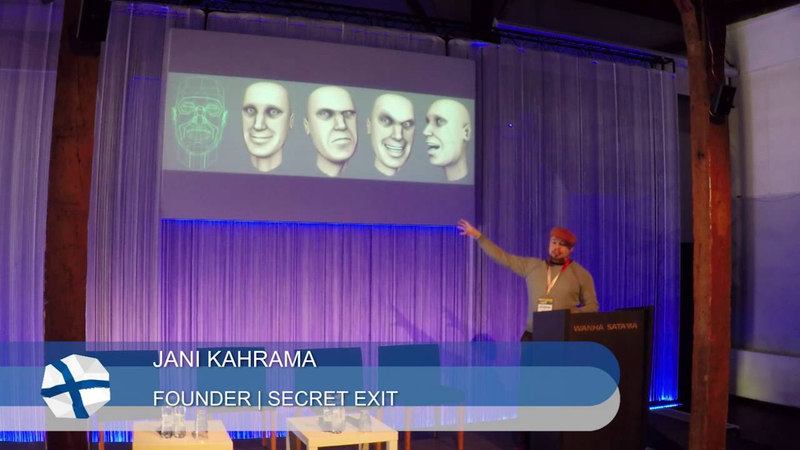
scale VR game which is heavily inspired by Jeff kremens to Sentinel here's a really really solid vehicle physics prototype because unity 5 has really failed in that regard here's an exploration into open subdiv Pixar graphics technology so basically creating a really really low detail control cage and using that to drive a high-quality mesh hopefully that'll make its way into the engine soon if there are any unity people here wink wink and here is a Newtonian physics Space Flight Simulator and we use pre-made assets we just it just makes me things more fun so altogether the one of the hardest things in this phase is giving yourself that time and I'm telling yourself that it's actually okay to take time and not
be productive well it just be inspired learn go read that book you haven't read you know pick up the tool that you you've always wanted to try out and see what comes out of it ideas don't come out of production stress and pressure to our yes we need to have this concept we need to launch new game two months like you only get derivative products like that this having the time to finally prototype and try new ideas kind of without bounds it's liberating it's amazingly good fun so kind of in summary those are just those two things but profitability is so underappreciated in this industry every mobile article is about you know taking in VC money soft launching proving your retention metrics growing as a company and then going for the IPO or your exit and look if you're an indie then none of
that applies to you your company is doing what you want it to do if you want to make good games and be profitable these remain small concentrate on ideas that you find interesting then do that focus on that there's no viable to tell you that in the business model goes like this and even on mobile that you should do it exactly like this ask yourself again what are the reasons you want to be proud about your products do you want to have artistic pride about the game that you've developed or do you want to be proud about your retention metrics and ethical and artistic ambitions aside as an indie you can't afford to do free to play anyway if you are income funded then you're probably not going to have the war chest for purchasing your users so the route one possible route is to
make a good game launch it on PC first if it's a good game there then bring it to other platforms with mobile being an optional a possible consideration it has worked for us it work for legend of grimrock it worked for banner saga it worked for FTL it worked for papers please and all of those games well I'm not going to include turbo this month in that but the other games are games that I love to play and I admire them remain multi-platform friendly because ultimately you unless you really want to go all out on pc then you remember that your business might find its venues on other devices and that's it like I said useless [Applause] far for me far from useless far from useless I think it's just hard this model that you've been very successful a lot of people driving haven't had the same level of success and I mean because I don't think it's just the fact that
PewDiePie played yet I think the fact that turbo dismount had this inherent sense of joy about it it then communicated well through a medium like someone like pewdiepie so I don't you put you talk down a lot of the stuff that you do but in a funny way and I I love that but it it seems to me that you do actually focus on an audience experience first and foremost is that fair whatever this month we know the audience of course I mean there were dismount games before and we knew that it would have some pool for the new games we have no clue what we're doing but it isn't a freedom though isn't that kind of joyful freedom that you've got a luxury point to be able to explore it is i'm just looking awful we have nothing to complain about the first time he's ever had nothing to complain about but anyway so your missus that's that's Brittany I'm really pleased for you but assuming we can get some questions from the audience
actually because I could just carry on talking to you forever as always anyone wanting ask me questions and these thoughts wish I just carry on witchery because i enjoy chatting gianni I'm Kara talking it and so I to get to this kind of this key point I think you were talking about on your last slide this idea that key identify what is success to you and I know we disagree on the kind of free to play versus paper on when it's not worry about that now we've but to me that's actually kind of critical thing and it's actually from a very important fundamental principle about knowing what it is you're making and why you're making it and it means a legitimate thing to say I'm making a commercial product that's going to appeal to 10 million people and you have to build that game but I don't think it's an indie like you said there's an indie decision well there's of course like what is in India is a very vague concept I like two more consider us an independent developer as sort of an indie like if you go indeed and it's morally there's more there are
more artistic considerations than we really take into account but for like even to be in the you have to have that independence for each so if your income funded or publicly funded that's that's the way to go I mean once you give get sign away control to an investor or a publisher then that goes away vishwas I could say some people like let you say it's about the one who got owns the money other people say it's about the the type of interpretation of content that they produce and I don't know if either or and valid or either or I think I both valid in different ways but they they mean different things to what kind of things you make don't think certainly you know I mean I reason is because I you know we've got investors in the rock or again I'm making but they're not involved in the day-to-day decision-making at all in fact you know they just happen to want to help support that process happen so an investor's can enable but they was when they was win
that border then that blur happens I suspect is when you stop being no I mean I want to be clear yeah it's I mean certainly I sound hostile toward everything that is not me and mine and ours but but I mean it's just I mean we're not good at playing the free-to-play game other companies are and like whatever the business model you you throw yourself into then just at least be aware of those choices and their implications I mean there are many Indies who sign up with a publisher thinking that it's a good thing when they ultimately crash headfirst into the reality of milestone payments so so that's one personally I have very little in experience with investors and how that affects your board level decisions but still we're talking about board-level decisions and you're no longer there alone making them so there is a district goal in your company that you need to adhere to house is it really like again I think
it comes back to working and what successes for you whether you need an investor whether you can do it you're alone it's what are you trying to achieve in waianae sounds like you're you're kind of living the dream which a lot of us want which is I want to be able to experiment making cool things right now I will be back with my god in my hand in the future no doubt right now to be able to do prototyping and refocusing without terrible pressure it is amazing great and I'm so glad you got it thanks very much [Applause] [Music] you
Summary
Independent game developers operating in the modern mobile ecosystem face significant pressure to adopt free-to-play models, which often prioritize user acquisition and monetization over creative diversity. The prevailing industry narrative suggests that free-to-play is the only viable path to success; however, this model presents ethical concerns and financial barriers for smaller studios that lack the capital for aggressive user acquisition. For independent, self-funded teams, the pursuit of artistic integrity and long-term sustainability often requires rejecting these industry-standard pressures in favor of alternative business models.
A successful strategy for independent studios involves focusing on high-quality, premium-priced products that prioritize audience experience and inherent gameplay value. By launching on PC platforms first, developers can build a dedicated community and validate their concepts before expanding to mobile or other devices. This approach, exemplified by titles like Turbo Dismount, relies on organic visibility, consistent post-launch updates, and a commitment to maintaining creative control. Financial success in this context is defined not by rapid scaling or exit strategies, but by achieving profitability that allows for long-term operational stability and the freedom to experiment.
Following a period of commercial success, studios often face a transitional phase where they must re-evaluate their goals and avoid the trap of derivative production. The most effective way to navigate this is to return to core artistic ambitions and invest time in prototyping and skill development. By decoupling from the pressure to constantly produce, developers can foster innovation and maintain the independence necessary to create meaningful work. Ultimately, the industry offers multiple paths to viability, and developers must clearly define their own version of success—whether it is artistic fulfillment or commercial scale—while remaining cognizant of the implications that different funding and business models have on their creative autonomy.















Comments