1 free read left. Create a free account for unlimited reading + AI research.
Create free account
How to optimise your revenue and user acquisition funding
Key insights
6 takeaways- 01Shift user acquisition strategies from focusing on install volume to prioritizing the long-term retention of paying users to combat market saturation.
- 02Move beyond singular metrics like effective cost per mille (eCPM) by adopting a holistic approach that emphasizes player engagement and high opt-in rates.
- 03Prioritize Average Revenue Per Daily Active User (ARPDAU) as the primary metric before global launch to ensure campaign profitability and secure better financing terms.
- 04Implement automated, global price localization and continuous A/B testing to identify optimal price points across diverse international markets.
- 05Leverage partnerships with specialized firms for data science and automated campaign management to scale effectively while maintaining healthy margins.
- 06Balance ad-based monetization with aggressive, targeted growth, as the financial viability of advertising models is directly dependent on the scale of the player base.
Ask AI about this video
Transcript
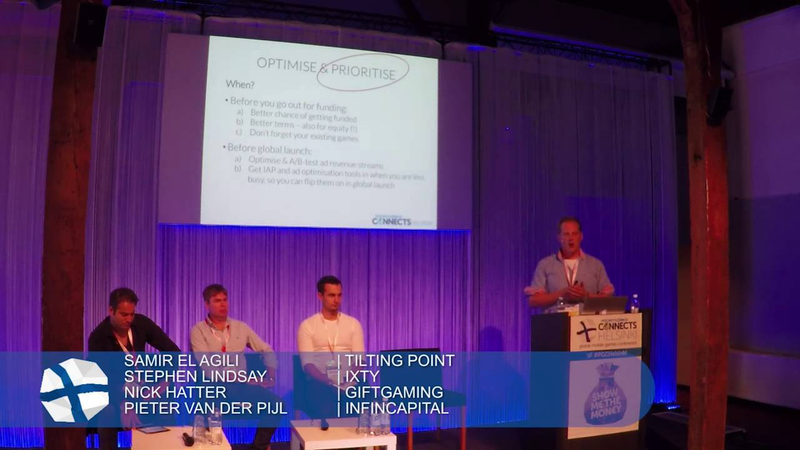
[Music] ok everyone I'm yeah welcome to the panel about optimizing revenue and user acquisition funding and as the name suggests the two topics I go hand in hand and because they're going hand in hand I we've invited a few people on the panel who can tell different things about different parts of either revenue optimization or user acquisition funding and there was also a few points that if you heard Simms talk you know you'll probably hear them again and that's commercial focus business skills and sort of think about KPIs on your existing titles so some of that stuff you may hear again and this is really intended as a as a panel session so say join in all points of
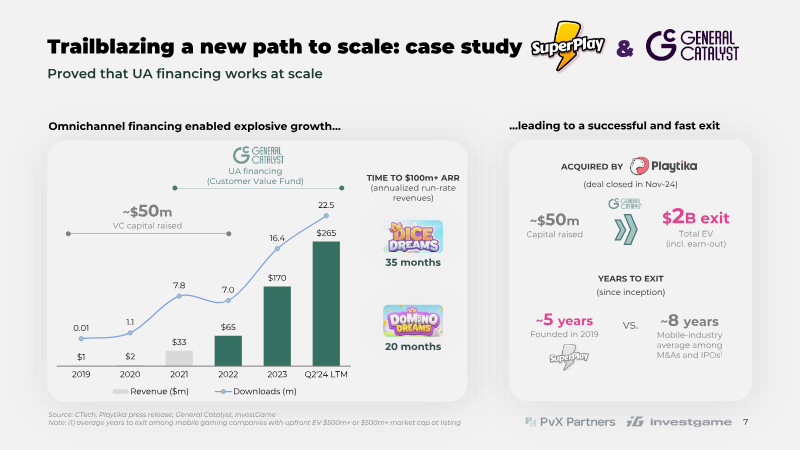
view sort of appreciated and so if you have questions or comments just shout out and also try to address those I'm for those of you who are not that familiar with the concept of user acquisition funding I just sort of very briefly because this session is it's about user acquisition funding but it's mostly about what you should do as a game developer to be in the best possible position to get funded for user acquisition funding Hey so in a nutshell user acquisition funding is is a credit facility so alone so a company such as infant capital would sort of make a loan available to get to a game developer that money is to be used and only to be used on user acquisition spending and the result of your you a campaign sort of assuming
that you're hitting the metrics that you're planning to hit it will be that you'll be generating an amount of revenue so in-app purchase revenue and advertising revenue that will be substantially more than the amount of money that you spend on user acquisition a so as a result you should end up with a tidy profit on your UA campaign part of which you're used to sort of pay interest on the facility and obviously repay the loan that you borrowed to acquire those users but as a developer you should end up with a decent amount of profit so it all sounds relatively simple and it all sounds quite good as with many things in life and reality and how you think how things will be can differ a little bit as with these cosplay girls so it is important to sort of focus a little bit on the
things that you need to be aware of in order to get funded for user acquisition funding so two key things to bear in mind I mean the first one I sort of jotted down as a bullet point is I it does help if you have a black belt in user acquisition now if you are a relatively smaller game developer or you're relatively new to the you a game and you don't have that black belt in user acquisition it's not the end of the world what you should do in that case is get help for someone who does have that black belt in user acquisition and some you can sort of talk a bit more about that and the other thing that I put on the slide is optimized metrics I it sounds probably as simple as it might be sort of be as it could be boring but optimizing your metrics is really really important
now the question is why should you really be watching your metrics well first of all if you're improving your metrics you're improving your revenue it means more cash for you as a developer always nice to have I the other thing with user acquisition campaigns is the idea with user acquisition is if it's going well you'd like to continue it you'd like to sort of increase the amount and that's really how you can give a big big boost to your business but in order to sort of scale your user acquisition campaign you need to sort of take into account that when you start with user acquisition you'll probably get sort of pretty pretty good quality sort of users or traffic and the costs may still be sort of like acceptable but when you start to spend more you stand to start to spend more and more the costs will see it start to rise and you'll also see inevitably that the return on the user acquisition starts to
go down so if initially you're spending a hundred and you're getting 150 back in revenue it's very very nice but at some point it starts to squeeze the 100 spend starts to turn into 120 and a 150 will start to go down to 130 and at some point when you get to close it doesn't make sense anymore to do sort of paid user acquisition so by optimizing your revenue you can put yourself in a much better starting position so if you start with your you a campaign you put in a hundred and rather than getting 150 out you get a 190 you're making more money but also you can go on with your you a campaign for much longer and as a result make much more money for your firm the other thing to really bear in mind is you need to optimize your metrics because you're talking to investors or lenders and if there's one thing that investors or lenders don't like is
funding someone who's leaving money on the table because that's money that could be used to repay the lender or it's I it's basically profits that could end up with you and your investor as a shareholder so make sure you optimize your revenue as much as you can and the other thing that I've sort of highlighted here is it's not only optimized but also prioritize and this is a little bit of a thing that if you're talking to investors or lenders who are coming from like the finance world and your background is in the games world i-it are two sometimes slightly different worlds and people have a slightly different take of or view on things and when I speak with game developers a lot of focus is on developing the game and that is perfectly logical because your product is about delivering the best possible game experience for your
players but at the same time you are running a business and particularly when you go out for investment for equity investors or you just start to talk to lenders it is the business discussion and so if you can improve your revenue try to do that as early as possible try to do that before you go out to investors and it makes all the difference if you can show decent KPI so pointer tune touched on earlier and so if you do that it improve your metrics before we start talking to investors first of all you have a much better chance of getting funded I if you have managed to increase your revenue on your existing titles and you're no longer sort of making like say for example 31st a month but 40 your metrics look better you will you will get better terms on the equity or the money that's being lent to you and so don't forget your existing titles I mean
I know a lot of focus is always on well we're going to build the next new clash of clans or this is going to be great I'm sure it will be and that's what you're talking to about soulful that's what you're talking to with lenders or funders to get that project done but don't forget the titles that you already have and that are able to generate you significant revenue if you optimize it properly so if you look at timeframes what I would really suggest is try to look at revenue optimization before you do your global launch so that's the time where you shoot the a/b testing certain like advertising tools and that's the time to sort of put tools in your game for IAP optimization or other kind of optimization because my guess is that's probably the best possible time of doing it first of all
after global launch you'll be way way too busy and secondly that's the time where you can still test tweak around with things and particularly things like I have tools if it's in there you're optimizing from your global ons onwards and not sometime afterwards I mean why would you leave two months of sort of potential revenue optimization on the table and so that that's money being wasted I mean so as I said we've got a panel here with people who can tell quite a bit about like I said the black belt in UA or the revenue optimization and so what I would suggest is I'll hand over to Nick I am he can tell about sort of advertising optimization and some interesting things there and but I think it's important that you should sort of think about it in time prioritize and and that's another thing that's an interesting talk this morning from Eric Soviet I he would
say well if you're doing you a and if you're a medium-sized or small team you can't do all channels focus on a few that you can deal with and the same goes for revenue optimization if you're a medium-sized to small team focus on the areas where you can optimize relatively easily and I would yet look at tools that you can use that are not going to be too super time-consuming to integrate and implement and that are relatively easy to manage I say Nick maybe you can tell a little bit about how you help game developers sort of optimizing their revenue yeah sure and thanks Peter yeah so my name's Nick Hatter I'm the CEO at gift gaming and we monetize games non-intrusive Lee through sponsored in-game gifts now over the last few years I've talked to a lot of developers and publishers and I've worked with
everyone through gift gaming from one person indie shops to game studios to mega large publishers like creative mobile and spill games and I think one of the most important things I've learned about optimizing revenue versus of all is that eCPM or the effective cost per thousand impressions is one of the most overrated metrics in this industry because incentivize video and offer war they have high eCPMs but we lose sight of what's also important other metrics such as player opt-in rate ie what percentage of your player base are going to engage with at all and the other thing is the frequency how often can they engage I mean are they engaging you know only twice a session or can you can ten times a session now a gift gaming we found that up to 80% of players don't opt in for
incentivize video and up to 95 percent of players don't opt in for offer wall so this means that there is a large percentage of players who are either not monetized well if at all now in comparison gif gaming has you know has a low lower eCPM but it's very high frequency you know the gifts only take a few seconds developers can do loads of them and the other thing as well is that we have an extremely high opt-in rate if you read on Pocket Gamer we recently covered by Pocket Gamer because of this the second most important thing that I've learned about optimizing revenue is that a little bit of effort can yield long term gains so yeah I get it right SDKs are major pain in the neck and because you know vendors say oh only takes a few minutes to integrate well actually it can end up taking a few days and then they can crash your game there's then conflicts
like I really understand the pain I'm actually a former indie developer myself so I'm gonna say it SDK suck but that's not to say that all third party technology sucks there are some really awesome third party technology that can do really good monetization and it's actually not that bad to integrate and not all SDKs are equal so let's take for example xt xt optimizes your in-app purchase pricing globally I think that's really cool tool if you ask me and you know effectively it's going to hit all of your players so there's also other tools as well like cash cash based skill but skill based gaming incentivize surveys real-world rewards all of these are tools you should consider really consider adding to your monetization arsenal and if you can get an increase of ten or even twenty five percent increase in daily
revenue from just a few hours work or even a few days work then it's really worth considering and you don't want to be leaving cash on the table and if you can maximize the average revenue per daily active user then your UA spend will be more efficient and then you'll help convince Pete Peter and other investors to give you money for user acquisition thank you okay thanks Nick and I Steve maybe you can add a few things from the perspective of how to sort of deal with I app revenue and how much you can sort of like sort of get more out of that and also sort of focus on these with like payers and players and yeah okay I thank you Peter and Nick as Peter said I use requisition cost of fortune and the returns can diminish and as he says you need to get your metrics up as
high as you can and one of the things to think about is to make the most of what you've got already the players you have already rather than the ones you're hoping to get and Nick said that only ten percent of AD serves are actually adopted or take convert and when he's got a system where 90 percent converts so immediately that's a fantastic uplift hey ninety five percent not 90 beg your pardon right but the statistics on in-app purchases which is where exterior involved horrific I mean 90 percent of games the only one percent of the revenue goes oh the revenues made by one percent of the players almost nobody spends any money on in-app purchases it's a terrible business model really so getting converting the people who are playing the game converting payers into players it's just an obvious thing to think about before you go out looking
for new players one of the clients we have he said to me that millions of people play my games in Russia and he said the revenue I get for the in-app purchases buys me a cup of coffee and a donut so let's quit this quote and now it does make common sense to think about the price of the things you're selling the in-app purchases in the game around the world one that most games firms work on the concept that one size fits all one price converted into various currencies is the price around the world it doesn't work McDonald's have worked it out Burger King have worked it out most games firms haven't started to think about it at Eckstein that's what we do Google get it Google in a talk recently and I've written it down they actually said if you can find a way to test prices across your markets this is the
way to find the optimal price to help increase conversions and gain incrementally new they're stating the problem they didn't actually have a solution but the solution is dynamic a B or ABC or whatever a B testing of prices across the globe in each market to get to increase revenue you can try and do it manually but if you had 10 games or so you had five games with a dozen that I apps in each game I've worked out you would need to put in a hundred thousand prices a year you'd be you'd have a your back would be hurting your net would be hurting and you'd probably need a team of ten people so work doing it manually doesn't work what you need is a low-cost fully automated system that can do it easy to use for the developer a price optimising system you don't need an in-house analyst that's you want to
avoid those costs specially for small developers you need to localize prices to make them affordable right across the globe it makes sense you need you're going to increase the retention you're going to increase conversions and you're all going to make a lot more money thank you okay that sounds sounds good and so these are sort of like two sort of alternatives that have been so recently coming to the market on ways to sort of increase revenue and tools that are accessible for pretty much like any developer so accessible for everyone some things like you a do require sort of more expert a specialist input and that's why Samir is here and it's be good to get a bit more perspective on that sure thank you so my name is Samira Jilly I'm the chief product officer at a publishing partner called tilting point we
specialize in mobile gaming free-to-play which is at other than what the talk is all about here I actually made a talk earlier maybe some of you have heard it about how the first approach that I start with that tip which is related to what I said earlier but the market today is so saturated with 26,000 games releasing monthly that without a clear marketing plan when you start developing your game without a clear idea of user acquisition it's going to be very hard for independent developers to succeed it has to be something that is that the it's not just I have a great idea and prototyping in it's super fun you have to think about your commercial potential when you actually start making your game so user acquisition starts the day you decide which game you're going to do really a tilting point we I have built a team of experts in the free-to-play world that we're a team of thirty people all have five to ten years experience in operating free-to-play
games and we really specialize in the launch soft launching operating it and of course UA is one of the biggest pieces of the pie of free-to-play today we our team is composed of our you a team alone is composed of five data scientists and two UA experts and these guys are spending their time building automation or tool optimizer tools that ultimately run kanpei ua campaigns optimizes campaigns automatically to make sure that you get the best of every sense that you spend in ua money as Peter was saying one of the hardest piece is in user acquisition is the scaling it's it's actually not that hard to make a game and find out that in some market you're going to have a 30 cent CPI and your game has an 80 cents LTV and you're thinking great this is perfect I'm going to be extremely rich and you run the wrong user acquisition
you're too aggressive or the wrong campaign and suddenly the next day you hit your cap with 5000 installs and your your CPI is not $1 and you don't know what to do it's all about really anticipating in that scale to make sure you're not you don't reach the ceiling too quick it's about making sure that you're continuously renewing your graphical assets how you advertise your game it's no wonder that machine zone is really using all these different spending tons of money doing these amazing trials with various very famous characters which actually have not actors which have nothing to do with their game because they've understood that the most important thing is getting people to your landing page downloading your game and they're gonna do whatever it takes to do that even showing things which look amazing but I'm not exactly related to that game it's eventually
gonna change I mean I believe that at some point the market is going to be mature enough to say okay well all no chachani is doing all these things in that commercial but like the game has nothing to do with that so it will it will get to that but it's it's it's a it's a difficult science to to master this is why I've been a developer most of my career for 12 years I only joined tilting point a year ago and and believed in the vision because I understand as a developer how difficult it is if you have a team focused on making the game how difficult it is to plan your user acquisition well and how how much of an expertise it is today where 99.5% of the market is non profitable when you're talking user acquisition I think I had one other point that I want to make yeah well the the other important point we were talking about one of the most important things to look
at in free-to-play games today and the one thing that usually drives me crazy is when developers just come to see me and say I have an amazing game day 1 retention is 75% which actually never happened but 55 or 60 percent and they stopped there because we the reality is that we know free-to-play success is based on long-term retention but more specifically it's based on long-term retention of your paying active users and the most important statute look at would be what is your day 90 paying active user retention that is the most important stat I want to hear him that is over 1% I know your game is going to be successful in today's market and in general it's 0.0001% that's what that's why it fails another very important stat you mentioned is reengagement or more specifically reconversion people that spend one spend a second time you know
those are the two stats that are really I think the ones that we love to hear when talking to independent person out there game and when they're good we know there's there's something there and somewhere maybe it would be helpful perhaps this will give an example of how you can to still deployed consult in achieving sort of like improving those metrics and maybe given an example of what you would do in home you would do that sure sure so wondering of the example we used earlier in presentation I'll use the same as a game called photo finish from developer called the third time which is a Florida in the pen developer that came to see us actually after they had already released the game so even though big part of our business is our relationship with Apple and Google and getting the game featured this guy had these guys that already released did not get a great featuring had an interesting concept a pretty niche concept which made us believe there's potential
user acquisition opportunity and the first thing we did with those guys is just say okay you know we're going to run a test for you for free and we're simply going to use your money a small amount five ten thousand dollars and do a specific target user acquisition campaign on various channels in this case I believe we mainly focus on on Facebook and use our own tools to optimize it progressively and seeing if we can if you can see a potential scale there that worked out and the next step where that developer was to transfer the the publisher to our publishing account which is called actually game Alliance and not tilting point and we've found there we started spending progressively money as I said using basically creating initially a list of campaigns and then using our own tool system that everyday checks how the
campaign is performing and it's all about of course precisely targeting various audience of users most powerful tool out there is local Facebook look-alikes you're trying to find the local likes of your top spenders that's what everybody's trying to do and we've spent time building these systems that automatically essentially after you run 30 days of campaigning automatic finds those users for for us and keeps on refining the user acquisition okay and then maybe a question for all three of you sort of what is sort of like what kind of team size is what I mean and what kind of level of sophistication do you see with developers who come to you to use your tool or to use your services I mean well how does it range or does that vary maybe I'll start just by saying that generally on a typical game when we partner up with the developer we will
assign full-time a team of seven people so actually it's a pretty significant amount of people we're talking about games that can make two million dollars or more in revenue and obviously sometimes much more but it's a significant team that is really and sometimes you're talking about developer that has a team of six and we're adding almost the same amount of people internally to help them run this game in terms of live ops and user acquisition so it's a it's a significant amount of people on top of that as I said we have five data scientists that are spending their days across games looking at data and writing scripts yeah and for me in our business which to remind you is optimizing the price of in-app purchases across the globe I mentioned you need an automated system which is what we have and it really is not important for me how big the client is with in terms of the clients that we
would accept if I met a guy earlier today who's on his first game doesn't know how it's going to go so he's going to do a soft launch in three months I'm very happy to have him it's not a lot of work for me to to put them onto the system it's actually it actually helps me actually it helps me improve the system because we're not a very old company we've been going two years I like to hear his feedback and there are we have sort of competitors that competitors in the space who have very high barriers for entry and some of the what I would thought would have thought quite big games firms have been turned down by them luckily for us we we and can take people from across the board and one thing has been quite surprising is I won't say the names but we've had given demonstrations to some very well-known firms and been surprised that they have done almost nothing in terms of localizing in-app purchase prices across the globe a real surprise here others we know do so it's it's there's no rule of thumb all they're big they
must be doing this we ask everybody so for us it doesn't really matter I said same for your neck or well yeah we more or less but they we so thing is that we we really like to offer a kind of White Glove service if you like to do anyone who works with us I mean we I want to provide you know the world's best support basically so we are a little bit more selective about who we work with now but it is again like like XT its gift gaming is you know it's quite scalable it's generally easy to integrate we're now SD Kahless it's you know it's one of their one of the easiest things to integrate so doesn't require a huge amount of support but we still like to be there I don't you know some of our clients have lots and lots of questions and we're happy to answer that but for us a good size is like you know someone who has at least you know at least like 10,000 ma use because to make any kind of money any kind of
significant revenue from in-game ads euni-unni do need some some volume okay right talk about taking questions from developers I mean either questions here in a room I guess this is the opportunity would go and find the sort of afterwards with probably at the drinks events later but any questions for now we'll take a maximum of ten okay well thanks very much I hope you find the talk useful and like I said if there's any questions afterwards just come round and give a shout yeah thanks very much Peter [Applause] [Music] you
Summary
Securing user acquisition funding in the competitive mobile gaming landscape requires a rigorous focus on revenue optimization and the demonstration of robust performance metrics. Developers must prioritize key performance indicators, specifically average revenue per daily active user, well before a global launch to ensure campaign profitability and secure favorable financing terms. Rather than relying on singular metrics like effective cost per mille, success stems from a holistic approach that emphasizes player engagement, high opt-in rates, and the implementation of high-impact, low-effort monetization tools.
Market saturation necessitates a shift toward data-driven strategies that prioritize the long-term retention of paying users over simple install volume. Manual processes are increasingly insufficient; instead, developers should leverage automated, global price localization and continuous A/B testing to identify optimal price points across diverse international markets. This technical precision, often achieved through partnerships with specialized firms that provide expert data science and automated campaign management, allows developers to scale effectively while maintaining healthy margins.
Ultimately, the financial viability of in-game advertising models is inextricably linked to the scale of the player base. Because ad-based revenue relies on high volume to be effective, developers must balance their monetization strategies with aggressive, targeted growth. By integrating sophisticated audience targeting with refined monetization tactics, studios can maximize the lifetime value of their titles and ensure the sustainability of their user acquisition efforts. This comprehensive approach transforms game development from a creative endeavor into a disciplined, data-backed business model capable of attracting consistent investment.
















Comments