1 free read left. Create a free account for unlimited reading + AI research.
Create free account
Big Bang Racing – A journey from game maker to social racer
Key insights
6 takeaways- 01The game achieved a volume of 1.3 million user-generated levels within the first five weeks of launch.
- 02Automated, player-driven rating systems effectively surface high-quality content, eliminating the need for manual developer curation.
- 03Shifting from content creator to platform architect allows developers to build a self-sustaining ecosystem where players generate 250,000 new tracks per week.
- 04A 'toy-like' level editor that emphasizes creating for others rather than oneself successfully drove 13% of daily active users to contribute content.
- 05Integrating social mechanics like YouTube cross-promotion converts 10% of viewers into active players.
- 06Successful social games function as communication platforms where players interact through the act of co-creation rather than just chatting within the game environment.
Ask AI about this video
Transcript
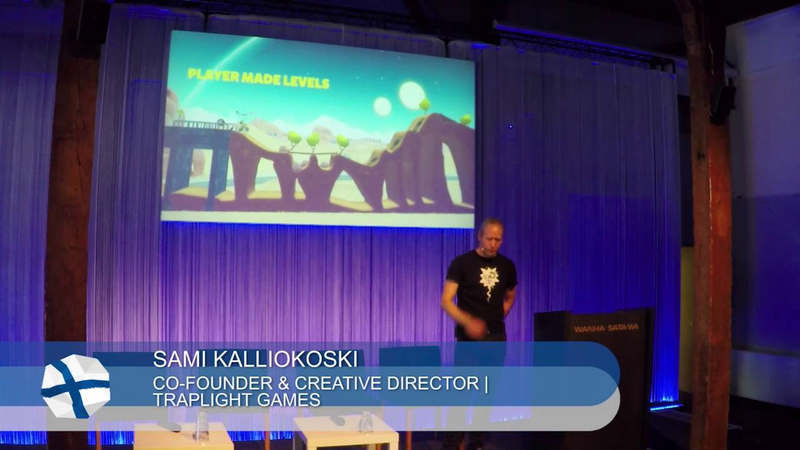
[Music] all right so I'm Sami galovski I work as a creative director trap light games 150 kilometres north from Helsinki and we released this Pikmin racing game a month ago it's all about user incumbent and and it's truly physics platformer like racer and the thing is that all the levels in a game are made by users so what we do as developers is to provide editor items different kind of a player characters and then we hand them out for the players and players create all the levels and create the game for us
basically so I thought by making indie PC games 15 years ago ended up doing Java mobile games for THQ pilots [Music] we really sturdy branded games so so and one one particle thing is that when you work with the brand's if you are ever going to work with France please read that brand guidelines document and understand what they are trying to tell you that's that's the best advice again I can I can tell I can give you about the brands branded games and it's not that easy that you would imagine so anyways 2010 we found a trap like to make indie PC games in the mobile games and ended up doing contract work for other companies this was first three years of our our journey during that time we also
made some original IP ideas and then one of our level creates and based ideas got funded by Nordic games project but of course we had some problems making the product fun enough so we had the trade idea that add some stuff to the game to make it more fun so one year later we kind of found out that you cannot make anything fun by adding software you just change the game totally and if you really want to want to want to find a fun from the from your game you take stuff out from it and then you might find it but what we did this this floating of the game we had to extend our level editor and it it kind of a started looked like game maker to us and and the basic thing was that you could draw everything you've draw ground you could draw all these physics objects you could draw backgrounds you could draw connection between things so you
could visually script logic over there and and you could even do the UI with it so so we have this this thing going on this ozone on working on PC and Mac but the games that we were planning to create with this was for mobile so we decided to go a bit future and create a little client alike game maker for mobile and focus only on user-generated content so we don't be any making any levels for the game but we would be giving tools for for people to to create and take them ownership of the product then we went went around and asked from industry partner interested friends what do you think about this idea and that and the reception wasn't what we were expecting only a fraction of players create levels using medic levels or a low quality it doesn't monetize and my personal
favorite is that they died in 2012 but Microsoft luckily take care of this and both my and my craft so so it's a we were standing all with three problems over here so only a fraction player players create levels and we figured out that the reason for this is that the level readers and the game makers are kind of engineering fantasies so the tools are created for that creating something functional instead of creating or playing so we thought that we make it a toy alike and then so people can play with it and then there was this for another problem that was about the quality of the levels and we won't put our heads together and figured that maybe this this problem is because all of the users tournament games are kind of a sandboxes and you create something for yourself not for others and so we
create clear goal to create for others and and and well I think it starts working and about this monetizing thing we since is our game was about creating levels we we moved for and looked around what kind of a games there are four level pro-christian and and we we kind of decided that we can we're not gonna do this this unusual road where you have lists of most famous most popular levels or newest levels or or or hardest levels we just have one path for players to Bay play through from level 1 to million and and that was our solution the one one one thing that was well a problem for us was the scope of the project so we had planned all these game maker features like multiple winning and losing conditions worries play characters and and also scriptable visually stripped of all logic and we
threw that always because we wanted to focus on writing and creating racing tracks and and still having that user account element as a priority well why did we go for it in the first place we yeah there are a few benefits from you Senate Congress you have endless conduct for your game for example in big fundraising 13 persons of daily active users create levels every day so we have kind of a 30,000 level designers working for us this amount of creators add up to trade college some really many great quality levels so it helps with their with the quality of condom it has some marking the advantage is it there are not too many of these games out out there in the marketplace and the marketing videos also stands out but most important thing is that the used tournament games have that is in
her and so so within them so people create stuff and they want to share it with others so this kind of helps you with with with if you want to look it from the business perspective it helps you with with the user acquisition so it's a it's a organic prod but all this we learned later we the real reason why we wanted to do user account was just we thought it was a cool thing to do so the big fundraising is all about the player made levels there are 250,000 player made levels coming every week since we launched five weeks ago we have now 1.3 million levels surprising you a few of them are offensive at first we thought that there's gonna be lots and lots of this well genitals and and but what they are none and if we have had a few 911 things going on over there but but but the offensive thing is mostly about names and so on but because we had a person
but since we have to so many levels how do we recognize the good ones and to be honest we don't we trust players to do it so so every time player plays a level in ant they rate it so so that's how we how we kind of and know what's good and what not and that also gives ownership of the of the product for the for the players we have some automatic filtering in when people are creating their walls we measure if there is any effort put in the level in the in the creation but that's that's all we do this is something that the rating screen for a new level so so there is an actual creator that they're talking to you so it's a kind of a social thing how do we keep them fresh because they you might think that they start to look one another because there are so many of them but people are quite clever clever
they when we introduce a new level editor right and they combine that item with the existing items and they come up with the new things that we didn't come up with and when someone someone figures something out someone else takes that and starts makes it even better and since we boost the reason create since the last week's questions are not a highlight of anymore so there are trends in a in a game and we don't have that kind of proposition that the player on level 20 or player on a level 123 have different levels coming they have all all have all get the newest best content so so it the trends affect everybody from the from the creators first fictive when you create something you want to have people playing your levels so how do we get players fall these fall this levels first we give first we drive people it's a handful of people to these
levels and we instant device that buy diamonds giving diamonds for people to rate the levels and we give we get the initial rating and some metrics for example how long it takes to finish the level or how many times you die before you finish it and and the bidder levels get more exposure after that one and it's low upper in the players pro-christian path and also the creator's can market their their levels themselves so they can take ins share it in different social media and when you're a part of the of a team in a game when you create something it gets automatically published in a team chat so you get 50 players immediately and also some comments in the farriner in the best case scenario and the best levels create following so 60 we have 16 creators that's not much but it's kind of a they have 10 or more
than 10,000 followers and 500 creators that have more than 500 peers yeah 100 followers that that amount is quite enough for us to get because these guys are publishing levels daily basis so we get lots of good levels where we buy these guys player named noob has 20,000 followers and he with his 30 levels he has scattered 1.1 million likes and his levels are quite unique they are kind of automatic levels you don't have to play through them you just start the blue ball and the level kind of machine it's the player through the level and it's kind of a fun to watch I believe this is the one of the reasons for his success and we have also one Spanish youtuber that has 40,000 followers inside the game and this is this is mainly because his huge hit 1.2 million you followers and he has been making making videos about Big Ben grating and
and he's converting many of those viewers into our game so but but since we wanted to create user account game and the usual method is that you are playing it alone but we wanted to have it make it a social game so we we were figuring out how do we get the players over there because on a mobile you could really can do a physics-based synchronous multiplayer so we figure out ok let's highlight the creators that they in the load experience of every level so so we give we show people at these levels are made by other people and it gives immediately a collaborative feeling for them for the game also the facebook pictures and and all these flags and names and team names give a feeling of a person behind their level and it's kind of a sometimes you
see young kid has made a level or you can you see the 25 you know guy has made something or couple that has done something then you start to figure out maybe they did together or something and it builds up a story and you can kind of a reflect your own story against the creators and and then you kind of find out who are you playing with this this game oh we also have this ghost opponents told so we have those creators being highlighted as the level makers and then we have other players inside the levels highlighted by by these these racing opponents as these overrating opponents so for example smoke colors over there from from the Netherlands I believe I said he started with his girlfriend and he has updated this is fatal to 677 CC so he's my racing racing rival over there so I get kind of a kind of a
feeling of the person [Music] we met 70 million ghosts everyday we have all more than 100 million record ghosts on various levels about sharing the creations we give people possibly the shared levels to methods they can share the level by link on a screenshot or or taken taken taken shared give when they die in a level so people are sharing 10,000 levels a day and this is discerned in some organic roles for us this is this image about player when the player dies he gets this gift playing over there and so we can share it right away also we are doing this this YouTube cross promotion thing so I said because our game is a user
account game it's easier for youtubers to activate the players to do something in the game so they asked them to create levels to get them to participate in competition or try to beat someone's time in certain level and ten percent of those viewers cornered in the game we've been we've taught this is working so well that we need to grow this to another direction also so we have a platform for new youtubers to grow inside our game so they can add their YouTube channel into their profile and whenever they create a level and someone place the channel is shown in a rating screen and it seemed we found out that 10% of people who see the link press that link actually if the level is good so we have a two way to a thing going on over there and what we learn by all this is it's a social game a social game is something that players communicate true
not with so they want to communicate to other players not with the game also so many a is using a condom use it uses our current user account based game is also so so merry it's a no if create content is made shareable and socially actionable for actually in repeat memorizing the levels are kind of a tweet or Facebook posts and all the accents of players circulate around those levels and one thing that we really like about you Jenna Colin is that that we created the game with the players it's not we creating game for the players but it's a kind of a two-way thing going on over there also [Applause] you think about the players communicate
through the game not on the game I think that's something that I think it's a big lesson there particularly with you know we have the rise and fall of the sort of Facebook influence in terms of social thing you see this massive kind of rise in terms of youtubes and PC have really seen that effect happen in mobile so much yet and I think part that it's exactly like you say but I think there's also another factor which is like the game has to effectively address not just the players interest but their audience is interest yes and realizing that the player isn't your final audience is a really kind of magic moment yeah what's free is that your experience - yeah it's so amazing to find out what kind of things players invented in our game we never we had many many levels created advanced and we thought if we have to populate the level pro-christian like like 50 levels ahead but we found out that those players are actually making much better levels that
we were I mean so so we our job as a developer turned into kind of an introductory thing that we introduced some kind of element in a game and we kind of help people find it and that's it then the intent the players take the ownership of the thing no that's much more satisfying yeah it sounds weird doesn't it because it's pain that you're creating a platform for people to do their own thing on where's the fun in that and actually it's more fun mm-hmm we had this this weird thing with playstation home where people used to wear this gold suit which had an animation of money coming out the pockets and it was the most expensive thing at the time and people would literally correct together or in single spaces just to try and make sure everybody in the same space had that suit yeah why did the robot dance some reason just randomly yeah and the people would upload that to YouTube and things like that so you know I think this is incredibly kind of very important space and I think much neglected so there's one lesson that you would say to indie
developers in the room why should they spend the time thinking about those social factors well tell fewer limits and if you think about it from there from them if you are doing a free-to-play game you need to think about your audience from the get-go earlier you get any player to get some feedback for you that's that's the first thing they you then you know you know doing the right things in the game in the development if you get feedback where and you see what's what interests people and what's not but another thing is that if you include them in the development loop they take stick with the game they take give you ideas about the game today they think you kind of owe you co-create the game with players at that point and and so there are many many small things over there but I think most of this sawing thing about that is to enable something that you don't know
what's gonna come out from there and then the players can actually tell you what to do so it's fun I think it's pretty risky in the process as well because you've clearly got an audience who are pre-qualified who know what they want the risk book is making sure you still make a gaming addressable to everybody else thank you very much thank you [Music]
Summary
The development of the mobile physics-based racing game Big Bang Racing serves as a case study for the strategic implementation of user-generated content (UGC) to drive engagement and retention. The primary thesis posits that by shifting the developer’s role from content creator to platform architect, studios can foster a collaborative ecosystem where players take ownership of the game, resulting in a self-sustaining cycle of content production and social interaction.
The development process involved transitioning from a traditional level-design model to a "toy-like" editor that allows players to visually script logic and build tracks. This approach addresses common pitfalls in UGC games, such as low creator participation and inconsistent quality, by focusing on creating for others rather than for oneself. Data from the game’s launch period highlights the efficacy of this model: 13% of daily active users contribute levels, resulting in 250,000 new tracks per week and a total of 1.3 million levels within five weeks. The game utilizes an automated, player-driven rating system to surface high-quality content, ensuring that the best levels receive exposure without requiring manual curation by the developers.
Beyond content volume, the game leverages social mechanics to drive user acquisition and retention. By integrating YouTube cross-promotion, team-based chat sharing, and ghost-opponent racing, the developers have successfully turned the game into a platform for social communication. Key metrics indicate that 10% of viewers who engage with creator-linked YouTube channels convert into active players. Ultimately, the findings suggest that the most successful social games are those that enable players to communicate through the game rather than just within it, effectively transforming the player base into a community of co-creators.