1 free read left. Create a free account for unlimited reading + AI research.
Create free account
Learnings From Downsized Social Media Games - The Metacast by Naavik
Key insights
6 takeaways- 01Western social media platforms are pivoting away from standalone gaming initiatives to refocus on core business priorities like community growth and augmented reality.
- 02Attempts to integrate high-fidelity gaming into Western social networks have largely failed because traditional game experiences clash with existing user intent and platform-specific engagement patterns.
- 03Successful platform gaming integration requires a native approach, such as TikTok’s use of bite-sized mini-games to enhance engagement flywheels, rather than bolting on traditional game mechanics.
- 04Innovative monetization strategies like social discounts and customizable bundles are effective only after achieving strong retention, though small teams often struggle to reach the statistical significance required to balance these economies.
- 05Subscription services are being utilized to mitigate rising production costs and economic volatility by securing a loyal user base through diverse compensation models and cloud accessibility.
- 06The industry is shifting toward subscription-based retention models, such as Microsoft’s Xbox Game Pass, to create barriers to exit through social pressure and platform stickiness.
Ask AI about this video
Transcript
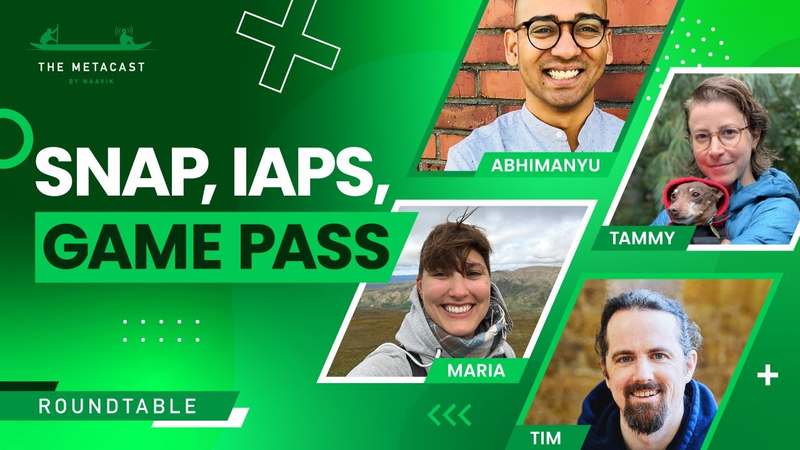
[Music] actually i don't even have a snapchat account so i don't really know like what people do over there but people come here to snap and [Music] hi friends welcome to the metacast dynamic today i'm joined by ami manikumar you know him he's the co-founder of navik tammy levy chief games officer at captain tv and tin manville cpo at hutch hello hello hello hello great to be here is that the cool way to say it hutch it's sort of emphasizing the age yeah definitely all right um today is a product party we're all product people hopefully hopefully we
can deliver on the prague party right right some numbers what's the product party jingle because [Laughter] okay do not hire us to write jingles that's fine before we carry on uh some sad news some happy news so nico he is amazing and he's going to move on to new adventures influencing you know building web 3 games and what that means so he'll no longer be the crypto corner host on the meticus by navik and the happy news is that we're looking for new hosts for that podcast so if you're listening and you're thinking oh maybe should i should i not don't worry i thought the exact same thing before sending navic an email and then suddenly becoming a host honestly no worries we were looking for
someone who has a good grasp on crypto and gaming but you don't need to really have experience in in podcasting as long as you're excited to do it and just send an email let's let's let's get to know you when i when i sent the email i thought who am i i'm nobody in the games industry i'll never become a host and then i didn't yeah take take a chance reach out to us yep definitely happy to hear from anyone interested so uh yeah just reach out at metacast navic.com and i will reach back out to have a call with you cool all right okay and it's funny right it's fun it's fun it's fun it is it is really fun it's a it's a great way to just gain knowledge every week so i'm very very happy to have taken the the opportunity and then i get to hang out with you which is the best thing one of the things i look for the most in my weeks and to pick us up from some sad news of nico
going away mania do you have a fun navic gamescom party quick story you could share with us uh maybe not about the party though like i mean the party was really really great so you know big thanks to phoenix games for you know uh funding the whole thing and also dof and misca uh in particular for you know even like bringing up the whole idea so i think it was a huge success we probably had like a little over like 400 people like walk in and walk out and it was really good just like meet everyone after three years of no gamescom you know so that was a great meeting point um gamescom itself um yeah i was a little bit underwhelmed with you know uh the consumer section of it a lot of the big companies weren't really there and then kind of get to see the
usually in one hall there's always uh ea with like you know it's huge stands in red and like on the opposite side of the hall there's always you know activision blizzard with its huge stands in blue and you kind of stand in the center and it always feels like this you know light company war kind of a thing between them and their games but yeah that was it there wasn't like too much of that this year um also you know blockchain gaming footprint at least in the main halls and the main conference area was really really minimal i think most of the blockchain gaming conversations were happening in the neighboring hotels not in the main area but um but yeah interesting story i guess um maybe um maybe one thing one thing i had learned about aaron because i also got to meet aaron and thomas you know for the first time ever in like three and a half years of like building the building navic
but an interesting story about aaron is i got to know he is he is um very very fascinated by ice cubes or you know i uh i don't even know if it's like cubes or like ice spheres um and he loves to like look at the i don't even know how to say it but like the water concentration in ice spheres and if it's like you know equally uh spread out across the whole sphere or not so we were like on the first night when he reached we were sitting at this bar and having having a drink and you know just kind of catching up and uh in the gla in the glass uh we ordered like these old fashions and in that glass it was there was a big ice sphere in it and after he finished his drink he he told me about this like obsession he has with ice spheres and he basically pulled out the whole sphere in his hand like with like you know
water and drink kind of like spilling from his hand and he was just you know observing it and and yeah that was that was something new i learned about aaron that's the kind of stuff you don't really get to learn about people over video so it was pretty good to like meet him in person and you know get to get to see his quirks a little bit but yeah that is a fascinating [Music] hobby next time he's on like and girls yeah next time he's on i think he should like definitely ask him more about it i forgot why he has that fascination but he does so i this is so random i don't know what else to say about it i think we'll carry on and then i'll try to investigate i'll do some googling into ice facts for the next time that he's on thanks for sharing that's that's good now everyone knows about aaron's fascination um of ice yeah
so before we're jumping into the topics this is kind of a topic but not really a topic it's more for summary because uh yesterday tencent announced that it increased its stake in ubisoft and i thought we should at least gloss was over it so it's going to increase its minority stake and it's valuing ubisoft at nearly 10 billion u.s dollars and it's also following isis acquisition of quantic dream quantic dream developed heavy rain and detroit become human and tencent also recently increased its stake in from software so the transaction this is really interesting to break down um the transaction gives 10 a total stake of 11 through the acquisition of the stake in the family's holding so they have a direct stake with ubisoft and now they're requiring a stake in the family's holding stake they acquired 49.9 percent and that gives them a 5 voting rights um in the gilmore
brothers limited i'm trying my french here and tencen also has the race the rights to raise its direct stake in ubisoft to 9.99 from the current 4.5 percent and cannot go above the 9.99 for a period of 8 years i think there was a lot of discussion where there were some rumors about whether ubisoft was looking for someone to acquire them or not um there were some doubts about that and i think this is this seems like a good intermediate solution it's not a full acquisition they got an investment i think it's around 300 million do you have any very quick takes before you move on yeah at least from my side like um i've actually not spent as much time as i should probably looking into this but i also know that when ubisoft kind of put out the whole um put out the idea of you know they want to like explore these strategic
alternatives and like potential acquisition and such they also had very very high uh expectations for it with you know a pretty like solid premium on their current stock price and such and i guess the one thing we'll probably like cover it in the newsletter this sunday or next wednesday and maybe even the podcast but um yeah the key question for me is like did ubisoft kind of get what it wanted through this but the whole like stake in the family holding company that's like a big question mark i i i don't get that um like why they would structure it like that but yeah i also haven't like really looked into it but that that part felt weird a little bit yeah i honestly don't know enough about all of these state stocks and how it works i'm really curious to read more content about someone breaking down the whys behind all of these decisions um perhaps in the navigation newsletter yeah i think that yeah it's also very interesting because i think uh tencent just
in trying to expand their footprint they come up with like all sorts of interesting deals and setups and you know splitting things in in different ways and having different gates so just it's very interesting how they just continue to do that and you know slowly but surely like you you read up and you're like oh tencent has a hand in that or tencent has a finger in that and it's just like they're pretty much everywhere yep at the end of the day the difficulty of the chinese market and the issues with getting their games approved to release their in the end it might actually turn out to be one of the best constraints that the company had to find a way to work around and potentially all leads to very successful long-term results well we'll have to see all right we're going to jump into the topics i sounded very canadian there with my all right um
so we're going to be looking into social networks downsizing their gaming initiatives so we'll be looking at a few companies we're also exploring the creativity within iaps so mobile product managers get excited about this and finally we'll dive into xbox's friends and family game pass and what that means to the players and what that means for the strategy tammy you're first on the block uh yeah so it's it was an interesting week uh the last week with uh different moves and changes from various social networks in terms of um changing let's call it changing their focus and prioritization around their gaming initiatives um if you don't know what i'm talking about uh there were three announcements uh from tiktok announcing that they were downsizing their gaming initiatives to facebook or meta announcing that they
were going to shut down an app that a lot of people might not be familiar with called facebook gaming um to an even bigger restructuring and reduce investment from snapchat and as i was reading you know a lot of these different uh announcements and just changes the the thing that comes to mind is like games yes games are hard and a lot of these um companies and in social networks they see the value in going into games expanding into games but after a couple of years it just gets really hard for them to justify that investment and this is what we're seeing now um some some numbers uh before we kind of talk a little bit more about or our takes on this but um the one that i'll go into more detail is the snapchat one which happened last week they announced um kind of their whole restructure it impacted more than just um snap games
uh they sadly laid off 20 of their workforce which is over a thousand employees which is huge it's always pretty hard to read uh those numbers just seeing how it's impacting gaming and the broader tech um and they announced that they're gonna be focusing on their community growth revenue growth and augmented reality initiatives um so a lot of thing basically everything that they had tried to expand into was impacted from uh snap games and and what they were calling mini apps um they've been very clear that they were moving all of that to maintenance mode they had acquired a couple of independent apps one of them called zenli they're downsizing all um those apps as well uh they had a uh if you didn't know those gaming apps where were those gaming apps the the zen league uh no there were social social
apps one was like a social mapping app um the other one i forget what it what it was um they did have a couple of gaming apps what and they're doing is moving them to maintenance mode basically yeah they they had a a hardware initiative with like a drone camera called pixie they canceled that they had oh that's canceled yeah that's cancelled that's crazy and yeah what about the snap classes are those also cancel so that that was interesting because that says that they're in their announcement that they're just narrowing their focus for so the spectacles that they call it they didn't they did not call that out as uh cancelled just narrowed their scope uh and i think that part of it is that it falls under their ar initiatives um and it i mean what what they were developing was like pretty interesting i
don't know if you guys have seen the the demos of of ar with like their respectable it was pretty pretty impressive um so we'll we'll see what they end up doing there uh side note i just think it's it's super hard especially with like the spectacles and the drone camera piece it's so hard to be a hardware company if you're not a hardware company and i think that that's part of what um you know some of these initiatives really show and like kind of this change of focus right like if you're a software company and try to go into hardware it's it's not the same skills um it's not the same expertise and also like takes your focus off of the software part of it especially with like the big tick-tock elephant you know like you know gaining market share but yeah i i realized how behind i was on knowing what snap did when i was research researching for this topic because i thought snap was snapchat and then i
started going through it i can't really find this thread of focus in their strategy so it's it's very sad that they had to lay off um a lot of people i do understand after researching why they made this decision especially considering just the basics of your revenue your costs and whether you get profit or not yeah yeah yeah and like they they also have like web three initiatives i think that's also in the in the shutdown so it's like just like a lottery list of things that they they were trying right uh specific to to games though one one thing that i find um very interesting is that they were trying a very similar uh strategy to what facebook trend with the instant games and facebook shut that down in 2019 so it's it's you know almost you know the market has changed
they approach it differently but it's almost history repeating itself and we'll see if history repeats itself again with the tick tock games exactly that was going to be like my my next one sorry no no it's great it's great right it's like tick tock is uh i think that they're no even though they called out that they're kind of reducing their gaming focus i think a place where they're still going to be investing is in their mini games in their instant games or whatever they'll call it bite-sized games um so we'll see we'll see if tiktok figures it out but it's just very interesting to see that social networks see this value they want to see gaming come come to life and they just haven't been able to find the right approach to right to sign um one of the pieces is their monetization right like they're for these games to work uh at least
they've they've tried to do um administration and with you know all the ad network woos and you know apple app tracking you know it just feels like snapchat is another victim of that in in that regard specifically um they try in-app purchases but you know goes back to like the 30 cut how do they approach this you know these are not deep games that monetize super super deep um and you know that's that's really you know they could try subscriptions which netflix is kind of going down going down that path of like hey we offer games within our subscriptions so it'll be interesting to see um you know where all of these initiatives net out it's sad to see that snapchat that already had a ton a ton of games like over 30 games they had partnered with some huge
names zynga zeptolabs pickpock uh voodoo was one of the huge ones that they worked with they had really good engagement like 40 of their users and they still couldn't couldn't quite justify it so uh the the question i wanted to just open it up to all of you guys is do you see a model that could work out for um social networks bringing games kind of more deeply integrated into their experience or is that just kind of a pursuit that is is not gonna come out what the the thing that i i hop back to is whenever you're looking at some kind of new or risky endeavor you look for examples of success in the past right uh if there's been no examples of success then like okay wow you know be careful about this uh but in this case there's a clear one right facebook in the pre-sort of mobile game zero was it facebook and games was absolutely
colossal so there is this one example of that working but then i don't think there are any others so and when there's only one you have to be almost as careful as when there's none because like maybe there were some very special circumstances there's wechat i was going to say their sweet chat right i'd say like for it's like wechat but it's a completely different market right yeah it's a completely different time and place yeah yeah in that market it's actually like it's working to some extent but i think that also kind of like um uh that just calls out the difference in just audience uh preferences from in between the east and the west um and but yeah i mean sorry to cut you off them but i just wanted to say yeah there's also like wechat uh that is like uh but there's there's a sort of a special kind of monopoly arrangement going on there in a few ways right which yeah yeah i think
i think the difference is facebook is a social app and i think wechat is almost a life management app you can do everything related to your life within within the app nearly call a taxi manage your bank book a movie ticket and so is it games that are working in wechat or is it just such a big behemoth where you do already everything almost as if it's your smartphone yeah i think exactly part of it is where are you at in your head like i am on my phone and i'm like i'm going to go to a social app or i'm going to go to a game if i'm on wechat it's like i am in we share rather than like rather than being on my phone i could go to or a game it's your operating system right like the like we changed the operating system yeah yeah i actually think like snaps uh the whole like minis initiative was was pretty much like parallel to what wechat was trying to do with the whole super app because with all these mini apps i mean games was only like one part
of it but you could also you know book tickets and like rsvp to events with your friends and basically like all these social group activities were all these mini applications from you know eventbrite or coachella and you know all these different companies so i actually think um i mean yeah again like i haven't like really looked deeply into it but the whole mini strategy that they were trying i felt was trying to like bring super apps to the west but and that's why i say like it just kind of shows the audience preferences and you know they they really don't want it and like for the game specifically um you know the more that tammy was explaining like how these game experiences are it just felt like um the big question for you know like at least for me or probably even like some more of the audience would be like if i'm basically going to get a game experience that is closer and closer to
another games experience that is basically its own app which is you know it's a game with ads and iaps and whatnot why would i play it on snapchat and not just like open another app uh and i also have my friends over there you know and it's a more it's just a more high fidelity experience like that so i felt like there was just like this fundamental you know problem with how they were approaching games i felt uh uh on on snap but i think the way tick tock is doing it is maybe a little bit different so tick-tock is not really like at least what i've seen on the app until now they're not creating like these full-fledged game experiences right it's it's more these like very very many uh small mini games that is native to the video platform so you have to like you'll have to like move your head on video to make the you know flappy bird character move through the obstacles and
and that works and then people make videos of them you know looking funny doing that and then it kind of drives the engagement algorithm and basically the core purpose of the app more versus snapchat which was okay well you know it says you have all your friends over here so i guess you also want to play games with them so here is like a full-fledged game experience in like a button in the corner and you know that'll work but maybe on paper that makes sense but you know it didn't really like play out yeah there's this there's metal for use a few times a hutch would talk about imagine combining this great thing with this other great thing so if you're like okay we've got a cool social network gaming is huge well let's have some of that but you've got to be careful that you're not just saying we've got a cool car let's make it as fast as an f1 car and with the capacity of a cruise ship wouldn't that be just amazing and you're like yeah actually trying to drive together two things that don't really work and then that's why like you said tick tocks approach okay it makes more sense you're actually going with the grain of the thing that you have
games actually can take any form a game can take 10 seconds again can take a thousand hours well okay choose the space that makes sense uh for what you have and then okay maybe you have something i feel like i don't know maybe it's too speculative but you can sort of lean into the games that are already like people play sort of games folk games in a way within social networks it's like oh here's a funny question what's your answer to this question okay or or like here's a funny image add your thing to it and pass it on these these are close to games already can you you know dive deeper on that i can't imagine what it is it's easy to say no i think that part part of the the piece for me that is is super conflicting with when thinking about games bringing games to these other platforms and mediums is the the user motivation and the user patterns um which are like entirely different from your traditional game so to
build a game that really resonates with you know the the use patterns and engagement patterns that if these networks or platforms already have you have to think you know outside the box design a new paradigm or adapt a paradigm to that way of interacting at the same time a lot of those times it kills uh what would be a lot of what you know to be as your monetization lovers so i think that's that's really where potentially as an industry we're getting stuck is we want to monetize in the way that we know but it's not going to work for these certain types of experiences so you have a conflict of interest of do i drive you know this engaging you know bite size to use the the term that tick tock has been using for for the games
do i provide this bite size you know game experience to enhance the the the experience of the platform of the the network or do i focus on what i know works to monetize free gaming experiences and you end up you know adding all of these layers that will potentially you know kill the flow kill the engagement so i think like there's there's something that we just as as an interesting we haven't embraced or figure out how to break kind of those two barriers and have them work together if you know i think that a lot of these games would be hugely successful if you were just you know let's drive just engagement on games games help uh keep players around in the apps and let's forget about monetization right like that would be a very different approach out of social
networks right there's netflix right where actually maybe it could make more sense because you just you want this content and people engage with content and that keeps them renewing so there's a sense in which you don't have to do something radically different uh i i feel like they haven't quite i feel like they haven't really put their foot on the gas with it like there's a bunch of games there but they're clearly not trying right like that if you just watch netflix on the tv you don't even know it exists so i feel like there's a later stage to come where they try this properly but i i can't sort of imagine it more and even funnier finding the games on the netflix app is difficult it doesn't even have a section to tap this you just have to scroll through the main page enough until you find it i think you're nailing it on the head there with the tick tock example and why it probably didn't work with snap i think there's a very big difference between we have a social app let's integrate games with it so that people can continue talking to each other but
doing something else and then looking at what tick tock is doing which is we know how to monetize tick tock we know how to make money from it how can we develop games that further spin the wheel that already exists and keep it spinning with content that is specific for what already works yeah i mean like people i mean tick tock i guess realized okay people are coming to this app to you know create these short videos they enjoy those short videos and if you want to like how do we like allow them or like create more opportunities for them to basically create more videos because that's going to like you know spin spin their business flywheel and yeah they built games or game experiences kind of keeping that in mind and it works great and you know it's making that flywheel work but snap is well okay people come here to i don't know i actually i don't even have a snapchat account so i don't really know like what
people do over there but people come here to snap and uh and uh okay great well we want to keep them snapping longer so you know let's put a little button with a game that basically looks like another mobile game and maybe they snap longer but that that clearly doesn't work i just like played the other mobile game the core of snapchat is you create something and then it goes away so it's ephemeris but i didn't really see them embracing that with their with their game design and we do need to carry on into the next topic i just want to highlight i know we're speaking with positivity about tick tock's gaming strategy they did downsize quite recently but from my research it was not from these initiatives it was from developing their own games yeah kind of like those initiatives so we'll we'll see where they in that out uh i'm i'm very curious i'm very curious and skeptical about both
tick tock and netflix but those are two two other deep dives we'll have to do in the future tim tell us what what do you know about iops what's exciting all right well so what first of all right just generally i'm tremendously excited by games just of all kinds the fact that a game can just be anything you know like it is it's just tremendously exciting to me generally uh in fact i'm just reminded of uh it's like uh practical games there's a lovely viral video playing people playing a game where they're like on the edge of a cliff or something and you take it in terms to throw your shoe as close as you can to the edge of the cliff oh and so there's a risk reward there right if you go real too far then okay you're gonna have to go down and get your shoe later that's a game that's a game you can play all right that's great and then there's iaps you're like oh okay iep's okay well this is where we make the money it's like no the possibilities are still vast this the full range of things you can do and conceive of as still present
it's amazing what you can do and we've kind of barely scratched the surface there's limitations right for sure right like okay there's a 30 cut going on uh on apple google so that makes some things less good like there's a particularly uh cool thing that was used i think at a theme park for those you know where they take photos of you on the ride and they try to sell you afterwards and it's always a weird like okay i'll do it how much is it what that's ridiculous and there was a lot of success with the model where it was like pay what you want and 50 of it goes to charity and that was the most successful way to set it up pay what you want but 50 goes to charity uh so that's cool and the humble bundle then kind of took that and ran with it but if somebody's taking 30 cut okay those kind of cool gambits start to look less good and then there's the practicalities you you know how do you handle refunds uh is it a thing that you can claim back if you go on another device and okay there's some problems but there's still loads of amazing stuff that you can do and so what this was
just jumping off an article that maria shared right from game refinery about some cool examples of some iap offers and there were some nice things there that i hadn't heard of and some other ones so some smaller things some bigger things it also ties to why recently i stopped playing pokemon go i talked to some other people ahead and they have this beautiful thing right where they have this pokemon go fest there's an iap it's like eleven dollars to participate in this virtual online thing but once you've got it you can buy somebody else that iap for like half the price for five dollars uh because it's a social game i guess and you want to play as a family and you don't want to go oh my goodness it's going to cost me 50 to get my family to play this thing okay there's a discount but it also means you have a sort of viral iap you know it's like because the person who gets the cheap one but they've now got it so i think they can then buy somebody else the one for five dollars so there's a whole thing okay now you've got a social thing you're talking to each other to try and work out how to get a cheaper it's a hefty discount so it's worth doing it i thought that was that was really clever but the simpler things so the merge
fables example was actually kind of simple but kind of effective it's just like you're going to do this series of quests and you're going to win these prizes and they just have a screen where it puts on the one half like here's the prizes you're going to get for the quest and over the other half it's like oh and there's an iep for all of these things by the way and you kind of look at them and you go all right i'm going to do all this stuff to get these or i could just pay five dollars and get all those things and it's kind of nice because i like to talk about things that go with the grain of human nature like if you're making an iap bundle the natural thing is to think like is this worth it to me like how i could get that from here i'm going to get this here and it's just literally on the same screen kind of makes sense really you're going to do this quest for these things here's an iep for these things simple uh but i hadn't seen it before uh i mean there's a few others but i don't know i thought i should throw it out here if you guys had any particularly favorite iaps or crazy purchasing experiences you've seen or even made i think one of my favorite iap designs is from mobile legends bang bang
not not many games can get through my hard shell of i shall not monetize and mobile legends got me because they gave me almost a quest system they gave me rewards for buying and it's sort of oh i'll get this thing that i'm buying and i'll get a reward and if i keep buying enough i'll get a super amazing reward and it was almost gamifying my consumer behavior yeah in a way the season pass or battlecast thing is a a kind of version of that because it's like there's this whole game and you're going to unlock prizes as you go and then oh if you pay there's this cooler version of it so it's like the game aspect is built in i think i think it was um i think it was nexon that actually um either pioneered it or popular popularized that mechanic specifically um uh in one of their games um i think they called it uh
it was called some some kind of like vip vip payer mechanic or something like that and um yeah basically it was you know what you said right now like i said like basically they're tracking your purchases and the more purchases you make the more rewards that you can get and these rewards are like some pretty like crazy rewards that you know um are not available to the you know um the rest of the 98 97 percent of the population but um but yeah i think it was next one that actually uh pioneered or popular popularized that one you have the whole thing of free players you have some people who play for free some people spend a little bit and some people even spend a huge amount and there's a strange paradox where generally what you set it up is like the more you buy the more you save but at the same time the people spending the most they need those savings the least the the people at the lower level they're the ones who really need the discount and yeah at the same time the more you buy your save how you square that frequently right it's with iaps so
like there's sometimes there was a very clean version that i saw in dungeon link back in the day where there was just once a month there was an extremely good offer for five dollars once every two weeks there was a quite good offer for ten dollars and once every week there was a not as good offer for twenty dollars so that meant and then there was standard so that means if you were not spending very much well okay you just get the thing that once a month if you spend a little bit you get the next one and in this way you actually get a discount that's bigger if you're spending less i thought that was quite cute interesting i think the the question i want to put to the group is do small gaming companies have the luxury of innovating iaps because it there's known patterns especially in free-to-play and if you're a small team you can see what already works in the industry and you don't have a lot of creative time because you need to get going with what you're doing and i think innovating iaps especially with something that is so ingrained and so already well known it takes a lot of
creative thought and just exploration time to find something that could work and then do an experimentation so what what do you think can can and should small small gaming companies try to innovate their iaps i think so so it's it's it's a very interesting question because i think that we within free-to-play we know that there's only a percentage that is ever going to play right so you are optimizing or maximizing like if we're speaking of like traditional ips and like traditional quote-unquote but you know iep versus free-to-play um we're still talking about like that you know your ceiling is six percent ever of your players are ever going to play if you're like super strong on your on your monetization maybe eight percent if you're like you know some of the the best-in-class
outliers um so even though i think like small teams are the ones that can probably experiment the most in terms of just if you're a small team you know you can you can potentially like play around with it more have more fun your players like if you have a good relationship with your players like they can be a little bit more flexible with you experimenting at the same time like what are what are you optimizing right like what's the risk reward of you spending time on optimizing that small percentage uh ultimately with anything on station it comes to sample size right when you're experimenting and that's the problem against a lot of the small teams i think like one one thing is like team bandwidth and capacity uh whether their audience is even like open to you know you experimenting but at the end of the day for you to like experiment in even even if you're just not doing a
navy test even if you're just like launching something for you to learn out of it for you to get like some significant learning out of it it comes down to your sample size and if your user base is smaller being a smaller team or a smaller game that becomes hairier and hairier in terms of you know do are these games significant or not that we just like look out on on seeing like a little boost here um also it comes at a risk of you know your economy um you know potentially like flooding your economy with a bunch of stuff that you then don't have like the sinks to like soak out of the of the economy so i think it's ip monetization i i'd love to see more experimentation and just creative thinking but it also comes with a lot of risk and it comes down to you know what's the risk tolerance for a team like what are
what are their goals uh not only like what is their bandwidth but what are their goals as a team as a company and whether they can afford to take that risk in in experimenting and building on those those challenges of a b tests like very often when you do something that's far out there and there's a risk you don't know how it works and you almost certainly haven't hit up on the best version of it so it'll be like okay we'll do that i'm like oh that was a bit crazy in this way we need to tweak it like this and you find you know the local maxima that makes sense for that idea it's even harder right if you've got a small team small population to run the experiments on they'll have anchoring effects if they're that small because you've changed the value of this iap and they remember what it was like before whereas if you have a constant stream of large number of new players coming in right okay we can do these tests and get a cleaner view so that's really hard and then the other one i was going to mention on this is that people there are a lot of built-in cognitive strange biases around money and the way people think about it
and i think it's very easy to come up with something that in theory makes sense and then actually goes down really badly like one thing i was considering was um like what do you mean iap and it's like the extreme version of delayed gratification like you go okay you can buy now and you'll get 50 more gold but you'll get it in a week's time uh like ah you know maybe that's better and maybe that's dissuading from people from making impulse purchases because maybe that's not a good thing but then games could even easily look at the other way and go look you're charging you're giving less to the people you're buying at the moment you're exploiting their weakness by making them pay more you could look at it that way or maybe that's how most people would look at it so you've got to be really really careful for sure when i say things that go with the grain of human nature actually that can be bad like in that case you would say no we should do it the other way we should do offers that last for five minutes and the best value and because that's what people want to do like is that really the best thing i
i don't know i also feel like um you know clear question about like do small teams have the luxury to innovate um i also feel like a lot of innovation does come naturally from the small teams because you know they're small and scrappy and they can like you know basically like implement crazy ideas very quickly um and but everything that also like tammy said about you know um once you do implement something like that then like measuring the impact of it has if especially in an a b test scenario like do you have enough of an audience to find like a statistically significant result and such like all of that like becomes very important but in the bigger companies when an idea like that like a crazy idea comes you know then it gets kind of um squashed with okay do we have like enough of the audience and you know all these right questions it can get squashed with all the right questions but in a smaller company i think people i think teams would just
be okay well i guess we don't really know until we try you know and and then they go ahead and you know implement it but and but yeah i think with the smaller teams also you know basically maybe their games don't really have the audience to kind of you know very formally uh showcase an impact of a new idea but for those teams the new ideas will be pretty like obvious also in terms of their impact and you probably don't even need an a b test for them um i mean even this idea that uh tim was talking about the you know the merge fables uh idea of you know showcasing what you get with grind versus pay now um i mean that i don't like what is this come this company is like some they're also a small team right a startup or something and i mean they they innovated with it and it seemed to work so yeah that's that's a good point um something that i
was contemplating this week is i believe being a product manager that's working on a smaller team forces you to take bigger bets on how much how much risk you need to take to see a big impact because if you're a big team with a lot of capacity you can afford to do the investment of all of these small experiments and see the small uplifts that they can bring but if you have very limited time to invest you have to make bold bold decisions bolt bolt risks to to see that uplift yeah so in conclusion medium-sized companies so it's on them well well i think i think for the way that the way that i would always um call it out is you retention's hard so first make sure that your user base is there then go crazy with one station like if if you're at the point where you can you
can be talking about like hey how do we how do we maximize monetization man you're already on the other other side of success with with your game make sure the wallets actually exist to eventually open so but right yeah at that point you're already like pretty pretty successful with your game like having a game that's sticky and like people engage long-term that's the hardest i think um thing that we're always trying to figure out if you can if we can be thinking about monetization you can go crazy uh read up on on all sorts of like crazy ideas that maybe haven't been tried like because you can back to your point tim where uh you know have you seen this be successful been tried or not uh it's like big ideas i think it also goes to like monstation and like even smaller things like what we're talking about like smaller optimizations
there's a lot of systems and monetization structures and and ways that we can think about ips that haven't been tried in games but have been proven in maybe in other businesses um that's a like a safer way to like go crazy with games like i think uh the the green every fire um example reminded me and it was not quite like one crazy idea that i at some point had discussed with um a coworker which was like more like hey what if we provide like the froyo experience for in-app purchases so you come in uh and all of you guys are familiar but like you you grab your cup and you serve yourself as much oh it's like make your own bundle kind of a thing i've seen some games do that yeah and you like throw in like your sprinkles and like all your goodies and then you just go and weigh it and they tell you how freaking expensive the thing is but it's like but you already don't know
let's put it back we already you're already excited about this thing that you've built with your own creativity i i actually uh i pitched this feature as like one of when i when i just started working at zynga for farmville one i pitched this feature as like one one thing that we could do um and i forget if we actually ended up implementing it or not but it was exactly what you said like just make your own bundle kind of a thing and uh well we've learned that tammy also really likes freyja it's always a scam i don't i always like it until i pay it and i'm like man it's not worth it and then i fall for it again yeah it's it's like it's pretty bad no like while you're actually making this you know this awesome thing that you want to eat like every second of making it you're also like feeling bad at the same time oh am i taking too much
well i'm curious now based on other industries we'll see if uh free to play games start using mail-in cashbacks you have to send a little letter let's get your cash back it's a whole gambit yeah um it's quite it's quite progressive it's quite progressive because the people who really really need that discount they're motivated to do it right and then the people who don't really need the money they're like ah maybe i'll do it tomorrow and then they don't do it yeah okay speaking about family discounts um xbox friends and family how's that for transition nice beautiful yeah just watch the youtube videos so you can see the disappointed faces right now the excited faces what are you talking about the mic is in front of my face you can't see it [Laughter] okay quick summary so microsoft they officially announced the xbox game pass friends and family earlier in september which is only seven days old but they did a little leak so rumors
were about towards the end of august the concept is that one user pays the membership and then for other friends or family but really people that live in the same country as you so you don't have to be from the same household just from the same country they can then use use the pass for that same price each person has their own account their own profile their own saves their own achievements so it's a completely separate experience that's your players save data between all these five different accounts in this membership and you can even play the same game at the same time you can all use multiplayer it's really just five memberships within one you also don't need neither a console nor a pc because the cloud gaming is included in this price so xbox games have game pass has two tiers you can buy the xbox pass you can buy the pc pass for 9.99 and then there's a ultimate pass
that encompasses pc console i think cloud as well the multiplayer capabilities and the xbox friends and family is essentially an ultimate pass so you gain access to all of that just to give you some idea on the pricing and how high value you get the the past without the multiplayer so that is 9.99 the ultimate pass is 14.99 the friends and family pass so this is in euros because it's currently only being tested in the republic of ireland and colombia but in euros it is 21.99 so if you divide that through five people that's that's less than five five euros um per person oh yeah because the usd in euro is nearly one to one now so less than five euros per person you gain access to all of the games i think this is the thing that's going to make me buy a a console because it's great value but okay what
amuses me about it is uh is how it looks in opposition to netflix right you okay about going basically the other way and saying wait a minute look at all these guys sharing these passwords and we're losing people that's not fair so let's charge them separately and then microsoft coming in the other way i have a netcast also has like the family thing right like so they have so the netflix pricing um and their plans so netflix you pay for screens how many screens you can watch on at the same time so their premium plan is for four screens and that's 20 99 euros and then for one screen is 8.99 so four screens is the same cost nearly as the friends and friends and family xbox game pass and netflix has started exploring and implementing in certain countries that you have to pay additional to get someone using your account i
think i don't know all the details i think if you buy the premium you can you get some households already included in it um but then if we look at playstation plus if we're looking at ireland to compare the republic of ireland with with itself the extra which has all of the game the game catalog of ps4 and 5 is 13.99 for one person and so if you're looking at i could use an xbox game pass which is less than five euros a month or i could have the ps plus it's such a good strategy i'm very impressed yeah what is it though does the money add up you still gotta wonder well that is the take i had on this on this topic because what is microsoft strategy they're making the game pass even cheaper and we see the cost of production the cost of running businesses increase instead of we see everyone well generalizing we see
the markets increasing their price and here comes xbox saying actually we'll make it more affordable for you to play if you get together and self-organize as a group yeah well they did already have the uh the mailing coupon equivalent uh right there's this been this trick sort of trick since about 2019 where you buy xbox gold once in advance then you can do a special conversion to ultimate and you pay one dollar for one month and then you get the all of your gold time gets converted to ultimate and it's this whole cool trick you do and they have a blog post explaining how to do the trick oh wow it's like that's but it's definitely mailing coupon time right because it's like a bit fiddly and it's a bit of a hassle and actually you're committing to probably three years in advance but the value of that i saw some players discussing this is kind of similar to this new family gambit so maybe that's why they weren't as afraid on the other hand this is for sure gonna be a more convenient way to do it than this shenanigans so yeah i mean instead of instead of like
you know your four or five family members having to purchase a full new console and you know a full new account and everything i guess uh i mean this would be kind of the way to kind of expand that um transaction size per customer kind of a thing right uh for a single family that would usually have one tv screen and one xbox and but they also have a computer screen and you know and it it's effectively like the same screen thing that netflix is doing i feel um and honestly like just speaking from personal experience i don't have any data to back this up but i pay for like the netflix family um you know for four screens for me my wife my parents sitting in india my wife's brothers sitting you know in various parts of germany and honestly like my retention for that is is a hundred percent like because if i
cancel it then you know my mom would be like watching some you know documentary or a spanish film she started watching those these days i don't know why but she's watching spanish films and suddenly like you know goes off so i mean that that doesn't make sense but i'm in the complete same boat as you and one of my theories about why this is a great strategy for for microsoft is increasing the barrier of exit by having the social pressure of having to keep renewing your subscription i downgraded my subscription of netflix from the premium to the two screens and on the same day i had you know my sister messaging me of i can't watch netflix what have you done and then i had to re-increase the tier um yeah i mean i'm even like scared of getting that message from the family as well i haven't even like you know downgraded anything i don't even want that event to happen but sorry yeah there's there's yeah there's a couple of things that came up to me
came up for me one was the the subscription like the social part of it right like we all we all share logins of all sorts right like i have so many like streaming services i only paid for half of them the other ones are like shared logins with you know xyz person um and i think like it's it's great timing from uh microsoft to be announcing this when as you said maria like there's like restrictions coming in people are angry like they're willing to go and look at the list of the subscriptions they have and start like purging so with microsoft getting ahead of it it's like oh no no wait don't purge ours purge the other guys like all the other subscriptions that you have uh i think like what i found some interesting date actually around subscriptions which was uh most people underestimate how much they spend on subscriptions by a lot like most people will estimate that they pay like 80 to 90 dollars in subscriptions when
in reality the average is like way above 220 dollars so as soon as you start you know doing an audit on your subscriptions you're gonna look at it hard right because you're it's gonna surprise you it's like oh i'm i'm spending like way more than i thought on on subscriptions i think that's a great way to get ahead of it the other piece is when i think about xbox uh game pads is like who are they competing with like what are in terms of like business goal other than you know just all the other subscriptions that you might have as a user if we go down to like where do you game as a user you know for example are they competing with steam steam has a huge library so they're trying to like you know make it you know xbox also has a huge library and they're trying to like bring in you know people in and provide like a bunch of games potentially and like
compete against um steam i think like that's because they're going against like console pc uh in like cloud gaming right so they're trying to just like offer as much as they can to be able to compete with all these other libraries of games that you might have and we start doing again like the math of like well on steam i have to i'm buying this game and this game and this game on the xbox pass i get all these for free but it's just like five dollars for me and and in my group paths that now i have with my friends uh or my family like that's you know huge value like at that point you know you start thinking about switching where where you potentially play where you potentially go first to play i feel like yeah if you potentially like start the netflix app and you you know open up your tv screen or you like go and game a little bit i think they're even like competing just for general attention with competition like netflix
um on the question about you know um but what you said my about like well production costs are increasing but they are like further subsidizing everything by you know doing you know family passes and such i mean of course like just from the business impact perspective and i've i don't know i feel it'll be a pretty positive impact first is i mean just the average transaction per existing customer will probably increase with this and two customer retention will probably our subscriber attention will also probably increase with this uh so there's definitely more stability but on top of that we also know like xbox um uh to get into the game pass every game or microsoft itself is pretty flexible with the way that they get games in so they some games are getting like a revenue share from the subscription revenue but some some games just get like a one-time payment for you know uh just getting the
game onto the platform and i think there are like two three other different methods so they also have like diversity in you know um how they want to compensate these different game developers and that's dependent on how the game developer wants to get compensated so and you know that's why they kind of have the flexibility so um so yeah i feel like in in in this world where you know okay production costs are increasing and such um microsoft still has like some defensibility against that because they just have like more you know options or of this optionality for developers to kind of you know um keep their lights on essentially so yeah i think it was a really good point about the announcement and releasing and now staving off the possibility of people leaving due to prioritizing what subscriptions they have because the no no matter how appealing the content is within the xbox game pass is still
nearly 15 15 a month that someone would be paying and to show the pains i looked at the netflix data to show the pains of the economic downturn on people cancelling their subscriptions so in the first quarter netflix lost 200 000 subscribers and in the second quarter which is when we started seeing a snowball effect of everything that's happening in the world nearly one million subscribers were removed and still this was below the worst case scenario i believe netflix were even expecting that they could have lost two million subscribers in the first half of the year so i can have a massive impact yeah and that's the first time that they've lost subscribers in 10 years right like that's it's it's a massive like downturn in terms of like subscriptions especially with like the subscription wars that we're living yeah and especially with xbox exploring cloud gaming
exploring even being able to do streaming directly from your samsung tvs increasing the number of people that you can get within your net through these types of passes they're also diversifying how people can engage with them so you might be able to start attracting audiences that have never been interested in console pc mobile phones and start yeah start bringing in new audience to to play games to these different types of interactivity and then when the time is right um they'll increase the price of a little bit for the entire family subscription so that'll probably happen also and then you're tied tied down to them and you're like well it's a couple more bucks sure yeah we'll pay it otherwise i'm gonna get that call from from my brother or from from my cousin so you know yeah my netflix subscription has now become my christmas present to my family and other stuff of course i'm not
that terrible okay we have to wrap up the episode we had a lot of different discussions i just want to do a shout out to navic pro with some really interesting deconstructions with rev racing which is a blockchain racing game and b-star deconstruction so there's a code in the description if you want to become a navic pro subscriber and if you want to say something additional to these topics you can find us in the navic's discord we're there yeah thanks everyone for joining it was lovely to have you on we'll see you shout out to using your bank app to put on notifications so that every time a subscription payment goes out you see it on your phone do that game changer okay if you're doing shout out to my mom for watching spanish films since they're doing shout outs sammy do you got a shout out is it to froyo uh i guess shout out to froyo for always ripping me off
bye everyone [Music] you
Summary
Major social media platforms are currently retreating from ambitious gaming initiatives, signaling a strategic pivot away from standalone gaming experiences toward core business priorities like community growth and augmented reality. This shift reflects the inherent difficulty of integrating high-fidelity gaming into Western social environments, where attempts to bolt on traditional game experiences often clash with existing user intent. While platforms like WeChat have successfully integrated gaming into a comprehensive super-app ecosystem, Western networks have struggled to replicate this model, frequently failing to harmonize platform-specific engagement patterns with intrusive monetization strategies.
Successful integration requires a native approach that aligns game design with the platform’s existing user behavior, as evidenced by TikTok’s use of bite-sized mini-games to enhance engagement flywheels. For developers, this environment necessitates agility and a willingness to pursue high-risk product bets rather than relying on incremental testing. When strong retention is achieved, innovative monetization structures—such as social discounts or customizable bundles—can effectively drive revenue, though small teams often face significant hurdles in achieving the statistical significance required to balance these economies.
Beyond social platforms, the broader industry is witnessing a shift toward subscription-based retention models, exemplified by Microsoft’s Xbox Game Pass. By offering high-value, multi-user access, these services create significant barriers to exit through social pressure and platform stickiness. These strategies are designed to secure a loyal subscriber base, allowing companies to mitigate rising production costs and economic volatility through diverse compensation models and cloud accessibility. Ultimately, the industry is moving toward a landscape where long-term platform loyalty is prioritized over the immediate, often disruptive, monetization of casual gaming experiences.





















Comments