1 free read left. Create a free account for unlimited reading + AI research.
Create free account
Secrets of the F2P Game Designer
Key insights
6 takeaways- 01To refine design intuition, professionals must broaden their gaming literacy by actively engaging with a diverse range of global titles.
- 02Modern free-to-play design requires integrating meta-systems directly into core gameplay rather than treating them as secondary features to ensure high-fidelity, cross-platform success.
- 03Career advancement in game design requires a transition from generalist roles to specialized expertise, eventually shifting focus toward soft skills like empathy and team management for leadership positions.
- 04Sustained professional growth is best achieved by prioritizing long-term relationships and task ownership over immediate financial gains.
- 05Designers must balance creative innovation with the analytical ability to deconstruct existing mechanics, as there is no universal methodology for success in the current market.
- 06The Indian game design sector is emerging as a significant global force, characterized by rapid skill acquisition and a strong work ethic that positions local talent to compete at a world-class level.
Ask AI about this video
Transcript
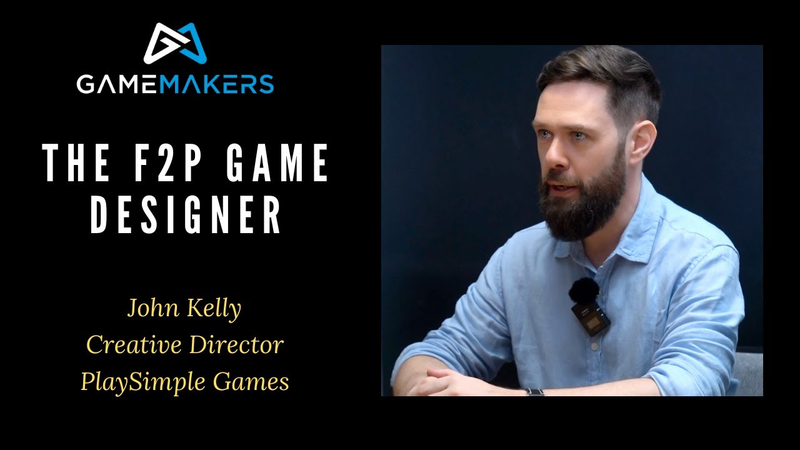
[Music] okay [Music] [Music] hey everybody john kelly is creative director at play simple games based here in bangalore india prior to play simple john had a lot of great experience in game design working at companies like zynga wargaming and rovio but we are here today to speak to john about a number of topics related to free to play game design and i'm really excited to have you here welcome john thank you very much appreciate you having me on yeah so i i thought like i gave a very brief introduction to in terms of your background but maybe you could also fill us in in terms of the this your background and kind of how you wound up here in india
sure um started out kind of making mods before going to college studied games was lucky enough to get started in a studio in the uk called climax mostly spent time there working on a mobile game or handheld as it wasn't mobile at that point in time um making ds games which was really fun experience got me sort of interested in those quick iteration cycles quick development cycles getting games into players hands as quickly as possible and just learning as much as you can as a designer as fast as you can from there decided to do a startup spectacularly unsuccessful um and that really provoked a point of reflection and trying to understand where what was my future going to be in the games industry i was lucky enough to get an opportunity to work with zenga um out here in india and it was one of those things i couldn't pass up the opportunity to live another side of the the planet meet new people new perspectives and experience something completely different just something that you couldn't pass up um working with xango was one of the best experiences in my career really
really appreciate the opportunities that they gave people there and introduced me to data driven design and analysis coming from a core design background they changed the entire way i perceived making games and really sort of opened up a whole new tool set an audience in terms of being able to reach and entertain people which is very very cool from there um worked with uh playground games really cool studio in the in the uk that makes forza horizon they were looking at exploring doing um free-to-play mobile games eventually they decided that you know actually console is where we're best and uh free to play mobile is actually a surprisingly scary and expensive business segment to enter and they continue to focus on their their core strengths they're moved over to rovio really cool company really really interesting to see sort of what is a creatively very strong studio very much leans into that player experience and qualitative game experience um and they were going through that transition into sort of games as a service and and how they were
merging that sort of creative culture with the production realities of having to deliver that content consistently predictably and not being really afforded the luxury of getting everything right and everything perfect before you've gotta sort of supply your players with the next phase of the game um then briefly i was at uh treasure hunt where we got to connect a little bit um very interesting experience in in berlin working with those teams and sort of building out new games um before joining wargaming where i moved over from a pure design role into director product and supported some of the teams out in minsk moscow shanghai and los angeles really interesting place to work got to work on an awful lot of product ideation core prototyping very much wargaming is a company that leans in on that um shooter experience and real core really gameplay design challenges in
terms of how do you translate a shooter experience or a combat experience or a driving experience onto a mobile device and keep the the depth and complexity of those systems engaging while uh also not not overwhelming the player with the amount of complexity and aligning that with emerging business models especially when you're in a competitive space in pvp where you know you can't sell play to win you can't sell power to two players you have to be looking at how does the business model actually work and how do you actually derive profit in a place that's very competitive like that uh and then finally some friends from uh from my time at zenga here in india have uh reached out after they had founded a company here asked if i would like to come back to india and help them grow play simple to to the next level and um i'd really miss the place i really wanted to be back in india and so they got you back yeah and i i think it's when you think about your experience in
zynga wargaming rovio it definitely seems like some of those companies are so different in terms of the kinds of products that they make and kind of disciplines that they have you know you mentioned a few of the good things about zing in terms of data-driven design and things of that nature what are some of the other strong things that you think that whether it's rovio or wargaming or treasure hunt or whoever like are there any specific things from a design perspective you think that some of those companies have done really well oh sure uh i mean uh i think rovio builds probably some of the best quality core game experiences on on the market like that they are really good at building um really really well polished put together fun game experiences and they put a lot of time and a lot of effort into that right and they tend to be relatively small and high talent density teams they can make really good stuff i think um almost over reliance on that strength of their very strong visual and design
company and because that kind of dominates the culture of of rovio i think they struggle a little bit more when it comes to stepping back and looking at things from a product perspective or a business perspective um there's a they're also true craftsmen when it comes to the games they make so there's like there like there's always this kind of tension between production demands and deadlines hey we've got deadlines we need to meet and we need to go out on the team being like it's not ready yet like it looks great like it's not good enough like they're definitely sort of like uh very committed to that quality of execution right and i think as the industry matures that strength is becoming more valuable and more desirable now right i think back in sort of like 2015 2016 um we were still sort of like on that growth curve of free to play as a market we hadn't really reached a point of um uh saturation or stability yet as a as a market um so there was room to get away
with sort of the onus was more on moving faster in getting to market and building scalable viable financial products rather than having to differentiate yourself from the competition with better quality right and i think rovio was playing a quality game at a point when the market was playing um speed and scale okay um i think as we're reaching maturity um those skill sets will probably pay dividends for rubio going forward i'd be be confident as expectations have gone up like just the last two years the amount of really great quality games that have come out has been staggering right so john i thought maybe we could take it back to india so when you compare the experience that you had at your other companies and now here in india what would you say are some of the differences and certainly from my own personal experience i have noticed certain characteristics in terms of strengths as well as weaknesses but like where where do you think um indian and specific to the discipline of game design where do you think they need to improve or what how can they get better to be
kind of world-class and compete against some of the companies that where you've worked at before i think probably the biggest thing is uh you need to play more games okay like first step um there isn't a gaming culture in india in the same way that there has been in uh europe or the united states okay um a lot of the the younger candidates we're talking to haven't really spent all that much time playing games since they were like eight nine ten years of age um up to when they're in their early twenties um and when they have kind of started to really game it's usually been when they've gotten to college and they've tended to focus in on one or two titles that they've gained an awful lot of depth and mastery and they know a lot about that particular game but they don't have that breadth of of learning and i think that's probably one of the biggest challenges here um like my my general opinion is it's easier to train um a game designer to be a relatively decent product manager than it is to
train a product manager to be a relatively decent game designer because there's just you you need literacy in games you need to have read a breadth of material and examined it and understood it and experienced it and that just takes time there's no shortcut to it um whereas skills tool sets methodologies approaches and thinking can be trained in a comparatively short period of time and i think that's probably one of the big challenges for designers here is they need to be consuming more games they need to be more broad in in what they're they're looking for and what they're playing and you've been in the industry like nine ten years in terms or have that amount of game design experience and i was wondering if you like just kind of thinking back and you know we're i think we're very fortunate to be in an industry where the you know kind of free-to-play mobile kind of changes and evolves so much but i was wondering if you could give us your perspective from a game design perspective we've seen things like battle pass and gotcha and different kinds of things
come into the market and evolve but could you speak to maybe just high level how you have how you kind of perceive the early days of gaming when you first started from a design perspective and how that's changing and evolving over time sure um so i think we've gotten uh the big shift has been in in meta layers across the the games um i suppose in in both regards both our core gameplays have become more refined and more evolved over time and what you're finding is uh more sort of hygienic designs even though we had pretty simple pretty clear games uh in the early days of free to play um we have maintained similar levels of complexity but we're surfacing the important features better and earlier in that experience i think one of the big challenges for a lot of us coming from pc and console into free to play and mobile was a misunderstanding of uh how to value those players time we
were assuming that we had 30 minutes 45 minutes 50 minutes of a player's time to get to understand the system understand what evolves and and how it plays out the reality is we had 30 seconds maybe 45 seconds um so how you surface mechanics how you hook your player how you get a player to understand the entire goal of the game is something that i think has evolved quite a bit over those years and how that core gameplay aligns and hooks into your meta layer like if you go back a couple of years ago things that would be relatively commonly said in in some companies would be hey just build good core gameplay make that fun and then we'll we'll attach a meta to it we know how to do that it's easy turns out metas are actually really hard like really really hard and how your your core a meta exactly like gamepl and it'll work and then it doesn't um so i think that understanding that
convergence of uh product approach and that benchmarking methodological data driven um approach is starting to coalesce and align an awful lot better with design principles and uh sort of that innate gameplay perspective in a much better way um and i think we're now seeing the cusp of a new cycle where development and advancement of meta is no longer where the real big competitive advantages are coming from we're starting to see core pubg is probably gameplay first big game to to break this wave where oh there's a shooter on mobile and it's popular right oh and it works and people like it and then you've got call of duty and then you've got fortnite and then you've got kinship impact and now you have these like big heavy uh heavy on the gameplay and the haptics and the controls and the fidelity mechanic games
offering really big experiences games impact is a big open world experience on the size of breath of the wild like that's a big game right with a lot of complexity um and there's players there's an audience so uh yeah i think we're seeing this development of these big heavy game experiences that if you were to try and pitch them a few years ago yeah um nobody would have really thought that these would work um i think the first large-scale successful shooter on on mobile was world of tank splits about five years ago that was doing that cross-platform pc to to mobile gameplay um but it was still relatively like it wasn't setting trends within the industry i think with the advent of pubg and a few of the others we're now starting to see those console level experiences come across and i think probably the most exciting future is going to be that convergence of truly cross-platform games um to play on pc can play on console can play on mobile that's that's going to be
a very exciting space for us i think so for game designers today or maybe even for new game designers given like where we are the the changes that have occurred what kind of skills do you think it takes to be a great free-to-play game designer in today's world i think first is uh first and foremost is empathy being able to like identify who your target audience is and really empathize with who they are and what they're looking for in the in their gaming experiences because well i i've just spoken about the exciting world of cross-platform uh core experiences we're also seeing gaming expand at the other end of the spectrum into ever more sort of casual genres we're seeing um stuff like uh word games become significant parts of the the industry in terms of the amount of revenue the amount of players involved with it we're seeing growth in um jess sudoku um very simple color matching puzzle games
um match the color uh hyper casual is doing an awful lot of interesting things with very accessible experiences and as a free-to-play designer one of the great things is you get a lot of opportunity to entertain a lot of very different people but if your perspective is narrowly focused on on a single type of game or a single genre or single audience it can be very difficult for free to play to feel like a rewarding place to work right and when you think about like game design or game designers in terms of different categories or role how do you think about it in your mind in terms of is there like a there's certainly like a maybe a feature designer economy or level or balancing type of designer uh what are the different kinds of designers or if somebody's interested about in game design in free to play how do you kind of categorize those or split those up in a team what in your experience sure i mean a lot of companies will sort of break things down they'll specialize like you'll get a
feature spec designer who's specifically this quarter we're gonna put out five new features we're gonna do two game events you might specifically have event designers you might have narrative designers and level designers um particularly if you're making a match 3 or a puzzle game or something like that like there's a depth of understanding that has to be garnered there and they do become very specialized almost to that very specific game in that very specific instance and really understanding how that audience will react to things um but i think in general for a free to play designer it's more important to be a generalist than a specialist until you've at least kind of reached more than a few years of experience in the industry okay the reason for that is um in free to play the game is the business model and the business model is the game and it has to be seen as a holistic whole you need to be able to make that business model fun how do we earn money in this game when it is essentially free to players and make that a good
experience so you have to be spreading yourself wide and understanding as much of the spectrum of design as you can and getting as much exposure as you can earlier in your career once you've built mastery and that's sort of like a concept you've internalized then i think it's it's perfectly fine to specialize and dive deep on something and that really interests you um but i think specializing early on puts you at a in a difficult place and it gives you you know kind of covers one eye when it comes to looking at free to play so kind of start broad and then start building levels of specialization yeah okay got it and what do you think are like um maybe if you're thinking about future trends we talked about how the free-to-play kind of game design um has kind of evolved over time but like in terms of future trends what do you think if you're if you're mentoring a game designer about how to prepare for the future what would you say to them um very bro
yeah hard question um because it like we're also seeing divergence of opportunities and ends of the spectrum like if somebody is in uh in a place and a mindset and a perspective as a designer that they're um they're looking for those more snacky casual experiences and they're hyper casual aligned in their sensibilities um the path for them would be very different from a designer who's more attracted to the core end of the spectrum but i think um let me think about the answer to this okay um once more on the question well just like future trends so meaning like so i mean one way to think about this would be whether it's from a skill set perspective like you know it's going to be more important to know certain skills or whether it's from like a features perspective like understanding um like player profiles and being able to uh to design features for specific type of players or like on you know so in ua
for example that's all of a sudden because of idfa deprecation that's starting to become like a point of emphasis while creative optimization is kind of coming back in vogue and then player profiling is starting to come you know become very popular but like when you think about some of the trends today and for a game designer to be prepared for any changes or for the future like you know any thoughts on that sure i think it's probably just a continuation of a trend we've seen for the last couple of years in in terms of um really understanding uh your system's design whether you're a feature designer an event designer a level designer or you're the lead designer on a project the expectation of being able to understand complex interconnected systems and how they relate back to a player experience is going to become increasingly more uh more valuable and more important to designers we are seeing a maturation at
all ends of the spectrum in terms of quality of experience i think the quality of games that are being put out in 2022 is noticeably higher than the quality of games being put out in 2020 right the the standards are are moving a lot um so ultimately that comes down to how do you build your systems how do you build your mechanics how do you transition them to communicating with your player and providing an end experience that's exciting and motivating and i think we're going to see more of a focus on brand ip um positioning of your game in terms of it being cool and aspirational and then we have seen up to this point in time i think you're we're gonna see the companies that are capable of reaching out and speaking to gamers emotionally will start to outperform uh other companies at this point in time which hasn't really been true and free to play where your analytical ability your ability to optimize growth campaigns okay probably gave you a competitive advantage over a studio that didn't have
that so i think more traditionally powerful companies nintendo blizzard if they start making more moves towards mobile we're going to see them continue to to drop consistent big hits because i think the market is going to favor those longer term skills and they'll start to be able to compensate for some of the weaknesses that they've had up to this point in time and the weight will shift now i wanted to ask you uh next question really having to deal with with part of the work so like for feature designer and for many designers the design specs seems to be the center of like what they work on in terms of a deliverable and i know at our studio we've tried to innovate on design specs in other words like what would a future design spec look like how could we change it um we didn't we made some progress and i think we'll probably take another attempt at it on a future game and i know there are some studios who have completely like changed their design spec methodology where it's
like no more design specs it's all just wires and flows and things like that but like i'm wondering from your perspective you know how do you think about design specs do you think the future is all traditional design specs or just just want to get your thoughts on on that um i think much like sort of your approach to production methodologies um your spec needs to be tailored to the group of people you have not the other way around i mean trying to find a perfect template that works for the industry i think is just not going to work um depends on on the people their experience their perspectives how they like to work how they communicate with each other i think the the important things around a um aspect is clarity and uh pithiness of communication it needs to be very clear why does why does this need thing need to get made why is it exciting or um if it's a player facing component what are the risks involved what are the things we need to be
careful of when's it due who's responsible for it um are kind of the key things that you want out of that um and a good synopsis of like what what is the overall thing and how does it fit in in relation to the rest of the game if you can kind of cover those things it doesn't really matter how you write your spec whether it's all in traditional old school like a4 page typed up technical style document or whether it's a uh whether it's a fancy ppt or whether you're doing it in a mirror board i don't think it really matters all that much as long as the way you're doing it is a way that your team will consume it and read it right the reason we moved away from the big thick game design documents that we did back in the day to powerpoint presentations was because nobody read the gdd right um they'd skim it they'd look oh okay i kind of get and then they'd make up their own thing as they were they were implementing stuff but now we're in a situation where i've seen powerpoint spec decks that are 150 slides long and i'm like
it's the same problem yeah you know that's that's not not solving the the challenge here um some of the best specs i've seen have been three pages okay all right so one last question for you here and since we're here in india wanted to get your thoughts in terms of your outlook for of the indian free-to-play gaming industry and i don't know if you have any specific thoughts on design out of india but um your thoughts on india cool uh yeah i think india is probably one of the most exciting places emerging markets and games um the amount of new studios that have cropped up here in the last few years the uh the shift from providing services to other companies in terms of game development to building their own stuff and finding an indian design voice and competing on the world stage with that is really exciting to be part of um and it'll be very interesting to see how that evolves and comes to the fore i
think you're going to see some very interesting stuff very exciting things coming out of it it's also a very young country very energetic country in a very driven country so there there's a push there's a momentum here that you can just feel like even coming from places like uh helsinki or berlin which are considered like startup hotbeds with lots of cool game stuff happening the pace here is just it's one step faster there's just that little bit more excitement and rush towards where this future is taking people that i think is really inspiring to see like i think it's very very cool um there's still a very there's a very analytical perspective on things here and i think because of that you're going to see indian successes appear in places that you didn't really expect to see successes i think play simple is a good example of that i don't think you would have seen a company be that successful in word games like
would not necessarily have been one of the places i would have said this is going to become a significant company um pursuing that genre where a lot of times if you're just looking at doing an app any analysis of the amount of money that was in that market at a surface level exam and examination not necessarily the most exciting segment but they found potential in it and they were able to grow the segment and i think you're going to start continue to see that very smart business analysis driving the indians indian gaming industry going into unusual places and being very successful because of that um there's a [Music] there isn't the same technical expertise in like and depth in india uh that you get in the west or the us or or japan yet um i think it's maturing rapidly there's a lot of learning happening in a very very short period of time but it's harder to build a unreal based team here than it is
than it is in a lot of other places and because of that it's it's also going to shape some of the directions that i think this market goes in right but it's i if you've visited india and you visited bangalore where a lot of places would say well then it can't be done i really believe in sort of india's ability to find solutions to things where everyone else would look at and go that's impossible and they will make it work probably not in in super elegant ways to begin with but i think it's going to be remarkably effective um one of my favorite words living in india is jugad where like thing has been put together it looks like it shouldn't function but it's actually remarkably effective um and i can kind of see that in the team and how they they approach building their specs and building their features i kind of can go it's an unusual way to approach things but it works and it's a new perspective new new view on the world and i think for me i'm learning a lot being here in terms of i haven't seen it all yet there are
new new ways to approach the things [Music] [Music] okay john so for this next segment we've got a number of young game designers who have kind of submitted questions and i want to ask you some of these questions as the experienced guy here the first question is about the career trajectory of a game designer how do you grow into a leadership position as a game designer um excellent question so i think first and foremost leadership is more about being able to help your team find answers to solutions and be broad spectrum it's not just about being the best at your craft
like just being the best designer in the studio doesn't make you the lead designer it's more being able to help the entire team move forward so what i would say in terms of building skill sets one go broad first get to understand how design interacts and interfaces with the rest of the the teams within the the game okay um and then start to realize that leadership is about people build those soft skills be able to motivate people be able to challenge people when you need to challenge people and keep focused on what the high level goal is of what you're working on be that a feature or a quarterly release or the entire game you need to be able to demonstrate and display the ability to keep the eye your eye on the prize and help the team consistently move towards that and be the person willing to make decisions and calls when everyone else is afraid or is overly procrastinating or trying to to avoid making hard calls okay be the one to accept the accountability and the responsibility for it right you will get things wrong
that's going to be bad um but ultimately if you can show those qualities that's how you move towards being a lead in a company it is about the people more than it is about the design got it and maybe i could ask a follow-up question of my own to this question so like let's say you are a design lead and there's a designer who's not performing how what would be like the the personal or the the soft skills that you need or how would you motivate that person to to kind of improve or work more or something like that i think first thing is is empathy and understanding why is that person not performing um being able to step back and look at the situation they're in is it um something in their personal life that is potentially distracting them from the job are they um overthinking the amount of pressure that's on them are they getting lost in the complexity of the task they're doing have they got a conflict with somebody else on the team try to understand and put yourself in their shoes as to why they're not working most people particularly if they've got a couple of years of experience in the industry and have proven themselves
are there to work they're there to make games where this is a passion driven industry there's very few people in games companies that aren't there to make a great game at the end of the day yeah so if that person is not performing there's probably a reason for it and you need to sort of be analytical about it and try to diagnose what it is as a lead then you start thinking about what can you do to mitigate that situation is it something within your power and ability to change within the team is it um who they're working directly with is the task that they have assigned do they just need somebody that they can vent to those are all things sometimes there isn't solutions to it at which point in time um it's important to challenge that person make them clear and aware early on that they are failing to underperform right even if they have a good reason for it even if there's a reason for them struggling that you can completely empathize with they need to be made aware that it has been recognized by not just you but probably their peers around them the rest of the company that you're not performing right um because if this continues it will escalate it will come
to a difficult situation you don't want to surprise somebody and be like you've been doing a bad job for the last year like you didn't tell me you can't tell that to somebody particularly if they're absorbed in something that is chewing up a lot of their mental space okay um so inform them first um try to help them find a solution and if that's not working then you do need to draw hard lines in the sand and set expectations this needs to get better or there will be consequences these are the expectations for you to continue at the company okay the next question here is working with other teams or how do you be steadfast and confident in delivering design decisions while at the same time welcoming the feedback and opinion of others so like let's say maybe there's an engineer or other folks from product management that are questioning and design decision how to be confident versus accepting feedback is what i believe the gist of the question is okay so i think the first thing to do is work on your listening skills allow people the space and the opportunity to uh to
give you the feedback to tell you the things to state their case don't jump to an answer immediately stop take stock of what they're saying weigh and analyze the the feedback it's very easy to get emotional and just try to prove like no we need to keep moving fast or the challenging something that i've made that is a core assumption i'm feeling threatened by it don't let your emotions get involved in it as much as you you possibly can as a human being weigh that feedback come to your own critical conclusion on whether it is appropriate and aligns with what the goals of the feature the game the phase you're working on the event whatever it is and then make your decision on whether you believe you're on the right course of action or not and be prepared to accept accountability for that decision okay it's easy to um to stay steadfast and committed to your design when you're willing to accept the accountability for the consequences of the thing you're committing to if you're unsure further discussion debate talk through things find something that you
have higher degrees of confidence in but as the designer you're accountable for the design outcomes right don't get pushed into making decisions that you won't accept accountability for and don't commit to things that you won't accept accountability for got it okay next question large versus compact design teams we understand that it's based on the needs of the project but is there a general philosophy so like how big should a design team be seems like what they're asking the smaller you can make it without burning yourselves out is probably what i would go with okay the simple reason for that is uh communication headwinds the larger your team the more robust your communication processes and practices have to be the further people are separated from each other and one of the primary factors in a successful game project is the quality of communication between members of the team right it's just far easier to be good at that when there's fewer of you right and you're always balancing that off against well how much work can we do how much pressure we under
some frequently it makes sense to add another designer to take some of the load but over uh over a certain number you have rapidly diminishing returns okay and hiring for game designers what do you think about the current state of talent in india and then how do you think about hiring for potential meaning people i think what they're talking about here are um not someone who doesn't necessarily have the skills yet versus so hiring for potential easy to find versus skill hard to find versus senior easier to find but doesn't match in skill sure um i think where the development scene is in india right now um there are relatively few very experienced guys who've been through multiple cycles on new product and live operations i can stitch that entire thing together um there's relatively few of them and they're they're at a point in their career where they they can
actually pick their projects right they they get to choose where they want to go they have many options um so those guys are hard to find and and really great when you do on the other two i think where i i fall on this at the moment in india is hire for passion and potential right um i'm i think a lot of companies here are more than willing to invest in people who are smart and help them build the skills and knowledge to get there if they're passionate committed and smart i think that's more important than anything else um the thing is particularly if you're early in your career your first one two three four years you might have great exposure to one genre at that point in time and you might have reached a level of like expertise even in that amount of time in your one genre but you probably haven't had enough time to spread out into other facets of the industry and other challenge propositions so i think unless you have a high talent density of those plus eight nine ten eleven twelve thirteen plus years guys
you have to be willing to invest in your people and hire for potential and intelligence rather than experience got it okay design documentation what do you think about speed of with iteration time later versus detailed more upfront design documentation at the start um so there's two thoughts here is one is the iteration cycle of i get the broad strokes of a feature specked out get it into production check in frequently play test it look at it on device and get that constant iterative cycle going is really valuable um but i think it's definitely worth giving a designer a day or a day and a half to sit down and write a document forcing them one of the reasons i'm still a fan of the older style game design documents and is it forces a designer to step through each piece of the logic on their entire feature all the way down to get it on
paper even if it never sees and like another person that process of interrogating your own internal logic before you put together your fancy ppd and go into that iteration cycle will save you a lot of time right so i like to encourage designers at play simple to take a bit of pre-production time think about it interrogate the logic walk through it whether that's writing or through doing wireframes however each designer likes to do it doesn't really matter but spending some time up front to make sure that you haven't fallen for the the god of the gaps your brain just glosses over like the details in there and they're like oh this is actually a significant problem yeah um so try to find as many of those before before you actually commit additional resources in the studio to building your features right i definitely agree with you on that i mean that's reason why some companies like amazon force like some meetings to be written first versus just having verbal kind of conversations okay um and then the next question is how do i understand myself in terms of the type of game designer systems features economies etc i want to
be so as a young game designer how should i go with industry requirements or should they follow the path that they want to be um i would say follow the industry requirements build your skill build your visibility around you and let's say you really want to be an economy designer but you can find a position as a level designer go do it learn it you'll be in proximity with economy designers you'll get to have visibility on how it's really done um and then you can decide whether you want to go into it the problem for somebody new in the career or outside of the industry looking in is we have a lot of assumptions about how it works yeah and it's frequently wrong right um so get in get your experience first be as generalistic as you can early in your career take the opportunities learn new things get pushed outside of your comfort zone when you've hit year four five six then look at where your specialization takes you you'll be a better specialist for it great
uh okay here's here's a question what do you expect from a young game designer if they work under you um i expect them to learn more than anything else um i expect them to show up be committed be motivated um take those opportunities as they're as they're given um and run with it and try to push themselves to grow as much as they can okay um i like to see them accept accountability for what they're doing right you if you see somebody showing true ownership around what they're doing um even if they get it wrong that's okay like your your senior or your lead or whoever is there to save your butt like they are supposed to step in and pull your butt out of the fire when it goes wrong because it will you're a junior you will make mistakes that's okay but absorbing that accountability and owning the outcomes of what you're building is probably the most important thing okay uh having an analytical mindset
stopping thinking about what you're doing before you do it right and paying attention to who your players are and empathizing with them okay looks like we have a career question what is best for a young game designer to jump companies to get a higher more hike i guess in terms of compensation or stay in one company for a long time and earn value um this sounds like a salary advancement question um and ultimately that comes down to the organization you're at if your company treats you well and is willing to to invest in you over the long term and you've seen them do it for other people yeah i would say consistency is better the relationships you build particularly in your early career right i think one of the hardest things for the work from home um thing that happened was for a couple of years for people at the beginning of their careers they didn't get the opportunity to build those connections with people build that network that's going to carry them all the way through the career the people i rely on now when i'm stuck on a thing
are the guys i worked with on my first game and the first year the people i call them like i'm stuck i don't know what to do i need somebody to talk to um and that's that's really valuable so if you can build connection with people right that's that's incredibly important not just the dollar value flipside if your company doesn't respect you there's lots of opportunities absolutely okay another career question how do i prepare myself to work at a big company like blizzard or riot um interesting question um so the thing about a company like blizzard or riot is they're so famous they are able to attract the absolute best of the best of the best right um if you're looking at your skill sets and you're like i'm doing pretty okay but you know like i can't put something in front of people and they go wow that's that is great um you're not ready to really like you're not going to be able to get through that interview process right like it's a rigorous process and they have a such a wealth of talents applying to
them um that it's you have to be focusing on having that level of special skill that can really help you stand out and that's somewhat in contradiction of what i was saying i think it's better for most designers to work as a generalist and then swap into a into a specialist if you want to get to a place like blizzard or riot early in your career like i think if i don't know the exact numbers but i think if you're to look at the mean amount of experience being hired into blizzard or riot it's probably not many people getting hired with less than five or six years worth of experience at a minimum to to go there uh or exceptional standout levels of talent right um the other thing to be aware of is if you join somewhere like blizzard or riot you're not going to be special like you've spent all this time building these amazing skills that everyone kind of goes wow and now you join a room full of those people um you need to prepare yourself for going back to being just another guy in the team okay uh how do you validate as a designer whether you are following best design
practices in the industry um excellent question i don't think you can because there aren't really best practices in the industry um depending on what country you're in what kind of genre you're in what kind of game you're building all of that moves and changes um i think i think the best practice in in terms of making games is clarity communication clarity of accountability clarity of goals if you can make sure that your design is supporting those things how you practice your methodologies in the studio supporting those things that's as close to best practices you're going to get um because each studio will approach it differently depending on the skills and knowledge and background of those people there um and tools that you think are wonderful in your studio you'll go to another student like no no no we don't do it like that at all that's not it's not how we do things right um so it changes so much okay be adaptable so what is more important being creative or having strong research
skills as a game designer you need both like you you can't say that one is more important than the other like to be a good designer you do need to reinterpret reimagine and find new things within uh your gameplay experiences but you can't do that unless you are well uh read and aware of what the body of working gaming is you have to be able to research deconstruct and understand why things work for you to be able to deploy creativity um the two sides of the same coin you need to be able to do both they're equally important okay last question what do you see in indian game designers compared to other game designers in other countries in terms of skills and work ethic work is second to none people people here really uh care they're passionate they commit they're more than willing to put in the hours um i think almost to an excessive level like there are times when i'm like hey go home stop it's done for the day and learning when
to give yourself a break and like step back and gain perspectives is something that i think some of them can learn from in terms of skills smart people building skills there isn't there isn't necessarily the the industry here isn't necessarily developed enough that there's clear sets of skills and expectations yet for the majority of younger candidates coming in but they show a strong aptitude for picking up the skills and adapting to it which is why i'm so optimistic about the game studios here is there's hard work there's dedication there's focus and there's an adaptability to go i don't know i will go learn and i think that gives designers here competitive advantage compared to the rest of the world at the moment um i think the people who are coming up now in in year one two by the time they hit year five and six we're going to be looking at people no fantastic design talent in india great
all right john those are all the questions i have for you maybe the last question i could ask you would be for someone who is interested in contacting you or working for you at play simple how can they get in touch with you sure you can email me at uh john kelly at playsimple.ian or find me on linkedin i'm happy to always connect with people awesome thank you very much thanks a lot cheers [Music] you
Summary
The modern free-to-play gaming landscape has transitioned from a focus on rapid scaling to the development of high-fidelity, cross-platform experiences. Success in this environment requires a seamless integration between core gameplay mechanics and complex meta-systems, moving away from the historical practice of treating meta-layers as secondary features. As the industry matures, designers must prioritize emotional engagement and deep, interconnected systems to compete effectively against established, brand-driven titles.
Professional development in this field demands a strategic approach to career growth. Aspiring designers should begin as generalists to gain broad exposure before pursuing specialization in areas such as narrative or level design. While technical proficiency and iterative design are essential, the transition to leadership roles necessitates a shift toward soft skills, including empathy, clear communication, and team management. Prioritizing long-term professional relationships and ownership of tasks over immediate financial gains is critical for sustained career advancement.
There is no universal methodology for success; instead, high-performing studios rely on internal clarity, accountability, and adaptability. Designers must balance creative innovation with the analytical ability to deconstruct existing mechanics. Within the global market, the Indian game design sector is emerging as a significant force. Driven by a strong work ethic and rapid skill acquisition, local talent is increasingly well-positioned to compete at a world-class level, provided designers continue to broaden their gaming literacy and engage with a diverse range of global titles to refine their design intuition.