Global reports and market data
Documents

The Video Game Industry: A Resource for Organizers
The video game industry is a rapidly expanding global sector, projected to reach nearly half a trillion dollars by 2028, surpassing the film and video industry in scale.
- The global video game industry is projected to reach a market valuation of $435 billion by 2028, supported by a workforce of over 330,000 employees.
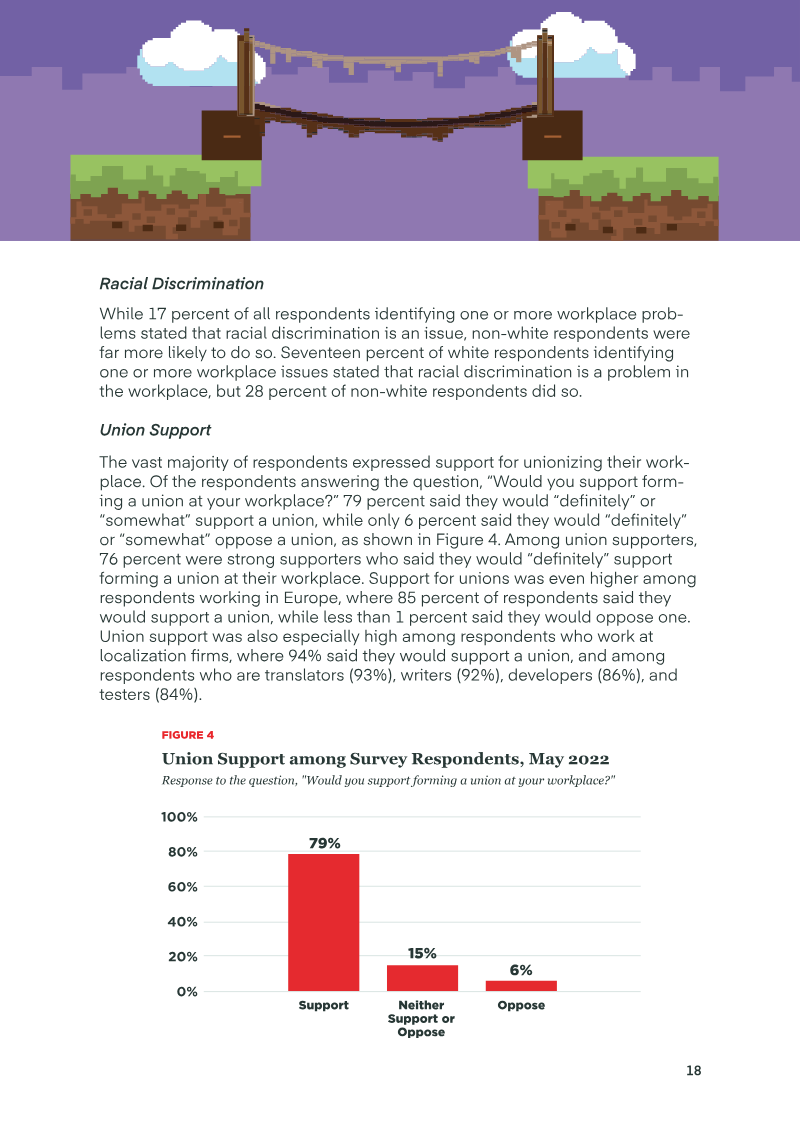
- Nearly 80 percent of surveyed industry employees support unionization as a response to systemic labor instability and workplace grievances.
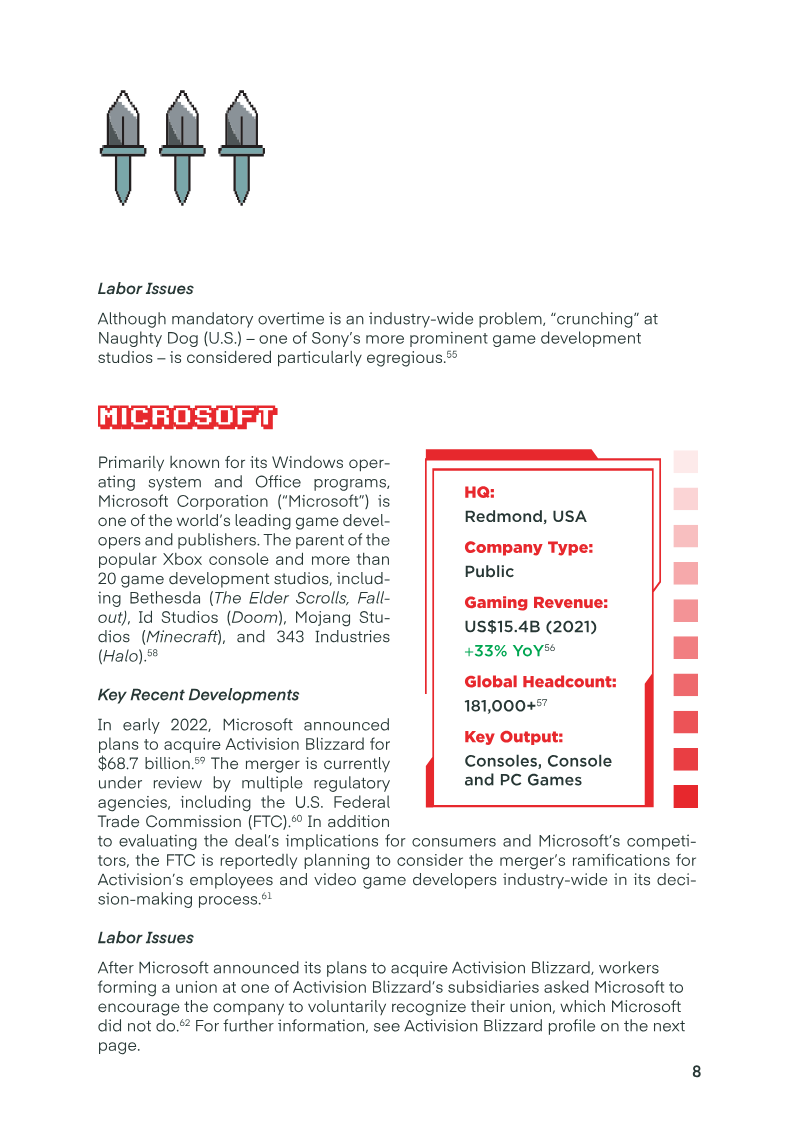
- Market consolidation, driven by aggressive mergers and acquisitions by major corporations like Tencent, has reduced worker bargaining power and increased employment precariousness.
Power of Play: 2025 Global Video Games Report
The "Power of Play: 2025 Global Video Games Report" asserts that video games are a multifaceted medium, primarily driven by the pursuit of fun, yet offering substantial benefits beyond entertainment.
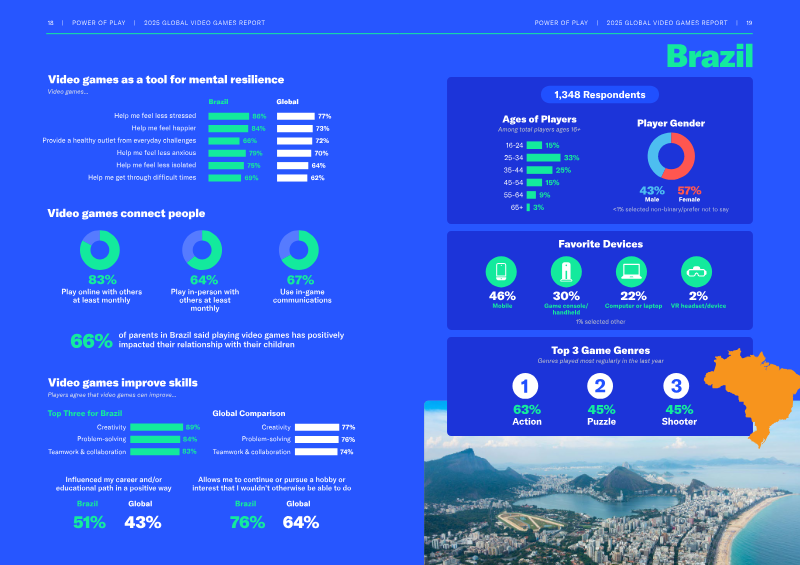
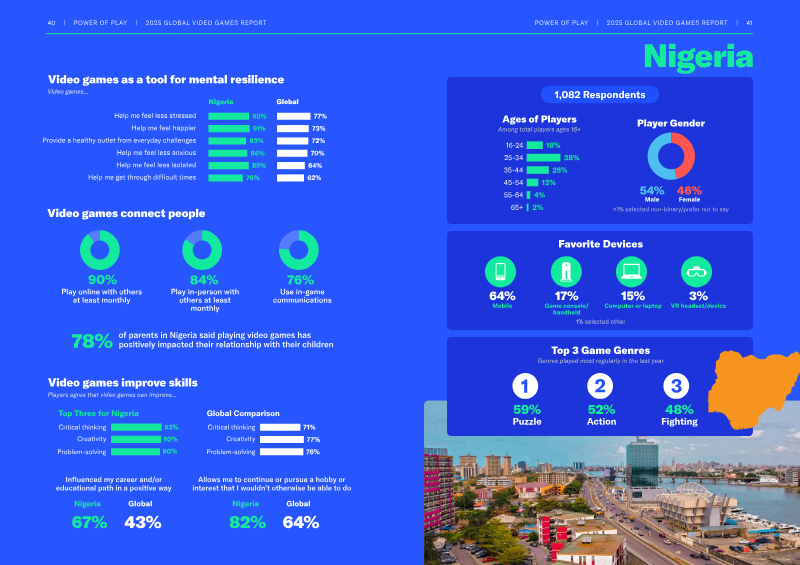
- Video games are now a primary tool for mental health, with a majority of 24,000 surveyed gamers across 21 countries reporting that gaming effectively mitigates anxiety and isolation.
- Gaming is a catalyst for cognitive development, with players demonstrating measurable improvements in creative thinking, complex problem-solving, and collaborative teamwork.
- High-stakes industries including medicine, aviation, and retail are increasingly adopting simulation-based training and augmented reality to improve decision-making and technical precision.
The Investigation of Pandemic Impact on Global Gaming Market
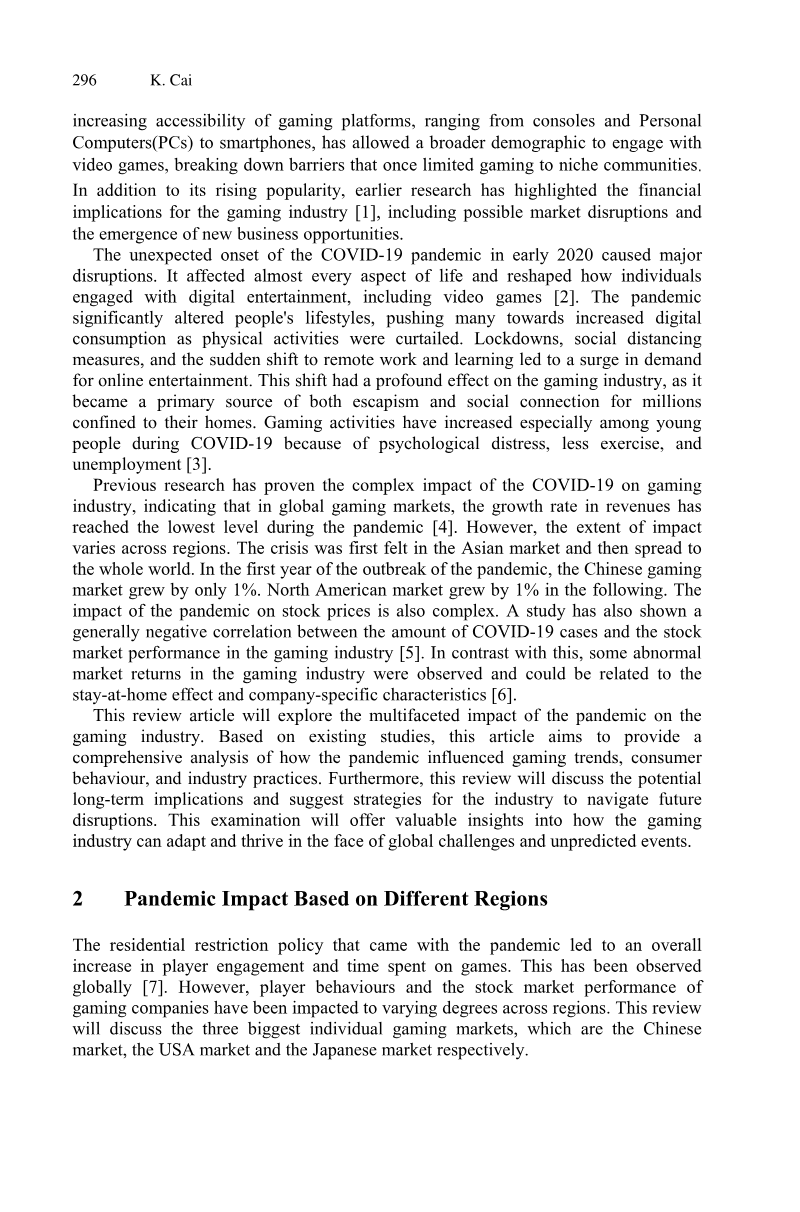
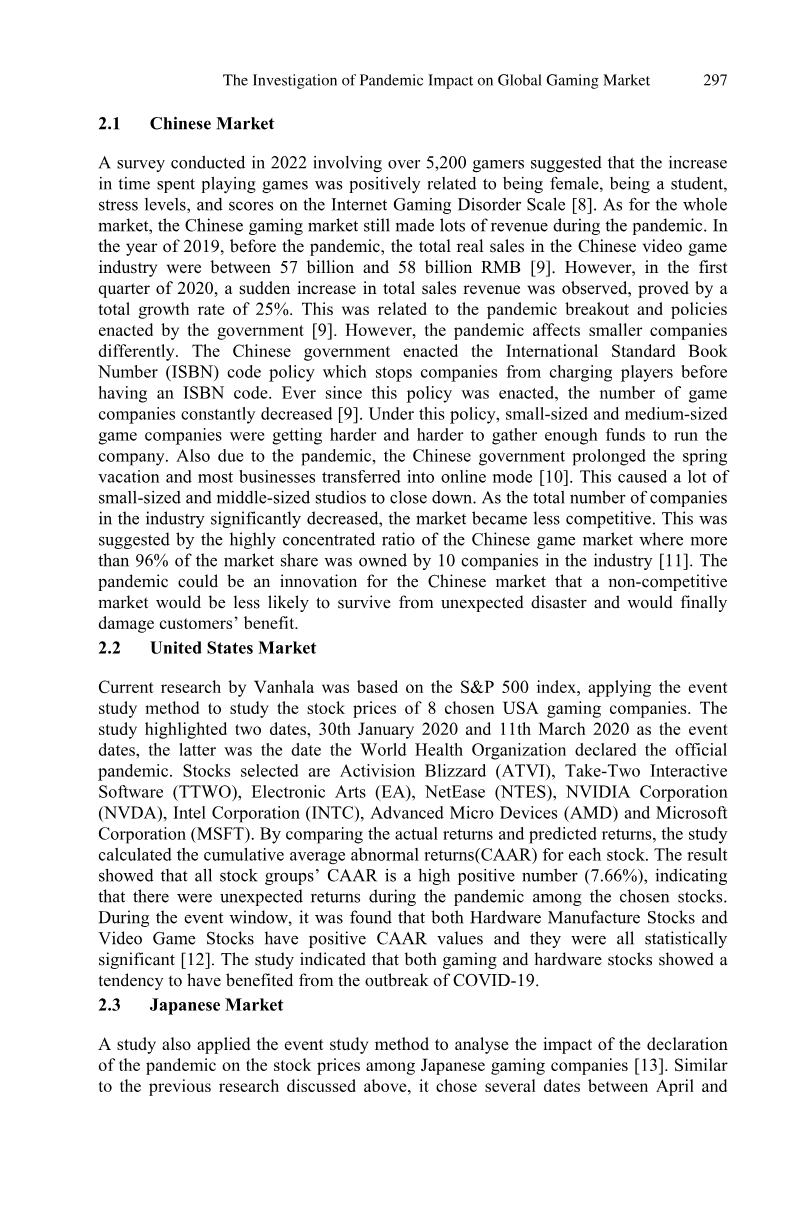
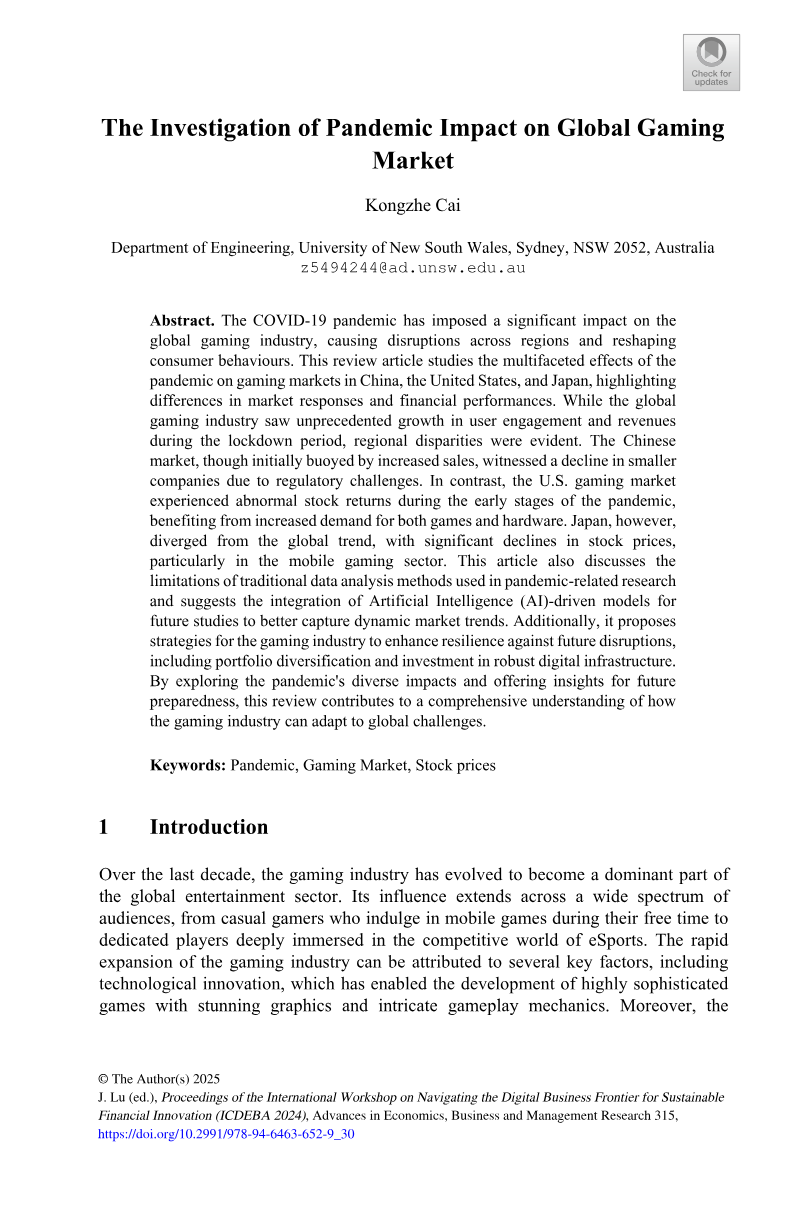
The document investigates the varied impacts of the COVID-19 pandemic on the global gaming market, focusing on China, the United States, and Japan.
- The Chinese gaming market experienced an initial 25% revenue surge in early 2020, but subsequent regulatory constraints on ISBN licensing triggered industry consolidation and the closure of numerous small-to-medium-sized studios.
- Major U.S. gaming and hardware firms saw positive cumulative average abnormal returns of 7.66% during the pandemic, driven by increased demand from stay-at-home mandates.
- The Japanese gaming market bucked the global growth trend, suffering a statistically significant decline in stock prices, particularly within the mobile gaming sector.

Bandai Namco Group Fact Book
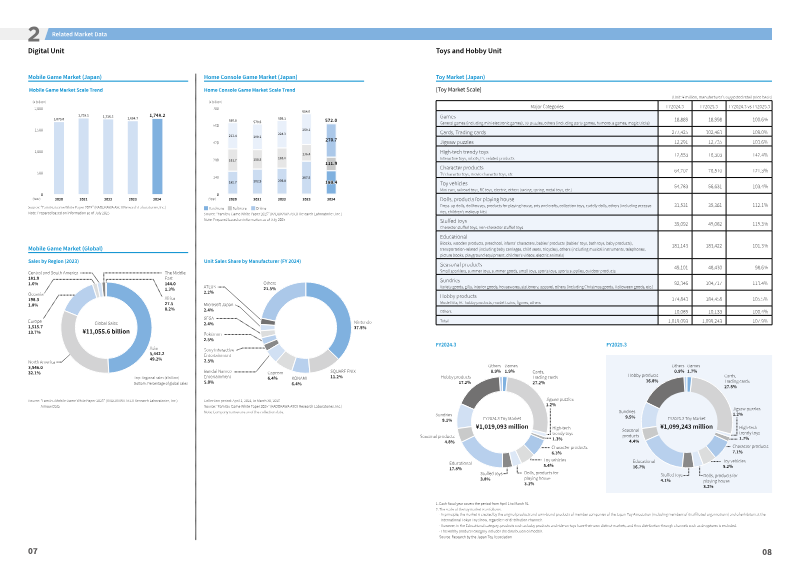
The Bandai Namco Group Fact Book provides a comprehensive overview of the company's financial performance, strategic initiatives, historical development, and commitment to ESG principles, primarily covering the period leading up to and including FY2025.3.
- Bandai Namco Group reported consolidated net sales of ¥1,241,513 million for the fiscal year ending March 2025.
- The Toys and Hobby unit is the company's primary revenue driver, accounting for 45.2% of total sales, followed by the Digital unit at 34.5%.
- The group maintains its market position through an IP-led strategy centered on iconic franchises including Gundam, PAC-MAN, Tamagotchi, and ELDEN RING.

Mobile Games: Placing Smartphone and Tablet Gaming in Perspective of the Total Games Market 2012
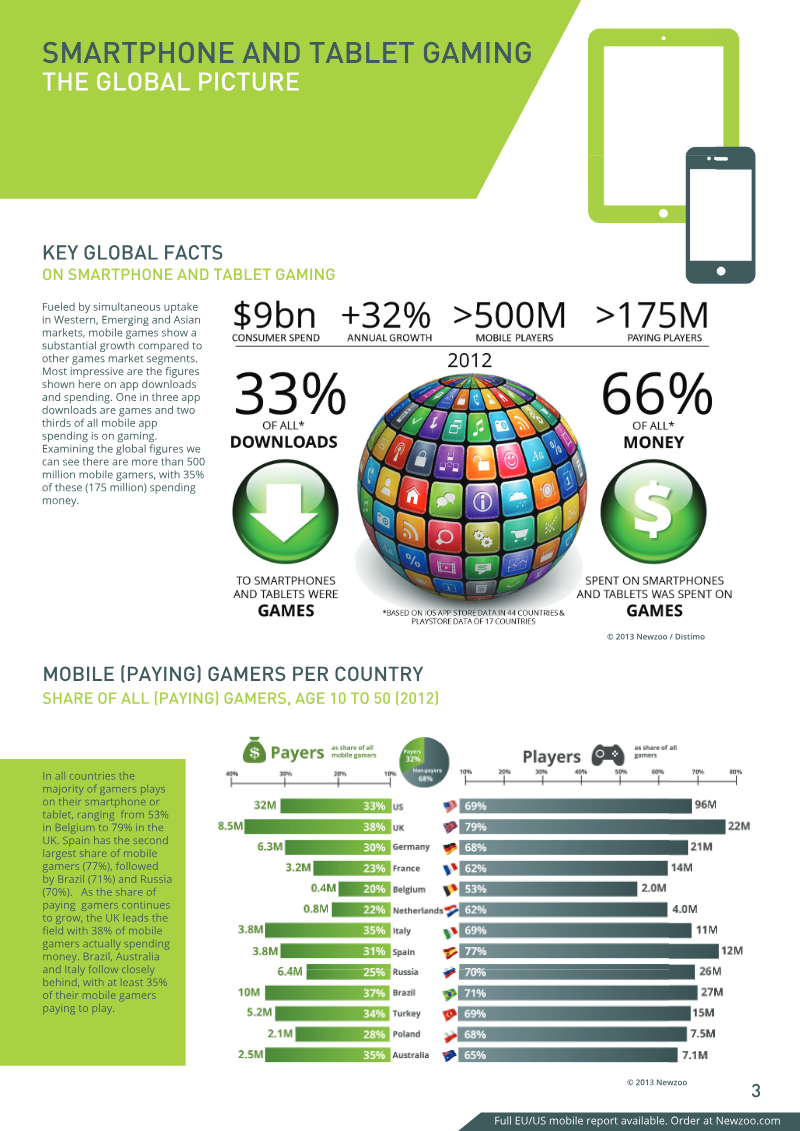
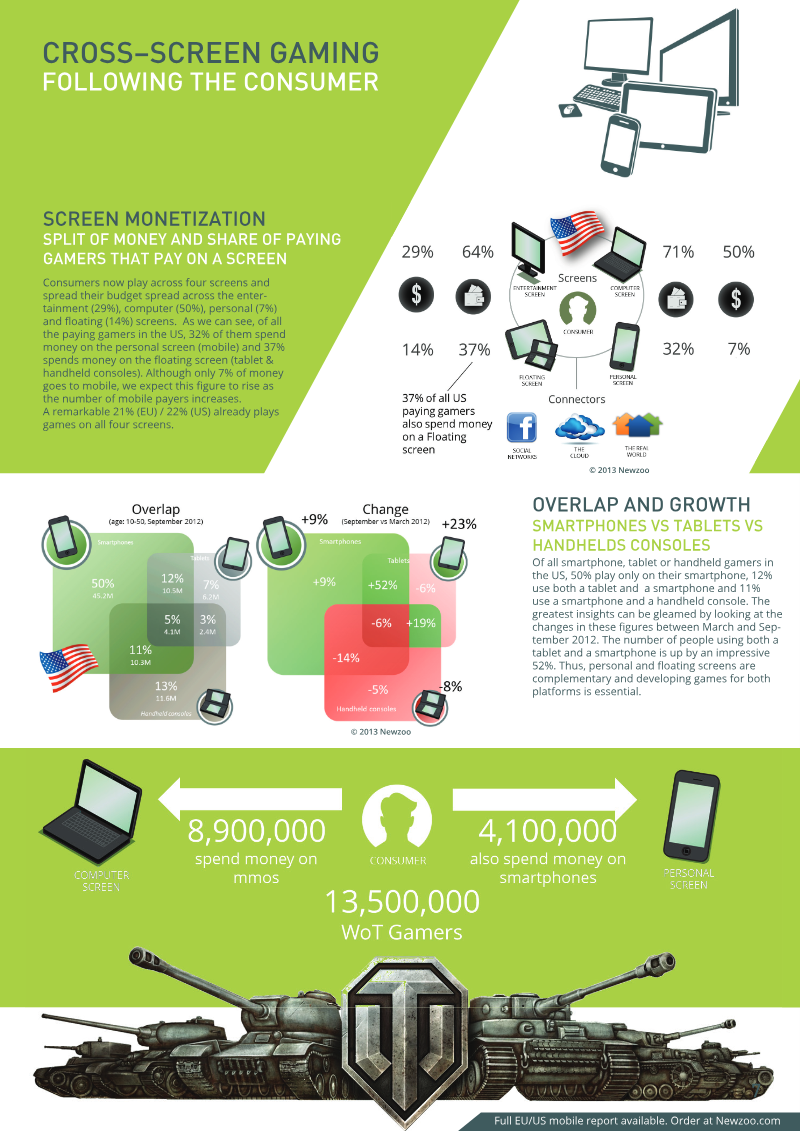
This report analyzes the global mobile games market in 2012, providing a comprehensive overview of smartphone and tablet gaming within the broader context of the total games market.
- Mobile gaming became a primary revenue driver in 2012, with two out of every three dollars spent on smartphones and tablets allocated to games.
- Free-to-play (F2P) models dominated the market, accounting for 70% of all iOS revenue in the US and Europe by the end of 2012.
- The global mobile gaming audience reached over 500 million users by the end of 2012, with 175 million identified as paying players.

The eSports Economy: Trends, Audience and Revenue Growth Towards 2017
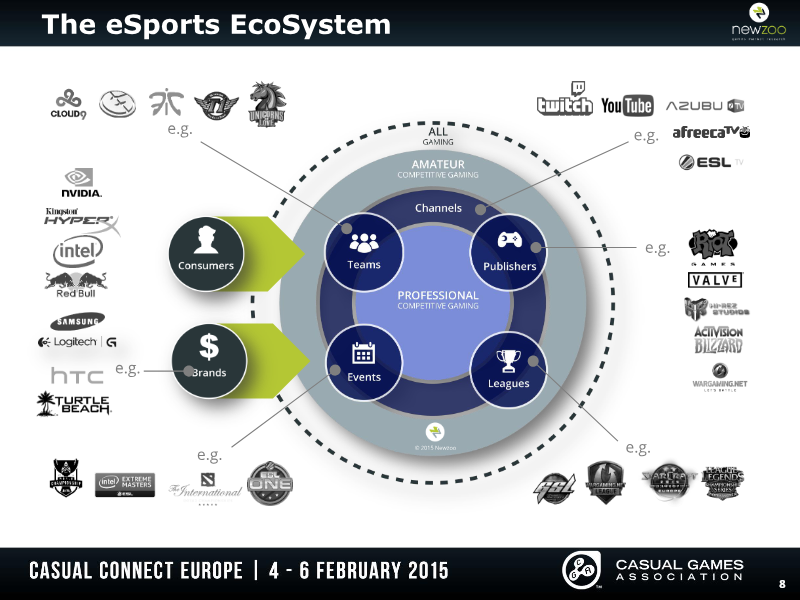
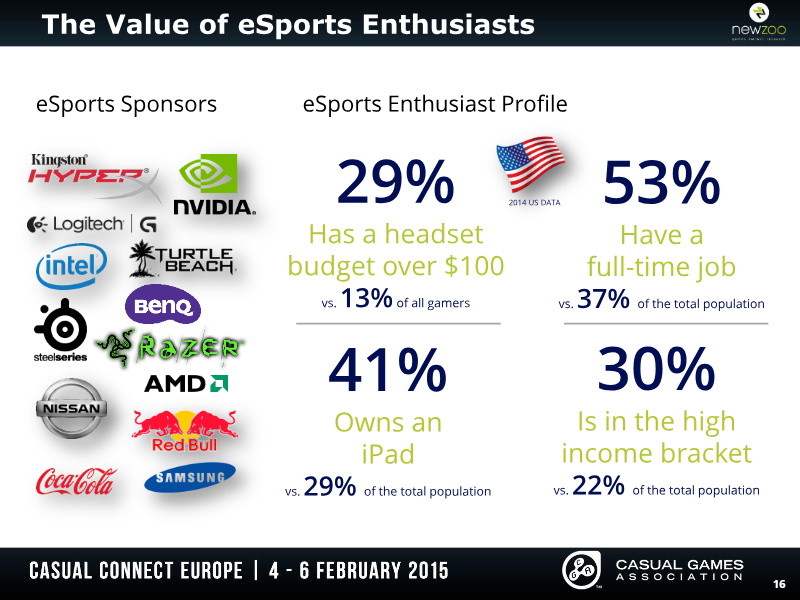
This document, "The eSports Economy: Trends, Audience and Revenue Growth Towards 2017," analyzes the burgeoning eSports market, detailing its audience demographics, revenue streams, and growth projections.
- The eSports enthusiast base is projected to exceed 100 million by 2017, maintaining a 20% compound annual growth rate between 2012 and 2017.
- Approximately 40% of eSports viewers are spectators who do not actively play the games they watch, indicating a shift toward viewing as a standalone entertainment medium.
- Streaming platforms are central to the industry's infrastructure, exemplified by Twitch reaching 100 million unique monthly viewers in 2014.

PC Gaming: Power to the People
The PC gaming market is a dominant and innovative force within the global games industry, projected to generate $27.6 billion this year, representing 39% of the total market and exceeding TV/console revenues.
- PC gaming leads the global interactive entertainment industry with a 39% market share, generating $27.6 billion in annual revenue from a base of approximately 900 million players.
- The free-to-play business model is the primary financial driver for the sector, with revenues projected to reach $13.3 billion by 2016.
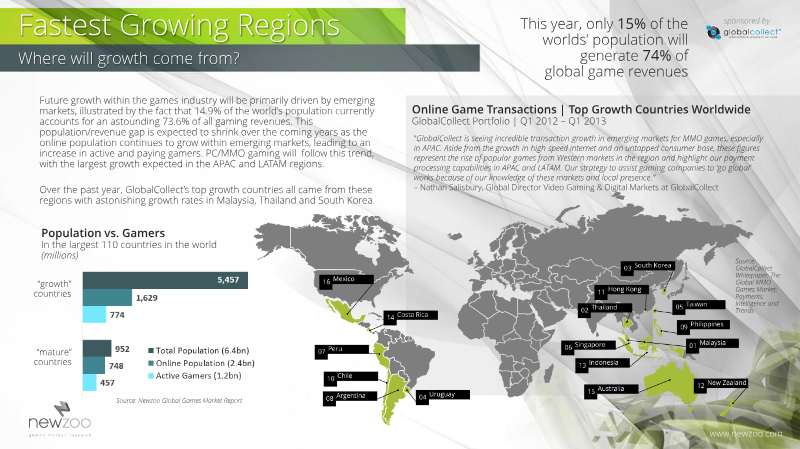
- The core PC and MMO gaming segment consists of 168 million players, with significant growth occurring in the APAC and LATAM regions.

VR Games Market Report: An Overview and Outlook of Virtual Reality
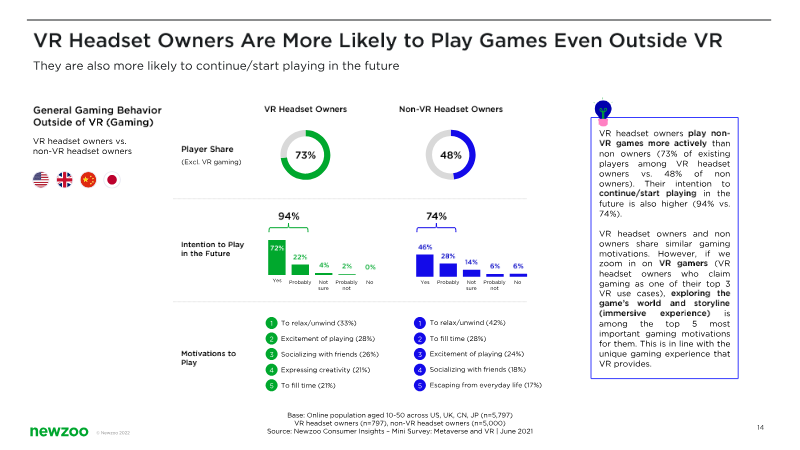
The VR Games Market Report provides a comprehensive overview and outlook of the virtual reality gaming sector, asserting that gaming is the primary catalyst for VR market expansion.
- The global VR gaming market is projected to reach $3.2 billion in annual revenue by 2024, more than doubling current figures.
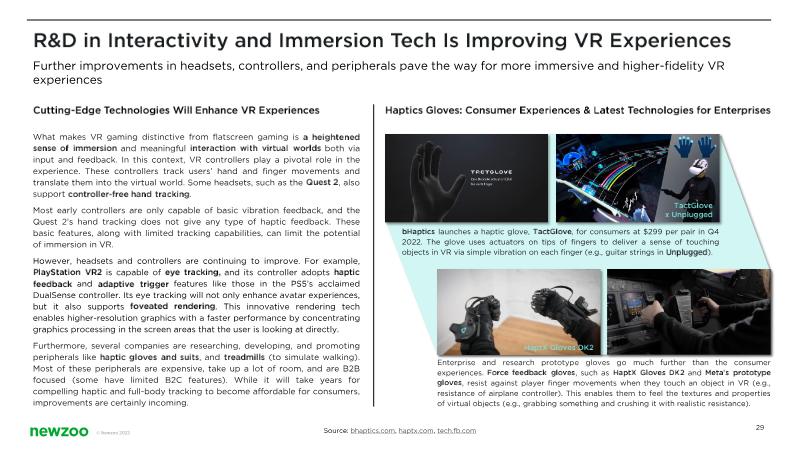
- The active hardware install base for VR is expected to grow to 46 million units by 2024, driven primarily by the adoption of affordable, standalone six-degree-of-freedom headsets.
- Industry growth is shifting toward hybrid monetization models, moving away from one-time purchases to incorporate subscriptions, DLC, and in-game microtransactions.

The Rise of Battle Royale: An Overview of the Hottest Game Genre
The battle royale genre, characterized by survival, exploration, scavenging, and last-man-standing gameplay, has rapidly emerged as a dominant force in the gaming industry, blending elements from survival games and first-person shooters.
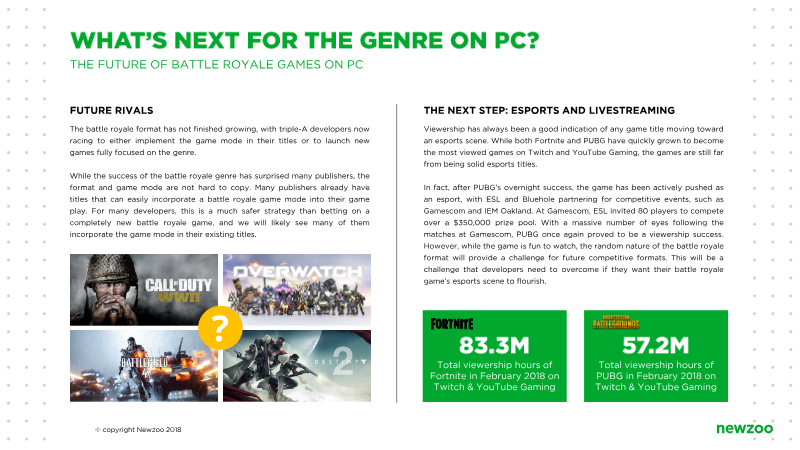
- The battle royale genre has achieved mainstream dominance by distilling survival and shooter mechanics into a highly replayable, spectator-friendly format.
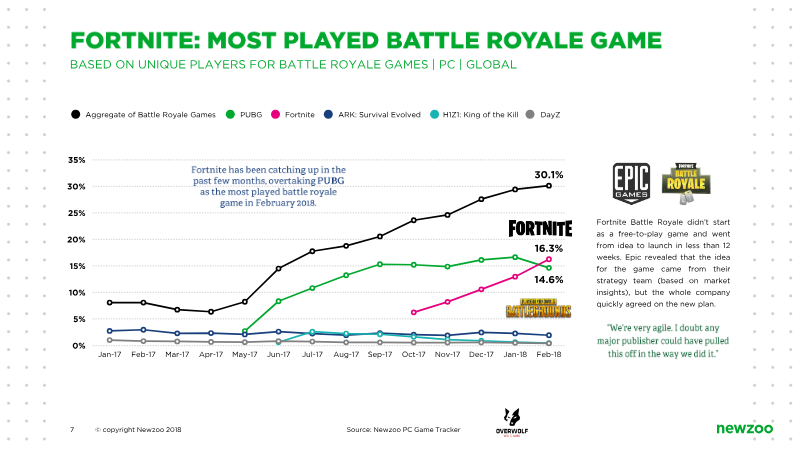
- PUBG and Fortnite serve as the genre's primary anchors, with PUBG maintaining a strong foothold in Asian markets through partnerships with Tencent, while Fortnite captures a broader Western audience via a free-to-play model and cross-platform integration.
- The mobile sector is a primary growth driver, led by publishers like NetEase and Tencent who have successfully launched mobile-optimized versions of major titles to capitalize on mobile-first gaming cultures.


Understanding the iPhone: Current Usage and Trends
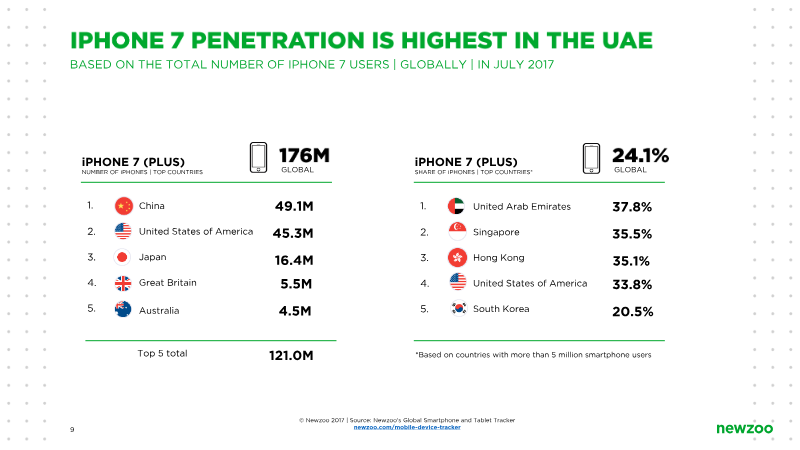
This document provides an overview of iPhone usage and trends globally as of July 2017, coinciding with the iPhone's 10th anniversary.
- As of July 2017, there are 730 million active iPhones worldwide, representing approximately 10% of the global population.
- 61% of all iPhones ever sold since the 2007 launch remain in active use, with 82% of those active devices released in 2014 or later.
- China is the largest market for iPhone adoption with 243 million active users.

Betting on Billions: Unlocking the Power of Mobile Gamers
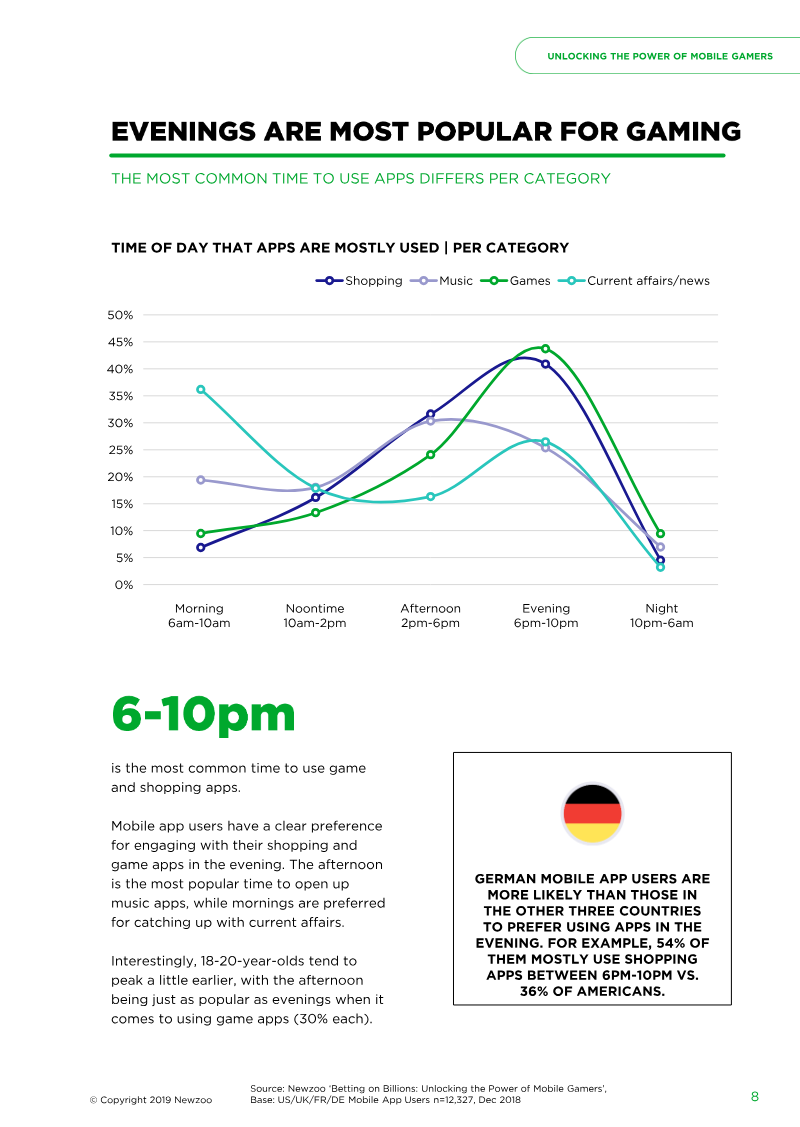
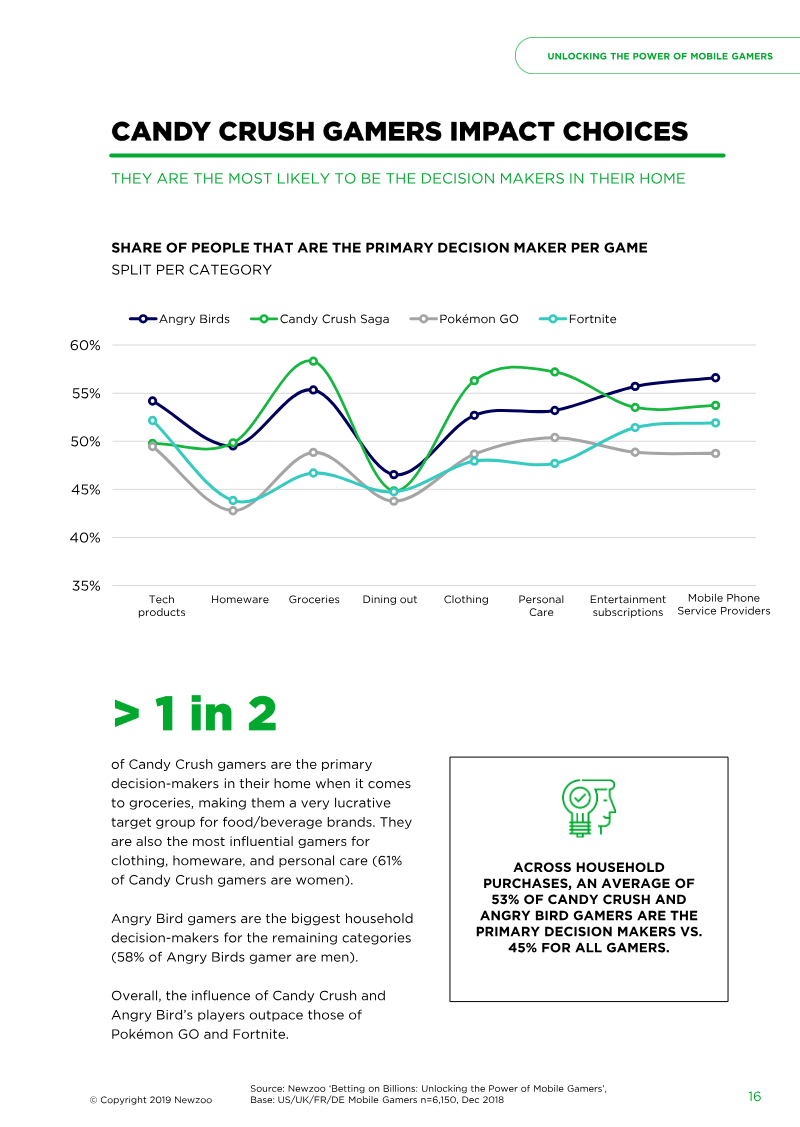
The document, "Betting on Billions: Unlocking the Power of Mobile Gamers," aims to highlight the untapped potential of mobile gamers as a lucrative audience for brands and advertisers.
- Mobile gamers are 23% more likely than non-gamers to influence the purchasing decisions of their peers, family, and colleagues.
- Gaming is the third-most-popular app category globally, with 50% of surveyed users engaging with games on a weekly basis.
- Over half (53%) of mobile gamers report that they are receptive to advertising, viewing it as a helpful way to stay informed about products and services.
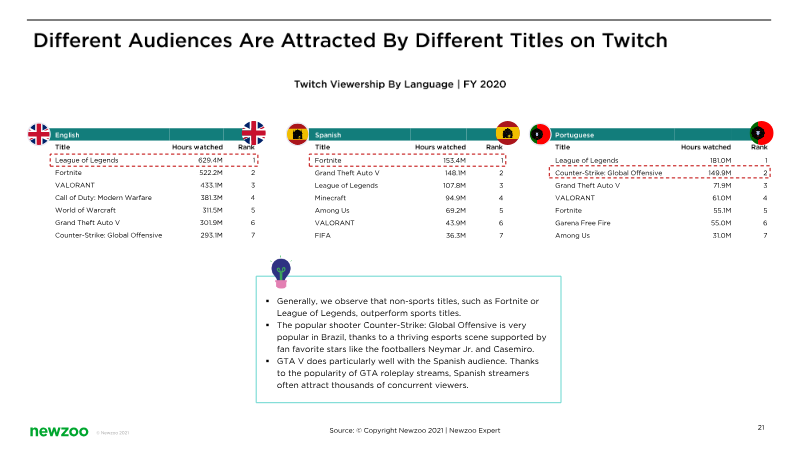

How Brands Can Use Data to Be Successful in Games & Esports
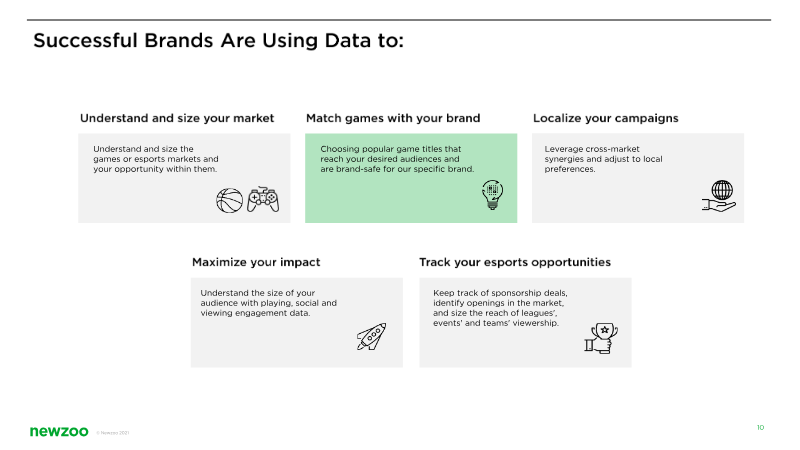
The document, "How Brands Can Use Data to Be Successful in Games & Esports," asserts that data-driven strategies are essential for brands to effectively engage with the global gaming and esports market, which encompassed 2.8 billion gamers in 2020.
- Brands must abandon the monolithic view of gamers and instead use granular consumer data to segment the audience by specific titles, demographics, and regional cultural preferences.
- Successful market entry requires moving beyond simple player counts to analyze multi-platform metrics, including social sentiment and viewership trends.
- Data-driven strategies should be used to identify authentic partnership opportunities with professional teams and influencers rather than relying on speculative investments.