Global reports and market data
Documents
Gamer Motivation Study
The Gamer Motivation Study provides a comprehensive analysis of gamer motivations, behaviors, and demographics across the United States and China, aiming to define and understand nine distinct gamer personas.
- The industry should transition from traditional demographic segmentation to a behavior-based framework consisting of eight distinct gamer personas to better capture engagement drivers.
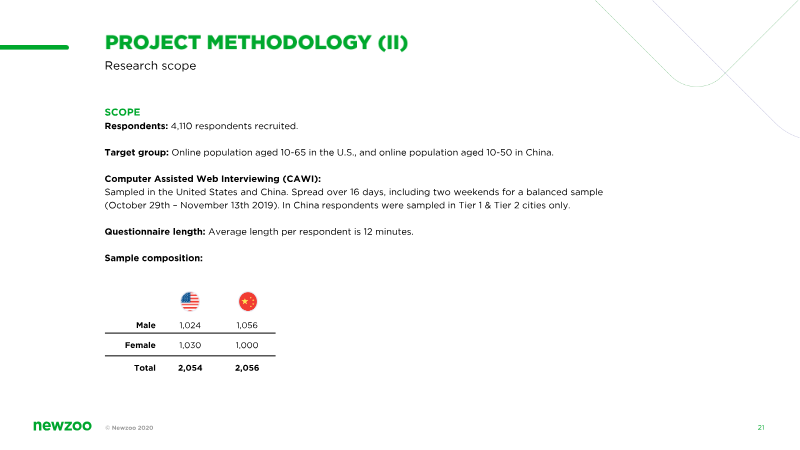
- The study analyzed 4,110 respondents across 30 international markets to identify the core motivations and habits defining global gaming engagement.
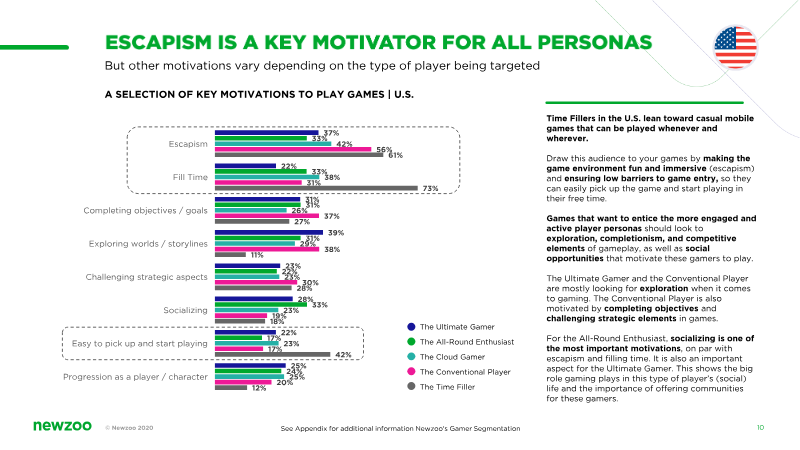
- U.S. gamers are primarily driven by escapism and filling idle time, while Chinese gamers prioritize competitive achievement, exploration, and skill mastery.
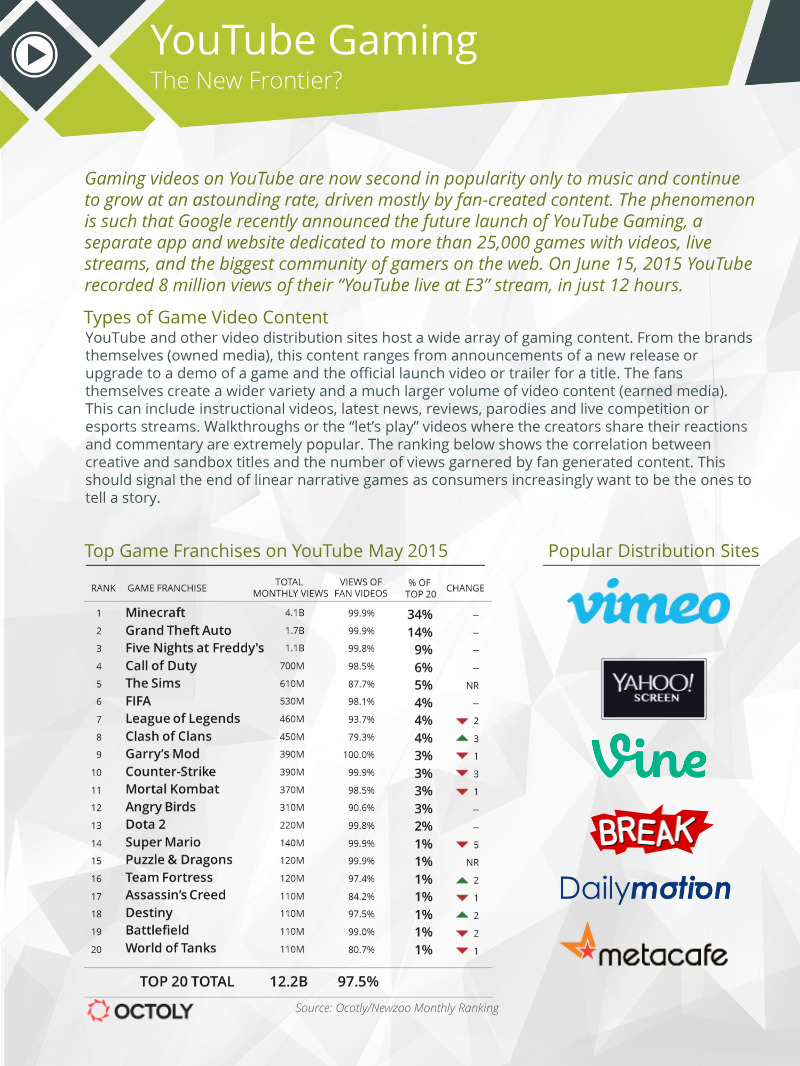
The Consumer as Producer: How Games & Video Converge to Drive Growth
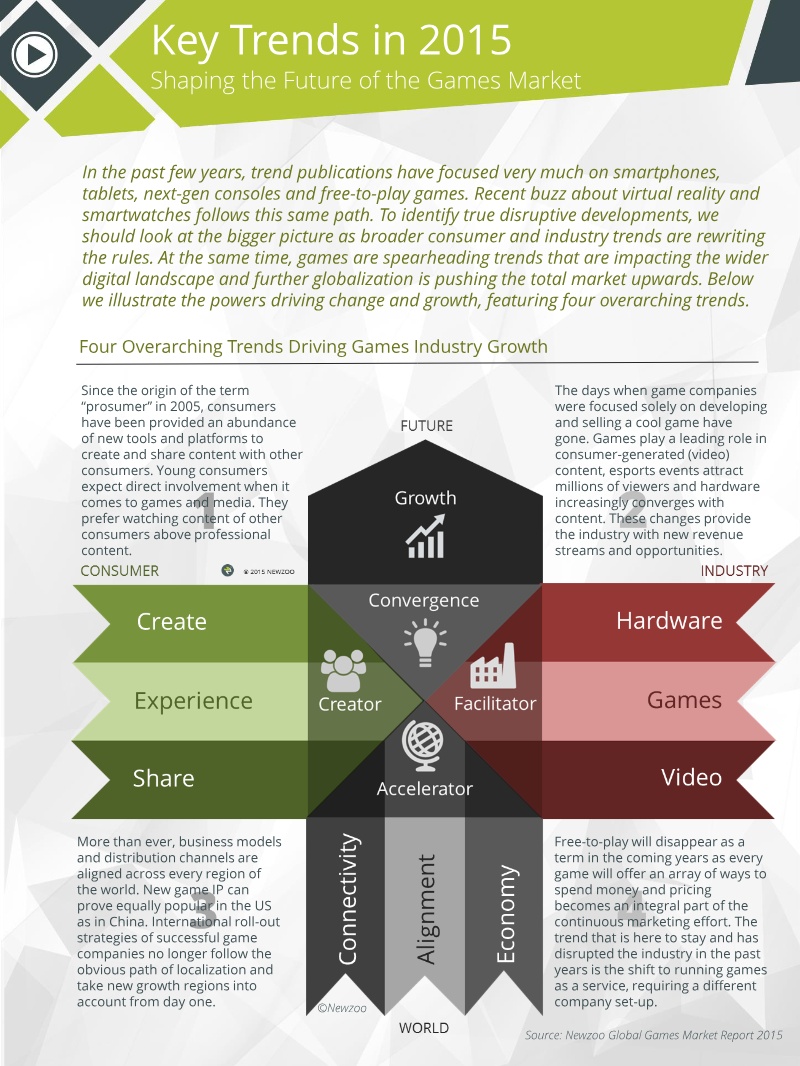
The document, "The Consumer as Producer: How Games & Video Converge to Drive Growth," analyzes the evolving relationship between consumers and content creation within the global games market, emphasizing the accelerating trend of consumer involvement in creating, streaming, and sharing gaming video content.
- The gaming industry is shifting from a one-way consumption model to a collaborative ecosystem where players act as 'prosumers' who create, share, and monetize content.
- Global games revenue is projected to reach $113.3 billion by 2018, growing at a compound annual rate of 7.9% from 2014.
- China and the United States will dominate the market, collectively accounting for 50% of global gaming revenues by 2018.
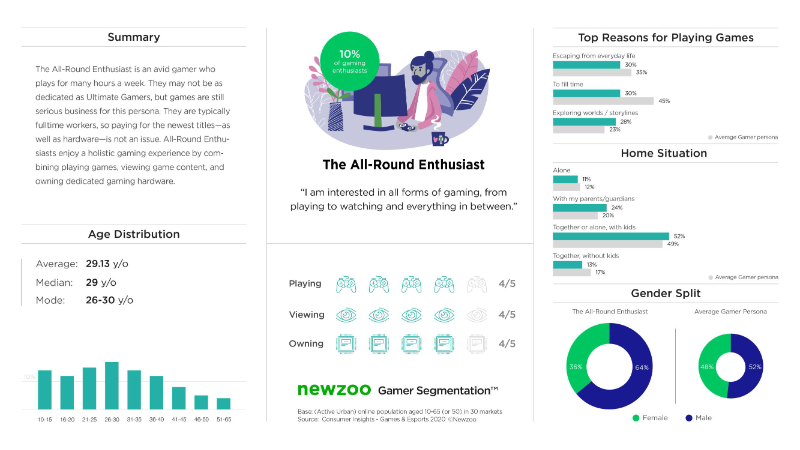
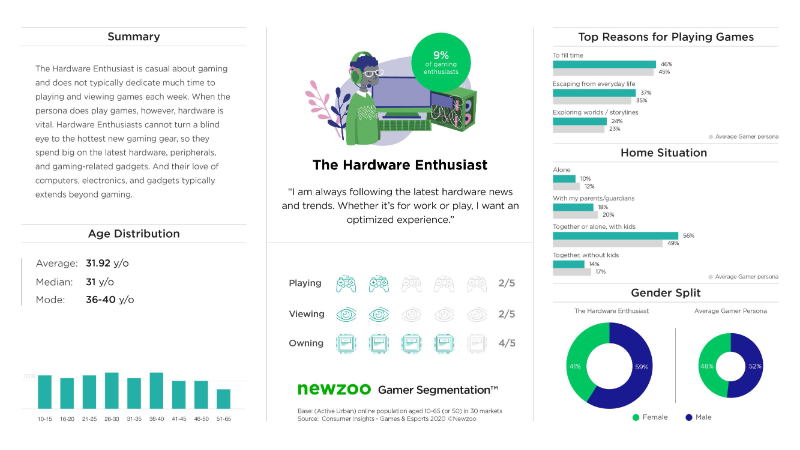
Newzoo Gamer Segmentation: An Overview of the Nine Unique Personas
This document outlines Newzoo's Gamer Segmentation model, presenting nine distinct gamer personas based on their engagement with playing, viewing, and owning gaming content and hardware.
- The 'Ultimate Gamer' persona accounts for 30% of gaming enthusiasts, characterized by high levels of active play, content consumption, and significant hardware investment.
- The global gaming audience is mature and heterogeneous, with the average age of the nine personas ranging from approximately 28 to 39 years old.
- Engagement is no longer defined solely by active gameplay, as segments like the 'Popcorn Gamer' and 'Backseat Viewer' prioritize esports and video content consumption.
Spotting the Mobile Spenders: An Analysis of Paying Smartphone and Tablet Gamers
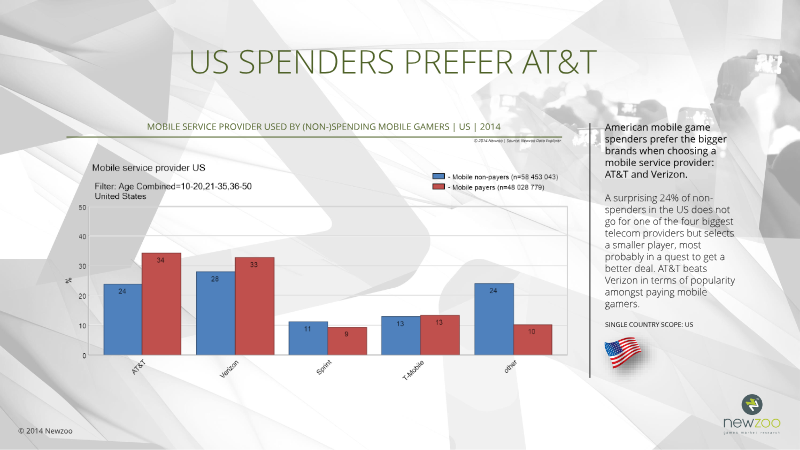
This Newzoo report, "Spotting the Mobile Spenders," analyzes paying smartphone and tablet gamers globally, with a specific focus on the US and Western Europe.
- Mobile gaming is projected to reach $25 billion in global revenue by 2014, with mobile expected to account for 50% of total game revenues by 2017.
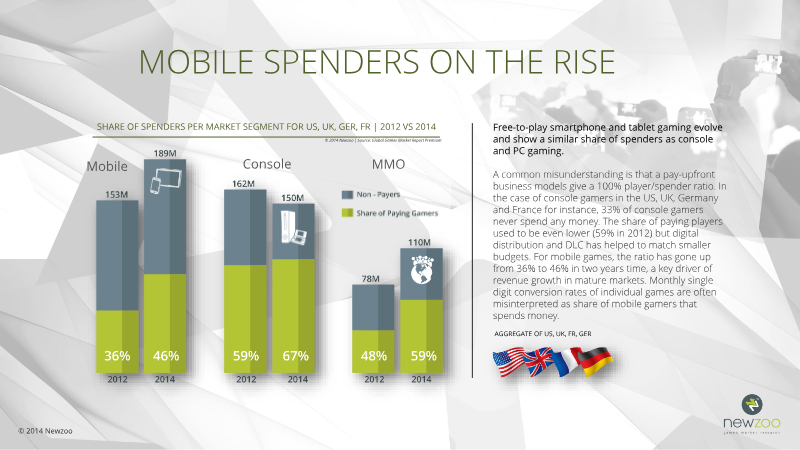
- The share of paying mobile users in Western Europe and the United States grew from 36% to 46% over the last two years, debunking claims of market saturation.
- The Amazon Appstore is an undervalued channel, as its users demonstrate a higher propensity to spend money compared to those on Google Play or Apple platforms.
Cloud Gaming: The Perfect Storm
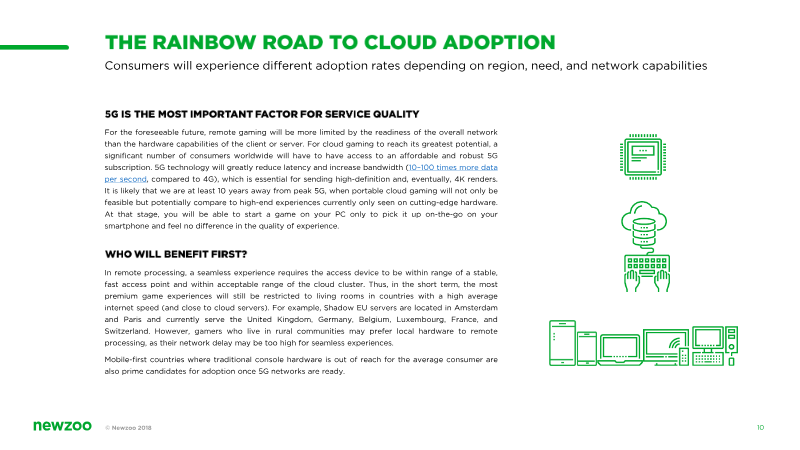
"Cloud Gaming: The Perfect Storm" examines the emerging cloud gaming market, asserting that advancements in internet infrastructure, particularly 5G, are creating an environment where cloud gaming can finally achieve widespread viability after previous failures.
- Cloud gaming transitions the industry from hardware-dependent models to an on-demand service ecosystem, removing the need for expensive local rigs or physical media.
- The long-term viability of cloud gaming is strictly dependent on the global rollout of 5G infrastructure to provide the high-speed, low-latency connectivity required for a seamless user experience.
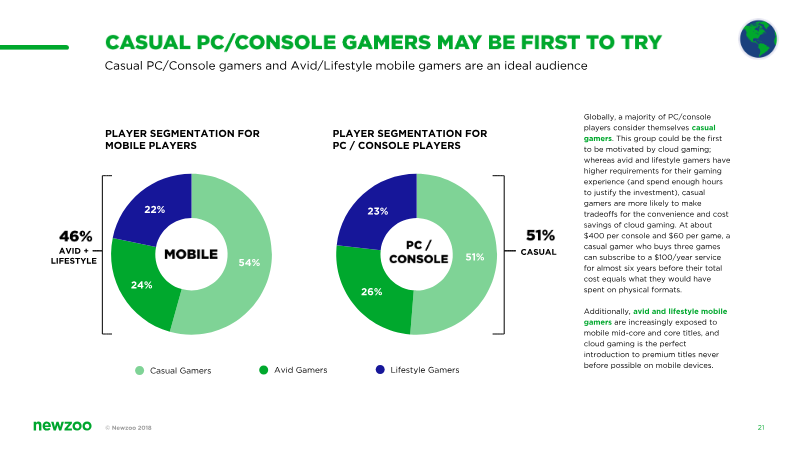
- Cloud gaming is expected to function as a complementary force to traditional PC and console gaming rather than a total replacement for existing hardware platforms.
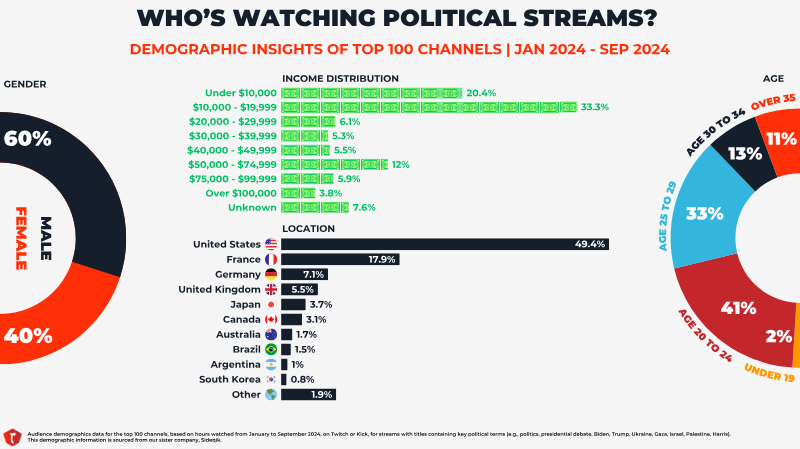
Politics in Live Streaming: 2024
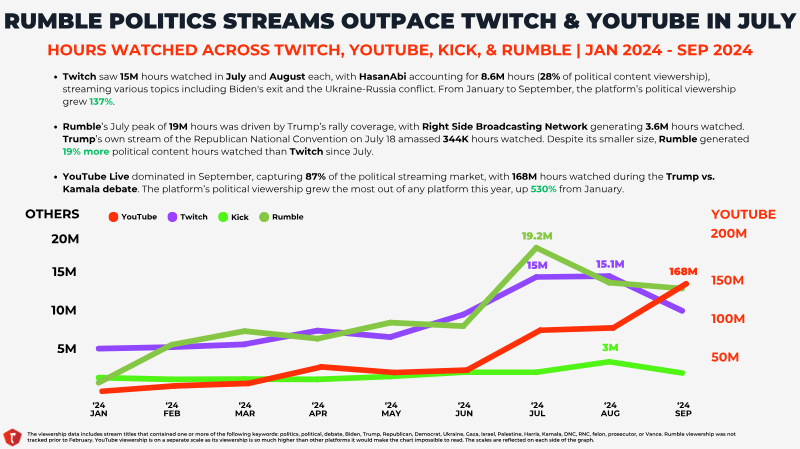
Political content on live-streaming platforms surged through the first nine months of 2024, according to Stream Hatchet's analysis of Twitch, YouTube Live, Kick, and Rumble.
- YouTube Live dominates the political streaming market with an 87% share as of September 2024, having experienced a 530% increase in political viewership since January 2024.
- Political content's share of the total live-streaming market grew significantly in 2024, rising from 0.8% to nearly 3% within the first nine months of the year.
- Approximately 35% of hours watched for streams mentioning U.S. presidential candidates in Q3 2024 originated from compromised YouTube channels exhibiting suspicious behaviors like rapid name changes or post-broadcast deletions.



Winning Audiences Through YouTube Gaming
YouTube Gaming set a viewership record in 2025, with live-streaming hours watched rising 12% year over year to 8.8B. That represents roughly one in four hours watched across gaming live-streaming platforms.
- YouTube Gaming captured 8.8 billion hours of viewership in 2025, marking a 12% year-over-year growth and securing a 25% share of the global live-streaming gaming market.
- Roblox ranked as the most-watched game on the platform, while esports titles like League of Legends and Mobile Legends: Bang Bang generated 1.2 billion hours of total viewership.
- YouTube Shorts reached a peak of 6.15 million gaming-related posts in August 2025, highlighting the platform's successful diversification beyond long-form live content.
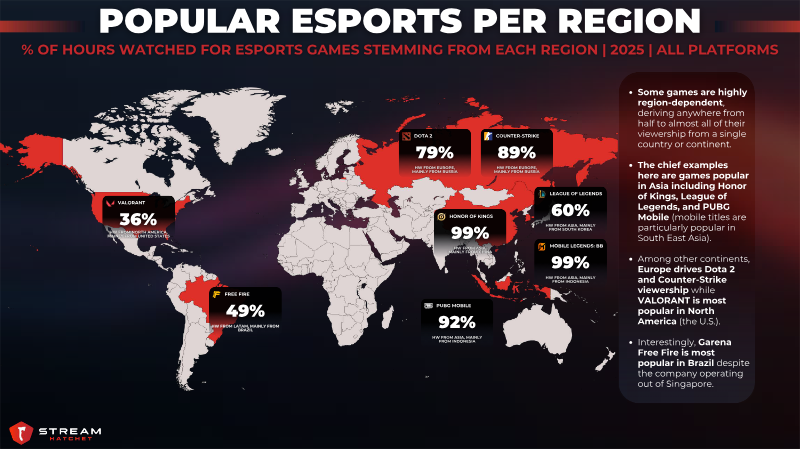
Esports Trends Report 2025
Stream Hatchet's Esports Trends Report 2025 analyzes live-streamed esports viewership across all tracked platforms, drawing on roughly 1.9K events spanning 78 games.
- Co-streaming has become the dominant viewership model, accounting for 51.2% of all esports hours watched and highlighting the critical role of creator-led content.
- The esports market remains highly concentrated, with League of Legends and Counter-Strike generating nearly 45% of the total 2.7 billion hours watched across 2,000 tracked events.
- Twitch and YouTube Gaming maintain a combined 84.1% market share of total viewership, though mobile esports tournaments are achieving higher average viewership per event than non-mobile titles.
Gamer Motivation Model: Reference Sheets and Details
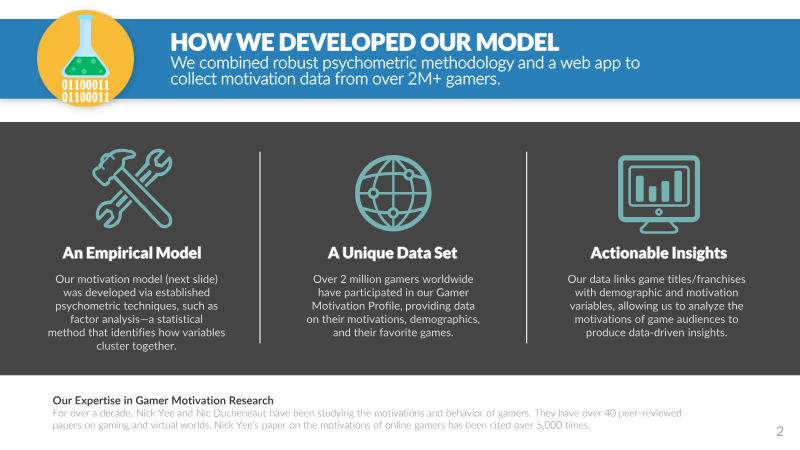
This document outlines Quantic Foundry's Gamer Motivation Model, an empirically derived framework identifying 12 distinct gaming motivations grouped into six pairs, which further cluster into three high-level categories.
- The Gamer Motivation Model categorizes player behavior into twelve distinct motivations derived from psychometric factor analysis of over two million global participants.
- Motivations are organized into three high-level clusters: Action-Social (immediate, interpersonal), Mastery-Achievement (goal-oriented, progression), and Immersion-Creativity (narrative, expressive).
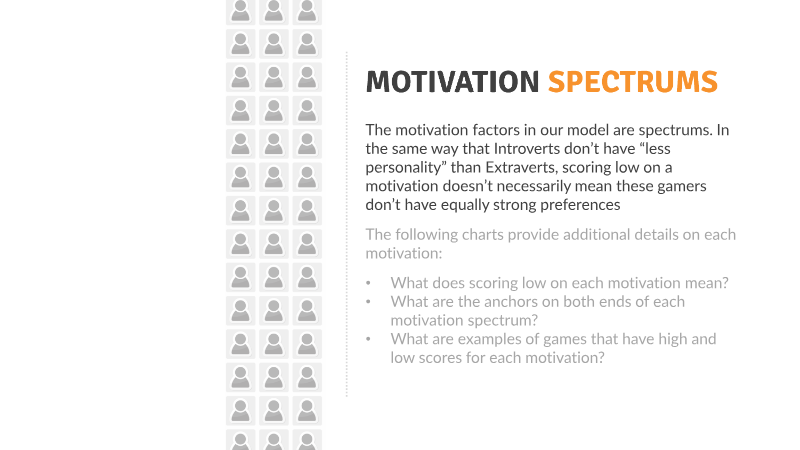
- Player preferences are measured as spectrums rather than binary choices, allowing for nuanced profiling of how individuals balance competing psychological drivers.
Gaming Report 2026: Choose Your Player
The "Gaming Report 2026: Choose Your Player" posits that the gaming industry is undergoing a fundamental transformation, moving away from a mass-market approach to one defined by highly fragmented player segments and personalized engagement.
- The gaming market has shifted from a supply-constrained environment to one of infinite choice, where success now requires deep engagement with specific player segments rather than broad, unfocused appeal.
- Focused games—those designed for a specific, identifiable audience—achieved an 83% commercial success rate, significantly outperforming the 50% success rate of unfocused titles.
- Player preferences are highly fragmented, with no single experience type (such as story-driven, sandbox, or multiplayer) capturing more than 26% of the market, and two-thirds of gamers preferring to stick to familiar franchises or existing habits.

The Future of Gaming Infrastructure: 2026-2028
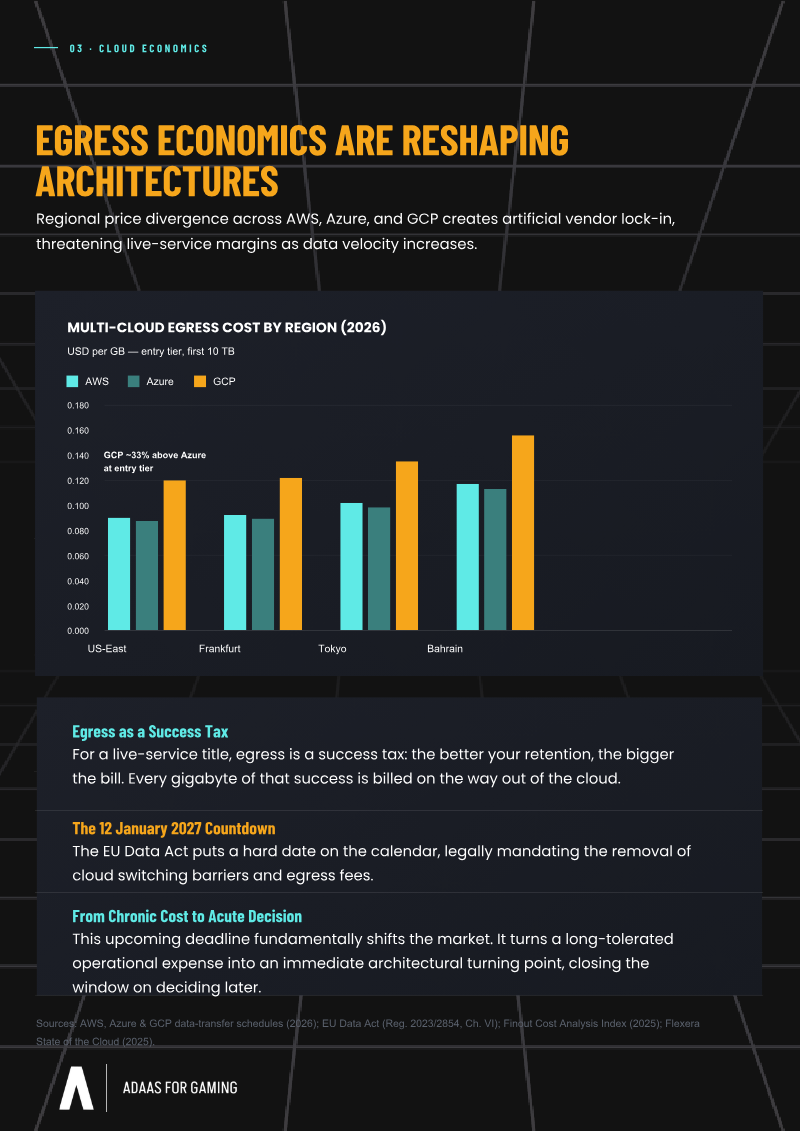
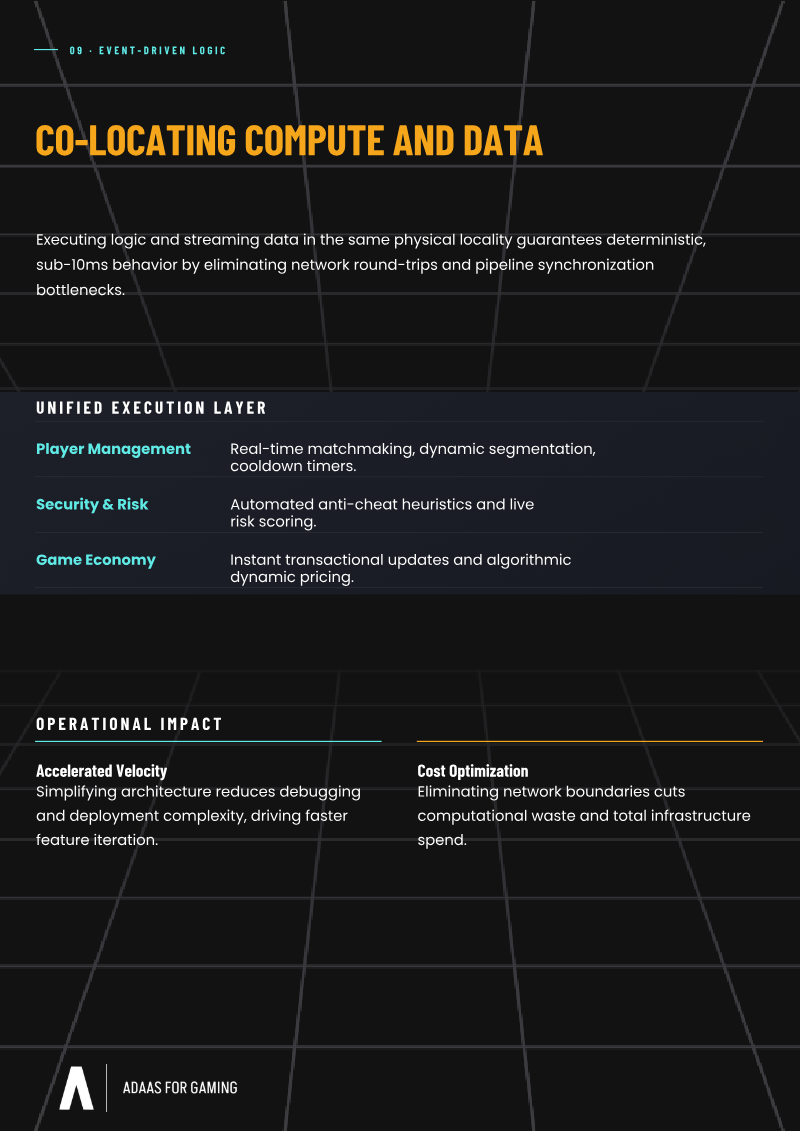
The document, "The Future of Gaming Infrastructure: 2026-2028," analyzes the evolving operational, regulatory, and cost pressures reshaping live-service game back-ends, arguing that legacy fragmented architectures are structurally incapable of meeting future demands.
- Studios must transition from fragmented legacy backends to unified, AI-native data planes that co-locate compute and data to overcome latency bottlenecks and support high-velocity live-ops.
- Optimizing real-time matchmaking through low-latency infrastructure can increase player retention by 4% to 15%.
- Regulatory compliance with the 2027 EU Data Act and EU AI Act requires studios to implement immutable audit logs and transparent, explainable algorithmic systems for matchmaking and personalization.

A Deep Dive into Deep Links: The All-in-One Handbook for Mobile App Marketers, Developers, and Product Managers
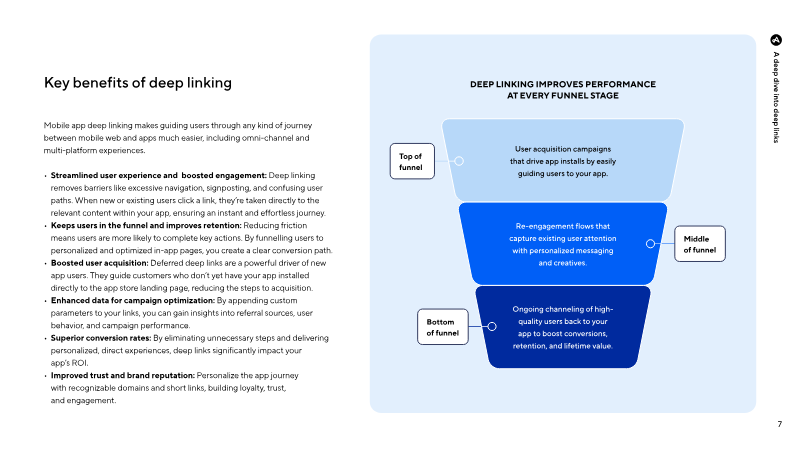
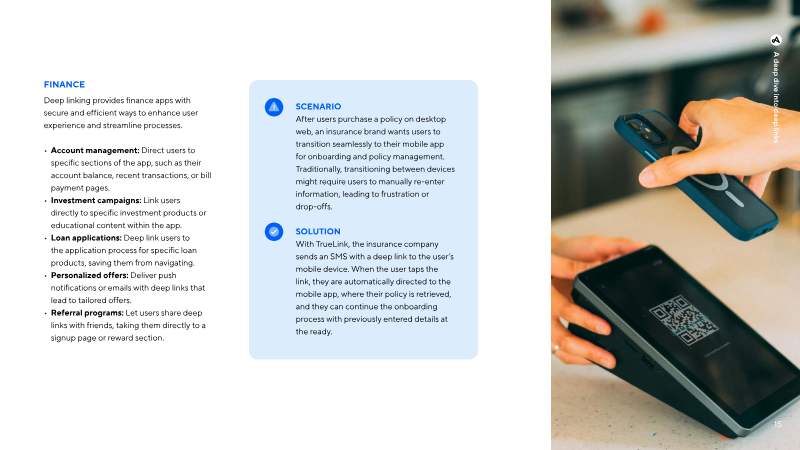
Adjust's handbook explains deep linking as the mobile equivalent of website URLs, routing users from ads or external sources to specific in-app content, and makes the case for its TrueLink product as the solution for marketers, developers, and product managers.
- Deep linking significantly improves app performance, with CleverTap data showing that users attributed to deep links achieve 81% higher activation rates, 2.5x higher retention rates, and 2x higher conversion rates compared to those using standard links.
- Deep linking technology functions by routing users directly to specific in-app content or screens upon clicking an ad or link, utilizing standards such as Apple Universal Links, Android App Links, and URI schemes.
- Deferred deep linking drives user acquisition by directing individuals who have not yet installed the app to the appropriate app store landing page, thereby reducing friction in the installation process.