Key insights
6 slides
Purchasing Power
Mobile gamers are more likely to influence purchasing decisions.
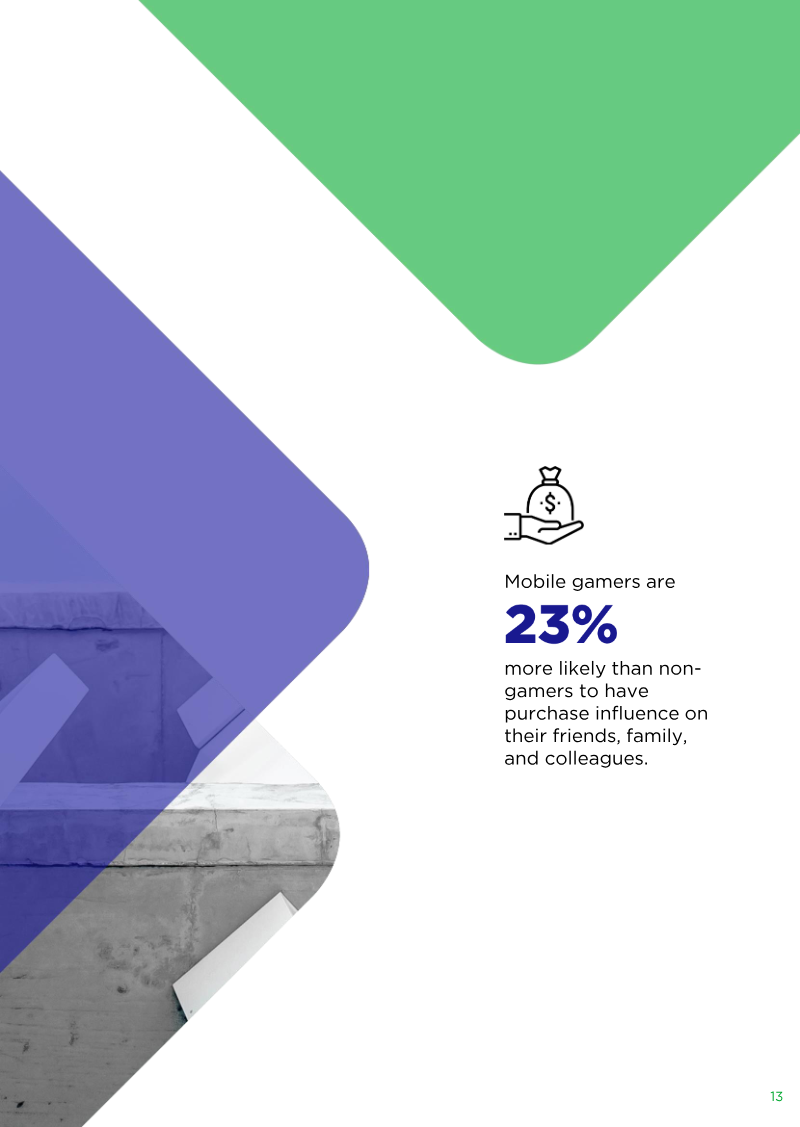
Mobile gamers are 23% more likely than non-gamers to influence the purchasing decisions of friends, family, and colleagues.
Like a trendsetter, mobile gamers often guide what others buy.
Spending Tendencies
Gamers show a stronger preference for premium brands.
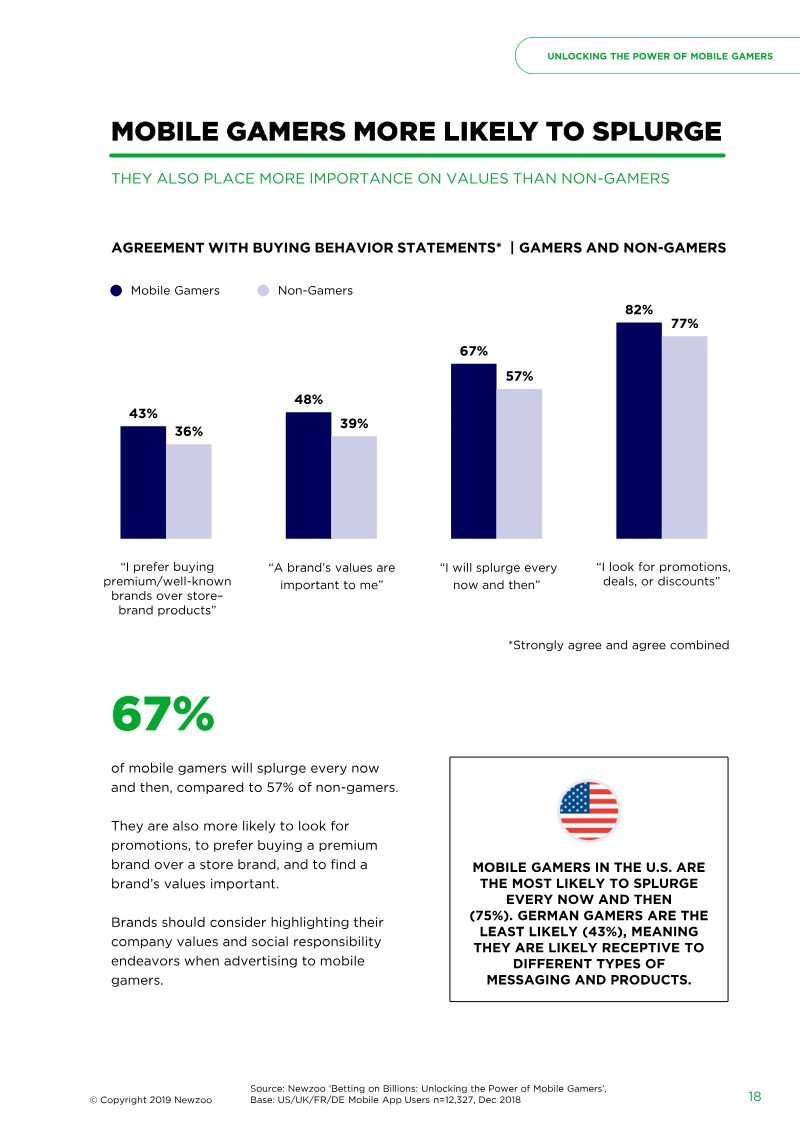
Mobile gamers exhibit a higher propensity for 'splurging' compared to non-gamers. They also show a stronger preference for premium brands.
Segmented Influence
Purchasing influence varies by gender among gamers.
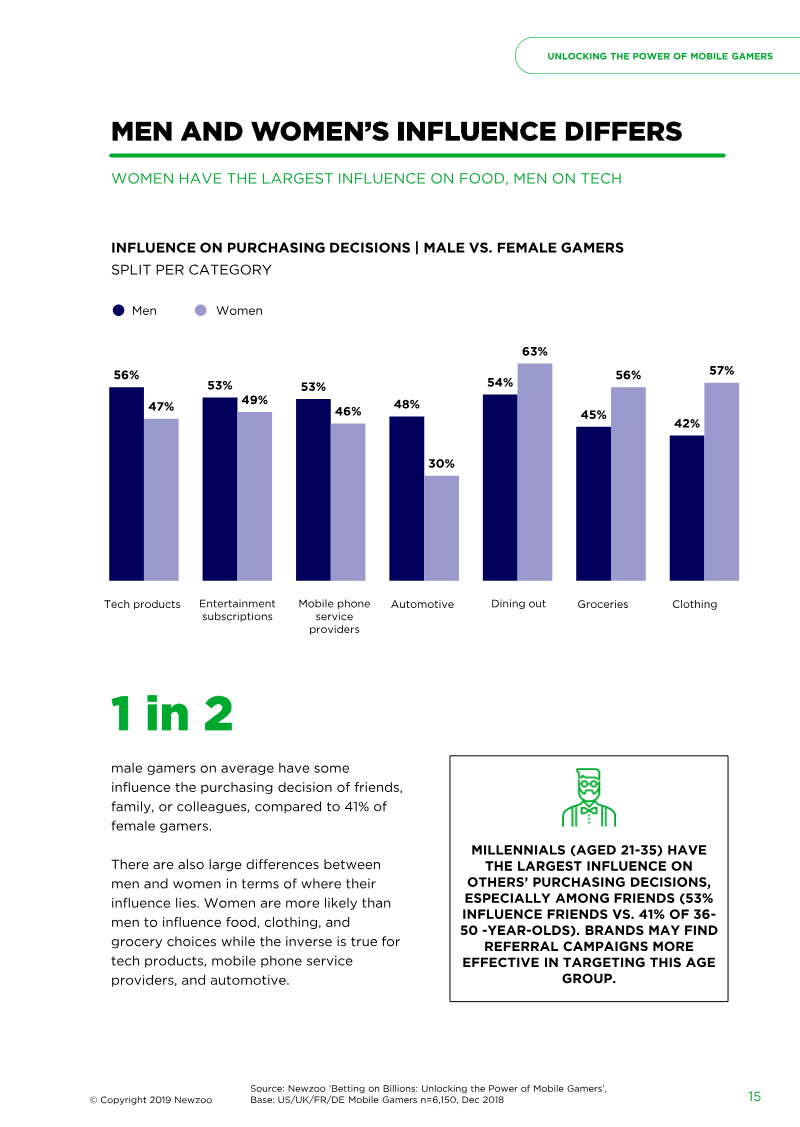
Female gamers drive decisions in groceries and clothing. Male gamers influence technology and automotive sectors.
Gender Differences. Purchasing influence is highly segmented by gender among mobile gamers.
Ad Receptivity
Over half of mobile gamers are receptive to advertising.
53% of mobile gamers agree that ads help them stay informed about products and services.
Open to Ads. 53% of mobile gamers report that they are receptive to advertising.
Peak Engagement
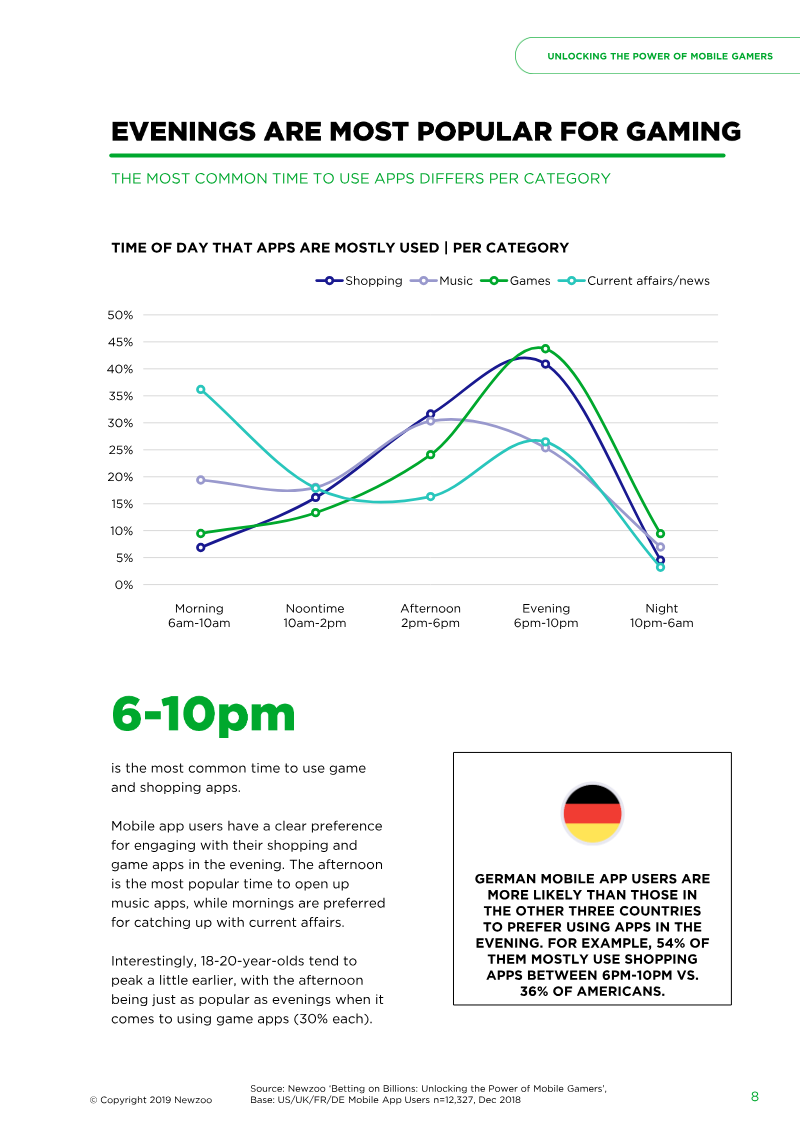
Evening hours are prime for contextual marketing in gaming apps.
Mobile gaming apps see peak usage in the evenings. This provides a prime environment for contextual marketing campaigns.
Like prime-time TV, evening hours are when mobile gamers are most engaged.
Targeted Messaging
Brands can optimize engagement by aligning messaging with game genres.
Aligning messaging with specific game genres can enhance engagement. Puzzle games target older, female-skewing demographics, while action titles target younger males.
1 / 6
Ask AI about this report