ReportNewzoo
Mobile Games: Placing Smartphone and Tablet Gaming in Perspective of the Total Games Market 2012
12 pages~18 min full read
Key insights
7 slides
Market Shift
The gaming industry saw a significant shift in consumer behavior in 2012.
Gamers moved away from traditional PC and TV-centric play. They adopted a multi-screen environment that includes smartphones and tablets.
Investment Impact
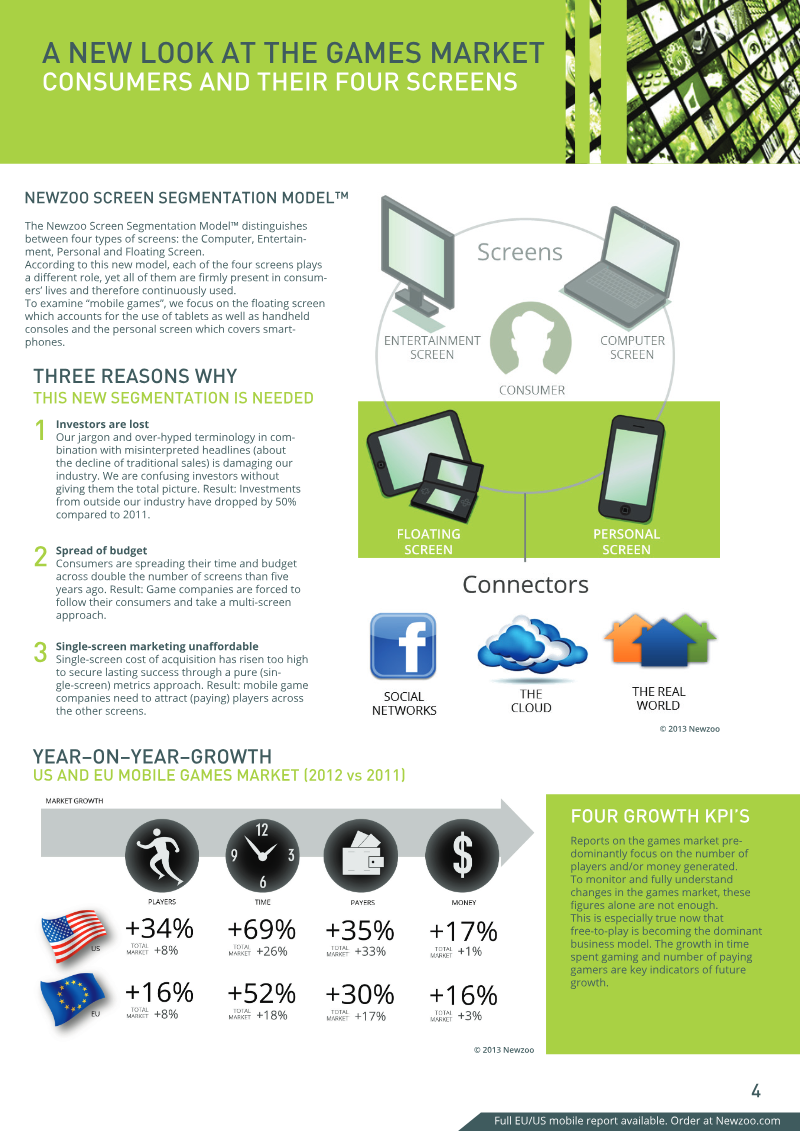
External investment volume for the gaming industry declined by 50% in 2012.
Single-screen metrics had previously led to investor confusion.
Investment Decline. A failure to adapt to multi-screen metrics contributed to a 50% decline in external investment volume for the gaming industry during 2012.
Revenue Driver
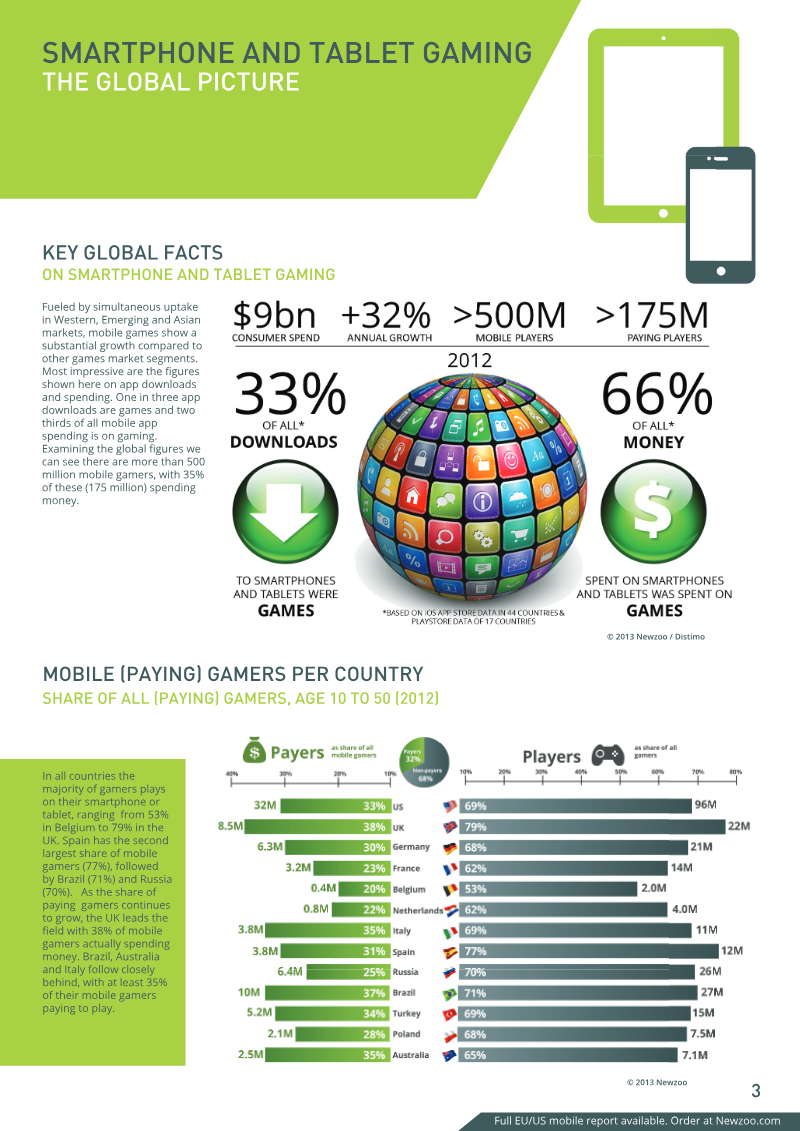
Mobile gaming became a primary revenue driver in 2012.
Two out of every three dollars spent on smartphones and tablets were allocated to games.
Page 1 of the reporttwo out of every three dollars
Share of spending on smartphones and tablets allocated to games in 2012.
Audience Growth
The global mobile gaming audience reached over 500 million users by the end of 2012.
Of these, 175 million were identified as paying players.
Monetization Model
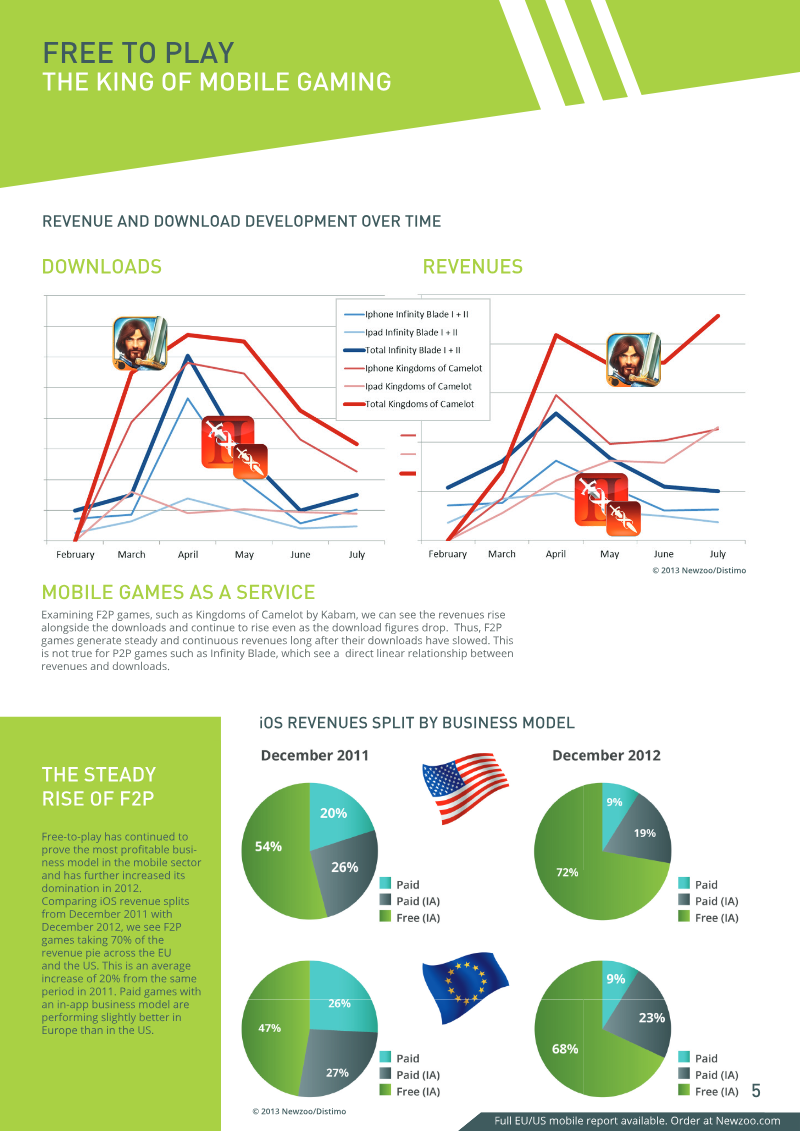
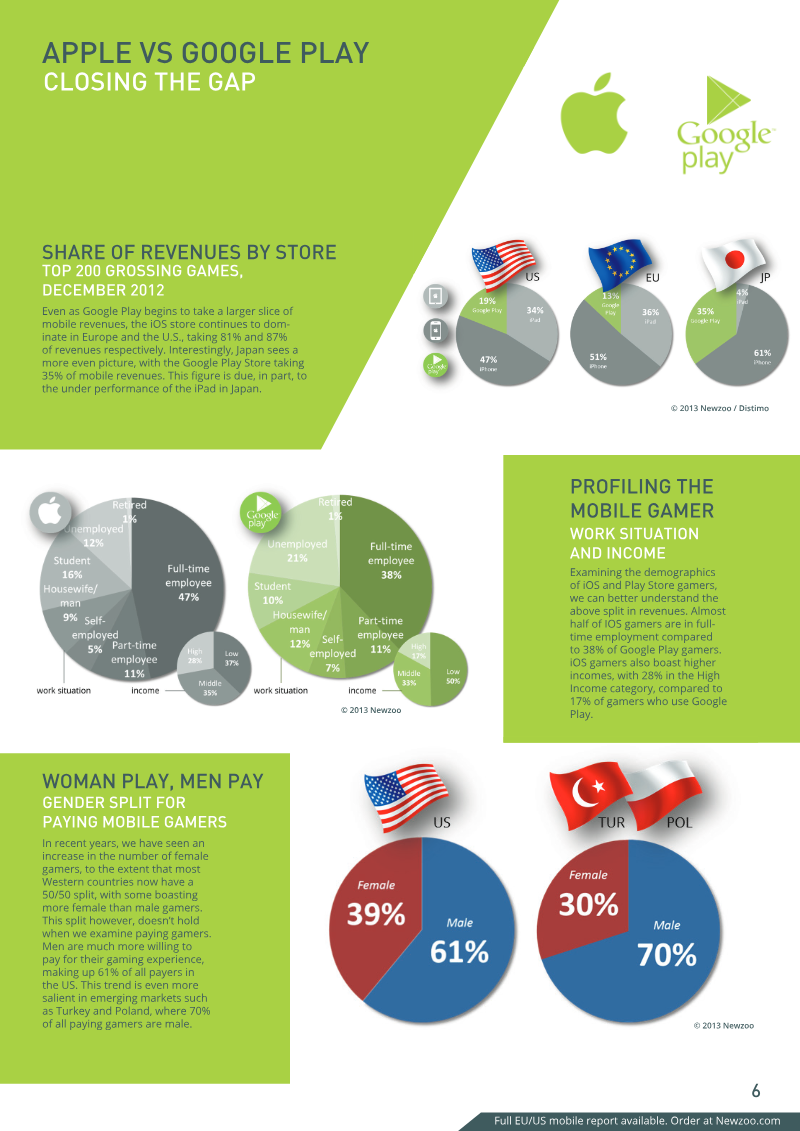
Free-to-play (F2P) models dominated the market, accounting for 70% of all iOS revenue.
F2P emerged as the most profitable strategy.
User Demographics
iOS gamers were more likely to be in full-time employment and possess higher incomes.
Demographic analysis indicated these differences.
Multi-Screen Use
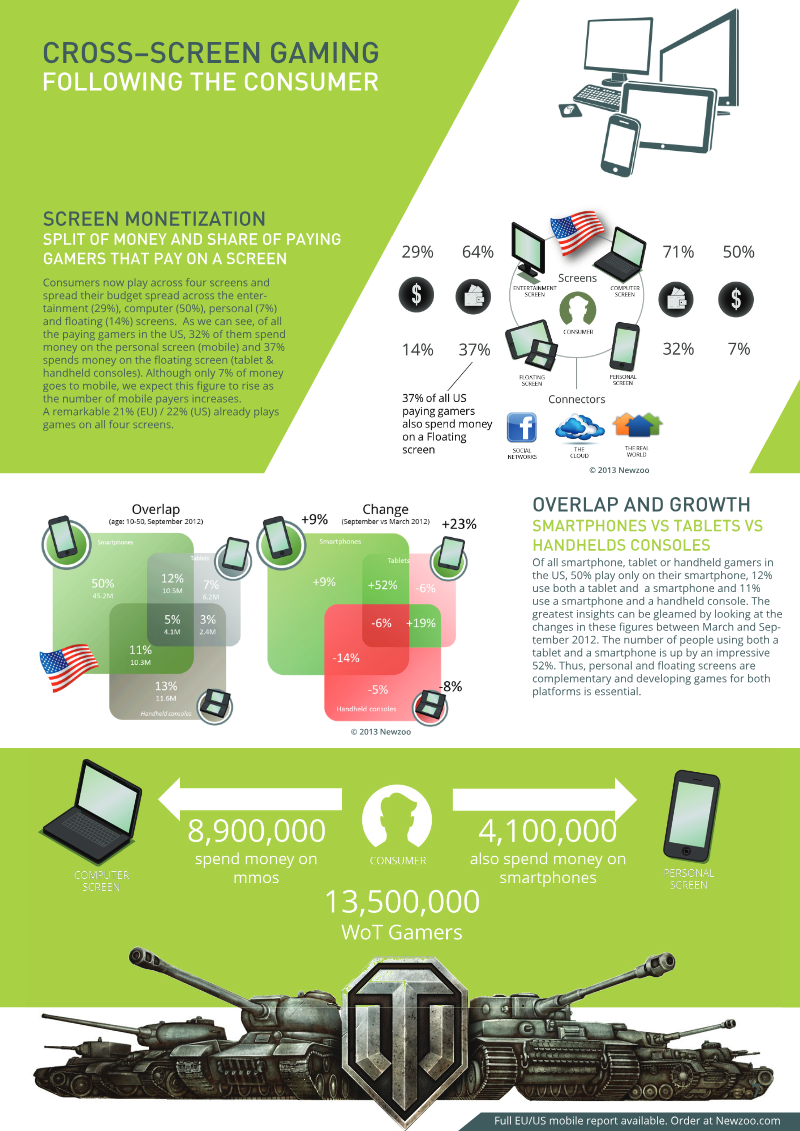
Multi-screen engagement grew significantly in 2012, with a 52% increase in users.
These users utilized both smartphones and tablets between March and September. Mobile and tablet usage is complementary.
1 / 7
Ask AI about this report