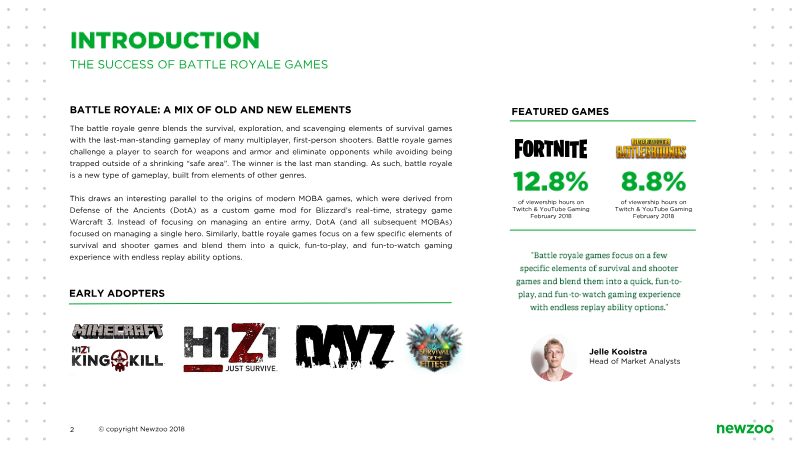
The genre distills core elements from survival and shooter games.
PUBG maintains a strong foothold in Asian markets through partnerships with Tencent. Fortnite captures a broader Western audience via a free-to-play model and cross-platform integration.
Market Anchors. PUBG and Fortnite serve as the genre's primary anchors.
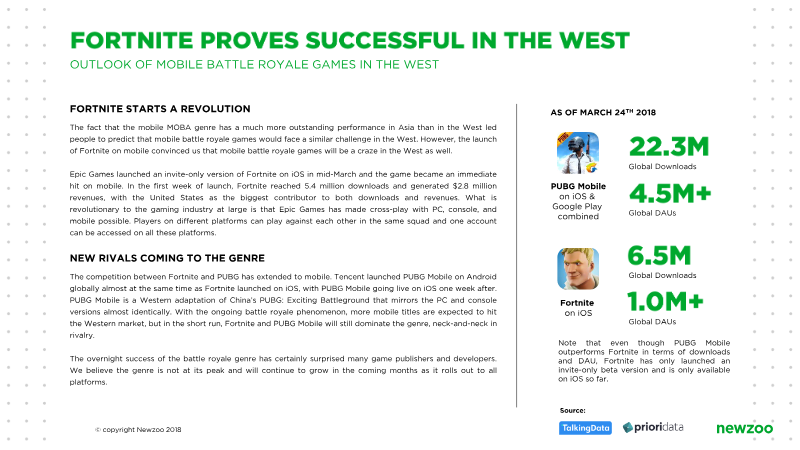
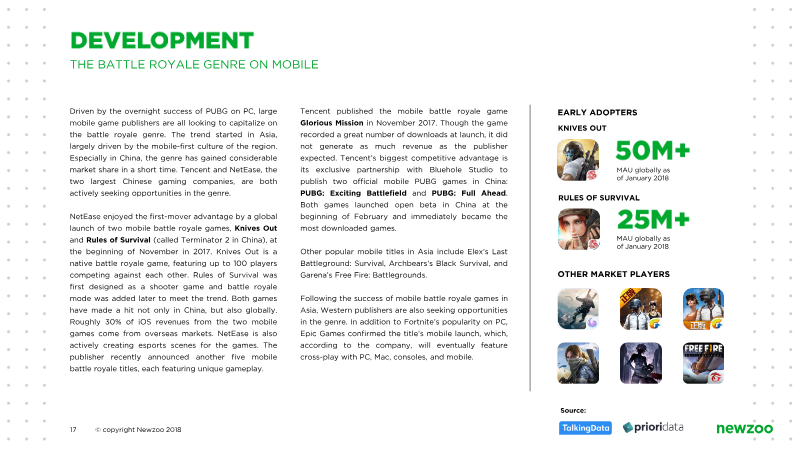
Publishers like NetEase and Tencent have successfully launched mobile-optimized versions of major titles.
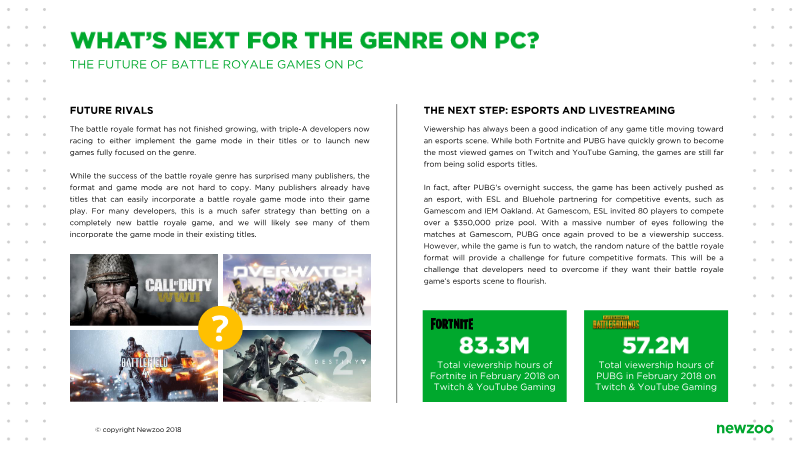
This is true despite challenges in formalizing esports due to the format's inherent randomness.
The battle royale genre has emerged as a dominant force in the global gaming industry, characterized by a unique blend of survival, exploration, and last-man-standing mechanics. By distilling core elements from survival and shooter games into a highly replayable, spectator-friendly format, the genre has achieved rapid mainstream adoption. This evolution mirrors the historical development of the MOBA genre, which similarly refined complex mechanics into a focused, competitive experience.
The genre’s rise is anchored by two primary titles: PlayerUnknown’s Battlegrounds (PUBG) and Fortnite. PUBG initially set the standard for PC success, quickly dethroning established titles on platforms like Steam and Twitch. However, Fortnite has since gained significant momentum, particularly in the West, by leveraging a free-to-play model, lower system requirements, and aggressive cross-platform integration. Data indicates that while PUBG maintains a strong foothold in Asian markets—supported by strategic partnerships with local publishers like Tencent—Fortnite has successfully captured a broader global audience through its accessibility and cultural impact.
The industry is currently witnessing a rapid expansion into the mobile sector, driven by a mobile-first gaming culture in Asia and the subsequent global rollout of mobile-optimized versions of these titles. Publishers such as NetEase and Tencent have been instrumental in this transition, launching multiple mobile-specific iterations that have achieved massive download numbers. Looking forward, the genre is poised for further growth as developers integrate battle royale modes into existing triple-A franchises. While the inherent randomness of the format presents challenges for formalizing esports, the high viewership metrics suggest that competitive play and professional streaming will remain central to the genre's long-term sustainability and commercial success.